5596 risultati
2003rif. 43611BBBialystok, Bialoruskie Tow. Historyczne, 2003. Original Flexible Boards. Very good Condition with only minimal Signs of Usage at the Cover. No Markings in the Text! No Underlinings! No Owner's Note! Text in Polish Language!
19794to; 26 pages; Bundist Newsletter from Denmark. Trilingual, in Polish, Danish, & Yiddish! Low-budget xerox production makes me think they weren't producing too many copies.Very good condition. (YID-11-15)
19741st Edition. Original Green Boards. 8vo. [59] pages ; 20 cm. In French. Title translates into English as, Recent Works Of Remo Brindisi: Exhibition From June 6th To July 6th 1974. Remo Brindisi (1918 1996) was an Italian painter (He) formed the Gruppo di Linea together with Gianni Dova and Ibrahim Kodra and was later associated with the realist movement, while maintaining, however, complete autonomy with respect to the major artistic trends of the age. His focus on issues of social commitment and protest culminated in the period 196061 with a series of large paintings devoted to the history of Fascism, in which figurative painting of an expressionist character was combined with an approach modeled on the examples of Art Informel (Wikipedia, 2017) . SUBJECT(S) : Exhibition catalogs. OCLC lists 3 copies worldwide (Michigan, Bibliotheque D'art Et Darcheologie, Biblio Hertziana Institut Fur Kunstgesch) , no copies in France. Very good condition. (ITART-1-41)
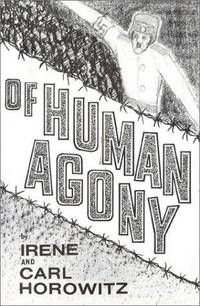
1992rif. 026551New York: Shengold Publishers Inc 1992. INSCRIBED / SIGNED by both AUTHORS directly on the front free endpaper. The first signatures are dated 3/13/92. Signed and dated 1/17/15 a second time by Irene in a very shaky hand. This is the 1992 Shengold first edition NOT the 1998 Schreiber reprint. Near Fine condition in a bright and shiny Near Fine dust jacket crease to front inner flap. NO chips or tears. NOT price clipped $18.95. The jacket is protected by a removable Brodart clear-plastic sleeve. NOT a remainder. Previous owner's name and brief gift note. Pages are otherwise crisp clean and unmarked. Photo illustrated. Holocaust memoirs of this Jewish couple - Carl lived as a Christian for 3 years before being discovered and sent away to concentration camp but escaped deportation to Auschwitz. Irene survived confinement in a ghetto by changing hiding places several times. They married in Poland at the end of the war and emigrated to America in 1948. Bound in the original blue cloth stamped in bright gold on the spine. Complete with dust jacket. From the publisher: "This is the candid graphic and moving story of two Holocaust survivors. Their youth and their wits helped them to survive and put their ordeal to a constructive end.". INSCRIBED / SIGNED by both AUTHORS. First Edition. Hardcover. Near Fine condition/Near Fine dust jacket. Illus. by NOT a library discard. 8vo. 202pp. Great Packaging Fast Shipping. Shengold Publishers, Inc Hardcover
1989Original Illustrated Wraps. 8vo. 174 pages. 21 cm. First edition. In German. Open Wounds, Burning Questions: Jews in Germany from 1938 to the Present. A collection of essays on different facets of twentieth century German-Jewish history since Kristallnacht. Subjects: Jews - Germany - History - 1933-1945. Jews - Germany (West) - History. Jews - Germany - Regensburg - History. Germany - Ethnic relations. Regensburg (Germany) - Ethnic relations. Light shelf wear to wraps and outer edges, otherwise fresh. Very good condition. (HOLO2-108-40) Xxxx
19361st edition. Original illustrated wrappers, 4to (large) , 34 pages. Loaded with illustrations. Event program. Striking cover illustration and one text illustration by Mitchell Loeb. Includes illustrations in text (halftones) and a section of ads. The World Labor Athletic Carnival was organized to directly oppose U. S. Athletes' participation in the 1936 Berlin Olympic Games, which were viewd as providing both legitimacy and a prime propaganda opportunity to Hitler's Nazi government. Put together in 1936 by a coalition of New York left-wing political organizations and labor unions including the heavily Jewish International Ladies' Garment Workers Union (ILGWU) , the Socialist and Communist Parties, the Jewish Labor Committee, and others, the Carnival took place over two days, coinciding with the two final days of the Berlin Games, and involved an array of high-profile American, Canadian, and a few international competitors including high-jumper Walter Marty, sprinters Eulace Peacock and Perrin Walker, and pole vaulter George Varoff. In the end, the Carnival proved something of a disappointment from both an attendance and an athletic perspective. Aside from Varoff's world-record setting performance in the pole vault, "... The New York Herald Tribune described the athletic performances as 'mediocre' and noted that the spectators were unenthusiastic'" (for a detailed account of the event, see Edward S. Shapiro, "The World Labor Athletic Carnival of 1936: an American Anti-Nazi Protest, " in American Jewish History v.74, no.3 (Mar 1985) , pp.255-273) . No copies anywhere in OCLC. Exceedlingly rare, we have never seen a copy offered for sale. Slightly stained and creased, but Very Good. A few event results have been supplied by the original owner in pencil. (holo2-149-1)
1994195x145 mm. 181 pages. Softcover. Cover slightly wrinkled and stained. Cover and spine yellowing. Spine edges rubbed. Binding visible between several pages. Pages yellowing. Else in good condition.
1960rif. 1163101München, Ner-Tamid-Verlag, 1960. 157, (1) S. m. Titelportr. und einigen Abb. auf. Taf. OLwd m. illustr. OUmschl.
1960rif. ZEIT1641München, Ner-Tamid-Vlg. 1960. 157 S., mit 4 Fotos u. 1 Titelbild, OLn. m. ill. (läd.) OU.
2014rif. 1133636Frankfurt: Größenwahn, 2014. 134 S.; 20 cm; kart.
2007IN HEBREW. 235X160 mm. 454 pages. Hardcover. Several pages stuck together. Several pages water stained. Else in good condition.
1997288pp., 22cm., gebroch., goede staat, N97874
1997rif. 0117641997 Meulenhoff Soft cover 2nd Edition
1986Mit einigen S/W Fotos.
1944Original wraps. 8vo. 246, [2] pages. 23 cm. Serial publication. In Hungarian, with Yiddish. OMZSA Yearbook. The Országos Magyar Zsidó Segíto Akció (National Hungarian Jewish Aid Association; OMZSA) was a general assistance organization for the large Budapest community. The OMZSA was involved with cultural, legal, and economic battles on behalf of the (religious) Jewish Budapest community. For example, a series of drawings by the artist Imre Amos (1907-1945) entitled Zsidó ünnepek (Jewish Holidays) , representing the Jewish holidays in the shadow of annihilation, became emblematic for Hungarian Jewry. (The series appeared in 150 copies published in 1940 by the Országos Magyar Zsidó Segito Akció [National Hungarian Jewish Aid Action]. ) (YIVO encyclopedia) . According to OCLC, four issues of the yearbook are known to exist (the earliest issue is titled OMZSA Naptár OMZSA Calendar) . This issue contains a calendar of the days and holidays for the year (In Hungarian and Yiddish) , and extensive literary (poems, letters, short stories) and journalistic pieces by dozens of writers and editors from the Budapest community. For many of these authors, this would be their last published work. [T]he Germans occupied the country on 19 March 1944, Gestapo chief Adolf Eichmann set up his SS command in Budapest, and the Budapest Jewish Council was established. What had been an extended process of stigmatization, ghettoization, deportation, and murder elsewhere was greatly concentrated and executed with great efficiency and speed in Hungary. The deportation and gassing of almost 440, 000 provincial Jews at Auschwitz-Birkenau began in mid-May and was swiftly accomplished by July as a result of full cooperation of the Hungarian authorities. Only intense diplomatic pressure threatening harsh postwar retribution caused Regent Horthy to call a halt to the deportations on 6 July, giving Budapest Jewry a temporary reprieve. In Budapest, a series of measures increasingly placed limitations on Jews who remained in the capital. Restrictions were placed on using the public transport; later telephones, bicycles, and cars were confiscated, and an evening curfew was imposed. From 3 April, all persons defined as Jews were obligated to wear a yellow star on their outer clothing The reverses suffered by the Germans emboldened Horthy to announce in mid-October his intention to withdraw Hungary from the war. With German backing, Ferenc Szálasi and his Arrow Cross Party seized power on 15 October. Budapests Jews were now threatened by a far more vicious regime whose radical antisemitic ideology was wholly in tune with Hitlers apocalyptic vision. Forced death marches began on 20 October and along with German deportations, affected some 75, 000 Budapest Jews. The city rapidly descended into chaos as roving Arrow Cross bands combed the streets rounding up Jews. The first murders in the streets began on 12 November; the first executions took place by the riverbank on 23 November. (YIVO Encyclopedia) Subjects: Jews - Hungary - Periodicals. Jewish almanacs. OCLC lists 7 copies. Wraps lightly worn, with light pencil marks on front cover and first endpage. Pages lightly aged, otherwise fresh. Very good condition. (HOLO2-103-36)
1972Cloth, 8vo, 343 pages, illustrations, 22 cm. First published in Yiddish in 1948. Subjects: Holocaust, Jewish, 1939-1945 -- Personal narratives. Jews. World War, 1939-1945 -- Personal narratives, Jewish. Warsaw (Poland) -- History Warsaw Ghetto Uprising, 1943. Added author: Vladka Meed; introduced by Elie Wiesel. Includes colored end papers, frontis photo tipped in, illustrated cover. Edgewear to jacket. Good + condition in good jacket. (H-17)
2002IN HEBREW AND ENGLISH. 24x17 cm. 182+237 pages. Softcover. In good condition. PLEASE NOTE: This item is overweight. We may ask for extra shipping costs.
21X14 cm. XIV+181 pages. Softcover. Cover slightly chafed, slightly stained. Spine slightly chafed. Else in good condition.
2012On the Eve is the portrait of a world on the eve of its destruction. [This] original and provocative book presents a new and disturbing interpretation of the collapse of European Jewish civilization even before the Nazi onslaught.In the 1930s, as Europe spiraled toward the Second World War, the continent's Jews faced an existential crisis. The harsh realities of the age--anti-Semitic persecution, economic discrimination, and an ominous climate of violence--devastated Jewish communities and shattered the lives of individuals....Demographic collapse, social disintegration, and cultural dissolution were all taking their toll. The problem was not just Nazism: In the summer of 1939 more Jews were behind barbed wire outside the Third Reich than within it, and not only in police states but even in the liberal democracies of the West...Unlike most previous accounts it focuses not on the anti-Semites but on the Jews... The geographical range also is vast: from Vilna (the "Jerusalem of the North") to Amsterdam, Vienna, Warsaw, and Paris, from the Judeo-Espagnol-speaking stevedores of Salonica to the Yiddish-language collective farms of Soviet Ukraine and Crimea. ... Based on comprehensive research, rendered with compassion and empathy, and brought alive by telling anecdotes and dry wit, .... a vivid and enlightening picture of the European Jews in their final hour.551p. plates bibliography, index. Book
19551st edition. Original stiff wrappers with 2 staples. 8vo, 13 leaves. Typescript mimeograph. The Attorney-General of the Government of Israel v. Malchiel Gruenwald, commonly known as the Kastner trial, was a libel case in Jerusalem, Israel. Hearings were held from 1 January to October 1954 in the District Court of Jerusalem before Judge Benjamin Halevi (19101996), who published his decision on 22 June 1955.[1]The defendant, Malchiel Gruenwald (18811958), a hotelier who lost 52 relatives in the Auschwitz concentration camp, had accused Rudolf Kastner (19061957), a Hungarian lawyer and journalist who became a civil servant in Israel in 1947, of collaborating with the Nazis in Hungary during the Holocaust. The allegations were made in a self-published newsletter, Letter to Friends in the Mizrachi, in August 1952. The Israeli government sued on Kastner's behalf, calling him as one of 59 witnesses. Gruenwald was represented by Shmuel Tamir, a former Irgun commander, who turned the case into one that examined the actions of the governing Zionist Mapai party during the Holocaust, and what had been done to help Europe's Jews. One of the key issues was whether Kastner, who in Hungary had helped to found the Budapest Aid and Rescue Committee, had in effect collaborated with Adolf Eichmann and Kurt Becher, two SS officers, in his efforts to secure safe passage from Budapest to Switzerland in July 1944 of 1,684 Jews, on what became known as the Kastner train. Gruenwald and Tamir accused Kastner of having failed to warn the Hungarian Jewish community that they were to be loaded onto trains and taken to the gas chambers in Auschwitz, in occupied Poland. They alleged that he had known about the gas chambers since at least the end of April 1944 when he had received a copy of the Vrba-Wetzler report but had neglected to inform the wider community that they were not being deported from Hungary to be resettled, as the Nazis had said. His motive, they said, was to safeguard the release of a smaller number, which included his family and friends. In failing to alert the wider community to the danger, they alleged that he had helped the SS avoid the spread of panic among the Jewish community, which would have slowed down the transports. The judge ruled in Gruenwald's favour, accusing Kastner of having sold his soul to the devil. Kastner was assassinated outside his home in Tel Aviv in March 1957 as a result of the decision and the subsequent publicity. (wikipedia) This booklet is against Kastner and how the Israeli Government handled it. They say, Had the Kastner case taken its natural course, had Kastner been tried on the strength of the prima facie evidence like any other citizen in such circumstances (and in execution of the law specially passed for that purpose) there would, of course be no need for any special public action. But the Government, in defiance of accepted democratic procedure and in disregard of the country, has thrown all its weight on the other side of the scales. This can only mean that there is more behind the Kastner trial than has so far been revealed, and that Kastner is the key to other mysteries that accompanied the greatest catastrophe in our modern history. (page 7-8) OCLC: 2056270, OCLC lists 4 copies worldwide (YU, YIVO, HUC, TAU) none at any non-Jewish institution. Tearing around staples on cover, repaired, cover is slightly creased and has a stain in the lower right corner. Very Good Condition Overall. Scarce.(HOLO2-144-29)
1985rif. 013259's-Gravenhage: Staatsuitgeverij 1985. 2 delen complete set met stofomslagen. De boeken zijn in goede staat verkleuring van het boekblok de stofomslagen zijn iets verkleur op de rug. Deel 1 XVIII 526 pagina's; deel 2 564 pagina's. Foto's fotopagina's ongenummerd afbeeldingen documenten tabellen. Zwarte linnen kaft. Met machtiging van de Staatssecretaris van Onderwijs Kunsten en Wetenschappen verscheen dit boek als Monografie nr. 10 van het Rijksinstituut voor Oorlogsdocumentatie. 8ste / 8th. Cloth / Linnen Hardcover. Good / Goed/Good / Goed. A5. Staatsuitgeverij hardcover
1945Original Illustrated Wrappers. 16mo. [36] pages. 18 cm. Illustrated with over 36 Anti-Nazi cartoons. First edition. De Jong #623. Written by Anne Cornelis Veth and Illustrated by Karel Leendert Links. Published anonymously and clandestinely during the Nazi occupation of the Netherlands. Illustrated throughout the text with anti-Nazi caricatures. Colophon on final page roughly translates as, On 1 April 1945 (Easter) came this work as the second piece of Ondergrondsche Knock-Out-Press. Offset printed on wood-free paper. The drawings and calligraphy from the same hand. The proceeds will benefit the victims of the current tyranny, whose end is in sight, as the hordes of oppressors meet their destruction on our home soil by the masterly strategy of the English, Americans and Russians. Subjects: World War, 1939-1945 -- Netherlands -- Poetry. Caricatures and cartoons. Humor. German occupation, 1940-1945. OCLC lists 4 copies worldwide. (British Libr. , UC Berkely, Northwestern, Bibliotheque Nationale de France. ) Light shelf wear, with minimal staining and light rubbing. Text block clean and fresh. Very good + condition. (HOLO2-110-17) xxxxx
rif. 41477BBLanham, Maryland, Publishers: Hamilton Books, an imprint of The Rowman & Littlefield Publishing Group, Inc, 2021. Third edition. Original Flexible Boards. 3rd Edition (2021). XXII, 319 Pages. Spine slightly damaged in the Area of the lower Capital. Otherwise very good Condition with only minimal Signs of Usage at the Cover. No Markings in the Text! No Underlinings!
1947rif. 244572Sifriat Poalim - Workers' Book-Guild Hashamer Hatzair 1947. Hardcover. Good. 8vo in a library binding. Manuscript spine title and library number. There are two spots where a previous owner has applied white-out apparently onto a library rubber stamp. Binding tight and square moderate rubbing to the corners and spine ends text block a bit toned. The text is in Hebrew with a second title page in English. At this writing Jan. '21 we find no other copies offered online. Sifriat Poalim - Workers' Book-Guild (Hashamer Hatzair) hardcover
1958Hardcover, 8vo, 220 pages, 23 cm. SUBJECT (S) : Descriptor: World War, 1939-1945 -- Personal narratives, Latvian. URSS. The story of a Latvian 'Odette'. No dust jacket. Lightly bumped cover corners. Very good condition. (Holo2-71-6)