5 598 résultats
1993PLEASE NOTE: This item is overweight. We may ask for extra shipping costs.
200131.5x24cm. XXXVIII+191 pages. Hardcover with dust jacket. In good condition. PLEASE NOTE: This item is overweight. We may ask for extra shipping costs.
1935Original Wrappers. 8vo. [11] pages. 18 cm. First edition. Back cover contains contribution form for submission to British bank N. M. Rothschild & Sons. Report describing the allocation of £176, 000 collected by the Central British Fund for German Jewry during 1934 for use in relief and refugee assistance. Central British Fund (CBF) , now known as World Jewish Relief, the principal British refugee relief agency, established in May 1933 as the Central British Fund for German Jewry, for emergency relief to persecuted persons following the Nazi rise to power. The CBF formed the Jewish Refugees Committee (JRC) as its case-working body and financed its activities. The purpose of this Committee was to assist Jewish refugees from Central Europe in the United Kingdom. The CBF also aided settlement in Palestine, and facilitated various emigration schemes. The CBF assumed a blanket guarantee vis-à-vis the British government that the refugees from Nazi oppression would not become a burden on public funds. When the number of refugees from Germany and Austria reached 60, 000 at the outbreak of World War II, the British government agreed to subsidize the work of the JRC. (EJ 2007) Subjects: Political refugees. Jews -- Germany. Jewish refugees. OCLC lists no copies anywhere. Spine rebacked. Small library stamp on inside cover. Number stamped on bottom of front cover. Bright and fresh. Very good + condition. Rare (HOLO2-109-28)
19445704 (1944). Original blank paper wrappers. 8vo. 64 pages. 21 cm. Reprinted in early 1944 for Jewish refugees in Switzerland with some additional notations. In Hebrew and German in parallel columns (with diacritic vowel marks under the Hebrew, and with Yiddish translation between Hebrew). Original 1938 title page, with verso 1944 German title page: Den jüdischen Flüchtlingen in der Schweiz; Zur Feier des [Pesakh]-Festes im Jahre 5704; überreicht vom Schweizerischen Israelitischen Gemeindebund. (For the Jewish Refugees in Switzerland; For the celebration of Pesakh in the year 5704; presented by the Swiss Federation of Jewish Communities). Copyright by Lehrberger & Co. of Frankfurt. A European-published hagada from the darkest period of the Holocaust, produced specifically for those feeling the inferno. During 1943 and 1944, the extermination camps were working at a furious rate to kill the hundreds of thousands of people shipped to them by rail from almost every country within the German sphere of influence, and by the spring of 1944, up to 8,000 people were being gassed every day at Auschwitz (USHMM, 2012). Passover 1944 began on April 8, the day that the roundups of the Jews of Carpatho-Ruthenia and northern Hungary started. On April 14, the last day of the Holiday, László Endre & László Baky (German-installed heads of the Ministry of the Interior) and Eichmann made the official decision to deport all the Jews of Hungary. With ten illustrations; an early 19th century German Orthodox Haggadah originally compiled by Wolf Heidenheim in 1822. Published for German-Jewish refugees in Switzerland under the auspices of the Swiss Federation of Jewish Communities, founded in 1904 to help protect the general interest of Jews in Switzerland; during the second world war, the Federation helped support the refugee community in Switzerland: Prior to and during the Second World War, Switzerland gave refuge to about 23,000 Jewish refugees although the government decided that Switzerland would serve only as a country of transit. These Jews were protected during the Holocaust due to Swiss neutrality. The Jewish refugees, however, did not receive the financial support from the government that non-Jewish refugees received. Many more Jews were prevented from entering, effectively shutting the border. (Jewish Virtual Library; Switzerland). The publishers, Goldschmidt, issued an earlier printing in 1940 (listed in one library on OCLC), no copies of this issue (1944) listed in libraries on oclc. Subjects: Haggada shel Pesah. German-Jewish Refugees - Schweizerischen Israelitischen Gemeindebund. Holocaust. Previous Owner's name on front wrappers, with "Zurich 5" written underneath. Wraps lightly soiled, with small tear at bottom of backstrip; otherwise Very good condition. Rare and important. (HOLO2-104-15)
1960Pamphlet. 8vo. 4 pages. 24 cm. In English and Hebrew. SUBJECT (S) : Seder -- Liturgy. Judaism -- Liturgy. Cover Subtitle: Lest We Forget! OCLC lists only 5 copies worldwide (Hebrew Union College, Eastern Shores Library System, Mead Public Library, University of Leeds, Harvard College Library) . Few pen marks and stains, good condition. (HOLO2-37-17).
1948Original boards with gilt lettering. 8vo. 276 pages, 21 cm. In Hebrew. Title translates to Arve Nahal: A Wonderful Composition on the Torah. Printed in the Fohrenwald DP camp , one of the largest in post-war Germany, to rebuild observant Judaism among Jewish survivors after the war. The original author, Rabbi David Shlomo Eibschitz [1755-1814] was a well-known 18th century Rabbi and one of the disciples of the Maggid from Zaltshov. He moved to Palestine in 1804. SUBJECTS: Holocaust. DP Camps. OCLC lists 2 copies worldwide (Bayerische Bibli. And NLI) , none in the US. Pages browning. Binding starting. Very good condition. Rare (HOLO2-142-15)
No date [1947]. Later paper Wrappers, 8vo. Not paginated (ca. 200 pages) ; 20.5 cm. Written in Hebrew. With publishers dedication at rear honoring victims of the Nazis. Title translates to Code of Jewish Law: a Compilation of Jewish Laws and Customs. Shlomo Ganzfried was a Hungarian Orthodox rabbi and famous halakhic scholar. The Kitzur states what is permitted and what is forbidden without ambiguity...This work was explicitly written as a popular text and as such is not at the level of detail of the Shulchan Aruch itself, while generally following its structure (Wikipedia, 2016) . Offset production for Sherit Ha-Petah survivors for use in the DP camps. SUBJECT(S) : Halahka, Jewish law. Fragile with Significant browning. Some damp staining and library stamps. Minimal edgewear. Fair condition. (Holo2-134-3A)
1945Original Publishers Cloth, 8vo, 98 leaves ; 21cm. In Hebrew. DP publication. Reprint of 1788 ed. SUBJECT (S) : Hasidism. Bible. O. T. Pentateuch -- Commentaries. OCLC lists 4 copies worldwide (JTS, Nat Lib Israel, Michigan, Bayerische Staatsbibliothek) . Front board bowing, paper browning as generally found, hinges starting to crack, but a solid copy. Good condition thus. (holo2-85-8)
1946First Shanghai edition. Original boards. 8vo. 54, 68, 80, 86, 90 pages. 23 cm. In Hebrew. Title translates to The Shining Light. Zeev Wolf was a Hasidic rabbi best known for the present book, originally published in Koretz in 1787. It is important for its wealth of material on the history of ? Asidism and the teachings of its founders. This edition was published in conjunction with the displaced community of Yeshivat Chachmei Lublin. During the 1930s and 1940s as the situation of the Jewish communities in Europe deteriorated, many students from the yeshivah escaped via Japan due the efforts of the Japanese Consul General in Kovno, Lithuania. SUBJECTS: Lublin --Holocaust Displaced Persons-Hasidim. Not listed on OCLC or the National Library of Israel database. Internally Very Good. Overall in Very Good Condition. (RAB-60-18)
2025réf. BIBSD0160335612025. Full Leather Bound. NEW. Size: 22.22x 29.21 cms A Unique Premium Leather-Bound book for elite readers/collectors of old rare books. An Original Leather is being used for binding this book with Golden Leaf Printing and designing on Spine front and Back of the book with edge gilding. WE HAVE MULTIPLE OPTIONS IN COLOR OF LEATHER RED GREEN BLUE MAGENTA TAN PURPLE DEEP BROWN BLACK AND WITH DIFFERENT COLOR LABELS. YOU MAY CHOOSE ANY COLOR OF YOUR CHOICE AND MAIL US. This service is chargeable. Original edition was published in 1897 and this unique edition is Reprinted in 2025 with the help of original edition. Black & white printing on high quality natural shade paper with sewing binding for longer life professionally processed without changing its contents. As these are old books we processed each page manually on computer and make them readable. We give our best to give you the best book but in some cases we have to adjust few pages which are blur or missing or black spots. If it is multi volume set then it is only single volume. We hope that you understand these issues in these old treasure. This is an important book for the readers who want to know more about our old treasure. Our dedicated team is trying to bring these rare books back to the shelves. We are also giving service of printing the hard-to-find books which are not listed in our store. Hope you will like it and give your comments and suggestions. Lang: - Hebrew Pages 202. Product Disclaimer: Please be aware that because leather is a natural material slight discoloration or change in texture may be visible. FOLIO EDITION Size 12x19 Inches IS ALSO AVAILABLE ON REQUEST. Please Note:- 4Text Cut hardcover
19731st edition, Original Cloth, 4to, 450 pages.In Yiddish and Hebrew. Yizkor book commemorates Sosnowiec (Katowice, Poland). Subjects: Holocaust, Jewish (1939-1945) -- Poland -- Sosnowiec Jews -- Poland -- Sosnowiec Sosnowiec (Poland) -- Ethnic relations. Very Good Condition.
19671st edition. Original cloth with jacket, 4to. , 840 columns. VOLUME ONE OF TWO ONLY. Illustrated with photographs, facsimiles, folded map. In Hebrew and Yiddish. Series: Sifre zikaron li-kehilot ha-golah. SUBJECT(S) : Jews -- Poland -- Czestochowa -- History. Holocaust, Jewish (1939-1945) -- Poland -- Czestochowa. Czestochowa (Poland) -- Ethnic relations. Other Titles: Ts'enstohov; Entsiklopedyah shel galuyot. Light wear to jacket. Very good condition. (YIZ-14-8)
19601st edition, later paper wrappers, 8vo. 808 + xx columns, illustrations throughout. In Hebrew, with an English title page and introduction. We consider it important and necessary to represent a review of our Memorial-Book to the children and friends of the Goniondz Society who do not read Yiddish or Hebrew. Let all of them get an idea about the Hometown of their parents and relatives and together with them hold dear the memory of the small Jewish community, that went to martyrdom during the black period of the bestial Nazi rule. 6, 000, 000 Jews perished during the 2nd World War in Eastern and Central Europe. Many bigger and smaller towns were immortalized in memorial books. They stand out like living symbols, spiritual monuments for the coming generations. Our beloved Goniondz has surely earned such a monument. The Jewish Goniondz was very lively and interesting. The small Jewish population was very active, established many parties and clubs and gave to the world outstanding intellectuals in many fields, both Jewish and general. Citizens of Goniondz are spread out all over the world. The majority of them live in the United States and in Israel, where they have established many societies and cooperatives in the socio-philanthropic field, giving financial and moral support to needy townspeople. The Memorial-Book portrays to a great extent the manysided life of Goniondz before its destruction. (from book) SUBJECT(S) : Jews -- Poland -- Gonia? Dz. Holocaust, Jewish (1939-1945) . Ethnic relations. OCLC: 18096280, OCLC lists 29 copies worldwide. Cover is missing, outside pages have some wear and discoloration, internally very good, Good Condition overall. (YIZ-20-2)
19611st edition. Original Cloth, Large 8vo; 508 pages; In Yiddish & Hebrew. Title translates as, "Memorial Book for the Community of Sarny." Memorial volume for the Jewish community of Sarny. Maps on the endpapers of the Sarny ghetto and White Russia. Frontis photo of town memorial grave. A history of the community, its institutions and prominent members. Includes numerous portraits & other photos. Very Good Condition. (yiz-5-5)
19751st edition, original cloth, 8vo. 795 pages, illustrations throughout. In Hebrew and Yiddish. (Wednesday, 15th of Shvat 5700, December 27, 1939.) Thirty-five years have passed since that dark day when shots were fired, and the entire Jewish population left their hometown of Zgierz. On that day, confusion and terror enveloped the big and the small, the poor and the rich. Children lost their parents and parents searched for their children. The weeping and screaming could be heard on all of the streets. Driven to the old marketplace, with their packs over their shoulders, the Jews of Zgierz fled into the forests with the fear of death, that only the eyes that saw could believe. The largest group of them fled to Lodz, a smaller group went to Glowno, and only a very few set out and arrived in Warsaw. In their despair, the unfortunate souls could not imagine that all of the roads were leading to a strange ending, to death. Thus in one day did end the flourishing Jewish community of Zgierz, that numbered 5, 000 souls and was bound up with the city throughout the 200 year history with intertwined work for its growth and development. It ended for not only were our holy shrines burnt, but the despicable people even desecrated the 150 year old cemetery and covered it over with earth, so that there would not remain even a memory of Jewish life on Zgierz soil. For us, the survivors, lies the great and holy duty to observe this memorial day and perpetuate it forever. This should be a day of memory and warning for us and for our children. Just as we light the memorial candles for our martyrs, we also must not forget the curse and the eternal hate for the disgusting criminals and murderers of the Jewish people. We who remain in sorrow should find comfort in the work for those close to us, and in the work to perpetuate the memory of our martyrs our parents, our brothers and sisters, relatives and friends and the entire community of Zgierz. May their memory be blessed! (translated from book, Jewishgen 2018) SUBJECT(S) : Jews -- Poland -- Zgierz. Holocaust, Jewish (1939-1945) Ethnic relations. OCLC: 40705049. Some edgewear and markings on cover, Good Condition Overall. (YIZ-19-2)
1967IN HEBREW. 240x170mm. 454 pages. Hardcover. Cover rubbed and slightly curved. Cover corners and edges bumped. Cover edges slightly worn. Spine edges bumped. Ex-library copy with usual marks. First and rear white pages stained. Pages yellowing. Else in good condition.
1965YIZKER BUKH NOKH DREY-UN-TSV?ONTSIK HORUV GEVORENE YIDISHE KEHILES` IN SVENTSYANER GEGNT?; SEFER ZIKARON LE-EZOR SHVINTSYAN. SEFER ZIKARON LE-?ES´RIM VE-SHALOSH KEHILOT SHE-NEHREVU BE-EZOR SHVINTSYAN Tel-Aviv : Irgun Yots'e Ezor Shvintsyan be-Yis´ra'el19651st Edition. Original Publishers Cloth, 4to (Large), 1954 columns. Includes endpaper maps and illustrations throughout. Chiefly in Yiddish. Title translates as, A Book of Remembrance for Twenty-Three Communities Destroyed in the Shvintsyan Area. Each chapter concerns a different community: Svencian - New Svencian - Old and New Dugelishak - Ignalina - Lingmian - Kaltinian - Duksht - Podbrads - Lintop - Kimelishak - Heidutschak - Styatshik - - Gaviken - Weeds - Kazian - Kabilnik - Niemenchin - Fastov - Yadi - Myari. SUBJECT(S): Jews -- Lithuania -- S?venc?ionys -- History. Holocaust, Jewish (1939-1945) OCLC: 23554363. Light wear, Very Good Condition (YIZ-18-9)
19521st edition, original cloth, 4to. X + 377 pages, illustrations throughout. In Hebrew. English title: Lomza- In Memory of the Jewish Community. After the end of World War I, the ethnic structure changed significantly. After Orthodox Russians and German Protestants had left Lomza, it became a city of two religions, being inhabited by Catholic Poles and Jews. After regaining independence, Lomza reached the status of a county town in Bialystok Province (from 1939 on in Warsaw Province) . It was also the local centre of trade, crafts and industry, and also the seat of garrison at the same time. A few high school operated there, and what is more, the local press in Polish and Yiddish language was published. In 1925, Pope Pius XI made Lomza the capital of Lomza Diocese. After the outbreak of World War II, on 7 September 1939, Lomza was destroyed as a result of bombing. Three days later Germans entered the city. On 28 September 1939, the city was handed over to Red Army units. Lomza was incorporated into the Byelorussian Soviet Socialist Republic. The occupiers transported to Siberia. When the war between the Germans and the Soviets began, on 22 June 1941, Lomza was bombarded by German Luftwaffe, while on 24 June occupied by Wehrmacht. In July, the city and the whole land of Bialystok were subordinated to the Gauleiter of East Prussia. A ghetto was formed in August. Jewish inhabitants and refugees from other areas were relocated there. In September 1941 about 31, 000 Jews from the ghetto were sent before a firing squad; most of those who remained were killed in Treblinka and Auschwitz-Birkenau. During the war (fights on the line of the River Narew) , in winter 1944/1945, about 70 per cent of Lomza's buildings were destroyed. The reconstructed city was the centre of county in Bialystok Province to 1975, and next it was the capital of Lomza Province, existing to 1998, as a result of an administrative reform in 1975. In 2013, the city had a status of the centre of Lomza County and a city with county rights (so-called municipal county) . (sztelt.org 2018) SUBJECT(S) : Jews -- Poland -- Lomz? A -- History. Holocaust, Jewish (1939-1945) -- Poland -- Lomz? A. Ethnic relations. OCLC: 19162885. Ex library with usual marks, wear on cover and spine, pages are separating from binding slightly in some parts, Good Condition Overall. (YIZ-18-2)
19771st edition, original cloth, 8vo. 518 + 96 pages. In Hebrew and Yiddish with an English section. Eight years have gone by since we first began preparations for this book on the Jewish community of Rozhan, until at long last it can be published now. It was a great effort made by a number of people devoted to the weighty and difficult task to erect a fitting memorial to our community. It is what other communities of Israel have done and no doubt it is the right thing to do for the people of the book. Rozhan was no different from other Jewish townships in Poland that are no more, but to us, who were born and grew up there, she has something unique. It is not only the landscape, the topographic situation on the high bank of the River Narew. It was also the Jews, who had been living at the place for generations, rebuilding it stubbornly and assiduously many times. In fact after each of the many wars that swept over the region, that lies on the road from Russia to Warsaw. Those were homely Jews of all social strata, orthodox and freethinkers, Zionists and anti-Zionists. Above all we have at heart the Jewish youth of Rozhan that took upon itself the task to redeem the world and the nation - and only few of them have reached the final haven of rest here in Israel, while others, of the few who did survive, have found shelter in the West and built their homes there. It is the intention of this book to keep our past alive and to preserve the shining memory of those who lived and were active there, to show that they were not anonymous and to describe their striving and struggling to maintain a definitely Jewish, religious, social and political existence. This book wants to tell future generations how the Jews of Rozhan created Jewish life in the midst of a hostile environment, how they built for themselves the framework of a society and filled it with deep-rooted national values, how they created their own institutions, that were able impose their authority - after democratically arrived at decisions with no governmental powers behind them. The book also wants to keep alive the old Jewish spirit maintained by our people everywhere, the rule Jews stand by each other that found its expression in individual help as well as in organized assistance such as various mutual funds. The book is also meant as a memorial to the tragedy of our people. Jews of Rozhan had to run for their lives during the very first days of the war, and one after the other they fell as victims on the bloodstained roads of Poland. Some survived after having passed through the hell of exile in the vastness of Russia and Siberia and back; only a few were lucky enough to reach Israel and to build new homes here. The book contains about 600 pages and it reflects a collective effort. It was not easy to obtain the material, as there are next to no writers among our people. So we had to apply to as many of our townsfolk as possible in order to make them talk or write - those who did write were a minority and most contributions were given orally and had to be taken down. We endeavoured to get in touch with as many as possible and to give a rounded out picture of the town, its history, people and folklore, but we feel that in spite of all our efforts we could not note everything worth remembering. All we can say is that we have done our best to present a many-sided picture of everything that was human and Jewish and good. (from English preface) SUBJECT(S) : Jews -- Poland -- Ro´z? An -- History. Holocaust, Jewish (1939-1945) . Ethnic relations.
1984réf. 1162561(Hamburg), Christians, (1984). 384 S. (Hamburger Beiträge zur Sozial- und Zeitgeschichte 19). OPp. m. OUmschl.
2001A clean, unmarked book with a tight binding. 426 pages. Translated by John Felstiner.
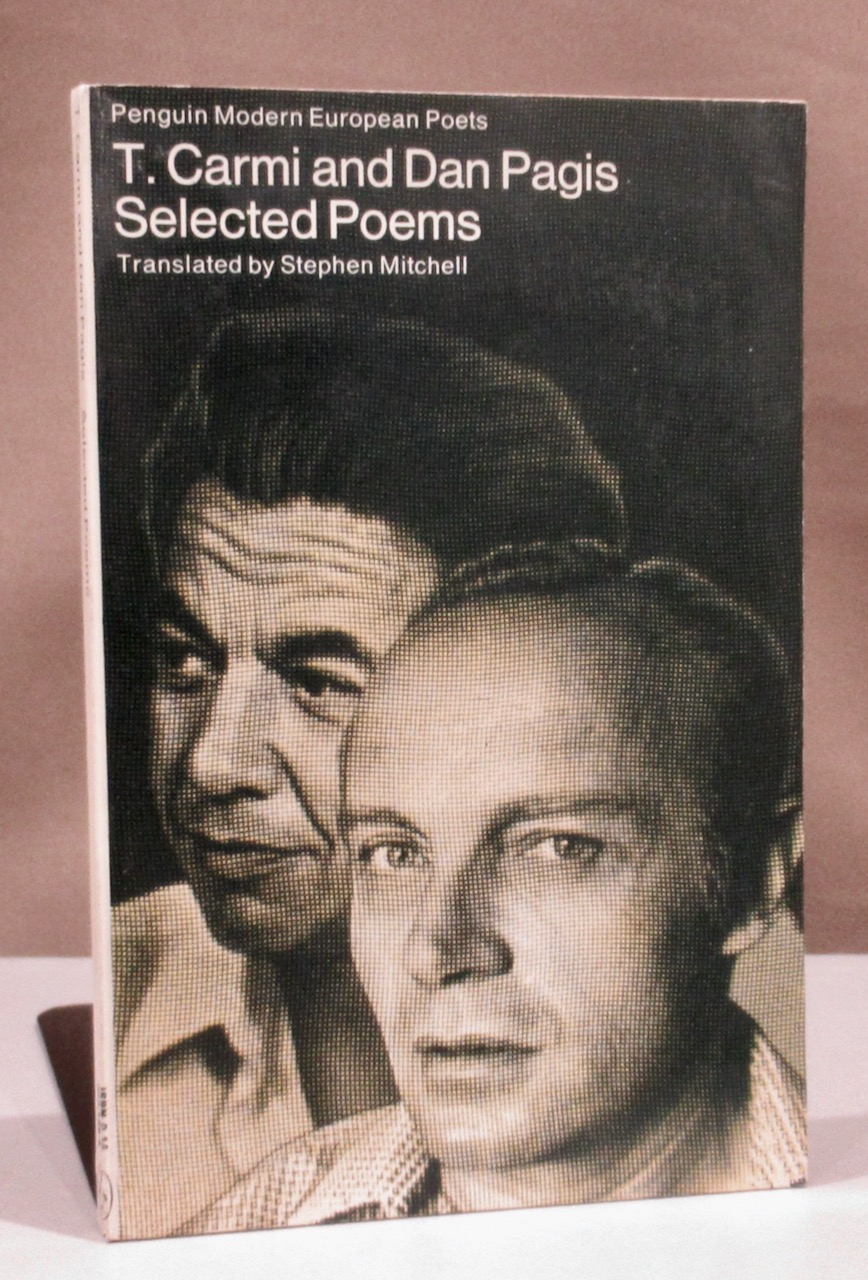
1976réf. 104233London, Penguin Books 1976. 1976. 142 p., paperback.
1990réf. 100137504Il Mulino 1990 294 pages in8. 1990. Cartonné jaquette. 294 pages.
19331st edition. Original paper wrappers. 8vo, 31 pages. An american rabbi's eerily prescient 1933 report from very early in the Nazi period in Germany. Isserman, the author, was the Rabbi of Temple Israel, St. Louis, Missouri. He was born in Antwerp, and immigrated with his family to the United States in 1906. He was ordained by Hebrew Union College and served the rabbinate in St. Louis for many decades. He participated in many civic and Jewish causes and visited Nazi Germany three times (1933, 1935 and 1937) - the first visit of which prompted the present document, in which he states there is no hope for the Jews of Germany - the government aim is their human extirpation (p. 3). His stated conclusions are that there is no hope for the Jews of Germany, that atrocities were perpetrated on Jews and other dissenters and will continue to be perpetrated, that an economic death sentence has been passed on the Jews of Germany, that only the fear of public and foreign opinion is preventing a pogrom against all the Jews of Germany, and that the Jews of Germany live under a sentence of death. Subjects: Jews -- Germany. Persecutions. OCLC: 5139787, OCLC lists 10 copies worldwide. Some tearing around staples on cover, repaired. Small tear on top of page 9, writing not affected. Few corrections to text, likely by the author. Good Condition Overall. (HOLO2-144-26)
2000réf. 100147168University of California Press 2000 380 pages 15 24x2 286x22 352cm. 2000. Broché. 380 pages.