Beer, UlrichAntiquariat.de
5233 risultati
1979rif. 191485Essen, Juristischer Fachbuchverlag, 1979.
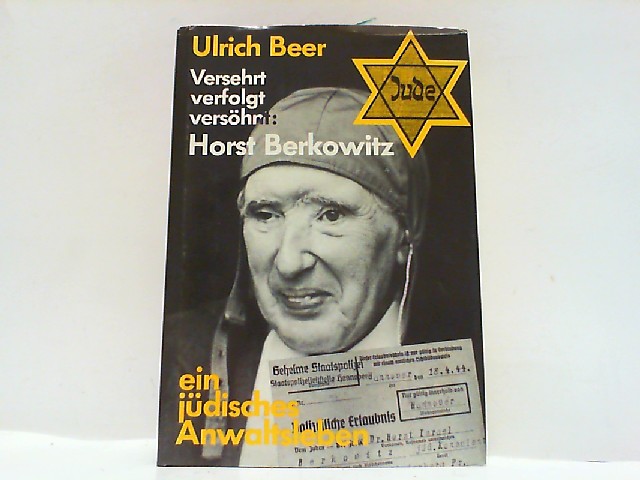
1983rif. 14020Reinbek bei Hamburg : Rowohlt 1983. 379 S. ; 22 cm, mit Schutzumschlag Pp., gebundene Ausgabe, Hardcover/Pappeinband, Schnitt bräunlich, sonst Exemplar in guten Erhaltungszustand
1995rif. 009222Wien und München, Europa Verlag, 1995. 351 S. Orig.-Pappband mit Schutzumschlag. Der Kopfschnitt etwas stockfleckig, sonst schönes, gut erhaltenes Exemplar mit nur leichten Gebrauchsspuren.
1948rif. 1160724Hamburg, Hammerich & Lesser, (1948). 63 S. OBr. (gebräunt).
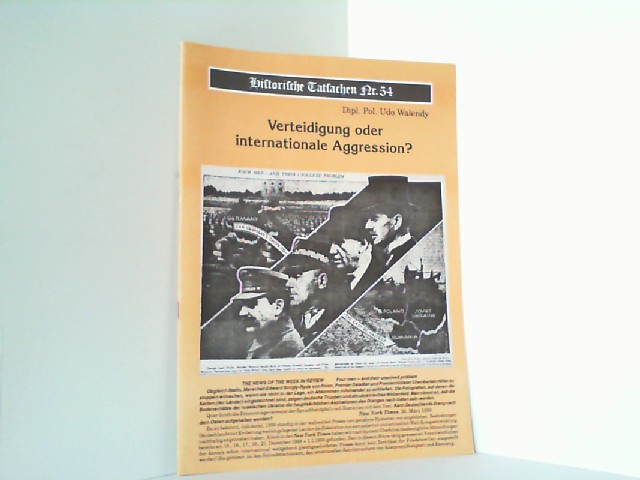
1992rif. 233572Vlotho, Verlag für Volkstum und Zeitgeschichtsforschung, 1992.
2013447pp., met enkele zw/w ills., 25cm., gecart., in de reeks "Maaslandse monografieën" nr.76, mooie staat, N88575
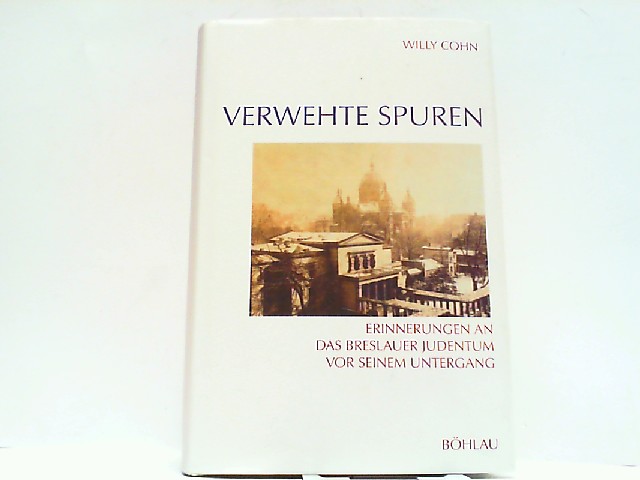
1995rif. 166724Köln, Böhlau Verlag, 1995.
199123.5x15.5 cm. XI+363 pages. Gilt hardcover with dust jacket. In good condition.
199123.5x16 cm. 11+363 pages. Gilt hardcover with dust jacket. Spine upper edge slightly bumped. Else in good condition.
1950Original Wraps. 8vo. 123 pages. 24 cm. First edition. Inscribed by the author. Title page verso: Wei oun wander; Douleur sans foyer, poe´sies. Sorrow Without a Home, post-holocaust poetry, with some pre-war poems, by Israel Aszendorf; published in Paris by the Yiddish Writers Club, illustrated by the famous Jewish artist, Benn. With frontispiece portrait of the author. Israel Ashendorf (19091956) , Yiddish poet, short story writer, and dramatist. Ashendorf grew up and lived in Lemberg (Lwow) , Galicia (now Lviv, Ukraine) , until World War II, when he fled to Uzbekistan. He spent five years in Paris and immigrated to Argentina in 1953. In Buenos Aires he served as supervisor of Jewish secular schools, taught Hebrew and Yiddish literature, and contributed to the Yidishe Tsaytung. His first poems were published in 1927, and thereafter he contributed to Yiddish periodicals in Europe, the Americas, and Israel. In 1929, he was co-editor of the literary journal Tsushtayer. Collections of his poetry were published in 1937, 1939, 1941, 1950, and 1956. His biblical dramas Der Meylekh Shoel (King Saul, 1948) and Der Meylekh Dovid (King David, 1956) express a pessimistic worldview. The posthumous collection Letste Shriftn (Last Writings, 1958) includes his poems and short stories. (EJ, 2007) Subjects: Yiddish Poetry. OCLC lists 20 copies. Front cover repair, backstrip torn at top and bottom, first page lightly torn at edge; otherwise, clean and fresh, binding firm. Good condition. (YID-18-1)
1946Later cloth. 12mo. 307 pages. 19 cm. In Swedish. Title translates to English as, We Are Hunted. OCLC lists 2 copies worldwide (National Library of Sweden, Fuller Theological Seminary) . Rebound in period cloth with original wrapper bound in. Nice, clean copy in very good condition. (HOLO2-70-16)
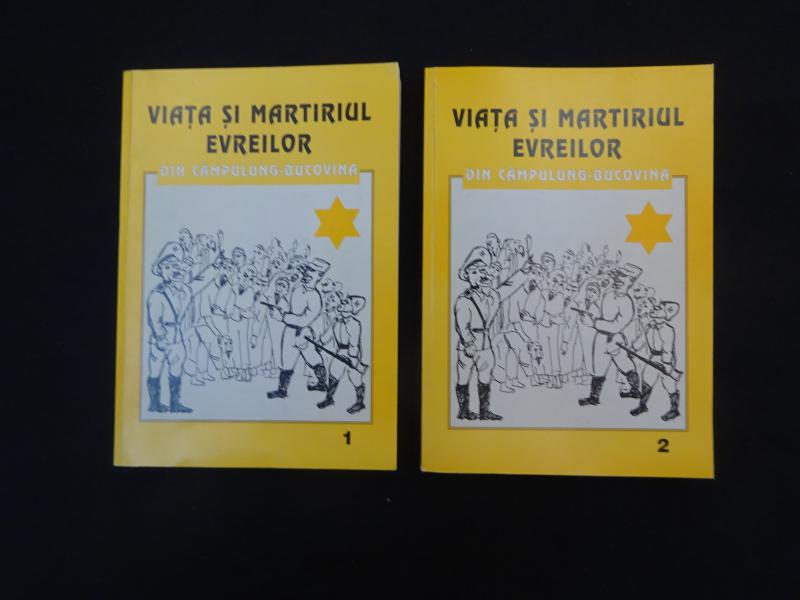
1997rif. JUDA2160Bucures?ti (Bukarest), Cicero [1997]. 751 S. in 2 Bdn., zahlr. phot. Ill., OKart. A collection of memoirs and documents on the history of the Jews in the city of Câmpulung Moldovenesc, Bukovina, mainly after 1900. They describe the anti-Jewish measures and the deportation in October 1941 of ca. 1,800 Jews from Câmpulung and its environs to Transnistria, and the suffering in the ghettos and camps there (e.g. Shargorod, Tulcin, Moghilev). Vol. 2 (pp. 353-750) presents memoirs of survivors about their families, arranged alphabetically by family name, including their fate in the Holocaust.
1948Original Wraps. 8vo. 15 pages. 21 cm. First edition. In Yiddish. 'How the Sparrows Taught Chumash'. Yiddish childrens fable. With frontispiece woodcut portrait of Shtaynbarg by Arthur Kolnik. Published in Jassy (Iasi) , Romania; a center of rich cultural activity in Yiddish in the post holocaust period. Eliezer Shteynbarg (18801932) , Yiddish writer and educator. As the most distinguished figure in the Tshernovitser Yidisher Shulfareyn (Czernowitz Association of Jewish Schools) and in the Jewish Cultural Association of Romania (founded in 1921) , Shteynbarg played a leading role in the cultural life of Romanian Jews. At a very young age, Shteynbarg had written childrens stories and plays in Yiddish for the students in the school he directed, as well as fables for adults. - YIVO Encyclopedia. Subjects: Yiddish literature Childrens. Yiddish Literature Romania. OCLC lists 7 copies. Wraps aged, lightly foxed and soiled; otherwise fresh. Good condition. (HOLO2-118-3)
1946Cloth, 8vo, 47 pages. 24 cm. In Yiddish Added title page: Jak przezylem niemiecka okupacje. SUBJECT(S): Holocaust, Jewish (1939-1945) -- Personal narratives. World War, 1939-1945 -- Personal narratives, Jewish. Originally bound in flimsy and fragile paper wrappers, this copy has been rebound in paper wrappers with original illustrated cover mounted on front. Paper browning as generally found, but solid. Good Condition. Scarce (H-40-19)
1989circa 50 schwarzweiß Abbildungen.
19848vo. X, 201 pages. Illustrated. First edition. SUBJECT (S) : Jews - Germany - Rhineland-Palatinate; Holocaust, Jewish (1939-1945) - Germany - Rhineland-Palatinate; Holocaust survivors - Germany - Rhineland-Palatinate; Rhineland-palatinate (Germany) - ethnic relations. CONTENTS: The history of Sonderburg: Jews in Sonderburg; The Nazi power structure in Sonderburg; Ethnic relations between Jews and gentiles before 1933; Jewish reactions to Nazi victimization; German reactions to the persecution of Jews; Sonderburg Jews and gentiles today; An analysis of interethnic relations in Sonderburg; Conclusion: the myth of assimilation. ISBN: 0897890477. Spine sunned, edges tanned, top corner bumped, good condition. (Holo2-12-23)
19848vo. X, 201 pages. Illustrated. First edition. SUBJECT (S) : Jews - Germany - Rhineland-Palatinate; Holocaust, Jewish (1939-1945) - Germany - Rhineland-Palatinate; Holocaust survivors - Germany - Rhineland-Palatinate; Rhineland-palatinate (Germany) - ethnic relations. CONTENTS: The history of Sonderburg: Jews in Sonderburg; The Nazi power structure in Sonderburg; Ethnic relations between Jews and gentiles before 1933; Jewish reactions to Nazi victimization; German reactions to the persecution of Jews; Sonderburg Jews and gentiles today; An analysis of interethnic relations in Sonderburg; Conclusion: the myth of assimilation. ISBN: 0897890477. Spine sunned, edges tanned, top corner bumped, good condition. (Holo2-12-23)
19511st edition. Original Wraps. 8vo. 176, [15] pages. 24 cm. In Yiddish. 'Resistance and Destruction in the Czestochowa Ghetto. ' Title page verso: Martyrologia I walka w getcie czestochowskim. Important history of the Czestochowa Ghetto, with maps, illustrations, and reproduction of documents. Published by The Jewish Historical Institute of Poland, written by Liber Brener based on the diary which he continued for a long time in the ghetto and in the camp. After the liberation, L. Brener restored his memories and verified and completed them with a series of German, Polish and Yiddish documents as well as testimony from other Jewish survivors of the Czenstochower ghetto. Subjects: Jews - Poland - Czestochowa. Holocaust, Jewish (1939-1945) - Poland - Czestochowa. Ethnic relations. Jews. Holocaust, Jewish (1939-1945) 1939 - 1945 Czestochowa (Poland) - Ethnic relations. (OCLC)19307926. Ex-library with only pencil on title page. Other than slight browning of pages, this is in near fine condition. (HOLO2-117-47B-+)
1936Original blue cloth, 12mo; 557 pages. As Hitler's power in Germany grew, it was important for Jews in Europe and America to assert the proud history of Jewish communities throughout Europe, but especially in the German-speaking lands. Part of the Jewish Communities Series. A very nice copy with bright gilt on spine. Very Good Condition (Comhist1-6) xx
1989[IN HEBREW]. [SIGNED BY THE AUTHOR]. 210x140 mm. 194 pages. Hardcover. Cover corners slightly bumped. Spine top edge slightly bumped. Else in good condition.
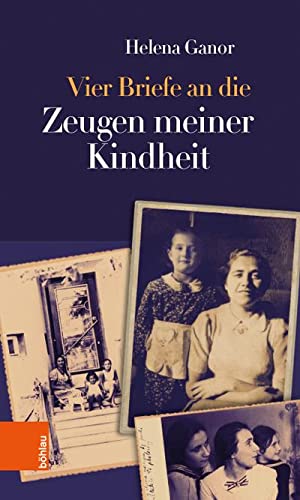
rif. 270827Köln: Böhlau 2021. 206 S. Br. *sehr gutes Expl.*.
1948rif. 007445München-Obermenzing, Hans von Weber, 1948. 75 S. Orig.-Broschur. Die Abbildungen zeigen Fotos des Lagers, die beiden Farbtafeln zeigen die farbigen Häflingskennzeichnungen. Der Schriftsteller und Journalist E. de Martini (1902-1969) emigrierte zunächst in die Tschechoslowakei. Im Mai 1940 wurde er in Königshütte wegen illegaler politischer Tätigkeit festgenommen und im Gestapogefängnis Montelupich inhaftiert. Von dort wurde er als politischer Häftling nach Auschwitz überstellt, wo er am 18. Juli 1940 ankam und als politischer Häftling mit der Nummer 1402 in das Stammlager eingewiesen wurde. Zunächst musste er Zwangsarbeit im Bauhofkommando und anderen Arbeitskommandos verrichten, bis er im Sommer 1942 im Krankenbau des Stammlagers als Häftlingsschreiber beziehungsweise dort im Herbst 1942 schließlich als Blockältester eingesetzt wurde. Im Februar 1943 folgte seine Entlassung und Einziehung zur Wehrmacht, wo er im Reichsgebiet eingesetzt war (Wikipedia). Ein gut erhaltenes Exemplar mit nur leichten Gebrauchsspuren. Selten.