5.738 Ergebnisse
1989Best.-Nr. 009431Frankfurt am Main und Wien, Büchergilde Gutenberg, 1989. 410 S. Orig.-Leinenband mit Schutzumschlag. Der Kopfschnitt etwas stockfleckig, sonst schönes, gut erhaltenes Exemplar mit nur leichten Gebrauchsspuren.
1978Paper wrappers, oblong 8vo, 22 pages. Parallel text in English, French, German, Polish, Russian and Yiddish. SUBJECT (S) : World War, 1939-1945 -- Jews. Jews -- Poland. Mostly photographs with accompanying text. OCLC lists 8 copies worldwide. Creases on corners of covers, otherwise good condition. (HOLO2-13-9)
2006xxxiii, 654 p. : illus., map ; 22 cm. Hardcover Very good condition good
200524.5x16.5cm. XVI+192 pages. Hardcover. In good condition.
1977245x225 mm. No pagination. Hardcover with dust jacket. Jacket worn and stained. Cover corners slightly bumped. Inner cover and white pages age stained. Pages slightly yellowing. Else in good condition.
Signed by author. 20x13.5 cm. 261 pages. Softcover. In a good condition.
19481st edition, original portfolio wrappers, 8vo. 53 pages, plus many blank and unnumbered pages. Illustrations throughout. In French. Title translates as, Without Flowers Nor Crowns. This book is told in the first person, in a succession of scenes, impressions, portraits, thoughts, reflections and emotions that, in chapters very brief and titled, make up a devastating panorama about Elinas experience in Auschwitz. (elcultural.com 2018). "When I returned from Auschwitz in 1945, I felt what I had just experienced with such acuteness that it was impossible for me to keep it to myself. I recorded it in notes and drawings. This constituted Without flowers nor Crowns. I do not regret having written these notes as soon as I returned from camp because, over time, memories become distorted, they become watered down or dramatized, but always move away from the truth. (...)" Odette Elina (1910-1991) was a painter, was deported by the Gestapo to Auschwitz-Birkenau in April 1944 as a communist, but above all and above all because she was Jewish. In 1940, she entered the French Resistance network, she had had an initial function to establish the liaison between the writers residing in the South zone (notably Mauriac, Aragon and Julien Benda) before entering the Secret Army in 1942. We actually know very little about the biographical career of Elina before and after her deportation, apart from her exacerbated desire on leaving the Camp to testify to her life in the Camp. Without Flowers nor Crowns, [was] originally published in 1948 in the wake of the first testimonies on the Holocaust that appeared in the post-war years..." (Isabelle Dumont). SUBJECT(S): World War, 1939-1945 -- Prisoners and prisons, German. Guerre mondiale (1939-1945) -- Camps de concentration -- Récits personnels. Französin. Elina, Odette. Auschwitz (Concentration camp). Konzentrationslager. OCLC: 58452978 (2005 edition by later publisher, with the OCLC record incorrectly listing the original 1st edition as 1947 instead of 1948). OCLC lists no 1948 (or 1947) copies online. Pages are loose as issued, in an illustrated portfolio. This book is one of 270 numbered copies. Illustrated with 12 inset drawings, one reproduced on the cover; the title page mentions 13 drawings (?), but there are only 12, the same number as reproduced in the 1982 reissue [and also in the other copy of this first edition we examined], so "13" would seem to be incorrect or possibly counting the repeated drawing on the cover. Portfolio is slightly rubbed with short closed tear at lower front inside fold and spine has some creasing, else Very Good Condition. Important and exceedingly rare (HOLO2-141-27-IIIXX)
2002Original illustrated wraps. 4to. 44 pages. 28 cm. First edition. Catalog of two exhibitions, Return to Vilna I and Return to Vilna II, held between 31 August and 20 November, 2002 at Pucker Gallery, Boston, Mass. With 67 full color illustrations. Samuel Bak was born in Vilna. A few years later the area was incorporated into the independent republic of Lithuania. He was eight when the Germans occupied the city. Bak began painting while still a child and, prompted by the well-known Yiddish poet Abraham Sutzkever, held his first exhibition (in the Vilna ghetto) in 1942 at the age of nine. From the ghetto the family was sent to a labor camp on the outskirts of the city. Bak's father managed to save his son by dropping him in a sack out of a ground floor window of the warehouse where he was working; he was met by a maid and brought to the house where his mother was hiding. His father was shot by the Germans in July 1944, a few days before Soviet troops liberated the city. His four grandparents had earlier been executed at the killing site outside Vilna called Ponary. After the war, the young Bak continued painting at the Displaced Persons camp in Landsberg, Germany (194548) , where he also studied painting in Munich. In 1948, he and his mother immigrated to Israel, where he studied for a year at the Bezalel Art School in Jerusalem. After fulfilling his military service, he spent three years (195659) at the École des Beaux-Arts in Paris. He then moved to Rome (195966) , returned to Israel (196674) , and lived for a time in New York City (197477) . There followed further years in Israel and Paris, then a long stay in Switzerland (198493) . From 1993 Bak lived and worked outside Boston, in Weston, Massachusetts. (EJ 2007) Subjects: Bak, Samuel - Exhibitions. Holocaust Art - Vilna. OCLC lists 21 copies. Light wear to wraps, otherwise fresh and clean. Very good + condition. (HOLO2-108-44)
1973Original wrappers, 8vo. Pages 20-34, [4], 35-49, [34 pages total]. 4 leaves of plates, black and white; photograph of Salman Schocken, 4 scans of documents: "Schocken Bucherei: Prospectus and Initial Catalogue Lisitings", "Pocket Calander for 5699 (1938/39) Front and Back Covers", Invitation to Readers to Add Their Names to the Mailing List", "Dust Jacket for Buber's Collection of Essays on Hasidism. " "Offprinted from Harvard Library Bulletin, volume XXI, number 1, January, 1973" (on cover) "In 1915, Schocken co-founded the Zionist journal Der Jude (with Martin Buber) . Schocken would support Buber financially, as well as other Jewish writers such as Gerschom Scholem and S. Y. Agnon. In 1930 he established the Schocken Institute for Research on Hebrew Poetry in Berlin, a research center intended to discover and publish manuscripts of medieval Jewish poetry. The inspiration for this project was his longstanding dream of finding a Jewish equivalent for the foundational literature of Germany, such as the German epic poem The Nibelungenlied. In 1931, he founded the publishing company Schocken Verlag, which printed books by German Jewish writers such as Franz Kafka and Walter Benjamin, making their work widely available; they also reprinted the Buber-Rosenzweig translation of the Bible. These initiatives earned him the nickname "the mystical merchant" from his friend Scholem. In 1933, the Nazis stripped Schocken of his German citizenship. They forced him to sell his German enterprises to Merkur AG, but he managed to recover some of his property after World War II. " (Wikipedia) SUBJECT(S) : Publishers and publishing -- Germany -- Berlin -- History. Jewish businesspeople -- Germany -- Biography. Biographies. 1918-1945. OCLC: 77906553, OCLC lists 5 copies worldwide (Grolier Club, Jewish Theog Seminary of Amer Libr, Yivo Inst For Jewish Res, Hebrew Union Col, and College of Charleston. ) Ex library stamp on cover, no other library marks, very light wear, Very Good Condition Overall. (HOLO2-159-1-1)
2022This is the terrifying story of Maria Mandl, whose career from a country girl to a death "manager" shows that cruelty has no gender and that unimaginable evil can have a gentle face. Of the forty million German women, one third were members of the NSDAP and thirty thousand were members of the SS entourage. Every tenth employee of the surveillance staff in the concentration camp was a woman. This job created an opportunity for social advancement, enrichment, power, and opening to new fields of activity. In addition to women who were forced to do the job, many volunteered to join the SS. One of them was Maria Mandl. "I chose this job because I heard that concierges in concentration camps earned well and I [2 entries in Worldcat] Book
1981Best.-Nr. 67987ABBerlin, Deutscher Verlag der Wissenschaften, 1981. 8°. 155 S. mit 52 Abb. auf Tafeln und Karte im Anhang. Original-Karton.
1977Mit 52 Abbildungen und 1 Lagerskizze.
1962Best.-Nr. 67992ABBerlin, Kongress-Verlag, (1962). 4°. 186 S. mit Holzschnittinitialien und 52 Photos von Ernst Schäfer. Original-Leinenband mit OUmschlag.
1962Best.-Nr. 112910ABBerlin, Kongress-Verlag, (1962). 4° (33,5 cm x 23,5 cm). 186 S. mit Holzschnittinitialien und 52 teils ganzseitigen Photos von Ernst Schäfer. Original-Leinenband mit OUmschlag.
19451st edition. Paper Wrappers, 8vo, 106 pages. Includes maps. 24 cm. In Danish. SUBJECT(S): World War, 1939-1945 -- Denmark. Geographic: Denmark -- History -- German occupation, 1940-1945. Some stains to covers, Very Good Condition. (H-41-9)
2008170x240 mm. 269 pages. Contains illustrations. Soft cover. Spine top edge slightly worn. Else in good condition.
1969(FT) Publishers cloth. 8vo. 229 pages. 23 cm. First edition. In Yiddish. Published by the South African Yiddish Cultural Federation. Authors first book. This volume contains detailed stories and anecdotes from the authors early years in the Shtetl of Tykocin, with vivid descriptions of his fathers court and the personages who came there, as well as attending synagogue and Yeshiva, in the period just before and during the first world war. The book is commemorated to those loved ones of the author who perished in the holocaust. Inscribed by author on title page. Subjects: Jews - Poland - Tykocin. Tykocin (Poland) - Ethnic relations. OCLC lists 21 copies worldwide. Dustjacket lightly aged and soiled. Endpages and outer edges soiled. Internally clean and fresh. Good condition. (HOLO2-95-47)
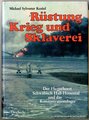
1989Best.-Nr. 77502Sigmaringen. Jan Thorbecke Verlag. 1989. 246 Seiten u. zahlreichen Kunstdrucktafeln. Mit 83 Abbildungen auf den Tafeln u. mehreren faks. Abbildungen u. Karten im Text. Roter Original-Leinwand-Einband u. farbig ill. Schutzumschlag. Sehr gutes Exemplar. 24x17,5 cm
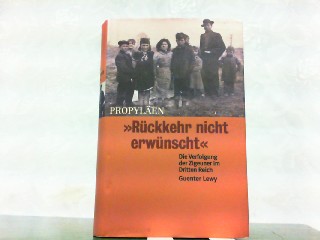
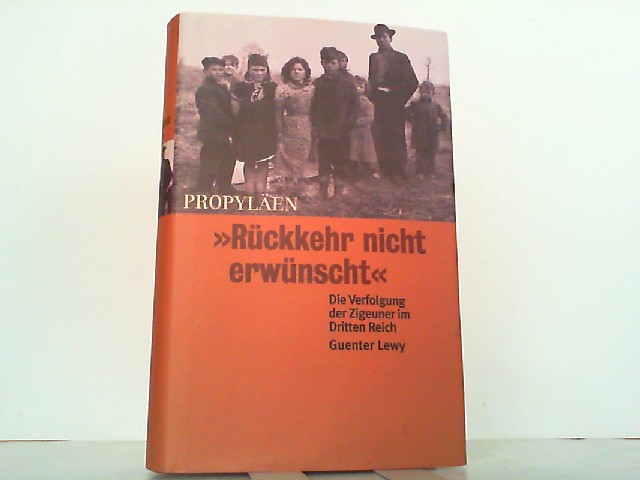
2000Best.-Nr. 07053München, Propyläen, 2000. PP, OU, 471S, gutes Exemplar
2001Best.-Nr. 76505München, Propyläen Verlag, 2001.
2001Best.-Nr. 167010Propyläen Verlag, 2001.
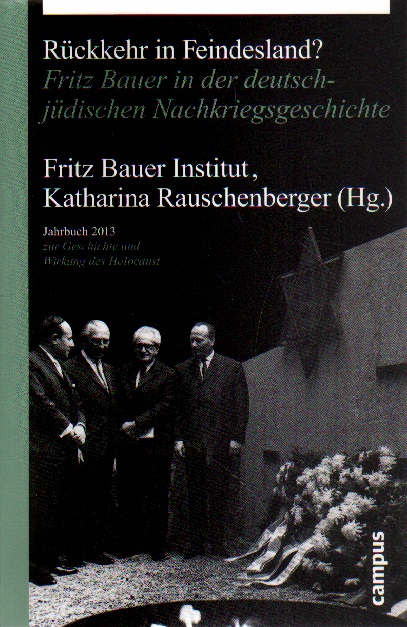
2013Best.-Nr. 97187Frankfurt, Campus Verlag, 2013. 237 S. 8° Oktav, Softcover/Paperback
199930x23 cm., 295 pp., hardcover, cover and spine slightly worn on edges, damaged back cover, slightly yellowing pages. else in good- condition.
1932Best.-Nr. 23837BHalle a.S.:, Marhold., 1932. 75,(1) S., 8 Tafeln. Halbleinen mit Deckelschildchen. Guter Zustand. (= Aus der Röntgenabteilung des Städt. Krankenhauses am Urban, Berlin).
75,(1) S., 8 Tafeln. Halbleinen mit Deckelschildchen. (= Aus der Röntgenabteilung des Städt. Krankenhauses am Urban, Berlin). Guter Zustand. Martin Israelski: Geboren 07.06.1897 - Transport XXIV/1, nr. 167 (Amsterdam -> Theresienstadt) - Transport El, nr. 562 (Theresienstadt -> Auschwitz) - Ermordet (holocaust.cz/de/opferdatenbank/opfer/150343-martin-israelski)