5 776 résultats
1990réf. 009087München, List, 1990. 286 S., 1 Blatt. Orig.-Pappband mit Schutzumschlag. Ein schönes, gut erhaltenes Exemplar mit nur leichten Gebrauchsspuren.
2002Softbound. 8vo. 182, [4] pages. 22 cm. First Belorussian edition. Title translates as: The Minsk ghetto; Soviet-Jewish partisans against the Nazis. In Belorussian, With four pages of black and white photographic plates. Hersh Smolar (19051993) , was a Polish and Soviet Yiddish writer and editor. Born to a poor family in the town of Zambrów, Poland, Hersh Smolar (also rendered Smolyar) attended primary school until the age of 11, when he began working, and soon became involved in revolutionary activities. He was a leader of the local branch of the Jewish Socialist Youth Association from 1918 to 1920. During the 1920 PolishSoviet War, Smolar belonged to a revolutionary committee that had formed in Zambrów when the Red Army had occupied the town. Smolar fled to Soviet Russia in 1921, initially living in Kiev. He moved to Moscow two years later, after being admitted to the Yiddish department at the Communist University for the Peoples of the West (known in Yiddish as Mayrevke) , one of the universities run by the Comintern. Forced to interrupt his studies the next year, Smolar was dispatched to Kharkiv (then the Ukrainian capital) , where he was given the task of reinforcing the local Yiddish-speaking Communist cadre. He helped to edit the newspaper Yunge gvardye (Young Guard) , which targeted Yiddish-speaking youth. He returned to Moscow in 1926 and continued his studies at the Communist University, coediting its Yiddish journal Mayrevnik (Student of the Mayrevke) . Smolar served as a Comintern agent in Poland from 1928 to 1939; twice arrested, he spent six years in prison. After World War II began, he fled to Bialystok (then in Soviet-occupied territory) , where he gained prominence among refugee Polish Yiddish writers and as editor of the Communist newspaper Byalistoker shtern (Bialystok Star) . Smolar did not manage to evacuate when Germany attacked the Soviet Union in 1941. A leading member of the resistance in the Minsk ghetto, he became commissar of a partisan group operating in Belorussian forests. His wartime memoirs, Fun Minsker geto (From the Minsk Ghetto) , were published by Emes in Moscow in 1946. Smolar and his wife, Walentyna Najdus, subsequently returned to Poland, where he held key positions in the Jewish community as chair of the Jewish Cultural Alliance and editor of the Yiddish newspaper Folks-shtime. He published a collection of partisan stories, Yidn on gele lates (Jews without Yellow Patches; 1948) , and the play A posheter zelner (An Ordinary Soldier; 1952) . His Folks-shtime editorial Undzer veytik un undzer treyst (Our Pain and Our Comfort; 4 April 1956) , which was reprinted all over the world, became the first semiofficial source of information on the liquidation of Soviet Yiddish cultural institutions and their leading personalities between 1948 and 1952. Indeed, this editorial triggered a radical decline in the number of Yiddish-language organizations that supported the Soviet Union. As a result of the 1968 anti-Jewish campaign and the involvement of his sons (Aleksander [1940 ] and Eugeniusz) in dissident student circles, Smolar acknowledged that his life in Poland had become untenable. He left for Israel in 1971. (YIVO Encyclopedia) Subjects: Jews - Persecutions - Belarus - Minsk. Holocaust, Jewish (1939-1945) - Belarus - Minsk - Personal narratives. World War, 1939-1945 - Jewish resistance - Belarus - Minsk. Smolar, Hersh, (1905-1993) . Light shelf wear to covers, with lightly bumped lower back corner on cover. Very clean. Very good + condition. (HOLO2-92-2)
1995réf. 35180Berlin ; Frankfurt am Main : Ullstein, 1995. 160 S. Ill., Kt. 8°. Geb. in ill. orig. engl. Broschur.
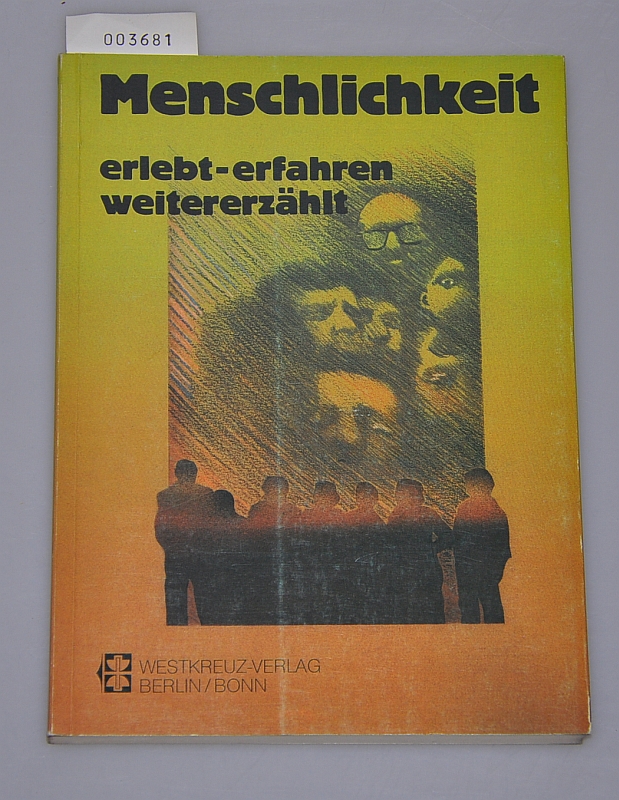
1986réf. 03681Berlin, Westkreuz, 1986. kt, 155S, gutes Exemplar
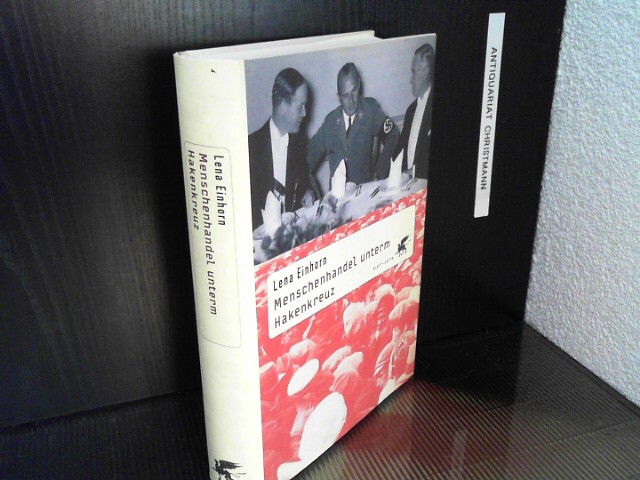
2002réf. 17971Stuttgart : Klett-Cotta 2002. 560 S. :zahlr. schw.-w. Abb. ; 23 cm, mit Schutzumschlag, Schutzumschlag mit leichten Gebrauchsspuren Pp., gebundene Ausgabe, Hardcover/Pappeinband, Buch als Mängelexemplar gekennzeichnet, sonst guter Zustand
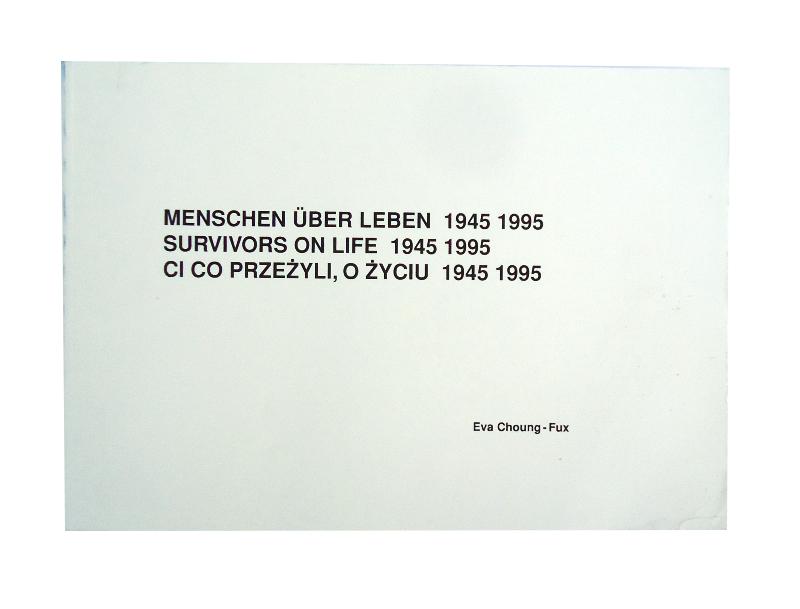
1995réf. 5637Wien, Wiesenthal Center, 1995. Quer 4°. Dreisprachiger Katalog zur Wanderausstellung 1995. Durchgehend mit s/w-Fotos bebildert. 401 S, 4 Bl. Orig.-Brosch. Mit einem Einführungstext von Simon Wiesenthal. - Die eindrucksvollen Porträts stellen - zusammen mit den Schilderungen der abgebildeten Personen - einen Querschnitt durch das Schicksal von Menschen in Polen, Holland, Österreich und der Slowakei dar: Überlebende des Holocaust und Verfolgte sowie Menschen der weietern Genaration solcher Familien. Eine Einbandecke eselsohrig.
1980réf. 1164325Berlin, Oberbaum Vlg, 1980. 150 S., zahlr. Abb. OKart.
2001Reichlich in Schwarzweiß illustriert.
1995réf. 20399Wien, Europaverlag, (1995). 800 S. 8°. OLwd. (minimale Gessprn.) mit OU.
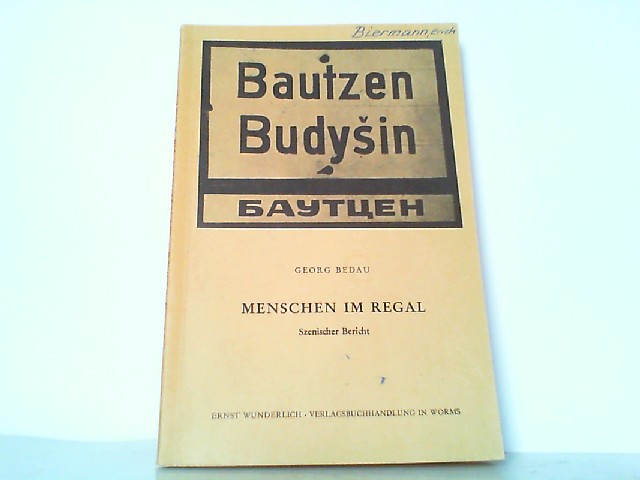
1961réf. 207258Ernst Wunderlich. Verlagsbuchhandlung in Worms, 1961.
1969réf. 009149Gütersloh, Bertelsmann Sachbuchverlag, 1969. 191 S. Großformatiger Orig.-Pappband mit Schutzumschlag.Ein schönes, gut erhaltenes Exemplar mit nur leichten Gebrauchsspuren.
1969réf. 1165700Gütersloh, Bertelsmann, (1969). Gr.-8vo. 191 S. m. zahlr. Abb. OPp. m. OUmschl.
Reichlich illustriert mit schwarzweiß Fotos.
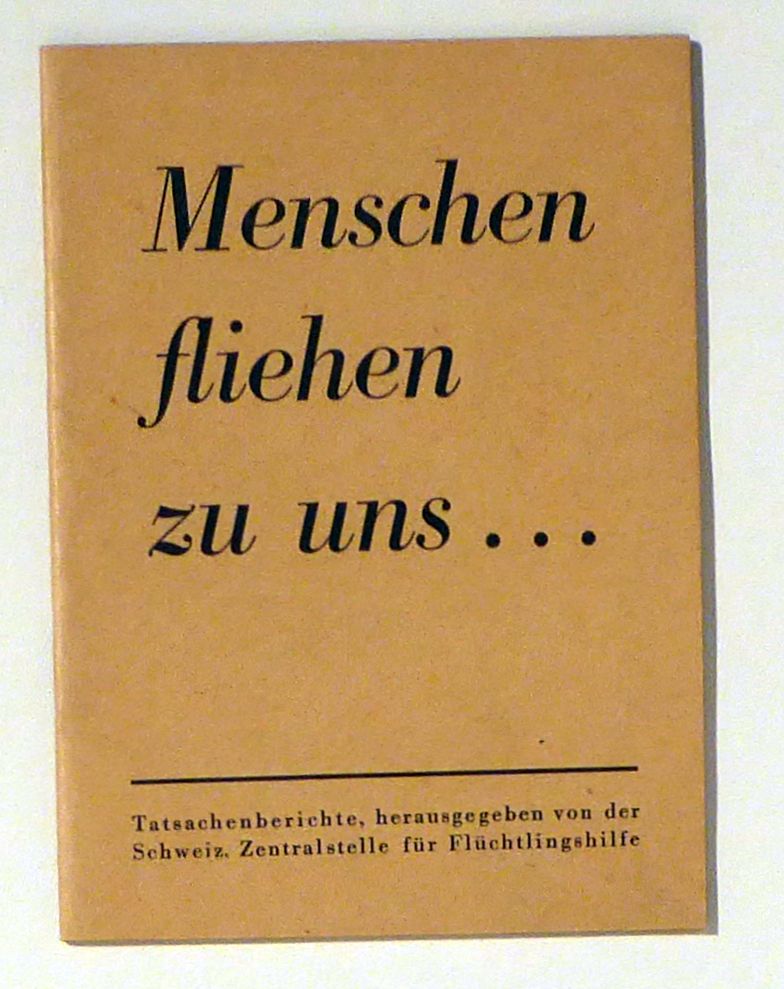
1944réf. 144893(Bern), Schweiz(erischen) Zentralstelle für Flüchtlingshilfe, (1944). 32 S., mit zahlreichen Abbildungen nach Zeichnungen von Otto Baumberger im Text sowie einer Illustration nach Aldo Patocchi auf dem Umschlagrückseite. Or.kt., kl.8°. Von 20 privaten schweizerischen Hilfswerken, die sich in der "Schweizerischen Zentralstelle füre Flüchtlingshilfe" zusammengeschlossen hatten, herausgegebene Textsammlung mit Berichten von Flüchtlingen, die während des Dritten Reichs, respektive des Zweiten Weltkriegs in der Schweiz Zuflucht suchten. Neben anonymen Berichten der verschiedenen Hilfswerke, als Hauptbeitrag von Hans Zbinden, "Die grosse Heimatlosigkeit". Die Zentralstelle war politisch und konfessionell neutral und vertrat die verschiedenen, teils politischen, teils religiösen Hilfswerke gegenüber den Behörden und in der Öffentlichkeit. Obschon in grosser Auflage verteilt, heute selten. Softcover Minim angestaubt.
1990réf. 62904Berlin: Rütten & Loening, 1990. 225 S. 19 x 12 cm. Original-Pappeinband mit Original-Schutzumschlag.
1985Publishers cloth. 8vo. 171, [1] pages. 21 cm. First edition. In Norwegian. Title translates as: People among the people: a book on anti-Semitism and xenophobia. Written by Leo Eitinger (1912 - 1996) , Holocaust survivor, Norwegian psychiatrist, and Human Rights advocate. He devoted a long period studying late-onset psychological trauma amongst Holocaust survivors, wherein Holocaust survivors like Paul Celan, Primo Levi and many others committed suicide due to holocaust trauma, several decades after the experience, towards late adulthood. Leo Eitinger was born in Lomnice, Moravia, at that time a town in the Austrian-Hungarian empire; currently the capital of Jihomoravský kraj and belonging to the Czech Republic. He studied medicine at the Masaryk University of Brno, graduated in 1937, and was drafted as an officer into the Czech Air Force. In 1939 he fled Nazi persecution of Jews and came to Norway as a refugee with the help of Nansenhjelpen. Upon arriving in Norway, he arranged for Jewish children to escape from Czechoslovakia to settle in the Jewish orphanage in Oslo. He was given permission to work as a resident in psychiatry in Norway in Bodø, but the permission was revoked by the Nazis after they invaded the country in 1940. He stayed underground from January 1941 until he was arrested in March 1942. He was imprisoned in various places throughout Norway and was deported on the ship Gotenland on February 24, 1943, arriving by train via Berlin at the concentration camp at Auschwitz (where the number 105268 was tattoed on his arm) and was later moved to Buchenwald. Of the 762 Jews deported from Norway to German concentration camps, only 23 survived - Leo Eitinger was one of them. After returning to Norway he specialised in psychiatry. In 1966 Leo Eitinger was appointed professor of psychiatry at the University of Oslo and became Head of the University Psychiatric Clinic. After the war Leo Eitinger allocated all his time and efforts to the study of human suffering with emphasis on clinical psychiatry, in particular victimology and disaster psychiatry. He conducted several landmark studies about the long-term psychological and physical effects of extreme stress and also about being a refugee. Some of the major works have been published; e. G. Concentration camp survivors in Norway and Israel (1964) ; Mortality and morbidity after extreme stress (1973) ; Strangers in the world (1981) (University of Oslo description) Subjects: Antisemitism -- History. Race Relations. Jews. Popular Works [PT]. Sociology. OCLC lists 16 copies. Pages lightly aged, contain consistent penciled marks throughout, and penciled notes on endpages. Otherwise fresh. Good condition in good jacket. (HOLO2-104-4)
1981Original Softcover. 8vo. 82 pages. Illus. 20 cm. In the original Danish. First edition. First person account of Melanie Oppenhejm who, after helping to save many Jewish childrens lives by helping them flee to Denmark, was captured by Nazi forces and sent to Theresienstadt. Title translates to English as, Man Trap: On Life in the Concentration Camp Theresienstadt. SUBJECT (S) : Holocaust, Jewish (1939-1945) -- Denmark -- Personal narratives. Jews -- Denmark -- Biography. Named Person: Oppenhejm, Mélanie. Named Corp: Theresienstadt (Concentration camp) . Geographic: Denmark -- Ethnic relations. OCLC lists ten copies worldwide. Some wear to cover. Internal pages are nice and clean; binding is tight. Very good condition. (HOLO2-77-57)
19371st edition. Original paper wrappers. 8vo, 4-8 pages each. Conservative Jewish men's group newsletter from the Holocaust period from the the second synagogue founded in New York (1825) and the third-oldest Ashkenazi synagogue in the United States. "The object of the 'Tattler' will be to provide the members with a regular source of information and entertainment....The Pogroms in Russia during the Czarist regime or the activities of the Zionist movement in recent years had no such effect on the consciousness of the average American Jew except to stir a sense of pity and sympathy for the afflicted ones. But the cruel, heartless persecutions of the Jews in Germany by Hitler and his crew, caused a stirring in the blood of Native Americans of Jewish birth that made them turn about and recall the religion of their fathers and the God of Israel. We of The Men's Club of the Congregation B'nai Jeshurun welcome with open arms all those who are returning to the fold." Most issues include commentary on the increasing oppression of the Jews in Germany; other issues discussed include some current Jewish news, some retelling of Jewish history, congregation news, editorials, fun facts, jokes with lessons. OCLC: 944959016, OCLC lists 2 holdings worldwide (JTS & USHMM), though these holdings appear to be incomplete. First issue shows edgewear, other issues show only creases from folding, touch of wear, good quality paper with just the slightest toning. About Very Good Condition Overall. Rare (HOLO2-159-22A)
19371st edition. Original paper wrappers. 8vo, 6 pages. Includes a recap of a round table on Labor Relations and a talk given by Attorney General John J. Bennett Jr. Conservative Jewish mens's group newsletter from the Holocaust period from the the second synagogue founded in New York (1825) and the third-oldest Ashkenazi synagogue in the United States. "The object of the ‘Tattler' will be to provide the members with a regular source of information and entertainment…. The Pogroms in Russia during the Czarist regime or the activities of the Zionist movement in recent years had no such effect on the consciousness of the average American Jew except to stir a sense of pity and sympathy for the afflicted ones. But the cruel, heartless persecutions of the Jews in Germany by Hitler and his crew, caused a stirring in the blood of Native Americans of Jewish birth that made them turn about and recall the religion of their fathers and the God of Israel. We of The Men's Club of the Congregation B'nai Jeshurun welcome with open arms all those who are returning to the fold. " Issues include some current Jewish news, some retelling of Jewish history, congregation news, editorials, fun facts. OCLC: 944959016, OCLC lists 1 copy worldwide (JTS) . Very Good Condition Overall. Rare. (HOLO2-159-23)
19401st edition. Original paper wrappers. 8vo, 6 pages. Includes recap of talk given by Father Kernan on "The Unchristian Front in America, " and a short article by Dr. Solomon S. Gross on The National Conference for Palestine. Conservative Jewish men's group newsletter from the Holocaust period from the the second synagogue founded in New York (1825) and the third-oldest Ashkenazi synagogue in the United States. "The object of the 'Tattler' will be to provide the members with a regular source of information and entertainment....The Pogroms in Russia during the Czarist regime or the activities of the Zionist movement in recent years had no such effect on the consciousness of the average American Jew except to stir a sense of pity and sympathy for the afflicted ones. But the cruel, heartless persecutions of the Jews in Germany by Hitler and his crew, caused a stirring in the blood of Native Americans of Jewish birth that made them turn about and recall the religion of their fathers and the God of Israel. We of The Men's Club of the Congregation B'nai Jeshurun welcome with open arms all those who are returning to the fold." Issues include some current Jewish news, some retelling of Jewish history, congregation news, editorials, fun facts. OCLC: 944959016, OCLC lists 1 copy worldwide (JTS). Very Good Condition Overall. Rare. (HOLO2-159-24)
19381st edition. Original paper wrappers. 8vo, 6 pages. Includes recap of round table on "The Economic Situation- Its Effect Upon Minority Groups. " Conservative Jewish men's group newsletter from the Holocaust period from the the second synagogue founded in New York (1825) and the third-oldest Ashkenazi synagogue in the United States. "The object of the 'Tattler' will be to provide the members with a regular source of information and entertainment....The Pogroms in Russia during the Czarist regime or the activities of the Zionist movement in recent years had no such effect on the consciousness of the average American Jew except to stir a sense of pity and sympathy for the afflicted ones. But the cruel, heartless persecutions of the Jews in Germany by Hitler and his crew, caused a stirring in the blood of Native Americans of Jewish birth that made them turn about and recall the religion of their fathers and the God of Israel. We of The Men's Club of the Congregation B'nai Jeshurun welcome with open arms all those who are returning to the fold." Issues include some current Jewish news, some retelling of Jewish history, congregation news, editorials, fun facts. OCLC: 944959016, OCLC lists 1 copy worldwide (JTS). Very Good Condition Overall. Rare. (HOLO2-159-25)
1920réf. 1161048Berlin, Verlag Neues Vaterland, (1920). Gr.-8vo. 111 S. OPp. (braunfl., Vordergelenk gelockert, S. gebräunt).
réf. 1230300Peter Lang, 04.2023. 262 Seiten paperback