DECKE, BETTINA.MareMagnum
Waco, LauraAntiquariat.de
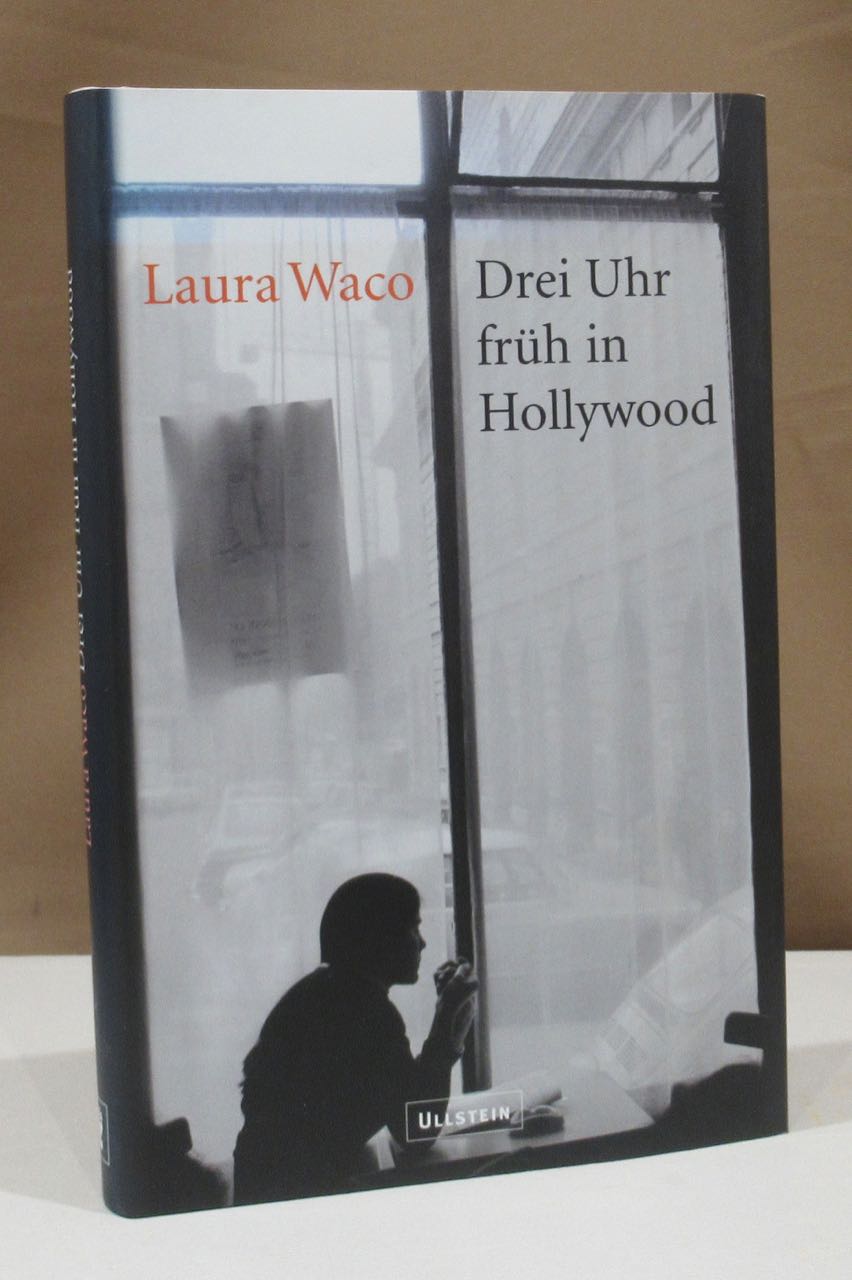
Drei Uhr früh in Hollywood.
2004réf. 99196München, Ullstein 2004. 2004. 153 S., 1 Bl., Orig.-Pappband mit Orig.-Umschlag.
Antiquariat Dieter Eckert · Allemagne10,00 €
5 661 résultats
1998Mit zahlreichen Abbildungen.
1998Mit zahlreichen Abbildungen.
2004réf. 99196München, Ullstein 2004. 2004. 153 S., 1 Bl., Orig.-Pappband mit Orig.-Umschlag.
21x16cm. 220 pages. Hardcover with dust jacket. Cover corners slightly bumped. Else in good condition.
1989réf. 008932München, Adalbert Stifter-Verein, 1989. 256 S. Großformatige Orig.-Broschur. Ein schönes, gut erhaltenes Exemplar mit nur leichten Gebrauchsspuren.
1966(FT) (FT) Cloth, 8vo, 215 pages, in Yiddish, with pictures, Title on title page verso: Drai: three, Biography of Pola Elster, Hersh Berlinski and Eliyahu Erlikh, who were all three ambitous, political and active in the Warsaw Ghetto Uprising. All three of them were killed in 1944. SUBJECT(S) : Jews -- Poland -- Biography. Holocaust, Jewish (1939-1945) -- Poland. Covers worn, some staining to edges, hinge repair, otherwise very clean copy in very good condition (HOLO2-98-21xx)
1998IN HEBREW. 135X210 mm. 263+VIII pages. Soft cover corners and edges slightly wrinkled. Spine slightly wrinkled. Else in good condition.
1972Original Wraps. 8vo. 74 pages. 23 cm. First edition. In Yiddish, with some Hebrew. Le-zikhro shel Aleksander Libo; In memory of Dr. Alexander Libo. Published by the Vilna Jews Association in Israel. Profusely illustrated. Memorial book for Dr. Alexander Libo, a physician in the Vilna ghetto resistance underground. Subjects: Libo, Alexander, 1890-1970. Partisans Vilna Ghetto. OCLC lists 12 copies. Light wear to wraps, otherwise clean and fresh. Very good condition. (HOLO2-118-5)
19551st edition. Original paper wrappers. 8vo. 15 pages, 23 cm. In English. A teachers guide to a filmstrip intended to be shown to students by the Union of American Hebrew Congregations. The guide includes paragraphs referencing various scenes in the filmstrip. Baeck (1873-1956) was a 20th-century German rabbi, scholar and theologian who served as leader of Liberal Judaism (Wikipedia, 2018) . SUBJECTS: Baeck, Leo. OCLC lists 1 copy worldwide (Leo Baeck Institute) . Some tape to spine and small tears in margins of wrappers. Overall Very Good Condition. (YID-41-59)
1961réf. ZEIT0579Poznán [u.a.] : Wyd. zachodnie, 1961. 240 S., einige Abb. u. Faks. im Text., ill.OBrosch., Umschlag mit Staubspuren In poln.
1945Original Cloth. 8vo. 220 pages. 20 cm. First edition. In Yiddish. Doyres (Generations) , poems of Chaim Grade. "In 1945, he published Doyres (Generations) , an anthology that included the poems previously published in Yo and Musernikes, and also more recent poems of rage and raw memorialization of lost family and friends. " - YIVO Encyclopedia. Published before his return to postwar Vilna, while he was still living in Soviet Central Asia. Publishing limited to 2000 copies title page verso. Contains frontispiece portraits of the author and of his father. Subjects: Yiddish poetry. YKUF Poems. Chaim Grade Poems. Light wear to cloth, minor pencil marks in the margins of a few pages; otherwise very clean and fresh. Very good condition. (YID-21-42) xx
2002255pp., 24cm., in het tijdschrift "Driemaandelijks tijdschrift van de Stichting Auschwitz" nummer 76-77, goede staat, [bijdragen in het Nederlands en het Frans], B73693
1965(FT) Half Cloth, 8vo. , 115 pages. Portrait, facsimiles, photographs. In Yiddish. Yiddish translation of the Hebrew original: ha-Na? Ar Mosheh. (The Youth Moses The Diary of Moses Flinker) Translated from the Hebrew by Yehiel Hofer, introduction by Dov Sadan and Shaul Ash. SUBJECT(S) Descriptor: Holocaust, Jewish (1939-1945) -- Personal narratives. OCLC lists holdings worldwide. Very good condition in very good original illustrated jacket. (HOLO2-84-2)
1994réf. 21942ABKöln, Kiepenheuer & Witsch, 1994. Gr. 8°. 237 Seiten, mit Abbildungen des Dichters und 15 Fotografien des Originalmanuskripts. Pappband mit Schutzumschlag. Die Versandkosten für Kunstwerke und mehrbändige Werke können von den Standard-Versandkosten abweichen. Guter Zustand.
1948(FT) Original Wrappers. 12mo. 79 pages. 17 cm. Undated edition. In Yiddish. Song of the Murdered Jewish People" by Itzhak Katzenelson (18851944) , a Hebrew and Yiddish poet. Katzenelsons world fell apart when in August 1942 his wife Hanna and two younger sons, Ben-Tsiyon and Binyamin, were deported to Treblinka. From then on, his literary creativity was piercingly shaped by lamentations over the loss of his family. Nonetheless, with his oldest son, Tsevi, he found the strength to join the Jewish Fighting Organization and took part in the first uprising of January 1943. After the ghetto was destroyed in April and May 1943, he escaped to the Aryan section of Warsaw and obtained a Honduran identity document. Nevertheless, he was sent to a German detention camp for foreign subjects in Vittel, France. He was imprisoned there until April 1944, and devoted most of his time to writing. Two important works were produced during that period: Pinkas Vitel (The Vittel Diary) , a Hebrew composition that uses the language of an incensed diarist and reconstructs the days of terror in Warsaw during the mass deportations; and Dos lid fun oysgehargetn yidishn folk (The Poem about the Murdered Jewish People) , a pathos-filled Yiddish poem that laments the destruction of the Jewish people and of the poet himself, who has been become bitterly angry with humankind and God. These two works are among the boldest and most lofty literary expressions to emerge from the Holocaust. All of Katzenelsons works from his Vittel period were either buried in hiding places or were given to people he trusted; consequently, they were saved and published shortly after the end of the war. In the middle of April 1944, Katzenelson and his son Tsevi were sent to the Drancy transit camp, and from there one month later to Auschwitz, where they were murdered. In 1950, the Ghetto Fighters kibbutz built a museum and an institute for research about the Holocaust that bear Yits? Ak Katzenelsons name. (YIVO Encyclopedia) Subjects: Holocaust, Jewish (1939-1945) -- Poetry. Half Dollar size chip to cover, no text loss, institutional stamp on title page, taped spine, otherwise Good Condition. (HOLO2-97-33xx)
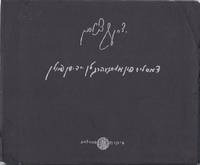
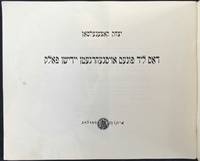
1963(FT) Paper Wrap. Oblong book, 18 x 22 cm. 79 pages. Ills. In Yiddish. Katzeneleson was a Russian-born poet who lived in the Warsaw ghetto and later the Auschwitz concentration camp. This poem gives a shattering account of what he saw and expresses his horror and grief, his protest and helplessness. It is widely considered one of the greatest literary expressions of the tragedy of the Holocaust. English Title: Poem of the Murdered Jewish People. SUBJECT(S) : World War, 1939-1945 -- Poetry. Small stain on front cover, bent corner on back cover. Pages and binding are in very good condition. (HOLO2-29-8) Xx
1948réf. 29513New York; YKUF 1948. Paperback. Original Wrappers. 12mo. 79 pages. 17 cm. Undated edition. In Yiddish. Includes introduction by Miriam Novitch as well as "Vi Yitshak Katsnelson hat geshribn zayne klog-lider" also by Miriam Novitsh on pages 15-16. “Song of the Murdered Jewish People" by Itzhak Katzenelson 1885–1944 a Hebrew and Yiddish poet. ”Katzenelson’s world fell apart when in August 1942 his wife Hanna and two younger sons Ben-Tsiyon and Binyamin were deported to Treblinka. From then on his literary creativity was piercingly shaped by lamentations over the loss of his family. Nonetheless with his oldest son Tsevi he found the strength to join the Jewish Fighting Organization and took part in the first uprising of January 1943. After the ghetto was destroyed in April and May 1943 he escaped to the Aryan section of Warsaw and obtained a Honduran identity document. Nevertheless he was sent to a German detention camp for foreign subjects in Vittel France. He was imprisoned there until April 1944 and devoted most of his time to writing. Two important works were produced during that period: Pinkas Vitel The Vittel Diary a Hebrew composition that uses the language of an incensed diarist and reconstructs the days of terror in Warsaw during the mass deportations; and Dos lid fun oysgehargetn yidishn folk The Poem about the Murdered Jewish People a pathos-filled Yiddish poem that laments the destruction of the Jewish people and of the poet himself who has been become bitterly angry with humankind and God. These two works are among the boldest and most lofty literary expressions to emerge from the Holocaust.… All of Katzenelson’s works from his Vittel period were either buried in hiding places or were given to people he trusted; consequently they were saved and published shortly after the end of the war. In the middle of April 1944 Katzenelson and his son Tsevi were sent to the Drancy transit camp and from there one month later to Auschwitz where they were murdered. In 1950 the Ghetto Fighters kibbutz built a museum and an institute for research about the Holocaust that bear Yitshak Katzenelson’s name” YIVO Encyclopedia. Subjects: Holocaust Jewish 1939-1945 -- Poetry. OCLC: 12260367. Half Dollar size chip to cover no text loss institutional stamp on title page taped spine otherwise Good Condition. BK5 B HOLO2-97-33-XX-ELABCC. New York; YKUF paperback
1963réf. 43253New York: YKUF 1963. Paperback. Original Wrappers. 12mo. 79 pages. 17 cm. In Yiddish. Includes introduction by Miriam Novitch as well as "Vi Yitshak Katsnelson hat geshribn zayne klog-lider" also by Miriam Novitsh on pages 15-16. “Song of the Murdered Jewish People" by Itzhak Katzenelson 1885–1944 a leading Hebrew and Yiddish poet. ”Katzenelson’s world fell apart when in August 1942 his wife Hanna and two younger sons Ben-Tsiyon and Binyamin were deported to Treblinka. From then on his literary creativity was piercingly shaped by lamentations over the loss of his family. Nonetheless with his oldest son Tsevi he found the strength to join the Jewish Fighting Organization and took part in the first uprising of January 1943. After the ghetto was destroyed in April and May 1943 he escaped to the Aryan section of Warsaw and obtained a Honduran identity document. Nevertheless he was sent to a German detention camp for foreign subjects in Vittel France. He was imprisoned there until April 1944 and devoted most of his time to writing. Two important works were produced during that period: Pinkas Vitel The Vittel Diary a Hebrew composition that uses the language of an incensed diarist and reconstructs the days of terror in Warsaw during the mass deportations; and Dos lid fun oysgehargetn yidishn folk The Poem about the Murdered Jewish People a pathos-filled Yiddish poem that laments the destruction of the Jewish people and of the poet himself who has been become bitterly angry with humankind and God. These two works are among the boldest and most lofty literary expressions to emerge from the Holocaust.… All of Katzenelson’s works from his Vittel period were either buried in hiding places or were given to people he trusted; consequently they were saved and published shortly after the end of the war. In the middle of April 1944 Katzenelson and his son Tsevi were sent to the Drancy transit camp and from there one month later to Auschwitz where they were murdered. In 1950 the Ghetto Fighters kibbutz built a museum and an institute for research about the Holocaust that bear Yitshak Katzenelson’s name” YIVO Encyclopedia. Subjects: Holocaust Jewish 1939-1945 -- Poetry. OCLC: 28824340. Some stains on covers Good Condition. B HOLO2-97-33A-XX-ELABCC. New York: YKUF paperback
1962(FT) Original paper wrappers. 8vo. 54 pages. 24 cm. First edition. In Yiddish. Title page in English: The life and writings of Dr. Philip Friedman: short bio-bibliographical survey. This memorial work outlines the biography and writings of the holocaust survivor and historian Dr. Phillip Friedman. From the Yivo Major Collections description of his work: Historian Philip Friedman collected documentation on the Holocaust and wrote extensively on the subject. He served as the first director of the Central Jewish Historical Commission in Poland in the post-war period, as consultant to the Nuremberg International Military Tribunal, and as director of the YIVO-Yad Vashem bibliographical series on the Holocaust. His papers include eyewitness accounts collected from Holocaust survivors by the Central Jewish Historical Commission in Poland. From a New York Times Article (Holocaust Historian written by Lucy S. Dawidowicz; January 11, 1981) : In July 1944 Philip Friedman was one of a mere thousand survivors of the 150, 000 Jews of his native Lvov. Before the war he had already become known as a historian of Polish Jewry, but thenceforth, until his death in New York at 59 in 1960, he dedicated himself to the history of the Jews in that crucible of death which we now call the holocaust. [ ] Philip Friedman has rightfully been called the father of holocaust history. Except for Emanuel Ringelblum, who did not survive the war, Friedman was the first to organize the collecting of records about Jewish life and death under German wartime occupation. Friedman stimulated survivors to write memoirs and urged them to gather letters, photographs, relics and any remains that would serve future historians. Subjects: Friedman, Philip, 1901-1960. Friedman, Philip, 1901-1960 - Bibliography. OCLC lists 20 copies worldwide. Light soiling to covers, with small chip to edge of back cover; lightly soiled outer edges. Otherwise fresh and clean. Good + condition. (HOLO2-99-42)
19471st postwar Yiddish edition (issued the same year in Moscow) of Ber Mark's centrally important work on the Warsaw Ghetto uprising of 1943, published originally in Russian in 1944. Original multicolor illustrated wrappers, 8vo, 391 pages. Title translates into English as, The book of Valor: 1. Volume. Uprising of the Warsaw Ghetto. Written by a participant, the Polish historian, journalist and anti-Fascist activist, Bernard Mark (1908-1966) . Mark narrates the events immediately preceding and during the 1943 armed uprising of Warsaw's Jews, and presents Jewish, Polish, and German documents pertaining to the Warsaw and other ghetto and camp rebellions. (Google Books, 2017) Copyright page lists title in Polish: "Ksiega Bohaterstwa. Tom pierwszy: Powstanie w ghetcie warszawskim." SUBJECT(S) : Holocaust, Jewish (1939-1945) -- Poland -- Warsaw. Jews -- Poland -- Warsaw. Warsaw Ghetto Uprising. World War, 1939-1945 -- Jewish resistance. Guerre mondiale, 1939-1945 -- Mouvements de re´sistance juifs. Holocauste, 1939-1945 -- Varsovie (Pologne) -- Histoire -- 1943 (Insurrection du ghetto) OCLC: 12010937. Spine rebacked, corner chip to front cover, other corner repaired, paper toning as expected. still attractive overall, a very nice copy. Our colleague offers a comparable copy for over $850.00. (Holo2-148-4A-ABX-'el)
2002réf. B73693Brussel, Studie- en Documentatiecentrum 2002 255pp., 24cm., in het tijdschrift "Driemaandelijks tijdschrift van de Stichting Auschwitz" nummer 76-77, goede staat, [bijdragen in het Nederlands en het Frans], B73693
1987réf. ZEIT2045Wien, Picus 1987. Gr.-8°. 241 S. m. zahlreichen s/w Abb., OKart.
1947Very Good Condition in Very Good Jacket. A beautiful copy.; Small 8vo; 222 pages; A diary of the German Occupation of Holland in the original Dutch. Pages brown as generally foudn for this title and other early-post-war Dutch imprints. The presence of the elusive dust jacket makes this a nice copy to have. (H-41-8)
2004Publishers cloth. 8vo. XVII, 271 pages. 24 cm. First edition. Contains over 30 black and white photographs. Publishers description: The unknown story of the successful American rescue of approximately 1, 000 children from the Holocaust is told in the words of the children and their rescuers. Sent across the ocean by their parents and taken in by foster parents and distant relatives, approximately 1, 000 children, ranging in age from fourteen months to sixteen years, landed in the United States and out of Hitler's reach between 1934 and 1945. Seventy years after the first ship brought a handful of these children to American shores, the general public and many of the children themselves remain unaware of these rescues, and the fact that they were accomplished despite powerful forces in and outside the government that did not want them to occur. This is the first published account, told in the words of the children and their rescuers, to detail this unknown part of America's response to the Holocaust. It will challenge the belief that Americans did nothing to directly and actively save Holocaust victims. Judith Tydor Baumel, Holocaust scholar and sister of two rescued children, provides an introduction explaining why, when, how, and where the rescues were carried out, who the heroes and heroines were, and which individuals and organizations placed almost insurmountable obstacles in their path. This account presents both recollections and experiences recorded at the time of the rescued children, their descendants, and their rescuers. The story demonstrates what a small group of determined people can do to change the course of history. Subjects: Jewish refugees - United States. Jewish refugees - United States - Biography. Refugee children - United States. Refugee children - United States - Biography. World War, 1939-1945 - Jews - Rescue. Gift stamp on inside jacket, otherwise fine. Very good + condition. (HOLO2-100-42)
1991255 pages; (HOLO2-19-4)