Friedlander, HenryAntiquariat.de
5 596 résultats
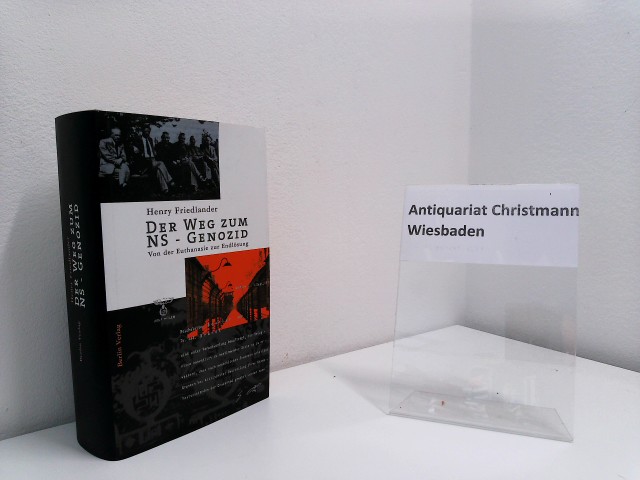
1997réf. 58296Berlin : Berlin-Verl. 1997. 640 S. ; 22 cm, mit Schutzumschlag Pp., gebundene Ausgabe, Hardcover/Pappeinband, Exemplar in sehr gutem Erhaltungszustand
2009réf. 60425Leipzig : Dingsda-Verl. 2009. 230 S. : : m. 20 Abb. ; 22 cm, mit Schutzumschlag +++ Stempel über dem Impressum (Ausgesondert) Pp., gebundene Ausgabe, Hardcover/Pappeinband, Exemplar in gutem Erhaltungszustand
1960First Yiddish edition. Original, illustrated paper wrappers. 12mo. 72 pages. 14cm. In Yiddish. Title translates to "The Wish Concert. " Stanislaw Wygodzki (1907-1992) was a Polish writer of Jewish origin. He published his first volume of poetry in 1933 before the Nazi occupation of Poland, during which Wygodzki was first interred in the Bedzin ghetto and later in the concentration camps of Auschwitz, Dachau, Oranienburg and Sachsenhausen. His health impacted by his experiences, Wygodzki did not resume publishing until 1947, becoming a successful writer and publishing poetry, short stories and one novel. Wygodzki, who lost his wife, daughter and parents in Auschwitz, was one of four winners of the 1969 "Remembrance Award", awarded annually by the World Federation of Bergen-Belsen Associations for "excellence in literature on the Nazi atrocities against European Jewry". A communist in his youth who was briefly imprisoned in Poland as an adult for his communist activities, Wygodzki resettled in Israel in 1968 in response to antisemitism in the Communist Party in Poland. SUBJECTS: Yiddish Fiction. OCLC lists 8 copies worldwide. Some browning to pages. Ex-library with no marks. Small, one inch tear where the front wrapper creased. (YID-27-11)
1960First Yiddish edition. Original, illustrated paper wrappers. 12mo. 72 pages. 14cm. In Yiddish. Title translates to "The Wish Concert. " Stanislaw Wygodzki (1907-1992) was a Polish writer of Jewish origin. He published his first volume of poetry in 1933 before the Nazi occupation of Poland, during which Wygodzki was first interred in the Bedzin ghetto and later in the concentration camps of Auschwitz, Dachau, Oranienburg and Sachsenhausen. His health impacted by his experiences, Wygodzki did not resume publishing until 1947, becoming a successful writer and publishing poetry, short stories and one novel. Wygodzki, who lost his wife, daughter and parents in Auschwitz, was one of four winners of the 1969 "Remembrance Award", awarded annually by the World Federation of Bergen-Belsen Associations for "excellence in literature on the Nazi atrocities against European Jewry". A communist in his youth who was briefly imprisoned in Poland as an adult for his communist activities, Wygodzki resettled in Israel in 1968 in response to antisemitism in the Communist Party in Poland. SUBJECTS: Yiddish Fiction. OCLC lists 8 copies worldwide. Some browning to pages. Tape on spine with title, light wear otherwise Good Condition. (YID-27-11A)
1996réf. 57083Hamburg : Hamburger Ed. 1996. 343 S. ; 24 cm, mit Schutzumschlag Pp., gebundene Ausgabe, Hardcover/Pappeinband, Exemplar in gutem Erhaltungszustand, Neupreis in Euro: 30,--
1935(FT) Hardcover, 8vo, 309, viii pages, 35 cm. In Yiddish. The way to our youth; elements, methods, and problems of Jewish youth research. Nazi-era imprint, looking at Jewish youth in 1930s Poland. Series: Bibliotek fun Yivo; Nom. 1 (7) ; Variation: Bibliotek fun Yivo. SUBJECT(S) : Jewish youth -- Psychological aspects. Personality and culture -- Methodology. Added title page: The way to our youth; elements, methods, and problems of Jewish youth research. Added title page also in Lithuanian: Keliasimusu javnuomene. Bibliographical footnotes and index. Other Titles: Way to our youth. ; Keliasimusu jaunuomene. Weinreich (1894-1969) was a Yiddish linguist, historian, editor. Born in Kuldiga (Latvia) , Weinreich made his debut as a Yiddish writer at the age of 13, and became a contributor to various Yiddish, Russian, German, and later English publications. After studying at the universities of St. Petersburg and Berlin, he completed a doctoral thesis on the history of Yiddish philology at the University of Marburg. Early in his career Weinreich became a prominent educator in various capacities, ranging from the teaching of Yiddish literature at the Vilna Yiddish Teachers Seminary to serving as leader of a Yiddish scouting movement, Di Bin. He was instrumental in giving Yiddish linguistics a solid, scholarly footing. Co-founder with Nokhem Shtif, Elias Tcherikover, and Zalmen Rejzen of the YIVO Institute, and YIVOs guiding spirit, he was largely responsible for its achieving a worldwide reputation. As director of YIVOs Research Training Division and organizer of its graduate school, Weinreich successfully educated young Yiddish scholars, among them, his son, Uriel Weinreich. At the World Congress of Linguistics in Copenhagen, he lectured on Yiddish as an Object of General Linguistics, and in 1940, he immigrated with his son Uriel to the U. S. , where he became the countrys first university professor of Yiddish, teaching Yiddish language, literature, and folklore at the College of the City of New York and Columbia University, while serving as the scholarly director of YIVO. Weinreichs wide array of books and studies include his magnum opus, Geshikhte fun der Yidisher Shprakh, the culmination of a half century of research on Yiddish sociolinguistics, tracing the thousand-year development of Ashkenazi culture and the Yiddish language as integral to the Jewish way of life. He studied the development of Yiddish from its origins in Germany, through Eastern Europe and into the second diaspora, creating the basic concepts and theoretical tools of the linguistic study of Jewish languages. Prominent among his other works are Hitlers Profesorn- probably the best documented indictment of German scholarship during the Nazi regime; Shturemvint, sketches on 17th-century Jewish history; Bilder fun der Yidisher Literatur-Geshikhte; Der Veg tsu Undzer Yugnt, a socio-psychological study of Jewish youth in Eastern Europe; and Di Shvartse Pintelekh, a history of alphabets. Weinreich translated Homer, Freud, and Ernst Toller into Yiddish and edited the periodicals Yidishe Filologye, Filologishe Shriftn, Yivo-Bleter, and the critical edition of S. Ettingers works, N. Stutchkoffs Oytser fun der Yidisher Shprakh, Y. L. Cahans Shtudyes vegn Yidisher Folkshafung, and Yidishe Folkslider mit Melodyes (Schaechter and Baumgarten in EJ, 2007) . OCLC lists 4 copies worldwide (U of Melbourne, Paris-Cujas-Bu Droit, Staatsbibliothek zu Berlin, Bayersiche Staatsbibliothek) . Browning to pages. Bumped cover corners. Otherwise, very good condition. (Holo2-74-6)
1935(FT) Hardcover, 8vo, 309, viii pages, 35 cm. In Yiddish. The way to our youth; elements, methods, and problems of Jewish youth research. Nazi-era imprint, looking at Jewish youth in 1930s Poland. Series: Bibliotek fun Yivo; Nom. 1 (7) ; Variation: Bibliotek fun Yivo. SUBJECT(S) : Jewish youth -- Psychological aspects. Personality and culture -- Methodology. Added title page: The way to our youth; elements, methods, and problems of Jewish youth research. Added title page also in Lithuanian: Keliasimusu javnuomene. Bibliographical footnotes and index. Other Titles: Way to our youth. ; Keliasimusu jaunuomene. Weinreich (1894-1969) was a Yiddish linguist, historian, editor. Born in Kuldiga (Latvia) , Weinreich made his debut as a Yiddish writer at the age of 13, and became a contributor to various Yiddish, Russian, German, and later English publications. After studying at the universities of St. Petersburg and Berlin, he completed a doctoral thesis on the history of Yiddish philology at the University of Marburg. Early in his career Weinreich became a prominent educator in various capacities, ranging from the teaching of Yiddish literature at the Vilna Yiddish Teachers Seminary to serving as leader of a Yiddish scouting movement, Di Bin. He was instrumental in giving Yiddish linguistics a solid, scholarly footing. Co-founder with Nokhem Shtif, Elias Tcherikover, and Zalmen Rejzen of the YIVO Institute, and YIVOs guiding spirit, he was largely responsible for its achieving a worldwide reputation. As director of YIVOs Research Training Division and organizer of its graduate school, Weinreich successfully educated young Yiddish scholars, among them, his son, Uriel Weinreich. At the World Congress of Linguistics in Copenhagen, he lectured on Yiddish as an Object of General Linguistics, and in 1940, he immigrated with his son Uriel to the U. S. , where he became the countrys first university professor of Yiddish, teaching Yiddish language, literature, and folklore at the College of the City of New York and Columbia University, while serving as the scholarly director of YIVO. Weinreichs wide array of books and studies include his magnum opus, Geshikhte fun der Yidisher Shprakh, the culmination of a half century of research on Yiddish sociolinguistics, tracing the thousand-year development of Ashkenazi culture and the Yiddish language as integral to the Jewish way of life. He studied the development of Yiddish from its origins in Germany, through Eastern Europe and into the second diaspora, creating the basic concepts and theoretical tools of the linguistic study of Jewish languages. Prominent among his other works are Hitlers Profesorn- probably the best documented indictment of German scholarship during the Nazi regime; Shturemvint, sketches on 17th-century Jewish history; Bilder fun der Yidisher Literatur-Geshikhte; Der Veg tsu Undzer Yugnt, a socio-psychological study of Jewish youth in Eastern Europe; and Di Shvartse Pintelekh, a history of alphabets. Weinreich translated Homer, Freud, and Ernst Toller into Yiddish and edited the periodicals Yidishe Filologye, Filologishe Shriftn, Yivo-Bleter, and the critical edition of S. Ettingers works, N. Stutchkoffs Oytser fun der Yidisher Shprakh, Y. L. Cahans Shtudyes vegn Yidisher Folkshafung, and Yidishe Folkslider mit Melodyes (Schaechter and Baumgarten in EJ, 2007) . OCLC lists 4 copies worldwide (U of Melbourne, Paris-Cujas-Bu Droit, Staatsbibliothek zu Berlin, Bayersiche Staatsbibliothek). SPine repair with black cloth tape. Title page torn and repaired with tape. Browning to pages. Good condition. (Holo2-74-6A)
2007réf. 1065981München : Martin Meidenbauer, 2007. 145 S. : Illustr. ; 22 cm. Fadengehefteter Originalpappband.
1923réf. 1160826Berlin, Harz, 1923. Gr.-8vo. 10, 582 S. OKart. (unbeschnitten, gebräunt).
1931réf. 1161131Wien u. Berlin, Vlg für Lit. u. Politik, (1931). 390 S. mit einigen Karten im Text. OLwd (Kapitale stärker bestoßen, Vordergelenk gelockert).
1979réf. KHe04860München (Kindler) 1979 (= Erste Ausgabe). 8°, Originalbroschur ( Paperback ) 163 S., ISBN 3463007606 1
1998réf. 1212649Frankfurt am Main : S. Fischer Verlag, 1998. 287 S. ; 21 cm; fadengeh. Orig.-Pappband m. illustr. OUmschlag.
1998réf. 65331Frankfurt am Main : S. Fischer 1998. 287 S. ; 21 cm, mit Schutzumschlag Pp., gebundene Ausgabe, Hardcover/Pappeinband, Exemplar in sehr gutem Erhaltungszustand
1998Gutes Ex.; Umschlag berieben. - Die Patientinnen und Patienten, deren Geschichten die israelische Psychoanalytikerin llany Kogan in diesem Buch erzählt, haben eines gemeinsam: Sie gehören der sogenannten zweiten Generation an, sie sind Kinder von Überlebenden des Holocaust. Ihre Wahrnehmung der Gegenwart ist geprägt durch eine Vergangenheit, die nicht ihre eigene ist.Von einem Zwang geleitet, der ihnen selbst unerklärlich ist, tun sie Dinge, die, wie sich im analytischen Prozeß allmählich herausstellt, aufs engste mit der Geschichte ihrer Eltern verbunden sind: Ein junger Mann verletzt seinen Vater - einen Überlebenden -, als dieser ihn von einem Selbstmordversuch abhalten will; der Säugling einer Frau stirbt bei einem Autounfall, den sie selbst herbeigeführt hat; eine Frau empfindet ihre Familie als Gefängnis und unternimmt immer wieder Ausbruchversuche. Um das Verhältnis von Realität und Phantasie so beherrschen zu lernen, daß mit Hilfe der Analytikerin die Entstehung eines neuen, gefestigten Selbst und die Erfahrung von Glück, Liebe und intakten Beziehungen möglich ist, müssen im Zuge des psychoanalytischen Gesprächs die Patientinnen und Patienten zu schlüssigen Lebensgeschichten finden. … (Verlagstext) // INHALT : Vorbemerkung ---- Vorwort von Janine Chasseguet-Smirgel ---- Einleitung ---- Eine Reise durch das Eisschloß ---- Tod im Liebesakt ---- Die zweite Haut ---- Reise zum Schmerz ---- Vom Agieren zum Wort und zur Bedeutung ---- Die Liebe und das Erbe der Vergangenheit ---- Im selben Boot ---- Psychoanalytische Behandlung während des Golfkriegs ---- Nachwort ---- Nachbemerkung von Margarete Mitscherlich und Christian Schneider ---- Danksagung ---- Anmerkungen ---- Bibliographie. ISBN 9783100404060
1915réf. 29089Ohne Ort, Selbstverlag, 1915, 1921 ?. 8°. 1 gezeichnetes Portrait des Autors ? 226 Seiten, 1 Blatt, Buchschmuck. Goldgeprägter Originalpappband. [5 Warenabbildungen]
1966réf. 1162847Stuttgart, Seewald, (1966). 358 S. m. einigen Faks. OLwd. m. OUmschl.
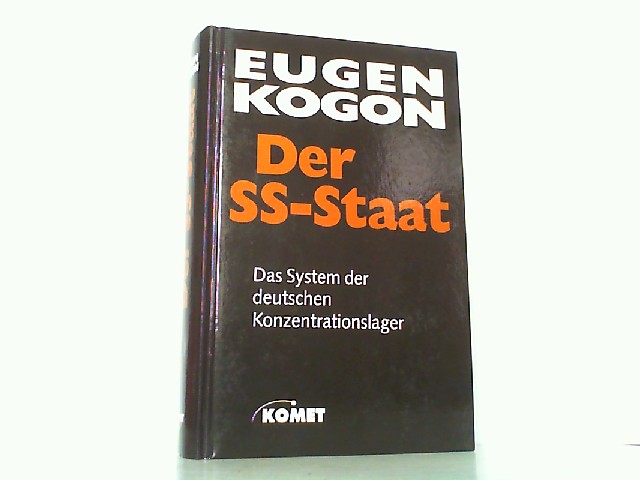
2000réf. 207621Komet Verlag um, 2000.
194620x13 cm. 362 [xxiii+339] pages. Hardcover. Cover age stained. Spine tattered lower part missing. Ex libris on inner front cover. Ex libris sticker on inner front cover. Pen and pencil writings on cover page - no damage to text. Pages yellowing and age stained. Else in good condition.
1947réf. C789Berlin, Druckhaus Tempelhof, (1947). (Die Bücherei für Jedermann) - Erste Ausgabe. Papierbedingt gebräunt, Buchblock aufgebogen.
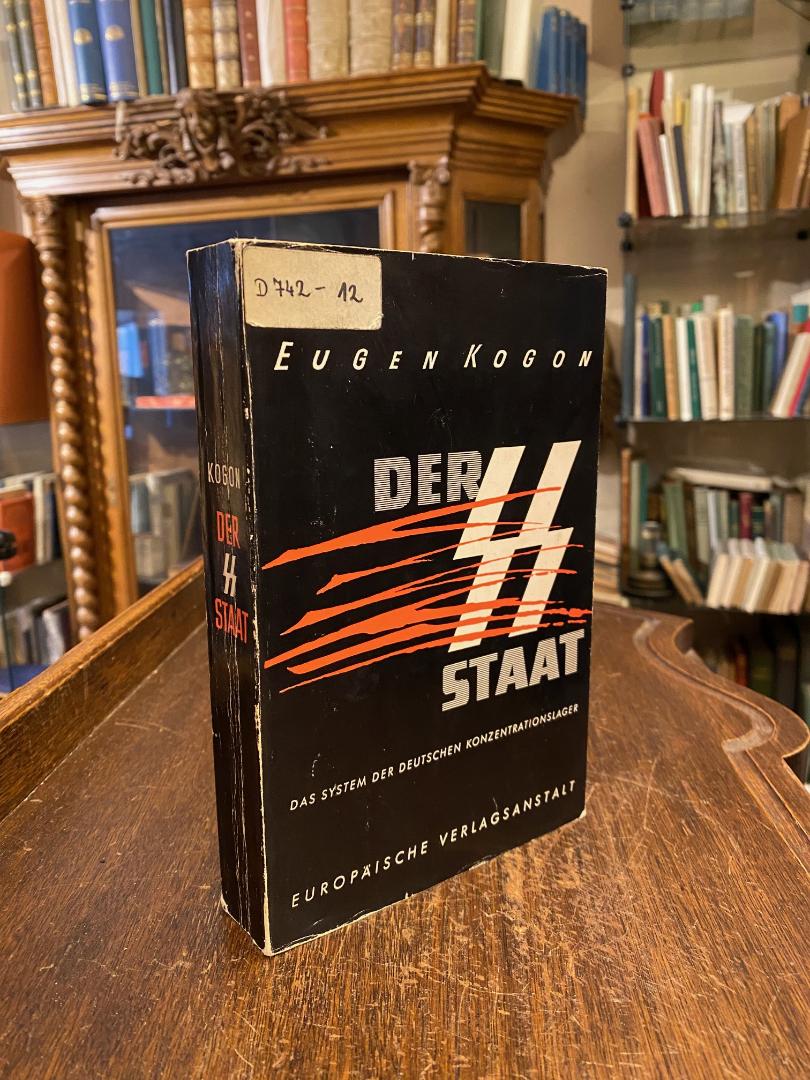
1946réf. 56986ABFrankfurt/M, Europäische Verlagsanstalt, (1946) Folgauflage 1965. 8° (20x13), XXIV, 419 S., OKart (englOBrosch), 211.-224. Tsd. gering berieben, Etikett auf vorderDeckel, Stempel verso Titel (Hochschule Linz), fest sauber und gepflegt,
194720x13.5cm. 434 pages. Gilt hardcover. Spine slightly loose. Few pages slightly age stained. Inner cover yellowing. Else in good condition.