3 risultati
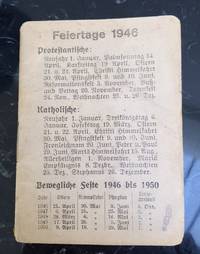
1946rif. 132911946. Kesselring Albert. Personal diary kept during imprisonment following the Second World War and during the Nuremberg war crimes proceedings. Albert Kesselring served as Field Marshal in the German Luftwaffe and commanded major German military operations in multiple theaters of the war including air campaigns in Poland and France the Battle of Britain operations during the invasion of the Soviet Union and later the Mediterranean and Italian fronts. After Germany's defeat he was arrested and prosecuted for war crimes committed during the German occupation of Italy. This diary documents his daily life during the immediate postwar period while he remained under Allied custody and while the major trials of German leaders were underway at Nuremberg. Entries note visits court appearances and personal reflections recorded during a period when former senior commanders awaited the outcome of postwar legal proceedings. Personal pocket diary for the year 1946 containing 58 pages with scattered pencil entries written by Albert Kesselring. The calendar format volume measures approximately 4 x 6 inches. The entries record numerous visits from his wife Paulina whom Kesselring notes simply as "Liny" and also mark the dates on which he traveled to Nuremberg to testify during the trial of Hermann Göring on February 15 April 26 and May 14. The diary concludes with a handwritten entry on December 31 reading "All's well that ends well!" reflecting Kesselring's outlook at the close of the year. Following the war Kesselring was tried by a British military tribunal for actions carried out during the German occupation of Italy and initially received a death sentence. The sentence was later commuted and he was released from imprisonment in 1952. Personal writings from senior German military commanders during the immediate postwar years provide direct documentary evidence of how individuals connected to the German war effort experienced detention testimony and the legal processes that followed the collapse of Nazi Germany. Slight foxing to the verso of the cover. Overall condition very good. unknown books
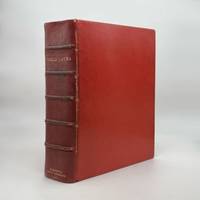
1482rif. 372091Nuremberg: Anton Koberger 1482. Eighth edition of the Bible printed by Koberger his first was 1475. Date from the colophon at end of text on fol. 427. Text in black letter two columns 53 lines. Red initials rubricated throughout. Foliation irregular. Bound without first and last blanks. 460 of 462 leaves. 1 vols. Folio. Twentieth century orange morocco by Zaehnsdorf preserving earlier gauffered and gilt edges. Spine darkened from smoke minor rubbing. First leaf remargined at foot; some traces of damp and stains from old marginal tabs internally clean overall closed tear in fol. 388. Very good plus. Eighth edition of the Bible printed by Koberger his first was 1475. Date from the colophon at end of text on fol. 427. Text in black letter two columns 53 lines. Red initials rubricated throughout. Foliation irregular. Bound without first and last blanks. 460 of 462 leaves. 1 vols. Folio. ISTC ib00575000; GW 4250; Goff B575. Provenance: George Livermore Harvard bookplate recording 1859 deposit with ink release dated 1894; General Theological Seminary gift of Cornelius Vanderbilt and Dean Augustus Hoffman bookplates and blindstamps Anton Koberger unknown books
1598rif. 66701598. 22 leaves including some blanks or pages ruled in ink for entries. Agenda format 315 x 100 mm. stitched as issued uncut. Nuremberg: 1598. A fascinating document of a type that rarely survives: the manuscript account book for the spring 1598 Leipzig fair of Hans Straub I or the Elder 1541-1610 the prominent Nuremberg gold- and silversmith alderman and son-in-law of Wenzel Jamnitzer the best-known German goldsmith of his time. The first leaf bears Straub’s hallmark interwined initials “HS” over an arrow pointing upward within a plain shield & also containing the inscription “No. 72”. Our manuscript sheds important light on the business relations in the late 16th century between the Nuremberg goldsmiths and their trade at the Leipzig fairs. Our account book is a list of sales orders and expenditures of Nuremberg goldsmith Hans Straub the Elder during the Leipzig Easter fair held in May 1598. While Straub is not expressly named he can be identified by his hallmark on the first leaf. At the fair trade was done in goblets rings knife-sheaths cutlery jewelry gemstones etc. Several business partners are named including the Nuremberg goldsmiths Heinrich Hahn Haan David Lauer and Paulus Koch. As an example of a transaction we see that the council of Halle paid over 33 florins for a goblet. In 1596 Straub was elected Alderman of the Artisans the most elevated and honorable office to which a Nuremberg artisan could aspire. Straub retained this position until his death in 1610. In 1569 he married Anna daughter of the famous goldsmith Wenzel Jamnitzer. On his father-in-law’s death in 1585 Straub inherited his casting molds and used them extensively in his own creations. Despite his long period of activity relatively few pieces made by Hans Straub have survived see Nürnberger Goldschmiedekunst 1541-1868 2007 ed. by Karin Tebbe et al. Vol. I p. 409. In fine condition. ⧠The mark is similar to Marc Rosenberg Der Goldschmiede Merkzeichen Frankfurt 1925 Vol. III no. 3969. unknown books