1830Paris, Ladvocat,1830. 2 volumes in-8 pleine basane havane, dos long décoré, plat encadré d'une roulette dorée, roulette sur les coupes,XXXVI- 386, 434pp. Bon état de la reliure, rousseurs tout au long de l'ouvrage. Aux armes de l'Université de France, Collège royal de Louis le Grand
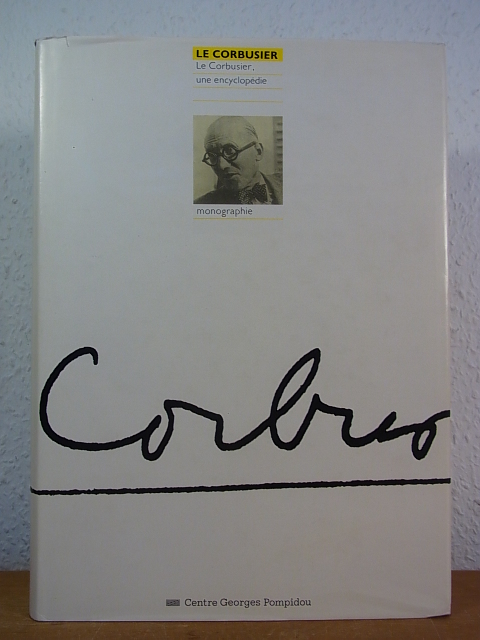
Boesiger, W and H Girsberger: Le Corbusier 1910-65. London: Thames & Hudson, 1967. 352 pages. No dust-jacket. Hardback. 28.5 x 23cms. Text in English, French and German. Text in English, French and German
2001Best.-Nr. 163029Los Angeles CA and New York: Los Angeles County Museum of Art in association with Harry N. Abrams Inc 2001. First edition. Hardcover. First printing. 191 pages. Published in conjunction with an exhibition at Los Angeles County Museum of Art that ran April 28 through August 5 2001 and then traveled for additional dates. Features essays by Carol S. Eliel Francoise Ducros Tag Gronberg and with a translation of "After Cubism" by Amedee Ozenfant and Charles-Edouard Jeanneret. Includes 122 illustrations of which 77 are in color. A fine copy in a fine dust jacket. Los Angeles County Museum of Art in association with Harry N. Abrams, Inc unknown books
1805Best.-Nr. 1409159Paris: Moreau 1805. First Edition. Hardcover. Octavo xviii 3 xxvi-xxi 3 91 1 pages. In Very Good condition. Rebound. Half-bound in brown leather with marbled paper boards. Paneled spine. Boards have light shelf wear. Textblock contains the bookplate of Hervé Bazin to the front free end page an ink stamp to the half-title page has light foxing scattered to some pages and light age toning throughout. Signed by Charles-Edouard Auber on the copyright page. Shelved in Case 5. 1409159. Shelved Dupont Bookstore. Moreau hardcover books
Best.-Nr. 06084Paris: Au Bureau du Charivari Maison Martinet 1860. Out of the Mouths of Babes! Nine Delightfully Mischievous Lithographs by Charles-Édouard de Beaumont In Which Innocent Children Expose the Indiscretions and Absurdities of Their Elders BEAUMONT Charles-Édouard de. Naïvetés Innocent Remarks. Paris: Au Bureau du Charivari Maison Martinet 1857-1858. Folio 13 1/2 x 10 inches; 342 x 254 mm. Nine fine lithographic plates consecutively numbered 1-9 all mounted on stubs. Each plate headed Naïvetés and accompanied by a humorous dialogue in French. Some light marginal staining otherwise very clean. Early-to-mid twentieth-century three-quarter red morocco over red pebbled cloth boards ruled in gilt. Front cover with rectangular black leather label ruled and lettered in gilt. Smooth spine elaborately decorated and lettered in gilt. Small stain to upper portion of boards. A wonderfully entertaining series of nine lithographs in which the innocent observations of children expose the vanities pretensions and occasionally embarrassing secrets of the adult world. Few things can be quite so devastating as a child's innocent remark particularly when delivered in the presence of an unsuspecting parent or family friend. Charles-Édouard de Beaumont exploits this universal truth with delightful effect in Naïvetés a series of charming lithographic caricatures illustrating the unfortunate consequences of youthful curiosity and unguarded honesty. In one particularly amusing scene a mother proudly draws her child's attention to a beautiful white swan. The child immediately asks whether the bird makes itself so white by applying face powder just like Mama. Elsewhere a little girl innocently asks a gentleman why he has kissed her nursemaid pointing out that he cannot possibly be one of the soldiers who ordinarily enjoy that privilege. Another child noticing an artist's double eyeglass remembers that her father claimed to have been seeing double after returning from a dinner party. The implied cause of his peculiar vision is entirely lost upon her. Beaumont's humor is at its sharpest when childhood innocence unexpectedly collides with adult vanity. A young boy solemnly informs his father that he intends to behave himself because his mother has warned him that when he is naughty he becomes extremely ugly - and looks just like Papa! In another scene a little girl asks a gentleman why his supposed horns are invisible a pointed reference to the traditional symbol of the cuckolded husband. Other plates gently satirize fashionable society through misunderstandings involving portrait painting gingerbread figures and the curious proposition of populating the rivers of France. The humor derives not merely from the dialogue but from Beaumont's remarkable ability to capture the gestures expressions and reactions of his subjects. The children are charmingly natural while the adults frequently appear startled uncomfortable or completely defeated by an observation they are powerless to contradict. Charles-Édouard de Beaumont 1819-1888 was among the most prolific French caricaturists lithographers and illustrators of the nineteenth century. His work appeared extensively in Le Charivari and other illustrated publications. Influenced by the celebrated Paul Gavarni Beaumont developed a distinctive talent for representing the social comedy of Parisian life particularly the relationships between men and women and the contradictions of fashionable society. Naïvetés is an especially appealing example of his talent for the humorous observation of everyday life. Rather than resorting to exaggerated grotesquerie he allows the innocent remarks of his young protagonists to reveal the follies of their elders. The present consecutively numbered sequence belongs to the first Martinet suite of Naïvetés dated 1857-1858. Individual impressions of plates 8 and 9 with identical captions are preserved in the Musée Carnavalet Paris inventory numbers G.10101 and G.10102. The museum's cataloguing establishes the earlier date and distinguishes this sequence from a second suite issued by Martinet in 1859. An exceptionally charming and uncommon collection of French social caricatures demonstrating Beaumont's considerable skill in exposing the absurdities of adult behaviour through the devastating honesty of children. Not listed in Colas Hiler or Lipperheide. Individual impressions recorded in the Musée Carnavalet Paris. The Nine Plates - Original French Captions and English Translations: 1. The Swan and Mama's Face Powder Vois mon enfant comme il est d'un beau blanc ce cygne!. Est-ce qu'il se met du blanc comme toi. dis maman. English: "Look my child how beautifully white that swan is!" "Does he put white face powder on himself like you do Mama" 2. The Nursemaid and the Soldiers Pourquoi que t'as embrassé ma bonne. T'es pas un militaire toi!. Si les militaires des Tuileries savaient ça ils seraient joliment en colère!. English: "Why did you kiss my nursemaid. You're not a soldier!. If the soldiers at the Tuileries knew about that they'd be terribly angry!" 3. A Most Unflattering Portrait Bust Tu m'apportes un polichinelle aussi. T'en as donné déjà un à maman pour sa cheminée!. Mais non. c'est mon buste. Tiens!. j'ai pris ça pour un polichinelle!. English: "Have you brought me a Punch figure too. You already gave Mama one for her mantelpiece!" "But no. that's a bust of me!" "Well!. I thought it was Punch!" 4. Seeing Double Deux lorgnettes. c'est pour y voir double. Papa en avait donc une comme ça l'autre jour quand il est revenu de ce dîner. tu sais. il a dit qu'il y voyait double!. English: "Two eyeglasses. so you can see double." "Then Papa must have had one of those the other evening when he came home from that dinner party. you know. he said he was seeing double!" 5. A Remarkably Unflattering Resemblance Je veux être bien sage. maman m'a dit que quand j'étais méchant j'étais très laid. que je vous ressemblais!. English: "I want to be very good. Mama told me that when I'm naughty I look terribly ugly. just like you!" 6. The Gingerbread Gentleman Voyons. me trouves-tu beau. Oh! pas si beau que mon grand bonhomme en pain d'épice!. English: "Well then. do you think I'm handsome" "Oh! Not nearly as handsome as my big gingerbread man!" 7. The Invisible Horns Dites donc. m'sieu Coquardeau. on dit toujours comme ça que vous portez des cornes!. mais alors pourquoi qu'on ne les voit pas. English: "Tell me Monsieur Coquardeau. everyone keeps saying that you wear horns!. But why is it that nobody can see them" 8. Oil Paintings and Potatoes Aimez-vous les tableaux à l'huile. Non monsieur à l'huile. je préfère les pommes de terre. English: "Do you like oil paintings" "No sir. When it comes to oil. I prefer potatoes!" 9. Populating the Rivers J'ai lu dans le journal qu'on va peupler toutes les rivières. Comment madame on va mettre des hommes dedans. Non pas tout de suite on commencera par y mettre des poissons. English: "I read in the newspaper that they're going to populate all the rivers." "What madam They're going to put people in them" "No not straightaway. They'll begin by putting fish in them!" Bibliographical note: All nine lithographs are present numbered consecutively from 1 to 9. They belong to the first Martinet suite of 1857-1858. The complete published extent of this first suite has not yet been independently established. Paris: Au Bureau du Charivari, Maison Martinet, 1860 unknown books
Best.-Nr. 06039Paris: Chez Aubert 1846. The Pretty Women of Paris - And the Gentlemen Who Pay for Their Furs! Forty Delightful Lithographs by Édouard de Beaumont Satirizing the Fashion Flirtations and Extravagances of Parisian Society BEAUMONT Charles-Édouard de. Les Jolies Femmes de Paris The Pretty Women of Paris. Paris: Chez Aubert 1846. First edition. Folio 13 1/8 x 10 inches; 333 x 254 mm. Forty superb black-and-white lithographs numbered 1-40 complete all mounted on stubs. A remarkably clean and beautifully preserved example of this scarce and highly amusing series. Bound by Pagnant ca. 1890 in three-quarter red scored calf over red cloth boards ruled in gilt. Smooth spine decoratively tooled and lettered horizontally in gilt. Marbled endpapers top edge gilt. Some minor rubbing to board edges; otherwise near fine. A wonderful panorama of the fashionable and frequently scandalous world of Paris during the final years of the July Monarchy. In Les Jolies Femmes de Paris Charles-Édouard de Beaumont 1821-1888 turns his mischievous eye upon the elegant young women of Paris their admirers their servants their wardrobes their romantic intrigues and perhaps most importantly their seemingly inexhaustible demands upon the purses of accommodating gentlemen. Across forty delightful lithographs Beaumont exposes the comedy of fashionable life with remarkable delicacy of drawing and a wonderfully sharp sense of humor. Diamonds expensive dresses elaborate furnishings secret assignations extravagant gifts and jealous lovers all provide material for his social satire. One lady dreams of possessing a magnificent diamond necklace prompting her admirer to beat a discreet retreat. Another declares that if she were genuinely in love she could positively economize by limiting her expenditure to a mere 3500 francs a month. Elsewhere a gentleman discovers that his mistress has been corresponding with a certain Casimir although his own name happens to be Philémon. Even the family parrot becomes an embarrassment when its mistress changes lovers. The series is particularly entertaining in its depiction of the complicated relationships between fashionable Parisiennes and the gentlemen who support them. Beaumont's women are frequently witty resourceful calculating and considerably more worldly than their unfortunate admirers. The men meanwhile are often pompous gullible romantically bewildered or quite simply out of pocket. The setting is unmistakably Parisian from the fashionable Rue Notre-Dame-de-Lorette to the Bois de Boulogne the Opéra and the popular pleasure grounds of Montmartre. Through these familiar locations Beaumont presents a lively and revealing picture of the social customs fashionable entertainments and sexual politics of mid-nineteenth-century Paris. Charles-Édouard de Beaumont was among the prolific French caricaturists and illustrators associated with Le Charivari and the celebrated publishing house of Aubert. Working in the tradition of Gavarni and Daumier he produced a remarkable body of lithographic satire during the 1840s and 1850s frequently concentrating upon fashionable society relationships between the sexes and the changing roles of women. His drawings combine lively characterization elegant costume detail and a particularly accomplished understanding of the expressive possibilities of lithography. The forty plates of Les Jolies Femmes de Paris demonstrate these qualities to excellent effect making the series both a highly entertaining work of graphic satire and a valuable visual document of Parisian social history. Rarity: Complete examples of the original forty-plate series are scarce. The institutional holdings previously identified include copies with twenty or thirty-two plates. The Musée Carnavalet Paris also preserves a reconstructed collection of all forty lithographs dated 1846. Complete bound examples have occasionally appeared at auction but the present copy is particularly attractive for its completeness fine condition and handsome nineteenth-century binding. Bibliographical references: Colas 257 forty-plate Aubert edition; Hiler p. 73 forty-plate Aubert edition; Von Lipperheide 3565 thirty-plate version. Paris: Chez Aubert, 1846 unknown books
Best.-Nr. 06040Paris: Au Bureau du Charivari Maison Martinet 1860. At the Paris Opera Ball the Masks Come Off! Thirty Superb Lithographs by Charles-Édouard de Beaumont A Delightful Panorama of Flirtation Mischief and Scandal in Second Empire Paris BEAUMONT Charles-Édouard de. Au Bal Masqué At the Masked Ball. Album par Beaumont. Paris: Au Bureau du Charivari Maison Martinet ca. 1860-1861. Fifth Series. Quarto 13 x 10 inches; 330 x 254 mm. Pictorial lithographed title-page and thirty superb lithograph plates printed on strong white paper and mounted on stubs. Publisher's original yellow pictorial front wrapper bound in. The plates exceptionally clean and fresh throughout. Bound ca. 1925 by Semet & Plumelle in half black scored calf over marbled boards ruled in gilt. Smooth spine richly decorated and lettered in gilt with small red morocco onlays. Marbled endpapers top edge gilt. Joints rubbed but sound. Small rectangular leather bookplate of the noted bibliophile Henri Lafond on front pastedown. An exceptionally attractive example of this rare album containing thirty wonderfully spirited lithographs depicting the pleasures intrigues and indiscretions of the Parisian masked ball. During the nineteenth century the masked balls of Paris particularly those held at the Opéra during Carnival provided an intoxicating mixture of fashionable entertainment flirtation disguise and social adventure. Behind their masks participants could temporarily abandon the conventions of respectable society indulge in unexpected encounters and assume identities very different from their everyday selves. Charles-Édouard de Beaumont captures this extraordinary world with wit and irreverence. His elegantly dressed gentlemen coquettish young women jealous lovers unsuspecting husbands and extravagant masqueraders inhabit a society in which appearances are invariably deceptive and almost nobody is quite what he or she pretends to be. The accompanying captions often cast as fragments of overheard conversation provide a delightful additional dimension to the illustrations. A woman discovers that her husband has followed her to the ball; another encounters a supposedly respectable acquaintance in compromising circumstances; a jealous lover issues an unfinished threat; and an elderly gentleman apparently reliving his youth becomes the object of a young woman's mischievous attentions. Particularly characteristic of these scenes are the women dressed as débardeurs or dockworkers wearing the loose trousers short jackets and caps associated with this popular Carnival costume. Such disguises enabled women to wear masculine attire dance with unusual freedom and playfully overturn the conventions of contemporary dress and behavior. The series invites comparison with the celebrated Parisian Carnival lithographs of Paul Gavarni whose treatment of masquerades fashionable society and the relationship between the sexes undoubtedly influenced Beaumont. Nevertheless Beaumont brings to these compositions his own lively sense of humor sharp observation and remarkable ability to capture the absurdities of human behavior. Charles-Édouard de Beaumont 1819-1888 was among the most prolific French lithographers illustrators and caricaturists of the nineteenth century. His drawings appeared extensively in Le Charivari and other illustrated publications and he contributed illustrations to numerous literary works including Victor Hugo's Notre-Dame de Paris. His artistic production encompassed lithography painting illustration and watercolor. In 1879 he was among the founders of the Société des Aquarellistes Français. Au Bal Masqué was one of his most sustained subjects. Eleven distinct suites appeared between 1848 and 1866 illustrating the enduring popularity of the Parisian masquerade. The present fifth suite issued by Maison Martinet around 1860-1861 contains thirty lithographs on fine white paper preserved here with the original pictorial front wrapper in an attractive binding by Semet & Plumelle. A charming and unusually well-preserved record of the exuberance theatricality and social comedy of Parisian Carnival life. Bibliographical references: Bibliothèque de M. René Descamps-Scrive vol. II no. 468; Inventaire du Fonds Français Beaumont fifth suite no. 74. The Thirty Plates - French Captions with English Translations: Ohé!. Fanny déguisée en femme honnête. ohé!. t'es bien sûre que ce soir personne ne te reconnaîtra!. "Hey!. Fanny dressed up as a respectable woman!. Are you quite sure nobody will recognize you tonight." Ma chère amie. je suis avec mon époux qui ne veut pas me quitter je ne sais vraiment pas par quel moyen m'en débarrasser!. "My dear friend. I'm here with my husband who refuses to leave my side. I really don't know how to get rid of him!." Allons bon!. Caroline s'est endormie sur la table que vais-je en faire. "Oh wonderful!. Caroline has fallen asleep on the table! Whatever am I going to do with her." C'est la seconde fois depuis huit jours que je vois Georgina avec un Anglais!. mais pas le même!. "That's the second time in eight days I've seen Georgina with an Englishman!. But not the same one!." Fanny serre-moi davantage. "Fanny hold me tighter." Voyons Turlurette. lève donc mieux la jambe que ça!. "Come along Turlurette!. Get that leg a little higher than that!." Combien me vendrez-vous ce costume de débardeur. "How much will you sell me that dockworker's costume for." Tu t'imagines que ta Caroline dort tranquillement chez elle. eh! bien tu te trompes je viens de la rencontrer ici. "You imagine your Caroline is sleeping peacefully at home. Well you're mistaken! I've just run into her here!." La première fois que je te verrai parler à Adolphe tu. "The next time I catch you talking to Adolphe you'll." Tiens! Te voilà seule. là-bas tout à l'heure dans cette loge ne parlais-tu pas à des Anglais. "Well! Here you are all alone. Weren't you talking to some Englishmen in that box over there just a moment ago." Tiens voilà un cigare de cinq sous prends-le. "Here have a five-sou cigar. Go on take it." Maudit portier!. il ne viendra donc pas vous ouvrir. "Confounded concierge!. Is he never going to come and open the door for you." Pourquoi cette manivelle. "What's that crank handle for." Comment Laure. je vous ai demandé ce matin si vous vouliez venir avec moi au bal de l'Opéra. vous avez refusé sous prétexte que vous aviez la grippe. et la première personne que je rencontre ici. c'est vous!. "What Laure!. I asked you this morning if you would come to the Opera Ball with me and you refused on the pretext that you had influenza. Yet the very first person I meet here is you!." Pardon monsieur. mais il me semble bien vous reconnaître. "Excuse me sir. but I do believe I recognize you." Comment. vous ma p'tite dame. vous fumez des cigares. "What!. You my little lady!. You smoke cigars." Charmant débardeur! Permets-moi de t'aimer et de t'emmener avec moi dans une île déserte!. "Charming little dockworker! Allow me to love you and carry you away to a desert island!." Comment! On t'a donc laissé sortir toute seule ce soir. "What! They've actually allowed you to go out all by yourself tonight." Si tu veux. charmant petit cuisinier. je te prends à mon service. "If you'd like my charming little cook. I'll take you into my service!." On vient encore de me payer un bâton de sucre de pomme!. "Someone's just paid me with another stick of apple candy!." En v'là une idée de prendre un costume pareil et qui ne se porte plus!. "Well what an idea choosing a costume like that!. And it's not even fashionable anymore!." Ah! Bien tu es bonne toi d'apporter tes rafraîchissements!. "Well that's a good one!. Bringing your own refreshments!." Paméla tu viens encore de parler à mon Alfred. et tu lui as même demandé de l'argent carotteuse!. "Pamela you've been talking to my Alfred again!. And you've even asked him for money you little sponger!." Partons-nous. "Shall we be going." Je peux bien faire joujou avec lui il n'y a pas trop grande disproportion d'âge!. c'est aussi un bébé. puisqu'il est tombé en enfance!. "I can certainly play with him. There's not such a great difference in our ages!. He's a baby too after all. since he's fallen into his second childhood!." Théophile attends-moi là. je vais danser je viendrai te reprendre dans deux heures!. "Théophile wait for me here. I'm going dancing and I'll come back to collect you in two hours!." Moi qui en acceptant à souper chez un noble Hidalgo croyais faire un festin de Balthazar et je ne trouve que du fromage d'Italie!. quelle chance!. "And to think that when I accepted a supper invitation from a noble hidalgo I expected a feast fit for Belshazzar. and all I find is Italian-style meat pâté!. What luck!." Avec qui es-tu dans cette loge. "Who are you with in that box." Bébé! Veux-tu venir vivre avec moi dans mon île. "Baby! Would you like to come and live with me on my island." Tenez. voilà ce que je peux vous donner pour avoir gardé mon manteau. un bâton de sucre de pomme. c'est tout ce que je possède!. "Here. this is all I can give you for looking after my cloak. a stick of apple candy. it's everything I possess!. Paris: Au Bureau du Charivari, Maison Martinet, 1860 unknown books
Best.-Nr. 06054Paris: Au Bureau du Charivari et Chez Martinet 1860. Parisian Beauties Expensive Tastes and Dangerous Flirtations! Twenty-Nine Fine Lithographs by Charles-Édouard de Beaumont A Delightful Satirical Portrait of the Pretty Women of Second Empire Paris BEAUMONT Charles-Édouard de. Nos Jolies Parisiennes Our Pretty Parisian Women. Album par Édouard de Beaumont. Paris: Au Bureau du Charivari et Chez Martinet 1859. Folio 13 3/8 x 10 1/8 inches; 340 x 257 mm. Pictorial lithographed title-page and twenty-nine fine lithographic plates comprising twenty-eight different subjects from a series of thirty. The lithograph numbered 46 is present in duplicate appearing as the seventh and twentieth plates in this copy; two subjects are therefore lacking. The plates exceptionally clean and fresh throughout. Publisher's original pictorial yellow glazed boards. Front joint cracked but endpaper holding sound. An unusually clean and attractive copy preserved in its original publisher's binding. A wonderfully entertaining collection of lithographic caricatures depicting the fashionable flirtatious extravagant and frequently mischievous women of Second Empire Paris. In Nos Jolies Parisiennes Charles-Édouard de Beaumont casts his delightfully irreverent eye over the pleasures and indiscretions of Parisian society. His elegant heroines inhabit a world of fashionable entertainments masked balls expensive restaurants seaside resorts wealthy admirers and extravagant presents. Beautifully dressed and invariably quick-witted they are frequently more than a match for the unfortunate gentlemen who fall under their spell. Each lithograph is accompanied by a humorous dialogue transforming these charming compositions into miniature comedies of manners. The subjects range from romantic misunderstandings and matrimonial deceptions to the more practical considerations of jewelry cashmere shawls and five-hundred-franc banknotes. In one particularly amusing scene an ageing beauty laments that men no longer make fools of themselves over her. When a younger companion assures her that she might still attract an admirer she anxiously asks whom. The devastating reply: "A collector of antiquities of course!" Elsewhere a disappointed young woman complains that her lover asked to provide a present for her name day has sent her nothing more valuable than his portrait. Another discovers that the supposed Spanish nobleman she encountered at a masked ball was actually an English creditor whom she had successfully avoided for six months. One particularly resourceful young lady suffering from influenza persuades her doctor that a prescription for a costly cashmere shawl would be infinitely preferable to an ordinary cloak especially as the expense will fall upon her husband. Beneath their apparently frivolous subject matter these delightful lithographs reveal much about the relationship between men and women in nineteenth-century Paris particularly the importance of fashion financial security social standing and the elaborate games of courtship and deception. Charles-Édouard de Beaumont 1819-1888 was one of the most prolific French caricaturists and lithographers of the nineteenth century. His work appeared extensively in Le Charivari and other illustrated journals and he contributed illustrations to numerous literary publications including Victor Hugo's Notre-Dame de Paris. A gifted painter and watercolorist as well as a lithographer he was among the founders of the Société des Aquarellistes Français in 1879. His treatment of fashionable Parisian life reflects the influence of Paul Gavarni whose celebrated caricatures of women society and the pleasures of the capital had established a distinctive tradition of social satire. Beaumont's own compositions however display a particularly lively combination of elegant draughtsmanship theatrical expression and sharp conversational wit. Nos Jolies Parisiennes was published by the Bureau du Charivari and Maison Martinet in 1859 a date confirmed by the legal-deposit stamp on a surviving lithographed title-page in the Musée Carnavalet Paris. Although related in subject to Beaumont's earlier Les Jolies Femmes de Paris Aubert 1846 it is a separate album rather than a later edition of that work. A highly attractive example of French social caricature retaining its original pictorial yellow boards and presenting a delightful panorama of the fashions flirtations and foibles of nineteenth-century Paris. Colas 259; Lipperheide 3565. List of Twenty-Nine Lithographs with English Translations: 1. Le Monsieur. Quel est ce jeune homme que je viens de rencontrer sur l'escalier et qui sort d'ici. La Petite Dame à part. Ah! diable! haut. Gustave ne sois pas jaloux. English: The Gentleman: "Who is that young man I just met on the staircase coming out of here" The Young Lady aside: "Oh the devil!" Aloud: "Gustave don't be jealous." 2. Comment une femme qui se respecte peut-elle venir ici déguisée en débardeur!. T'es encore bien plus déguisée que moi puisque tu t'es mise en femme du monde!. English: "Really! How can a self-respecting woman come here dressed as a dockworker!" "You're much more disguised than I am seeing as you've dressed yourself up as a respectable lady of society!" 3. Dis-donc si ces messieurs qui nous ont donné rendez-vous ici n'allaient pas venir. que ferions-nous. C'est bien simple nous souperions sans eux!. English: "Tell me what shall we do if those gentlemen who arranged to meet us here don't turn up" "That's simple enough. We'll have supper without them!" 4. Charmant postillon. je t'offre mon cœur!. Que les hommes sont stupides!. Ils ne savent qu'offrir leur cœur. comme si une femme pouvait vivre avec ça!. English: "Charming postilion I offer you my heart!" "How stupid men are! All they ever think of offering is their hearts. as though a woman could live on that!" 5. Oui ma petite. les hommes ont fait des folies pour moi. ah! Que les temps sont changés!. Mais mame Chaffaroux. ne vous désolez pas. vous pourrez encore plaire. Vous croyez. et à qui donc. À un amateur d'antiquités. parbleu!. English: "Yes my dear. men used to do the most extraordinary things for me! Ah how times have changed!" "But Madame Chaffaroux don't despair. You could still attract admirers!" "You think so And who might they be" "A collector of antiquities of course!" 6. Mlle Nina pose les anges les grâces et les vertus à quatre francs la séance. Nota: Les péchés capitaux se payent à part on traite de gré à gré. English: "Mademoiselle Nina poses as angels graces and virtues at four francs a sitting. Note: The seven deadly sins are charged separately; prices are negotiable." 7. Tu sais. hier le baron m'a offert ses services. Oui. et que lui dis-tu dans ta lettre. English: "You know yesterday the Baron offered me his services." "Really And what are you saying to him in your letter" Note: This is the same lithograph numbered 46 as plate 20 below where the full caption is given. 8. Quel plaisir trouves-tu à fumer de l'opium. Je fais des songes charmants. je rêve que j'habite encore mon village que je suis une honnête jeune fille et qu'on me couronne rosière!. English: "What pleasure do you find in smoking opium" "I have the most delightful dreams! I dream that I'm back in my village that I'm still an innocent young girl and that I'm being crowned the village's most virtuous maiden!" 9. Voyons madame voulez-vous que je vous plonge tout-à-fait dans l'eau. Non il me suffit de me tremper les jambes. je viens prendre des bains de mer pour me fortifier les jarrets. English: "Come now madam would you like me to immerse you completely in the water" "No it's quite enough for me to get my legs wet. I come for sea bathing to strengthen my legs!" 10. Ma chère amie. je viens te faire mes adieux je vais voyager. mais comme je ne veux pas faire dépenser de l'argent à Paul qui n'en a pas je porte à son insu quelque chose au mont-de-piété!. English: "My dear friend I've come to say goodbye. I'm going travelling. but since I don't want Paul who has no money to have to spend anything I'm taking something to the pawnbroker without his knowing!" 11. Si on allait prendre nos vêtements. Nous irions tout de suite porter notre plainte à monsieur le Maire. English: "What if we went to fetch our clothes" "We'd go straight off and lodge a complaint with the Mayor!" 12. Ce jeune homme qui vous suit toujours m'a prié de vous monter cette lettre. et il m'a promis dix francs si je lui rapportais une bonne réponse. English: "That young gentleman who is always following you asked me to bring you this letter. and he promised me ten francs if I brought him back a favourable answer!" 13. Pourquoi portez-vous des robes si longues. C'est pour qu'on marche dessus. Je ne comprends pas!. English: "Why do you wear your dresses so long" "So that people will tread on them!" "I don't understand!" 14. Comment madame Chaffaroux!. On apporte une lettre pour moi c'était une invitation à dîner pour le lendemain et vous me la remettez trois jours après!. English: "Really Madame Chaffaroux! A letter arrives for me inviting me to dinner the following day and you don't give it to me until three days later!" 15. Votre cadeau est charmant. mais j'aime mieux les boucles d'oreilles que les bagues!. Oh!. que je suis donc fâché!. English: "Your present is charming. but I much prefer earrings to rings!" "Oh how very sorry I am!" 16. Je dis à Jules de me donner quelque chose pour ma fête et il m'envoie son portrait. comprends-tu ça. English: "I asked Jules to give me something for my name day and he sends me his portrait! Can you imagine that" 17. Je viens de toucher mes loyers et je te réserve ce billet de cinq cents francs pour t'acheter un joli châle dans quelque temps. si tu es bien gentille!. English: "I've just collected my rents and I'm putting aside this five-hundred-franc note so that you can buy yourself a pretty shawl in a little while. provided you're very good!" 18. Pardon madame. je désirerais parler à monsieur Grandet. Il est à la campagne. mais je suis sa femme. et comme je connais toutes ses affaires je pourrai peut-être le remplacer. English: "Excuse me madam but I should like to speak to Monsieur Grandet." "He's in the country. but I'm his wife and since I know all his affairs perhaps I could take his place" 19. Mon cher ami. je ne sais pas où nous irons cet été. je balance entre les bains de mer et Bade. je suis bien embarrassée!. English: "My dear friend I simply don't know where we shall go this summer. I'm torn between the seaside and Baden-Baden. I'm in such a quandary!" 20. Tu sais. hier le baron m'a offert ses services. Oui. et que lui dis-tu dans ta lettre. Qu'il ne se dépouille pas pour moi et qu'il m'en envoie seulement un de dessert en porcelaine de Sèvres!. Mais il t'a offert ses services pour te faire rentrer à l'Opéra. Tu es stupide!. Je le sais bien. mais j'aurai l'air de ne pas avoir compris!. English: "You know yesterday the Baron offered me his services." "Really And what are you saying to him in your letter" "That he mustn't impoverish himself on my account and that he should merely send me a Sèvres porcelain dessert service!" "But he offered his services to help you get back into the Opera!" "You're an idiot! I know that perfectly well. but I'll pretend I misunderstood him!" Note: Duplicate impression of lithograph no. 46 also appearing as plate 7. 21. LE PIERROT RÊVANT. Comment féroce propriétaire. tu n'as pas honte de m'augmenter encore. LE DÉBARDEUR. Sont-ils stupides de dormir pour rêver qu'ils sont augmentés!. Ma foi. c'est bien la peine de venir souper à la Maison d'Or pour faire des rêves pareils!. English: The Dreaming Pierrot: "What! You ferocious landlord! Aren't you ashamed of raising my rent yet again" The Dockworker: "How stupid people are going to sleep only to dream that their rents are being raised! Really what's the point of coming to supper at the Maison Dorée if you're going to have dreams like that!" 22. Eh! bien. vous êtes gentil vous!. Je pose pour un de vos tableaux et vous me représentez me laissant embrasser par un homme qui a des pieds de cheval!. English: "Well that's very nice of you I must say! I pose for one of your paintings and you portray me allowing myself to be kissed by a man with horse's hooves!" 23. Le baron mon maître. m'envoie vous demander s'il peut vous apporter tantôt la parure dont vous aviez envie. Dites-lui qu'il n'a pas besoin de se déranger et qu'il envoie tout simplement cette parure. English: "The Baron my master has sent me to ask whether he may bring you the jewellery set you were admiring this afternoon." "Tell him there's no need for him to trouble himself. He can simply send the jewellery!" 24. Mon ami. une de mes amies qui a voyagé en Suisse et qui sait très bien dessiner vient de m'envoyer un album où elle a représenté toutes les plus belles vues de ce pays!. Oh! Elle est bien aimable!. Au moins de cette façon nous n'aurons pas besoin d'aller voir la Suisse l'année prochaine; comme tu me l'avais demandé. English: "My dear one of my friends who has travelled in Switzerland and draws beautifully has sent me an album in which she's depicted all the finest views of the country!" "Oh how very kind of her! At least this way we shan't need to go and see Switzerland next year as you were asking me to do!" 25. Ma chère je te conseille de ne jamais donner ton adresse à un homme masqué. Pourquoi ça. Au dernier bal. un bel Espagnol orné d'une petite tunique abricot et un grand nez en carton m'a suppliée de lui dire où je demeurais j'ai eu la folie d'y consentir et le lendemain au lieu de recevoir la visite d'un noble étranger j'ai vu arriver un créancier que j'étais parvenue à dépister depuis six mois. mon Espagnol était un Anglais!!!. English: "My dear I advise you never to give your address to a masked gentleman." "Why ever not" "At the last ball a handsome Spaniard wearing a little apricot-coloured tunic and a large cardboard nose begged me to tell him where I lived. I was foolish enough to agree. And the following day instead of receiving a visit from a noble foreigner who should arrive but a creditor I'd managed to evade for six months! My Spaniard was an Englishman!" 26. Qu'as-tu donc Coralie. t'as l'air tout chose. Parce que j'ai reçu trois invitations à souper de trois messieurs très bien et je ne sais auquel donner la préférence!. Franchement. tu ne peux pas souper trois fois dans une nuit. C'est bien ce qui me contrarie. Soupirant Ah! c'est dans ces circonstances que l'on reconnaît la faiblesse de la nature humaine!. English: "Whatever's the matter Coralie You look quite out of sorts!" "It's because I've received three invitations to supper from three very distinguished gentlemen and I simply don't know which to accept!" "Well frankly you can't have supper three times in one night!" "That's precisely what's upsetting me!" Sighing: "Ah! It's on occasions like these that one truly appreciates the frailty of human nature!" 27. Ça ne sera rien. c'est la grippe. il faudra bien vous couvrir si vous sortez. N'est-ce pas docteur. Aussi dans la petite ordonnance que vous me ferez recommandez à mon mari de m'acheter un cachemire!. Oh! votre manteau fera le même effet. Du tout. du tout. il n'y a qu'un cachemire qui couvre bien une femme!. English: "It's nothing serious. just influenza. You'll need to wrap yourself up warmly whenever you go out." "Isn't that so Doctor And in the little prescription you're going to write for me do recommend that my husband buy me a cashmere shawl!" "Oh your cloak will do just as well!" "Not at all! Not at all! Nothing covers a woman properly like a cashmere shawl!" 28. Voici un jeune homme qui vient de m'envoyer un bouquet. dois-je l'accepter. Non renvoie-le. il ne faut pas se compromettre. English: "Here's a young man who's just sent me a bouquet. Ought I to accept it" "No send it back. One mustn't compromise one's reputation!" 29. La renommée de Rigolboche m'empêche de dormir!. Tu voudrais faire parler de toi. English: "Rigolboche's fame is keeping me awake at night!" "You'd like people to talk about you would you" Collation note: Twenty-nine lithographic plates representing twenty-eight distinct compositions. Lithograph numbered 46 appears twice plates 7 and 20 in this copy. Two subjects are therefore absent from the thirty-subject series. Paris: Au Bureau du Charivari et Chez Martinet, 1860 unknown books
Best.-Nr. 50372in Archives Générales de Médecine 5. série 7 pp. 143-9. Paris: Labé 1856. French. Whole volume 122 x 207mm. 768pp. Quarter morrocco with marbled boards marbled endpapers. A very good copy. Experimental epilepsy section of the sciatic nerve. Garrison-Morton.com No. 4813. unknown books
Best.-Nr. 05542Paris: Chez Aubert Éditeur du Musée Philipon. 1842. Twenty Superb Hand Colored Lithograph Plates by Daumier Cham Beaumont & Quillenbois DAUMIER Honoré & others. Paris Comique Revue Amusante Des Caractères Moeurs Modes Folies Ridicules Excentricités Niaiseries Bêtises Sottises Voleries et Infamies Parisiennes. Text non politique Par MM. L. Huart Michelant Ch. Philipon et autres Rédacteurs du Charivari et de la Caricature: Dessins Comiques par MM. Bouchot Cham de N. Daumier Gavarni Grandville et autrés artistes du Musée Philipon. Paris: Chez Aubert Éditeur. 1844. Folio 13 x 9 7/8 inches; 329 x 250 mm. iv 160 pp. Twenty magnificent hand colored lithographs all heightened with gum arabic. The plates are by Honoré Daumier 10; Cham 8; Beaumont 1 & Quillenbois 1. Contemporary ca. 1844 quarter dark green morocco over green paper boards front cover with gilt emblem. Spine with five raised bands tooled and lettered in gilt in compartments marbled endpapers. An excellent example with ten of the wonderful hand colored lithographs by Honoré Daumier. "The house of Aubert was ingenious in marketing its products. Its lithographs.were published one by one in periodicals like Le charivari and together in suites by the same artist without letterpress. Still a third form of publication was in albums made up of lithographs by several artists with accompanying texts. These collections most commonly took the form of volumes with the generic title Paris Comique which consisted of twenty colored lithographs accompanied by quite unrelated texts. Aubert remarked that the resulting hodgepodge had 'a plan that is easy to follow for it consists in not having any' and in fact this was indeed a frugal procedure for reusing old texts and already published plates. The interest of the various volumes of Paris comique resides entirely in the lithographs they happen to contain. It can be considerable however since Daumier and Gavarni are the predominant artists" Ray The Art of the French Illustrated Book 164. The Plates: 1. DAUMIER. La Tragédie. "Que de soins m'ont couté cette tête charmante ! ." Phèdre. DR 1740 The Tragedy. How much worries this charming face has caused me. 2. DAUMIER. La Tragédie. "Venez dignes soutiens de la grandeur romaine." "Compagnons de César approchez!." La mort de César. DR 1741 The Tragedy. Come dignified pillars of Roman grandeur. friends of Caesar approach! 3. DAUMIER. Locataires et Propriétaires. - Eh! bien monsieur et mes trois termes. vous me direz toujours que vos meubles en répondent!. DR 1624 Tenants and Owners. Well Monsieur and my three months rent. you are always telling me that your furniture serves as collateral. 4. DAUMIER. Locataires et Propriétaires. Vois comme ils m'avaient abimé mes murailles avec leurs conduits de cheminée. on ne devrait pas permettre aux locataires de faire du feu!. DR 1623 Tenants and Owners. See how they have damaged my walls with their chimney ducts. tenants really shouldn't be allowed to have a heating. 5. CHAM. Les Fêtes Champêtres. Inconvénient de diner sur l'herbe non loin d'une ménagerie. Jeu d'adresse sentimental et patriotique. Country festivals. Disadvantage of dining on the grass not far from a menagerie. Sentimental and patriotic game of skill. 6. DAUMIER. Actualités. Allant aux renseignements Politiques chez le concierge du Général Changarnier. DR 2103 News. The public opinion gets its information on politics from the housekeeper of general Changarnier. 7. CHAM. Actualités. Monsieur Odilon continuant à chasser et à exterminer tous les snagliers qu'il rencontre. News. Monsieur Odilon continues to hunt and exterminate all the snagliers he encounters. 8. CHAM. Les Fêtes Champêtres. Elite de la société de Mabile au bal de Noisy-le-Sec. Mr. le maire n'est plus content. Country festivals. Elite of Mabile's society at the ball at Noisy-le-Sec. Mr. Mayor is no longer happy. 9. BEAUMONT. Au Bal Masqué. Cette Petite ligne m'annonce que votre vertu va enfin trouver sa récompense.un fort marchand de papier en gros s'apprête à vous demander en mariage! J'aimerais mieux un restaurateur.je me commanderais un crâne souper tous les jours de bal! At the masked ball. This Little Line announces to me that your virtue will finally find its reward.a strong merchant of wholesale paper is about to ask you in marriage! I'd rather have a restaurant owner.I'd order myself a skull supper every prom day! 10. CHAM. Les Politiques de Marais. Eh! Bien et les nouvelles du Portugal. Je suis un peu plus rassuré les nouvelles doivent être meilleures je remarque aujourd'hui que les marchandes d'oranges sont moins abattues.je ne vous cacherai pas qu'il y a deux jours j'étais bien effrayé on m'avait fait une orange dix sous!. Marsh Politics. Hey! Well what about the news from Portugal. I'm a little more reassured the news must be better I notice today that the orange sellers are less despondent.I won't hide from you that there two days later I was very frightened they had made me an orange ten sous!. 11. CHAM. Actualités. Lecture de journaux donnant des nouvelles peu rassurantes. News. Reading newspapers giving not very reassuring news. 12. CHAM. Actualités. Une Séance de la Commission de Surveillance. Nous constatons au procès verbal que présentement la ville de Paris est uniquement occupée de ballons!. News. A meeting of the Supervisory Commission. We note in the minutes that currently the city of Paris is only occupied with balloons!. 13. CHAM. Actualités. Le Beau sexe voyant grâce aux sergens de ville les jeux de Bourse transformés en des parties de barres. News. The fair sex seeing thanks to the sergens de ville the stock exchange games transformed into bar games. 14. DAUMIER. Actualités. Un nouvel Almaviva venant essayer de séduire Rosine-Véron en lui donnant une sérénade sur l'air de Vive Henri V. DR 2110 News. A new Almaviva trying to seduce Rosine - Véron by singing her a serenade on the tune of Vive Henry V. 15. QUILLENBOIS. Prophéties Charivariques. Les cabinets de lecture subiront des agrandissemens reclamés par le format des journaux. Le journal la semaine trouvera un abonné. Les abonnés de l'Epoque porteront un uniforme. Les porteurs du journal seront tenus de les saluer. Charivaric prophecies. The reading cabinets will undergo enlargements demanded by the format of the newspapers. The weekly newspaper will find a subscriber. Epoch subscribers will wear a uniform. Newspaper carriers will be required to salute them. 16. CHAM. Actualités. Dègoûté de la politique le directeur du Constitutionnel se décide à attendre désormais bien tranquillement l'arrivée du mois de Mai de l'an 1852. News. Disgusted with politics the director of Le Constitutionnel decided to wait quietly for the arrival of the month of May in the year 1852. 17. DAUMIER. Actualitiés. Surveillant la Commission de Surveillance. DR 3957 News. Supervising the supervisory commission. 18. DAUMIER. Actualitiés. Un nouveau Bélisaire. DR 2107 News. A new Belisarius. 19. DAUMIER. Locataires et Propriétaires. Deux bons voisins. DR 1618 Tenants and Owners. Two good neighbors. 20. DAUMIER. Locataires et Propriétaires. Locataires noctambules. DR 1619 Tenants and Owners. Nighttime movers. Paris: Chez Aubert, Éditeur du Musée Philipon..., 1842 unknown books
Best.-Nr. 05256Paris: Chez Aubert & Cie. Editeurs 1848. When the Women Took Up Arms - and the Men Took Up the Babies! The Vésuviennes: Twenty Superb Hand-Colored Lithographs Satirizing the Women's Emancipation Movement of 1848 BEAUMONT Charles-Édouard de. Les Vésuviennes ou les Soldats pour rire. The Vésuviennes or Soldiers for a Laugh. Paris: Chez Aubert & Cie. Éditeurs 1848; this publisher's album issue not before 1856. Folio 12 15/16 x 9 3/4 inches; 328 x 247 mm. Elaborate pictorial lithograph title-page and twenty superb hand-colored lithograph plates all heightened with gum arabic. Complete. Publisher's original lithographed pale green front wrapper entitled Album Comique par E. de Beaumont advertising Le Journal amusant and Le Petit Journal pour rire at 20 rue Bergère Paris. Rear wrapper expertly replaced with nearly identical paper. Original glassine wrapper preserved. An exceptionally fine copy the coloring exceptionally fresh and brilliant throughout. Housed in a felt-lined clamshell case of half black morocco over gray cloth boards spine with five raised bands ruled and lettered in gilt. An exceptionally attractive and complete collection of twenty brilliantly colored political and social caricatures satirizing one of the most controversial manifestations of the women's emancipation movement during the French Revolution of 1848. Following the overthrow of King Louis-Philippe in February 1848 and the proclamation of the Second Republic Paris witnessed an extraordinary outburst of political activity. Women who remained excluded from the newly expanded male electorate organized clubs published newspapers attended public meetings and demanded a greater voice in political and social affairs. Among the most notorious figures to emerge from this turbulent period were the Vésuviennes named after Mount Vesuvius whose volcanic eruptions provided an irresistible metaphor for the supposedly explosive consequences of female emancipation. The Vésuviennes were popularly represented as a militant sisterhood of young women who demanded the right to bear arms wear trousers serve in the National Guard and enjoy complete equality with men including the reversal or redistribution of traditional domestic responsibilities. The historical reality behind this sensational movement is considerably more complicated. Contemporary reports document women identifying themselves as Vésuviennes including working-class women associated with Belleville. However the existence of the organized female military legion so enthusiastically described by contemporary satirists has been seriously questioned by modern historians. Some have suggested that much of the legend originated in hostile journalism deliberate fabrication or efforts to discredit the emerging feminist movement. Whether real imaginary or an ingenious mixture of the two the Vésuviennes proved an irresistible subject for the caricaturists of Paris. Charles-Édouard de Beaumont 1819-1888 one of the most prolific illustrators associated with Le Charivari responded with this wonderfully entertaining series of twenty lithographs originally published in 1848. In Beaumont's topsy-turvy world women become soldiers sentries corporals sergeants and commanding officers while their husbands are reduced to the less glamorous occupations of childcare sewing and domestic obedience. Armed with rifles swords and an apparently inexhaustible supply of self-confidence his young heroines patrol the streets arrest unfortunate civilians supervise military exercises and enthusiastically demonstrate their newly acquired authority. The resulting scenes are delightful examples of Beaumont's lively draughtsmanship and comic imagination. One unfortunate husband protests that his wife has abandoned him with three children and not even a feeding bottle. A young female sentry threatens to skewer a gentleman with her bayonet unless he responds correctly to her challenge. Another Vésuvienne refuses to sew a button onto a comrade's uniform while a female sergeant orders the arrest of a man whose only apparent offense has been to submit to a beating from his wife. Perhaps the most amusing lithograph depicts the enrollment of the Vésuviennes in the Napoleonic party under the command of the formidable Joséphine Frenouillot who exploits her resemblance to Napoleon Bonaparte to persuade her troops that the Emperor is still alive. Although Beaumont's satire reflects contemporary anxieties about female independence and the disruption of established gender roles his caricatures are not without ambiguity. His attractive energetic and frequently resourceful female protagonists often appear considerably more capable than the bewildered men whom they dominate. The artist's mockery is directed as much toward the absurdities of masculine authority as toward the ambitions of the women themselves. The series is thus not merely a collection of amusing lithographs but an important visual document of the political and cultural conflicts surrounding women's emancipation during one of the most revolutionary years in nineteenth-century French history. A bibliographically interesting publisher's album issue. The twenty lithographs belong to Beaumont's original series of 1848 while the surviving pale green publisher's wrapper advertises Le Journal amusant and Le Petit Journal pour rire both established in 1856. The present album was therefore issued or assembled in its surviving wrapper no earlier than that year. The precise date of this album issue has not been established. Complete copies retaining their publisher's wrappers particularly in such fresh hand-colored condition are especially desirable. The Twenty Lithographs - French captions with English translations. The translations preserve the humor colloquial expressions and military terminology of the originals. 1. Mâme Coquardeau j'te défends d'aller au rappel. n'y a pas d'bon sens de me laisser comme ça avec trois enfans sur les bras. et pas de biberon !. "Madame Coquardeau I forbid you to go off to the military assembly!. It makes no sense to leave me here with three children on my hands. and not even a feeding bottle!." 2. Grosse Ronde-Major. "The Major's Grand Inspection Round." 3. Entre Deux Patrouilles. "Between Two Patrols." 4. Tambour tes flas commencent à être agréables mais trop souvent tes ras sont ratés !. "Drummer your flams are beginning to sound quite good but your rolls are still all too often botched!." 5. Tiens Virginie c'est la première fois qu'on peut se flatter de m'avoir mise au pas !. "Well Virginie this is the first time anyone can boast of having made me march in step!." 6. Comment p'tite malheureuse je te donne un état honorable je te mets dans les chemises d'homme et v'là que je te r'trouve dans les culottes d'une Vésuvienne. va tu n'es plus ma fille !. "What! You wretched little creature! I give you a respectable occupation set you up making men's shirts and now I find you wearing the trousers of a Vésuvienne!. Away with you! You're no longer my daughter!." 7. Qui vive . Eh ! mais je ne me trompe pas c'est m'am'selle Virginie ! N'y a pas de Virginie qui tienne. réponds au qui vive ou j't'embroche !. "Who goes there." "Why surely I'm not mistaken! It's Mademoiselle Virginie!" "Never mind who I am!. Answer the challenge or I'll run you through with my bayonet!." 8. Danger d'insulter une femme armée. "The Danger of Insulting an Armed Woman." 9. Il est gentil tout d'même notre vivandier. allons versez petit. "Our canteen boy really is rather sweet isn't he. Come along pour us another drink my boy." 10. Me conseilles-tu de me mettre une barbe . "Do you think I ought to grow a beard." 11. Allons habille-toi Clorinde essaye ton uniforme. je t'apporte une carabine toute neuve elle est à piston. Tiens j'croyais qu'il n'y avait que la trompette de m'sieu Dufrène qui était à piston ! "Come along get dressed Clorinde try on your uniform!. I've brought you a brand-new carbine; it's got a percussion mechanism." "Well! I thought Monsieur Dufrène's trumpet was the only thing with pistons!" 12. Entre camarades. "Between Comrades." 13. Prête-moi donc la plume de ton chapeau de paille d'Italie j'ai envie de l'ajouter encore à mon panache. "Do lend me the feather from your Italian straw hat. I'd like to add it to my plume." 14. Phrasie. recouds-moi rien que ce bouton-là je n'peux pas sortir sans ça !. Plus souvent !. "Phrasie just sew this one button back on for me. I can't possibly go out without it!." "Not on your life!." 15. Sergente. voici un homme à fourrer au violon. la patrouille l'a surpris au moment même où il était en train d'être battu par sa femme. elle était bien fatiguée faut que ce soit un fier gueux !. "Sergeant!. Here's a man who ought to be thrown into the lockup!. The patrol caught him in the very act of being beaten by his wife. She was quite exhausted so he must be a thoroughly wicked scoundrel!." 16. Caporale faites courir après un homme qui se sauve. il m'a offensée moi factionnaire !. Il fallait l'arrêter toi-même !. Je n'ai pas pu. il m'a insultée par derrière. le lâche !. "Corporal send someone after that man who's running away!. He insulted me a sentry!." "You should have arrested him yourself!." "I couldn't!. He insulted me from behind. the coward!." 17. Un homme découvert pour avoir été surpris. Bourgeois si vous voulez ravoir votre chapeau c'est cinq sous !. "A Gentleman Deprived of His Hat for Being Taken by Surprise." "Citizen if you want your hat back that'll be five sous!." 18. Pour un Mobile. "For a Mobile Guardsman." 19. Eh bien pékines. qu'est-ce que vous attendez encore pour vous enrôler dans mon régiment "Well then you civilians!. What are you still waiting for Why haven't you enlisted in my regiment." 20. Enrôlement des Vésuviennes dans le parti Napoléonien. Joséphine Frenouillot abuse de sa ressemblance avec Napoléon pour faire croire à sa troupe que l'Empereur n'est pas mort comme la police en avait fait courir le bruit. "Enlistment of the Vésuviennes in the Napoleonic Party." "Joséphine Frenouillot exploits her resemblance to Napoleon to convince her troops that the Emperor is not dead as the police had spread rumors to the contrary. Paris: Chez Aubert & Cie. Editeurs, 1848 unknown books
Best.-Nr. 05309Paris: Chez Aubert & Cie. Editeurs 1848. From the Boudoir to the Barricades - And Back Again! A Remarkable Collection of Ninety-Seven Lithographs by Charles-Édouard de Beaumont Including Two Complete Suites and Fifty-Seven Superb Hand-Colored Plates BEAUMONT Charles-Édouard de. Les Vésuviennes ou les Soldats pour rire. and Quartier de la Boule Rouge and La Guerre des Femmes and Fariboles and Au Bal Masqué and Les Jolies Femmes de Paris. Paris: Chez Aubert & Cie. 1846-ca. 1851. A remarkable collection of six celebrated series of Parisian social and political caricatures by Charles-Édouard de Beaumont comprising two complete suites and selections from four others. In all ninety-seven lithographic plates of which fifty-seven are beautifully hand-colored and heightened with gum arabic together with a pictorial lithographed title-page. Folio 13 1/8 x 10 inches; 334 x 254 mm. Late nineteenth-century quarter red morocco over marbled boards. Spine with five raised bands ruled in blind and lettered in gilt. Marbled endpapers. All plates mounted on stubs. The six series comprise: 1. Les Vésuviennes ou les Soldats pour rire. Paris: Aubert & Cie. 1848. Complete. Pictorial lithographed title-page and twenty superb hand-colored lithographs all heightened with gum arabic. An extraordinarily entertaining and historically significant series satirizing the supposed revolutionary regiment of women known as the Vésuviennes whose appearance in the political imagination of 1848 provoked considerable controversy. 2. Quartier de la Boule Rouge. Paris: Aubert & Cie. 1847-1848. Nineteen superb hand-colored lithographs all heightened with gum arabic selected from the larger series of fifty-one plates. A delightfully mischievous collection of Parisian social satire depicting the intrigues jealousies flirtations extravagances and romantic complications of fashionable life. 3. La Guerre des Femmes. Paris: Aubert & Cie. ca. 1848. One superb hand-colored lithograph heightened with gum arabic: plate 7 Complication de la crise. 4. Fariboles. Paris: Aubert & Cie. 1848-1849. Three superb hand-colored lithographs all heightened with gum arabic: plates 10 15 and 22. 5. Au Bal Masqué. Paris: Aubert & Cie. 1848-1851. Fourteen superb hand-colored lithographs all heightened with gum arabic selected from the larger series of forty-seven plates. A wonderfully amusing assortment of masked-ball scenes carnival disguises amorous misadventures and social encounters. Particularly noteworthy is plate 29 Le Roi du Carnaval de 1850 which provides an important indication of the series' chronology. 6. Les Jolies Femmes de Paris. Paris: Aubert & Cie. 1846. Complete. Forty fine black-and-white lithographs. One of Beaumont's most engaging explorations of fashionable Parisian society presenting an exuberant succession of romantic intrigues domestic misunderstandings extravagant fashions jealous lovers and the endlessly complicated relationships between men and women. Charles-Édouard de Beaumont 1821-1888 was among the most prolific and accomplished French caricaturists and lithographers of the nineteenth century. A contemporary of Daumier and Gavarni he contributed extensively to Le Charivari and other illustrated journals developing an especially recognizable style of social satire centered upon Parisian manners fashion courtship and relations between the sexes. His exceptional gift for capturing the comedy of everyday life is abundantly demonstrated in the present collection. The Vésuviennes and the Revolution of 1848: Of particular historical importance is the complete series Les Vésuviennes ou les Soldats pour rire created during the extraordinary political upheavals accompanying the French Revolution of 1848. Following the overthrow of Louis-Philippe and the establishment of the Second Republic demands for women's political and social emancipation assumed a new prominence. Among the more sensational manifestations of this movement was the proposed formation of a female military regiment whose members would wear masculine clothing bear arms and assert an unprecedented degree of independence. Known as the Vésuviennes these revolutionary women became the subject of numerous articles pamphlets and satirical illustrations. Whether such a military organization ever existed as described remains a matter of historical debate. Some historians have associated the name with genuine working-class feminist activism while others regard the supposed regiment largely as a creation of the contemporary satirical press calculated to ridicule demands for women's emancipation. In Beaumont's brilliant lithographs the traditional distinctions between masculine and feminine roles are gleefully reversed. Women become soldiers sentries officers and military commanders while men are reduced to domestic responsibilities or compelled to submit to the authority of their formidable female counterparts. The resulting images are frequently hilarious but beneath the comedy lies a revealing commentary upon the anxieties generated by the prospect of women's political and social equality. The exceptional appeal of the present album lies not merely in the beauty of its fifty-seven hand-colored lithographs but in the extraordinary range of Beaumont's subject matter. From the fashionable drawing rooms and clandestine romantic adventures of Paris to the revolutionary ferment of 1848 and the exuberant masquerades of the Parisian carnival these six series offer a wonderfully entertaining panorama of French society in the middle of the nineteenth century. A particularly desirable collection of ninety-seven lithographs by one of the foremost French caricaturists of his generation. Full listing of plates on application. Paris: Chez Aubert & Cie. Editeurs, 1848 unknown books
Best.-Nr. 04619Paris: Au Bureau du Charivari Maison Martinet 1848. Behind the Masks of Parisian Society Thirty Delightful Lithographs of Flirtation Deception and Mischief at the Masked Ball BEAUMONT Charles-Édouard de. Au Bal Masqué At the Masked Ball. Album par Beaumont. Paris: Au Bureau du Charivari Maison Martinet ca. 1860. Quarto 13 1/4 x 10 inches; 336 x 254 mm. Pictorial lithograph title-page and thirty superb black-and-white lithograph plates printed on the rectos only each with an amusing caption beneath the image. Complete. Some light foxing mainly marginal to a few plates otherwise a fine clean copy. Later violet cloth over boards spine lettered in gilt. Original publisher's pictorial yellow front wrapper and plain yellow rear wrapper bound in. An exceptionally scarce and wonderfully entertaining album of thirty lithographs devoted to the pleasures indiscretions and social absurdities of the Parisian masked ball. Charles-Édouard de Beaumont 1819-1888 was among the most accomplished French caricaturists of the nineteenth century contributing prolifically to Le Charivari and other illustrated journals. A contemporary of Honoré Daumier and Paul Gavarni with whose work his own was frequently compared Beaumont possessed a particularly sharp eye for the foibles of Parisian society and especially for the complicated relationships between men and women. In Au Bal Masqué Beaumont transports us into the exuberant and frequently scandalous world of the Parisian carnival. Behind elaborate costumes feathered headdresses theatrical disguises and occasionally rather unconvincing masks respectable appearances are gleefully abandoned. Husbands encounter their wives in unexpected circumstances lovers exchange promises of doubtful sincerity jealous mistresses confront their rivals and enterprising young women demonstrate considerable ingenuity in extracting money presents and invitations to supper from their admirers. The masked ball provided an ideal setting for Beaumont's particular brand of social satire. Its temporary suspension of ordinary conventions allowed men and women to assume unfamiliar identities reverse traditional gender roles and enjoy freedoms that polite society might otherwise have condemned. The resulting encounters furnished the artist with an inexhaustible supply of amusing situations rendered with lively draughtsmanship and a wonderfully observant sense of humor. Particularly noteworthy are Beaumont's depictions of women dressed as débardeurs the fashionable carnival costume adapted from the clothing of Parisian dockworkers. With their abbreviated trousers distinctive caps and masculine accessories these disguises became emblems of the freedom and playful transgression associated with the Parisian masquerade. While the influence of Gavarni is unmistakable Beaumont's characters possess a vitality and comic immediacy entirely their own. Each lithograph presents a miniature theatrical comedy its dialogue providing the final twist to the artist's visual joke. The series Au Bal Masqué appeared in various sequences over an extended period beginning in 1848. The present separately issued album comprises thirty unnumbered lithographs printed by Destouches and published by the Maison Martinet. Although undated it is appropriately assigned to circa 1860 consistent with the dating of the colored example formerly in the celebrated collection of René Descamps-Scrive. Complete albums retaining their original publisher's wrappers are uncommon and the present example offers a particularly attractive opportunity to appreciate Beaumont's affectionate irreverent and occasionally merciless portrait of Parisian life. Bibliographical reference: Bibliothèque de M. René Descamps-Scrive deuxième partie no. 468 a colored copy of the thirty-plate album dated circa 1860. The Thirty Lithographs - The French captions are identified by their opening words with English translations. Ellipses indicate abbreviated captions: 1. Chère enfant avant que tu n'entres dans ce bal laisse-moi te bénir. "Dear child before you enter this ball let me bless you." 2. Si quelque gandin t'invite à souper. tâche de m'emmener. "If some fashionable young dandy invites you to supper. try to take me along." 3. Mesdames entrez dans la loge. "Ladies step into the private box." 4. Tu es joliment costumé !. On jurerait que tu es une femme !. "What a splendid costume!. One would swear you were a woman!." 5. Le pantalon à la nouvelle ordonnance. c'est ça qui est commode pour aller. "Trousers of the new regulation style. now that's convenient for going." 6. Mon petit bébé. nous irons demain acheter des joujoux chez Giroux. "My little darling. tomorrow we'll go and buy some toys at Giroux's." 7. Vois-tu ce gros monsieur là-bas . "Do you see that fat gentleman over there." 8. Tiens !. Une femme honnête !. "Well look at that!. A respectable woman!." 9. Je ne veux pas qu'on m'embrasse !. "I don't want anyone kissing me!." 10. Oh !. Adolphe. j'ai un bien grand service à te demander. "Oh!. Adolphe. I have a very great favor to ask of you." 11. Adèle. il n'y a qu'un instant je te voyais causer à l'étage supérieur avec un monsieur. "Adèle. only a moment ago I saw you chatting upstairs with a gentleman." 12. Va donc t'asseoir sur cette banquette au lieu de fatiguer ce malheureux Paul. "Go and sit down on that bench instead of exhausting poor Paul." 13. Comment ! Vous M. Dugardin un homme sérieux un maître clerc de notaire vous. "What! You Monsieur Dugardin a respectable man the chief clerk of a notary you." 14. Vois-tu là-bas c'est mon Éléonore. "Do you see over there That's my Éléonore." 15. Comment. monstre !. Tu me dis que tu pars pour Meaux pour affaires. "What!. You monster!. You tell me you're going to Meaux on business." 16. Vue prise dans un cabinet particulier. au moment où le monsieur regarde la carte. "A scene in a private dining room. at the moment when the gentleman examines the menu." 17. N'êtes-vous pas mademoiselle Elisa . "Aren't you Mademoiselle Elisa." 18. Après souper. Dieu que je suis malheureuse de ne pas être restée vertueuse !. "After supper. Good heavens how unhappy I am that I did not remain virtuous!." 19. Comme je suis portière je sais tout et je puis te tirer la bonne aventure. "As I'm a concierge I know everything and I can tell your fortune." 20. Veux-tu souper Eugénie . "Would you like some supper Eugénie." 21. Je suis la femme qui doit faire votre bonheur donnez-moi une petite maison. "I am the woman destined to make you happy. Give me a little house." 22. Ainsi vous ne voulez pas me permettre d'aller vous rendre visite demain . "So you won't allow me to come and visit you tomorrow." 23. Est-ce que tu vas encore carotter ce soir une pièce de dix sous à chaque personne. "Are you going to swindle another ten sous out of every person this evening." 24. Si tu adresses encore la parole à mon Ernest tu auras affaire à moi. "If you so much as speak to my Ernest again you'll have me to deal with." 25. Tu serais bien aimable de me prendre dix billets de loterie à un franc. "You would be terribly kind if you bought ten one-franc lottery tickets from me." 26. Comme tu as deux bâtons de sucre de pomme donne-m'en un. "Since you have two sticks of apple-flavored candy give me one." 27. Allons-nous souper Adolphe . "Shall we go to supper Adolphe." 28. Comme tu as l'air de mauvaise humeur !. "What a bad mood you seem to be in!." 29. Pendant le bal un Anglais m'a offert ce bâton de sucre de pomme. "During the ball an Englishman offered me this stick of apple-flavored candy." 30. Mademoiselle Adèle. si vous continuez à rentrer à des heures aussi indues je. "Mademoiselle Adèle. if you continue coming home at such improper hours I. Paris: Au Bureau du Charivari, Maison Martinet, 1848 unknown books
1857Best.-Nr. 26734Paris 1857. unknown books
1854Best.-Nr. 67Paris: Gazette med. de Paris 1854. 1st edition. Brown-Sequard Charles Edouard. Sur les resultats de la section et de la galvanisation du nerf grand sympathique au cou. . . . OFFPRINT from Gazette medicale de Paris 1854 8vo. 14pp. 212 x 133 mm. Marbled boards. Fine. First edition. Garrison-Morton 1326. The very rare offprint of Brown-Sequard's classic paper on the results of sectioning and shocking the grand sympathetic nerve at the neck. Brown-Sequard's experiments served to confirm and elaborate Bernard's studies on the sympathetic control of the vasomotor mechanism. Garrison/McHenry History of Neurology 316. . Gazette med. de Paris unknown books
1882Best.-Nr. 47531Paris: G. Masson 1882. First separate edition 8vo pp. 37 3; original printed wrappers; some browning else near fine. Reprinted from Gazette hebdomadaire de médecine et de chirurgie. G. Masson unknown books
Best.-Nr. 06206Paris: Chez Aubert Éditeur du Musée Philipon. 1842. Twenty Superb Hand Colored Lithograph Plates by Daumier Gavarni Platier Bouchot & Plattel DAUMIER Honoré & others. Paris Comique Revue Amusante Des Caractères Moeurs Modes Folies Ridicules Excentricités Niaiseries Bêtises Sottises Voleries et Infamies Parisiennes. Text non politique Par MM. L. Huart Michelant Ch. Philipon et autres Rédacteurs du Charivari et de la Caricature: Dessins Comiques par MM. Bouchot Cham de N. Daumier Gavarni Grandville et autrés artistes du Musée Philipon. Paris: Chez Aubert Éditeur. 1844. Folio 13 3/16 x 10 inches; 335 x 254 mm. iv 152 pp. Twenty magnificent hand colored lithographs all heightened with gum arabic. Some light foxing which is mainly confined to the blank borders of the plates. The plates are by: Jules Platier 6; Honoré Daumier 5; Paul Gavarni 4; Frédéric Bouchot 4 & Henri Daniel Plattel 1. Publisher's quarter green calf over pictorial green paper boards smooth spine decoratively ruled and lettered in gilt in compartments. Extremities a little rubbed otherwise near fine. An excellent example with eleven of the wonderful hand colored lithographs by Honoré Daumier and Paul Gavarni. "The house of Aubert was ingenious in marketing its products. Its lithographs.were published one by one in periodicals like Le charivari and together in suites by the same artist without letterpress. Still a third form of publication was in albums made up of lithographs by several artists with accompanying texts. These collections most commonly took the form of volumes with the generic title Paris Comique which consisted of twenty colored lithographs accompanied by quite unrelated texts. Aubert remarked that the resulting hodgepodge had 'a plan that is easy to follow for it consists in not having any' and in fact this was indeed a frugal procedure for reusing old texts and already published plates. The interest of the various volumes of Paris comique resides entirely in the lithographs they happen to contain. It can be considerable however since Daumier and Gavarni are the predominant artists" Ray The Art of the French Illustrated Book 164. The Plates: 1. DAUMIER. Chasse et Pêche no. 8. Je l'ai pris pour un lièvre. 2. DAUMIER. Monomanes no. 7. Le Malde Imaginaire. 3. GAVARNI. Les Plaisirs Champêtres no. 2. Le Charge D'Affaires. 4. BOUCHOT. L'École des Voyageurs no. 12. La Neige. 5. DAUMIER. Croquis D'Expressions no. 44. Charmant jeune trainant tous les coeurs après soi Cel qu'on depeint nos Dieux ou tel que je vous vois! Phedre. 6. GAVARNI. Les Rêves no. 2. Monsieur Joseph rêve qu'il est Cure et dit la Messe à St. Thomas d'Aquin. 7. DAUMIER. Croquis D'Expressions no. 2. 8. PLATIER. Profils Contemporains no. 15. Le Restaurateur. 9. BOUCHOT. Ce Que Parler Veut Dire no. 11. 10. GAVARNI. Transacions no. 7. Qu'est ce que tu me bailleras b'en si j' te rends ton fagot 11. BOUCHOT. Ce Que Parler Veut Dire no. 16. 12. BOUCHOT. Ce Que Parler Veut Dire no. 5. 13. PLATIER. Actualites no. 22. 14. PLATIER. Actualites no. 27. 15. PLATIER. Croquis D'Expressions no. 96. 16. GAVARNI. Actualités no. 1. 17. PLATIER. Croquis D'Expressions no. 89. 18. DAUMIER. Croquis D'Expressions no. 45. 19. PLATTEL. Actualités no. 1. 20. PLATIER. Les Mauvais Payeurs no. 4. Paris: Chez Aubert, Éditeur du Musée Philipon..., 1842 unknown books
1883Best.-Nr. ZZ1122Paris:: G. Masson 1883. 1883. 4to. viii 70 2 pp. Printed wrappers; front cover detached wrappers heavily chipped. Dudley Observatory rubber-stamp on front cover. Fair. Very rare. Detailed bibliography with substantial annotations for many of the 397 publications cited. G. Masson, 1883. unknown books
2003Best.-Nr. 25985Paris: Tajan 2003. First printing. Paper wrappers. A fine copy. As new. 66 pp. Illus. with color & b/w reproductions. Sm. 4to. Auction catalogue of 276 lots including Le Corbusier Project pour Ca-Ma-Oa et La Mer est Toujours Presente 18 items Gen Paul Leger Miro and others. Tajan unknown books
1955Best.-Nr. 208486Tokyo: Takashimaya Department Store 1955. Softcover. Good small red star sticker on spine indicating that a work within this catalogue was owned at one time by Herbert and Nannette Rothschild very slight concentrated curling to corners of cover light age-toning and a few light foxing spots. BW illustrated stapled wraps with printed blue band around the whole with French text on the front cover within this band and Japanese text on the rear cover within this band. Catalogue in French and Japanese of the exhibition held in Tokyo at the Takashimaya department store April 1-10 1955. Conceived by Charlotte Perriand and produced with Junzo Sakakura and Martha Villiger this exhibition was the logical continuation of the 1941 exhibition “Choice Tradition Creation in contact with Japanese art" organized in the same department store. The catalogue is illustrated with photographic reproductions in black and white and in color. Extremely scarce and seminal. OCLC located 4 copies. Takashimaya Department Store paperback books
1951Best.-Nr. 3031Paris: np 1951. first edition. folder. Very Good. UNIQUE ANNOTATED TYPESCRIPT SIGNED WITH TWO FULL PAGES OF LE CORBUSIER DRAWINGS PRESENTING ONE OF HIS MOST FAMOUS AND INFLUENTIAL PHILOSOPHICAL ACHIEVEMENTS. Born in 1887 Le Corbusier found himself situated between two competing historical and architectural moments: an intricate history of grandiose Gothic and Renaissance style and the sleek efficient creation of the Second Industrial Revolution. In his canonical 1923 Towards an Architecture Le Corbusier argued that modernity must be matched with architectural innovation. Functionality took a core place in Le Corubusier’s thinking. Houses were to be understood as machines for living said Le Corbusier famously and machines were to be governed by the economies in which they existed. From this conviction came Le Corbusier’s famous villas his massive housing blocks in the suburbs of Paris and perhaps most importantly a fathering of modern architecture as defined by an emphasis on function simplicity and new material Towards an Architecture. In 1942 Le Corbusier was asked to create a universal measurement for construction materials. What Le Corbusier deemed necessary was not only the creation of a new unit but the arduous task of unifying metric and Anglo-Saxon systems integrating the inch and the centimeter into one intuitive scale. Although an ambitious project this unification coined Modulor existed within the ethos of Le Corbusier’s New Architecture. As Le Corbusier identified it the importance of an architect was in their giving of “a physical order which we feel to be in accordance with that of the world.” This order was not only in aesthetic sleekness but in an ethos of design that mirrored the social moral and political reality surrounding the architect. Therefore units of measurement —as enablers of creation—were to reflect modern efficiency with new universal standards Towards an Architecture. It was not immediately clear what should be the basis for the new standardized units. Metric and Anglo-Saxon systems after all are based on different ‘orders’—a meter defined by the speed of light a law of science; a foot defined by the proportions of the human body. Le Corbusier framed this tension in this rare manuscript: “the human body exists on one side and the mathematicians on the other.” Le Corbusier struggled with the concept of the Modulor over many years and the present text dated by Le Corbusier 28/1/1951 represents a more mature and developed presentation of his theories. It reads as a manifesto-like preamble to the Modulor’s ambitions in the postwar world: to “harmonize the flow of worldwide production” to systematize standardization without deadening compromise and to reduce the friction of incompatible systems metric versus foot–inch. Le Corbusier presents the Modulor as a human-scale “gamut” of measurements—explicitly compared to the musician’s scale—grounding chosen dimensions in bodily proportion and number. He invokes the golden ratio and the Fibonacci series as ordering principles and includes the well-known endorsement attributed to Einstein “a scale of proportions that makes the bad difficult and the good easy” framing the Modulor as a tool of order rigor and harmony applicable from the architect’s drafting table to the engineer’s office and the building site. The two full drawing sheets marked with figure callouts e.g. “Fig. 35…” “Fig. 65…” “Fig. 100…” and geometric/proportional constructions including a right-angle scheme marked “90°” and φ symbols reinforce the document’s working character: argument paired with visual proof capturing Le Corbusier’s drive to make proportion not merely theoretical but operational. Although we haven’t been able to find this exact text published anywhere the present typescript closely aligns—often in phrasing and argumentative sequence—with Le Corbusier’s published presentation of the Modulor and can be read as a self-contained “preamble” distilled from that larger project. However the dated and signed terminal leaf 28 January 1951 and the presence of working ink annotations and separate diagram leaves with figure callouts suggest an independent studio or promotional iteration rather than a simple excised page from a printed book documenting the Modulor as an evolving actively circulated tool. The Modulor proved enduringly influential as a conceptual and pedagogical framework for proportion—reinforced by its use in Le Corbusier’s own buildings and its broad afterlife in architectural discourse—even as it never achieved its founder’s ambition of becoming a universally adopted international standard of measurement. Paris: January 28 1951. Text in French. 6 leaves each approx. 8.25 × 10.75 in.; with writing or drawings on rectos only including 4 typed leaves with ink annotations and small drawings; 2 leaves of original drawings; last typed leaf signed and dated. In excellent condition with only very light toning and minor handling wear consistent with working material. English translation available upon request. A UNIQUE FIRST-HAND ACCOUNT WITH NUMEROUS DRAWINGS PRESENTING ONE OF LE CORBUSIER'S CORE PHILOSOPHIES. np unknown books
2002Best.-Nr. 213230Bolivia: AOS IRD 2002. Paperback. 88p. text in Spanish b&w photos of the children very good first edition 8x8 inch trade paperback in pictorial wraps. AOS IRD paperback books
1973Best.-Nr. 100233Cambridge:: MIT Press. Very Good. 1973. Paperback. 0262120569 . Translated from the French by Peter de Francia and Anna Bostock. Black and white illustrations throughout. Third paperback printing of the second edition. Moderate shelf wear and aging else very good in illustrated wraps.; 243 pages . MIT Press, paperback books
1965Best.-Nr. 98961NY:: Praeger Publishers. Very Good in Very Good dust jacket. 1965. Hardcover. Black and white photographs and line drawings throughout. Translated from the French by Frederick Etchells. Sixth printing thus. Very good in a very good minor edge wear dust jacket. . Praeger Publishers, hardcover books
1987Best.-Nr. 126968Éditions du Centre Georges Pompidou, Paris, 1987. 497 S. ; 30,5 x 22 cm ; Leinen.