MareMagnum

174 Ergebnisse
1997An Illustrated Romp Through the Golden Age of Heterosexuality The 1970s was a time saturated with sex: singles' bars, nudism, porn theatres, hot tubs, couple-swapping, swingers' retreats, compliant stewardesses and mass-market titillation. All this and more can be found between the pages of this lavishly illustrated history of this charmingly naive but sex-crazed period. — pagg. 248; rileg. brossura. Editore: Feral House, Port Townsend, 1997.
1968Best.-Nr. 29110Editions Albin Michel 1972. In-8 broché de 255 pages au format 20 x 14 cm. Belles couvertures à rabats, illustrées. Dos carré, illustrée, avec une infime trace de pliure. Plats et intérieur frais, malgré d'infimes frottis aux coins. Présentation du livre au 1er rabat et de l'auteur, avec photo, au second. Livre consacré au mouvement Hippie et Underground américain, avec des documents et des photographies hors texte en noir et blanc. Deuxième édition, après l'originale parue en 1968, en très bel état général.
Best.-Nr. 51FAYARD (1970), broché, 191 pages, très bon état
1970A clean, unmarked book with a tight binding. Small tears and wear to cover. Yellowing paper. 10 3/4"w x 11 1/4"h. Approx. 60 pages. "Avant Garde was a magazine notable for graphic and logogram design by Herb Lubalin. The magazine had 14 issues and was published from January 1968 to July 1971.....While it could not be termed obscene, but it was filled with creative imagery often caustically critical of American society and government, sexual themes, and (for the time) crude language." [Wikipedia]
1969A clean, unmarked book with a tight binding. Small tears and wear to cover. Yellowing paper. 10 3/4"w x 11 1/4"h. Approx. 60 pages. "Avant Garde was a magazine notable for graphic and logogram design by Herb Lubalin. The magazine had 14 issues and was published from January 1968 to July 1971.....While it could not be termed obscene, but it was filled with creative imagery often caustically critical of American society and government, sexual themes, and (for the time) crude language." [Wikipedia]
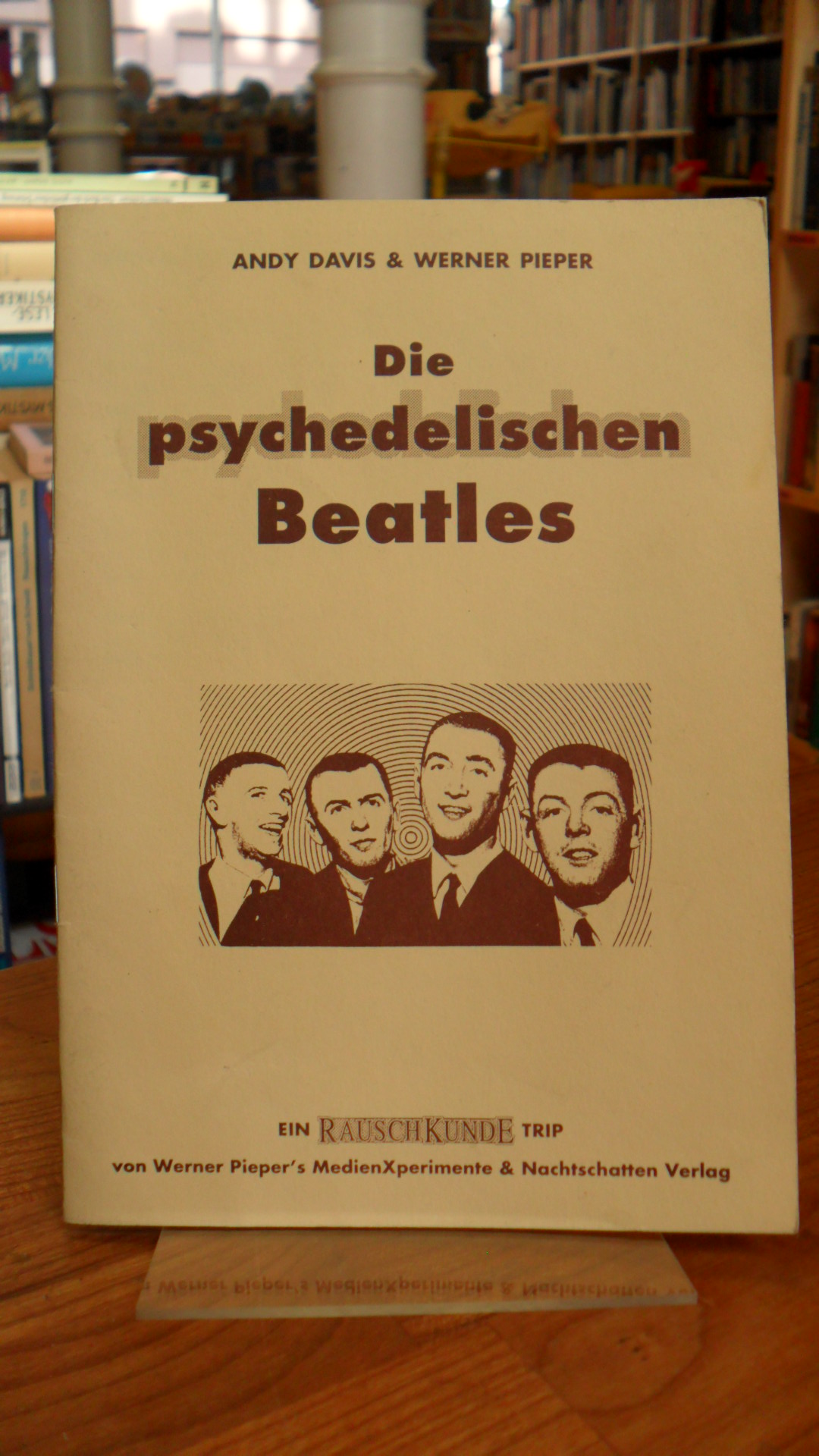
1994Best.-Nr. 8388CBLöhrbach, Pieper's MedienXperimente [u.a.], 1994. gr.8°, 32 S., original Heft, Erstausgabe Einband minimal berieben, sonst sehr schönes, sauberes Exemplar (vo2gla)
1972Testi: Fairfield Richard. F.to: 19,5x13; pagg. 406; BN; rileg. brossura. Editore: Penguin Books, Baltimore, Maryland, 1972.
1974Testi: Saunders Nicholas. F.to: 11,5x18,5; pagg. 166; BN; rileg. brossura. Editore: Arcana Editrice, Roma, 1974.
2011Fug You is Ed Sanders's unapologetic and often hilarious account of eight key years of "total assault on the culture," to quote his novelist friend William S. Burroughs.Fug You traces the flowering years of New York's downtown bohemia in the sixties, starting with the marketing problems presented by publishing Fuck You / A Magazine of the Arts, as it faced the aboveground's scrutiny, and leading to Sanders's arrest after a raid on his Peace Eye Bookstore. The memoir also traces the career of the Fugs--formed in 1964 by Sanders and his neighbor, the legendary Tuli Kupferberg (called "the world's oldest living hippie" by Allen Ginsberg)--as Sanders strives to find a home for this famous postmodern, innovative anarcho-folk-rock band in the world of record labels. — Testi: Sanders Edward. pagg. 448; rileg. rigida. Editore: Da Capo Press, New York, 2011.
1975Gives details on design, construction materials, optional features, costs and pitfalls for each type of home. Chapters include mobile homes, modular houses, prefabricated houses, domes, specifications, and an excellent bibliography. While many of the examples are traditional in design, there are enough interesting, modernist and thoughtful designs to make this a valuable addition to your prefab collection. Well-written, organized, and photographed. — Testi: Rabb Judith, Rabb Bernard. pagg. 172; BN; rileg. brossura. Editore: Quadrangle, New York, 1975.
1968Testi: Earisman Delbert L.. F.to: 11x18; pagg. 144; rileg. brossura. Editore: Fortress Press, Philadelphia, 1968.
F.to: 12,5x20; pagg. 240; BN; rileg. brossura. Editore: De Bezige Bij, Amsterdam, .
1963F.to: 12,5x20; pagg. 160; BN; rileg. brossura. Editore: De Bezige Bij, Amsterdam, 1963.
1968Testi: Hanlon Edward S.. pagg. 160; rileg. brossura. Editore: Paperback Library, New York, 1968.
1967Best.-Nr. 706821967 N° 10 - Décembre 1967 - Directeur-Rédacteur en chef : Michel Laborie - Mensuel d'information Edité par la S.A.R.L. d'édition du Journal et des publications Bande à Part - Grand in-4 broché - journal illustré - 32 pages
1972A clean, unmarked book with a tight binding. 11"w x 8 1/2"h. Black and white photos of soldiers, Viet Nam, hippies, students, protests, cops, People's Park, Jerry Rubin, Huey Newton, portraits and street scenes.
1969Best.-Nr. V1952Düsseldorf (Accidentia) 1969. Gr.-4°, Originalleinen mit Originalumschlag, Begleitheft
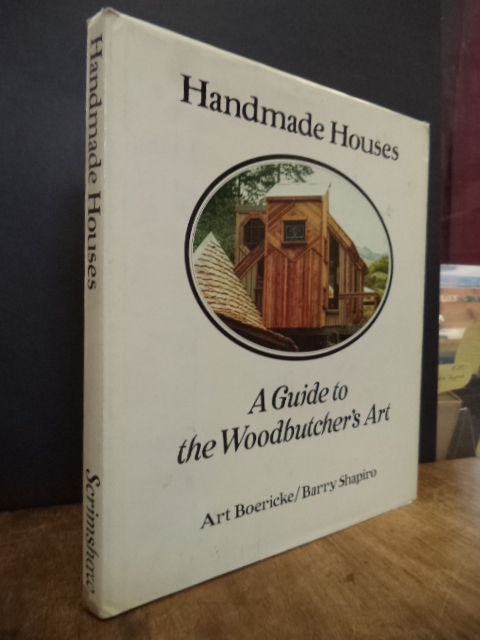
1973Best.-Nr. 38968ABSan Francisco, Scrimshaw Press, 1973. quadr.gr.8°, 48 S. mit wunderbaren Fab-Abb. von selbstgezimmerten Holzhäuser (meist in schöner Natur oder der Wildnis), Text: englisch, original Leineneinband mit dem illustr. original Schutzumschlag, Erstausgabe / First Edition der weiße Umschlag zart berieben und an der unteren Rückenkante mit kleinem Fleckchen, sonst ein gutes, sauberes Exemplar mit tollem Abbildungsmaterial
1970Best.-Nr. 41970n.p.: n.p. 1970. Very good. Poster picturing four sweaters wearing a number of buttons with pacifist themes like "Make love not war" and "Stop creeping proliferation." The poster has no text identifying an artist or any associated groups suggesting this was a commercial production with a "hippie" theme likely the kind of thing one might pick up in a head shop in the waning days of the counterculture. Still an evocative momento. 25" x 38" approx. printed recto only in green and black ink. Folded with some splits at folds. Minor toning. Very good overall. n.p. unknown books
1971Testi: Shortney Joan R.. F.to: 10,5x17,5; pagg. 338; rileg. brossura. Editore: Pocket Books, New York, 1971.
1967Testi: Simmons J. L., Winograd Barry. pagg. 180; rileg. brossura. Editore: Marc Laird Publications, Santa Barbara, 1967.
1970pagg. 136; rileg. brossura. Editore: Becker Versand, Nürnberg, 1970.
1966Testi: Kluver Heinrich. F.to: 13,5x20,5; pagg. 108; rileg. brossura. Editore: Phoenix Books, Chicago, 1966.
1969Testi: Hyde Margaret O.. pagg. 148; rileg. brossura. Editore: Pocket Books, New York, 1969.
1971We Are Everywhere, written by Jerry Rubin while in the Cook County Jail, is a bit of a departure for the Library. It isn't a direct "how-to" manual in the ways that the other books we have included are, rather it is a celebratory book chronicling an emerging counterculture. The book was written to share ideas openly and freely. Rubin was part of the Chicago 7 arrested after mass protests at the 1968 Democratic National Convention in Chicago. He wrote the book at a time when he and others were witnessing the birth of our control society. This book joyfully enumerates and celebrates an emerging militant, resistant counter culture. It is part manifesto and part document of the emergence of a movement. The book's design is also a point of interest for us. Rich and dynamic, we are sure that it was intended to be read while under the influence of some psychotropic substance. The colors change on every page. They jump back and forth from background to frame to text, alternating with one another. The pages alternate between purple, yellow, red, green and pink. The same colors appear as strips, bands or frames, sometimes texts, on various pages throughout. Here is the tantalizing description of the book on the back cover: We Are Everywhere is Jerry Rubin's journal, written secretly in Cook County Jail and smuggled out. Jerry is a convicted felon, Yippie, enemy of the state, pothead, seven-year-old child and author of the revolutionary manifest Do It! We Are Everywhere reveals a defendant's inside view of The Conspiracy Trial. Written like a scenario, this book focuses on the Weatherman underground, the Black Panther Party, LSD, Women's Liberation, Walter Cronkite, Judaism, street fighting and the coming revolution. A color layout including more than one hundred and fifty pictures takes you on a multi-media trip, revealing the emergence of a new people. — Testi: Rubin Jerry. F.to: 13,5x20; pagg. 256; COL e BN; rileg. brossura. Editore: Harper & Row Publisher, New York, 1971.