111 risultati
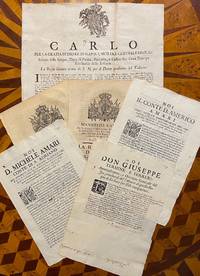
1764rif. 1067Sicily Naples and Turin 1764. Very good. Together 6 items: 1 broadside 46 x 34.5 cm 5 bandi folio sheets each folded once various sizes various wear some signatures clipped others supplied in manuscript assorted manuscript annotations extracted from bindings. Small but very interesting collection of Bandi on the prohibition of tobacco all scarce none are found in OCLC / FirstSearch. As there was no centralized government in Italy the restrictions on Tobacco was a quagmire of regional taxation restriction and monopolization as is attested by the bandi in the present collection. Increasing tobacco consumption in the Italian penensula merited the establishment of fiscal laws by various States. The present items illustrate the expansion of tobacco culture and the disjointed governmental responses from Sicily Naples and Turin: 1. Broadside: Carlo . La Regia Giunta eretta da S.M. per il Dritto proibitivo del Tabacco 3 May 1758. 2. Noi il Conte d' Americo Amari . del gius proibitivo del Tabacco 23 January 1746 2 pp. 3. Noi d' Michele Amari conte de S. Adriano . del Jus prohibendi del Tabacco 23 January 1740 2 pp. 4. Noi Don Giuseppe Termine e Ferreri . del Jus prohibendi del Tabacco 30 November 1733 1 p. 5. Manifesto Camerale per la vendita. de distribuzione del Tabacco nel Luogo di Refrancore 14 May 1762 3 pp. with Tariffs. 6. 5. Manifesto Camerale che ristabilisce la vendita e distribuzione del Tabacco nel Luogo di Rochetta Belbo 13 February 1764 3 pp. with Tariffs. unknown books
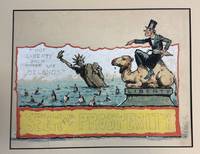
1933rif. 41184n.p. 1933. 8" x 12". Original color painting on Abacco illustration board matted and framed behind glass. Vibrant colors with some pencil sketch lines showing through. Unsigned and uninitialed. Corners chipped a closed crack in lower left corner. On verso of board is the name of the type of board and available dimensions "Paints Brush and Color Corporation" with distributors listed as E.H. & A.C. Friedrichs Co. of New York The Hirshberg Company of Baltimore and Henry M. Taws of Philadelphia. Very Good. Ours is the only copy located after diligent investigation. The camel which Thomas Nast chose as the symbol of the Prohibition Party has replaced the Statue of Liberty on the pedestal. Camels don't drink very often; when they do they only drink water. This item was likely painted between 1931 and 1933. The official Beer for Prosperity Campaign was organized May 1931 in New York City. Edward H. Schulze was director of the organization and announced that he would support all political candidates in favor of legalizing beer. The slogan spread over the next year and a half. Posters for this campaign in 1932 advertised that legalizing beer would bring two trillion dollars in new revenue in four years because "millions of dollars made from bootleg Beer now finances all kinds of crimes kidnappings etc." Another campaign poster advertised purchases of "Beer for Prosperity" Stamps to "Help Elect to Congress Men Who Will Vote 'Yes.'" Beer for Prosperity Campaign. n.d. In John J. Raskob papers. Manuscripts and Archives Hagley Museum and Library #m473_20100624_005; "Beer For Prosperity Campaign Inc. Will Back Pierce's Congressional Candidacy" The Rutland Daily Herald 23 August 1932 p.7. We do not know who painted this imaginative item. E.H. & A.C. Friedrichs Company was founded in 1868 and is still in business today under the modern name of Fredrix. The Hirshberg Company originated in 1845 as Hirshberg Hollander & Company and remained in business under a few different Hirshberg names until approximately the early 1960s. Henry B. Taws opened in Philadelphia around 1897 and remained in business until at least 1931. unknown
1933rif. 41184n.p. 1933. 8" x 12". Original color painting on Abacco illustration board matted and framed behind glass. Vibrant colors with some pencil sketch lines showing through. Unsigned and uninitialed. Corners chipped a closed crack in lower left corner. On verso of board is the name of the type of board and available dimensions "Paints Brush and Color Corporation" with distributors listed as E.H. & A.C. Friedrichs Co. of New York The Hirshberg Company of Baltimore and Henry M. Taws of Philadelphia. Very Good. Ours is the only copy located after diligent investigation. The camel which Thomas Nast chose as the symbol of the Prohibition Party has replaced the Statue of Liberty on the pedestal. Camels don't drink very often; when they do they only drink water. This item was likely painted between 1931 and 1933. The official Beer for Prosperity Campaign was organized May 1931 in New York City. Edward H. Schulze was director of the organization and announced that he would support all political candidates in favor of legalizing beer. The slogan spread over the next year and a half. Posters for this campaign in 1932 advertised that legalizing beer would bring two trillion dollars in new revenue in four years because "millions of dollars made from bootleg Beer now finances all kinds of crimes kidnappings etc." Another campaign poster advertised purchases of "Beer for Prosperity" Stamps to "Help Elect to Congress Men Who Will Vote 'Yes.'" Beer for Prosperity Campaign. n.d. In John J. Raskob papers. Manuscripts and Archives Hagley Museum and Library #m473_20100624_005; "Beer For Prosperity Campaign Inc. Will Back Pierce's Congressional Candidacy" The Rutland Daily Herald 23 August 1932 p.7. We do not know who painted this imaginative item. E.H. & A.C. Friedrichs Company was founded in 1868 and is still in business today under the modern name of Fredrix. The Hirshberg Company originated in 1845 as Hirshberg Hollander & Company and remained in business under a few different Hirshberg names until approximately the early 1960s. Henry B. Taws opened in Philadelphia around 1897 and remained in business until at least 1931. unknown books
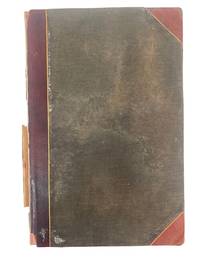
1922rif. 236901922. Woodland California Judicial Township justice court fee book 1922 to 1930 recording eight years of misdemeanor enforcement and the transfer of fines from R. W. Harrison's courtroom to Yolo County and California fiscal offices. Ninety nine of the ledger's 100 pages are completed with defendants' names abbreviated charges fines fees and docket references. Entries for liquor possession and other alcohol offenses appear beside motor vehicle violations gambling disturbing the peace assault battery and local ordinance cases while attached receipts document the sums Harrison remitted to county and state authorities. Harrison R. W. General Fee Book Justice of the Peace Woodland Judicial Township. Woodland California April 1922 to June 1930. 100 pages 99 completed in manuscript. 10.5 × 16 inches. Each monthly section provides columns for the date "Description of Work or Service" fees and remarks; Harrison supplied case names and abbreviated causes marked payments received calculated monthly totals and cited corresponding docket numbers. County auditor's receipts pasted over the entries certify payments for fines and fees. Receipts from the California Controller's Department and State Treasurer's Office record further transfers. The state documents bear the printed name of Treasurer Charles G. Johnson while the county forms carry signatures and date stamps from the Yolo County auditor and treasurer. The ledger covers most of national Prohibition which began in 1920 and records alcohol prosecutions as one category within the ordinary monthly business of a township court. Its growing number of motor vehicle matters documents the corresponding expansion of traffic enforcement often through small fines entered beside assault gambling peace disturbance and fish and game cases. Yolo County Archives maintains 18 linear feet of justice court dockets dating from circa 1878 to 1959 including criminal civil small claims and motor vehicle records whose entries generally identify the township litigants complaint and proceedings; Harrison's fee book supplies the financial sequence that followed those proceedings from the assessment of a fine through its remittance to county or state government. Quarter leather binding chipped at the outer corners; spine covering stripped although the binding remains tight; several threads loose at the edges; staining and discoloration to the front cover. Overall good condition. A nearly complete fiscal register of Prohibition era policing traffic regulation and misdemeanor justice in Woodland Judicial Township. unknown
1922rif. 236901922. Woodland California Judicial Township justice court fee book 1922 to 1930 recording eight years of misdemeanor enforcement and the transfer of fines from R. W. Harrison's courtroom to Yolo County and California fiscal offices. Ninety nine of the ledger's 100 pages are completed with defendants' names abbreviated charges fines fees and docket references. Entries for liquor possession and other alcohol offenses appear beside motor vehicle violations gambling disturbing the peace assault battery and local ordinance cases while attached receipts document the sums Harrison remitted to county and state authorities. Harrison R. W. General Fee Book Justice of the Peace Woodland Judicial Township. Woodland California April 1922 to June 1930. 100 pages 99 completed in manuscript. 10.5 × 16 inches. Each monthly section provides columns for the date "Description of Work or Service" fees and remarks; Harrison supplied case names and abbreviated causes marked payments received calculated monthly totals and cited corresponding docket numbers. County auditor's receipts pasted over the entries certify payments for fines and fees. Receipts from the California Controller's Department and State Treasurer's Office record further transfers. The state documents bear the printed name of Treasurer Charles G. Johnson while the county forms carry signatures and date stamps from the Yolo County auditor and treasurer. The ledger covers most of national Prohibition which began in 1920 and records alcohol prosecutions as one category within the ordinary monthly business of a township court. Its growing number of motor vehicle matters documents the corresponding expansion of traffic enforcement often through small fines entered beside assault gambling peace disturbance and fish and game cases. Yolo County Archives maintains 18 linear feet of justice court dockets dating from circa 1878 to 1959 including criminal civil small claims and motor vehicle records whose entries generally identify the township litigants complaint and proceedings; Harrison's fee book supplies the financial sequence that followed those proceedings from the assessment of a fine through its remittance to county or state government. Quarter leather binding chipped at the outer corners; spine covering stripped although the binding remains tight; several threads loose at the edges; staining and discoloration to the front cover. Overall good condition. A nearly complete fiscal register of Prohibition era policing traffic regulation and misdemeanor justice in Woodland Judicial Township. unknown books
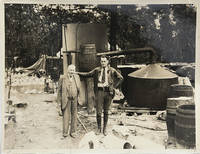
1932rif. 181780East Hartford CT & Palm Beach County FL: 1932-c. 1933. A collection of photographs documenting the seizure of illegal moonshine stills in Connecticut and Florida during Prohibition and following its repeal. The photographs are from the library of Ralph A. Johnson a revenue agent for the Bureau of Prohibition and its successor the Bureau of Alcohol Tax Unit. Moonshining flourished under Prohibition and even after its repeal its cheapness - and to some its taste - ensured it continued. Across the New England countryside farms housed industrial-sized moonshine operations. The first nine images show an immense moonshine still with vats and equipment inside a Connecticut barn raided by the Bureau of Prohibition on 14 July 1932. Johnson is shown standing next to an unidentified well-dressed man perhaps the moonshiner. The remaining five images depict a large still in Florida seized by the Alcohol Tax Unit in 1933 showing large copper stills connected to barrels above cooking fires glass carboys for the product and barrels with stove-in tops. Taken by Ernest Kirbell signed in the negative a crime photographer with the Connecticut State Police Department these images document the continued profitability of moonshining after Prohibition's repeal. Recent blue leatherette album front cover lettered in silver enclosing 14 silver gelatin photographs preserved in archival sleeves 5 measuring 216 × 279 mm with photographer's signature in negative sequence numbered in blank margin at upper fore edge; 8 measuring 203 × 254 mm; 1 measuring 89 × 140 mm. Sepia toning to photographs minor creasing and edgewear at extremities. In very good condition. hardcover
1938[4], 5-254, [2], 8 [ads], pages. This portion of Carr's life story begins after his experience as a submariner in WWI. He serves as an officer of the Mercantile Marine and experiences incredible adventures and hardships before deciding to move his young family from England to New Brunswick. Times are tough in his new land. He describes the local poverty and exposes the awful social problems of rural New Brunswick, as well as his dramatic adventures at work, with a local trapper and as a member of the C.P.R. police. In short, Carr was a man's man and this book is full of manly adventures. Later in life, Carr [1895-1959] became very concerned about what he viewed as plans for world government and wrote Pawns in the Game and Red Fog Over America, books which sold by the hundreds of thousand. The present work is vital in understanding the background and motivations of this fascinating man. Above-average wear to publisher's black cloth. Binding intact. Gift greetings upon front free endpaper. Spine leaning. Dust jacket not included. Not pretty but a worthy reading copy. Book
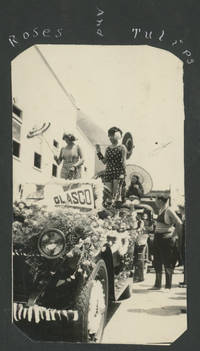
1920rif. List1317Southern California 1920. Limp leatherette album oblong 4to measuring 10 x 7 inches with seventy photographs most measuring 4 x 2 ½ inches. Wear to binding photographs with excellent contrast very good to near fine overall. Near Fine. An energetic album of photographs belonging to one Eddie Jones a fun-loving banjo player from Santa Ana mostly composed of photographs of musicians performing at small parties and functions during the prohibition era. Jones was apparently quite active on the local scene and the album is mostly made up of candid photographs of musicians all captioned some humorously. Many of the photographs show small bands playing guitars many of them playing with slides likely due to the popularity of Hawaiian music at the time. Also included are many photographs of parades in and around Los Angeles as well as photographs of the 1925 Santa Barbara Earthquake showing damaged buildings. Two photographs feature a glass of rye others show agricultural scenes. Newspaper clippings in the back center on the Santa Ana and it’s possible that Jones - who was the common name mentioned in these clippings - was also a farmer from the Santa Ana area when he wasn’t playing music. One photograph shows San Diego a couple show a bullfight in Tijuana. Overall an evocative and well preserved piece of California Prohibition-era history. unknown
1920rif. List1317Southern California 1920. Limp leatherette album oblong 4to measuring 10 x 7 inches with seventy photographs most measuring 4 x 2 ½ inches. Wear to binding photographs with excellent contrast very good to near fine overall. Near Fine. An energetic album of photographs belonging to one Eddie Jones a fun-loving banjo player from Santa Ana mostly composed of photographs of musicians performing at small parties and functions during the prohibition era. Jones was apparently quite active on the local scene and the album is mostly made up of candid photographs of musicians all captioned some humorously. Many of the photographs show small bands playing guitars many of them playing with slides likely due to the popularity of Hawaiian music at the time. Also included are many photographs of parades in and around Los Angeles as well as photographs of the 1925 Santa Barbara Earthquake showing damaged buildings. Two photographs feature a glass of rye others show agricultural scenes. Newspaper clippings in the back center on the Santa Ana and it’s possible that Jones - who was the common name mentioned in these clippings - was also a farmer from the Santa Ana area when he wasn’t playing music. One photograph shows San Diego a couple show a bullfight in Tijuana. Overall an evocative and well preserved piece of California Prohibition-era history. unknown books
1930rif. BK0040Texas 1930. Journal measuring 9 ¼ x 7 ¾ inches 67 double-sided pages filled thoroughly with many loose newspaper clippings tucked inside. Many pages with newspaper clippings pasted over writing some fairly loosely attached. Cover heavily worn good; contents worn and somewhat delicate though generally very good or better. With appx. 200 sheets of other material mainly 5 x 8 inch note papers generally good to very good. Overall very good. The scrapbook journal and papers of a Texas preacher likely the Methodist reverend Charles B. Garrett documenting his anti-alcohol stance and his efforts to come up with convincing empirical arguments in favor of Prohibition. The journal begins in about 1900 or 1901 starting with numerous newspaper clippings concerning alcohol-induced killings domestic violence and other tragedies. Alongside the clippings are Garrett's own notes and writing. These include some fully thought-out short essays on topics like the Woman's Christian Temperance Union the Association Against the Prohibition Amendment and drinking rates alcohol-related death rates crime and so on. For example Garrett writes: "These boys and girls who are determined to drink because the government has prohibited the sale of intoxicants come as a rule from fathers and mothers who have failed to endow their sons and daughters with elimental sic decency. Yet the wets make the best of this. It is a fact. Drinking flask toting and cocktail jerking is not done in the best American society. . Bottle made conversation is never worth listening to only fools are entertained by such." He also comments on certain Texas happenings in particular including the impeachment of anti-Prohibition Governor James Ferguson appearing to blame Ferguson's behavior on drink. Next to clippings about Texas v James E Ferguson he writes: "A self confessed degenerate / An impeached Governor / A proven grafter using the state money to pay his own debts . a. To hell with these cigarette smoking boys my pockitt book is my principal / b. I am a degenerate son of a noble sire". However his writing is typically tempered with the acknowledgement that "this is a public question with two sides and this is a free country or is supposed to be therefore each individual has the right of choice." His aim seems to have been to construct an argument for Prohibition using rather than moral rhetoric as much convincing empirical evidence as he could; entries often include specific statistics such as crime and car accident rates rates before and after bans on alcohol sales in Texas counties. He also shows great consideration for the opposing side's arguments; for instance a more stream-of-consciousness entry reads: "1 The all important Q is shall a man be deprived of selling what he pleases - this is an inalienable right. 2 Any man has the absolute right to buy liquor. Minors are not allowed. We got ar sic right to do these things - it is God gave it. Dont 14 chapter on thithing sic. There is the whole field of the liquor question covered. . The law provides that it may be sold for every purpose . Prohibition is violation of the Holy Scriptures / Will one of you who laughed at his ridicule tell where he found the scripture / No man new wine in old bottles / The ax is laid at the root of the tree. / Paul said take wine for the stomach sick / We don't prohibit we regulate. . Our forefathers fought for these rights / Sam Houston and others ." In another similarly free-associative entry his reasons against prohibition include that "It is boy's nature to do what you say he shan't" "Can't make men good by law" and "I drank boat loads of it but harmed nobody"; and he remarks that "Men who have strong opinions on one side of a subject will not see the other side." These stream-of-consciousness entries sometimes veer into the bizarre such as the following entry titled "Anecdotes": "Get 'em in the open. Like the cowboy who saw a bald headed man on the train out West scratching the fringe of hair at the base of his skull. The cowboy leaned forward and said: 'Stranger if you will run them up into the clearing you can catch em' / Got his eyes open - Old Sook John and Dad / The Arkansas girl and the Texas Cowboy. / The negro who grew in grace. / The stammering boy and his palseyed Dad / The stammering a peculiarity. / The two men who bought a fan each one wore his out fanning while the other kept his by holding the fan still moving his head from side to side. / The Lousanna sic man who drank corn whiskey till he saw so many snakes that he decided to start a snake show / Mr Nesbitt and his namesake / A rabbit took a drink of No 4 and broke the latch on a bull dog's door / A peckerwood took a drink of No 3 and peeled the bark from a hickory tree / A bull frog took a drink from No 2 and when he jumped he fairly flew / A mouse took a drink from No 1 and said I am a cat lickin son of a gun." The journal continues throughout and after Prohibition. An entry from during Prohibition again focusing on opposition arguments reads: "The U.S. has stood the depression better than most any nation. We have had to lend several of the soaking wet nations money to keep them out of bankruptcy. Irving Fisher. Why do you oppose the 18A It destroys my personal liberty . / When I want a drink I want to walk right in and take it / Women didnt drink till the 18th A was adopted / Pro. made bootleggers / It interferes with my personal liberty . / Americans will not stand for any one saying they shall not they shall not do this or that." After the repeal his focus shifts somewhat to the moral responsibility of nonvoting "drys" for the evils resulting from legalization. He writes: "The wets now refer to repeal of the 18A. without sic emphasizing the overwhelming majority for repeal and many drys swallow that like they swallowed the diabolical propaganda against the 18A. . No honest person wet or dry will vote for or give their consent to anything that will double drunkenness and increase car accidents and crime if they know it will but that is exactly what every wet voted for and drys who didnt vote consented to and became responsible for if they knew what it was." The loose materials mainly seem to be sermon notes though they also contain a significant amount of Prohibition-related material. These include anecdotes about alcohol-related car accidents; a letter from the Texas Liberal Legion favoring Roosevelt's Beer and Wine Revenue Act with many of Garrett's notes on the back; and mailers with statements and sets of statistics from the Anti-Saloon League of America and the Methodist Episcopal Church's Board of Temperance Prohibition and Public Morals. Overall an engaging if sometimes strange document of a religious leader grappling with the task of convincing people of the Prohibitionist viewpoint. Of interest to historians of Texan prohibition and anti-alcohol views before during and after Prohibition. . unknown
1930rif. BK0040Texas 1930. Journal measuring 9 ¼ x 7 ¾ inches 67 double-sided pages filled thoroughly with many loose newspaper clippings tucked inside. Many pages with newspaper clippings pasted over writing some fairly loosely attached. Cover heavily worn good; contents worn and somewhat delicate though generally very good or better. With appx. 200 sheets of other material mainly 5 x 8 inch note papers generally good to very good. Overall very good. The scrapbook journal and papers of a Texas preacher likely the Methodist reverend Charles B. Garrett documenting his anti-alcohol stance and his efforts to come up with convincing empirical arguments in favor of Prohibition. The journal begins in about 1900 or 1901 starting with numerous newspaper clippings concerning alcohol-induced killings domestic violence and other tragedies. Alongside the clippings are Garrett's own notes and writing. These include some fully thought-out short essays on topics like the Woman's Christian Temperance Union the Association Against the Prohibition Amendment and drinking rates alcohol-related death rates crime and so on. For example Garrett writes: "These boys and girls who are determined to drink because the government has prohibited the sale of intoxicants come as a rule from fathers and mothers who have failed to endow their sons and daughters with elimental sic decency. Yet the wets make the best of this. It is a fact. Drinking flask toting and cocktail jerking is not done in the best American society. . Bottle made conversation is never worth listening to only fools are entertained by such." He also comments on certain Texas happenings in particular including the impeachment of anti-Prohibition Governor James Ferguson appearing to blame Ferguson's behavior on drink. Next to clippings about Texas v James E Ferguson he writes: "A self confessed degenerate / An impeached Governor / A proven grafter using the state money to pay his own debts . a. To hell with these cigarette smoking boys my pockitt book is my principal / b. I am a degenerate son of a noble sire". However his writing is typically tempered with the acknowledgement that "this is a public question with two sides and this is a free country or is supposed to be therefore each individual has the right of choice." His aim seems to have been to construct an argument for Prohibition using rather than moral rhetoric as much convincing empirical evidence as he could; entries often include specific statistics such as crime and car accident rates rates before and after bans on alcohol sales in Texas counties. He also shows great consideration for the opposing side's arguments; for instance a more stream-of-consciousness entry reads: "1 The all important Q is shall a man be deprived of selling what he pleases - this is an inalienable right. 2 Any man has the absolute right to buy liquor. Minors are not allowed. We got ar sic right to do these things - it is God gave it. Dont 14 chapter on thithing sic. There is the whole field of the liquor question covered. . The law provides that it may be sold for every purpose . Prohibition is violation of the Holy Scriptures / Will one of you who laughed at his ridicule tell where he found the scripture / No man new wine in old bottles / The ax is laid at the root of the tree. / Paul said take wine for the stomach sick / We don't prohibit we regulate. . Our forefathers fought for these rights / Sam Houston and others ." In another similarly free-associative entry his reasons against prohibition include that "It is boy's nature to do what you say he shan't" "Can't make men good by law" and "I drank boat loads of it but harmed nobody"; and he remarks that "Men who have strong opinions on one side of a subject will not see the other side." These stream-of-consciousness entries sometimes veer into the bizarre such as the following entry titled "Anecdotes": "Get 'em in the open. Like the cowboy who saw a bald headed man on the train out West scratching the fringe of hair at the base of his skull. The cowboy leaned forward and said: 'Stranger if you will run them up into the clearing you can catch em' / Got his eyes open - Old Sook John and Dad / The Arkansas girl and the Texas Cowboy. / The negro who grew in grace. / The stammering boy and his palseyed Dad / The stammering a peculiarity. / The two men who bought a fan each one wore his out fanning while the other kept his by holding the fan still moving his head from side to side. / The Lousanna sic man who drank corn whiskey till he saw so many snakes that he decided to start a snake show / Mr Nesbitt and his namesake / A rabbit took a drink of No 4 and broke the latch on a bull dog's door / A peckerwood took a drink of No 3 and peeled the bark from a hickory tree / A bull frog took a drink from No 2 and when he jumped he fairly flew / A mouse took a drink from No 1 and said I am a cat lickin son of a gun." The journal continues throughout and after Prohibition. An entry from during Prohibition again focusing on opposition arguments reads: "The U.S. has stood the depression better than most any nation. We have had to lend several of the soaking wet nations money to keep them out of bankruptcy. Irving Fisher. Why do you oppose the 18A It destroys my personal liberty . / When I want a drink I want to walk right in and take it / Women didnt drink till the 18th A was adopted / Pro. made bootleggers / It interferes with my personal liberty . / Americans will not stand for any one saying they shall not they shall not do this or that." After the repeal his focus shifts somewhat to the moral responsibility of nonvoting "drys" for the evils resulting from legalization. He writes: "The wets now refer to repeal of the 18A. without sic emphasizing the overwhelming majority for repeal and many drys swallow that like they swallowed the diabolical propaganda against the 18A. . No honest person wet or dry will vote for or give their consent to anything that will double drunkenness and increase car accidents and crime if they know it will but that is exactly what every wet voted for and drys who didnt vote consented to and became responsible for if they knew what it was." The loose materials mainly seem to be sermon notes though they also contain a significant amount of Prohibition-related material. These include anecdotes about alcohol-related car accidents; a letter from the Texas Liberal Legion favoring Roosevelt's Beer and Wine Revenue Act with many of Garrett's notes on the back; and mailers with statements and sets of statistics from the Anti-Saloon League of America and the Methodist Episcopal Church's Board of Temperance Prohibition and Public Morals. Overall an engaging if sometimes strange document of a religious leader grappling with the task of convincing people of the Prohibitionist viewpoint. Of interest to historians of Texan prohibition and anti-alcohol views before during and after Prohibition. . unknown books