Organisation for the Prohibition of ChemBiblio.com
Opcw: The Legal Texts
rif. 23092171-nnew. unknown

GreatBookPrices · Stati Uniti370,72 USD≈ 331,21 €
139 risultati
rif. DADAX124068326XNew unknown
rif. DADAX0367456745New unknown
rif. 23092171-nnew. unknown
rif. DADAX0801451981New unknown
rif. DADAX1496820045New unknown
rif. DADAX0195391233New unknown
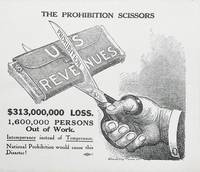
1916rif. 190622Newark New Jersey: Bowers 1916. A handbill opposing the introduction of prohibition illustrating it as greatly cutting American revenues leading to "$313000000 loss. 1600000 persons out of work" and therefore "intemperance instead of temperance" - "national prohibition would cause this disaster". Newspapers reported the design placed on billboards and arriving in the mail in early 1916. 178 x 211 mm. Very light central crease and spot at head else in fine condition. hardcover
rif. DADAX019883036XNew unknown
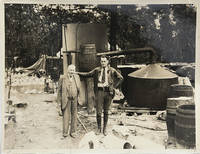
1932rif. 181780East Hartford CT & Palm Beach County FL: 1932-c. 1933. A collection of photographs documenting the seizure of illegal moonshine stills in Connecticut and Florida during Prohibition and following its repeal. The photographs are from the library of Ralph A. Johnson a revenue agent for the Bureau of Prohibition and its successor the Bureau of Alcohol Tax Unit. Moonshining flourished under Prohibition and even after its repeal its cheapness - and to some its taste - ensured it continued. Across the New England countryside farms housed industrial-sized moonshine operations. The first nine images show an immense moonshine still with vats and equipment inside a Connecticut barn raided by the Bureau of Prohibition on 14 July 1932. Johnson is shown standing next to an unidentified well-dressed man perhaps the moonshiner. The remaining five images depict a large still in Florida seized by the Alcohol Tax Unit in 1933 showing large copper stills connected to barrels above cooking fires glass carboys for the product and barrels with stove-in tops. Taken by Ernest Kirbell signed in the negative a crime photographer with the Connecticut State Police Department these images document the continued profitability of moonshining after Prohibition's repeal. Recent blue leatherette album front cover lettered in silver enclosing 14 silver gelatin photographs preserved in archival sleeves 5 measuring 216 × 279 mm with photographer's signature in negative sequence numbered in blank margin at upper fore edge; 8 measuring 203 × 254 mm; 1 measuring 89 × 140 mm. Sepia toning to photographs minor creasing and edgewear at extremities. In very good condition. hardcover
rif. DADAX023035971XNew unknown
rif. DADAX0195188020New unknown
rif. DADAX0313208220New unknown
rif. DADAX0415596858New unknown
rif. DADAX0520202724New unknown
rif. DADAX0199232458New unknown
rif. SONG0837188997Used: Good unknown
rif. DADAX0520302540New unknown
rif. DADAX1441131906New unknown
rif. DADAX0520296494New unknown
rif. DADAX0230359701New unknown
rif. DADAX0520356667New unknown
rif. DADAX0520254295New unknown
rif. DADAX0520254309New unknown
rif. DADAX0415386675New unknown
1933rif. 157897Cincinnati: Romach and Groene 1933. Vintage photograph of the first legal whiskey produced in Ohio during prohibition at the Carthage Distilling Company in Cincinnati with contemporary annotations of location dates and personnel and a "Rombach and Groene Commercial Photographers Cincinnati Ohio" stamp on the verso. A fascinating prohibition artifact depicting fifteen men and one woman standing in a warehouse before a stack of three whiskey barrels the topmost barrel prominently marked "1" less than two months before the passage of the 21st Amendment December 5 1933 repealing prohibition. On the verso in a contemporary hand is written: "First Barrel Whiskey produced in the State of Ohio since the 18th amendment became effective / manufactured and produced at the Carthage Distilling Corpn. plant Cincinnati Ohio / mashed under date Oct. 20th 1933 / drawn and entered under date Oct. 23rd 1933." Cincinnati Ohio second only to Louisville Kentucky in the production of bourbon prior to the end of prohibition was best known during prohibition as the headquarters for the "King of Bootleggers" George Remus. Cincinnati was located within a 300 mile radius of 80 percent of all of America's bonded whiskeys making it an ideal location for a massive bootlegging enterprise as well as for the headquarters to the Schenley Distillery one of only six distilleries nationwide with a license to sell medicinal spirits during prohibition. An October 26 1933 article from the Cincinnati Enquirer entitled "Big Blending Plant Planned For Reading; First Legal Whisky In Ohio Is Produced" confirms the annotations on the photograph "Simultaneously with the actual production of medicinal whisky at its plant in Carthage-said to be the first legal whisky turned out in Ohio since prohibition-it became known yesterday that the National Distillers Products Corporation New York largest distiller in the country will locate one of its major blending and bottling plants in the immediate vicinity of Cincinnati." The article continues "The Carthage Distillery on Anthony Wayne Avenue Carthage is the only distillery now operating in the state of Ohio." In 1933 the Carthage Distilling Company was acquired by the National Distillers Products Corporation and in 1987 was bought by Jim Beam. Established in 1883 Cincinnati photographers Rombach and Groene specialized in commercial and landscape photography. In 2001 the Cincinnati Museum Center acquired the Rombach and Groene Collection a collection of over 6500 glass and film negatives and a hundred prints dating from 1870 to 1970. The company closed in 1973. 10 x 8 inches. Very Good with some modest creasing four small bruises and a small repair to the surface of the image to the center right. Romach and Groene unknown