112 résultats
1930réf. BK0040Texas 1930. Journal measuring 9 ¼ x 7 ¾ inches 67 double-sided pages filled thoroughly with many loose newspaper clippings tucked inside. Many pages with newspaper clippings pasted over writing some fairly loosely attached. Cover heavily worn good; contents worn and somewhat delicate though generally very good or better. With appx. 200 sheets of other material mainly 5 x 8 inch note papers generally good to very good. Overall very good. The scrapbook journal and papers of a Texas preacher likely the Methodist reverend Charles B. Garrett documenting his anti-alcohol stance and his efforts to come up with convincing empirical arguments in favor of Prohibition. The journal begins in about 1900 or 1901 starting with numerous newspaper clippings concerning alcohol-induced killings domestic violence and other tragedies. Alongside the clippings are Garrett's own notes and writing. These include some fully thought-out short essays on topics like the Woman's Christian Temperance Union the Association Against the Prohibition Amendment and drinking rates alcohol-related death rates crime and so on. For example Garrett writes: "These boys and girls who are determined to drink because the government has prohibited the sale of intoxicants come as a rule from fathers and mothers who have failed to endow their sons and daughters with elimental sic decency. Yet the wets make the best of this. It is a fact. Drinking flask toting and cocktail jerking is not done in the best American society. . Bottle made conversation is never worth listening to only fools are entertained by such." He also comments on certain Texas happenings in particular including the impeachment of anti-Prohibition Governor James Ferguson appearing to blame Ferguson's behavior on drink. Next to clippings about Texas v James E Ferguson he writes: "A self confessed degenerate / An impeached Governor / A proven grafter using the state money to pay his own debts . a. To hell with these cigarette smoking boys my pockitt book is my principal / b. I am a degenerate son of a noble sire". However his writing is typically tempered with the acknowledgement that "this is a public question with two sides and this is a free country or is supposed to be therefore each individual has the right of choice." His aim seems to have been to construct an argument for Prohibition using rather than moral rhetoric as much convincing empirical evidence as he could; entries often include specific statistics such as crime and car accident rates rates before and after bans on alcohol sales in Texas counties. He also shows great consideration for the opposing side's arguments; for instance a more stream-of-consciousness entry reads: "1 The all important Q is shall a man be deprived of selling what he pleases - this is an inalienable right. 2 Any man has the absolute right to buy liquor. Minors are not allowed. We got ar sic right to do these things - it is God gave it. Dont 14 chapter on thithing sic. There is the whole field of the liquor question covered. . The law provides that it may be sold for every purpose . Prohibition is violation of the Holy Scriptures / Will one of you who laughed at his ridicule tell where he found the scripture / No man new wine in old bottles / The ax is laid at the root of the tree. / Paul said take wine for the stomach sick / We don't prohibit we regulate. . Our forefathers fought for these rights / Sam Houston and others ." In another similarly free-associative entry his reasons against prohibition include that "It is boy's nature to do what you say he shan't" "Can't make men good by law" and "I drank boat loads of it but harmed nobody"; and he remarks that "Men who have strong opinions on one side of a subject will not see the other side." These stream-of-consciousness entries sometimes veer into the bizarre such as the following entry titled "Anecdotes": "Get 'em in the open. Like the cowboy who saw a bald headed man on the train out West scratching the fringe of hair at the base of his skull. The cowboy leaned forward and said: 'Stranger if you will run them up into the clearing you can catch em' / Got his eyes open - Old Sook John and Dad / The Arkansas girl and the Texas Cowboy. / The negro who grew in grace. / The stammering boy and his palseyed Dad / The stammering a peculiarity. / The two men who bought a fan each one wore his out fanning while the other kept his by holding the fan still moving his head from side to side. / The Lousanna sic man who drank corn whiskey till he saw so many snakes that he decided to start a snake show / Mr Nesbitt and his namesake / A rabbit took a drink of No 4 and broke the latch on a bull dog's door / A peckerwood took a drink of No 3 and peeled the bark from a hickory tree / A bull frog took a drink from No 2 and when he jumped he fairly flew / A mouse took a drink from No 1 and said I am a cat lickin son of a gun." The journal continues throughout and after Prohibition. An entry from during Prohibition again focusing on opposition arguments reads: "The U.S. has stood the depression better than most any nation. We have had to lend several of the soaking wet nations money to keep them out of bankruptcy. Irving Fisher. Why do you oppose the 18A It destroys my personal liberty . / When I want a drink I want to walk right in and take it / Women didnt drink till the 18th A was adopted / Pro. made bootleggers / It interferes with my personal liberty . / Americans will not stand for any one saying they shall not they shall not do this or that." After the repeal his focus shifts somewhat to the moral responsibility of nonvoting "drys" for the evils resulting from legalization. He writes: "The wets now refer to repeal of the 18A. without sic emphasizing the overwhelming majority for repeal and many drys swallow that like they swallowed the diabolical propaganda against the 18A. . No honest person wet or dry will vote for or give their consent to anything that will double drunkenness and increase car accidents and crime if they know it will but that is exactly what every wet voted for and drys who didnt vote consented to and became responsible for if they knew what it was." The loose materials mainly seem to be sermon notes though they also contain a significant amount of Prohibition-related material. These include anecdotes about alcohol-related car accidents; a letter from the Texas Liberal Legion favoring Roosevelt's Beer and Wine Revenue Act with many of Garrett's notes on the back; and mailers with statements and sets of statistics from the Anti-Saloon League of America and the Methodist Episcopal Church's Board of Temperance Prohibition and Public Morals. Overall an engaging if sometimes strange document of a religious leader grappling with the task of convincing people of the Prohibitionist viewpoint. Of interest to historians of Texan prohibition and anti-alcohol views before during and after Prohibition. . unknown
2011réf. 2090202120415058Published by the National Congress Against Atomic and Hydrogen Bombs 2011. Soft Cover. Fine. Number of books: 1 Published by the National Congress Against Atomic and Hydrogen Bombs paperback
1975In this survey of crime films the author explains their particular significance and relates them to the public consciousness of crime at the times they were made. With numerous photographs. This book is extra heavy, and may involve extra shipping charges to some countries
1986réf. 152221986 Editions Tallandier - 1986 - In-8, broché couverture illustrée - 271 pages
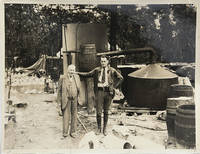
1932réf. 181780East Hartford CT & Palm Beach County FL: 1932-c. 1933. A collection of photographs documenting the seizure of illegal moonshine stills in Connecticut and Florida during Prohibition and following its repeal. The photographs are from the library of Ralph A. Johnson a revenue agent for the Bureau of Prohibition and its successor the Bureau of Alcohol Tax Unit. Moonshining flourished under Prohibition and even after its repeal its cheapness - and to some its taste - ensured it continued. Across the New England countryside farms housed industrial-sized moonshine operations. The first nine images show an immense moonshine still with vats and equipment inside a Connecticut barn raided by the Bureau of Prohibition on 14 July 1932. Johnson is shown standing next to an unidentified well-dressed man perhaps the moonshiner. The remaining five images depict a large still in Florida seized by the Alcohol Tax Unit in 1933 showing large copper stills connected to barrels above cooking fires glass carboys for the product and barrels with stove-in tops. Taken by Ernest Kirbell signed in the negative a crime photographer with the Connecticut State Police Department these images document the continued profitability of moonshining after Prohibition's repeal. Recent blue leatherette album front cover lettered in silver enclosing 14 silver gelatin photographs preserved in archival sleeves 5 measuring 216 × 279 mm with photographer's signature in negative sequence numbered in blank margin at upper fore edge; 8 measuring 203 × 254 mm; 1 measuring 89 × 140 mm. Sepia toning to photographs minor creasing and edgewear at extremities. In very good condition. hardcover
1927réf. 2381ABBerlin, Verlag Die Schmiede, (1927). Kl. 8°. Üs. Paul Cohen-Portheim. Vorwort L. L. (d.i. Leo Lania). 70 S. 1 Bl. Farb. OPp. (Georg Salter). (= Berichte aus der Wirklichkeit, hrsg. Eduard Trautner, Bd. 3).
1976réf. 2090502113717793Not Available 1976. Soft Cover. Fine. The book is in fine condition. Not Available paperback
1932réf. Prohibition1932PROHIBITION American Drinks special issue 718 of LE RIRE. Text by Robert Dieudonné. Paris: Le Rire 5 November 1932. With 17 illustrations by Jean Bruller. Folio 20pp; entire issue in brown cloth binding front panel with duplicate pictorial cover image. Fine copy. First printing of this clever spoof on the secret consumption of alcohol during the American prohibition. Le Rire hardcover
réf. 152766659X.Gpaperback. Good. Access codes and supplements are not guaranteed with used items. May be an ex-library book. paperback
1990230 pages. Index and bibliography. "...Traces the history of the antipotlatch law, the government's attempts to enforce it and the widespread native opposition to the repressive legislation, shedding new light on a crucial chapter in the history of native peoples in Canada over the past two centuries." - from dust jacket. Former library copy with usual markings and only light wear. A sound copy. Book
1973372p., illus. Hardcover Good condition; boards soiled
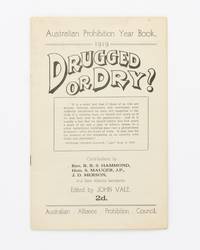
1919réf. 102605Melbourne: Australian Alliance Prohibition Council 1919. Very Good. Melbourne Australian Alliance Prohibition Council 1919. Octavo 32 pages including title-wrappers. Saddle-stapled; minimal signs of use and age; an excellent copy. The third year book issued by the Council. Australian Alliance Prohibition Council unknown
197933 pages. Features: Bibles and Booze - Prohibition in Chilliwack in the late 1800s. The Depression in Matsqui, 1930-1937; Willard Ernest Ireland, 1914-1979; Old Trails and Routes in British Columbia: The Boston Bar Trail, 1859-1860 - Fort Hope to Boston Bar; plus 15 book reviews. Book
1964réf. 207850Couverture souple. Broché. 350 pages. Couverture défraîchie. Rousseurs.
1993A study of white racism on the notoriously racist Middle Border between the years 1833 and 1880 and its evolution into outspoken egalitarianism. With Index. 348 pages. Dust jacket has small tears to sides at top of spine, and light shelfwear.
193158 pages. Features: Nice color ad for General Electric radios inside front cover; Hudson Essex car ad shows mother dropping kids at school; Nice full-page ad for Mimeograph; They'll Come Shooting (short story); Power and Glory - the gutsy story of Boies Penrose, one of the most prodigious figures in American political life - article with photos; Wild Geese (short story); A Lady of Resource (short story); Naughty Girl - Lenore Ulric serves allure in generous portions - article with photos; The Meanest Beast - battle between black leopard and shark; The Road Back (part VI of short story); You Couldn't Hate Patrick (short story); Thoughts that Win - Advice by champion golfer Jerome D. Travers - article with photo; Nice full-page color ad for Seald Sweet grapefruits; Full-page ad for Canada Dry ginger ales; The Scotty Dog (short story); Fantastic centerfold two-colour ad for Colorado tourism; Louisville & Nashville (L&N) Railroad full-page ad; Full-page ad for Philco radios features photos of Gary Cooper; Nice Chrysler ad; Full-page Fleischmann's Yeast ad encourages readers to eat three cakes per day (!); Back page article on prohibition; Attractive color Ford ad inside back cover shows doctor making housecall in the evening snow; Color Ipana ad on back cover. Average wear. Unmarked. A sound vintage copy. Book
1994réf. 7202CBSolothurn/Löhrbach, Nachtschatten-Verlag/Pieper's MedienXperimente (= der grüne Zweig 147), 1994. 8°, 94 S. mit s/w-Abbildungen, illustr. original Kartonage (Paperback), Erstausgabe schönes, sauberes Exemplar.
1924réf. 23615New York: League for Public Discussion 1924. First edition. 74 pages followed by 4 pages advertisements or notices 1 plate with a portrait of each of the contenders. 1 vols. 8vo. Original green stiff wrappers notice about the League on inside back cover. Some light wear and discoloration front cover detached. First edition. 74 pages followed by 4 pages advertisements or notices 1 plate with a portrait of each of the contenders. 1 vols. 8vo. League for Public Discussion unknown
1924réf. 23615New York: League for Public Discussion 1924. First edition. 74 pages followed by 4 pages advertisements or notices 1 plate with a portrait of each of the contenders. 1 vols. 8vo. Original green stiff wrappers notice about the League on inside back cover. Some light wear and discoloration front cover detached. First edition. 74 pages followed by 4 pages advertisements or notices 1 plate with a portrait of each of the contenders. 1 vols. 8vo. Darrow vs. Holmes on Prohibition. League for Public Discussion unknown books
1888réf. 78719New York NY.: The National Temperance Society and Publication House. Very Good. 1888. Softcover. Soft-bound in tan wrappers with black printing. The spine is chipped and torn with the covers loose but present. The covers show light soiling and wear/chipping to the edges and corners with loss to the top outer corner of the lower cover. The text-block is worn with the title-page loose but present. The contents are bright and clean. . The National Temperance Society and Publication House paperback
1889réf. 30728New York: The National Temperance Society and Publication House 1889. Original printed wrappers some edge and spine chipping rear wrapper detached but present and original staples. 36pp. Clean text. Except as noted Very Good. In 1881 Kansas enacted a constitutional amendment prohibiting the manufacture or sale of alcoholic beverages. Doing so was a misdemeanor punishable by fine or imprisonment. The amendment effectively rendered Peter Mugler who operated a brewery unemployed. He brought suit claiming that Kansas had unconstitutionally deprived him of his property in violation of the Fourteenth Amendment to the U.S. Constitution. Writing for the Court Justice Harlan-- who would issue a powerful dissent several years later in the notorious case of Plessy vs. Ferguson-- held that the amendment was a permissible exercise of the State's police powers which have always been reserved to the States as an attribute of their sovereignty. The rear wrapper advertises works sponsored by the National Temperance Society. OCLC locates eleven copies under two accession numbers as of November 2013. The National Temperance Society and Publication House unknown
1889réf. 30728New York: The National Temperance Society and Publication House 1889. Original printed wrappers some edge and spine chipping rear wrapper detached but present and original staples. 36pp. Clean text. Except as noted Very Good. In 1881 Kansas enacted a constitutional amendment prohibiting the manufacture or sale of alcoholic beverages. Doing so was a misdemeanor punishable by fine or imprisonment. The amendment effectively rendered Peter Mugler who operated a brewery unemployed. He brought suit claiming that Kansas had unconstitutionally deprived him of his property in violation of the Fourteenth Amendment to the U.S. Constitution. Writing for the Court Justice Harlan-- who would issue a powerful dissent several years later in the notorious case of Plessy vs. Ferguson-- held that the amendment was a permissible exercise of the State's police powers which have always been reserved to the States as an attribute of their sovereignty. The rear wrapper advertises works sponsored by the National Temperance Society. OCLC locates eleven copies under two accession numbers as of November 2013. The National Temperance Society and Publication House unknown books
1976réf. Ge1095New York, Norton, 1976. Broschur. Ebd. leicht nachgedunkelt & etw. berieben. 8° Buch Softcover
1991218 pages. Index. Footnotes. "The first systematic examination of government control of liquor in Canada. As the first province in English Canada to choose government control, British Columbia stood out as a North American experiment in the post-prohibition world of alcohol regulation. Analyzes liquor control from a variety of viewpoints: attitudes and access to alcohol; federal-provincial relations; cartels and patronage; and social reform. Reveals much about he intricacies of the state in economic life, particularly the apparent contradiction between promotion and regulation." - Preface. Former library copy with usual markings and front free endpaper removed. Dust jacket not included. Above-average wear to navy blue boards. Binding intact. A worthy reference copy of this 1991 first printing. Book
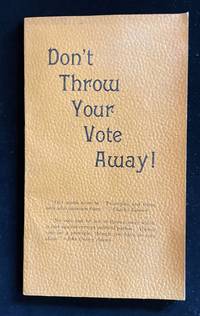
1892réf. 013064Hartford: Press of New England Home 1892. 1st Edition. Soft cover. Near Fine. Scarce 1892 campaign booklet for the Prohibition Party's Presidential candidate General John Bidwell its Vice Presidential candidate James Cranfill electors at large congressional candidates and canddiates for Connecticut Governor Ltnt Giovernor. Secretary of State and other state officers - all temperance advocates. Mustard textured paper covers titles printed in black measures approx 4.5x 7.5" 58pages with acceptance speech of Bidwell and full biographies and images from plates of all candidates. In the election of 1892 the Prohibition Party came in 4th place with about 2% of the national vote. OCLC lists no library holdings with this specific title though a search for it by title reveals that one library -Yale - sources "Collection of late 19th century minor political pamphlets" dated 1892 but we cannot confirm if this title is among them. Press of New England Home unknown