134 risultati
1960rif. 556565Jerusalem: The Israel Program for Scientific Translations 1960. Hardcover. Fine/Near Fine. First English-language edition. Quarto. 484pp. Illustrated with charts and graphs. Owner stamp and signature of a noted American psychologist on the front fly. Top corners of boards and about half the text modestly bumped else a fine copy in a close to fine dust jacket with a corresponding gentle bump and tiny abrasion. Published for two American institutions: The National Science Foundation and The Department of Health Education and Welfare. First published in Russian in 1955. This publisher The Israel Program for Scientific Translations was founded by future mayor of Jerusalem Teddy Kollek in 1959. He is quoted in a 1970 article in The New York Times: "There was a keen need in the West for technically sound translations of Soviet scientific works soon after the launching of Sputnik. We had numerous immigrants with exceptional linguistic and scientific ability so we just put demand and supply together.” The venture began modestly—with a small government grant and five editors—but by 1970 had over 100 editors and published about 150 English-language titles a year. A nice copy of a relatively uncommon title. The Israel Program for Scientific Translations hardcover books
1979rif. S7889Washington D.C.:: National Academy of Sciences 1979-1998. 1979. 16 volumes. 8vo. Various paginations. Numerous biographies of noted scientists photos portraits bibliog. Full cloth 6 vols. with plain brown dust jackets. A few volumes with ownership rubber stamp or signature of Norman Horowitz. FINE. FIRST EDITIONS. Detailed biographies of many important figures in science such as: Percy Williams Bridgman Edwin P. Hubble George Richards Minot Robert Frederick Loeb Earl W. Sutherland Albert Einstein Vesto Melvin Slipher George W. Beadle Edward L. Tatum Sterling Emerson Alfred Sturtevant & many more. Volume numbers are: XLI-XLVII XLIX-52 58 59 62 63 & 73. National Academy of Sciences, 1979-1998. hardcover books
1872rif. 48012New York: D. Van Nostrand 1872. First Edition. Presentation copy inscribed "To Commander J.S. Skerrett with the regards of the author" undated but apparently contemporary. Octavo; publisher's pebbled cloth stamped in gilt and blind; 11416pp. Errata slip inserted folowing author's introduction; 16pp publisher's catalog of "Naval Books." Bit of discoloration at base of front cover; private library stamp to front endpaper and title page; Very Good. A basic treatise on astral navigation written as a textbook for students at the U.S. Naval Academy where the author was an assistant professor in the Department of Astronomy. Inscribed to J.S. Skerrett at this time commanding officer of the U.S.S. Portsmouth. A nice copy of what was according to a contemporary review in the journal Popular Science ".a harmful book being full of doubtful statements of confused mathematics and questionable precepts and one not likely to improve the art of navigation or the science of nautical astronomy in any way. D. Van Nostrand unknown books
1827rif. 44516New Haven: Hezekiah Howe 1827. First Edition. Octavo 23.5cm.; publisher's peach wrappers printed within double rule; 24pp. Previously removed from larger volume coin-sized loss at bottom spine edge of upper cover not approaching text upper wrapper fore-edge rather chipped some soil and foxing later ink shelf number to upper cover and title page else Good to Very Good overall. Inscribed at head of front cover: "Revd. Mr. Duttow with the respect of the author." Address by the American physicist who would pioneer the study of meteor science in 1833 following the Leonid Meteor Shower over North America becoming the first American to observe Halley's Comet in 1835. SHOEMAKER 30115 misspelling author name "Olmstead". Hezekiah Howe unknown books
1917rif. 1781917. Hardcover. Very Good. Large 4to. Ltd. to 500 copies. Well illus. Covers slightly soiled/rubbed. Covers American artists 1750-1850 hardcover books
1905rif. 7611Washington: Governments Printing Office 1905. Hardcover. g. 4to. 272 pp. Brown cloth binding. Corners frayed and spine have a small amount of fraying very slightly shaken otherwise good to very good. Sixty-one full-page plates in color and b&w of drawings and photographs with two or more images on each plate. Good. Governments Printing Office hardcover books
1893rif. 1946New York: NY Academy of Sciences 1893. First Edition. As issued. A fine copy. 4to. An engraved invitation meas. appx. 8 x 11 in. with a portrait of Audubon. A superb engraved invitation with the original admission ticket and mailing envelope to the unveiling of the Audubon monument at Trinity Cemetery. NY Academy of Sciences unknown books
1981rif. 73837Beijing: Science Publishing House 1981. First edition 10.25" x 7.5" pp. 4 xii 170; text in Chinese; 26 pages of plates 3 folding maps 2 of which are large and laid into a back pocket; original pictorial boards backed in green cloth; pen mark on upper board else fine. A report produced after the First Comprehensive Scientific Expedition to the Qinghai-Tibet Plateau. Based on field investigations and laboratory studies the book records more than 500 hydrothermal areas and geothermal fields in Tibet systematically analyzes 169 geothermal fields and proposes an estimated total heat flow of 550000 kcal/s. It won first prize in the National Natural Science Awards in 1988 Baidu. Science Publishing House unknown books
1811rif. 6790Munich: I J Lentner 1811. First Edition. Contemporary paste paper boards. Good; some spotting and browning throughout. 8vo xxiv 4 1 - 224 239 pp. large folding table. The author is responsible for the striking physiological observation and first description of the circulation of endoplasm in Paramecium. The significance of this was not realized by Ehrenberg at the time and was finally confirmed by Carus in 1834. The discovery had a profound impact on the ideas of cell theory and evolution in the early 19th century. He was a staunch opponent of the 'romantic' in natural philosophy see his later work Uber Naturforschung and an indefatigable teacher and researcher. A little known and important work. See Cole; Poggendorff I 964 -`5; NDB VII 211. I J Lentner hardcover books
2001rif. 22873Moscow: Nauka 2001. First edition. Hardcover. vg. Lg 4to. White paper dust-jackets over faux leather boards with gilt lettering on front and spine. Color-coordinated by year. Yearly publication by the Russian Academy of Sciences reporting on Literature Art and Archeology research projects performed by the members of the Academy. Each year's work is summarized in 1 volume replete with ample b&w illustrations photographic reproductions and charts. Research areas for the most part centered around Western and Eastern Russia Central Asia former Soviet Union and Eastern Europe but also occasionally incorporating Western Europe. Research includes a wide cross-section of both ancient and modern topics for example the 1992 topics range from Chekhov to Meyerhold to Machiavelli to ancient archaeology of the Solovetsky Islands off the coast of Archangel. 10 vols total between 1989-2001. Missing years: 1991 1998 1999. Text in Russian. Corners of dust jackets and boards slightly bumped Interiors in fine. 1990 missing dust-jacket. Set overall in near fine condition. Nauka hardcover books
1831rif. 54248Philadelphia: Stoddart and Atherton 1831. Second edition. Three octavo volumes 22cm. Contemporary marbled calf with leather spine labels; engraved extra-title present in each volume; xvi7-362;330;264pp; engraved frontispiece v.1 and 48 inserted leaves of plates; text illus. Faint scattered foxing to text but plates generally clean; bindings exhibit moderate external aging and wear with small losses to leather at spine ends and corners. A complete structurally sound Good or better set. Early ownership signature of a Benj. Webb Jr. on endpaper and extra-title of v.1. A quite presentable set of Godman's treatise on the mammals of North America including some ethnographic notes on Native Americans and a lengthy discussion of the fossil record with special attention given to the Giant Mastodon. Much of the third volume is devoted to a description of the American whale fishery. Godman 1794-1830 was trained as a physician and was for some time the director of the Philadelphia Anatomical Rooms a private medical college where he achieved considerable renown as an anatomist. American Natural History described as "the first systematic treatise on the subject" DAB was first published in Philadelphia from 1826-1828; two "Second Editions" appeared in 1831 this one under the Stoddart & Atherton imprint and another by Key & Mielkie. Sabin and Imprints Bruntjen & Bruntjen note only the latter but OCLC records suggest that the two editions are collected with equivalent frequency. Neither Sabin nor Imprints supply a plate count for the Second Edition but our copy conforms to that at the Smithsonian Institution the only OCLC member institution to provide a collation. SABIN 27663. B&B 7271. Stoddart and Atherton unknown books
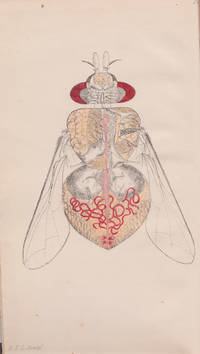
1870rif. 353London: J Van Voorst 1870. First Edition. orig. publisher's cloth. A very good copy. 8vo. Ten partially colored copper plate eng's. of the microscopic anatomy. 2 iiiiv-vi 2 12-121 pp.; 10 pls. A marvelous piece of natural history in which Lowne is undoubtedly to be credited with priority on a number of points with regard to the microscopical anatomy of the Musca vomitoria Linn. The illustrations are painstaking renderings of microscopic anatomy that must have cost the author many hours of labor. The coloring is partial and chosen to highlight anatomical details rather than dramatise the subject. Cole II 214. J Van Voorst hardcover books
2003rif. 51932NY: Knopf 2003. First edition first prnt. Co-authored with Andrew Berry. Signed by Watson in his diminutive hand on the title page. Author's Note. Introduction. Notes. Index. Color and black & white illustrations. Unread copy in Fine condition in a Fine dustjacket with an archival cover. Published to coincide with the fiftieth anniversay of the discovery of the double helix. Signed by Author. First Edition. Hardcovers. Fine/Fine. 8vo - over 7¾" - 9¾" tall. Knopf Hardcover books
2003rif. 20616NY: Knopf 2003. First edition first prnt. Signed by Watson in his diminutive hand on the title page. Color and black & white illustrations. Unread copy in Fine condition in a Fine dustjacket with an archival cover. Signed by Author. First Edition. Hardcovers. Fine/Fine. 8vo - over 7¾" - 9¾" tall. Knopf Hardcover books
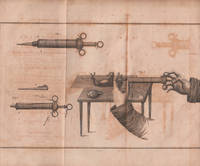
1813rif. 14086Philadelphia: M Thomas 1813. First English Edition. full contemporary calf. Very good; some minor offsetting; joints chafed. 8vo. Folding plate. An elusive and important title. Le Gallois described the action of the vagus nerve on respiration and located the respiratory center in the medulla. The plate accompanying the text is dramatic. See G - M # 928 citing the first French edition; Austin # 1139; Norman # 1324; Clarke & O'Malley Human Brain pp. 294 - 296. M Thomas unknown books
2002rif. 60629NY: Knopf 2002. First US edition first prnt. Signed by Watson in his diminutive hand on the title page. Unread copy in Fine condition in a Fine dustjacket with an archival cover. Signed by Author. First Edition. Hardcovers. Fine/Fine. 8vo - over 7¾" - 9¾" tall. Knopf Hardcover books
1839rif. 6206Paris / Berlin: A Hirschwald 1839. First Edition. Contemporary embossed binder's cloth. Good with spotty foxing throughout. 4to 2 1 - 110 pp. 23 large folding lithographic plates. An important study. The book identifies the circulation of nutrients in vascular plants and comments on their cell structure. Schultz's research took place during a crucial time in the development and understanding of the cell theory of plant and animal structures. Pritzel #8478; Hirsch V 159-160; Stafleu / Cowan V pp. 374-375. A Hirschwald hardcover books
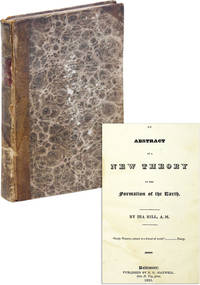
1823rif. 46664Baltimore: N.G. Maxwell 1823. First Edition. 12mo 18.5cm.; calf-backed marbled boards gilt-lettered spine; xv214-211pp. Boards a bit scuffed with brief exposure at corners leather somewhat dried and mottled endpapers toned faint dampstaining to first half of textblock else a Very Good sound copy. Theory on the formation of the earth dedicated to Andrew Jackson. Early chapters cover general natural phenomena such as "strata" and "The various colours of Marble" while the latter half of the text focuses on the North American continent describing "A Flood that was produced by the rise of northeast rise of North America" the formation of the Delaware Schuylkill and Susquehanna Rivers; the formation of the North American prairies; and the "Insects Vegetation &c. of America." The author later published another work titled "Antiquities of America Explained" 1831 arguing that a group of Tyrians and Jews crossed the Atlantic 3000 years ago creating a colony in Nova Scotia that eventually spread across the entire continent. This title missed by Sabin. SHOEMAKER 12827. N.G. Maxwell unknown books
1971rif. 29191Moskva: Nauka 1971. First edition. Cloth with gilt titles in shades of gray cream and blue. A very good set some browning to leaves on a few volumes otherwise clean unmarked one volume with damp stain to boards and a few leaves at the inner margin. Illus. 8vo. The complete run of the publications of the 7th International Congress of Anthropological and Ethnological Sciences held in Moscow in 1964. Contributions in Russian English French German Italian or Spanish. Hard to find in a complete run. Nauka hardcover books
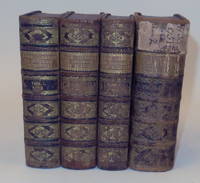
1760rif. 14266Amsterdam 1760. Boards. Good. Four volumes in uniform period leather bindings. 12mo 6 1/2 x 4 inches. Spines with gilt decorations raised bands and leather labels. Clean internally. Bindings are worn but fundamentally sound. Tome Premier: III-XVI 727 pages. Tome Second: 2 743 pages. Tome Troisieme: 2 648 pages. These three volumes comprise a set and contain the indices of the Royal Academy of Sciences of Paris for the years 1699-1734 inclusive. Headband of Tome Second torn. Marbled pastedown endpapers with plain flyleaves. Published in 1741 by Chez Pierre Mortier. These three volumes contain a general table of the matters contained in the Royal Academy of Sciences of Paris from 1699 to 1734 inclusive. Tome Quatrieme: 8 404 XXXVI 372 2 III-VIII 256 pages. This volume has a paper label with manuscript notations at the head of the spine. Marbled endpapers. Published in 1760 by Chez J. Schreuder Et Chez Pierre Mortier le Jeune. The first section 8 404 pages is a general table of the matters contained in the Royal Academy of Sciences of Paris from 1735-1751 inclusive. BOUND WITH XXXVI 372 pages the "Histoire de L'Academie Royale Des Sciences Centie'me ou Dernier Volume De La Premiere Centurie. Contenant un Abregd Historique de chaque Sceince. Avec une liste generale des Memoires de Mathematique & de Physique jusqu'a l'annee 1751. inclusivement." History of the Royal Academy of Sciences Hundredth or Last Volume of the First Century. Containing an Historical Summary of each Science. With a general list of Memoirs of Mathematics & Physics up to the year 1751 inclusive. BOUND WITH III-VII 256 pages "Memoires de L'academie Royale Des Sciences. Jusqu'a L'Année MDCCLI. Inclusivement. Contenus dans la premiere Centurie des Volumes de l'Edition de Hollande." Memoirs of the Royal Academy of Sciences. Up to the Year MDCCLI. Inclusively. Contained in the First Century of Volumes of the Holland Edition. This last section has no title page. Boards. unknown books
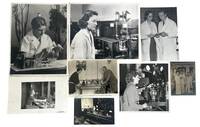
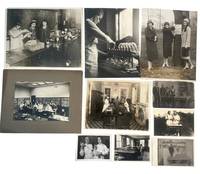
1910rif. 231321910. Women in STEM Women's scientific and technical employment photo archive documenting female laboratory labor from the early twentieth century through the 1940s historically significant for showing how women entered academic industrial and commercial research settings in roles that ranged from student and aide to biologist technician and physician at a period when scientific work remained overwhelmingly male and women's access to professional authority was still sharply constrained. The group includes five press photographs and three non press photographs with women pictured not as incidental clerical staff but as active operators of instruments handlers of test animals readers of charts and participants in experimental procedure establishing direct visual evidence of women's expanding place within the infrastructure of American science industrial testing and laboratory employment. Photo archive of 8 silver gelatin photographs ranging from 3.5 x 5.5 to 8 x 10 inches various U.S. locations circa 1910 to 1940s. The archive spans classroom laboratory and industrial interiors. One 1910 photograph shows two men and one woman standing in a laboratory identified as "three scientists or science students" an early image of mixed gender scientific training. A 1937 press photo titled "aviation biologist works with hatchlings" shows Dr. Manisera in a lab coat hand feeding two week old canaries with a third bird perched on her head turning animal handling and experimental care into a public image of female scientific expertise. Another press photo shows Sally Wulff identified on the verso as an engineering aide with a science degree from the University of Iowa seated at a control bench calibrating experimental instruments at Wright Field. A 1938 non press image shows Dr. Marie D'Amour and Fred D'Amour studying a chart before a blackboard covered with formulas and technical notations linking the photograph to mammalian physiology research. A Hoboken New Jersey press photo depicts a female technician in the chemical division of the United States Testing Company operating a Fisher titrimeter "for performing volumetric analyses by electronic means" while a 1939 press photo from Newton Massachusetts shows a laboratory worker testing newly developed Permatron tubes used in high frequency welding and power transmission. Another press image captioned "A 'noise machine' used in experiments in the Colgate laboratory" shows a woman and man positioned on either side of the apparatus and a separate 1940s laboratory group photograph places a single woman among five men before a long demonstration bench and blackboard diagrams underscoring both women's presence and their numerical isolation within technical settings. Several versos retain typed caption slips editorial markings and reference stamps consistent with press photo circulation. Across the first half of the twentieth century women entered scientific work through normal schools universities wartime research demand industrial laboratories and auxiliary technical appointments yet their advancement was often channeled into subordinate or specialized designations even when their work required substantial training. This archive makes that structure visible through named and captioned examples of women conducting measurement instrument calibration physiological research electronics testing and experimental animal work across corporate academic and applied research environments. Minor residue on versos from former press labels or caption attachments; otherwise clean and well preserved. Overall very good condition. As a record of women's early technical labor the archive supplies concrete visual evidence of the pathways limits and visibility of women's participation in American scientific work before the full opening of postwar professional opportunity. unknown books
1813rif. 45481Philadelphia: Kimber & Richardson 1813. First Edition. Two volumes; octavo 21.5cm.; Vol. I bound in slightly later half calf over marbled boards black gilt spine label Vol. II in full contemporary sheep red gilt spine label; 4506; 6484pp.; engraved title pages 25 leaves of plates including eight folding. Evidence of previously removed library bookplates to Vol. 1 pastedowns some scuffing to boards more heavily so to Vol. II some light foxing one leaf trimmed close with slight loss of text a couple of closed tears to folding leaves else Very Good and sound overall. Attractive engraved pictorial bookseller ticket to rear pastedown of Vol. II. Complete first and second volumes of the New Series edited by the Anglo-American chemist Thomas Cooper. Though not a particularly brilliant scientist Cooper's "greatest service to science was undoubtedly the dissemination of information" Dictionary of Scientific Biography III p. 400. The present collection includes detailed articles on sugar from beets and grapes "Comparative Height of Mountains on the Earth the Moon and Venus" turnpike roads making "fine Cutlery" foreign and homemade wines criminals from 1805 to 1811 and "the uses of a dead horse by the editor." SHAW & SHOEMAKER 28226. Kimber & Richardson unknown books
1789rif. 472Freyburg & Annaberg: Craz 1789. First Edition. contemp. marbled wrappers. A very good copy; small inoffensive 19th cent. lib. stamp on the title. 8vo. There are 4 numbered plates on two sheets illus. the devices. This pamphlet is a description of an elaborate an innovative automatic recording device for rain wind direction and humidity. Each of the measurement systems devised by Herrmann were clock driven and appear to be the refinement of a similar system designed by Leupold in 1726. Herrmann's genius however is revealed in his design for the wind recorder. This device consisted of a wheel with 12 sector shaped compartments. Once and hour a clock driven hammer ejected a numbered cube from a magazine into the appropriate sector. After a fixed time cycle the observer would have a clear record of changing wind conditions. See Middleton Meteor. Instruments pp. 136 179-'80. Craz unknown books
1900rif. 235831900. Women in laboratory sciences photo archive circa 1900 to 1946 documenting women's movement into chemistry bacteriology hospital medicine and classroom experiment at a time when scientific training and professional advancement remained largely organized around men with barriers of entry for women. The group begins with a pharmacological laboratory where one woman stands among men predating suffrage in the United States and continues through school laboratories hospital laboratories press photographs and postwar images of young women handling test tubes and glassware. World War I drew women chemists into schools universities analytical laboratories and war work while World War II accelerated laboratory demand again through bacteriology antibiotics and industrial drug production. Photo archive of 11 mixed phtoographic mediums including albumen silver gelatin and real photo postcard photographs various sizes ranging 5 x 4 inches to 8 x 10 inches United States and Europe early 20th century. The images show women and girls conducting experiments at benches lined with burners flasks pipettes test tubes reagent bottles and laboratory stands; a large pharmacological classroom with nearly all male staff and students and one woman present; high school girls in an early science classroom; two nuns or a nun and nurse working in a laboratory at Saint Anthony's Hospital Rockford Illinois identified on verso as early 1930s; and a bacteriological laboratory scene dated October 2 1923. A 1926 Acme press photograph identifies "Miss Virginia Trelease chemist student at Northwestern University Evanston Ill." using liquid oxygen from a Heylandt liquefier to fry an egg over "burning ice." Other images show two young women captioned "Resa Yusko and Bla Pesala" in 1946 smiling while handling laboratory equipment and a 1927 press photograph of Mrs. August Rus Oppenheim Mrs. Oswald Jimenis and Mrs. Arthur Bunker of the Southern Women's Educational Alliance posting a Metropolitan Opera benefit notice evidence of women's educational fundraising alongside the scientific scenes. The photographs trace women's scientific labor from gendered access to instruction into wartime necessity and postwar professional visibility. In the early twentieth century women who entered chemistry and medicine often worked through teaching nursing hospital laboratories and applied science fields that admitted them more readily than elite research posts while still relying on their technical skill. During World War II penicillin moved from laboratory microbiological study in 1940 to mass production by 1945 a shift that depended on fermentation work laboratory handling and industrial coordination rather than discovery alone. Light surface wear toning occasional creasing press stamps captions and handling marks; some images faded or rubbed. Overall good condition. A concentrated visual record of women learning demonstrating and performing laboratory science across the decades when modern medicine and chemistry increasingly required their work while still limiting their recognition. unknown books
1951rif. 12896New York: New York Council of the Arts Sciences and Professions 1951. Three items stapled together at top left corner together with a separate leaflet totaling seven pages. Minor edge wear one item with a short closed tear. Overall very good. A group of four printed items pertaining to an effort by New York arts professionals to encourage equality for African American arts professionals in midcentury United States where the lower half of the country was still mired in Jim Crow laws. The most notable of these items is a four-panel program detailing the conference with introductory text describing the ways in which racism limits the opportunities of Black artists and scientists and the failure to put recent anti-racist court decisions into actual practice. The program for the conference lists such themes as the effects of Jim Crow policy on the arts and representation of Black subjects the deleterious effects of racism on health and welfare and how cultural standards are lowered and violence encouraged by discrimination. According to the speakers list on the fourth page of the program participants in the conference included Oliver Harrington Jacob Lawrence Julian Mayfield Paul Robeson and other artists educators scientists and musicians. Attached to this program are two handbills; one is an invitation to an opening night event featuring new works of ballet chorus calypso and drama the night before the conference. This performance took place at the Pythian on November 9 1951. The other handbill announces the program for the Annual Convention of the New York Council which appears to have been a more general event on the day after the conference on equal rights. The text on this handbill notes the suppression of free speech under McCarthyism. The last item is an 8.5-x-14-inch handbill probably a press release of sorts announcing the conference also titled "A Call to a Conference on Equal Rights for Negroes in the Arts Sciences and Professions." The language of this handbill is the same as the second page of the four-page brochure but is dated a month before the conference in October 1951. Some of the language in the program introduction and handbill merit quoting here: "In the sciences and professions the majority of Negroes are deprived of equal educational opportunities by segregation and quota systems denied employment in the professions restricted to the most menial occupations confined to ghetto areas for their private practice and thus prevented from making a full contribution to the welfare of the nation. Blacklisting character assassination political inquisitions and other forms of censorship against white artists scientists and professionals cannot be ended - so long as discrimination against Negroes and other minority group members is maintained For those who violate the Constitution and foster a policy of discrimination against Negroes are the very same persons who are responsible for censorship blacklisting and the debasement of our science and culture. It is they who tolerate and promote the campaigns of violence and brutality against the Negro people as exhibited in Cicero in the bombing of the home of a world-renowned Negro chemist in the refusal of platforms to the most outstanding American Negro artists in the ‘legal lynchings’ of many young men guilty of nothing more than being Negroes. American culture Cannot live in the face of such terror against a large segment of our people. Standards of truth and humanism cannot be maintained in our cultural media so long as the truth of the Negro people's lives is denied expression. Nor can there be decent standards for white professionals in many fields so long as a reservoir of Negro unemployed is used to depress salaries and rates." Surprisingly OCLC is silent on any material from the conference though we doubt this group of ephemera is a unique survival. New York Council of the Arts, Sciences and Professions unknown books