118.981 risultati
rif. 2523Un vol. in folio, de 201pp., plein parchemin (reliure de l'époque) (manque de parchemin au dos, petits trous de vers dans les marges inf. de qq. ff.).
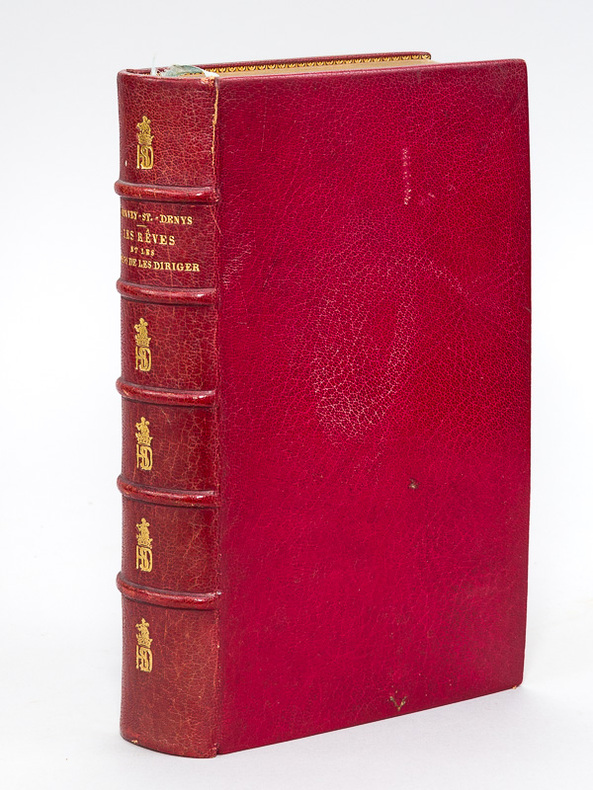
1867rif. 582711 vol. fort in-8 reliure plein maroquin rouge, dos à 5 nerfs orné (au chiffre HSD surmonté d'une couronne de marquis et d'un hercule), toutes tranches dorées, chasses et coupes ornées, couvertures conservées, reliure signée de Trautz-Bauzonnet, Amyot, Paris, 1867, 2 ff., 496 pp. avec frontispice lithographié en couleurs, et 9 dessins originaux ou tirages d'essais du frontispice ou des couvertures
1 vol. fort in-8 reliure plein maroquin rouge, dos à 5 nerfs orné (au chiffre HSD surmonté d'une couronne de marquis et d'un hercule), toutes tranches dorées, chasses et coupes ornées, couvertures conservées, reliure signée de Trautz-Bauzonnet, Amyot, Paris, 1867, 2 ff., 496 pp. avec frontispice lithographié en couleurs, et 9 dessins originaux ou tirages d'essais du frontispice ou des couvertures Exemplaire unique de cet ouvrage très rare, dont Freud fut incapable de se proposer le moindre exemplaire, malgré tous ses efforts, comme il l'indique en note dans l'Interprétation des Rêves ! Un des 10 exemplaires sur grand papier ("sur papier espagnol" comme l'indique une note manuscrite de l'auteur dans un autre exemplaire), celui-ci manifestement celui de l'auteur (avec son chiffre couronné "HSD" répété en dos), contenant en sus : les deux couvertures (absentes du seul autre exemplaire répertorié du tirage sur grand papier), le croquis original de la couverture par Henri Alfred Darjou, un tirage de la couverture avant mise en couleur, un dessin original à la plume (étude pour le frontispice, dont un dessin non retenu), un tirage d'ébauche du frontispice, un tirage en noir du frontispice, trois tirages d'essais de mise en couleurs du frontispice, un tirage d'épreuve avant la lettre du second plat. Le sinologue Léon d'Hervey de Saint-Denys avait recueilli les rêves de 1946 de ses nuits, lesquels servirent de matière à cette étonnante étude, pionnière dans l'analyse des rêves d'un point de vue "moderne". L'ouvrage se conclut sur un appendice intitulé : "Un rêve après avoir pris du hatchich" (sic). Havelock Ellis ou André Breton évoquent la rareté de l'ouvrage (l'éditeur Amyot fit faillite peu de temps après sa publication). Bon état (petites fentes en mors en tête, signet usé presque coupé, petits frott. et petits accroc à un plat, très bel exemplaire par ailleurs). Unique copy of this scarce work, of which Freud was unable to offer himself the slightest copy, despite all his efforts, as he indicates in a note in his "Interpretation of Dreams" ! One of the 10 copies on large paper ("on Spanish paper" as indicated by a handwritten note from the author in another copy), this one obviously that of the author (with his number crowned "HSD" repeated on the back ), containing in addition: the two covers (absent from the only other listed copy of the print on large paper), an original sketch of the cover by Henri Alfred Darjou, a print of the cover before coloring, an original pen drawing (study for the frontispiece, including one drawing not retained), a drawing of a sketch of the frontispiece, a black print of the frontispiece, three prints of color trials of the frontispiece, a proof print before the letter of the second cover. The sinologist Léon d'Hervey de Saint-Denys had collected the dreams of 1946 from his nights, which served as material for this astonishing study, a pioneer in the analysis of dreams from a "modern" point of view. The work ends with an appendix entitled: "A dream after having taken hatchich" (sic). Havelock Ellis or André Breton evoke the rarity of the work (the publisher Amyot went bankrupt shortly after its publication). In a note in his "Traumdeutung", Freud evokes this work which he did not manage to obtain despite his efforts. : "[ ... ] ich mir trotz aller Bemühung nicht verschaffen konnte" ("d'Hervey, whose book I could not lay hands on in spite of all my efforts"). Français
1818rif. 89274In der Realschulbuchhandlung | Berlin 1818 | 54 x 42 cm | En feuilles sous une boîte
1618rif. 163261618, Francofurti apud Lucamiennis, in-8 plein vélin jaune, texte en latin. Inventaire des gravures : gravure sur la page de titre de l'Opus chymicum, 1 gravure «Les 12 clefs de Basile Valentin » sur page de titre du Basilica Chymica, 1 gravure (femmes assises sur des lions) sur page de titre du Basilica Philosophica, figures noir et blanc sur les pages 71, 72, 74 et 77. 1/ Basilica medica : Physiologiam, Pathologiam, Therapeuticam, 2/ Basilica chymica : anatomiam auri, argenti & mercurii, Jovis, Martis ac Veneris, tractat de gemmis, examinat mineralia, vegetabilia resoluit, animalia explicat, 3/ Basilica philosophica : horum prior [...] | Etat : Assez bon état général pour un ouvrage de cette époque, vélin noirci, dos désolidarisé, rousseurs, quelques écritures à la plume dans les marges, partie 3 : pages 59 à 88 vermoulues en un point précis (empêchant la lecture de quelques mots sur les pages), pages foncées au début des 2ème et 3ème parties (ne nuisant pas à la lecture), quelques pages réparées. (Ref.: g430)
The archive contains a plethora of material. Original Artwork in different formats, namely a collection of 14 original sketchbooks with numerous original colored drawings, approx. 540 original pencil drawings, 16 original water colored pencil drawings, 24 original watercolors, 15 original ink drawings, 32 original pencil ink drawings, 18 original watercolors, 79 original etchings, partly in aquatint, 30 manuscript pages of notes, 4 original oil studies and 3 photographs. Sheet dimensions from approx. 4 x 8 inches to approx. 22 x 26 inches. The archive includes manuscript cost calculations and numerous, partly large-scale construction drawings for the restoration work at the town hall Bülach. With his keen sense and appreciation of history, the Swiss architect Rordorf was an attentive observer of Swiss culture. As a result of the restoration work based on his designs at the town hall Bülach (around 1905) and in the Castle Greifensee (historic room conversions 1917) he drew the attention of the Swiss public to his work. Also, architectural and floor plan drawings, beautiful views (between 1876-1933) of Switzerland, including Bremgarten, Dübendorf, Effretikon, Lugano, Freiburg, New Bechburg, Thierstein, Bern-Thun, Mariastein, Aarberg, Castle Burgdorf, Kyburg, Locarno, Arbon, Brugg, Zurich, Erlach, as well as Italy, France and Germany. Documents include announcement and invitations and manuscripts of the Société "On the Wall" in Zürich, manuscript letters, poems, purchase contracts and dividing documents between David and Paul Rordorf, etc., as well as a district plan of the city of Zurich. Rordorf-Mahler was a member of the Zurich Artist Society, the Swiss Association of Engineers and Architects, the Société "On the Wall" in Zurich, and at times its President. All in all, an impressive archive of original drawings and at the same time, an important primary source material for the history of architecture in Switzerland. Manuscript
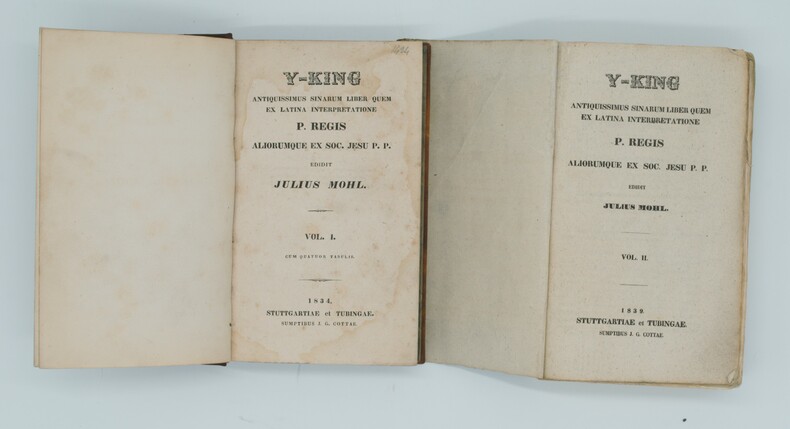
1834rif. PHO-1520Stuttgart & Tubingue, Cotta, 1834-1839. 2 volumes in-8 de [1] f., xvi-474-[1] pp., 4 planches dépliantes ; [1] f., 588 pp. Premier tome relié en demi-basane brune, dos lisse, titre doré, date en queue (reliure moderne) et second tome broché, couverture d’attente, inscriptions manuscrites sur la couverture ("à Monsieur M. Barucchi - Directeur du Musée égyptien, professeur d'histoire à l'Université de Turin), dos usé avec qqs fentes. Les deux volumes réunis dans un emboîtage toilé bleu moderne. Très légères mouillures claires par endroits.
1910rif. 83637Zurich 21 juin 1910 | 9 x 14 cm | une carte postale
1937rif. 88282s.d. (1937-1938) | 20.50 x 26.50 cm | 1 p. manuscrite, 1 p. titre tapuscrite, 19 ff. tapuscrits, 1 ff. bl., 6 pl. + 15 ff. tapuscrits, 1 pl.
In-folio grande (49x30), (6cc), XLI tavole a colori, 77pp, paginazione imperfetta (come in altri esemplari di questa tiratura), legatura coeva in mezza pelle con angoli, dorso restaurato a otto comparti con titolo in oro su tassello di marocchino. Edizione originale, prima tiratura, di uno dei più bei libri di entomologia mai pubblicati. Bellissima l’antiporta in bianco e nero (che mostra l’Autore con i suoi strumenti da entomologo su di uno sfondo boscoso) e 41 tavole a colori di superba qualità, raffiguranti farfalle, falene e i diversi stadi delle loro metamorfosi, assieme a piante e fiori di cui si nutrono. Il tutto con accuratezza scientifica e al contempo con la volontà di mostrare la bellezza di questo microcosmo. Ogni tavola è protetta dalle veline originali (alcune con strappetti o piccole mancanze). Questo esemplare presenta la tavola II con i margini inferiori e superiori più corti (ma quello di sotto è intonso); la pagina di fronte B2 ha il margine inferiore più corto e quello esterno appena rifilato; in mezzo sta la velina originale e la coloritura della tavola è assolutamente della stessa qualità delle altre. Essendo questo un esemplare in carta grande è quasi certo che, per qualche motivo contingente, nella bottega stessa del tipografo-editore siano stati inseriti due fogli in carta normale. Nonostante ciò, si tratta di una superba copia assolutamente genuina. Ogni tavola misura mediamente alla battuta del rame 30x23. La coloritura è splendida. Moses Harris (1730-1788) fu uno dei maggiori entomologi del suo tempo. Disegnò le sue farfalle da vivo prestando una particolare cura alla qualità dell’incisione e alla bellezza dei colori. Nissen, 190. In-folio large (49x30), (6cc), XLI colored plates, 77pp, imperfect paging (as in copies of the same issue), contemporary half calf binding with corners, eight-sections restored spine with gilt title on Moroccan label. Original edition, first issue of one of the most beautiful entomology books ever published. Beautiful black and white frontispiece (showing the author with his tools in a forest background) and 41 color plates of superb quality, depicting butterflies, moths, and the different stages of their metamorphosis, together with plants and flowers they feed on. All with scientific accuracy and at the same time with the desire to show the beauty of this microcosm. Each plate is protected by the original tissues (some with tears or small lacks). This copy presents plate II with shorter upper and lower margins (but the one below is uncut); the opposite page B2 has a shorter lower margin and the external one slightly trimmed; in the middle there is the original tissue, and the coloring of the table is absolutely of the same quality as the others. Since this is a large paper copy, it is almost certain that, for some reason, two sheets of normal paper have been inserted in the printer-publisher's shop. Despite this, it is a superb and genuine copy. Each plate measures 30x23. The coloring is splendid. Moses Harris (1730-1788) was one of the leading entomologists of his time. He drew butterflies live, paying particular attention to the quality of the engraving and the beauty of the colors. Nissen, 190.
New York, Ormsby, 1852. Folio. Original illustrated, richly gilt boards with a large gilt centre resembling a guilloche-gravure. Blindstamped corner-ornamentations and gilt lettering to boards as well. Old owner's inscription of ""Nissen & Parker/ 43 Mark Lane"" to front free end-paper and with a gift-inscription from H N Nissen, dated 1867, to first blank. VIII, 102 pp. + 13 engraved plates (including frontispiece, which is ""PLATE 5"") - complete. The 13 finely engraved plates demonstrate different technologies and depict bank notes, vignettes, and various design elements.
rif. 69536, Guangxi Normal University Press, 2012 Cloth binding with blue silkscreen printed lettering, 572 pages, 30 x 24 cm, English and Chinese. *Good condition, lightly bleached from sunlight, no dustjacket. With origami fold-out. ISBN 9787549572083.
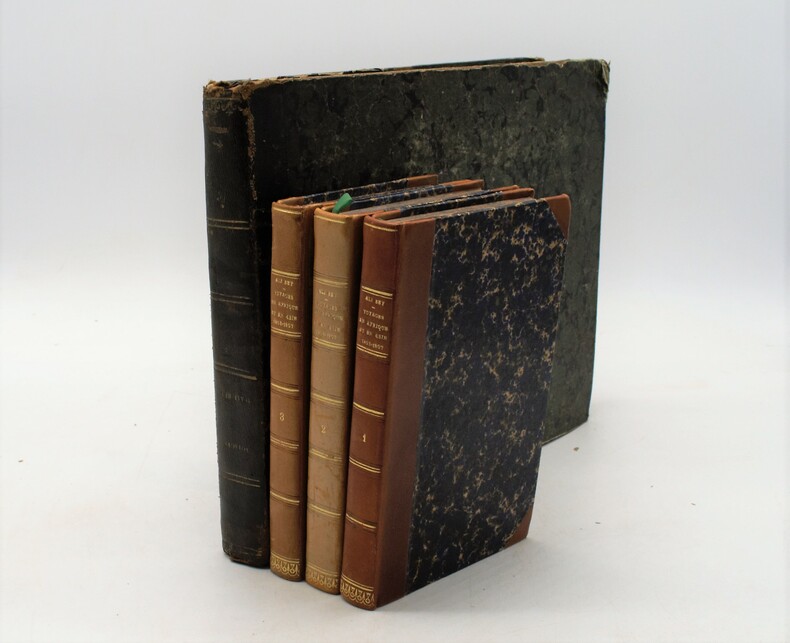
1814rif. PHO-1225Paris , imprimerie Didot l’ainé , 1814 , 4 volumes composé de 3 tome de texte et un Atlas. TEXTE , 3 vol. in-8 (210x135) , relié demi maroquin et coins ,dos lisse avec auteur , titre et tomaison ,tranches marbrées, portrait de l’auteur en frontispice ,xix-395pp-1f (errata), 2ff-464pp-1f (errata),2ff-410pp-1f (errata) , dos et gardes refaits , cachets répétés , premiers feuillets brunis , quelques rousseurs , dos insolés. ATLAS , in-4 (330 x 260) Relié demi basane époque Portrait frontispice XIV-pp-texte 90 planches, dont 14 dépliantes ou sur double page, 5 grandes cartes d après les dessins de l auteur , les cartes Chypre, Maroc, Afrique du Nord, Cote d Arabie, El Cassaba ou le château de Tanger, Temple. Mission d Ali Bey à Tripoli. quelques rousseurs ,Pas de déchirures, coins usés, salissures , les gravures sont de Adam d’après les dessins de l’auteur. Très rare avec le texte
1984rif. SBBI-L-BBC00374-RAG-20241World Health Organization 1984. paperback. Good. Our good condition books are generally good for reading but not for gifting or collecting. They could have imperfections such as creasing fanning inscriptions margin notes yellowing staining on edge or cover or pages bumps scuffs etc etc sometimes multiple of these. It's a wide category that encompasses anything that isn't almost-new down to anything that is slightly better than poor. We would NOT recommend gifting Good books - these should be considered reading copies. Our books are dispatched from a Yorkshire former cotton mill. We list via barcode/ISBN so please note that the images are stock images and may not be the exact copy you receive furthermore the details about edition and year might not be accurate as many publishers reuse the same ISBN for multiple editions and as we simply scan a barcode or enter an ISBN we do not check the validity of the edition data when listing. If you're looking for an exact edition please don't order at least not without checking with us first although we don't always have time to check. We aim to dispatch prompty the service used will depend on order value and book size. We can ship to most countries see our shipping policies. Payment is via Abe only. World Health Organization paperback
1779rif. 148241779-1781, imprimerie royale, in-4 plein cuir de XVI+707 et 844 pages, gardes marbrées, dos à 5 nerfs, titrages dorés, 13 planches dépliantes en fin de chaque ouvrage. | Etat : Bon état général, dos, champs et mors usés, rousseurs, manque de la 14ème planche du 2nd volume, complet de ses 2 volumes. (Ref.: MA87)
1558rif. 41789Lyon, Macé Bonhomme, 1558. 2 parties en 1 vol. in-4 de (20)-240 et 135 pp. (erreur pour 134 pp.), maroquin rouge, dos orné à nerfs, triple filet doré sur les plats, dentelle intérieure, tranches dorées (reliure du XVIIIe siècle).
rif. 7639P., Bernard, 1807/1817, 3 VOLUMES in 8 reliés en pleine basane racinée, dos ornés de fers et filets dorés, étiquettes de titres et de tomaisons rouge, tranches jaspées (reliures de l'époque), (cachets de la bibliothèque de la société de Jésus dans la marge des pages de titres dont le fonds scientifique fut vendu à l'hotel Drouot en 1984), T.1 : (2), 4pp., 382pp., 1 TABLEAU DEPLIANT, 1 PLANCHE DEPLIANTE, T.2 : 3 feuillets non chiffrés, pp. 6/498, 1 TABLEAU DEPLIANT, 2 PLANCHES, T.3 : 6pp., (1), 618pp., 1 TABLEAU DEPLIANT
- s.n., Paris 1788, in-8 (12,5x20cm), xij ; 344 pp.; (4 p.), relié. - Essai sur le Phlogistique, et sur la constitution des Acides [Essay on Phlogiston] n. p. | Paris 1788 | 8vo (12.5 x 20 cm) | xij ; 344 pp.; (4 p.) | contemporary half sheep First edition and sole publication of the French translation and critical analysis under the direction of Madame Lavoisier of this text published in English the previous year under the title An Essay on Phlogiston and the Constitution of Acids. The work is made up of twelve sections, all followed by critical notes by Louis-Bernard Guyton de Morveau, Pierre Simon de Laplace & Gaspard Monge & Claude Louis Berthollet & Antoine François de Fourcroy. Contemporary half light brown sheep over marbled paper boards, smooth leather spine decorated with gilt fillets and fleurons, morocco leather title piece. Very skillfully restored joints. Interior in very good condition except for two marks left by bookmarks on pages 68-69 and 176-177. Rare autograph inscription by Marie-Anne Paulze Lavoisier to Joseph Louis de Lagrange, prominent mathematician and loyal friend to Antoine Lavoisier. Valuable record of the leading role played by Marie-Anne Paulze Lavoisier in the "chemical revolution" at the dawn of the French Revolution. Phlogiston theory emerged at the end of the 17th century - conceived by Johann Becker and developed by Georg Ernst Stahl - postulating the existence of a "flame element" inherent in combustible bodies and released during combustion. This hypothesis was completely refuted by Lavoisier, who revealed the role of oxygen in the combustion process, thus inventing the theory of oxidation. Irritated by Lavoisier's skepticism with regard to phlogiston theory, the eminent Irish chemist Richard Kirwan published this text titled Essay on Phlogiston. "[...] The French chemists who rallied around Lavoisier decided to respond by translating An Essay on Phlogiston into French." (Keiko Kawashima, "Madame Lavoisier et la traduction française de l'Essay on phlogiston de Kirwan" in Revue d'histoire des sciences, 2000). This text, far from being a simple translation of Kirwan's work, adopted the form of a manifesto in itself in which the greatest chemists of the day contested phlogiston theory, dissecting its advocates' arguments one by one. The huge success of the French translation led Kirwan to attempt to refute the objections of Lavoisier and his collaborators. In 1789, he published a second edition of his work, translating the French notes written by its detractors into English and adding his own refutations. He finally converted to the ideas of the anti-phlogisticians, the founders of modern organic chemistry. Marie-Anne Pierrette Paulze - Mme Lavoisier - played a key role in the career of her husband, who taught her chemistry at her request; she then became his assistant, recording the experiments he carried out and their results. She very quickly took on a role that went beyond that of the devoted wife, becoming a translator but also a writer: many of the notes in the Essai sur le phlogistique were written by her. At the height of her involvement, it was she - in her capacity as a skilled illustrator - who drew all the plates in Traité élémentaire de chimie (1789), appending her signature "Paulze Lavoisier Sculpsit" on this occasion. This specimen includes a rare autograph inscription "by the translator" - Mme Lavoisier - to Joseph Louis de Lagrange (1736-1813), one of her husband's closest friends. It was Lavoisier who aroused the interest of Lagrange in the new science of chemistry. Together they participated in the development of a metric system that standardized weights and measures, which came to light during the Revolution. Working for the revolutionary government, Lagrange had more opportunities than his chemist friend, who was executed as a victim of the Terror. When he learned that Lavoisier had been killed at the guillotine, the mathematician declared: "It took them onl
1768rif. 0033511768 Paris, Saillant et Desaint, 1768. Deux volumes petit in-folio (260 X 329 mm) veau fauve marbré, dos cinq nerfs, caissons dorés ornés, dentelles dorées en queue, pièce de titre maroquin grenat, coupes et coiffes filetées, tranches rouges (Placé). Tome I: (1) f. blanc, (2) ff. de faux-titre et titre, titre-frontispice, XXIX pages de préface et table, (1) page et (1) f. d'extrait des registres et privilège, 337 pages, 62 planches hors-texte; Tome II: (1) f. blanc, (2) ff. de faux-titre et titre, 280 pages, 118 planches hors-texte. Étiquette de l'imprimeur-libraire et relieur «Placé», installé «Rue du Change, N°13, à Tours, Près Saint-Martin».
1770rif. 64661770 Paris, Imp. Royale, Imp. Bâtiments du roi, Hôtel de Thou, Plassan, 1770-1804. Complet en 71 vol. in-12 reliés: 10.5 x 17 cm. Ensemble illustré de 871 planches gravées principalement d'après De Sève, la plupart à double avec ÉPREUVES AVANT LA LETTRE. 5e édition du texte, 1ère édition in-12. Ensemble complet sans le sup. anatomique (14 vol.) par Daubenton. Luxueuses reliures de l'époque en plein cuir de Russie Rouge. Dos lisse avec auteur, titre, tomaison et filets en doré. Doubles encadrements des plats. Filets sur les coupes. Roulettes intérieures. Tranches dorées. Très bel exemplaire
Edition française par Pierre Boven, revue par l'auteur, 2 fort vol. grand in-8 reliure demi-basane noire, Librairie Payot et Cie, Lausanne, Paris, 1917 et 1919, LXII-784 pp. et 1 f. (table du volume 2 rapportée) ; XII pp., pp. 785-1762 Remarquable exemplaire dédicacé par Vilfredo Pareto à son jeune disciple français Georges-Henri Bousquet : "A M. G. H. Bousquet Témoignage d'amitié et de haute considération". Il s'agit de l'édition originale de la traduction française du Traité, publié en italien en 1916. Successeur de Léon Walras dans la chaire de Lausanne, le sociologue et économiste Vilfredo Pareto (1848-1923) reste l'un des plus fameux intellectuels de son temps. Son traité de sociologie marque une date dans la discipline, notamment dans l'étude des actions non-logiques et dans l'appréciations de ce qu'il dénomme les "résidus" : "les résidus sont des manifestations de sentiments. Les dérivations comprennent des raisonnements logiques, des sophismes, des manifestations de sentiments employées pour dériver; elles sont une manifestation du besoin de raisonner qu’éprouve l’homme. Si ce besoin n’était satisfait que par les raisonnements logico-expérimentaux, il n’y aurait pas de dérivations et à leur place, on aurait des théories logico-expérimentales. Mais le besoin de raisonnement de l’homme trouve à se satisfaire de beaucoup d’autres manières : par des raisonnements pseudo-expérimentaux par des paroles qui excitent les sentiments, par des discours vains et inconsistants; ainsi naissent les dérivations. Elles font défaut aux deux extrêmes : d’une part pour les actions instinctives, d’autre part, pour les sciences rigoureusement logico-expérimentales. On les rencontre dans les cas intermédiaires" (Traité, paragraphe 1401). L'ouvrage, en état très satisfaisant (très manipulé par G.-H. Bousquet mais bien solide, avec une fente partielle à un mors en tête et frott. en coiffe sup.) est enrichi des très nombreuses annotations du dédicataire, G.-H. Bousquet. Le professeur Georges-Henri Bousquet (1900-1978), docteur en droit en 1923 avec une thèse sur "L'évolution sociale en Hollande 1914-1922", devint un spécialiste de questions économiques, proche de Pareto et Schumpeter. Il fut également un islamisant de l'école de Goldziher et Snouck-Hugronje, professeur aux facultés d'Alger puis de Bordeaux. Il fut proche de son maître en sociologie Vilfredo Pareto, dont il servit fortement la pensée, en l'éditant et en le vulgarisant. G.-H. Bousquet entretint une correspondance avec Pareto et le visita notamment une huitaine de jours dans sa villa de Céligny (Suisse), vers Pâques 1923. Outre Pareto, G.-.H. Bousquet connut personnellement d'aussi grands noms de la pensée économique que Joseph Schumpeter (professeur à Harvard où, grâce à la fondation Rockfeller, G.-H. Bousquet fit un séjour de recherche dans les années 1933-1934.), Irving Fisher ou Albert Aupetit, le disciple de Léon Walras. Le nom du Professeur Bousquet est cité plusieurs fois par Schumpeter dans sa monumentale Histoire de l’Analyse Economique. Français
1955rif. 120901Paris, Bachelier, 1866-1955. M. zahlr. Abb. Hldr. u. Hlwd. Teils m. Rsign. Einbde. teils angeschmutzt, einige fleckig u. meist etwas bestossen/angerissen. Einige Vors. m. leimschatt. Ecken bzw. gebräunt. St. a. Vors. u. Tit. Teils stockfl. Einige Tit. fehlen. Wenige S. etwas geknickt.
rif. 122459aafLondon, Reeve & Co., (John Edward Taylor, Printer), 1863 - 1867, lg. in-8vo, 6 volumes with each 24 tipped-in original photogr. mounted on stiff white leaves with yellow frame (albumin prints), overall a fine original, complete set, original contemporary clothbound, spine with gilt title & publisher, covers with gilt central piece and blindpressing (binder’s ticket in vol. V: Bound by Westleys & Co. London).
rif. 136590aafLondini, impensis Henrici Clements, ad insigne Lunae Falcatae in Coemeterio D. Pauli, 1708, petit in-4to, (24 x 18 cm), VI + 58 S.; II + 72 S.; II + 22 S., illustriert mit insgesamt 45 teils gefalteten Kupfertafeln einschliesslich des Porträts des Verfassers als Frontispiz, und 3 Titeltafeln (gestochen von Jos. Nutting nach Mechior Füssli und Anna Waser, auf Tafel 17 vom 2. Teil ist eine Figur im Zentrum handkoloriert, rezenter Kalbsledereinband, dem frühen 18. Jhd nachempfunden, beide Buchdeckel mit Blindpressung, Rücken reich vergoldet, Vorsätze erneuert, ein sehr schönes Exemplar.