123 012 résultats
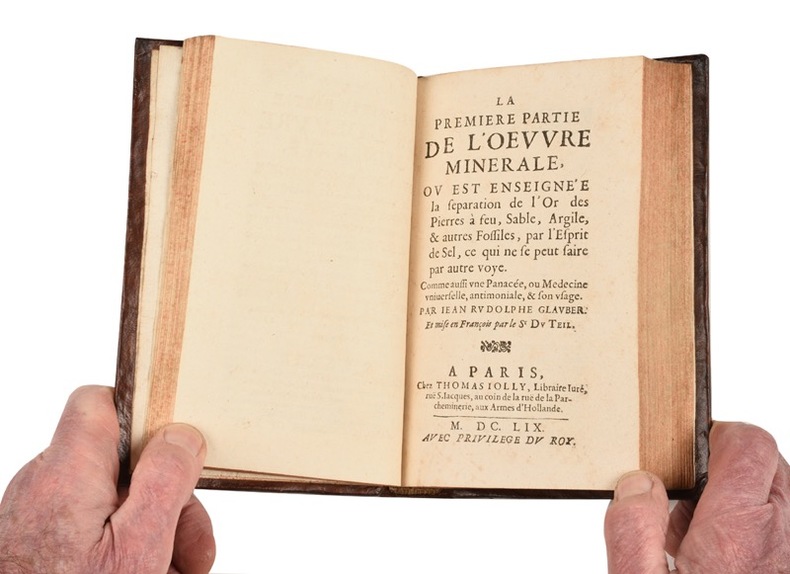
réf. 21548- Annotations sur l’appendix de la cinquiesme partie des “Fourneaux philosophiques”, où il est traitté de plusieurs secrets inconnus, et utiles. Mises en lumière, en faveur des incrédules et ignorans par Jean Rudolphe Glauber. Et traduites en françois par le Sr Du Teil. 62 pp., [1] f.bl. (Stanislas de Guaïta 1421-352)- L’Oeuvre minérale : La Première partie... ou est enseignée la séparation de l’or des pierres à feu, sable, argile, et autres fossiles, par l’esprit de sel, ce qui ne se peut faire par autre voye. Comme aussi une panacée, ou medecine universelle, antimoniale, et son usage. 64 pp.- L’Oeuvre minérale : La seconde partie... De la naissance et origine de tous les métaux et minéraux ; de quelle façon ils sont produits par les astres, sont composez d’eau et de terre, et reçoivent diverses formes. En faveur des curieux. 48 pp.- L’Oeuvre minérale : La troisième partie... ou commentaire sur le livre de Paracelse, appelé “le Ciel des Philosophes”, ou le livre des vexations, dans lequel sont enseignées les transmutations des métaux ; avec un appendix touchant la fonte, la séparation, et les autres opérations nécessaires. 111 pp., [1] bl.- La teinture de l’or ou le véritable or potable ; sa nature, et sa différence d’avec l’or potable, faux et sophistique. Sa préparation spargique et son usage dans la médecine. 22 pp., [1]f.bl. (Caillet 4588 - Stanislas de Guaïta 625)- Traité de la médecine universelle, ou le vray or potable. C’est à dire, une exacte description de la vraye médecine universelle, et de l’admirable vertu qu’elle exerce sur les végétaux, animaux et minéraux. Pour servir de clair flambeau au monde aveugle, luy enseignant le moyen de discerner le mensonge d’avec la vérité ; et de secourir les pauvres malades abandonnez. 61, [1] pp., [1] f.bl. (Stanislas de Guaïta 352 - Lenglet Du Fresnoy p.177)- La Consolation des navigants. Dans laquelle est enseigné à ceux qui voyagent sur mer un moyen de se garantir de la faim et de la soif, voire mesme des maladies qui leur pourraient survenir durant un long voyage. 64 pp. (E.O. trad. Caillet 4569 - Stanislas de Guaïta 352).
réf. 106072Amstelodami, Joannem Janssonium, 1654-1669, 1 volume in-16 de 160x95 mm environ, plein parchemin d'époque avec des coins émoussés et des traces sur le deuxième plat, annotations anciennes à l'encre sur les gardes blanches et quelques unes marginales, doublures au recto des plats restaurées. Avec 2 planches dépliantes (manque de papier sur la seconde).
1651réf. 89641Pierre DAVID | Paris 1651 | 10.6 x 16.8 cm | 4 volumes reliés en 1
réf. 32Chez l'Auteur, 4 volumes, demi-maroquin rouge à grains longs et à coins, dos lisses ornés de roulettes et palettes dorées, filets et fleurons dorés.
réf. 224591Paris, Smith et Buisson, 1812-1817 4 vol. in-8, 17 planches, portrait en frontispice du tome 1, demi-basane noire, dos lisse orné en long, plats de moire noire, roulette dorée en encadrement (reliure de l'époque). Dos un peu frotté, coupes usées. Rousseurs et mouillures marginales.
1795réf. 6386Paris, de l'imprimerie de Pierre Didot l'aîné, l'an IIIe de la République, 1795 - l'an VIe de la République, 1798. 1795 3 vol. in-4° (300 x 225 mm) de : I. 1 frontispice ; 1 portrait ; LV (dont faux titre, titre, préface) ; 176 pp. (dont table) ; 59 planches et cartes (n°1 à 59) ; II. 256 pp. (dont faux titre, titre) ; 54 planches et cartes (n°60 à 113) ; 149 pp. ; [3] ff. ; pp. 392 pp (reprise à 153) ; 53 planches et cartes (n°114 à 159, 140 et 141 ainsi que 142 et 143 réunies en deux planches + 9 non numérotées) ; petit dessin collé en regard de la planche n°8 avec notes manuscrites. Un total de 166 planches et cartes dont 2 composées de 2 numéros, certaines dépliantes et 9 planches d'éléments décoratifs non numérotées. (Petites manques aux premiers feuillets du second volume). Pleine basane marbrée, dos à nerfs orné, pièce de titre de maroquin et tomaison, filets dorés sur les plats, dos à nerfs très ornés, tranches rouges, gardes de couleurs. (reliure frottée).
1636réf. 39976Paris, Robert Foüet, 1636. 2 parties en un vol. in-8 (161 x 100 mm) de (16)-255-(1) pp. (la dernière chiffrée par erreur 255, saut de pagination 128 à 179 sans manque) 1 f. blanc ; (16)-526 pp. (sans l'ultime feuillet blanc Kk8), veau fauve, dos orné à nerfs, pièce de titre en maroquin vert, triple filet doré d'encadrement sur les plats, tranches dorées (reliure du XVIIIe siècle).
réf. 3980P., Desprez, 1663, un volume in 12 relié en pleine basane, dos orné de fers dorés, tranches mouchetées (reliure de l'époque), (14), 232pp., (4), 2 PLANCHES DEPLIANTES
1767réf. 41452Paris, Debure père, 1767. In-4 de XII-(4)-464 pp., 31 planches numérotées dont le frontispice, maroquin rouge, dos orné à nerfs, triple filet doré d'encadrement sur les plats, tranches dorées (reliure de l'époque).
1738réf. 5783A Amsterdam, chez Etienne Ledet & Compagnie, 1738. In-8 de 1 frontispice gravé, 2 portraits, (6)-XII-(2)-399-(1)-(400 à) 410-(6) pp., veau brun, dos orné à nerfs, pièce de titre en maroquin rouge (reliure de l'époque).
2020réf. 2081502111900463Chinese book office 2020. Soft Cover. Fine. Size: Hardcover Chinese book office paperback
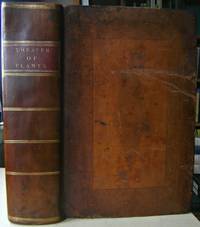
1640réf. 015181London: Thomas Cotes 1640. First edition. Large thick folio title page dedication page preface two pages author's tributes ten pages then ii 1734 but actually slightly less as there are several errors of pagination illustrated with over 2100 woodcut figures lacking the extra engraved title page the 20-page addenda at the rear and the errata leaf but otherwise complete and very sound. The contents are extremely clean and tight there is the odd crease and an occasional tiny corner missing but overall in impressive condition. The front and rear endpapers are a little browned and marked both front and rear hinges are cracked and showing a little silver-fish damage but there is no weakness at all. Full panelled calf probably eighteenth century but possibly earlier a little rubbed a little worn at the edges scuffed on the upper cover rebacked fairly recently with a leather spine and red morocco label. Blanche Henrey 286. Very heavy - extra postage will be required. John Parkinson 1567 - 1650 was both the last of the great English herbalists and one of the first of the great English botanists. He was apothecary to James I and a founding member of the Worshipful Society of Apothecaries in December 1617 and was later Royal Botanist to Charles I. The Theatrum was the most complete and beautifully presented English treatise on plants of its time. One of the most eminent gardeners of his day he kept a botanical garden at Long Acre in Covent Garden today close to Trafalgar Square and maintained close relations with other important English and Continental botanists herbalists and plantsmen. . First Edition. Full-Leather. Very Good. Thomas Cotes Hardcover
1746réf. 57440ABNürnberg, Beim Verfasser gedruckt bei Johann Josef Fleischmann., 1746-1761. Klein-4°. Mit 3 gestochenen, kolorierten Vortiteln, einem gestochenen Porträt, 284 (davon 4 gefalteteten) kolorierten gestochenen Tafeln. Lederbände der Zeit mit 2 verschiedenfarbigen goldgeprägten Rückenschildern und reicher floraler Rückenvergoldung. 4 Bände. [3 Warenabbildungen]
1667réf. 156P., Savreux, 1667, un volume in 4 relié en plein veau, dos orné de fers dorés, tranches mouchetées, armes sur les plats (reliure de l'époque), (petit accroc à la coiffe sans gravité, mouillures marginales sans gravité aux trois derniers feuillets), (12), 345pp., 4 PLANCHES REPRESENTANT DES CARRES MAGIQUES, (1-errata), figures dans le texte
1630Pont-à-Mousson, I & Gaspard Bernard, 1630; in-4, VI-264 pp., reliure plein vélin d'époque, dos lisse. Brunet I, 358 ; Graesse 208 ; Beaupré 413-414. Ouvrage bien complet de la très belle page de titre gravée et de ses 133 gravures placées dans et en hors-texte. (14 planches pleines pages). Seconde édition, refondue et augmentée, du Recueil de plusieurs machines militaires et feux artificiels du lorrain Jean Appier Hanzelet, imprimeur et graveur, paru en 1620. De nombreuses machines de guerre sont ici représentées pour la première fois ; le livre traite aussi longuement des feux d'artifice. Son surnom Hanzelet, diminutif d’Hans et synonyme de « Petit Jean », lui fut donné pour le distinguer de son père ; ce dernier, Jean Appier, ingénieur des Ducs Charles III et Henri II, contribua à l’établissement des fortifications de Nancy. Hanzelet était établi comme imprimeur à Pont-à-Mousson vers 1620 ; il était en même temps un graveur remarquable. Il perdit sa charge d’imprimeur en 1628 après avoir édité un ouvrage d’un professeur de l’université sans le visa du recteur. Il fut ensuite nommé « Maistres des feux artificiels » (ingénieur des poudres et directeur de l’artillerie) par le Duc Charles IV de Lorraine. Celui qui, pour Dom Calmet, était un « esprit fort inventif et habile ouvrier en différents genres » serait mort en Italie en 1647.
réf. 017976Taurini: Ex Regio Typographeo Three volumes 1837 - 1843. A partial set of one of the rarest of Mediterranean floras. Illustrated with 96 very fine engraved plates including 3 bis plates - XXXIII LXXVII LXXXVIII a double-page engraved map of Sardinia rather foxed quarto pp xii 606; 562. ii plates volume 96 plates of 114 remarkably clean internally contemporary half calf and cloth the spines with raised bands and black morocco labels slightly rubbed and scuffed a little wear at the corners. The engravings are by by L. Fea S. Botta H. Mil and A. Nizza after drawings by M. Lisa and J.C. Heyland; there is a presentation inscription in Latin in the first volume from the author to Sir Charles James Fox Bunbury. Lacking the final volume which was not published until 1857. The fact that the plates volume is here labelled Volume III suggests that Bunbury received these from the author in 1843 and the final volume was never presented. The author was a botanist at Cagliari then at Turin where he subsequently became Director of the Botanical Gardens. His primary investigations were on the flora of Sardinia of which this work is the first and still the most complete and detailed account. Sir Charles Bunbury was a keen botanist and geologist with a particular interest in paleobotany. He collected plant specimens on expeditions to South America in 1833 and South Africa in 1838. He also accompanied his great friend Sir Charles Lyell the geologist on an expedition to Madeira. He was elected a Fellow of the Royal Society in 1851. From Bunbury the set moved to the Leipzig collector and antiquary Oswald Weigel with his small stamp. Also in each volume is the later bookplate of Kenneth Lazenby a founding member of the Alpine Garden Society. The map is an addition to the published work and is equally rare - "Carta della Sardegna annessa alla 1a parte del viaggio in cetta Isola del Colonello A. della Marmora. 2da Edizione. Carte de la Sardaigne annexee a la 1e´re partie du voyage en cette Ile par le Colonel A. de la Marmora.". Although lacking the later volume this set remains very attractive due to its condition provenance and the additional map. First Edition. Half-Leather. Very Good. Ex Regio Typographeo Hardcover
1951réf. ZB394472Division of Philosophy Letters and Sciences Pan American Uni 1951-1993. volumes 1-43. 1951-1993. partly bound library markings textually clean & tight PRICE IS FOR THE LOT. - If you are reading this this item is actually physically in our stock and ready for shipment once ordered. We are not bookjackers. Buyer is responsible for any additional duties taxes or fees required by recipient's country. Photos available upon request. Division of Philosophy, Letters and Sciences, Pan American Uni unknown
réf. 133375aafGetruckt zu Bern bey Abraham Weerli, in verlegung deß Authoris, 1618, kl.-4° (20x15 cm), 4 Tle. in 1 Bd. 4 Titelbl. mit Holzschnittbordüren. 28 n.n. Bll. + 2 Falttafeln (S.1 & S. 705) + 704 S. + 8 Bl. (Register / Beschluß / Errata. (Am Schluss 1 Holzschnittabb.), vereinzelt gebräunt oder fleckig, Pergament d. Zt. (berieben und bestoßen minimal fleckig, alte Restaurierung am Einband).
1674Hafniae (Copenhagen), Petrus Haubold, 1674. 4to. Contemporary full mottled calf with five raised bands to richly gilt spine. Upper and lower part of spine worn and restored. Some overall wear and a bit of worming. Internally evenly browned. Contemporary notes in neat hand to front free end-paper and additional information about contents in same hand to title-page. Title-page printed in red/black. (8), 200 pp. + engraved plate depicting snow crystals.
1759- Chez Thomas Herissant, A Paris 1759, In-12 (10x17,2cm), (4) xvj, 419pp. et xvj, 402pp. (1) et xxvj (1) 498pp. (4), 3 volumes reliés. - Rare first edition, illustrated with 4 pictures in the first volume and 6, including 5 folded pictures, in the third. Translated from German with the translators notes. Half title common to the 3 volumes: Treatises on physics, natural history, mineralogy and metallurgy. Bound in contemporary, full, granite-patterned brown sheep. Spine in decorated compartments. Title pieces in red morocco, gilt volume labels at the bottom. Signs of rubbing, especially on the joints. Slight accident to the lower joint at the bottom of volume 3, narrow split to the upper joint at the top of volume 1 of 0.5cm. Very pale and scattered foxing. Beautiful copy. Considered the father of modern geology and the founder of stratigraphy (the study of the earth's strata), Lehmann (1719-1767) was a mineralogist and geologist renowned for his work. From 1750, his essay on the formation of metals allowed him to be commissioned by the Prussian Academy of Sciences for a study of the mines throughout Prussia. Lehmann drew his work from L'art des mines, whose many terms entered geological literature. In 1767, he was invited by the Imperial Russian Academy of Sciences where he became Professor of Chemistry and Director of the Imperial Science Museum. He remains famous for his precise description of the earth's various layers of stratified rock. [FRENCH VERSION FOLLOWS] Edition originale, rare, et illustrée de 4 figures dans le premier volume et 6 dont 5 dépliantes dans le troisième tome. Traduit de l'Allemand avec des notes du traducteur. Faux-titre commun aux 3 volumes : Traités de physique, d'histoire naturelle, de minéralogie et de métallurgie. Reliure en pleine basane brune granitée d'époque. Dos à nerfs orné. Pièces de titre en maroquin rouge, tomaisons dorées en queue. Traces de frottement, notamment aux mors. Légers accidents au mors inférieur du tome 3 en queue, étroite fente au mors supérieur en tête du tome 1 sur 0,5cm. Rousseurs très pâles éparses. Bel exemplaire. Considéré comme le père de la géologie moderne et le fondateur de la stratigraphie (étude des strates de la terre), Lehmann (1719-1767) fut un minéralogiste et un géologue réputé pour ses travaux. Dès 1750, son essai sur la formation des métaux lui permit d'être missionné par l'Académie des sciences de Prusse pour une étude des mines sur l'ensemble de la Prusse. Lehmann en tira son ouvrage de L'art des mines, dont de nombreux termes sont entrés dans la littérature de la géologie. En 1767, il fut invité par l'Académie impériale des sciences de Russie où ildevint professeur de chimie et Directeur du musée impérial des sciences. Il est démeuré célèbre pour sa description précise des différentes couches de roches stratifiées de la terre.
1762réf. 26629Berlin, Stettin und Leipzig, Johann Heinrich Rüdigern, 1762-75. 4to. Bound in 13 fine uniform full calf, raised bands, gilt backs. Remains of paperlabels on backs. Top of spine on one volume frayed. Small rubber stamp on titles. A few brownspots. A good copy. Having in all 374 (of 585) fine engraved plates (1 plate supplied in xerox-copy). Plates measure around 37x24cm.
1674réf. 54695Hafniae (Copenhagen), Petrus Haubold, 1674. 4to. Contemporary full mottled calf with five raised bands to richly gilt spine. Upper and lower part of spine worn and restored. Some overall wear and a bit of worming. Internally evenly browned. Contemporary notes in neat hand to front free end-paper and additional information about contents in same hand to title-page. Title-page printed in red/black. (8), 200 pp. + engraved plate depicting snow crystals.
1762réf. 26629Berlin Stettin und Leipzig Johann Heinrich Rüdigern 1762-75. 4to. Bound in 13 fine uniform full calf raised bands gilt backs. Remains of paperlabels on backs. Top of spine on one volume frayed. Small rubber stamp on titles. A few brownspots. A good copy. Having in all 374 of 585 fine engraved plates 1 plate supplied in xerox-copy. Plates measure around 37x24cm. First German edition of one of the main works of the 18th century in the fields of crafts and technology as it is a translation of the famous series "Description des Arts et Metiers" issued by Academie Royale des Sciences 1760-75. The French edition was published in folio. Band 1: Kohlenbrennen Lichtziehen Ankerschmieden Nadler Papiermacher. 31 plates and 1 table;Band 2: Eisenhämmer. Teil 1-2 Wachsziehen Pergamentmachen Leder-Vergoldung Schieferbrüche. 22 plates; Band 3: Eisenhämmer. Teil 3-4 Spielkartenherstellung Seidenfärberei Pappenmacher. 29 plates 1 plate supplied in xerox-copy; Band 4: Böttcherkunst Weißgerber Ziegelstreichen Zuckersieden Silber affinieren. 30 plates; Band 5: Messingherstellung Tuchmacherkunst Lohgerberei. 33 plates. Band 6: Tuchfrisierkunst Saffianleder-Herstellung Leder auf ungarische Art Weißgerber Hutmacher Dachdecker. 19 plates; Band Band 7: Tapetenweberei Kalkbrennerkunst Ziegelstreichen in Holland Ziegelhütten Ball- und Raquettenmacher. 30 plates and 1 table; Band 8: Perückenmacherkunst Müller Nudelmacher und Bäcker. 15 plates; Band 9: Schuster Schlösserkunst. 48 plates; Band 10: Steinkohlenbergbau Indigobereiter. 22 plates; Band 11: Eisenbergwerke und Hüttenwerke in der Steiermark Leimsiederei Fischerei Teil 1. 25 plates and 1 table; Band 12: Fischerei Teil 2. 50 plates; Band 13: Fischerei Teil 3 Porzellanherstellung. 23 plates and 1 engr. frontisp.; Band 14: Glasmalerei und Glasarbeiten. Mit 13 von 14 Tafeln; Band 15: Wollenzeugfabrikant. 17 plates; Band 16: Seifensider Leinwandhandel Schneiderhandwerk Leinenmanufaktur Tabaksmanufaktur. 27 plates; Band 17: Bleiarbeiter mathematische und astronomische Instrumente Baumwoll-Samtfabrikation. 38 plates; Band 18: Stickerkunst Siebmacher Riemer und Sattler mit Kutschenbau Drahtzieherei Stahlblattmacher. 51 plates Band 19: Schiffbaukunst. 18 plates and 1 engr. frontisp.;Band 20: Zinngießerkunst. 32 plates; Band 21: der Strumpfwirkerstuhl und sein Gebrauch. 14 plates. hardcover
1734réf. D4425Paris: Par La Compagnie des Libraires 1734. Hardcover. Very Good. Three volumes comprising Vol. III parts I to III of Memoires de lAcadémie Royale des Sciences depuis 1666 jusquà 1699. Paris: Par La Compagnie des Libraires 1733-1734. Part I: 231pp.; Part II: 294pp.; Part III: 215pp. 97 engraved folding plates depicting animals and skeletal diagrams. Engraved portrait frontispiece of Claude Perrault in first volume. Contemporary French calf spines gilt edges red; some occasional browning; repairs to joints some rubbing. Unidentified armorial bookplate to front pastedown beneath monogrammed bookplate D.P. with chipmunk and two mice. A later reduced format edition of Perraults Memoires of 1671-1676 Perraults study of this nature was first published in 1669 with the results of investigations of five animals and later expanded with studies of over forty animals. Prior to 1670 most descriptions of animals paid little attention to their internal structure and there were very few images in natural history encyclopedias that depicted skeletons or muscles. That changed with the establishment of the Académie des Sciences in Paris in 1666 by Jean-Baptiste Colbert with the approval of King Louis XIV. The Academy functioned with neither statutes nor regulations until 1699. At that time the Academy used the term mathématique to encompass the fields that are now called astronomy mathematics and physics and the term physique to encompass the fields that are now called anatomy botany zoology and chemistry. In January 1699 Louis reorganized the Academy giving it first regulations. The effect was to give the King more control over their activities in exchange for becoming an official institution under his protection with the new name Académie Royale des Sciences. One of the original academicians the physician Claude Perrault organized regular sessions at which participants could dissect deceased animals from Louis XIVs royal menagerie and record all they observed. Lions chameleons bears gazelles wolves ostriches crocodiles monkeys eagles tigers porcupines and salamanders among some were all laid open by the academics scalpels. These superb folding plates record in great detail the pioneering work at the Academy. These three volumes in three parts focus on the transformative and foundational years of the French Royal Academy of Sciences and Claude Perraults efforts which had made comparative anatomy a vital tool for the classifying naturalist. Par La Compagnie des Libraires hardcover
1734réf. D4425Paris: Par La Compagnie des Libraires 1734. Hardcover. Very Good. Three volumes comprising Vol. III parts I to III of Memoires de lAcadémie Royale des Sciences depuis 1666 jusquà 1699. Paris: Par La Compagnie des Libraires 1733-1734. Part I: 231pp.; Part II: 294pp.; Part III: 215pp. 97 engraved folding plates depicting animals and skeletal diagrams. Engraved portrait frontispiece of Claude Perrault in first volume. Contemporary French calf spines gilt edges red; some occasional browning; repairs to joints some rubbing. Unidentified armorial bookplate to front pastedown beneath monogrammed bookplate D.P. with chipmunk and two mice. A later reduced format edition of Perraults Memoires of 1671-1676 Perraults study of this nature was first published in 1669 with the results of investigations of five animals and later expanded with studies of over forty animals. Prior to 1670 most descriptions of animals paid little attention to their internal structure and there were very few images in natural history encyclopedias that depicted skeletons or muscles. That changed with the establishment of the Académie des Sciences in Paris in 1666 by Jean-Baptiste Colbert with the approval of King Louis XIV. The Academy functioned with neither statutes nor regulations until 1699. At that time the Academy used the term mathématique to encompass the fields that are now called astronomy mathematics and physics and the term physique to encompass the fields that are now called anatomy botany zoology and chemistry. In January 1699 Louis reorganized the Academy giving it first regulations. The effect was to give the King more control over their activities in exchange for becoming an official institution under his protection with the new name Académie Royale des Sciences. One of the original academicians the physician Claude Perrault organized regular sessions at which participants could dissect deceased animals from Louis XIVs royal menagerie and record all they observed. Lions chameleons bears gazelles wolves ostriches crocodiles monkeys eagles tigers porcupines and salamanders among some were all laid open by the academics scalpels. These superb folding plates record in great detail the pioneering work at the Academy. These three volumes in three parts focus on the transformative and foundational years of the French Royal Academy of Sciences and Claude Perraults efforts which had made comparative anatomy a vital tool for the classifying naturalist. Par La Compagnie des Libraires hardcover books