108 resultados
2014New English Original bdg. Dust wrapper. 4to. (32 x 25 cm). English Edition. 241, [1] p., color ills. The arms of the sultans. The arms collection of Topkapi Palace. Translated by Alev (Kerimoglu) Bulut. "Weapon is a device that was developed by the mankind in the ancient ages for protection against the events of nature and enemies. The arms that were used for the functions of drilling, cutting, defense, and the firing function to be acquired later, were accepted as works of art owing to the mastery and craftsmanship skills that they display. The present work title The arms of the sultans. The arms collection of Topkapi Palace was prepared for the purpose of presenting to the readers The Arms of Collection of the Topkapi Palace Museum, where some of the rarest examples of these works of art are on display, as a whole along with an analysis of its fundamental attributes". Covering 1,300 years and consisting of 52,000 weapons of Arab, Umayyad, Abbasid, Mamluk, Persian, Turkish, Crimean Tartar, Indian, European, and Japanese origin, the Topkapi Palace Museum's weaponry collection is also among the world's premier weapons collections. The collection is made up in part of weapons transferred from the cebehâne and those used by the palace guards; however, the collection's most noteworthy section consists of those weapons ordered by the sultan personally or specially made as gifts for him, which weapons are a part of the palace's private collection. This collection includes weaponry owned by such sultans as Mehmed II, Bayezid II, Selim the Grim, Suleiman the Magnificent, Selim II, Mehmed II, and Ahmed I, as well as the weapons of such high-level dignitaries as grand viziers, pashas, and palace chamberlains; all of these weapons are eye-catching with their fine craftsmanship and decorations. An additional factor that contributed to the diversification of the collection's highly artistic weaponry was the tradition of bringing to the palace the weapons of important figures that were obtained through plunder.
1955ref. 14984Paris, Editions du Chariot, 1955 ; in-8, broché ; 222, (2) pp., couverture crème imprimée en rouge et noir ; nombreuses figures, lettrines et culs-de-lampe imprimés en rouge ; lettre de Charles Richet.
1961ref. 14920Paris, Les Productions de Paris (Hachette), sans date (1961, date du Dépôt légal) ; in-16 (20 cm) ; pleine toile violette, titre en blanc sur le dos et le plat, illustration sur le plat, rhodoïd transparent (reliure de l’éditeur) ; 621, (3) pp., y compris les nombreuses illustrations à pleines pages comprises dans la pagination.
ref. DADAX0670691992New unknown
ref. DADAX1339043459New unknown
1988ref. 12949Rio de Janeiro, FUNARTE, 1988. Broschiert, 8°, 167 S., zahlreiche s/w Abbildungen; -wenig gebräunt, gutes Exemplar/ soft board, 8vo, 167 pp, numerous b/w illustrations; -very good copy.
ref. 13981418Madrid: Consejo superior de investigaciones cientificas, Instituto de estudios africanos, 1949 in-8, 142 pages, 6 planches hors texte, 14 figures dans le texte, 11 planches de tatouages. Broché, couverture illustrée, bon état.
1925ref. 5205Paris, Cité des Livres (Abbeville, F. Paillart), 1925, collection balzacienne N°1 ; in-12, broché ; (2) ff. blancs, 22, (2) pp., (2) ff. blancs, couverture rempliée lie-de-vin.
1823Amuleti a forma di scarabeo e diverse figure in terracotta, argento ed ematite. Tavola incisa all’acquaforte su lastra di rame, inserita nella monumentale opera Description de l’Egypte, II° edizione dal 1820-29 voluta da Luigi XVIII, importante risultato culturale dell’occupazione francese in Egitto per il periodo che va dal 1798 al 1801. Bonaparte decise di invadere queste terre per controllare le vie commerciali verso l’india ed assestare in questo modo un duro colpo all’economia britannica. Durante questa operazione, il Nostro favorì l’attività di numerosi artisti, ingegneri, matematici e naturalisti per registrare e catalogare con estrema precisione le costruzioni e i monumenti egiziani nonché la flora e la fauna. Il risultato di questo immane sforzo, che per la pubblicazione coinvolse quasi duemila tra artisti e tecnici oltre a quattrocento incisori, fu l’opera "Description de l’Egypte, ou recueil des observations et des recherches qui ont été faites en Egypte pendant l’expédition de l’armée française", che offre una globale visione scientifica dell’antico e moderno Egitto, nonché la sua storia naturale. La Description ebbe grande influenza sul movimento orientalista pittorico dell’ottocento e diede un contributo fondamentale alla diffusione dell’Egittologia. Numerosi edifici rappresentati in queste tavole sono stati completamente distrutti nel tempo
1823Diversi amuleti e oggetti in terracotta, steatite, bronzo e giada. Tavola incisa all’acquaforte su lastra di rame, inserita nella monumentale opera Description de l’Egypte, II° edizione dal 1820-29 voluta da Luigi XVIII, importante risultato culturale dell’occupazione francese in Egitto per il periodo che va dal 1798 al 1801. Bonaparte decise di invadere queste terre per controllare le vie commerciali verso l’india ed assestare in questo modo un duro colpo all’economia britannica. Durante questa operazione, il Nostro favorì l’attività di numerosi artisti, ingegneri, matematici e naturalisti per registrare e catalogare con estrema precisione le costruzioni e i monumenti egiziani nonché la flora e la fauna. Il risultato di questo immane sforzo, che per la pubblicazione coinvolse quasi duemila tra artisti e tecnici oltre a quattrocento incisori, fu l’opera "Description de l’Egypte, ou recueil des observations et des recherches qui ont été faites en Egypte pendant l’expédition de l’armée française", che offre una globale visione scientifica dell’antico e moderno Egitto, nonché la sua storia naturale. La Description ebbe grande influenza sul movimento orientalista pittorico dell’ottocento e diede un contributo fondamentale alla diffusione dell’Egittologia. Numerosi edifici rappresentati in queste tavole sono stati completamente distrutti nel tempo
2007ref. 17198San Francisco: The Book Club of California 2007 One of 350 copies. This is book number 222 of the Book Club of California. Quarto. With eight photographs and illustrations from the author's collection. Designed by Jack W. Stauffacher of the Greenwood Press of San Francisco. Computer layout by Kina Sullivan. Set in Cycles type designed by Summer Stone. Printed by Hatcher Press on Finch Vellum #70 paper under the supervision of Susan Schaefer. Bound by the Roswell Book Bindery. Green cloth boards titled in gilt. Prospectus laid in. A fine copy in the plain white dustjacket. The Book Club of California hardcover books
2007ref. 17198San Francisco: The Book Club of California 2007 One of 350 copies. This is book number 222 of the Book Club of California. Quarto. With eight photographs and illustrations from the author's collection. Designed by Jack W. Stauffacher of the Greenwood Press of San Francisco. Computer layout by Kina Sullivan. Set in Cycles type designed by Summer Stone. Printed by Hatcher Press on Finch Vellum #70 paper under the supervision of Susan Schaefer. Bound by the Roswell Book Bindery. Green cloth boards titled in gilt. Prospectus laid in. A fine copy in the plain white dustjacket. The Book Club of California hardcover
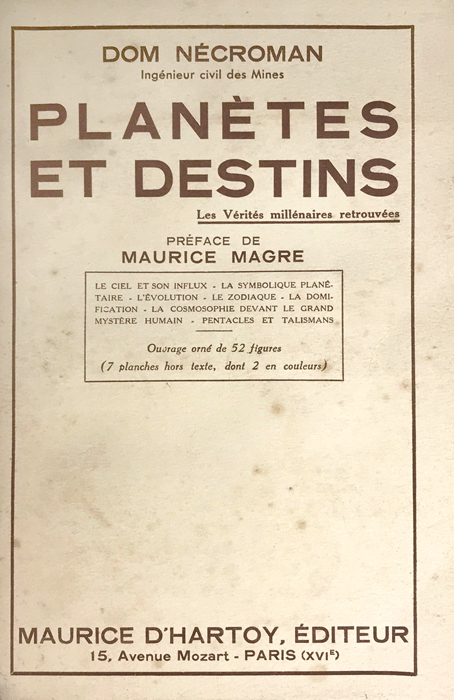
1933ref. 1070Paris, Maurice d’Hartoy, 1933 ; in-8, broché ; 295 pp., 7 planches hors-texte dépliantes (dont 2 en couleurs).
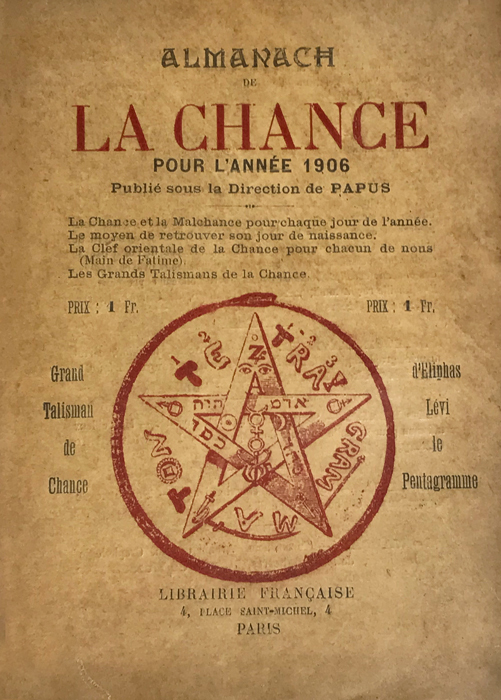
1906ref. 3510Paris, Librairie Française, 1906 ; in-12, broché ; 63 pp. et couverture illustrée en rouge et noir.
ref. SONG0877281769Used: Good unknown
ref. DADAX1338328182New unknown
2002ref. 3051À Paris, Éditions Honoré Champion, 2002.
1972Features: The Mac - Chicago to Mackinac Island Race; Blue Horizon; Diavolo; Blitzen; American Eagle; Dora; Comanche; Endurance; Bay Bea; Goblin; Jenny Too; Talisman; Pearson Entry a stand-out in year of the 30-footer; The Compleat Cruiser - Allied's Mistress 39; Nicholson 55 made to varied cruising and racing tastes; Sirensong - an exquisite new fiberglass racer; Two by Tripp; The Ensenada Parade - Beauty on the Water; 5.05 Meters of super planing sailboat - the 5-0-5; and more. Clean and unmarked with moderate wear. A quality copy. Magazine
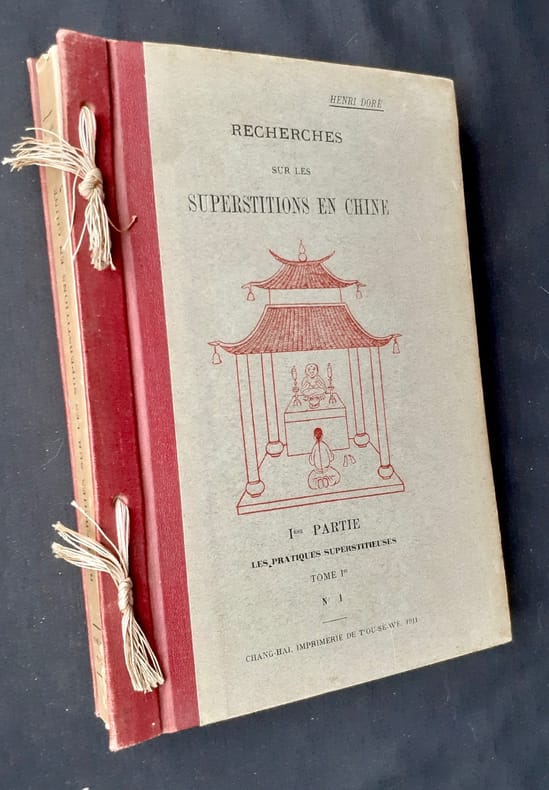
ref. 47250Chang-Hai : Imprimerie de la Mission catholique, 1911. Un volume sous couvertures cartonnées, relié à la chinoise au moyen de cordelettes, 146 pages illustrées de 65 planches hors texte en couleurs et des figures dans le texte. Exemplaire en bon état.
190014 pages. Circa 1900? NIcely colour-illustrated front cover. Few markings. Above-average wear and soiling. A sound copy. Sheet music
1823Numerosi tipi di amuleti, figure e vasi egizi. Tavola incisa all’acquaforte su lastra di rame, inserita nella monumentale opera Description de l’Egypte, II° edizione dal 1820-29 voluta da Luigi XVIII, importante risultato culturale dell’occupazione francese in Egitto per il periodo che va dal 1798 al 1801. Bonaparte decise di invadere queste terre per controllare le vie commerciali verso l’india ed assestare in questo modo un duro colpo all’economia britannica. Durante questa operazione, il Nostro favorì l’attività di numerosi artisti, ingegneri, matematici e naturalisti per registrare e catalogare con estrema precisione le costruzioni e i monumenti egiziani nonché la flora e la fauna. Il risultato di questo immane sforzo, che per la pubblicazione coinvolse quasi duemila tra artisti e tecnici oltre a quattrocento incisori, fu l’opera "Description de l’Egypte, ou recueil des observations et des recherches qui ont été faites en Egypte pendant l’expédition de l’armée française", che offre una globale visione scientifica dell’antico e moderno Egitto, nonché la sua storia naturale. La Description ebbe grande influenza sul movimento orientalista pittorico dell’ottocento e diede un contributo fondamentale alla diffusione dell’Egittologia. Numerosi edifici rappresentati in queste tavole sono stati completamente distrutti nel tempo
1823Numerosi tipi di amuleti e figure egizie. Tavola incisa all’acquaforte su lastra di rame, inserita nella monumentale opera Description de l’Egypte, II° edizione dal 1820-29 voluta da Luigi XVIII, importante risultato culturale dell’occupazione francese in Egitto per il periodo che va dal 1798 al 1801. Bonaparte decise di invadere queste terre per controllare le vie commerciali verso l’india ed assestare in questo modo un duro colpo all’economia britannica. Durante questa operazione, il Nostro favorì l’attività di numerosi artisti, ingegneri, matematici e naturalisti per registrare e catalogare con estrema precisione le costruzioni e i monumenti egiziani nonché la flora e la fauna. Il risultato di questo immane sforzo, che per la pubblicazione coinvolse quasi duemila tra artisti e tecnici oltre a quattrocento incisori, fu l’opera "Description de l’Egypte, ou recueil des observations et des recherches qui ont été faites en Egypte pendant l’expédition de l’armée française", che offre una globale visione scientifica dell’antico e moderno Egitto, nonché la sua storia naturale. La Description ebbe grande influenza sul movimento orientalista pittorico dell’ottocento e diede un contributo fondamentale alla diffusione dell’Egittologia. Numerosi edifici rappresentati in queste tavole sono stati completamente distrutti nel tempo
1937Stories: The Nazco Patrol; North for Timber; The Keeper's Tale; The Editor's Post Bag; The Hunting Down of Sultana; Three Dogs; The Grey Shark; Blackmailing a Railway; The Grey Shark; The Blue Grass Amulet; New Zealand Hermits; Missing; The Blue Glass Amulet; Indian Jugglers; Major the Outlaw. Somewhat above-average wear. Book
1943ref. 1074Paris, Editions Sous le Ciel, 1943 ; in-4 ; pleine toile vert-empire, dos lisse, titre doré, premier plat conservé (reliure de l'époque) ; 543 pp. (texte imprimé sur deux colonnes), 2 planches hors-texte en couleurs, 183 figures et 42 tableaux.
1983Circa 1983. 152 pages plus 5 pages of advertisements and local postal memorabilia. Includes six pages of information copied from the records of the Amulet Cemetery. A point-form diary of local history from 1935 through 1982. Book