Sample, F.: EditorMareMagnum

110 resultados
1983Circa 1983. 152 pages plus 5 pages of advertisements and local postal memorabilia. Includes six pages of information copied from the records of the Amulet Cemetery. A point-form diary of local history from 1935 through 1982. Book
1971ref. 121707P. Fanlac P. Fanlac 1971, In-8 broché. 125 pages. Avec figures et dessins. Bon état.
1988ref. 12949Rio de Janeiro, FUNARTE, 1988. Broschiert, 8°, 167 S., zahlreiche s/w Abbildungen; -wenig gebräunt, gutes Exemplar/ soft board, 8vo, 167 pp, numerous b/w illustrations; -very good copy.
1971P. Fanlac 1971, In-8 broché. 125 pages. Avec figures et dessins. Bon état.
1912ref. 1898Sans lieu (Paris), sans nom (Ecole française d'Extrême-Orient), sans date (1912) ; in-4, broché, 3 pages, couverture muette.
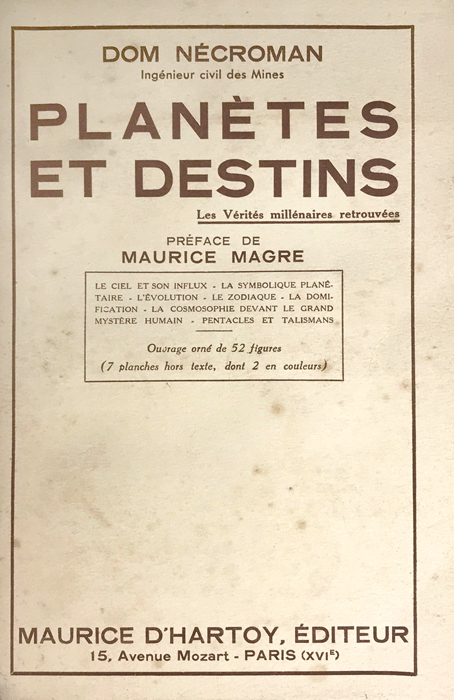
1933ref. 1070Paris, Maurice d’Hartoy, 1933 ; in-8, broché ; 295 pp., 7 planches hors-texte dépliantes (dont 2 en couleurs).
1972ref. 15541Payot 1972 240 pages in8. 1972. Broché couverture rempliée. 240 pages. Ce livre explore la nature et l'évolution des superstitions à travers le temps en examinant pourquoi à l'ère de la science et de la technologie les humains conservent un penchant pour la magie et les croyances occultes. Il aborde des phénomènes comme les pressentiments les rêves prémonitoires les présages les amulettes et les esprits en s'appuyant sur des exemples concrets
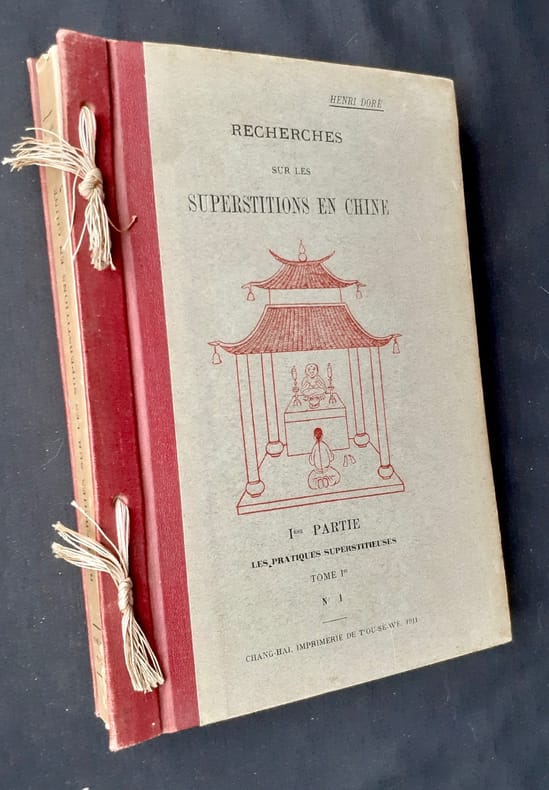
ref. 47250Chang-Hai : Imprimerie de la Mission catholique, 1911. Un volume sous couvertures cartonnées, relié à la chinoise au moyen de cordelettes, 146 pages illustrées de 65 planches hors texte en couleurs et des figures dans le texte. Exemplaire en bon état.
ref. RO40210080Revue de Paris. Non daté. In-4. En feuillets. Bon état, Livré sans Couverture, Dos satisfaisant, Intérieur frais. 6 pages volantes illustrées de dessins et photo-gravures en noir et blanc dans le texte.. . . . Classification Dewey : 70.49-Presse illustrée, magazines, revues
ref. RO40210062Revue de Paris. Non daté. In-4. En feuillets. Bon état, Livré sans Couverture, Dos satisfaisant, Intérieur frais. 6 pages volantes illustrées de dessins et photo-gravures en noir et blanc dans le texte.. . . . Classification Dewey : 391-Mode
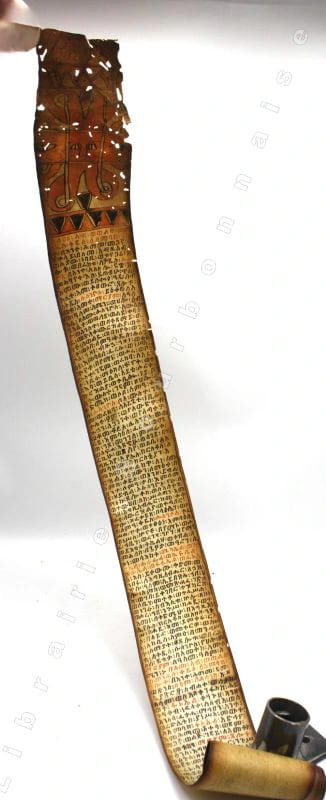
1979ref. ETHIOPIEEE93170825Paris, Seuil, 1979, 20,5 x 28, 122 pages sous couverture souple illustrée. Iconographie noir & blanc et couleurs.
1972Features: The Mac - Chicago to Mackinac Island Race; Blue Horizon; Diavolo; Blitzen; American Eagle; Dora; Comanche; Endurance; Bay Bea; Goblin; Jenny Too; Talisman; Pearson Entry a stand-out in year of the 30-footer; The Compleat Cruiser - Allied's Mistress 39; Nicholson 55 made to varied cruising and racing tastes; Sirensong - an exquisite new fiberglass racer; Two by Tripp; The Ensenada Parade - Beauty on the Water; 5.05 Meters of super planing sailboat - the 5-0-5; and more. Clean and unmarked with moderate wear. A quality copy. Magazine
ref. 615418 November 1883; on letterhead of Sussex Villas 3 Sussex Place Victoria Road W. Kensington London. 8vo: 1 p. Very good. He has 'pleasure in complying' with his correspondent's request. 'You may have seen a book I have recently published - "Retrospect of a Long Life" - and have learned that I am in the 84th year of my age - born on the 9th May 1800. I am thankful to God for good health and for many other blessings.' 18 November 1883; on letterhead of Sussex Villas, 3, Sussex Place, Victoria Road, W., Kensington [London]. unknown
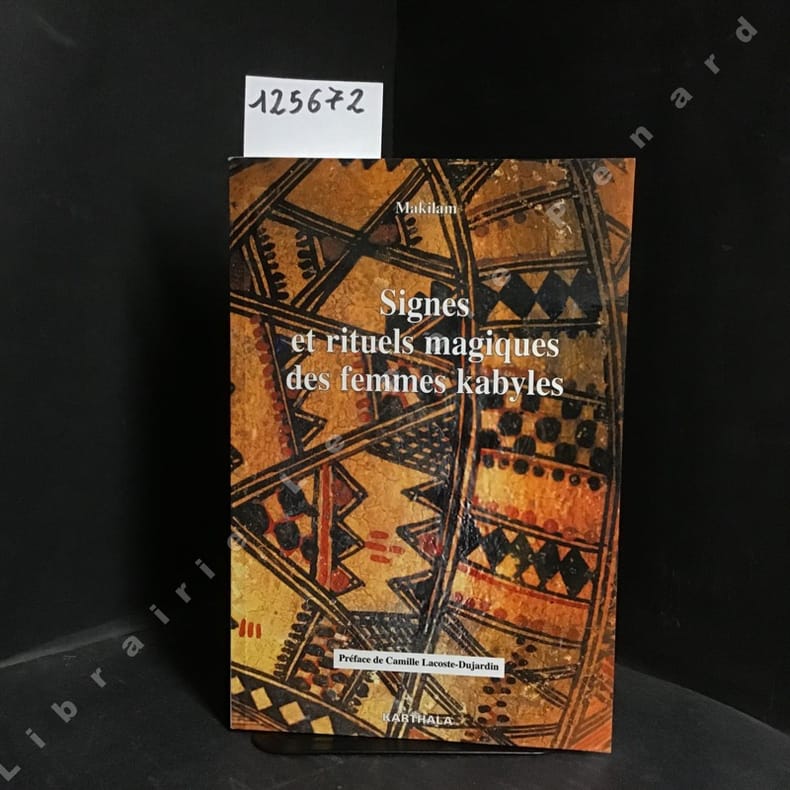
2011ref. 1256722011 Editions Karthala, Paris - 2011 - In-8 broché, couverture illustrée - 207 pages
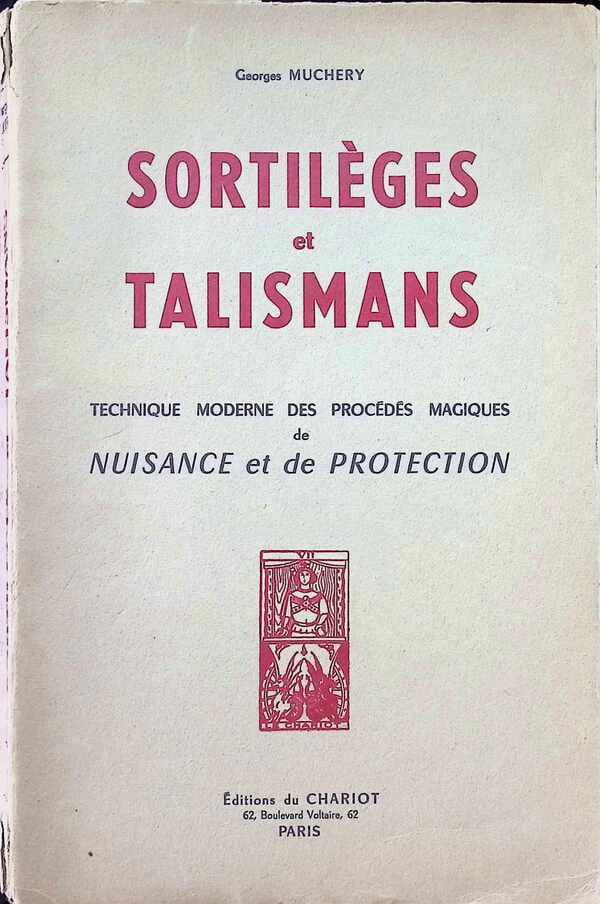
1955ref. 030878Chartres 1955 Editions du Chariot Soft cover
1955ref. 14984Paris, Editions du Chariot, 1955 ; in-8, broché ; 222, (2) pp., couverture crème imprimée en rouge et noir ; nombreuses figures, lettrines et culs-de-lampe imprimés en rouge ; lettre de Charles Richet.
ref. 0282542272.Gpaperback. Good. Access codes and supplements are not guaranteed with used items. May be an ex-library book. paperback
ref. 1207A181317Good. ND C.1890 Boston:DeWolfe Fiske embossed floral decor. red HC Good/No DJ. 3 illus. Intro. July 1832. 508pp with another 5pp index. Includes CASTLE DANGEROUSindex in one vol. hardcover
ref. 13981418Madrid: Consejo superior de investigaciones cientificas, Instituto de estudios africanos, 1949 in-8, 142 pages, 6 planches hors texte, 14 figures dans le texte, 11 planches de tatouages. Broché, couverture illustrée, bon état.
2002ref. 775102002 France Loisirs, 2003 - 1 volume in-8 , cartonnage noir de l'éditeur sous jaquette illustrée - 550 pages
2014New English Original bdg. Dust wrapper. 4to. (32 x 25 cm). English Edition. 241, [1] p., color ills. The arms of the sultans. The arms collection of Topkapi Palace. Translated by Alev (Kerimoglu) Bulut. "Weapon is a device that was developed by the mankind in the ancient ages for protection against the events of nature and enemies. The arms that were used for the functions of drilling, cutting, defense, and the firing function to be acquired later, were accepted as works of art owing to the mastery and craftsmanship skills that they display. The present work title The arms of the sultans. The arms collection of Topkapi Palace was prepared for the purpose of presenting to the readers The Arms of Collection of the Topkapi Palace Museum, where some of the rarest examples of these works of art are on display, as a whole along with an analysis of its fundamental attributes". Covering 1,300 years and consisting of 52,000 weapons of Arab, Umayyad, Abbasid, Mamluk, Persian, Turkish, Crimean Tartar, Indian, European, and Japanese origin, the Topkapi Palace Museum's weaponry collection is also among the world's premier weapons collections. The collection is made up in part of weapons transferred from the cebehâne and those used by the palace guards; however, the collection's most noteworthy section consists of those weapons ordered by the sultan personally or specially made as gifts for him, which weapons are a part of the palace's private collection. This collection includes weaponry owned by such sultans as Mehmed II, Bayezid II, Selim the Grim, Suleiman the Magnificent, Selim II, Mehmed II, and Ahmed I, as well as the weapons of such high-level dignitaries as grand viziers, pashas, and palace chamberlains; all of these weapons are eye-catching with their fine craftsmanship and decorations. An additional factor that contributed to the diversification of the collection's highly artistic weaponry was the tradition of bringing to the palace the weapons of important figures that were obtained through plunder.
2014New English Original bdg. Dust wrapper. 4to. (32 x 25 cm). English Edition. 241, [1] p., color ills. The arms of the sultans. The arms collection of Topkapi Palace. Translated by Alev (Kerimoglu) Bulut. "Weapon is a device that was developed by the mankind in the ancient ages for protection against the events of nature and enemies. The arms that were used for the functions of drilling, cutting, defense, and the firing function to be acquired later, were accepted as works of art owing to the mastery and craftsmanship skills that they display. The present work title The arms of the sultans. The arms collection of Topkapi Palace was prepared for the purpose of presenting to the readers The Arms of Collection of the Topkapi Palace Museum, where some of the rarest examples of these works of art are on display, as a whole along with an analysis of its fundamental attributes". Covering 1,300 years and consisting of 52,000 weapons of Arab, Umayyad, Abbasid, Mamluk, Persian, Turkish, Crimean Tartar, Indian, European, and Japanese origin, the Topkapi Palace Museum's weaponry collection is also among the world's premier weapons collections. The collection is made up in part of weapons transferred from the cebehâne and those used by the palace guards; however, the collection's most noteworthy section consists of those weapons ordered by the sultan personally or specially made as gifts for him, which weapons are a part of the palace's private collection. This collection includes weaponry owned by such sultans as Mehmed II, Bayezid II, Selim the Grim, Suleiman the Magnificent, Selim II, Mehmed II, and Ahmed I, as well as the weapons of such high-level dignitaries as grand viziers, pashas, and palace chamberlains; all of these weapons are eye-catching with their fine craftsmanship and decorations. An additional factor that contributed to the diversification of the collection's highly artistic weaponry was the tradition of bringing to the palace the weapons of important figures that were obtained through plunder.
1958ref. FB8152 /L19Paperback. Green cover with black title. We provide an in-depth photographic presentation of this item to stimulate your feeling and touch. More traditional book descriptions are immediately available Warning: This book was part of the erotic library gathered by the famous Cambridge Don computer scientist food and wine connoisseur Jack Arnold LANG along with medical friends and family involved in Freudian research. Sexual instincts or drives have deeply hidden roots in the unconscious mind. Instincts act by giving vitality and enthusiasm to the mind through meaning and purpose. The range of instincts is in great numbers. Freud expressed them in two categories. One is Eros the self-preserving life instinct containing all erotic pleasures. While Eros is used for basic survival the living instinct alone cannot explain all behavior according to Freud. In contrast Thanatos is the death instinct. It is full of self-destruction of sexual energy and our unconscious desire to die. The main part of human behavior and actions is tied back to sexual drives. Since birth the existence of sexual drives can be recognized as one of the most important incentives of life. The enclosed book was part of this research. A photograph is enclosed should you seek further details please contact Martin Frost on martin.frost@gmail.com Foremost amongst erotic books collected by Jack Arnold Lang are those published in France by the Olympia Press. The Olympia Press was a Paris-based publisher launched in 1953 by Maurice Girodias as a rebranded version of the Obelisk Press he inherited from his father Jack Kahane. It published a mix of erotic fiction and avant-garde literary fiction and is best known for issuing the first printed edition of Vladimir Nabokov's Lolita. In its heyday during the mid-fifties Olympia Press specialized in books which could not be published without legal action in the English-speaking world. Early on Girodias relied on the permissive attitudes of the French to publish sexually explicit books in both French and English. In the late 1950sthe French authorities began to ban and seize the press's books. A total of 94 Olympia Press publications were promoted and packaged as "Traveller's Companion" books usually with simple text-only covers and each edition in the series was numbered. The "Ophelia Press" line of erotica was far larger using the same design but pink covers instead of green. Olympia Press was the first publisher willing to print William S. Burroughs's avant-garde sexually explicit Naked Lunch which soon became famous. Other notable works included J. P. Donleavy's The Ginger Man ; Samuel Beckett's French trilogy Molloy Malone Dies and The Unnamable ; Henry Miller's trilogy The Rosy Crucifixion consisting of Sexus Nexus and Plexus; A Tale of Satisfied Desire by Georges Bataille; Story of O by Pauline Réage; Terry Southern and Mason Hoffenberg's Candy ; Alex Austin's The Blue Guitar and Eleanore ; and a critical book on Scientology Inside Scientology/Dianetics by Robert Kaufman. The South African poet Sinclair Beiles was an editor at the publisher. Other authors included Alexander Trocchi Iris Owens Harriet Daimler and John Stevenson Marcus Van Heller. Girodias had troubled dealings with his authors including copyright issues. Nabokov was dissatisfied with the copyediting assignment of copyright and the press's literary reputation. The press engaged in a long-running dispute over the rights to The Ginger Man ended with Donleavy's wife Mary buying out Girodias at what was intended to be a closed auction. Forced to leave France in 1963 Girodias briefly reestablished Olympia Press in New York in the 1960s and in London in the early 1970s. Grove Press in the U.S. would later print The Olympia Reader a best-selling anthology containing material from some of Olympia's most popular works including material by Burroughs Miller Trocchi and others. Another well-known collection was The Best of Olympia first published by the Olympia Press in 1963 and reprinted by New English Library in 1966. Other incarnations of the company some with Girodias' support emerged in Germany Italy and the United Kingdom. Olympia Press has been re-established and is currently operating out of Washington London and Frankfurt. Paris: The Olympia Press.1958. Small format 8vo. original green card covers ruled and lettered in black and white; pp. vi 7-259 v; title page with border in green; a very good to near fine copy. First issue. No. 63 in the Traveller's Companion series. An Olympia Press catalogue issued c.1958 lists no. 63 in this series as being a novel by Henry Crannach Marilyn Meeskeentitled 'Porridge Tasters'. The book was never written and Talsman's offering filled the gap.Somewhat of a lost novel in the history of gay literature The Gaudy Image follows the protagonist Titania Thomas Schwartz as he navigates a cast of characters in New Orleans in search of the perfect lover. Review: Talsma's book tells the story of Thomas Schwartz Madame Titania's alter ego who moves to 1950s New Orleans in search of the perfect man synthesized in the "Gaudy Image". Through the city's bars clubs and back streets you follow the lives of a variety of characters. Sometimes the novel seems a bit confusing sometimes it's not simple to follow the story. But right away you have a very articulate split of what gay life was like in those years. So many characters who call themselves using adjectives and feminine pronouns a world where true identities don't matter replaced by nicknames. In which the police seem to tolerate. And in which the Gay and partly lesbian world seems organized into precise castes each with its role. Yet the desire to love many of the figures in the novel Tit in the lead already tells of a desire for normality that will be late in arriving. Note: Originally published in France in the 50s to avoid prosecution for obscenity The Gaudy Image is one of the most important `lost' gay novels. A classic of gay fiction. The Olympia Press. paperback
1942Pages 397-424. Features: (Now) extremely politically incorrect "loose lips sink ships" poster with illustration of African with massively protruding lips is held by young lady as she stands in a gaping hole blasted in the side of U.S. freighter "Absaroka"; Photo of Rear-Admiral P.L. Vian; Photo of Italian battleship "Littorio"; Illustrations of brillian Mediterranean action - the Malta convoy gets through; Photos and maps of the daring attack on St. Nazaire's big dry dock; Four great aerial photos of R.A.F. daylight raids on Le Trait and Le Havre; Photos of numerous people in the news, including General Chiang Kai-Shek and his wife, Captain Guy Dollman, plus the H.M.S. "Trident" which torpedoed the "Prinz Eugen"; Three pages of illustrations of underground war factories where workers labour and live; Armoured Warfare Today - article with photo of British Mark IV.A cruiser tank and the tank transporter truck it can drive onto; One page of photos of specialied aircraft for warfare; Photo of Lord and Lady Elton and son Rodney with dogs at their home; Air photos of R.A.F. bomb damage evidence in Cologne; Elaborate centerfold illustration of a Japanese landing force, supported by warships and airplanes - typical of many since war opened in the Far East; H.M. Submarine "Talisman" flys her own Jolly Roger, as does submarine "Utmost"; Photos of mascots "Butch, M.C." and "Bacchus"; Photo of Russia's Maisky presenting 'Order of Lenin' to R.A.F. fighter pilots, including Wing Commander Ramsbottom Isherwood; Photos of human guinea pigs being used to find an antidote for mustard gas; One-page admiralty chart of Australia's Outer Bastion - Port Moresby and Environs; Photos of clothing and furniture provided to those who've been bombed out; Photos of British Soldiers "Toughening Up" at an "Assault School"; Two pages of great illustrations explaining the deadliest weapon in naval warfare, the torpedo, and its intricate mechanism and modus operandi of firing; Photos of Pigmy Aborigines of the Andaman Isles; Four nice photos of the Andaman Islands which have now been seized by Japan; Five photos of Malta, the most-bombed isle in the British Empire; vintage ads. This issue was never stapled. Contents clean and unmarked with moderate wear. A worthy copy of this great wartime issue. Book