Giovanni Battista CodronchiLivre Rare Book
1,734 results
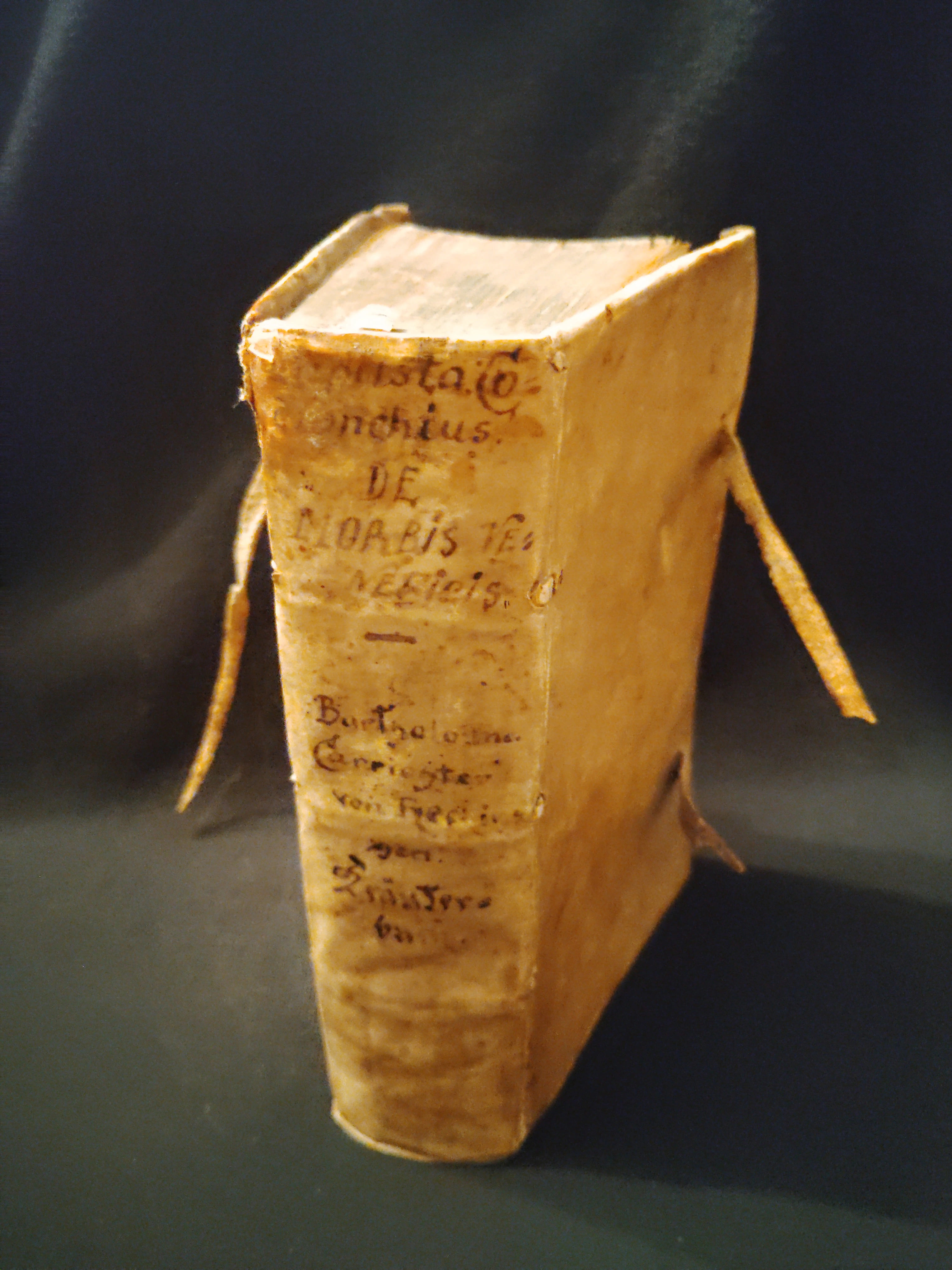
1595ref. GEJ-15Venezia, apud Francesco De Franceschi, 1595. In-8, pp. [8] 199 [13]. Small octavo (16 x 10 cm). 8 leaves, 199 (paginated) leaves, 25 unnumbered pages (index), 1 leaf (Errate sic corrige). Complete. Contemporary overlapping vellum with handwritten spine titles and 4 leather-band straps, but only 1 full lenght functionally. Interior minimally rubbed and bumped, slightly stained and dusty. 1st edition, Very Rare!!! Ex-libris on the first bookplate belonging to Georg Christoph Petri von Hartenfels, who was a 17 century notable physician and polymath, professor, and later the Rector of the University of Erfurt. The treatise under title De morbis veneficis ac veneficiis (On Poisoning Witches and Spells), published in 1595 in Venice by the physician Giovan Battista Codronchi (1547–1628), is a significant, is rare 16th-century work focusing on the intersection of medicine and demonology. Codronchi wrote the treatise to analyze "diabolical illnesses" (specifically regarding his daughter) and to define the roles of physicians versus exorcists in cases of presumed poisoning or witchcraft. (Akademia.edu) Author has an extensive account of the present work is given by Thorndike who deals with its role in the history of witchcraft. Codronchi (1547-1628) was a physician from Imola, whose works according to Hirsch all show deep knowledge and originality. Bibliographie: USTC No.823353; Caillet, 2435, Dorbon (Bibliotheca Esoterica), 829; Yvesa Plessis, 224; Graesse (Bibliotheca Magica et Pneumatica), Chapter VIII: "Von den Zauberkrankheiten" (On diseases caused by witchcraft); Garrison & Morton, A Medical Bibliography, 1718; Cornell University Library Witchcraft Collection, 114, Thorndike, VI; Hansen, "Quellen und Untersuchungen zur Geschichte des Hexenwahns; Bibliotheca Osleriana, 2343; OCLC: 165994812. "Plessis, like Caillet, appreciates Codronchi for his attempt to systematize medical knowledge in the forensic service (recognizing whether a given case is a natural disease or the effect of "maleficia".(Plessis) "Grässe appreciated this work as one of the first systematic treatises in which a physician attempted to provide scientific (for that time) criteria for distinguishing natural diseases from the effects of "magical poisons".(Graesse) "Garrison and Morton mention De morbis veneficis... They indicate that it was this work on poisons and witchcraft, published two years earlier, that prepared the ground for the later treatise on forensic medicine". (Garrison and Morton). Provenance: Ex-libris on the first bookplate belonging to Georg Christoph Petri von Hartenfels, who was a 17 century notable physician and polymath, professor, and later the Rector of the University of Erfurt. Book is bound with: Bartholomäus Carrichter: Kräuterbuch. Darinnen begriffen, under welchen zeichen Zodiaci, auch in welchem Gradu ein jedes Kraut stehe, wie sie in Leib unnd zu allen Schäden zu bereyten, und zu welcher zeit sie zu colligieren sein. Anton Bertram 1589. Kl.-8° (16 x 10 cm). 8 Bll., 223(1) S., 8.
1555ref. GEJ-11Pescia: Lorenzo Torrentino, 1555, 4to, [13] 18-126 [1] of colophon 1 blank. Book in Italian. 1st Italian Edition (2nd overall) of this rare demonology tratise. Later (18/19 .century) later half morocco with gold lettered spine and blank pages. Marbled endpapers. Architectural woodcut border on title-page with a small view of Florence and with Medici coat of arms. Woodcut initials, woodcut vignette on verso of A4. Colophon leaf at end. Very ginuine interior, clean, without marks, annotations, stamps and ex libris. No foxing and stains. Complete. First Italian edition and the first translation from the 1523 Latin original by Turino Turini, marking the earliest book on witchcraft printed in the Italian vernacular. While the dialogue format reinforces the grim theological framework of the Malleus Maleficarum and contemporary inquisitorial manuals regarding sabbaths and demonic pacts, it stands apart for its erudition. By sophisticatedly weaving classical and pagan citations into medieval scholastic precepts, Pico della Mirandola effectively pioneered the "humanistic literature of witchcraft," bridging Renaissance intellectualism and counter-reformation demonology. The work embodies the Renaissance approach to demonology, demonstrating how a humanist could substantiate the reality of witchcraft, transvection, and the sabbath using classical sources alongside scripture and inquisitorial manuals. Ultimately, the early modern obsession with demonology is presented not as an irrational residue of a rational age, but as a foundational conceptual nexus essential to understanding sixteenth-century philosophy. Bibliography: Censimento 16 CNCE 34704; Riccardi II, 281; Moreni, Annali della tipografia di Lorenzo Torrentino, s. 394; Sander 5688; Graesse V, 283; USTC No. 848435; Caillet 8654; Encyclopaedia of Witchcraft 2006.
1620ref. GEJ-1France, Lyon, Claude Landry, 1620. In-8. Text in Latin. 2 volumes of 3 complete itself. Last part dated 1621 under title: Daemonomastix sive Vniversi operis adversus daemones et maleficos ad vsum praesertim exorcistarum concinnati, is not included. Colation: V 1: title page in black and red, indexes and 544 p.: Henricus Institoris & Jakob Sprenger - Malleus maleficarum : maleficas et earum haeresin framea conterens... 2. Fr. Ioannis Nideri - Formicarum de maleficis, & earum praestigiis ac deceptionibus... V2.1: title page in black and red, indexes and 317 p.: 3. Bernhardi Basin - Opusculum de artibus magicis ac magorum maleficiis. 4. Vlrici Molitoris - Dialogus de lamiis, & Pythonicis mulieribus. 5. Ioannis de Gerson - Libellus de triale spirituum. 6. Thomas Murner - Libellus de Pythonico contractu.7. Bartholomaei de Spina - Quaestio de strigibus seu maleficis. 8. Io. Franciscum Ponzinbium - De lamiis, apologia prima [-quarta]. V2.2: title page in black and red, indexes and 506 p.: 9. Joan. Laurentii Ananiae - De Natura daemonum. 10. R.P.F. Bernardi Comensis - Tractatus de strigibus, cum notis Franc. Pennae. 11. Ambrosii de Vignate - Elegans ac utilis quaestio de lamiis seu strigibus. 12. Joan. Gersonii - Tractatus de erroribus circa artem magicam et articulis reprobatis. 13. Joan. French Leonis - Libellus de sortilegiis. 14. Jacobi Simancae - Titulus unicus de lamiis. 15. Alphonsi a Castro, Zamorensis - de Impia sortilegarum. 16. Pauli Grillandi - Tractatus de sortilegiis eorumque poenis. A collected edition of the most famous book about witches ever written including other works dedicated to occult topic. 16 extremely rare treatises on demonology and witchcraft in a single binding in three parts! Over 1,300 pages, 3 separate title pages, tables of contents, and indexes. Complete 1620 edition itself. Internal condition: very good. Binding: good. Professionaly restored parchment on the spine. Solid antiquarian condition. Bibliography: The Encyclopedia of Witchcraft and Demonology, Robbins, 1964; Not in Caillet, Dorbon, Yve-Plessis or Bibliotheca esoterica; USTC 6902887. Provenance: XVII c. - Chistophori Solarij U.I.D. & Bibliothecae Slacoverdensis Scholarum Piarum.
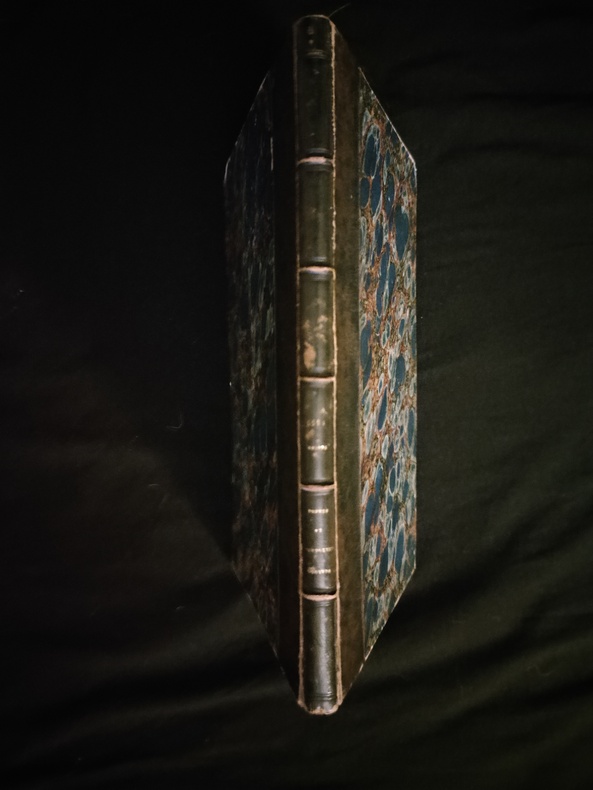
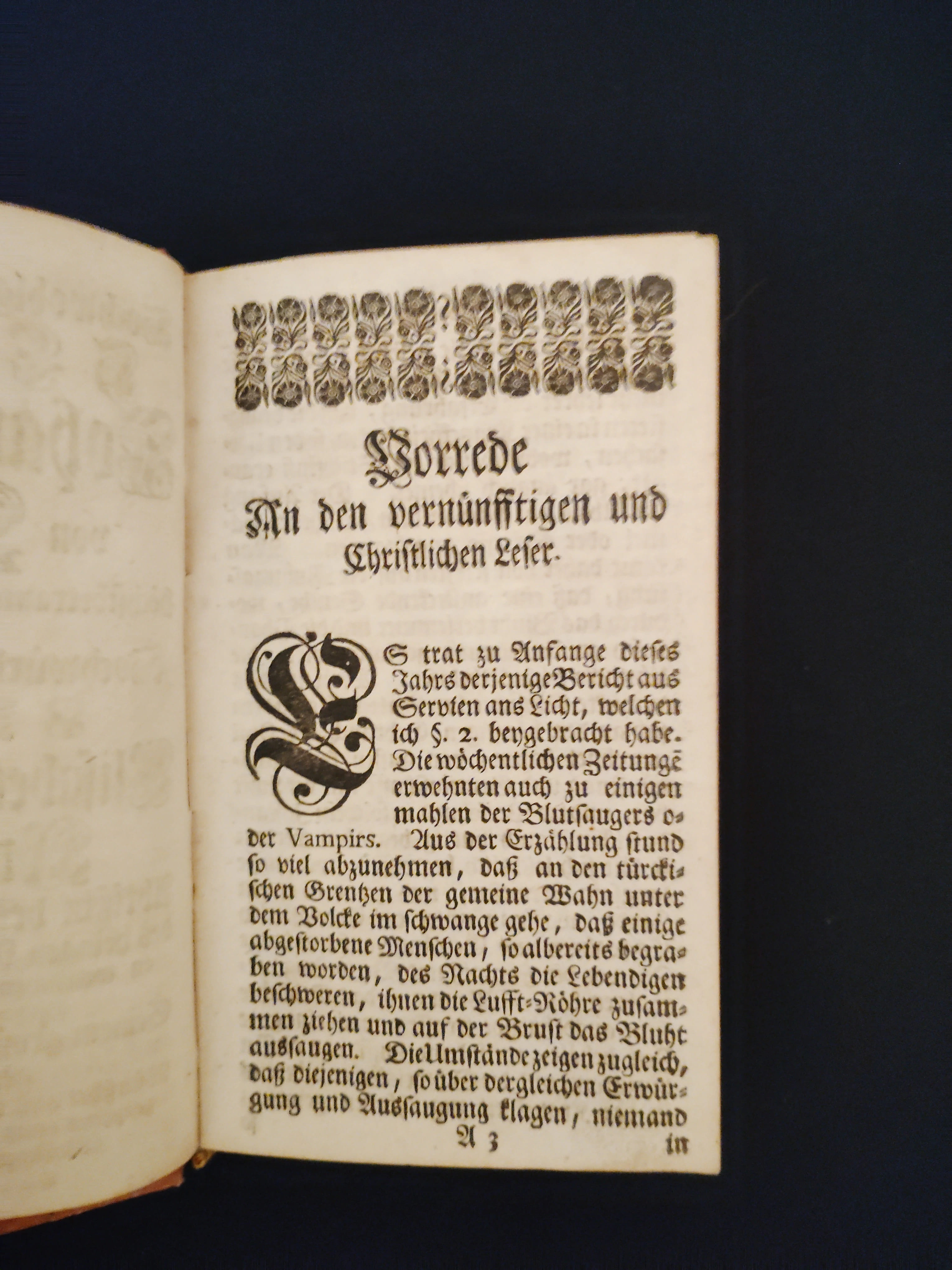
1733ref. GEJ-16Wolffenbüttel [Wolfenbüttel]: Zu finden bey Johann Christoph Meißner, 1733. In-8, 136 pp., [4] leaves (Register). Small octavo (17 x 10 cm). Contemporary red cardboard binding, incorporating the original paper wrapper. Covering material stained. Paper greyed. Interior minimally rubbed and bumped, slightly stained and dusty. 1st and only edition, Extremely Scarce!!! First edition of this exceptionally and unique rare and foundational text-monument of early European vampirology, published at the absolute zenith of the 18th-century "Vampire Controversy" (Vampyrstreit). This seminal octavo volume comprising the one-color title page in black, 136 pages of gothic Fraktur text, and the final index leaves, stands as one of the most critical contemporary intellectual responses to the vampire panic that swept Central and Southeastern Europe. The hysteria, which gripped the public imagination following the official Habsburg military and medical reports from the Serbian borders—most notably the grim exhumations related to Peter Plogojowitz in 1725 and Arnold Paole in 1732—effectively introduced the Slavic concept and the very word "vampire" into the lexicon of Western European Enlightenment discourse. The author, Johann Christoph Harenberg (1696–1774), an eminent German theologian, historian, and school rector, approaches this terrifying contemporary phenomenon with a sophisticated blend of early scientific rationalism and Protestant orthodoxy. While providing his readers with highly detailed, sensational, and meticulously recorded case studies of alleged vampiric attacks and ritualistic desecrations of corpses along the volatile Ottoman-Serbian frontiers ("Gräntzen des Servien-Landes"), Harenberg systematically deconstructs the supernatural myths surrounding them. He fiercely rejects the physical reality of the animated dead, brilliantly diagnosing the epidemic not as a literal threat, but as a "disease of the imagination" (Phantastische Seuche). He argues that the perceived visitations are the tragic products of mass psychological trauma, rural ignorance, premature burials, and the natural, misunderstood processes of bodily decomposition. Furthermore, from a theological standpoint, Harenberg maintains that God would never permit the souls of the deceased to return to the mortal realm for such grotesque purposes, attributing the sightings to demonic illusions or sheer human sensory deception. Preceding Dom Augustin Calmet’s celebrated and widely translated phantom treatise by more than a decade, Harenberg’s work represents a vital, transitional milestone bridging the late-baroque fascination with the occult and the burgeoning skepticism of the Age of Reason. Recorded in the German national bibliography under VD18, this remains a highly coveted, profoundly influential masterwork for specialized collections focusing on the history of magic, early medicine, folklore, and the European Enlightenment. An item of legendary rarity on the open market, this 1733 first edition represents an exceptional, census-proven acquisition opportunity for the discerning collector of early occult and Enlightenment literature. According to worldwide institutional databases and international library union catalogs (including WorldCat and the Karlsruhe Virtual Catalog / KVK), fewer than 12 institutional copies of the physical 1733 original printing are recorded globally, with the vast majority permanently secured within key European state repositories such as the Bayerische Staatsbibliothek in Munich, the Herzog August Bibliothek in Wolfenbüttel, and the Universitätsbibliothek Göttingen. The vast majority of library search results for this title point strictly to modern digital facsimiles, microform copies, or late 20th-century reprints, masking the true, extreme scarcity of the physical artifact. Since virtually all known original copies are institutionalized and perpetually removed from commerce, public auction appearances of this seminal vampire tract are virtually non-existent. A profoundly elusive work of early Vampyrologia, this piece stands as an ultimate desideratum that has historically escaped even the most exhaustive collections of early horror and paranormal history. Bibliographie: VD18 14205289; OCLC/WorldCat: 257577536 / 934812328; Hamberger-Meusel: III, 75; Summer, Montague: The Vampire: His Kith and Kin (London, 1928) – Cited as one of the critical early German works addressing the Serbian vampire epidemics of 1725–1732; Hock, Stefan: Die Vampyrsagen und ihre Verwertung in der deutschen Literatur (Berlin, 1900), p. 34; Not in Caillet; Graesse [Grasse]: Bibliotheca Magica et Pneumatica (1843), p. 125; Not in USTC; Cornell Library: Witchcraft BF1556 .H27. Provenance: Antiquariat Peter Fritzen, January 2018, No. 93., Librairie ancienne LIRI, 2025. Since 1990 only one auction record (2004, Falk & Falk, 12, no. 20). This copy has no owners annotations (ex-libris, marks, stamps, handwritten notes).
1615ref. GEJ-13Paris, Jean Millot, 1615. In-12 : 109pp, (1). Full original vellum binding and endpapers with blank pages. Parchment with defects on the cover, few stains at the end of book. Shorter page 103/104 due to handmade paper inperfections. Some worm holes. Bright and complete copy. Two old ink different anotations on the first endpaper. This exceptionally rare 1615 Parisian first edition, published by Jean Millot, represents a foundational cornerstone in early modern demonological literature and the history of psychiatry. Written by the French physician Jean de Nynauld, De la lycanthropie, transformation et extase des sorciers is widely celebrated by historians Evans and Bartholomew as "the most extensive and detailed description of ointments in relation to both witchcraft and lycanthropy." Across four meticulous chapters dedicated entirely to the salves of sorcerers, Nynauld documents the grim contemporary lore surrounding these unguents, including the notorious belief that they utilized the fat of sacrificed children. However, rather than validating these horrors as supernatural reality, Nynauld applies a brilliant, early medical rationalism to the phenomenon. He boldly declares the numerous reports of murderous, cannibalistic shapeshifters and sabbat flights to be powerful hallucinations brought on by diabolical chemistry—specifically, the pharmacological effects of psychoactive herbs. Defying the harsh inquisitorial consensus of his era, he firmly regards those who claim they metamorphose into animals not as literal monsters or heretics, but as sufferers of severe mental disorders and clinical delusion. Consequently, this prized editio princeps stands as a crucial historical milestone, marking the transition from superstitious witch-hunting to a rational understanding of early pharmacology and mental health. Bibliography: "One of the "classic" works on Witchcraft and nevertheless one of the rarest." (Caillet 8124), The Encyclopedia of Extraordinary Social Behavior 333-39; Guaita, Bibliothèque occulte 774; Coumont, Demonology and Witchcraft: An Annotated Bibliography N38.3; Laehr, Die Literatur der Psychiatrie, Neurologie und Psychologie I: 159; Cioranescu 51435; Yve-Plessis, 975; USTC No. 6013581. Keywords : Keywords : Grimoire, Magie, Occultisme, Charmes, Sorcellerie, Diables
1561ref. GEJ-10Paris, apud Gilles Corrozet, 1561, [1], 40, [1] pp, 8°. Book in Latin. RARE AND UNCOMMON ON THE MARKET FIRST PARISIAN PRINTING! 17/18 century full calf binding, gold lettered spine, marbled endpapers, owner's ex libris of Emeric Bigot (?) on title page. Good antiquarian condition, woodcut printers device to title, woodcut initials. Few stains and discolorations. Complete. Published in Paris by Gilles Corrozet in 1561, this rare edition of Ulrich Molitor’s Tractatus de lamiis et pythonicis stands as a definitive cornerstone of early occult literature and a fascinating, skeptical counterpoint to fanatical witch-hunting manuals like the Malleus Maleficarum. Written by a prominent German jurist, the treatise is historically significant for its early skepticism, as Molitor boldly argued that supernatural acts like shape-shifting or flying to sabbaths were merely illusions and dreams induced by the Devil rather than physical realities. This text is equally famous for containing the earliest printed depictions of witches, establishing the modern iconography of the occult through striking woodcut imagery that includes scenes of witches brewing storms in cauldrons, a wizard riding a wolf, and the Devil corrupting a woman. Composed as a direct response to Europe's rising witchcraft hysteria, this treatise introduces cold legal logic and canonical jurisprudence into a debate previously dominated by religious fanaticism. Moving away from dry academic lecturing, the text adopts the dynamic structure of a scholarly dialogue between three real historical figures: Archduke Sigismund of Austria, the ruler of Tyrol, who acts as the voice of skepticism by raising logical doubts and challenging the validity of witch trials; Conrad Schatz, the magistrate of Constance, who champions the strict, traditional view by defending the physical reality of witchcraft and demanding harsh punishments; and Ulrich Molitor himself, the author, who serves as the impartial arbiter utilizing Roman and Canon law to systematically resolve the disagreements between his interlocutors. Ulrich Molitor (c. 1442–1507) was a pioneering German jurist, humanist, and diplomat who shaped early modern legal thought. After studying humanities in Basel, he earned a prestigious doctorate in civil and canon law from the University of Pavia, positioning him at the forefront of Renaissance jurisprudence. He spent the pinnacle of his career as a trusted legal advisor to Archduke Sigismund of Austria in Innsbruck and later served as chancellor to the Bishop of Worms. Molitor’s enduring legacy is his 1489 masterpiece, Tractatus de lamiis et pythonicis, which stands as one of history's earliest legal critiques of witch-hunt fanaticism. By utilizing rigorous Roman and Canon law to argue that witchcraft was largely a demonic illusion, he became a vehement opponent of judicial torture, forever marking his place as a trailblazer of European rationalism. Provenance: Emeric Bigot (?) - Ex Libris: Emeric Bigot (1626–1689) was a prominent French humanist, bibliophile, and a central figure in the 17th-century European intellectual network known as the Respublica Literaria (Republic of Letters). Born and based in Rouen, he used his substantial wealth to amass one of the most legendary private libraries in Europe, renowned for its rare Greek and Latin manuscripts and early printed books. Though he published little under his own name—focusing primarily on editing early Christian texts—Bigot served as an indispensable international scholarly coordinator. He maintained a vast correspondence with major thinkers like John Milton and Nicolas Heinsius, utilizing his unparalleled bibliographic expertise to source texts, verify translations, and generously assist scholars across the continent in preparing their own monumental works for print. Bibliography: Herbert M. Adams, M 1573; USTC, 153205; Pettegree i Walsby, 153205, only found in one US institution (Yale University, Beinecke Library), Not in VD 16, Yve-Plessis, Dorbon-Aîné and Bibliotheca Esoterica; Caillet, II, 7641; Grässe, p. 55; Bibliotheca Daemonologica (Robbins).
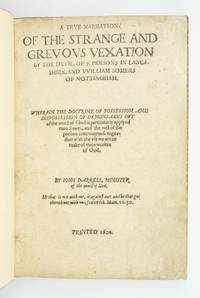
1600ref. ST21089England: Printed by the English secret press 1600. FIRST EDITION. 187 x 128 mm. 7 3/8 x 5". 4 p.l. 24 106 2 pp. Very pleasing early 20th century grained calf gilt covers with French fillet border and rosette cornerpieces raised bands spine panels with small daisy centerpiece gilt lettering densely gilt turn-ins marbled endpapers all edges gilt. STC 6288; ESTC S109297. See also Freeman "Demons Deviance and Defiance: John Darrell and the Politics of Exorcism in Late Elizabethan England" in Conformity and Orthodoxy in the English Church c. 1560-1660 ed. P. Lake and M. Questier Boydell Press 2000 pp. 34-63. Short faint scratch to front board extremities lightly rubbed text washed and pressed title and final two leaves somewhat grayed and grubby margins trimmed a bit close occasionally grazing headlines or shoulder notes but a perfectly readable copy in an attractive binding. This scarce clandestine imprint is a central publication in of one of the strangest religio-political controversies of the turn of the 17th century involving demonic possession witchcraft accusations and an anti-Puritan crusade by a Church of England bishop. Our author Puritan exorcist John Darrell ca. 1562 - ca. 1607 was educated at Cambridge and briefly dabbled in law and farming before establishing himself as a preacher and spiritual healer. In 1586 he began conducting exorcisms resulting in a level of local fame partly because some of them resulted in the convictions of witches. In the following decade he achieved national notoriety. First in March of 1597 he exorcised a group of seven demoniacs in the household of Lancashire landowner Nicholas Starkey. Then in November of the same year he conducted a dramatic public exorcism of Nottingham apprentice musician William Somers whose claim of having been magically possessed led to the arrest of 13 people on witchcraft charges. One of these individuals was the sister of a city alderman who immediately took action to protect his kinswoman. The resulting legal tangle--which included the arrest of Somers on charges of witchcraft later changed to fraud and an investigative commission led by the Archbishop of York--attracted widespread attention to Darrell's activities by both supporters and detractors. The Church of England was highly concerned about Puritan exorcisms: in the words of historian Thomas S. Freeman "exorcism magnified those aspects of Puritan worship which the ecclesiastical authorities most feared--its anti-hierarchical tendencies its strong sense of communal solidarity and its potential as a vehicle for protest." No doubt with an understanding of this threat Bishop of London Richard Bancroft and his chaplain Samuel Harsnett led a vicious campaign against Darrell publishing multiple works smearing his character and theology stripping Durrell of his license to preach and imprisoning him for more than a year. Darrell did not go quietly. Over the next four years he and his supporters penned multiple defenses of his actions and of Puritan exorcism more generally published either abroad or illegally by secret English presses. The present work is significant not only for its detailed retelling of Darrell's final two exorcisms in his own words but also because it includes Darrell's detailed "doctrine of possession" which discusses the difference between his exorcisms and those of the apostolic age an important theological clarification in the debate. STC indicates that our book was one of the works published clandestinely in England; this is backed up by the October 29 1600 Stationers' Company order to burn all copies of "mr Darrell's book lately printed concerning the casting out of Devilles" which Freeman asserts refers to the present publication. This order to be burned on top of the clandestine publication could explain the present scarcity of the work which appears on the market very infrequently. We have been able to trace just a single copy at auction this century and only five since 1964 several lacking the final errata leaf which does appear here. Printed [by the English secret press?] unknown
1600ref. ST21089England: Printed by the English secret press 1600. FIRST EDITION. 187 x 128 mm. 7 3/8 x 5". 4 p.l. 24 106 2 pp. Very pleasing early 20th century grained calf gilt covers with French fillet border and rosette cornerpieces raised bands spine panels with small daisy centerpiece gilt lettering densely gilt turn-ins marbled endpapers all edges gilt. STC 6288; ESTC S109297. See also Freeman "Demons Deviance and Defiance: John Darrell and the Politics of Exorcism in Late Elizabethan England" in Conformity and Orthodoxy in the English Church c. 1560-1660 ed. P. Lake and M. Questier Boydell Press 2000 pp. 34-63. Short faint scratch to front board extremities lightly rubbed text washed and pressed title and final two leaves somewhat grayed and grubby margins trimmed a bit close occasionally grazing headlines or shoulder notes but a perfectly readable copy in an attractive binding. This scarce clandestine imprint is a central publication in of one of the strangest religio-political controversies of the turn of the 17th century involving demonic possession witchcraft accusations and an anti-Puritan crusade by a Church of England bishop. Our author Puritan exorcist John Darrell ca. 1562 - ca. 1607 was educated at Cambridge and briefly dabbled in law and farming before establishing himself as a preacher and spiritual healer. In 1586 he began conducting exorcisms resulting in a level of local fame partly because some of them resulted in the convictions of witches. In the following decade he achieved national notoriety. First in March of 1597 he exorcised a group of seven demoniacs in the household of Lancashire landowner Nicholas Starkey. Then in November of the same year he conducted a dramatic public exorcism of Nottingham apprentice musician William Somers whose claim of having been magically possessed led to the arrest of 13 people on witchcraft charges. One of these individuals was the sister of a city alderman who immediately took action to protect his kinswoman. The resulting legal tangle--which included the arrest of Somers on charges of witchcraft later changed to fraud and an investigative commission led by the Archbishop of York--attracted widespread attention to Darrell's activities by both supporters and detractors. The Church of England was highly concerned about Puritan exorcisms: in the words of historian Thomas S. Freeman "exorcism magnified those aspects of Puritan worship which the ecclesiastical authorities most feared--its anti-hierarchical tendencies its strong sense of communal solidarity and its potential as a vehicle for protest." No doubt with an understanding of this threat Bishop of London Richard Bancroft and his chaplain Samuel Harsnett led a vicious campaign against Darrell publishing multiple works smearing his character and theology stripping Durrell of his license to preach and imprisoning him for more than a year. Darrell did not go quietly. Over the next four years he and his supporters penned multiple defenses of his actions and of Puritan exorcism more generally published either abroad or illegally by secret English presses. The present work is significant not only for its detailed retelling of Darrell's final two exorcisms in his own words but also because it includes Darrell's detailed "doctrine of possession" which discusses the difference between his exorcisms and those of the apostolic age an important theological clarification in the debate. STC indicates that our book was one of the works published clandestinely in England; this is backed up by the October 29 1600 Stationers' Company order to burn all copies of "mr Darrell's book lately printed concerning the casting out of Devilles" which Freeman asserts refers to the present publication. This order to be burned on top of the clandestine publication could explain the present scarcity of the work which appears on the market very infrequently. We have been able to trace just a single copy at auction this century and only five since 1964 several lacking the final errata leaf which does appear here. Printed [by the English secret press?] unknown books
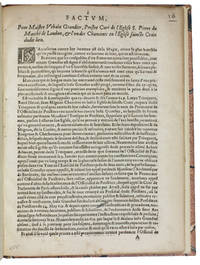
1634ref. ABC_48501France 1634. Modern marbled boards with a red morocco title-label lettered in gold on the spine. 4to ca. 18.5 x 24 cm. 2 works in 1 volume. With:2 WITCHCRAFT. Remarques et considerations servans a la justification du curé de Loudun autres que celles contenuës en son factum.France ca. 1634. Two exceedingly rare pamphlets about the "Loudon possessions" a case of mass hysteria surrounding the supposed demonic possession of Ursuline nuns that took place in the western French town of Loudun in 1634. The affair led to the trial of a local priest Urbain Grandier who was accused of witchcraft. Interestingly these two pamphlets are by an anonymous partisan of the accused priest. The possession cases began in 1632 when several nuns at the local Ursuline convent claimed to be possessed by demons. The nuns accused Grandier a charismatic and controversial figure in Loudun of casting spells on them and making them his witches. Grandier who had gained the enmity of the powerful Cardinal Richelieu was arrested and put on trial despite a lack of evidence against him. The trial was riddled with corruption and political intrigue and Grandier was ultimately found guilty and sentenced to death by burning at the stake. His execution took place on 18 August 1634.While 18th century accounts of the famous trial such as those by De La Menardaye were popular contemporary accounts are almost unobtainable. Neither pamphlet has appeared in auction records and there are very few institutional holdings.The spine and corners of the boards are rubbed the title label is slightly chipped. Numbers in the upper corners of the leaves indicate that these two works were likely removed from a sammelband containing multiple works. Internally slightly browned an older typed description has been mounted with tape to the recto of the first free flyleaf. Otherwise in good condition.l Ad 1: Caillet 4718; Coumont F7.1; WorldCat 467111589 705771905 7 copies; Yve-Plessis 1285; Ad 2: Coumont R31.1; WorldCat 1254612433 2 copies; Yve-Plessis 1286; cf. for more information about Grandier and the Loudun Nuns see: Robbins The Encyclopedia of Witchcraft and Demonology pp. 312-317; Both ads not in Barbier Dictionnaire des ouvrages anonymes; Rosenthal Bibliotheca Magica et Pneumatica; Thorndike Grandier and the Ursulines only mentioned once in general vol VIII p. 583; Ad 2 not in Caillet. hardcover