Galgemair, GeorgAntiquariat.de
7 214 résultats
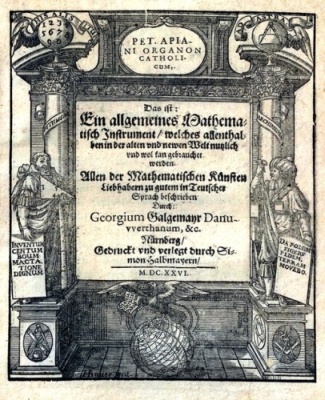
1626réf. N334Nürnberg, Simon Halbmaier, 1626. Mit der meist fehlenden großen Falttafel - Erste Ausgabe. Als einzeln paginierter Druck und mit einem eigenen Titelblatt zusammen mit dem "Centiloquium Circini Proportionum" des Georg Galgemair erschienene Abhandlung über das "Organon Catholicum", es ?behandelt Herstellung (bzw. Aufbau) und Gebrauch von Peilinstrumenten, die der ältere Apian erfand. Dies geht aus den Vorworten unmißverständlich hervor. Galgemair hat freilich seine Vorlagen gründlich und selbständig durchdacht und mit bemerkenswertem didaktischem Geschick präsentiert. Das sogenannte Inventum Apiani ist ausschließlich für terrestrische Anwendungen bestimmt. Im Titel des Inventum wird betont, daß man ohne alle Rechnung auskomme ? Galgemair ? ist ein kompetenter Sachbuchautor, kein selbständiger Forscher? (Gerhard Betsch, Praxis geometrica und Kartographie an der Universität Tübingen im 16. und frühen 17. Jahrhundert, in: Friedrich Seck (Hrsg.). Zum 400. Geburtstag von Wilhelm Schickard: zweites Tübinger Schickard-Symposion, 25. bis 27. Juni 1992, Sigmaringen 1995, S. 213). Die Holzschnitt-Tafeln zeigen geometrische Figuren ?Dorsum sine Rotula?, die große einen astrologischen Jahreskreis (36,5 x 30,5 cm!) mit dem von Galgemair nach Apian erfundenen Instrument: ?Nun ist die Peilscheibe des Inventum mit einem Quadratnetz überzogen, ähnlich unserem Millimeterpapier, nur nicht so fein unterteilt. Mit Hilfe dieses Quadratnetzes, und mit etwas Übung, kann man die gesuchte 4. Proportionale direkt auf der Peilscheibe ablesen. Ganz ohne Rechnung geht es im Grunde freilich doch nicht, denn das Quadratnetz muß als passender Maßstab interpretiert werden? (ebenda). Der Titel mit einer großen Ädikula mit zahlreichen geometrischen Messinstrumenten und einer Weltkugel. Nur unwesentlich gebräunt, sehr sauber und wohlerhalten sowie vollständig ? mit der meist fehlenden großen Falttafel.VD17 23:289322W. Zinner 5025. Ortroy 116. [2 Warenabbildungen]
1630réf. 012312In Verlegung Lazari Zetzners S. Erben Strassburg 1630. Edition Unknown. Hardcover. Good Condition/No Dust Jacket. Size: Small Octavo. Text is in German. Text body is clean and free from previous owner annotation underlining and highlighting. Binding is tight covers and spine fully intact. Rebound gilt-stamped vellum and light blue paper over boards 30 282 pages illustrated with woodcuts. Covers and text block soiled corners and spine ends bumped and lightly worn pages toned staining scattered throughout still highly readable paper loss and tear on page 83 some minor wormholes in blank margins towards end of book. Quantity Available: 1. Shipped Weight: 1 lb 9 oz. Category: Astrology; German Language; Pictures of this item not already displayed here available upon request. Inventory No: 012312. . In Verlegung Lazari Zetzners S. Erben hardcover
1565in-4, pp.(2), ff,29, emblema di Ziletti sul titolo, iniziali istoriate e fregi tipografici in silografia. Copertina decorata settecentesca. Edizione originale, rara.. Cantamessa, III, n.7149. B:M. Sh. T., p.617. RiccardiI, 432. Thorndike, VI, 124-126. Houzeau-Lancaster, 4893.,.
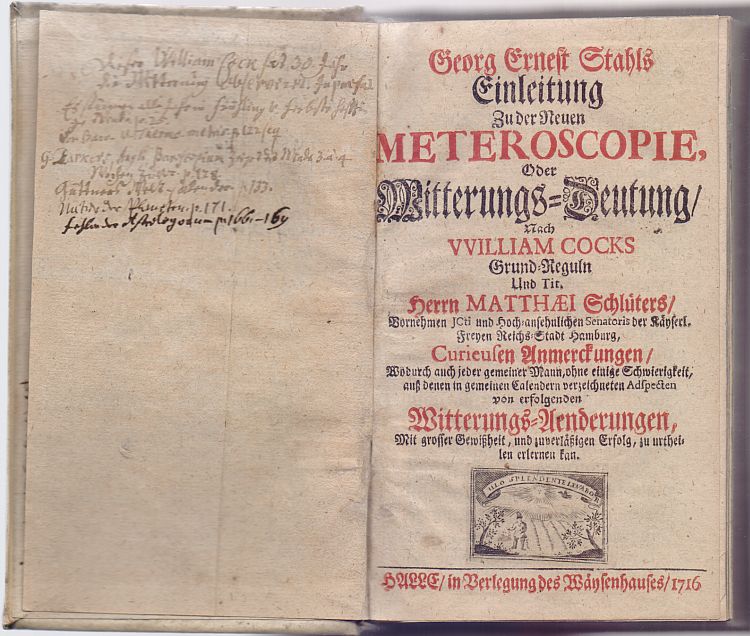
1716réf. 30174Halle, Waisenhaus, 1716. 8vo. Mit 1 mehrf. gef. gest. Karte mit astrol. Jahreszeiten. Titel m. Vign. in Rot u. Schwarz. 8 Bl., 515 S., 114 Bl. Pgt. d. Zt. mit hs. RTitel. Farbschnitt.
16388°, mm 220x165, due volumi in un tomo di pp. (44), 129, (2) 433, (3); legatura coeva in pergamena floscia. Lievi bruniture alle carte, particolarmente quelle centrali; un lieve restauro alla carta N2 con minima mancanza, peraltro ottimo esemplare. Bellissima antiporta allegorica in rame raffigurante Atlante ed Ercole ai lati del cartiglio con il titolo, un astrolabio e i volti di Argoli e Thycobrae. Dedica a Francesco Erizzo, patrizio veneziano, vari componimenti poetici, prefazione e indice nelle carte preliminari. Bella bordura silografica contenente una fontana al verso dell'ultima carta preliminare; all'interno tre diagrammi che rappresentano il sistema tolemaico, il copernicano e quello di Thycobrae (prediletto dall'autore), numerosi altri diagrammi astronomici e tabelle nel testo. Da notare alla pag. 22 e 23 la rappresentazione delle fasi lunari e delle macchie della luna. Edizione originale completa delle due parti. Da non confondere con l'opera di Argoli che tratta di astrologia medica, pubblicata l'anno successivo e che curiosamente ripropone un'identica antiporta figurata. Quest'opera è invece divisa in tre libri: il primo tratta dei tre principali sistemi astronomici; il secondo è un importante trattato di astrologia, con capitoli sui segni zodiacali e sulla navigazione; in ultimo il terzo libro contiene le tavole delle effemeridi (dal 1630 al 1680) con parti di testo che spiegano come leggerle e interpretarle. Argoli, abruzzese di origine, fu allievo di Magini a Padova, e dopo aver insegnato matematica alla Sapienza di Roma dal 1622 al 1627, a causa della bolla papale contro l'astrologia (di cui tutte le opere di Argoli sono intrise), si trasferì a Padova dove ottenne la prestigiosa cattedra di matematica. Il calcolo estensivo delle Efemeridi fu la ricerca che in assoluto gli diede maggior fama. Non comune prima edizione: due copie nelle biblioteche italiane. Bibliografia: Riccardi, 49. Houzeau Lancaster, 15115. Graesse, 194.
1775réf. 0034561775 Paris, Frères Debure, 1775. In-quarto (212 X 265 mm) basane fauve racinée, dos cinq nerfs, caissons dorés ornés, pièce de titre maroquin grenat, coiffes et coupes ornées, tranches marbrées (reliure de l'époque) ; (1) f. blanc, titre, XXII pages de "Discours préliminaire", 526 pages, 3 planches dépliantes. Petite restauration à une coupe, marges de la page de titre brunies. Une note manuscrite à l'encre noire sur papier ancien contrecollée en marge de la page 79. Ex-libris collé sur le premier contreplat.
1610réf. 10721610 Couverture rigide A Rouen, chez Romain de Beauvais, 1610. Petit in-12, reliure plein veau, dos lisse orné, pièce de titre rouge, tranches rouges, roulette dorée sur les coupes, signet, manque à la charnière en tête, coins émoussés, restaurations. 8 pages non chiffrées (titre, épitre, sommaire des 6 journées), 561(1) pages, 40 pages non chiffrées de tables, petits manques de papier aux coins inférieurs des feuillets 317 et 319 (quelques mots de commentaires dans la marge sont manquants, voir photo), dernier feuillet légèrement bruni. Ouvrage rare paru pour la première fois à Lyon en 1582, il est dédicacé à Gilbert de Cremeaux, chantre en l'abbaye de Savigny. Cet Hexaméron est un traité de sorcellerie, de magie naturelle et d'astrologie. Un curieux chapitre est consacré aux monstres, un autre aux propriétés des eaux, un troisième aux visions, aux esprits succubes et incubes (Caillet n°10761). Très bon état intérieur, bon exemplaire.
1940réf. 141009Institut astrologique de Carthage 1940 Rare tête de série, jusqu’à l’interruption de juin 1940, soit 109 numéros sur 127, in-8 agrafée, près de 45 pp. par fascicule. Lacunes : 1932 : les 10 volumes ; 1933 : mai, août & septembre ; 1935 : juin à octobre 5 fasc. ; 1937 : décembre. Quelques usures. Bon ensemble
1565In-16 p. (mm. 153 x 103), mz. pergamena antica (risg. rifatti), 28 cc.nn., 360 pp.num., marca tipografica al frontespizio, ornato da testatine e grandi capilettera figurati a vignetta, tutti xilografati. Dedica di Lodovico Dolce a Nicolò Crasso, oratore. L'opera contiene molti argomenti curiosi ed interessanti (religione, politica, passioni, ragione, divinazione, magia); tra gli altri, nei capitoli III, IV, V, VI e XXVII tratta dell'aritmetica, della geometria, della musica, della astrologia, come precisa il Riccardi,I, 402. Ma il "Sommario".., attribuito al Delfino, è risultato essere una pura traduzione della “Vision delectable de la philosofia y artes liberales" di Alfonso de la Torre, già stampata in Spagna nel 1480 o 1482.. Anzi, come osserva giustamente il Brunet, nemmeno gli spagnuoli dovettero ricordarsi che l’opera apparteneva alla loro letteratura, perchè si tradusse in spagnolo col nome del Delfino, e fu ripetutamente stampata! Così Bongi,I, p. 504-505. Questa ediz. del 1565 è quindi la "seconda edizione" della traduzione di Delfino (la prima giolitina è del 1556). Cfr. anche Palau,VII, p. 47 - Brunet,V,887. Su quasi tutto il volume pesante alone al solo margine esterno bianco (che man mano si attenua); alc. cc. con uniforme lieve arross.; a parte questi difetti, buon esemplare di questa rara opera.
1961réf. 35746Hamburg, Hamburger Hefte, 1961. je ca. 50 S. Hefte
1576Lugduni, apud Ioannem Toronaesium, 1576, 16° (cm. 11,5 x 7) legatura in piena pelle coeva, cornici e ornamenti in oro ai piatti, dorso a tre snodi, con fiori d’oro nei compartimenti e titolo, un po’ sbiadito, pure dorato, pp. 366-(81: rerum ac verborum index), frontespizio in cornice vegetale. Nella sua opera l’A. attaccò i dissoluti costumi del suo tempo in un ampio discorso filosofico sulla natura e sul comportamento umano. La sua analisi si estendeva al clero e al papato che egli esecrava per la loro ipocrisia. Opinioni così dure non potevano passare sotto silenzio e lo Zodiacus vitae - la sua sola opera conosciuta, ristampata innumerevoli volte nel XVII secolo - fu ben presto messo all'indice. Molte copie delle prime edizioni furono distrutte dall'Inquisizione. L’A. venne accusato dopo la morte di praticare la magia; il suo corpo venne riesumato e bruciato pubblicamente per ordine dell'Inquisizione. Bel restauro alla legatura (cerniere, cuffie, angoli); all’interno carta uniformemente brunita. Bella copia. Caillet, 7096 (edizione precedente); Dorbon-Ainé, 2929 (edizione francese).
1592réf. 1118101592 A Lengres, Par Jehan des Preyz (Jean), 1592, 1 volume in-4 de 155x210 mm environ, 91 feuillets paginés, (1) f. (Table). Parchemin souple avec traces de liens. Ouvrage INCOMPLET DES ILLUSTRATIONS ET DU TEXTE : globe de la page de titre découpé, sans les figures ou cartes dépliantes (mais la carte in-texte d'Europe est bien présente), feuillets 2, 3, 8, 28, 58 et 59 manquants. Ouvrage en partie dérelié méritant une restauration : reliure salie comptant quelques manques, traces de mouillures importantes, déchirure avec manque au feuillet 54, mais de nombreuses gravures sur bois.
1622In 16, cm 10 x 15,5, pp. 384 con 83 illustrazioni xilografiche nel testo. Antica firma cancellata al frontespizio, piccola mancanza al margine bianco alle pp. 281 - 287. tipiche diffuse bruniture. Piena pergamena coeva. Buona edizione seicentesca dell'opera di Johannes Ab Indagine, monaco tedesco, dedicata ai tre campi della scienza occulta: astrologia, fisionomia, chiromanzia. Pubblicata nel 1522, fu uno dei trattati piu' diffusi e noti del periodo rinascimentale dedicati a queste materie. Qui sono stati aggiunti anche i trattati del medico bergamasco Guglielmo Gratarolo dedicati alla memoria, alla fisiognomica, alla previsione metereologica e quello del Gaurico inerente la scultura.
1582[16]-327 pp Demi-basane havane du dédut du XIXe s., dos lisse orné de roulettes de grecques dorées, pièce de titre rouge, tranches bleues, gardes renouvelées 1582, 1582, in-8, [16]-327 pp, Demi-basane havane du dédut du XIXe s, dos lisse orné de roulettes de grecques dorées, pièce de titre rouge, tranches bleues, gardes renouvelées, Rare édition anversoise du célèbre Traité de la sphère de Joannes de Sacrobosco, commentée et annotée par Francesco Giuntini et Elie Vinet. L'édition est illustré de schémas astronomiques gravés sur bois dans le texte. John of Holywood, connu sous le nom de Johannes Sacrobosco, enseigna les mathématiques et l'astronomie à la Sorbonne au XIIIe siècle. Il publia plusieurs traités très diffusés dans les milieux universitaires, le plus populaire, le plus commenté et le plus diffusé étant celui-ci ; en quelques feuillets, ce petit volume offre la synthèse des théories astronomiques, astrologiques, mathématiques et cosmologiques de l'époque. Ex-libris manuscrit ancien sur la page de titre. Lourde réparation à l'adhésif sur le feuillet H4, apposée sur une annotation ancienne. Feuillets brunis, une auréole large. USTC N° 414519
1655in-12 pp 24,354, 8. piena pergamena coeva. contiene un sonetto del Marino, un discorso del Galluzzi o Gallucci sul teatro, la descizione dei segni astrologici, la descrizione di diverse macchine.
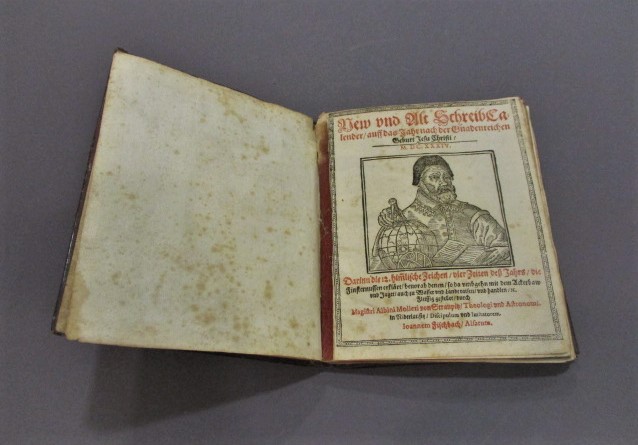
1634réf. 21757(Ohne Ort und Drucker), 1634. 16, 7 Bll. mit 1 Porträt in Holzschnitt und zahlreichen in Schwarz und Rot gedruckten Kalenderzeichen in Holzschnitt. 8°. Ldr. der Zeit (verzogen, bestoßen und berieben). [5 Warenabbildungen]
Paris, Chez Lambert & Durand, 1739, 25 x 19,5 cm., hol. piel, frontis grabado + portada a dos tintas + LXVI págs. + 1 h. + 487 págs. y 12 láminas grabadas, varias de ellas plegadas. (?Bella obra sobre las religiones antiguas y sus misterios. Los capítulos sobre el culto de Mitra, sobre la astrología judiciaria y los misterios de Baco son particularmente interesantes? Biblioteca esotérica. Catálogo de la Librairie Dorbon-Ainé, Paris, 1988).
1668in-8, pp. (38), 540, 100, (10), 2 cb, bella leg. p. perg. coeva con tass. al d., tagli spruzz. Antip. inc. in rame con molte simbologie. Vignetta xilogr. al front. Prima rara ediz. di trattato di matematica, contenente migliaia di lemmi scientifici con ampie digressioni sulla astrologia e alchimia. A pag. 215 vi è una tabella sui segni zodiacali. La seconda parte del testo porta un nuovo titolo: Digressio physio-theologica ad verbum sympathia. L'opera del sacerdote teatino originario di Capua (1623-1698), a causa delle critiche per i contenuti astrologici, fu revisionata dal Vitali e ripubblicata in seconda edizione nel 1690, ma molto meno interessante perchè privata degli aspetti più originali ed ermetici. Riccardi II, 606. Qualche pp. brun. ma bell'esempl. [045]
2005réf. 24293Coron-Exklusiv 2005. 12 hochwertige einzeln nummerierte Miniaturen in Echtvergoldung hinter Passepartouts, der 24-seitige broschierte Kommentarband im Format 30x40 beschreibt die Miniaturen ausführlich und stellt die dazugehörigen Handschriften und ihre Geschichten kurz vor. Darüber hinaus werden die bekanntesten Mythen zu den Tierkreiszeichen erzählt und gegebenenfalls in der Interpretation der mittelalterlichen Buchmalerei weiter ausgeführt 31x41 (Kassette), die dunkelblaue GANZLEDER-KASSETTE in hochwertiger Handarbeit wurde mit einer originalgetreuen Wiedergabe der astronomischen Uhr am Markusplatz in Venedig aus den Jahren 1493 bis 1499 äußerst luxuriös ausgestattet. Diese Uhr zeigt neben der Uhrzeit auch Mondphasen und Tierkreiszeichen an. Im befestigten Ring aus Steinguss, der die 24 Stunden mit römischen Ziffern zeigt, befinden sich drei konzentrische, drehbare und auf Metall geprägte Ringe aus Kunstemail. Die 12 Tierkreiszeichen sind vergoldet und stehen im Gegenuhrzeigersinn nacheinander. Der drehbare Zeiger stellt die Sonne dar, er gibt sowohl die Tageszeit als auch das jeweilige Tierzeichen des Jahres an. Ganz innen läuft die Halbkugel des Mondes um die sich um sich selbst drehende Erde im Zentrum - getreu dem Mittelalterlichen Weltbild.
1944réf. YRG-440première édition de cette œuvre majeure, 4 volumes in-4, demi toile prune, couvertures non conservées. Reliure modernes. pages très légèrement jaunies. T1 : 423 pp. T2 : 610 pp. T3 : 314 pp. T4 : 315 pp. Librairie Lecoffre - Paris. 1944 Très bel ensemble. Tome I (L’astrologie et les sciences occultes, avec appendice de Louis Massignon) → 1944 Tome II (Le dieu cosmique) → 1949 Tome III (Les doctrines de l’âme) → 1953 Tome IV (Le dieu inconnu et la gnose) → 1954
1677In 8° ant. (mm 162x101), p. perg. rigida di primo Settecento, pp. 210,(2), con 6 fig. astrologiche inc. e frontesp. in rosso e nero buon es., con modeste fioriture per il tipo di carta, e sporadiche postille coeve (per questa ed. seicentesca, cfr. Cantamessa, 823).
1789réf. 5316DBFrankfurt am Mayn, Heinrich Luidwig Brönner, 1789. 8°. Pappband der Zeit.
1676RIVERIUS LAZARUS ARCANA, CUM ISTITUTIONIBUS MEDICIS ET REGULIS.ET OBSERVATIONIBUS P.F. BERN. CHRISTINI.QUIBUS ACCESSERUNT CURATIONUM MORBORUM DE LUE SEU MORBO VENEREO, DE FEBRE PESTILENTIALI CUM BREVI ROMAE CONTAGII NURRATIONE, ET ASTROLOGICUS AD MEDICINA PERTINENS.Venetiis, Barth. Tramontini 1676[Astrologia-Medicina] (cm. 24,3) Ottimo cartonato originale.Titolo al dorso.11 carte non numerate.Pagine 184 (198) 6 carte non numerate; pagine 132; 4 carte non numerate; Pagine 78 + 1 carta bianca.Frontis rosso e nero.Le tre parti hanno frontis proprio.EDIZIONE ORIGINALE MOLTO RARAManca a:Hirsch, Choix, Waller, Garrison-Morton e a varia bibliografia specializzata consultata.L'autore (1598-1655) fu uno dei più abili medici pratici della scuola di Montpellier e fu il primo che vi introdusse il metodo Spagirico di Paracelso.Fu anche importante per dermatologia, otorino, psichiatria ecc.Vedi: * Neuburger- Pagel, III pagina 409, 471, 608 e per odontoiatria, Sudhoff, Geschichte der Zahnheilkund pagina169.Alcuni, attribuiscono questa singolare nostra opera, più volte ristampata(1680, 1696.) al Cristini Bernardino, vedi: * Bayle-Thilaye * Carrere volume II pagina 528ESEMPLARE MOLTO BELLO, NITIDO CON BARBE E UNA NOTA MANOSCRITTA COEVA IN FINE.SOLAMENTE IN: * KRIVATSY 2900 * WELLCOME IV 535 * BRITISH MUSEUM CATALOGO XVII CENT. ITALIAN, II PAGINA 752.[f5] Libro
réf. 900039ASTROLOGY The Astrologer's Magazine; and Philosophical Miscellany. Consisting of An Easy Introduction to the Celestial Science of Astrology. The Art of setting a Figure to any Time proposed. Signification of the Houses Planets Signs and Aspects. Position Motion and Influences of the Heavenly Bodies. Rules and Examples to Resolve all Lawful Horary Questions. How to calculate Nativities exemplified by the Genitures of many illustrious Persons. Lives of eminent Philosophers. Singular Prophecies. Chymical Secrets. Medical Prescriptions. Extracts on interesting Subjects from the Philosophical Transactions. With a Monthly Portion of Lavater's Physiognomy embellished with Several Hundred Etchings and Engravings illustrative of the Science. Holborn London: Printed for W. Locke 1793-4 8vo. calf-backed marbled paper-covered boards spine with five raised bands and 'I' in gilt to third compartment; pp. v 4-250 ii index; together with the highly decorative engraved frontis with an illustration depicting quotes from Job and Milton; containing numerous diagrams tables and charts throughout; the spine ends re-tipped in calf now heavily rubbed and lacking label to second compartment split along edges but holding and rubbed all over some of the marbled paper beginning to chip and boards showing through beneath in places; the frontis seldom found at all is here closely shaved at head and affixed to the front paste-down; some light pencil markings to paste down and title; damp stain to lower corner of title; the text block itself occasionally shaved at outer margin though with no loss of text; aside from light spots and the odd corner tear a very clean copy internally; this copy without the additional engravings as is also common. A scarce collection of six issues of the 'Astrologer's Magazine' representing the August 1793 to January 1794 issues. Formerly known as 'The Conjuror's Magazine' which ran from 1791-1793 Astrology became such a large focus that the name was changed here in August 1793. It then ran for just six more issues before publication was ceased. Widely believed to be the first conjuring periodical it was also one of the first to openly and actively promote the practice of magic. Contributions here include 'Curious Philosophical Essays upon the Power of the Devil on Human Bodies' 'Prophecies of Nostradamus relating to France' 'The Moon's Influence on Madmen' and several sections on Witchcraft including a witch trial held in 1762 'Proofs of Witchcraft' and 'Children afflicted by supposed Sorcery' as well as sections on Necromancy Dreams Visions and Palmistry accompanied by diagrams. hardcover
1979réf. 022341San Antonio: Bear Publishers 1979. Book. Very Good. Hardcover. First Edition. Corners bumped/rubbed small tears and price-clipped corner in dust jacket which is now in protective mylar. 278pp. The effects of astrological aspects and cycles on the stock market. Bear Publishers Hardcover