7 306 résultats
réf. 3768Paris, Editions Charconac, 1952. In-8 broché, 504 pp.
réf. 1559Monaco, Editions du Rocher-Gnose, 1981. In-8 broché, 158 pp. Imprimé en mauve.
réf. 2891Paris, Flammarion, 1984. Grand in-8 cartonné, 479 pp.
réf. 10446Paris, Editions du Chariot, s.d. In-8 broché, 220 p.
réf. 3814Paris, De Vecchi, 1983. In-8 broché, couverture illustrée, 174 pp.
réf. 9559Paris, Editions de Vecchi, 1995. In-8 broché, 285 pp.
1615réf. ST20812Rome: Bartolomeo Zannetti 1615. Second Edition. 222 x 160 mm. 8 3/4 x 6 1/2". 12 p.l. 304 pp. 12 leaves. Very pleasing 17th century calf covers with a floral roll border surrounding a semis of fleurs-de-lys raised bands spine gilt in compartments with a double rule enclosing five fleurs-de-lys lettered in gilt marbled paper pastedowns all edges gilt old expert repairs at the top of joints. Attractive woodcut head- and tailpieces throughout historiated initials and two woodcut astrological charts in the text. Front pastedown with morocco book label of Stanislas de Guaita; rear flyleaf with his inked inscription: "Collationné. Complet - à Nancy. ce 27 Xbre 1895. - Guaita." "Stanislas de Guaita et sa bibliothèque occulte" 15 this copy; Caillet I 291; Graesse I 127; USTC 4022052. See also Thorndike VI pp. 202-04. A bit of rubbing at corners other light wear to the binding inconsequential foxing here and there isolated quires slightly darkened but an excellent copy--crisp and clean internally in a solid decorative binding still shining with gilt. In a lovely early binding this is a notorious 19th century occultist's copy of a scarce 17th century refutation of astrology. Our author Jesuit scholar Alessandro de Angelis 1559-1620 taught logic natural history metaphysics and theology at the Collegio Romano eventually serving as prefect of studies from 1611-17. De Angelis' only known publication the "Astologos" systematically picks apart common astrological beliefs on both metaphysical and theological grounds. First printed in Lyon the work appears here in a second edition issued the same year; both seem to be rare as we were able to trace only six copies at auction since 1966. Making our copy of an already absorbing book even more intriguing is its former owner the French poet and occultist Stanislas de Guaita 1861-97 whose short but colorful life was full of curious incident. He founded a chapter of the Rosicrucians published several works on magic and Kabbalah and had a defrocked priest declare a "magical war" against him which culminated in a decidedly unmagical though fortunately not fatal pistol duel. He is also responsible for the iconic symbol of a goat's head in an inverted pentagram now used to represent Satanism which he had originally used as an illustration for his 1897 work "La Clef de la Magie Noire" "The Key to Black Magic". In addition to these activities Guaita assembled an extensive library of books on various occult and related topics. His collection was sold by the Paris bookseller Dorbon whose 1899 catalog of the library includes 2227 volumes. Ours is #15 priced at the significant sum of 65 francs perhaps $1200 in today's buying power. Bartolomeo Zannetti unknown
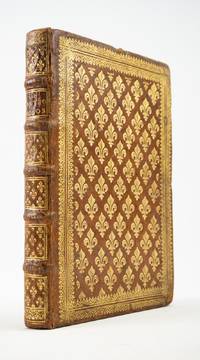
1615réf. ST20812Rome: Bartolomeo Zannetti 1615. Second Edition. 222 x 160 mm. 8 3/4 x 6 1/2". 12 p.l. 304 pp. 12 leaves. Very pleasing 17th century calf covers with a floral roll border surrounding a semis of fleurs-de-lys raised bands spine gilt in compartments with a double rule enclosing five fleurs-de-lys lettered in gilt marbled paper pastedowns all edges gilt old expert repairs at the top of joints. Attractive woodcut head- and tailpieces throughout historiated initials and two woodcut astrological charts in the text. Front pastedown with morocco book label of Stanislas de Guaita; rear flyleaf with his inked inscription: "Collationné. Complet - à Nancy. ce 27 Xbre 1895. - Guaita." "Stanislas de Guaita et sa bibliothèque occulte" 15 this copy; Caillet I 291; Graesse I 127; USTC 4022052. See also Thorndike VI pp. 202-04. A bit of rubbing at corners other light wear to the binding inconsequential foxing here and there isolated quires slightly darkened but an excellent copy--crisp and clean internally in a solid decorative binding still shining with gilt. In a lovely early binding this is a notorious 19th century occultist's copy of a scarce 17th century refutation of astrology. Our author Jesuit scholar Alessandro de Angelis 1559-1620 taught logic natural history metaphysics and theology at the Collegio Romano eventually serving as prefect of studies from 1611-17. De Angelis' only known publication the "Astologos" systematically picks apart common astrological beliefs on both metaphysical and theological grounds. First printed in Lyon the work appears here in a second edition issued the same year; both seem to be rare as we were able to trace only six copies at auction since 1966. Making our copy of an already absorbing book even more intriguing is its former owner the French poet and occultist Stanislas de Guaita 1861-97 whose short but colorful life was full of curious incident. He founded a chapter of the Rosicrucians published several works on magic and Kabbalah and had a defrocked priest declare a "magical war" against him which culminated in a decidedly unmagical though fortunately not fatal pistol duel. He is also responsible for the iconic symbol of a goat's head in an inverted pentagram now used to represent Satanism which he had originally used as an illustration for his 1897 work "La Clef de la Magie Noire" "The Key to Black Magic". In addition to these activities Guaita assembled an extensive library of books on various occult and related topics. His collection was sold by the Paris bookseller Dorbon whose 1899 catalog of the library includes 2227 volumes. Ours is #15 priced at the significant sum of 65 francs perhaps $1200 in today's buying power. Bartolomeo Zannetti unknown books
réf. M10196Paris Chacornac et Cie, (sd), in8 br, 280pp. Exemplaire en bon état non coupé. Langue: Français
2009réf. LFA-126738602Un ouvrage de 112 pages, format 210 x 250 mm, illustré, broché couverture couleurs rempliée, publié en 2009, Impr. des Deux-Ponts, bon état
réf. 16638Paris, imp. Henri Diéval, 1925, 1 broché, couverture rempliée illustrée, dos renforcé avec du papier kraft. petit in-4, titre illustré, 105 pages, illustrations, tirage limité, exemplaire sur vergé d'alfa ;
2004Colognola ai Colli, Gribaudo Tempolibro, 2004, 8vo brossura editoriale con copertina illustrata a colori, pp. 63 con numerose illustrazioni a colori n.t.
1982Milano, Armenia, 1982, due volumi in-8vo cartonato con copertine illustrate a colori contenenti 16 fascicoli sciolti per complessive 441 pagine, con numerosissime illustrazioni a colori. In buone condizioni, completo dei fogli di guardia, da rilegare.
1812In -12°, pp. 24, 1 tav., 9 cc. manoscritte, una c.b., rilegatura in carta marmorizzata coeva. L'autore dell'opera è il sacerdote tedesco Adam Kaldy, Pastore nell'Hauzenthal in Austria, e il titolo suona così: “Che cosa sono le comete? E quale relazione hanno col nostro Sistema solare?” Questo trattato di astronomia, non privo di elementi teologici, riflette le cognizioni contemporanee circa le comete: il testo tedesco è accompagnato da una graziosa tavola f.t. e rilegato con una traduzione manoscritta italiana. The author of this work about comets is the austrian priest Adam Kaldy: the german text is followed by a nice plate and an Italian manuscript translation.
1988Milano, Biblioteca Trivulziana, 1988, in-8, br. pp. 110. Con numerose illustrazioni.
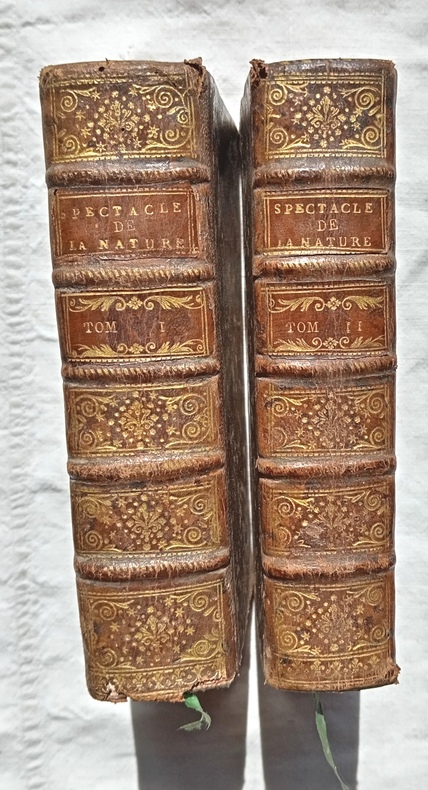
1740réf. E02352 vol, in-12 (9,7 cm X 16,4 cm), XXXX + 518 pp + VIII + 496 pp , reliure plein veau, dos à 5 nerfs, pièce de titre et de tomaison cuir, caisson orné de fleurons, liseré doré sur les plats. 3 tranches rouges. Signet. 24 planches de gravures + 1 frontispice tous dans le 1er vol
2001Bologna, 2001, 24to br. pp. 80. In copertina una frase "profetica" : L'euro ci farà venire la neuro.
2008Bologna, 2008, A. n° 12, 24to br. pp. 80.
2009Bologna, 2009, A. n° 13, 24to br. pp. 80.
1758réf. 165660Nouvelle édition. 2 Bde. Paris, Veuve Estienne & fils, 1758. Mit einem Frontispiz u. 25 Kupfertafeln. 2 Bl., XXXV S., 1 Bl., 518 S., 1 Bl.; 2 Bl., 515 S. Braune Lederbände d. Zt. mit Rückenvergoldung u. je zwei Lederrückenschildchen, goldgeprägten Wappensupralibros auf den Deckeln u. marmoriertem Schnitt; Rückenvergoldung etw. berieben, vord. Gelenk von Bd. 1 ca. 3 cm aufgeplatzt u. unteres Kapital etw. beschädigt. [3 Warenabbildungen]
Due tomi in 16° (cm 9 x 16,5), legatura piena pelle coeva, dorsi a cinque nervi con titoli su tasselli, fregi in oro, ex libris araldico, pp (2), XXXVII, (3), 518; (4), 496, (4). 25 tavole f.t. incise in rame, compresa quella del frontespizio, raffiguranti i simboli delle divinità egizie, le divinità stesse, piante dell'Egitto (Loto, Banano, Persea...), le divinità greche, i segni zodiacali, scettri e caducei... tratti da monumenti dell'antichità, da "L'Antiquité expliquée" di Bernard de Montfaucon, nonchè "Le immagini degli dei degli antichi" del Cartari, dal vaso d'agata di S. Denis, dalla Tavola di Iside. Esemplare in buone condizioni, lievi bruniture alle carte. Il nome dell'A. (Noël-Antoine Pluche, giansenista confutatore della bolla papale "Unigenitus") si ricava dal Privilegio posto in appendice al secondo volume. Esoterici gli argomenti trattati, concernenti teorie cosmogoniche e riti e miti degli antichi, tra cui: l'invenzione dello Zodiaco; l'invenzione della scrittura simbolica (i geroglifici), origine dei simboli egizi e loro significati; le cerimonie propiziatorie del ciclo delle stagioni, e mortuarie; l'origine dell'idolatria, genealogia e caratteristiche delle divinità maggiori di ogni religione; gli animali sacri; i Misteri egizi e greci. I testi sono corredati da didascalie laterali che rimandano a poeti e filosofi antichi, con citazioni in caratteri greci ed ebraici. Un intero capitolo del primo tomo è dedicato a Divinazione, Astrologia e a L'origine de l'Alchimie, scienza combinatoria di elementi naturali; poi Auguri, Aruspici, Oracoli, le influenze lunari, gli incantesimi e le relative formule, l'influenza dei pianeti, le Sibille, la necromanzia, con dettagliata descrizione delle fasi del rito di evocazione dei Mani, gli spiriti dei morti, per l'interrogazione. Il secondo tomo tratta della formazione del Cielo e della Terra, e si sofferma per una quindicina di pagine sui Principi degli Alchimisti, Ermete Trismegisto, la trasmutazione dei metalli e degli elementi, con l'intento dichiarato di confutarne la veridicità, dipingendo però un quadro seducente e traboccante di notizie sull'esoterica disciplina. Un capitolo è dedicato a Descartes e uno a Newton. Alla fine di questo viaggio attraverso i millenari tentativi dell'umanità di decifrare l'universo, l'A. invita a praticare la "fisica di Mosè", fondata esclusivamente sull'esperienza sensoriale, lodando i pragmatici Copernico e Galileo, Torricelli e Pascal. Una breve Appendice, in calce al secondo tomo, contiene una bibliografia antica e moderna sulle piante d'Egitto: papiro, loto, nenufaro, colocasia, persea, banano, descritte sotto un profilo naturalistico e storico. Seconda edizione parigina non censita in biblioteche italiane.
1950Mention de 19è année. Français