4.062 resultados
ref. DADAX0439139309New unknown
ref. DADAX0439339200New unknown
ref. DADAX0439442451New unknown
ref. DADAX0545085594New unknown
ref. DADAX0811800962New unknown
ref. DADAX0874311985New unknown
ref. DADAX0874311810New unknown
ref. BN608188Star Wars: Episode 1. The Phantom Menace Perfect Paperback Star Wars: Episode 1. The Phantom Menace Perfect Paperback Star Wars: Episode 1. The Phantom Menace Perfect Paperback paperback

ref. BN92303Heidelberger Spieleverlag; Ulisses Spiele. Star Wars: Das Erwachen der Macht Einsteigerset Star Wars: Das Erwachen der Macht Einsteigerset Star Wars: Das Erwachen der Macht Einsteigerset Heidelberger Spieleverlag; Ulisses Spiele unknown
2009ref. 1778150125006Warner Home Video 2009-11-03. DVD. Like New. DVD plays perfectly & the case looks good. Warner Home Video unknown
1978ref. 407203New York: Random House 1978. A fine complete unused copy. 11.75 x 8.5 inches. 32 pages. Complete with all color cut outs preserved in unused pages. Stapled as issued in pictorial wrappers. The book allows readers to cut out and make: Rs-D2 C-3P0 X-Wing Plane Landspeeder Energy Pistol Lightsaber TIE Fighter and Sandcrawler. Designed by Ib Penick illustrated by Patricia Wynne instructional drawings by Charlotte Staub. Random House unknown
1978ref. 407203New York: Random House 1978. A fine complete unused copy. 11.75 x 8.5 inches. 32 pages. Complete with all color cut outs preserved in unused pages. Stapled as issued in pictorial wrappers. The book allows readers to cut out and make: Rs-D2 C-3P0 X-Wing Plane Landspeeder Energy Pistol Lightsaber TIE Fighter and Sandcrawler. Designed by Ib Penick illustrated by Patricia Wynne instructional drawings by Charlotte Staub. Random House unknown books
ref. 1894898699.Gpaperback. Good. Access codes and supplements are not guaranteed with used items. May be an ex-library book. paperback
ref. DADAX0545279720New unknown
2013ref. Q-1591431492Bear & Company 2013-01-04. Paperback. New. In shrink wrap. Looks like an interesting title! Bear & Company paperback
2009ref. Q-1591431069Bear & Company 2009-11-17. Paperback. New. New. In shrink wrap. Looks like an interesting title! Bear & Company paperback
2010ref. Q-1591431131Bear & Company 2010-03-09. Paperback. New. In shrink wrap. Looks like an interesting title! Bear & Company paperback
2011ref. Q-159143131XBear & Company 2011-10-19. Paperback. New. New. In shrink wrap. Looks like an interesting title! Bear & Company paperback
2012ref. Q-1402787634Sterling Ethos 2012-10-02. Hardcover. New. In shrink wrap. Looks like an interesting title! Sterling Ethos hardcover
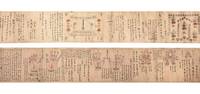
ref. 9137Numerous fine paintings & diagrams throughout using blue green red gray yellow much gold silver & flesh-colored pigments. Siddham script in several places. Two scrolls 185 x 17660 mm.; 175 x 9210 mm. each with gold-speckled inner endpapers at front dark blue paper on outsides. At the end of the first scroll a note states these texts were first written in 1192 Kenkyū 建久 3 & copied on an auspicious day in the 12th month of Genna 元和 5 this part of Genna 5 corresponds to 1620; the second scroll is also dated at end “the 12th month of Genna 5.” These two scrolls are related to a kind of Daoist-influenced star worship that was associated with esoteric Buddhism. This practice became popular within the Japanese aristocracy in the medieval period. It drew on several strands of thought imported from China that were synthesized in Japanese religious practice. Buddhism as it appeared when imported to China from India and Central Asia in the first millennium CE carried with it astronomical and astrological knowledge including an identification of the planets and their association with the calendar e.g. the association between the planets and the days of the week still apparent in the modern Japanese names for them. In China this knowledge became influenced by Daoism exemplified for example by the worship of the stars of the Big Dipper Ch.: beidou J.: hokuto 北斗. In medieval Japan star worship under the auspices of esoteric Shingon and Tendai Buddhism became popular and highly ritualized. One star-related ritual expressed the worship of an individual’s birth and year stars. During these rituals offerings were made to a star or a constellation to obtain fortune or longevity. Such rituals are described in these two scrolls. Mandala dhÄraṇī and mudrÄ were important features of ritualized star worship and the three of them are present in the first scroll. There is a fine series of 158 flesh-toned paintings of mudrÄ gestures of the hand depicted and labeled. MudrÄ were hand and arm gestures made during the course of ritual practice or depicted in images of buddhas bodhisttvas tantric deities and other Buddhist images. With the development of Mahayana and Vajrayana iconography the number of mudrÄ proliferated and reaching the hundreds. DhÄraṇī were incantations and are presented as lists of syllables written in the Indic Siddham script. There is also a diagram a mandala depicting the Big Dipper the legends reference the earthly branches each listed as either yin or yang. The second scroll includes among other things a list of the Seven Planets sun moon and the planets of the solar system minus Neptune and Pluto and associated Buddhist deities stars in the constellation of the Big Dipper and years in the sexagenary calendrical cycle. Through this list an individual’s personal star can be determined. Further into the scroll the layout of the altar featuring e.g. silver coins food offerings and candles and the conduct of the rituals for various kinds of worship are described and illustrated in a series of scenes. Ritual objects like mandalas with Siddham characters are depicted as well. The instructions for the conduct of these rituals include the performance of combinations of mudrÄ and dhÄraṇī associated with the mystery of the body and the mystery of speech respectively. In addition to the importance of the Big Dipper the Daoist influence on these scrolls is evident in its mention of deities such as the Dongyue emperor and Huang Shigong. Very good preserved in a modern box. Some worming carefully repaired. unknown
ref. 9137Numerous fine paintings & diagrams throughout using blue green red gray yellow much gold silver & flesh-colored pigments. Siddham script in several places. Two scrolls 185 x 17660 mm.; 175 x 9210 mm. each with gold-speckled inner endpapers at front dark blue paper on outsides. At the end of the first scroll a note states these texts were first written in 1192 Kenkyū 建久 3 & copied on an auspicious day in the 12th month of Genna 元和 5 this part of Genna 5 corresponds to 1620; the second scroll is also dated at end “the 12th month of Genna 5.” These two scrolls are related to a kind of Daoist-influenced star worship that was associated with esoteric Buddhism. This practice became popular within the Japanese aristocracy in the medieval period. It drew on several strands of thought imported from China that were synthesized in Japanese religious practice. Buddhism as it appeared when imported to China from India and Central Asia in the first millennium CE carried with it astronomical and astrological knowledge including an identification of the planets and their association with the calendar e.g. the association between the planets and the days of the week still apparent in the modern Japanese names for them. In China this knowledge became influenced by Daoism exemplified for example by the worship of the stars of the Big Dipper Ch.: beidou J.: hokuto 北斗. In medieval Japan star worship under the auspices of esoteric Shingon and Tendai Buddhism became popular and highly ritualized. One star-related ritual expressed the worship of an individual’s birth and year stars. During these rituals offerings were made to a star or a constellation to obtain fortune or longevity. Such rituals are described in these two scrolls. Mandala dhÄraṇī and mudrÄ were important features of ritualized star worship and the three of them are present in the first scroll. There is a fine series of 158 flesh-toned paintings of mudrÄ gestures of the hand depicted and labeled. MudrÄ were hand and arm gestures made during the course of ritual practice or depicted in images of buddhas bodhisttvas tantric deities and other Buddhist images. With the development of Mahayana and Vajrayana iconography the number of mudrÄ proliferated and reaching the hundreds. DhÄraṇī were incantations and are presented as lists of syllables written in the Indic Siddham script. There is also a diagram a mandala depicting the Big Dipper the legends reference the earthly branches each listed as either yin or yang. The second scroll includes among other things a list of the Seven Planets sun moon and the planets of the solar system minus Neptune and Pluto and associated Buddhist deities stars in the constellation of the Big Dipper and years in the sexagenary calendrical cycle. Through this list an individual’s personal star can be determined. Further into the scroll the layout of the altar featuring e.g. silver coins food offerings and candles and the conduct of the rituals for various kinds of worship are described and illustrated in a series of scenes. Ritual objects like mandalas with Siddham characters are depicted as well. The instructions for the conduct of these rituals include the performance of combinations of mudrÄ and dhÄraṇī associated with the mystery of the body and the mystery of speech respectively. In addition to the importance of the Big Dipper the Daoist influence on these scrolls is evident in its mention of deities such as the Dongyue emperor and Huang Shigong. Very good preserved in a modern box. Some worming carefully repaired. unknown books
1999ref. BN102701Urachhaus 1999. 1999. 1999. Schöpferisch pflegen : ein Beitrag aus anthroposophischer Perspektive Schöpferisch pflegen : ein Beitrag aus anthroposophischer Perspektive Urachhaus unknown
2002ref. Q-0374528632Farrar Straus and Giroux 2002-09-30. Paperback. New. In shrink wrap. Looks like an interesting title! Farrar, Straus and Giroux paperback
2016ref. 75648-A-67954Bits & Crafts 2016. 2nd edition. Softcover. Profusely illustrated full-page in color. -In excellent condition. 2nd copy with some smudges to the cover for 40 euro. Bits & Crafts paperback
2015ref. 70538-A-57629Groninger Museum 2015. First ed. Hardcover. 31x23 cm. Profusely illustrated full-page in color. 323 p. . -very good as new. ISBN 9789090294360. Groninger Museum hardcover