Bulmer, KennethAntiquariat.de
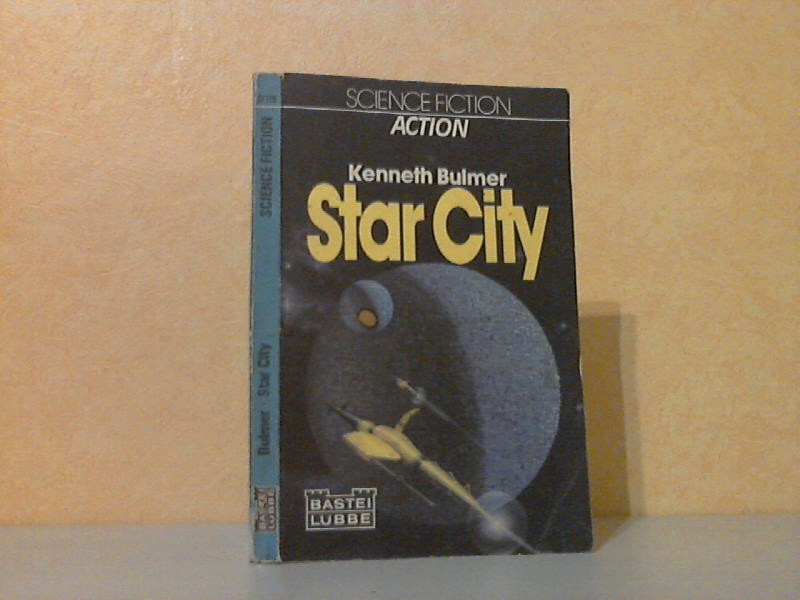
Star City - Science Fiction-Roman
1974réf. 43992Bergisch Gladbach, Bastei-Verlag Gustav H. Lübbe, 1974. 172 Seiten , 18 cm, kartoniert
Antiquariat Ardelt · Allemagne7,95 €
4 066 résultats
réf. 42378Tome XL - 40ème année - juillet 1906 - 158e livraison - 1 vol in-8 broché - 127 pages
1974réf. 43992Bergisch Gladbach, Bastei-Verlag Gustav H. Lübbe, 1974. 172 Seiten , 18 cm, kartoniert
1997réf. 20441Collectionneur 1997 In-4, oblong, pleine toile noire, sous jaquette illustrée, illustrations en couleurs, 193 pp. Etat neuf.
2013Mm 140x210 Volume nella sua brossura originale, 160 pagine con immagini in nero e a colori non comprese nel testo. Condizioni del libro: nuovo. Spedizione in 24 ore dalla conferma dell'ordine.
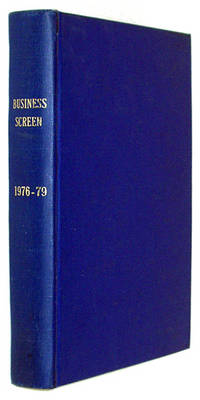
1976réf. 11976New York: Backstage Publications 1976. Hardcover. A bound volume with eighteen 18 issues of Business Screen: The Visual Communications Magazine aka Business and Home TV Screen 1976-1979. The magazine came out every other month as a supplement to Backstage. Articles include: an interview with Francis Ford Coppola; Soviet cinema and television; Star Wars; Star Wars veterans and their special effects hardware; the Maysles brothers; Ralph Rosenblum on editing Woody Allen's films; exodus of Disney animators; Star Trek the movie; the Osmond family studios; Michael Cimino on making tv spots; how to combat corporate terrorism; using witchcraft Wicca in a sales pitch; Xicom-Video Arts the corporate training film company with John Cleese--three articles one with a caricature of Cleese one with a photo and another about awards won includes two stills with Cleese there is also an ad for Xicom-Video Arts with a photo of Cleese. Generally the content is information on the film video and a/v industries including coverage of documentary corporate advertising sponsored independent and hollywood filmmaking and technical articles on animation graphics hardware lighting film versus tape special fx music location shooting financing etc. Many early articles on the emerging technology or industry of laser discs projection tv video cassette players pay-tv lasers and holograms and software for the emerging medias. Ads for hardware companies and personalities including one for the Steadicam with a half page production shot of OJ Simpson being filmed for a Hertz commercial. Approx. 900 pages; b&w and color images throughout; 8.25 x 11 inches. Very Good hardcover with light rubbing at the extremities solid sturdy binding. Ships the next business day wrapped in padding in a box. Due to size and weight international and expedited shipping may be more than quoted. Backstage Publications hardcover
réf. 16593973-6Used - Good. Former library copy. Pages intact with minimal writing/highlighting. The binding may be loose and creased. Dust jackets/supplements are not included. Includes library markings. Stock photo provided. Product includes identifying sticker. Better World Books: Buy Books. Do Good. unknown
2020réf. x-1646420101Utah State Univ Pr 2020. Paperback. New. 280 pages. 9.00x6.00x0.85 inches. Utah State Univ Pr paperback
2011réf. AME_9781612096919NOVA 2011. 1st. Soft Cover. New/New. _ NOVA paperback
réf. 2080202103703644Haku yosha N.A. Soft Cover. Fine. Page number: 120p Size: 20cm B6 Haku yosha paperback
réf. DADAX081182487XNew unknown
1951P., PLF "Danseurs et danseuses", 1951. Petit in-8 broché, couverture agrafée, 24 pp-8 hors-textes. Bords insolés.
1951P., PLF "Danseurs et danseuses", 1951. In-12 broché , pas de numérotation (environ 30 pages), avec des 12 illustrations photographiques hors texte. Bon état.
réf. BN354914Stgt. B. G. Teubner 1998. Hardcover. De rebus indicis. Ad Philippum Catholicum Hispaniarum et Indiarum regem libri septem. De rebus indicis. Ad Philippum Catholicum Hispaniarum et Indiarum regem libri septem. Calvete de Estrella Juan Christoval. Stgt., B. G. Teubner 1998. hardcover
1998réf. DADAX3598711298De Gruyter 1998-01-01. Reprint 2012. hardcover. New. 5.00x1.81x8.00. Buy with confidence. Excellent Customer Service & Return policy. De Gruyter hardcover
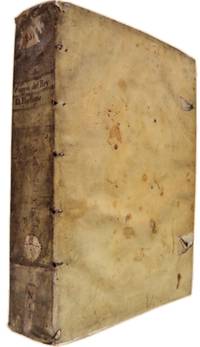
réf. 1504JC024Hijo d’el Emperador Don Carlos Quinto Maximo desde España à sus tierras de la baxa Alemaña: con la description de todos los Estados de Brabante y Flandres. Escrito en quatro libros por Iuan Christoual Caluete de Estrella. Con Gracia y Priuilegio de la Imperial Majestad para todos sus Reynos Estados y Seõrios por quinze Años. En Anuers en casa de Martin Nucio. Año de M. D. L I I. 1552.In fólio de 27x19 cm. Com 8 335 19 folios.Encadernação da época em pergaminho flexível com o título manuscrito na lombada e com vestígios de fechos de atilho nas pastas com 6 fragmentos de um manuscrito do séc. XVI reforçando a lombada do miolo.Ilustrado com as armas de Carlos V em xilogravura na página de rosto uma outra xilogravura de página inteira no verso do último fólio preliminar contendo um arco triunfal erigido em Gand para a entrada de Filipe a marca de impressor de Nutius no final e dezenas de iniciais decoradas em 4 séries.Exemplar com uma nota manuscrita marginal inicial e ocasionais notas e marcas posteriores maioritariamente a lápis. Com um leve pico de traça na margem interior do pé de cerca de 40 folhas que não afecta o texto e ligeiras manchas de água marginais nas últimas e primeiras três folhas mas ainda em muito bom estado. Capa quase solta do miolo alguns rasgões e manchas perdeu os dois pares de atilhos e as páginas finais com rasgos.Primeira edição no original espanhol de um relato de uma testemunha ocular das viagens do Princípe Filipe futuro Filipe II de Espanha e Iº de Portugal aos Países Baixos através de Itália e dos Estados alemães com o objetivo de o preparar para as obrigações que teria de enfrentar quando sucedesse aos títulos do seu pai o Sacro Imperador Romano Carlos V que também foi rei Carlos I de Espanha.Obra publicada nos últimos anos do reinado do Imperador Carlos V. Encontram-se referências a D. João II e à presença de Portugal em Antuérpia e na Flandres nos fólios 318; 235 e 302.A obra enquadra-se na passagem de poderes abdicação e cedência do Imperador. Nos últimos anos da sua função Imperial ocorreram os seguintes factos:Em 1548 o documento proposto por Carlos V - o Interin de Augsburgo - não foi aceite pelos Protestantes nem pelo Papa A cidade de Magdeburgo centro da resistência protestante é banida do Império. Em 1552 Maurício da Saxónia responsável pela aplicação do decreto armou-se secretamente e surpreendeu o Imperador. Derrota de Carlos V em Innsbruck. O Imperador e os Príncipes protestantes assinam o Tratado de Nassau. 1552-1556 Guerra entre Carlos V e Henrique II de França que tinha ocupado Metz Toul e Verdun. Em 1553. Maurício da Saxónia derrota Alberto marquês de Brandenburgo-Culmach em Sievershausen mas foi ferido mortalmente. Em 1554 Assinatura do Tratado de Crépy. 1555. Supressão violenta de uma revolta anti calvinista em Genebra. A cidade tornou-se um centro de refúgio para protestantes ingleses e franceses e um ponto de radiação da doutrina calvinista. 1555 Assinatura da Paz de Augsburgo pela qual se reconhece aos protestantes a liberdade de culto e de propriedade. Os príncipes territoriais e as cidades livres que à data tinham aceite a confissão de Augsburgo passaram a ter liberdade de culto o direito de introduzirem a Reforma nos seus territórios jus reformandi e direitos iguais aos dos estados católicos. 1556. Carlos V assina a Paz com Henrique II de França. Abdicação de Carlos V. em Bruxelas com efeito em 1558. Carlos V abdica a favor do seu filho Filipe II a soberania dos Países Baixos Castela Leão Aragão e a Catalunha Navarra Nápoles Sardenha Sicília o Ducado de Milão e as Ãndias. A função imperial e as possessões dos Habsburgos foram entregues ao seu irmão Fernando I. Carlos viveu no mosteiro de Yuste tendo ali morrido em 1558.O humanista aragonês Juan Cristóbal Calvete de Estrella ca. 1510/20-1593 pertenceu à corte espanhola de Carlos V que o nomeou tutor do príncipe Filipe 1527-1598 em 1541. Acompanhou Filipe nestas viagens pelo que o seu livro constitui uma fonte primária essencial tanto para a vida e personalidade do futuro rei Filipe II que viria a trazer a Espanha a sua idade de ouro e o seu maior poder e riqueza como para os primórdios das suas relações com os Países Baixos que viriam a revoltar-se contra o rei e provocar a queda do poder de Espanha e a desenvolver a sua própria idade de ouro como Estado independente. Calvete de Estrella permaneceu em Antuérpia quando Filipe regressou a Espanha tendo aí mandado imprimir o seu livro. Trata-se de um excelente trabalho de produção de livros que antecipa o papel que Antuérpia viria a desempenhar como principal centro de impressão e edição da Europa.EN In folio. 27x19 cm. 8 335 19 folios.Contemporary lexible parchment binding with handwritten title on the spine and traces of latches on the boards and with 6 fragments of a 16th century manuscript reinforcing the spine of the bookblock.Illustrated with the coat of arms of Charles V in woodcut on the title page another full-page woodcut on the back of the last preliminary folio containing a triumphal arch erected in Ghent for Philip"s entry the printer"s mark of Nutius at the end and dozens of decorated initials in 4 series.Copy with an initial marginal handwritten note and occasional later notes and marks mostly in pencil. With a slight moth hole on the inner margin of the foot of about 40 leaves which does not affect the texto area and slight marginal water stains on the last and first three leaves but still in very good condition. Cover almost detached from the bookblock some tears and stains signs of two pairs of latches and the final pages with tears.First edition in the original Spanish of an eyewitness account of the travels of Prince Philip the future King Philip II of Spain and I of Portugal to the Low Countries through Italy and the German states with the aim of preparing him for the obligations he would have to face when he succeeded the titles of his father the Holy Roman Emperor Charles V who was also King Charles I of Spain.Published in the last years of the reign of Emperor Charles V. References to King João II and Portugal"s presence in Antwerp and Flanders can be found on folios 318; 235 and 302.This work fits in with the transfer of powers abdication and transfer of Emperor Charles V. In the last years of his Imperial function the following events occurred:In 1548 the document proposed by the Emperor - the Interin of Augsburg - and it was not accepted by Protestants nor by the Pope. The city of Magdeburg the centre of the Protestant resistance is banished from the Empire. In 1552 Maurice of Saxony responsible for implementing the decree armed secretly and surprised the Emperor. Defeat of Charles V in Innsbruck. The Emperor and the Protestant Princes sign the Treaty of Nassau. In the years 1552-1556 there was a war between Charles V and Henry II of France who had occupied Metz Toul and Verdun. In 1553 Maurice of Saxony defeated Albert Marquis of Brandenburg-Culmach in Sievershausen but was mortally wounded. In 1554 there was a signature of the Treaty of Crépy. In 1555 occurs the violent suppression of anti Calvinist revolt in Geneva. The city has become a refuge center for English and French Protestants and a radiation point of the Calvinist doctrine. In 1555 was signed the Peace of Augsburg which recognizes the Protestants freedom of worship and property. The territorial princes and free cities that had accepted the Augsburg Confession had now freedom of worship the right to introduce the Reformation in their territory jus reformandi and equal rights of Catholic states. In 1556 Charles V signed the Peace with Henry II of France. In the same year occurred the the abdication of Charles V in Brussels effective in 1558. Charles V abdicated in favour of his son Philip II the sovereignty of the Netherlands Castile Leon Aragon and Catalonia Navarre Naples Sardinia Sicily the Duchy of Milan and the Indies. The imperial role and the possessions of the Habsburgs were delivered to his brother Ferdinand I. Charles lived his last years in the monastery of Yuste in Spain and died there in 1558.The Aragon humanist scholar Juan Cristóbal Calvete de Estrella ca. 1510/20-1593 served in the Spanish court of Charles V who appointed him tutor to Prince Philip 1527-1598 in 1541. He accompanied Philip on these travels so that his book forms an essential primary source for both the life and personality of the future King Philip II who was to bring Spain its golden age and its greatest power and wealth and for the early beginnings of his relations with the Netherlands which was to revolt against the King bring about Spain"s fall from power and develop its own golden age as an independent state. Calvete de Estrella remained in Antwerp when Philip returned to Spain having his book printed there. It is an excellent piece of book production anticipating the role Antwerp was to play as Europe"s leading centre of printing and publishing.Referências/References:Adams C264;Belg. Typ. 539;Iberian books 2403;Landwehr Splendid ceremonies 14;Palau 40491. M-17-B-19 hardcover
1552réf. H8IABU6I693ZAntwerp: Martinus Nutius I 1552. Near contemporary limp vellum sewn on 5 double tanned leather supports cut flush with the bookblock but with later alum-tawed thongs laced through the vellum cover with 6 fragments of a 16th-century manuscript reinforcing the spine of the bookblock blind- and later gold-tooled spine with a neatly lettered title in caps and small caps reading down the spine and a later one in caps and lowercase across the spine headbands in yellow and green old paper labels with letterpress and manuscript shelfmarks. Small folio 27 x 19.5 cm. With a woodcut architectural cartouche on the title-page the arms of the Holy Roman Emperor and King of Spain Charles V with columns strapwork and allegorical figures representing stability and fairness a full-page woodcut triumphal arch erected in Ghent for Philips entry with letterpress title and key to elements A-N Nutiuss woodcut device at the end a strapwork cartouche with a crane feeding a worm to its young dozens of woodcut decorated initials 4 series and a vine-leaf ornament Vervliet 170. Set in roman and italic types many and the vine-leaf by François Guyot in Antwerp. First and only early edition in the original Spanish of an eyewitness account of the future King Philip II of Spain's travels from Spain through Italy and the German states to the Low Countries from 1548 to 1550 or 1551 intended as preparation for the duties he would face when he succeeded to in the event only some of the titles of his father the Holy Roman Emperor Charles V who was also King Charles I of Spain. The Aragon humanist scholar Juan Cristóbal Calvete de Estrella ca. 1510/20-1593 served in the Spanish court of Charles V who appointed him tutor to Prince Philip 1527-1598 in 1541. He accompanied Philip on these travels so that his book forms an essential primary source for both the life and personality of the future King Philip II who was to bring Spain its golden age and its greatest power and wealth and for the early beginnings of his relations with the Netherlands which was to revolt against the King bring about Spain's fall from power and develop its own golden age as an independent state. Calvete de Estrella remained in Antwerp when Philip returned to Spain having his book printed there. It is an excellent piece of book production anticipating the role Antwerp was to play as Europe's leading centre of printing and publishing.With an early marginal manuscript note and occasional later mostly pencil notes and marks. With a small worm trail in the inner foot margin of about 40 leaves not approaching the text and faint marginal water stains in the last and first three leaves but still in very good condition. The cover has nearly come loose from the bookblock has some tears and stains has lost its 2 pair of ties and the endpapers are tattered.l Adams C264; Belg. Typ. 539; Iberian books 2403; Heredia 7039; Landwehr Splendid ceremonies 14; Netherlandish books 6408; Palau 40491; Peeters-Fontainas Meridionaux 170; Ruggieri 913; Salvá 3758; USTC 440071; not in Bibl. Belg. Martinus Nutius I, hardcover
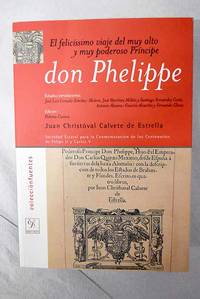
2001réf. 3794380Madrid.: Sociedad Estatal para la Conmemoración de los Centenarios de Felipe II y Carlos V. 2001. Paperback. Firma del anterior propietario. Good. 24 cm. CLXVIII 755 p. il. col. y n. Encuadernación en tapa blanda de editorial. Colección 'Colección Fuentes'. Calvete de Estrella Juan Cristóbal ca. 1510-1593. El felicísimo viaje del muy alto y muy poderoso príncipe Don Felipe. Estudios introductorios de José Luis Gonzalo Sánchez-Molero José Martínez Millán y Santiago Fernández Conti Antonio Ãlvarez-Ossorio Alvariño Fernando Checa ; edición de Paloma Cuenca. Relación del camino y buen viaje que hizo el príncipe de España don Phelipe / Vicente Ãlvarez ; edición de José María de Francisco Olmos y Paloma Cuenca. Arcos triunfales de la entrada en Amberes / ilustraciones de la obra de Cornelio Schryver Spectaculorum in susceptione Philippi Hisp. Princ. Divi Caroli V Caes. an. MCCCCCXLIX. Textos en español y latín. II. Rey de España. Viajes. Europa occidental. Descripción. Gonzalo Sánchez-Molero José Luis. autor del comentario adicional. Cuenca Muñoz Paloma. 1966-. editor literario. Francisco Olmos José María de. 1964-. Grapheus Cornelius Scribonius. 1482-1558. ilustrador. Relación del camino y buen viaje que hizo el príncipe de España don Felipe . Firma del anterior propietario. Biografías 929 Felipe 460 II Geografía del mundo antiguo. Geografía regional en general. Geografía universal 9134-15"15" Sociedad Estatal para la Conmemoración de los Centenarios de Felipe II y Carlos V. paperback
2001réf. 182534Sociedad Estatal para la Acción Cultural Exterior S.A. 2001. tapa blanda. 2ª Mano - Bueno/2ª Mano. Sociedad Estatal para la Acción Cultural Exterior S.A. 2001. Felipe II Tapa blanda; 936 p. : il. ; 24x17 cm Sociedad Estatal para la Acción Cultural Exterior, S.A. unknown
1945réf. 43183Madrid: Blass S. A. Tipografía 1945.- VIII90 p. 2 h.: Facsímil de la portada de la edición original de Antuerpiae Christophori Plantini 1573 una lámina y varios documentos facsímiles; 4º 21 x 158 cm; Buena impresión sobre papel verjurado y ahuesado; Portada a dos tintas; Texto bilingüe en Latín y Castellano; Cartulina Ed. Las cubiertas algo sucias interior perfecto. HISTORIA DEL SIGLO DE ORO ESPAÑOL Libro en español Blass, S. A. Tipografía paperback
1889réf. 38297PRIMERA EDICION EN TIRADA DE LUJO.- Madrid: Escritores Castellanos Imp. y Fundición de M. Tello 1889.- SOLO TOMO II. con 570 p. 1 h.; 8º 172 cm; Excelente impresión sobre magnífico papel de hilo; Portada orlada en rojo y negro y viñetas en el comienzo de cada capítulo; Enc. en Media Piel a puntas lomo dorado y filetes dorados en tapas corte de cabeza dorado.- Colección de Escritores Castellanos. críticos. LXXVI.- Lujosa edición en papel de hilo de 50 ejemplares numerados siendo este el Nº 43 a nombre del Sr. Conde de Peñaranda de Bracamonte. FALTO DEL TOMO 1º SOLO SE VENDE SUELTO EL TOMO 2º. La encuadernación con mínimas rozaduras en los bordes y con la bisagra del plano anterior ligeramente desgajada aunque todo ha sido restaurado. El interior en impecable estado resultando en conjunto Excelente. CONQUISTA PERIODO VIRREINAL E HISTORIAS GENERALES DE IBEROAMÉRICA Libro en español Escritores Castellanos (Imp. y Fundición de M. Tello) hardcover
réf. 47619Passages betr. Gorinchem Dordrecht Rotterdam Delft 's-Gravenhage Leiden Haarlem en Amsterdam. unknown
réf. DADAX0521263220New unknown
1992réf. 154458Burbank CA: Warner Brothers 1992. Vintage studio still photograph from the 1992 film. A comedy about the romantic misadventures of a group of young adults living in Seattle during the grunge rock craze. Three members of the real-life grunge rock group Pearl Jam appeared in the film under the band name "Citizen Dick." Set and shot on location in Seattle. 8 x 10 inches. Near Fine. Warner Brothers unknown books
2017A new, unread book in excellent condition except small bump to rear cover and dust jacket.
2009réf. x-0863156533Floris Books 2009. Paperback. New. 1st edition. 128 pages. 9.00x6.00x0.50 inches. Floris Books paperback