4408 risultati
1906- E. Leroux, Paris 1906, 11,5x17cm, broché. - Edition originale de la traduction française et de la présentation établies par Léon Pineau. Rare et agréable exemplaire. [ENGLISH DESCRIPTION ON DEMAND]
1853- Hachette & Cie, Paris 1853, 11,5x19cm, broché. - Nouvelle édition. Dos défraîchi, premier plat volant, quelques petites rousseurs. Rare. [ENGLISH DESCRIPTION ON DEMAND]
1937- Editions Francis Salabert, Paris 1937, 27x35cm, une feuille repliée et une libre. - Edition originale de cette partition chant (bilingue) et piano, au premier plat illustré, "Le grand succès du célèbre Cotton Club de New York dans la revue "Cotton Club Parade" présentée par Edmond Sayag et qui triomphe aux Ambassadeurs et au Moulin Rouge. Très bel exemplaire. [ENGLISH DESCRIPTION ON DEMAND]
1940- Paris s.d. (circa 1940), 10x12,5cm, une feuille. - Dessin original au feutre vert monogrammé de Carlo Rim représentant le pianiste François Samson comme se dirigeant vers un piano. Le dessin monogrammé à l'encre noire en marge inférieure gaucheporte cette légende au stylo rouge en dessous : "Samson François". Le dessin a été encollé sur un morceau de feuille de papier portant aussi la mention au crayon de papier : "Samson François" Carlo Rim fut un écrivain provençal auteur notamment de "Ma belle Marseille", un caricaturiste, un cinéaste et fut notamment l'ami de Fernandel, de Raimu et Marcel Pagnol mais aussi de Max Jacob et André Salmon qu'il rencontra à Sanary. [ENGLISH DESCRIPTION ON DEMAND]
1937- Gallimard, Paris 1937, 14,5x20,5cm, broché. - Edition originale de la traduction française établie par Louise Servicen, un exemplaires du service de presse. Dos légèrement bruni et plats marginalement salis. Envoi autographe signé de Louise Servicen à (Lucien) Rebatet. [ENGLISH DESCRIPTION ON DEMAND]
1920- Lucien Vogel éditeur, Paris 1920, 18x24cm, une feuille. - Original color print, printed on vergé paper, non signed. An original print used to illustrate the Gazette du bon ton, one of the most attractive and influential 20th century fashion magazines, featuring the talents of French artists and other contributors from the burgeoning Art Deco movement. A celebrated fashion magazine established in 1912 by Lucien Vogel, La Gazette du bon ton appeared until 1925, with a hiatus from 1915 to 1920 due to the war (the editor-in-chief having been called up for service). It consisted of 69 issues printed in only 2,000 copies each and notably illustrated with 573 color plates and 148 sketches of the models of the great designers. Right from the start, this sumptuous publication "was aimed at bibliophiles and fashionable society," (Françoise Tétart-Vittu, "La Gazette du bon ton", in Dictionnaire de la mode, 2016) and was printed on fine vergé paper using a type cut specially for the magazine by Georges Peignot, known as Cochin, later used (in 1946) by Christian Dior. The prints were made using stencils, heightened in colors, some highlighted in gold or palladium. The story began in 1912, when Lucien Vogel, a man of the world involved in fashion (he had already been part of the fashion magazine Femina) decided, with his wife Cosette de Brunhoff - the sister of Jean, creator of Babar - to set up the Gazette du bon ton, subtitled at the time: "Art, fashion, frivolities." Georges Charensol noted the reasoning of the editor-in-chief: "'In 1910,' he observed, 'there was no really artistic fashion magazine, nothing representative of the spirit of the time. My dream was therefore to make a luxury magazine with truly modern artists...I was assured of success, because when it comes to fashion, no country on earth can compete with France.'" ("Un grand éditeur d'art. Lucien Vogel" in Les Nouvelles littéraires, no. 133, May 1925). The magazine was immediately successful, not only in France but also in the United States and Latin America. At first, Vogel put together a team of seven artists: André-Édouard Marty and Pierre Brissaud, followed by Georges Lepape and Dammicourt, as well as eventually his friends from school and the School of Fine Arts, like George Barbier, Bernard Boutet de Monvel and Charles Martin. Other talented people soon came flocking to join the team: Guy Arnoux, Léon Bakst, Benito, Boutet de Monvel, Umberto Brunelleschi, Chas Laborde, Jean-Gabriel Domergue, Raoul Dufy, Édouard Halouze, Alexandre Iacovleff, Jean Émile Laboureur, Charles Loupot, Chalres Martin, Maggie Salcedo. These artist, mostly unknown when Lucien Vogel sought them out, later became emblematic and sought-after artistic figures. It was also they who worked on the advertising drawings for the Gazette. The plates put the spotlight on, and celebrate, dresses by seven designers of the age: Lanvin, Doeuillet, Paquin, Poiret, Worth, Vionnet and Doucet. The designers provided exclusive models for each issue. Nonetheless, some of the illustrations are not based on real models, but simply on the illustrator's conception of the fashion of the day. The Gazette du bon ton was an important step in the history of fashion. Combining aesthetic demands with the physical whole, it brought together - for the first time - the great talents of the artistic, literary, and fashion worlds; and imposed, through this alchemy, a completely new image of women: slender, independent and daring, which was shared by the new generation of designers, including Coco Chanel, Jean Patou, Marcel Rochas, and so on... Taken over in 1920 by Condé Montrose Nast, the Gazette du bon ton was an important influence on the new layout and aesthetics of that "little dying paper" that Nast had bought a few years earlier: Vogue. [FRENCH VERSION FOLLOWS] Estampe originale en couleur, tirée sur papier vergé, non-signée. Gravure originale réalisée pour l'illustration de La Gazette du bon ton, l'un
rif. DADAX0810907259New unknown
2010rif. 1252682010 Editions Bernard Dulon / Momentum Papers - 2010 - In-4, cartonnage illustré - 385 pages + Glossaire - Texte bilingue en français et en anglais -
1932Traduit de l'anglais par Jean Romanche, exemplaire du service de presse marqué S.P., 1 vol. in-12 reliure bradel demi-toile marron, couverture conservée, NRF, Gallimard, Paris, 1932, 209 pp. Bel exemplaire de l'édition originale de la traduction française. Français
1971rif. 29960Toronto Musson 1971
rif. SONG2717836330Used: Good unknown
1980rif. RO80122014LAGET Léonce. 1980. In-16. Cartonné. Très bon état, Couv. fraîche, Dos satisfaisant, Intérieur frais. 412 pages + 24 pages de partitions + 4 planches dépliantes illustrées en noir et blanc, en fin d'ouvrage. Frontispice en noir et blanc.. . . . Classification Dewey : 793.3-Danse
rif. RO30078044COLLINS. non daté. In-4. Cartonnage d'éditeurs. Bon état, Couv. convenable, Dos satisfaisant, Intérieur frais. 222 pages. Frontispice : photo en couleurs. Nombreuses photos en noir et blanc dans le texte et hors texte. Ouvrage en anglais.. Avec Jaquette. . . Classification Dewey : 793.3-Danse
1977rif. RO30008602Hatier. 1977. In-4. Relié. Bon état, Couv. convenable, Dos satisfaisant, Intérieur frais. 283 pages illustrées de nombreuses photographies en noir et blanc; cartonnage éditeur, dos cuir blanc, plats en toile noire; jaquette légèrement passée.. Avec Jaquette. . . Classification Dewey : 793.3-Danse
1952rif. RO80171660EDITIONS DU TEMBOURINAIRE. 1952. In-8. Broché. Bon état, Couv. convenable, Dos satisfaisant, Intérieur frais. 337 pages augmentées de nombreuses photos et illustrations en couleur et en noir et blanc dans et hors texte. Bandeaux, culs de lampe. 2 photos disponibles.. . . . Classification Dewey : 793.3-Danse
1949rif. R240080779BORDAS. 1949. In-8. Broché. Etat d'usage, Coins frottés, Dos satisfaisant, Intérieur frais. 226 pages - illustration en monochrome sur le 1er plat - coins frottés - couverture à 3 rabats - petite annotation au stylo bleu sur la page de faux titre - nombreuses planches en monochrome.. . . . Classification Dewey : 793.3-Danse
1949rif. R240163615Bordas. 1949. In-8. Broché. Bon état, Couv. convenable, Dos satisfaisant, Intérieur acceptable. 225 pages - nombreuses photos et illustrations en noir et blanc hors texte. Couverture à trois rabats.. . . . Classification Dewey : 793.3-Danse
rif. 1477734Contentum Ltd. Loose sheet. New. High-quality art print based on an original work from the Rijksmuseum. Created in the 19th century 1893. Professionally printed on premium fine-art paper Museum Etching museum quality in size A2. The artwork is printed with a white border museum-style presentation. Contentum Ltd. unknown
rif. 1477347Contentum Ltd. Loose sheet. New. High-quality art print based on an original work from the Rijksmuseum. Created in the 19th century 1888. Professionally printed on premium fine-art paper Museum Etching museum quality in size A2. The artwork is printed with a white border museum-style presentation. Contentum Ltd. unknown
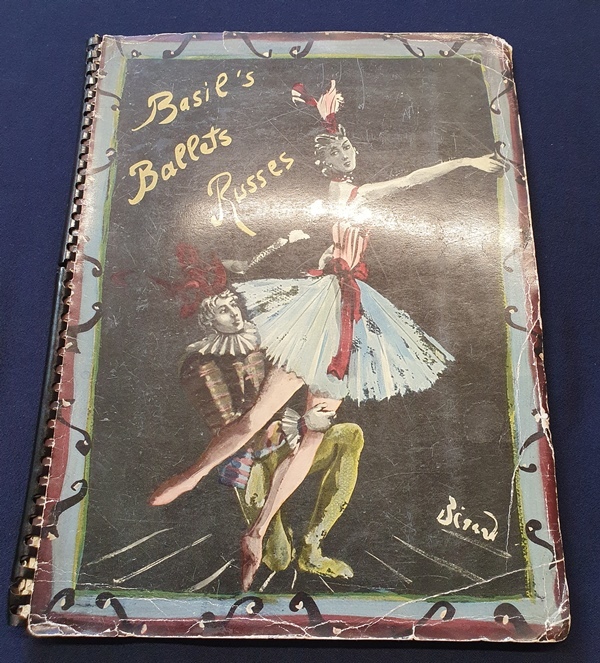
1939rif. Eb2-71Hurok 1939 In4 - cahier à spirales - non paginé ( environ 60 pages ) - illustrations couleurs de Christian Bérard , Nathalie Gontcharova , Léon Bakst , André Derain, Pedro Pruna, Juan Miro, J.M. Sert - En Anglais .Plis marqués sur les plats .
1997rif. 23880Editions Le Dilettante 1997. In-12 broché de 95 pages au format 12 x 18,5 cm. Couvertures à rabats illustrées par Anne-Marie Adda. Dos carré. Un des 33 exemplaires sur Vélin Marais, du tirage de tête. Le nôtre est noté H.C ( Hors Commerce ). Edition originale en état superbe. Exemplaire enrichi d'une cordiale dédicace autographe, signée de l'écrivain. Rare.
1943rif. 126111943 1 San Francisco, War Memorial House, 1943, in-12, br., ill.
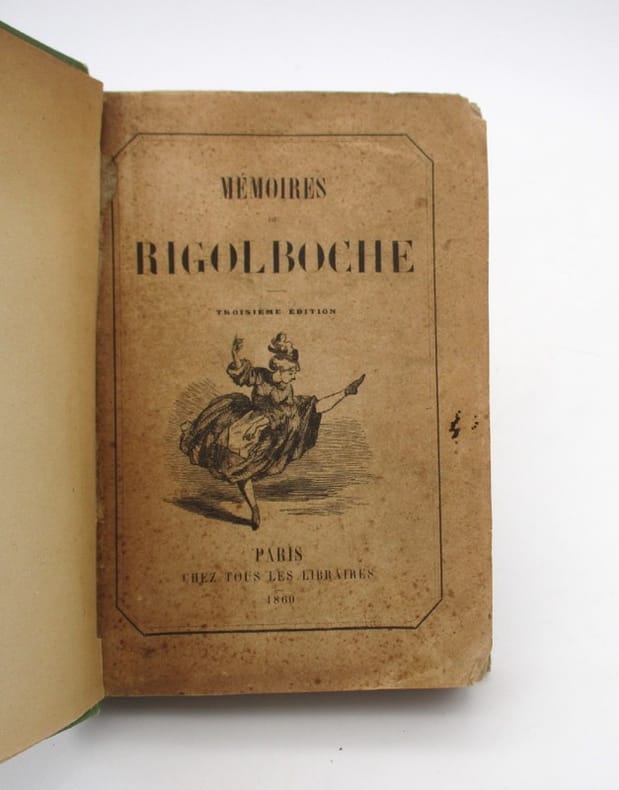
rif. 15861Paris, chez tous les libraires, 1860. In-16, 188 pp., demi percaline à la Bradel de l'époque, pièce de titre, couverture conservée (frottements, quelques pâles et rares rousseurs).