103 resultados
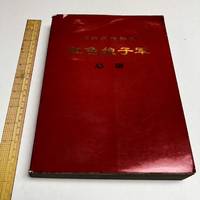
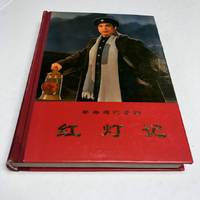
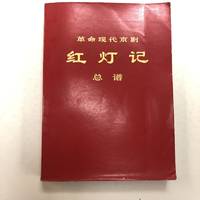
1971ref. AG-10050The Red Lantern Full Score红ç¯è®° Hong Deng Ji Beijing: Published by People's Publishing House printed by Beijing Xinhua Printing Factory distributed by Xinhua Bookstore Beijing Distributing Agency,August 1971 FIRST EDITION. The May 1970 Script Created Collectively by the China Peking Opera troupe. Quotations from Chinaman Mao on the second and third page 8vo. xii 380 2 pp. colophon printed titled wrappers crease to the cover very slight tear to the foot of the binding else fine condition. In China revolutionary operas or model operas Chinese: yangban xi æ ·æ¿æˆ were a series of shows planned and engineered during the Cultural Revolution 1966–1976 by Jiang Qing the wife of Chairman Mao Zedong. They were considered revolutionary and modern in terms of thematic and musical features when compared with traditional Chinese operas. Many of them were adapted to film. 京剧《红ç¯è®°ã€‹æ€»è°± 北京:人民出版社出版,中国京剧团集体制作,基于1970年五月演出本,第一版,书的å‰ä¸¤é¡µæœ‰æ¯›ä¸»å¸è¯å½•ï¼Œå…±380页主体内容。书皮ç¨æœ‰ä¸€é“上下方å‘折痕,其他å“相éžå¸¸å¥½ã€‚ In China revolutionary operas or model operas Chinese: yangban xi æ ·æ¿æˆ were a series of shows planned and engineered during the Cultural Revolution 1966–1976 by Jiang Qing the wife of Chairman Mao Zedong.1 They were considered revolutionary and modern in terms of thematic and musical features when compared with traditional Chinese operas. Many of them were adapted to film. Originally eight revolutionary operas Chinese: Ba Ge Yangban Xi å…«ä¸ªæ ·æ¿æˆ were produced eighteen by the end of the period. Instead of the "emperors kings generals chancellors maidens and beauties" of the traditional Peking opera which was banned as "feudalistic and bourgeois" they told stories from China's recent revolutionary struggles against foreign and class enemies. They glorified the People's Liberation Army and the bravery of the common people and showed Mao Zedong and his thought as playing the central role in the victory of socialism in China. Although they originated as operas they soon appeared on LPs in comic books lianhuanhua on posters postcards and stamps; on plates teapots wash basins cigarette packages vases and calendars. They were performed or played from loudspeakers in schools factories and fields by special performing troupes. The Eight Model Operas dominated the stage in all parts of the country during these years leading to the joke "Eight hundred million people watched eight shows." 本剧是文é©æ—¶æœŸçš„å…«å¤§æ ·æ¿æˆä¹‹ä¸€ã€Šçº¢ç¯è®°ã€‹ï¼Œç”±æ¯›ä¸»å¸å¤«äººæ±Ÿé’负责制作和演出。很多被æ‹æˆäº†ç”µå½±ã€‚ 最åˆæœ‰å…«ä¸ªæ ·æ¿æˆï¼ŒåŽæ¥åœ¨æ–‡é©æ—¶æœŸçš„åŽæœŸå‘展到了18个。ä¸åƒå› å°å»ºå’Œèµ„产阶级的被ç¦äº†çš„ä¼ ç»Ÿäº¬å‰§ï¼Œé‡Œé¢å‡ºçŽ°çš„ä¸çš„国王大臣少女和美人,é©å‘½çŽ°ä»£äº¬å‰§ä¸»è¦è®²è¿°ä¸å›½è¿‘å¹´æ¥çš„抗战故事,宣扬人民解放军的光辉è£è€€å’Œæ¯›ä¸»å¸çš„英勇。虽然是京剧,很快就å˜æˆäº†å„ç§å½¢å¼å‡ºçŽ°åœ¨è¿žçŽ¯ç”»ã€æµ·æŠ¥ã€æ˜Žä¿¡ç‰‡ã€é‚®ç¥¨ã€é¦™çƒŸã€èŠ±ç“¶ã€æ—¥åŽ†ç‰å„ç§åœ°æ–¹ï¼Œç”¨æ‰©éŸ³å–‡å在å¦æ ¡ã€å·¥åŽ‚ç‰åœ°æ–¹ï¼Œç”±æ¼”出团进行表演。8ä¸ªæ ·æ¿æˆä¸»å¯¼äº†å…¨å›½æ‰€æœ‰çš„舞å°ï¼Œå› æ¤æœ‰äº†8亿人看8个剧的笑è¯ã€‚ People’s Publishing House paperback books
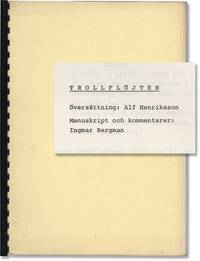
1973ref. 146818N.p.: N.p. 1973. Agency Draft script for the 1975 film. With 31 pages of director Ingmar Bergman's commentary bound in after the script. Text in Swedish. Based on the 1791 German opera about a young prince tasked with rescuing a princess from a mysterious high priest. Widely considered one of the most successful operatic adaptations to film ever released. Shot on location in Stockholm Sweden. Pale yellow untitled wrappers. Title page present dated November 1973 with credits for director Ingmar Bergman and screenwriter Alf Henrikson. 93 leaves with last page of text numbered 61. Xerographic duplication rectos only. Pages Very Good plus wrapper Very Good plus with a black comb binding. Criterion Collection 71. N.p. unknown books
ref. B261337-1N.p. S.n. 1999. 150pp. the last 36 blank. 41 original tipped-in color photographs. Sm. sq. 4to. Boards. Printed on heavy hand-made paper this unique album presents designs for a commemmorative quilt represented by the photographs and with text by the participants. N.p. (S.n.), [1999]. hardcover books
ref. WALTER-FILM007297American Ballet Theatre. No binding. Fine. New York: American Ballet Theatre 1970s-2000s. Group of five vintage original 8 x 10" 20 x 25 cm black-and-white glossy print still photos. Photo stamps and blurbs on versos fine. Twyla Tharp b. 1941 is an American dancer choreographer and author who lives and works in New York City. In 1965 she formed the company Twyla Tharp Dance which merged with American Ballet Theatre in 1988. She regrouped the company in 1991. Her work often uses classical jazz and contemporary pop music. She is renowned as an innovative American choreographer known for her unique blending of classical ballet modern dance and popular styles often incorporating elements of jazz social and even street dance. She is also recognized for her Broadway work including choreographing Movin' Out and Come Fly Away and her contributions to film and television. Wikipedia Four photos show the Tony Award-winning choreographer/dancer/writer of American Ballet Theatre in portrait and at work. One is for her ballet How Near Heaven. American Ballet Theatre unknown books
ref. 36029Includes works of Battista 5 Donizetti 6 Mercadante 7 Pacini 1 Petrella 1 and Verdi 1. With contemporary mansucript index to front free endpaper. Contents: BATTISTA Vincenzio 1823-1873 Ermelinda Dramma lirico in Quattro Atti di Domenico Bolognese. Monaco: Orlando e C. after 1850. - Duetto Signor Capitano. PN 599. 19 pp. - Coro alla danza. PN 600. 14 pp. - Terzettino Febo ei vieni. PN 606. 8 pp. - No. 13. Scena e Romanza. Partenopeo. PN 12093. 4 pp. Anna La Prie. Tragedia lirica di Nicola Leoncavallo. Napoli: Fabricatore e Co. ca. 1845. - Scena e cavatina Alboix. PN 105. 10 pp. DONIZETTI Gaetano 1797-1848 La Favorita Melodramma tragico in 4 atti Posto in musica pel Real teatro di Parigi. Napoli: Girard e Ci. ca. 1844. - Aria O mio Fernando. PN 5181. 9 pp. - Scena e Duetto Ah moio bene un Dio t'invia. PN 5185. 12 pp. - Quartettino Deh paventa il furor. PN 5197. 4 pp. - Scene e Duetto Ah va t'invo la e questa. PN 5184. 13 pp. Maria di Rohan Melodramma tragico in tre atti di S. Cammarano . Riduzione per Canto con accompo. di Pianoforte di C. Czerny. Milano: Giovanni Ricordi 1843 - N: 14. Scena e Freghier . No osoalzarcilumi! PN 14914HH. 6 pp. - Scena e Ballata . Cavalieri che veggio. Napoli: F. Fabricatore e C.; Palermo: R. Zerega. PN 146 ca. 1845. 7 pp. MERCADANTE Saverio 1795-1870 Violetta Opera semiseria in 4 Atti . Rappresentata per la prima volta nel Teatro Nuovo di Napoli li 10 Gennajo 1853. Napoli: Partenopeo ca. 1856-60. - No. 22. Rondo Finale. PN 10756. 10 pp. Virginia Tragedia Lirica in tre atti di S. Cammarano . Rappresenta per la prima volta nel R. Teatro S. Carlo di Napoli il 7 Apr. 1866. Napoli: T. Cottrau ca. 1866. - No. 10. Preghiera di Virginia. PN 14610. 4 pp. - No. 14. Terzetto di Virginia Appio ed Icilio. PN 14614. 8 pp. Stratira opera tragica in tre Atti. Esuguita nel R. Teatro di S. Carlo li 8 Gennajo 1853. Poesie di Domenico Bolognese. Napoli: Partenopea ca. 1866. - No. 3. Scena e cavatina Cassandro. PN 10757. 15 pp. - No. 14. Romanza Cassandro. PN 10758. 4 pp. Orazi e Curiaze Tragedia lirica in 3 atti di S. Cammarano. Posta in musica per il Teatro di S. Carlo ov'é stata rappresentata á 10 Novembre 1846. Napoli: Girard ca. 1846 - No. 2. Scena Romanza e Cavatina. PN 7555. 14 pp. - No. 13. Scena Preghiera ed Aria Finale. PNs 7565 7560 7567. 13 pp. Later issue of ca. 1856-60. PACINI Giovanni 1796-1867 Malvina di Scozia. Opera in 3 acts Grande Scena Preghiera ed aria. L'orror mi rese immobile. Napoli: Fabricatore e C. PN 725 ca. 1852. 19 pp. PETRELLA Errico 1813-1877 Elena di Tolosa. Melodramma in tre Atti. Eseguito nel R. Teatro del Fondo li 112 Agosto 1852. Poesia di Domenico Bolognese. Napoli: Successori della Ditta Girard ca. 1852. - No. 6. Duetto. Dembra mesta! . male! male! PN 10466. 14 pp. VERDI Giuseppe 1813-1901 Rigoletto. Melodramma di F.M. Piave. Milano: Giovanni Ricordi after 1852 - No. 9. Scena ed Aria "Coro nome che'il mio cor." PN N23079N. 7 i list of publisher's plate numbers for excerpts of piano-vocal piano 2-hands and piano 4-hands pieces pp. Oblong folio. 19th century black leather-backed boards. Binding somewhat worn and abraided; joints split. Occasional minor wear and soiling; some small tears. In very good condition overall. An interesting collection of scarce mostly Neapolitan imprints in all likelihood associated with contemporary performances. unknown books
1959ref. 161071New York: United Press International 1959. Two vintage reference photographs from the set of the 1959 film including one glossy and single weight and one matte finish borderless and double weight. One photograph shows actor Sidney Poitier talking with producer Sam Goldwyn and the other shows Poitier with actors Dorothy Dandridge and Brock Peters. One with a provenance stamp on the verso and both with annotations in manuscript ink identifying subjects on the versos. Based on DuBose Heyward's 1925 novel "Porgy" and its subsequent 1927 opera adaptation by DuBose Heyward and his wife Dorothy with music and lyrics by George and Ira Gershwin. One of the great enduring American musicals following a disabled man in a small fishing village in South Carolina who harbors a woman attempting to flee her disreputable past. Set in South Carolina shot on location in Stockton California with some scenes shot near the San Joaquin-Sacramento River Delta in California. Matte photograph 11 x 8 inches glossy photograph 10 x 8 inches. Very Good plus lightly edgeworn with matte photograph slightly curled. National Film Registry. United Press International unknown books
1759ref. 29663Paris: Basan 1759. 385 x 260 mm. Printed on laid paper. The outdoor scene with trees and statuary depicts Caroline and Charlotte daughters of Frédéric Sluyter performing in a production of Pygmalion at the Schouwberg Theatre in Amsterdam. The dancer at left is on her right foot with arms outstretched costumed in a dress with a low rounded neckline pointed waistline and a wide panniered skirt; the dancer at right is on her left foot with arms outstretched wearing male attire including cocked hat frock coat with stiff flared skirt breeches and heeless shoes. Browned; small stain to lower right corner. Scarce. NYPL: b12155632. BM 1854 0614.342. Caroline and Charlotte Frédéric were part of a troupe of child performers active in Amsterdam in the 1760s. Basan unknown books
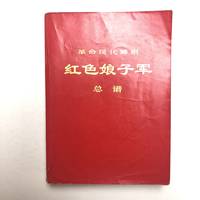
1970ref. AG-10062Red Detachment of Women full Score 红色娘å军总谱 Hong Se Niang Zi Jun Beijing: Published by People's Publishing House printed by Beijing Xinhua Printing Factory distributed by Xinhua Bookstore December 1970 FIRST EDITION. The July 1970 Script Revised and Performed Collectively by Shanghai Peking Opera Troupe. 25×18 cm. xiv 534 1 pp. Colophon. Quotations from Chinaman Mao on the second and third page printed red tilted wrappers minor tear to the cover slight tears to the foot of the binding else very fine condition. 北京:人民出版社,1970年12月第一版,新åŽä¹¦åº—å‘行。本总谱由上海京剧演出团于1970年演出本集体改编,å‰ä¸¤é¡µå¸¦æœ‰æ¯›ä¸»å¸è¯å½•ï¼Œä¹¦çš®æœ‰è½»å¾®ç£¨æŸï¼Œå…¶ä»–å“相éžå¸¸å¥½ã€‚ In China revolutionary operas or model operas Chinese: yangban xi æ ·æ¿æˆ were a series of shows planned and engineered during the Cultural Revolution 1966–1976 by Jiang Qing the wife of Chairman Mao Zedong. They were considered revolutionary and modern in terms of thematic and musical features when compared with traditional Chinese operas. Many of them were adapted to film. Originally eight revolutionary operas Chinese: Ba Ge Yangban Xi å…«ä¸ªæ ·æ¿æˆ were produced eighteen by the end of the period. Instead of the "emperors kings generals chancellors maidens and beauties" of the traditional Peking opera which was banned as "feudalistic and bourgeois" they told stories from China's recent revolutionary struggles against foreign and class enemies. They glorified the People's Liberation Army and the bravery of the common people and showed Mao Zedong and his thought as playing the central role in the victory of socialism in China. Although they originated as operas they soon appeared on LPs in comic books lianhuanhua on posters postcards and stamps; on plates teapots wash basins cigarette packages vases and calendars. They were performed or played from loudspeakers in schools factories and fields by special performing troupes. The Eight Model Operas dominated the stage in all parts of the country during these years leading to the joke "Eight hundred million people watched eight shows." 本组剧本属于文é©æ—¶æœŸçš„å…«å¤§æ ·æ¿æˆï¼Œç”±æ¯›ä¸»å¸å¤«äººæ±Ÿé’负责制作和演出。很多被æ‹æˆäº†ç”µå½±ã€‚ 最åˆæœ‰å…«ä¸ªæ ·æ¿æˆï¼ŒåŽæ¥åœ¨æ–‡é©æ—¶æœŸçš„åŽæœŸå‘展到了18个。ä¸åƒå› å°å»ºå’Œèµ„产阶级的被ç¦äº†çš„ä¼ ç»Ÿäº¬å‰§ï¼Œé‡Œé¢å‡ºçŽ°çš„ä¸çš„国王大臣少女和美人,é©å‘½çŽ°ä»£äº¬å‰§ä¸»è¦è®²è¿°ä¸å›½è¿‘å¹´æ¥çš„抗战故事,宣扬人民解放军的光辉è£è€€å’Œæ¯›ä¸»å¸çš„英勇。虽然是京剧,很快就å˜æˆäº†å„ç§å½¢å¼å‡ºçŽ°åœ¨è¿žçŽ¯ç”»ã€æµ·æŠ¥ã€æ˜Žä¿¡ç‰‡ã€é‚®ç¥¨ã€é¦™çƒŸã€èŠ±ç“¶ã€æ—¥åŽ†ç‰å„ç§åœ°æ–¹ï¼Œç”¨æ‰©éŸ³å–‡å在å¦æ ¡ã€å·¥åŽ‚ç‰åœ°æ–¹ï¼Œç”±æ¼”出团进行表演。8ä¸ªæ ·æ¿æˆä¸»å¯¼äº†å…¨å›½æ‰€æœ‰çš„舞å°ï¼Œå› æ¤æœ‰äº†8亿人看8个剧的笑è¯ã€‚ People’s Publishing House paperback books
1971ref. AG-10054Beijing: Published by People's Publishing House printed by Beijing Xinhua Printing Factory distributed by Xinhua Bookstore January 1971 FIRST EDITION. The July 1970 Script Revised and Performed Collectively by Shanghai Peking Opera Troupe. 8vo vi 397 pp. colophon consists of scripts stage photos selected theme score stage action instruction and the stage design started with quotations from Chairman Mao on the second and third page printed color stage photos and instructions inside printed pictorial wrappers slightly curled at the head and foot of the wrappers else very good condition. 北京:人民出版社出版,1971年第一版,由上海京剧团《智å–å¨è™Žå±±ã€‹å‰§ç»„集体改编åŠæ¼”出。本书包括了剧本ã€ä¸»æ—‹å¾‹ã€å‰§ç…§ã€åŠ¨ä½œæŒ‡å¯¼ã€èˆžå°ç¾Žæœ¯ç‰å†…容。包括éžå¸¸å¤šçš„照片。书皮上下ç¨å¾®å·èµ·ï¼Œæ— ç ´æŸï¼Œå“相éžå¸¸å¥½ã€‚ In China revolutionary operas or model operas Chinese: yangban xi æ ·æ¿æˆ were a series of shows planned and engineered during the Cultural Revolution 1966–1976 by Jiang Qing the wife of Chairman Mao Zedong.1 They were considered revolutionary and modern in terms of thematic and musical features when compared with traditional Chinese operas. Many of them were adapted to film. Originally eight revolutionary operas Chinese: Ba Ge Yangban Xi å…«ä¸ªæ ·æ¿æˆ were produced eighteen by the end of the period. Instead of the "emperors kings generals chancellors maidens and beauties" of the traditional Peking opera which was banned as "feudalistic and bourgeois" they told stories from China's recent revolutionary struggles against foreign and class enemies. They glorified the People's Liberation Army and the bravery of the common people and showed Mao Zedong and his thought as playing the central role in the victory of socialism in China. Although they originated as operas they soon appeared on LPs in comic books lianhuanhua on posters postcards and stamps; on plates teapots wash basins cigarette packages vases and calendars. They were performed or played from loudspeakers in schools factories and fields by special performing troupes. The Eight Model Operas dominated the stage in all parts of the country during these years leading to the joke "Eight hundred million people watched eight shows." 本剧是文é©æ—¶æœŸçš„å…«å¤§æ ·æ¿æˆä¹‹ä¸€ã€Šæ™ºå–å¨è™Žå±±ã€‹ï¼Œç”±æ¯›ä¸»å¸å¤«äººæ±Ÿé’负责制作和演出。很多被æ‹æˆäº†ç”µå½±ã€‚ 最åˆæœ‰å…«ä¸ªæ ·æ¿æˆï¼ŒåŽæ¥åœ¨æ–‡é©æ—¶æœŸçš„åŽæœŸå‘展到了18个。ä¸åƒå› å°å»ºå’Œèµ„产阶级的被ç¦äº†çš„ä¼ ç»Ÿäº¬å‰§ï¼Œé‡Œé¢å‡ºçŽ°çš„ä¸çš„国王大臣少女和美人,é©å‘½çŽ°ä»£äº¬å‰§ä¸»è¦è®²è¿°ä¸å›½è¿‘å¹´æ¥çš„抗战故事,宣扬人民解放军的光辉è£è€€å’Œæ¯›ä¸»å¸çš„英勇。虽然是京剧,很快就å˜æˆäº†å„ç§å½¢å¼å‡ºçŽ°åœ¨è¿žçŽ¯ç”»ã€æµ·æŠ¥ã€æ˜Žä¿¡ç‰‡ã€é‚®ç¥¨ã€é¦™çƒŸã€èŠ±ç“¶ã€æ—¥åŽ†ç‰å„ç§åœ°æ–¹ï¼Œç”¨æ‰©éŸ³å–‡å在å¦æ ¡ã€å·¥åŽ‚ç‰åœ°æ–¹ï¼Œç”±æ¼”出团进行表演。8ä¸ªæ ·æ¿æˆä¸»å¯¼äº†å…¨å›½æ‰€æœ‰çš„舞å°ï¼Œå› æ¤æœ‰äº†8亿人看8个剧的笑è¯ã€‚ People’s Publishing House paperback books
1972ref. AG-10053Beijing: Published by C printed by Beijing Xinhua Printing Factory distributed by Xinhua Bookstore Beijing Distributing Agency February 1972 FIRST EDITION 8vo. The May 1970 Script Revised Collectively by the China Peking Opera Troupe. iv 374 pp. colophon consists of scripts stage photos selected theme score stage action instruction and the stage design started with quotations from Chairman Mao on the second and third page printed pictorial wrappers slightly curled at the head and foot of the wrappers minor tears to the edge of the wrappers else fine condition. 北京:人民出版社出版。本书å‰ä¸¤é¡µå¸¦æœ‰æ¯›ä¸»å¸è¯å½•ï¼Œå†…容包括了剧本ã€å‰§ç…§ã€ä¸»æ—‹å¾‹ã€åŠ¨ä½œè¯´æ˜Žç‰è¯¦ç»†å†…容,由照片和文å—çš„å½¢å¼ç»„æˆï¼Œç…§ç‰‡å›¾ç‰‡å¾ˆå¤šï¼Œä¹Ÿæ˜¯æœ¬ä¹¦çš„一大特色。书皮上下两段ç¨å¾®å·èµ·ï¼Œå…¶ä»–部分å“相éžå¸¸å¥½ã€‚ In China revolutionary operas or model operas Chinese: yangban xi æ ·æ¿æˆ were a series of shows planned and engineered during the Cultural Revolution 1966–1976 by Jiang Qing the wife of Chairman Mao Zedong.1 They were considered revolutionary and modern in terms of thematic and musical features when compared with traditional Chinese operas. Many of them were adapted to film. Originally eight revolutionary operas Chinese: Ba Ge Yangban Xi å…«ä¸ªæ ·æ¿æˆ were produced eighteen by the end of the period. Instead of the "emperors kings generals chancellors maidens and beauties" of the traditional Peking opera which was banned as "feudalistic and bourgeois" they told stories from China's recent revolutionary struggles against foreign and class enemies. They glorified the People's Liberation Army and the bravery of the common people and showed Mao Zedong and his thought as playing the central role in the victory of socialism in China. Although they originated as operas they soon appeared on LPs in comic books lianhuanhua on posters postcards and stamps; on plates teapots wash basins cigarette packages vases and calendars. They were performed or played from loudspeakers in schools factories and fields by special performing troupes. The Eight Model Operas dominated the stage in all parts of the country during these years leading to the joke "Eight hundred million people watched eight shows." 本剧是文é©æ—¶æœŸçš„å…«å¤§æ ·æ¿æˆä¹‹ä¸€ï¼Œç”±æ¯›ä¸»å¸å¤«äººæ±Ÿé’负责制作和演出。很多被æ‹æˆäº†ç”µå½±ã€‚ 最åˆæœ‰å…«ä¸ªæ ·æ¿æˆï¼ŒåŽæ¥åœ¨æ–‡é©æ—¶æœŸçš„åŽæœŸå‘展到了18个。ä¸åƒå› å°å»ºå’Œèµ„产阶级的被ç¦äº†çš„ä¼ ç»Ÿäº¬å‰§ï¼Œé‡Œé¢å‡ºçŽ°çš„ä¸çš„国王大臣少女和美人,é©å‘½çŽ°ä»£äº¬å‰§ä¸»è¦è®²è¿°ä¸å›½è¿‘å¹´æ¥çš„抗战故事,宣扬人民解放军的光辉è£è€€å’Œæ¯›ä¸»å¸çš„英勇。虽然是京剧,很快就å˜æˆäº†å„ç§å½¢å¼å‡ºçŽ°åœ¨è¿žçŽ¯ç”»ã€æµ·æŠ¥ã€æ˜Žä¿¡ç‰‡ã€é‚®ç¥¨ã€é¦™çƒŸã€èŠ±ç“¶ã€æ—¥åŽ†ç‰å„ç§åœ°æ–¹ï¼Œç”¨æ‰©éŸ³å–‡å在å¦æ ¡ã€å·¥åŽ‚ç‰åœ°æ–¹ï¼Œç”±æ¼”出团进行表演。8ä¸ªæ ·æ¿æˆä¸»å¯¼äº†å…¨å›½æ‰€æœ‰çš„舞å°ï¼Œå› æ¤æœ‰äº†8亿人看8个剧的笑è¯ã€‚ People’s Publishing House paperback books
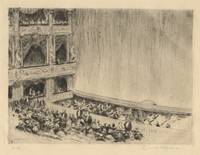
ref. 390891915. Signed in full in pencil just outside platemark at lower right. Also signed and dated in the plate "E. Oppler 15" at lower left inscribed in pencil "9-50" just outside platemark at lower left and "VII.II" at lower left corner with titling in pencil to lower margin. On ivory laid Bosquet watermarked paper. Impression size 180 x 270 mm. 7 x 9-1/2" with wide margins. A pre-performance or intermission scene depicting three tiers of an elaborate performance space with people both sitting and standing some in animated conversation with players in the orchestra pit before a closed curtain. Number 9 of an edition limited to 50 copies this impression an apparent second state of seven. Oppler is considered the premiere chronicler of ballet in Germany. "He spent his student years in Munich London and Holland before settling in Berlin in 1905. As a member of the Berliner Secession he developed into a sought-after portraitist and from 1912 through his drawings and graphic works to one of the perhaps to the most significant German artistic chroniclers of ballet history. Especially the Ballets Russes and their soloists owe to Oppler's enthusiasm an appreciation known until today only among ballet afficionados. Oppler is recognized as the inventor of an illuminated drawing pencil which enabled him to sketch from the audience during rehearsals and performances." Deutsches Tanzarchiv Köln. unknown books
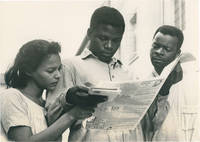
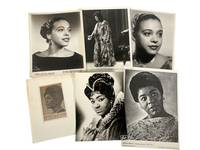
1957ref. 208291957. Press photograph archive of African American women opera singers 1957-1977 documents the emergence and international recognition of Black performers within mid twentieth century classical music and operatic institutions. The images center on four prominent singers whose careers developed during and after the era of segregation when access to major stages and audiences expanded unevenly for Black artists. Figures such as Marian Anderson who broke barriers at the Metropolitan Opera in 1955 established a precedent for subsequent generations; the performers represented here advanced that presence through sustained international careers providing visual evidence of African American participation in elite cultural institutions during a period of social and cultural change. Six black and white silver gelatin press photographs each approximately 8 x 10 inches with captions and markings on recto and verso. Subjects include Adele Addison in two studio portraits from the 1950s later known as the singing voice for Bess in Porgy and Bess 1959; Shirley Verrett in two images including an early news photograph prior to a performance at Ambassador College Auditorium and a later 1976 stage portrait in formal concert dress; Martina Arroyo in a 1977 portrait during the height of her international career; and Grace Bumbry depicted in costume as Princess Eboli in Verdi's Don Carlos at the Metropolitan Opera in 1965. The photographs capture both staged publicity portraits and performance contexts documenting professional presentation and artistic identity. Produced during decades of expanding civil rights advocacy and gradual institutional integration the archive situates African American women within a field historically shaped by exclusion and limited access. Their visibility in major opera houses and concert venues reflects broader shifts in cultural recognition and professional opportunity while also underscoring the continued significance of performance as a site of racial and gendered representation. Minor edge wear; captions remain legible; overall very good condition. unknown books
1794ref. 215352London: Debrett; Longman; Debrett; Debrett 1794. All but the last title first editions. 80; 6 42; 4 61 3; 4 32 pp. 1 vols. 8vo. Three quarters blue polished calf gilt spine t.e.g. Upper cover detached. All but the last title first editions. 80; 6 42; 4 61 3; 4 32 pp. 1 vols. 8vo. Debrett; Longman; Debrett; Debrett unknown books
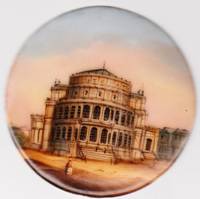
1845ref. 12060Dresden : Not published. ca 1845. Unique. Contemporary ebony frame. Very good. 68 mm diameter An early painted rendering on a bisque porcelain disk of what has come to be known as the Semperoper Dresden. The building was designed by Gottfried Semper arguably the most important German architect of the Victorian era and opened in 1841. This was his first major building - a neo Renaissance theater with subdued ornamentation and an exterior that clearly expressed its internal spaces - and the introduction of Semper's revolutionary ideas that were ' . to change the course of theater design.' The Bayreuth Festspielhaus was the last expression of these design concepts. Semper was the original architect but was dismissed by Wagner before the project was complete. The Semperoper of Dresden burned to the ground in 1861.Contemporary renderings of the building are all that remain. The disk bears a contemporary identification on the back: 'Koenig Theater / zu Dresden'. It is mounted in a contemporary wooden ebony frame and held in place with a stamped gilt bezel. The verso of the frame is marked with a letter M and the number 30 impressed in the wood. As if to emphasize the revolutionary aspects of Semper's design the painter illustrated the theater building from the stage side a unique perspective when judged by the few contemmporary illustrations of the building. Given that the Meissen works were within 25 km of Dresden one assumes the bisque porcelain disk is Meissen but it bears none of the usual marks of the great manufactory. See Mullin The Development of the Playhouse. Not published. unknown books
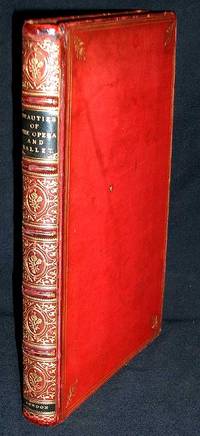
1844ref. 8333London. David Bogue. 1844. Lavishly bound in sumptuous tri-gilt ruled full crimson calfskin. Gilt tooled fleurette motifs to corners of front and rear covers. Elaborate gilt ruled spine compartments with intensely ornate gilt tooled fleural vignettes. Gilt tooled raised bands. Decorative gilt tooled and titled morocco label. Elaborate and ornate paneled turn-ins. Marbled endsheets. a.e.g. 4to. 7.25" x 10.75". The First Edition. Illustrated with ten full page illuminated steel plate engravings and further throughout by various wood engravings en texte. Elaborate multi-chromatic decorative borders to each page. A Fabulous production detailing the mid-Victorian Opera and Ballet featuring plate engravings of notable singers dancers and productions. With its high gloss engravings whimsical en texte woodcuts and highly stylized colour page borders this volume represents one of the finest examples of Victorian book design. Niles and Leslie V1-225; Moroda-1272. Some darkening and/or mild scuffing to covers. Hinges present previous repairs but are tight and firm. Corners gently bumped. Head and tail pieces lightly chipped. A very Good copy of this breathtaking work. David Bogue. hardcover books
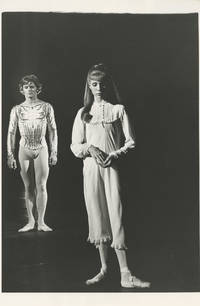
1977ref. 163168N.p.: N.p. 1977. Vintage oversize satin finish photograph from the 1977 production of the beloved 1892 ballet showing dancers Mikhail Baryshnikov and Gelsey Kirkland. Camera 5 stamp on the verso crediting photographer and Camera 5 founder Ken Regan. The 1977 production was staged by the American Ballet Theatre at the Kennedy Center and marked Baryshnikov's debut as choreographer. The ballet was adapted for television the same year directed by Tony Charmoli. From the archive of the PIX Agency an American photo house that acted as an intermediary between emigre photographers as well as those still living in Europe and the American magazine and newspaper market between 1935-1969. 9.25 x 14 inches archivally matted in a 14 x 18 inch 8-ply white mat. About Near Fine slightly wavy at the top and bottom edges. N.p. unknown books
2000ref. 159893N.p.: N.p. 2000. Three vintage photographs of director Werner Herzog taken by noted jazz photographer Jeffrey Kliman during choir rehearsals for his staging of Richard Wagner's "Tannhäuser" held at The Lyric Opera House in Baltimore in March 2000. These prints are unique struck from the original negative by the photographer. Full provenance available. 8 x 10 inches. Fine. N.p. unknown books
1972ref. AG-10057The Red Lantern Script红ç¯è®° Hong Deng Ji Beijing: Published by People's Publishing House printed by Beijing Xinhua Printing Factory distributed by Xinhua Bookstore Beijing Distributing Agency February 1972 FIRST EDITION 8vo. The May 1970 Script Revised Collectively by the China Peking Opera Troupe. iv374 pp. colophon consists of scripts stage photos selected theme score stage action instructions and designs beginning with quotations from Chairman Mao on the second and third pages printed pictorial stiff cover wrappers fine condition. 京剧《红ç¯è®°ã€‹å‰§æœ¬ 北京:人民出版社出版,中国京剧团集体制作,基于1970年五月演出本,1970年12月第一版,书的å‰ä¸¤é¡µæœ‰æ¯›ä¸»å¸è¯å½•ï¼Œå…±374页主体内容。精装,å“相éžå¸¸å¥½ã€‚ People’s Publishing House hardcover books
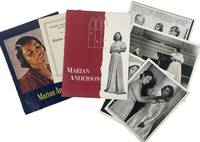
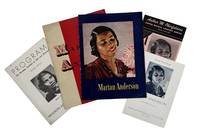
1947ref. 209021947. Anderson Marian group of eight items dating from 1946 to 1959 documents the concert career and international recognition of Marian Anderson a central figure in twentieth century African American music and a pivotal presence in the desegregation of American performance spaces. By the mid twentieth century Anderson's career intersected with both domestic civil rights developments and U.S. cultural diplomacy abroad following earlier milestones including her 1939 Lincoln Memorial concert and her 1955 debut at the Metropolitan Opera. The materials trace her concert programming repertoire and public reception including performances featuring European composers such as Franz Schubert alongside African American spirituals as well as her role in international cultural exchange. Photographs document formal recognitions including a ceremony in Tokyo where Princess Takamatsu of the Japanese Red Cross awarded Anderson a medal of merit following her performances benefiting Japanese orphans and a 1958 presentation at the American National Theatre and Academy marking her participation in presidential cultural initiatives. Anderson Marian. Archive of concert programs and press photographs. Various locations: University of Minnesota and S. Hurok management 1946 to 1959. Eight items total comprising four concert programs and four black and white silver gelatin press photographs. Programs range from approximately 5 x 8 inches to 9 x 12 inches and include: a University Artists Course program for the 1946 to 1947 season at the University of Minnesota featuring Anderson's recital with repertoire including Schubert and spirituals; multiple S. Hurok managed programs presenting Anderson as a leading concert artist with biographical essays photographs and repertory notes; and a 1955 program continuing similar documentation of her touring career. Photographs measure approximately 8 x 10 inches with three retaining original press captions on verso or margins including images of Anderson receiving honors in Japan posing with a sculpted bust by Napoleon Veloso Abueva and accepting the Gimbel National Award in 1959. These materials situate Anderson within mid twentieth century performance networks that linked concert stages international diplomacy and public recognition of African American achievement. The programs document how her repertoire bridged European classical traditions and African American musical forms while the press photographs emphasize her role as a cultural ambassador during the Cold War period when artists were enlisted in international outreach initiatives. Honors such as the Japanese Red Cross recognition and the Gimbel National Award underscore the transnational and humanitarian dimensions of her career while the sustained documentation of her concerts reflects her continued prominence in American cultural life following breakthroughs in segregated institutions. Minor edge wear to programs and light creasing to one photograph; materials remain clean and well preserved. Overall very good condition. unknown books
1938ref. 209421938. Anderson Marian archive of six concert programs dating from 1938 to 1953 documents the touring career of Marian Anderson during a period when her performances intersected with national debates over race access to public space and cultural representation. By the early 1940s Anderson had achieved international recognition following appearances at the White House and before British royalty as well as her widely attended 1939 concert at the Lincoln Memorial where she performed before an audience of 75000 after being barred from Constitution Hall. The programs trace her sustained concert activity across North America including major tours and individual performances in Canada and the United States and document the presentation of her repertoire which combined European art song traditions with African American spirituals. Anderson Marian. Archive of six concert programs. Various venues including University Artists tour circuits and concert halls in Toronto Brooklyn and Denver 1938 to 1953. Six programs in staple bound wrappers ranging from approximately 5 x 8 inches to 9 x 12 inches. Includes a program from her 1941 to 1942 coast to coast tour with extended biographical content and photographic illustrations depicting Anderson in performance receiving honors and in personal settings with family and manager Sol Hurok. A later illustrated program from the 1951 to 1952 tour presents similar material reflecting her continued prominence. Additional smaller programs document specific engagements at Eaton Auditorium in Toronto 1946 Brooklyn Institute of Arts and Sciences 1950 and Denver Auditorium 1953. These programs provide a record of Anderson's sustained public presence during a period when African American performers navigated segregated venues and expanding national audiences contributing to shifts in cultural access and representation. The inclusion of biographical narratives photographic imagery and repertory selections illustrates how her career was framed for concert audiences and how her public identity was constructed through touring circuits. Her performances in major cities across North America demonstrate the geographic reach of her influence and the institutional contexts in which her work was received offering material for the study of music history race and performance culture in the mid twentieth century. Minor edge wear with some foxing to several programs and manuscript notation to the Eaton Auditorium program; overall clean and stable. Overall very good condition. unknown books
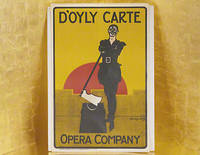
1919ref. 432211919. First Edition. GILBERT AND SULLIVAN D'OYLY CARTE OPERA COMPANY. Poster ""Gilbert and Sullivan's ""The Yeoman of the Guard"" by Dudley Hardy"". WITH: Billboard ""Opera Company's 1919/1920 Season by Dudley Hardy and John Hassall"". London: David Allen & Sons 1919. Single sheet measuring 20 by 30 inches; nine unassembled dovetailing sheets measuring 7-1/2 by 10 feet assembled. $900.Original poster depicting the headsman with axe from Gilbert and Sullivan's ÒThe Yeoman of the GuardÓ accompanied by a large billboard in parts announcing the seasonÕs productions with three poster designs: ÒThe YeomanÓ ÒThe GondoliersÓ and ÒThe Mikado.ÓThe poster advertises Gilbert and Sullivan's ""Yeoman of the Guard"" widely recognized as Sullivan's most accomplished musical score. A classic Savoy Opera the piece isÑrather unusuallyÑset during the 16th century at the Tower of London bringing in quasi-Shakespearean dialogue and a darker atmosphere. The accompanying billboardÑmeasuring over 70 square feetÑpromotes the 1919 season's productions including ""Yeoman"" the musical theater favorite ""The Mikado"" and Gilbert and Sullivan's last major success ""The Gondoliers."" Hardy and Hassall were among the premier graphic artists of their time having built reputations both as book illustrators and specialists in poster design. Hardy was influenced by French chalk drawings and poster art while Hassall attributes his style to Japanese prints. ""Yeoman"" poster fine. Chipping and creasing to separate panels of original billboard. A wonderful pair. unknown books
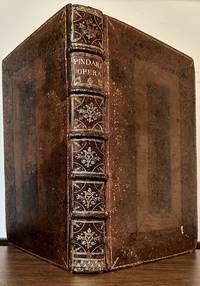
1697ref. 23479Oxford: Etheatro Sheldoniano 1697. leather_bound. Contemporary cambridge style binding in full brown calf. Very good. Folio6 A4-Ppp4 Qqq-Pppp Qqqq2-Zzzz2 Aaaaa-Mmmmm. The first English edition of the Greek text edited by Richard West & Robert Welsted. Engraved portrait of Pindar by M. Burghers facing the title page. DIBDIN II 289. "a beautiful and celebrated edition. on the whole we must allow that the editors of this magnificent work have taken infinite pains to bring together every thing which could illustrate and improve the reading of the poet". The editors compared the Mss held by the Bodleian with that of the Biblioteca Palatina. Engraved portrait of Pindar and large title page vignette by M. Burghers. Pindar c. 522 – c. 443 BC was an Ancient Greek lyric poet of the classical period from Thebes and the first Greek poet to reflect on the nature of poetry and on the poet's role. Errata. BRUNET IV p.659. Armorial bookplate. Raised bands spines richly gilt small front cover nick scrape lower front cover corner binding tight with leaves at end of text of Pindari Opera Omnia leaves Oooo-Mmmm toned. Etheatro Sheldoniano unknown books
1923ref. 370639New York 1923. Mounted photograph of the Opera House. Calligraphic presentation leaf extracts from programs inlaid in large folio leaves 120 2 index ff. 1 vols. Folio. Full deep red morocco gilt spine with five raised bands boards with triple fillet borders navy blue doublures silk flyleaves t.e.g. Faintest traces of rubbing. Fine. Mounted photograph of the Opera House. Calligraphic presentation leaf extracts from programs inlaid in large folio leaves 120 2 index ff. 1 vols. Folio. Elaborate and attractive album of extracts from the printed programs of the Metropolitan Opera House in New York a record of opera productions from 1915 to 1922 listing the principal performances and also retaining the lists of box holders which functions as a who's-who of New York society. There are several newspaper clippings including an account of the farewell performance of Mrs. Geraldine Farrar in Tosca. Presented to Henry Fletcher by his wife Ethel née Thompson on the tenth anniversary of their wedding. Henry Fletcher 1877-1953 of Greenwich Connecticut was a member of the Grolier Club until his death and a major benefactor of the Yale libraries. unknown books
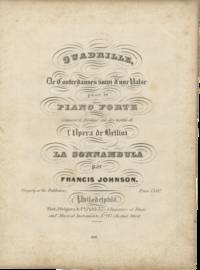
1837ref. List3613Philadelphia: Firth Meignen & Co. Publishers & Importers of Music and Musical Instruments No. 41 Chestnut Street 1837. Seven pages complete including dance figures. Folio sheet music. Very good with scattered foxing and light edge wear. A rare early American operatic dance arrangement by Francis Johnson 1792-1844 widely regarded as the first published Black composer in the United States. Issued circa 1837 this work adapts themes from Vincenzo Bellini's opera La Sonnambula 1831 into a set of quadrilles with concluding waltz arranged for piano forte and structured for social dancing. The internal headings "Pantalon" "Ladies Chain" etc. retain the formal quadrille sequence reflecting the popularity of European ballroom forms in Philadelphia during the period. Johnson a Philadelphia bandleader composer and virtuoso keyed bugle player published approximately seventy compositions over nearly three decades. Active in Philadelphia from at least the 1810s he became one of the city's most sought-after musicians leading ensembles for cotillions public balls military functions and civic celebrations. In 1818 became the first African-American composer known to have sheet music published in the United States. His band performed for elite social events and public commemorations including celebrations for the Marquis de Lafayette's visit to Philadelphia. In 1838 he toured Europe with his ensemble performing in England and reportedly receiving a silver trumpet from Queen Victoria. This piece was composed a year earlier per the Johnson page at Musicalgeography.com six years after Bellini's work. Operatic paraphrases and dance adaptations of fashionable European works were central to Johnson's output. Overall a quite scarce early title from an important composer. We find two copies in OCLC 692295106 at AAS and the William Clements Library. See "Francis Johnson's Compositions - With Sheet Music" https://musicalgeography.org/francis-johnsons-compositions/. Firth, Meignen & Co., Publishers & Importers of Music and Musical Instruments, No. 41 Chestnut Street books
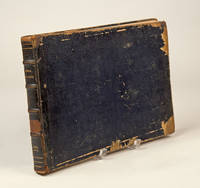
1960ref. 88091CULTURAL REVOLUTION MODEL OPERA Manuscript Ledger Master Inventory: General Record of Stage Props for a traveling Chinese theatrical repertory company introducing Revolutionary Opera into its program including costs for creating silk stage props sets costumes and scenery with various paper slip receipts some loose dated from 1963 to 1969. Oblong album measuring 7-3/4 x 10-5/8 inches contents with 20 numbered leaves of double-sided ruled ledger; bound in brown cloth-backed plain light blue paper board with lettered pink paper label decorative pattern endpapers originally with ribbon-tied spine now lost contents loose. Includes entries for the revolutionary opera Taking Tiger Mountain 1968 with one entry bearing signature of Wang Xiu Wen dated 12 September 1967. Includes a pink silk armband laid into the album inscribed "Mei Ying Shan" which could be translated as Huaying Mountain. https://www.youtube.com/watchv=cjE0LDNycE8 There is also reference to a 1961 novel which the Bejing Film Studio made into a movie called Lie Huo Zhong Yong Sheng Living Forever in Burning Flame its IMDB title translated as Red Crag based partly on fact by Chinese authors Luo Guangbin and Yang Yiyan former inmates in a Kuomintang prison in Sichuan. It was set in Chongqing during the Chinese Civil War 1949 and featured underground communist agents under the command of Zhou Enlai fighting an espionage battle against the Kuomintang. The story takes place in Huaying Mountain. hardcover books