130 résultats
1798réf. 87502Au Bureau du Journal des Dames, Rue Montmartre, N° 183, au coin du Boulevart | A Paris s.d. (1798-1808) | 10.80 x 17.60 cm | 52 planches en feuilles montées sous marie-louise, en étui
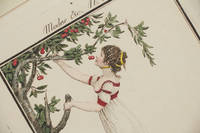
1798réf. 87502A Paris: Au Bureau du Journal des Dames Rue Montmartre N° 183 au coin du Boulevart 1798. Fine. Au Bureau du Journal des Dames Rue Montmartre N° 183 au coin du Boulevart A Paris s.d. 1798-1808 10.80 x 17.60 cm 52 planches en feuilles montées sous marie-louise en étui Set of 52 original plates etched and enhanced with watercolours at the time numbered 1 to 52 mounted in pairs under mats. Leaves in red half calf slipcase early 20th century red shagreen boards. The plates vary in size 10.8 x 17.6 cm to 28.1 x 18.8 cm and paper stock as was often the case with La Mésangère's publications. Unbound engraved title on a bifolium printed separately absent from most copies. It is replaced here by its identical reprint by Gosselin 1893-1903 on antique watermarked paper and bears the publisher's 'G' mark characteristic of this reprint a century later. All the plates however are in their first edition without the G mark added by Gosselin to the lower corners of the engravings in the figure or the bowl occasionally accompanied by a date. Some foxing a few rare engravings showing traces of pasted tabs on the reverse. Plate 42 restored without missing. A green stain in plate 11 probably due to the watercolour of the landscape. Twelve plates are trimmed to the plate mark: pl. 12 12.7 x 19.2 cm pl. 15 12.4 x 18.7 cm pl. 19 11.9 x 19.8 cm pl. 29 11.9 x 19 cm pl. 30 12.5 x 19 cm pl. 39 12.1 x 18.4 cm pl. 41 12.5 x 19.1 cm pl. 42 12.5 x 19.1 cm pl. 48 11.9 x 18.3 cm pl. 49 12.9 x 19.9 cm pl. 51 12.5 x 18.4 cm and pl. 52 12 x 18.1 cm. Plate 37 is trimmed around the black border 10.8 x 17.6 cm. More pronounced foxing in the margins of plates 4 28 30 31 35 44 45 and 47. A rare and precious complete suite of 52 original costume prints from the Directoire and First Empire periods. Deemed ""unfindable"" by Gaudriault in his study of women's fashion engravings in France this is the only complete set of first editions currently available. This series of elegant silhouettes was published on the initiative of the bookseller Sellèque and Pierre La Mésangère a clergyman who returned to the press after the turmoil of the Revolution. In 1800 La Mésangère took over the management of the renowned Journal des Dames et des Modes a pioneering publication in the history of the women's press and produced a few standalone series such as this one aimed at 'a category of connoisseurs with an interest in a more refined and luxurious interpretation of fashion than that offered by the plates in the newspapers' Philippe Séguy Histoire des modes sous l'Empire. The plates are the work of Philippe-Louis Debucourt a painter of French elegance since 1787 and a regular contributor to the Journal des Modes. The first 38 date from Year VIII the next 12 from Year IX and the last two from 1808. Through these 52 costumes unfolds a veritable grammar of dress a precious alphabet of the gown and hat - a language in which Parisian women were particularly well versed. Shepherdesses sultanas Etruscan princesses. the trend leaned towards exoticism even eroticism with the occasional bare breast. We find the fashions brought to the fore by the Merveilleuses following the Revolution inspired by Antiquity and mythology - gowns of iridescent muslin light and form-fitting alongside coats bandeau hairstyles and Grecian tunics. The captions accompanying the etchings often provide detailed descriptions of the attire hairstyles and headwear meticulously enhanced with watercolour. Some figures even double as biting social commentary verging on caricature featuring characters such as the ludicrously pretentious Turcaret a recurring theatrical figure since the early 18th century or genre scenes teeming with amorous intrigues. The significance of this series in the history of colour engraving is noteworthy albeit underappreciated by bibliographers. Some plates bear tiny black dots in the margins indicating the process of colour engraving by superimposing intaglio plates. These mark Au Bureau du Journal des Dames, Rue Montmartre, N° 183, au coin du Boulevart hardcover
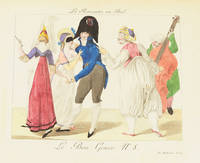
réf. 05714Paris: Chez l'Editeur 1827. Parisian Life in All Its Splendor and Absurdity One Hundred and Fifteen Superb Hand-Colored Plates Depicting the Fashions Foibles and Amusements of Post-Revolutionary Paris The Exceptionally Rare Complete Third Edition of Le Bon Genre BON GENRE LE. Observations sur les Modes et les Usages de Paris pour Servir d'Explication aux 115 Caricatures Publiées Sous le Titre de Bon Genre Depuis le Commencement du Dix-Neuvième Siècle. Paris: Chez l'Éditeur Pierre de la Mésangère 1827. Third edition containing 115 hand-colored plates eleven more than the first edition of 1817. Large folio 14 7/8 x 10 7/8 inches; 378 x 277 mm. 4 24 pp. of descriptive text. One hundred and fifteen finely engraved and beautifully hand-colored plates by Georges-Jacques Gatine after designs by various artists including George Dutailly François-Joseph Bosio Louis-Marie Lanté and Horace Vernet. Printed by Vassal et Essling. A duplicate of plate 16 loosely inserted. Some occasional light foxing principally confined to the blank margins the plates generally fresh and clean with excellent contemporary coloring. Contemporary half crimson straight-grain morocco over marbled boards smooth spine elaborately decorated and lettered in gilt. Some light wear to head and foot of spine. An excellent copy of one of the rarest and most delightful collections of early nineteenth-century French fashion and social caricature. An exceptionally rare complete copy of the third edition of Le Bon Genre one of the most important and entertaining pictorial records of Parisian society in the opening decades of the nineteenth century. With 115 superbly hand-colored plates depicting the fashions customs occupations recreations and social eccentricities of the emerging French bourgeoisie. First published in 1817 Le Bon Genre represents a remarkable development in the history of French illustrated books. At once a fashion portfolio a social panorama and an affectionate frequently mischievous satire of contemporary manners it offers an extraordinarily vivid picture of Parisian life during the years following the French Revolution and the Napoleonic era. Unlike conventional fashion publications whose principal purpose was to illustrate the latest modes of dress Le Bon Genre places its fashionable subjects within the social situations that gave their clothing meaning. Its elegant ladies and gentlemen attend parties exchange compliments promenade in public gardens flirt dance dine quarrel and indulge in an astonishing variety of amusements. The result is a wonderfully revealing portrait of a society in which fashion leisure and public display had become essential expressions of social identity. The series is particularly significant for its depiction of the expanding urban middle class. The upheavals of the Revolution and the subsequent transformations of French society had altered established distinctions of rank and privilege. Wealth fashionable appearance manners and participation in the social life of the capital increasingly provided alternative means of establishing status. Le Bon Genre captures this changing world with exceptional wit and delicacy. Its subjects include fashionable young women in the latest Parisian dresses extravagantly attired gentlemen awkward suitors eccentric visitors and an almost inexhaustible procession of entertainers and fashionable characters. The collection is equally remarkable for its representation of popular entertainment. Among the many delightful subjects are performances by the celebrated rope-dancing troupes of Forioso and Ravel Indian jugglers acrobats performing dogs magic lantern exhibitions and elaborate amusement-park attractions. These images offer a fascinating record of entertainments that were enormously popular in their day but are seldom illustrated with such immediacy and charm. Particularly engaging are the plates depicting three ladies enjoying sorbets no. 4 a magic lantern entertainment no. 31 performing dogs no. 35 a balancing act no. 91 an extraordinary performer capable of swallowing almost anything no. 93 and an enormous amusement slide no. 97. The series encompasses subjects as varied as domestic pastimes fashionable entertainments theatrical performances courtship public promenades and the curious diversions of the Parisian pleasure grounds. The English provide another recurring source of amusement. Their clothing manners and social conventions are frequently represented as awkward or eccentric when contrasted with the supposedly superior elegance of Parisian society. Such images reflect the long-standing rivalry between France and England and the enduring French conviction that Paris was the undisputed capital of European fashion. The humor however is not confined to foreigners. French society itself is subjected to a gentle but persistent scrutiny its pretensions and absurdities exposed through exaggerated gestures incongruous situations and carefully observed details of dress and behavior. The illustrations are distinguished by their delicacy of line animated compositions and exceptionally attractive hand-coloring. Many plates contain several figures engaged in lively social interaction while others concentrate upon individual costumes or eccentric characters. Together they form a remarkable visual record of the manners and amusements of the early nineteenth century. Of particular importance is the accompanying descriptive text which provides explanations of the individual caricatures and their social significance. This commentary transforms the collection from a series of attractive prints into a coherent and unusually informative document of contemporary French life. The publication was conceived and directed by Pierre-Joseph-Antoine Le Bouc de la Mésangère 1761-1830 one of the most influential figures in the history of French fashion journalism. Born in Anjou La Mésangère originally pursued an ecclesiastical and academic career entering the Congregation of the Brothers in 1784 and subsequently teaching philosophy and literature at the Collège de La Flèche. During the revolutionary Terror he was forced into hiding but following the fall of Robespierre in 1794 he established himself in Paris as a writer and journalist. In 1799 he became associated with the influential Journal des Dames et des Modes eventually directing a publication that exercised an extraordinary influence upon contemporary standards of elegance and taste. Under his guidance fashion illustration developed into an increasingly sophisticated form of cultural commentary recording not merely clothing but the manners aspirations and changing social habits of fashionable society. For Le Bon Genre La Mésangère brought together designs by several accomplished artists including George Dutailly François-Joseph Bosio Louis-Marie Lanté and Horace Vernet. Their compositions were engraved by Georges-Jacques Gatine one of the foremost costume engravers of the period whose elegant line and sensitive rendering of detail were ideally suited to the fashionable subjects. Gatine had already established a considerable reputation through his work for the Journal des Dames et des Modes. His engravings for Le Bon Genre display the same refinement and precision combined with a greater freedom of expression and an unmistakable sense of humor. The importance of the collection was recognized by Gordon N. Ray who described Gatine as the leading costume engraver of his time and characterized Le Bon Genre as a lively mixture of caricatures of contemporary people and scenes. Vyvyan Holland in Hand Coloured Fashion Plates 1770 to 1899 noted the particular attention paid to the contrast between English and French fashions with the former frequently represented in deliberately unflattering terms. Millia Davenport in The Book of Costume emphasized the distinction between these lively social caricatures and conventional fashion plates noting that the series was accompanied by explanatory paragraphs describing the scenes represented. The first edition of Le Bon Genre published in 1817 contained 104 plates. Eleven additional plates were incorporated into the expanded series by the time of the 1822 edition and the present third edition of 1827 retains the full complement of 115 plates. The complete series is exceptionally scarce. Earlier bibliographical research located only four institutional copies of the 1827 edition two copies of the 1822 edition and no copies of the first edition in the OCLC/KVK records consulted. These figures should be regarded as a historical search result rather than an exhaustive census of surviving examples. The present copy complete with all 115 beautifully hand-colored plates and preserved in its handsome contemporary crimson morocco binding is a particularly desirable example of this celebrated and increasingly difficult-to-obtain work. A remarkable combination of fashion history social satire and popular entertainment Le Bon Genre stands among the most engaging illustrated records of Parisian life during the first quarter of the nineteenth century. References: Colas 2240; Vicaire I pp. 839-842; Rahir 332; Davenport 2280A-2281; Ray The Art of the French Illustrated Book p. 141; Vyvyan Holland Hand Coloured Fashion Plates 1770 to 1899 p. 51. Paris: Chez l'Editeur, 1827 unknown
1827réf. 87629chez l'éditeur, boulevard Montmartre, no 1 Vassal et EsslingImprimeurs | Paris [1801-1827] ; 1827 (pour le texte) | 41.20 x 27.80 cm | relié
1827réf. 87629Paris: chez l'éditeur boulevard Montmartre no 1Vassalet EsslingImprimeurs 1827. Fine. Princess Murat's copy chez l'éditeur boulevard Montmartre no 1 Vassal et EsslingImprimeurs Paris 1801-1827 ; 1827 pour le texte 41.20 x 27.80 cm relié Complete set of 115 copper-engraved plates with an additional plate 116 plates all printed on either laid or wove paper all hand-colored with watercolor. Two entirely different plates 39 follow each other in first issue: ""Les Titus et les cache-folies"" was published in the 1817 and 1822 sets and the other ""La Politicomanie"" appeared in 1827. This is the most complete series which also includes the 11 new plates published from 1818 to 1822 numbered 105 to 115. According to Vicaire the plates were probably all printed between 1801 and 1822 and only the text preceding the plates was reprinted in 1827. 3/4 long-grained cherry half-morocco smooth spine elaborately framed in gilt lentghwise gilt tooled center of spine gilt lettered title at head of spine framed in gilt marbled boards marbled paper endpapers and flyleaves. Minor brown spots are mainly confined to the 24 pp. of text with very few on the plates mainly on the margins and versos. A rare and famous collection of costumes genre and entertainment scenes from the French First Empire and Restoration eras with very wide margins and magnificently hand-colored at the time. A veritable encyclopedia of thrills pleasures and pageantry published by Pierre de la Mésangère leading fashion editor at the turn of the century. This copy includes two versions of plate 39 both of which are extremely scarce. These magnificent copper-engraved prints by Georges Jacques Gatine Schenker and others were based on drawings by the greatest painters of Parisian fashion: Carle Vernet Philippe-Louis Debucourt Jean-Baptiste Isabey Louis-Marie Lanté Dutailly. They were initially sold as a supplement to the successful magazine Le Journal des Modes before being published as a collection. Some plates bear the engraver's name and several the draftsmen's. This gallery of figures is singularly representative of a period of upheaval in French history in terms material but also moral and intellectual values - depicting a frivolous and daring part of feminine society eager to please and well-versed in the games of love. The ensemble perfectly combines social satire with the refinement expected of fashion engravings. It includes the famous portraits of the extravagantly dressed Directoire women called ""Merveilleuses"" and ""Incroyables"" - representations that have henceforth served as a reference. From beautiful silhouettes reclining on Greek-style beds to provocative and undressed courtesans everything is designed to illustrate the finery of these pretty coquettes often followed by a host of suitors and servants. Dresses hats and furs rub shoulders with elegant male figures in frock coats and even a few transvestites Trois grâces parisiennes no. 16. Many of the scenes have a clear erotic connotation especially the salon games featuring suggestive embraces and positions. Dancing takes pride of place: no fewer than twenty plates feature fashionable ballroom dances ""Danse du Schall"" named after the popular scarf quadrille figures such as ""La Poule"" ""La Trénis"" or more daring ones like ""La Sauteuse"" ballets or even the famous tightrope dancers Ravel and Forioso. The movement of the characters is reflected in the drapery of the large Empire muslin gowns and hair flowing in the wind. Among the dozens of hand-colored plates a great many are devoted to leisure and entertainment activities available at the beginning of the 19th century. Gastronomy games of skill sports acrobatics circus tricks music and even real sensational attractions: several plates depict the very first Parisian roller coaster installed in Belleville then at the Odeon for the 1817 Carnival. Clowns pierrots and masked figures are seen dancing in front of the structures and hurtling down steep slopes on small carriages. Anothe chez l'éditeur, boulevard Montmartre, no 1Vassalet EsslingImprimeurs hardcover