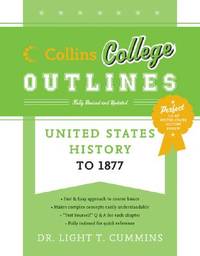
Cummins, LightBiblio.com
4525 resultados
ref. 0060881593.Gpaperback. Good. Access codes and supplements are not guaranteed with used items. May be an ex-library book. paperback
ref. 10088In 4 reliure éditeur cartonnée, titre à froid sur le premier plat. Jaquette illustrée en couleurs. Faux-titre, titre, 575 pages, nombreuses illustrations : historique, notes, architecture, intérieurs, mobilier, éclairage, porcelaine, verrerie, tapis, graphisme, sculpture biographies, annexes, bibliographie, index, remerciements. Editions du Regard 1986. Très bon état. Deux tampons du précédent propriétaire. Provenance Bibliothèque de M. G.L
19601192 pages plus 16 pages of maps. Includes over 500 photos, maps and drawings. No marks noted. A little above average wear to green cloth covered boards. Binding intact. Light soiling. Prior owner's small address label atop preface. Solid working copy of this excellent reference. Book
2025ref. x-1647049482Rtm Books 2025. Hardcover. New. 240 pages. 6.00x0.75x9.00 inches. Rtm Books hardcover
2025ref. x-1647049474RTM Books 2025. Paperback. New. 240 pages. 6.00x0.57x9.00 inches. RTM Books paperback
198086 pages. Author is purported to have provided the spark which prompted the Hunt brothers to launch their attack on the silver market in the early 80s. Discusses: The Cause of Inflation; Runaway Inflation's Global Threat; Hyperinflation - The end and the beginning; Capital Survival Strategy; Capital Protection - the Right to Privacy; The E.R.C. Group of Companies. Includes useful charts. Unmarked with average wear. Binding intact. Sunning to exterior. A sound copy of this important work. Book
ref. 46752775-nnew. unknown
ref. 46752775like new. unknown
ref. ria9780443217654_inpPaperback / softback. New. New Book; Fast Shipping from UK; Not signed; Not First Edition; N/A paperback
ref. 0534559441-7-1-13Wadsworth Publishing. 1. Acceptable. The item might be beaten up but readable. May contain markings or highlighting as well as stains bent corners or any other major defect but the text is not obscured in any way. Wadsworth Publishing unknown
1998ref. SONG0534559441Brand: Wadsworth Publishing 1998-12-21. 1. hardcover. Used: Good. 9.00x0.75x11.25. Buy with confidence. Excellent Customer Service & Return policy. Brand: Wadsworth Publishing hardcover
1999ref. 1560780865West/Wadsworth Belmont CA 1999. Hardcover. New . The book is New In Excellent condition. Correponds with Student ISBN #0534559441. This is the Instructor's Edition Quantity Available: 1. ISBN: 0534559522. ISBN/EAN: 9780534559526. Pictures of this item not already displayed here available upon request. Inventory No: 1560780865. . 9780534559526 West/Wadsworth hardcover
2004ref. Q-073605457XHuman Kinetics 2004-11-15. Paperback. New. In shrink wrap. Looks like an interesting title! Human Kinetics paperback
1989274 pages including references and index. "The Age of Aquarius was dawning. A radical, rebellious and sometimes illegal phenomenon was demanding attention - and getting it." - from back cover. Unmarked. Solid binding. Light wear. Nice copy. Book
1988175 pages. It was Canada's - in fact, North America's biggest-ever drug bust, and the man behind it was an unknown hero, an ordinary small-town Canadian who fooled the Miami Drug barons who were setting up a billion-dollar pipeline to Canada. He worked undercover for the RCMP for 19 long months. He was so successful that he eared a lifetime on the run from the mob. This is his story. Clean and unmarked. Very light wear. Lovely copy. Book
ref. 22261Copyright Applied For . PBO Decorated grey Wraps lettered in Black NO DATE 1st edition 1940s Interior nice clean light Wear FoX 170 pgs 4 1/2 X 6 In. Cover light rub wear & tiny chips Tears Extremities NF/VG SOFTCOVER. First Edition. Soft Cover. Copyright Applied For paperback
ref. 0897301544.Gpaperback. Good. Access codes and supplements are not guaranteed with used items. May be an ex-library book. paperback
1946ref. 9461PBO Printed Wraps 1946 ON COVER 1st edition Minor Rub Wear & Scuff some Aging Interior tight Clean Part of spinestrip missing at top & bottom but title & author still present VG/GOOD AS-IS First Spanish language edition. Plain wrappers 6" x 8 ¾" SOFTCOVER Mateos was almost single-handedly responsible for the translation of Traven into Spanish and along with Canasta Editorial Alas, S. de R. L. Jose Maria Marroqui Mexico paperback
2001ref. RO90110857COLLECTION HARLEQUIN COLLECTION HORIZON N° 1732. 2001. In-12. Broché. Bon état, Couv. convenable, Dos satisfaisant, Intérieur frais. 148 pages.. . . . Classification Dewey : 820-Littératures anglaise et anglo-saxonne
1997144 pages. A mouthwatering, sumptuously illustrated celebration of chocolate for chocoholics everywhere. More than 100 delicious recipes. Decorations with a professional touch. Step-by-step techniques. Giftable condition. Unmarked. Very light edge wear to dust jacket. Book
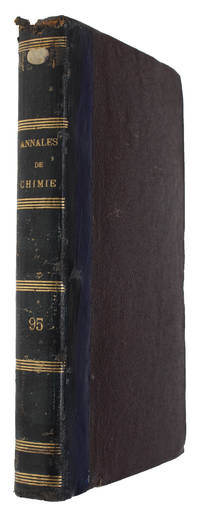
1848ref. 44100Leipzig Johann Ambrosius Barth 1848. Without wrappers. In "Annalen der Physik und Chemie. Hrsg. von J.C. Poggendorff" Ergänzungsbd. Bd. II Stück 2. Titlepage to Erg-Bd. 2. Pp. 193-368. The entire issue offered. Fresnel's papers: pp. 304-331 textillustr. a. pp. 332-355 textillustr. A stamp on titlepage and verso of. Clean and fine. First German editions of two importent memoirs on polarization and reflexion of light by "the founder of the new optics". The French versions of the papers appeared in "Annales de Chimie et de Physique"1846.The first paper takes on a central role in Fresnel's dealing with polarization in general and specially with chromatioc polarization and the explaining the phenomena that arises when light travels through crystals. The paper was read at the Academy on march 30 was not printed at the time as it disappeared and only turned up many years later around 1845 when it was found in the papers of Fresnel's brother. "On croyait ou Mémoire perdu. Il a été retrouvé dans les papiers de M. Léonor Fresnel frère de l'illustre académicien." Thus the offered paper is here PRINTED FOR THE FIRST TIME AND IN ITS FULL LENGHT in the German version.The second paper deals with reflection and explains the different phenomena seen when light is reflected from glassplates having two surfaces parallel or with curvature interference of reflected waves and the measure of their different wavelenghts all explained according to the wave theory of light. The paper offered is for the FIRST TIME PRINTED IN ITS FULL LENGHT in the German version as it only appeared in the résumé-form in 1820 "Résumé d'un Mémoire sur la Réflexion de la lumière" Annales de Chimie et de Physique tome 15 pp. 379-386."As it was Fresnel succeeded fully in attaining his explicit goal the establishment of the wave conception of light. Not long after his death scientific opinion definitely shiftedin favor of waves and opened up the pathway leading to the deeper insight of Maxwell. In broad context Fresnel's work can be viewed as the first successfull assault on the theory of imponderables and a major influence on the development of nineteenth-centurty energetics." DSB V p. 171. unknown
1833ref. 43919Leipzig Joh. Ambrosius Barth 1833. Contemp. hcalf. Spine gilt. Very light wear to spine ends and edges. In: "Annalen der Physik und Chemie. Hrsg.von Poggendorff" Jahrgang 1833 Bd. 30 Ergäntzungsheft. 376 pp. a. 2 folded engraved plates. 2 small stamps to p.1 and a small stamp to verso of plates. Entire volume offered. Fresnel's papers: pp. 100-255 a. pp. 255-261. Clean and fine. First German edition of Fresnel's epoch-making memoir from the French Academy 1826 and incorporating his experimental results from the years 1815-19 in which he for the first time explained the causes of the diffraction effects as the mutual interference of the secondary waves emitted by those portions of the original wave-front which have not been obstructed by the diffraction screen. His methods of calculation utilized the principles of both Huygens and Young and he summed the effects due to different portions of the same primary wave-front. He demonstrates that the transverse wave theory of light explains the observed phenomena of reflection refraction interference polarization difraction patterns diffraction fringes etc. making a strong case for the theory of the transverse nature of light waves. The memoir records also Fresnel's famous mirror-experiment."In broad contect Fresnel's work can be viewed as the first successfull assault on the theory of imponderables and a major influence on the development of nineteenth-centurty energetics." DSB V p. 171."Augustin Fresnel seems to have adopted a wave theory of light from the very beginning of his studies. His first paper presented to the Academy.in October 1815 and entitled "La Diffraction de la Lumiere" the paper offered was written after a long correspondance with Arago who had promised Fresnel his full support. "The wave theory" Fresnel wrote "is well suited to explaining the complicated propagation of light phenomena and since as we know from the case of sound waves can surcomvent obstacles I decided to make a study of shadows.It is because they cross in regions common to them both that two pencils of rays can produce fringes. hence it follows that the vibrations of rays which cross at very small angles can cancel out whenever crests of one correspond to the throughs of the other."The voume contains further a notable paper by AMPÈRE "Bestimmung der krummen Fläche der Lichtswellen in einem Mittel dessen Elasticität verschieden ist nach den drei Hauptrichtungen d.h. nach debjenigen in welchem die von der Elasticität erregte Kraft in desselben Richtung wirkt in der die Theilchen dieses Mittels verschoben wurden." First German edition. Pp. 262-295. unknown
1871ref. 43538Leipzig Johann Ambrosius Barth 1871. Without wrappers as issued in "Annalen der Physik und Chemie. Hrsg. von J.C. Poggendorff" 142. Bd. 1. issue "Heft" No 1 1871. Titlepage to vol. 142. Titlepage with small stamps on verso Pp. 1-176 a. 4 folded engraved plates entire issue offered. Kundt's paper: pp. 163-171. First printing of this importent paper on the theory of dispersion. "The theory of the dispersion of light was given its modern form when F.P. Leroux found that a prism filled with iodine vapour refracts the red rays to a greater extent than it refracts the blue 1862 and when Kundt 1871 - in the paper offered - showed the connection between this phenomenon and absorption: in the neighbourhood of an absorption band the refractive index undergoes considerable variations.the mechanical theory - which had already been suspected by Maxwell in 1869 - was perfected by Helmholtz in 1875; three years later H.A. Lorentz translated the results into electromagnetic language and so independently did Helmholtz in 1892." Taton in "History of Science in the 19th Century" p. 221 - In 1888 Kundt succeeded Helmholtz at Berlin.Magie "A Source Book in Physics" pp. 382 ff. unknown
1867ref. 43497Leipzig Johann Ambrosius Barth 1867. Contemp. hcalf raised bands gilt spine with gilt lettering. A few scratches to binding. In "Annalen der Physik und Chemie. Hrsg.von Poggendorff" Bd. 99. Entire volume offered. 2X652 pp. and 4 folded engraved plates. Weber & Kohlrausch's paper:pp. 10-25. First appearance of this importent paper the results of which Maxwell later used as a crucial support for his electromagnetical theory of light.".The velocity of light c were measured by W. Weber and R. Kohlrausch in 1855 the paper offered. They used an electrometer to determine the charge of a condnsor in electrostatic units and a ballistic galvanometer to measure the same charge in electrodynamic units. The resulting value for c was in good agreement with that obtained by Fizeau in 1849 and Maxwell accordingly felt entitled to identify light and electromagnetic vibrations. This conclusion recalls Newton's identification of gravity with universal attraction: it was not only because they obeyed the same formal law but also because both led to the same mathematical results that Newton saw fit to combine them."Taton Réne in "History of Sciencein The Nineteenth Century" p. 163. hardcover
1811ref. 44092Leipzig Johann Ambrosius Barth 1811. Without wrappers. In: "Annalen der Physik. Hrsg. Ludwig Wilhelm Gilbert" Bd. 39 der Reihe Eilftes u. Zwölftes Stück. Titlepage to vol. 39. Pp. 129-244 a. 2 engraved plates. The entire issue offered. Young's papers: pp. 156-205 a. pp. 206-220. And pp. 245-360 a. 2 engraved plates. The entire issue offered. Young's papers: pp. 255-261 a. pp. 262-290. First appearance in German of Youngs 3 groundbreaking papers On the Theory of Light and Colours 1802 - An account of some Cases of the Production of Colours not hitherto described 1802 - The Bakerian Lecture. Experiments and Calculations relative to physical Optics. 1804 - which gives the first really convincing evidence that the fringes are produced by interference of light waves and giving the experimental demonstrations of the general law of Interference.These importent demonstrations served as the experimental basis for the wave hypothesis of light. - In his two first papers "On the Theory of Light and Colours" 1802 and "An account of Some Cases of the Production of Colours not hitherto described" 1802 - he only partially announced his principle of Interference and the statement of it in "An Account." was entirely hypothetical and not experimental. Magie. Source Book in Physics gives extracts of this paper and a later paper under the head: Discovery of the interference of light pp.308-15.Young also shows here that diffraction effects can be explained by the interference law."The experimental basis for the wave hypothesis of light as Young formulated it was interference. The fact has already been observed that two trauins of water waves may be so superposed that in certain regions the throughs of one train will lie continuously on the crests of another thereby producing zero disturbance.Destryctive interference is said to occur between the two trains of waves in the former case and constructivee interference in lthe latter. Similarly two sound waves may be so combined as to produce alternate regions of silence and enhanced sound. The phenomenon of interference of which the forgoing are familiar examples is easely comprehensible in the case of combining waves but would be utterly incomprehensible in the case of combining streams of particles. So when Young demonstrated that two beams of light could under properly controlled conditions be made to combine in such a way as to produce alternate regions of darkness and light he was rightly considered to have identified in light a characteristic property of waves." Lloyd Taylor in: Physics. The Pioneer Science. p. 511.Of the three papers published in the years 1802-04 the last is the most importent as it gives the experimental demonstrations of the interference of light. Dibner in Heralds of Science No. 151 list the first paper so does PMM: 259. unknown