Le CorbusierABAA
1.129 resultados
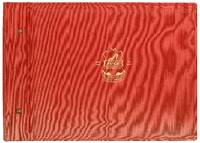
1958ref. 423035Svit Gottwaldov: Nositel Radu Prace The Svit Company in Gottwaldov The Order of Work 1958. Hardcover. Very Good. Oblong folio measuring 15" x 11". Screw-bound red cloth over still paper boards with gilt decorations. Contains 30 color or black and white gelatin silver photographs measuring around 7" x 9" with captions in Czech mounted in a custom album. Slight bowing on the boards and some fading thus very good with fine photographs. Superb propaganda photography album issued by the state-owned Svit shoe company which had seized the assets of the world-famous Bata company in the Le Corbusier-designed city of Zlin Czechoslovakia later renamed Gottwaldov after the first Communist president of the country Klement Gottwald. A handwritten dedication starts the album and presents it to the workers of the Svit factory to celebrate their productivity. The photographs that follow are professional images showing workers in the factory as well as the city itself each with a printed caption. Besides working people are seen walking through the city tending their gardens and swimming in the local pool. School children are also photographed playing outside and at a puppet show. A fascinating album with striking images documenting the wonders of the Le Corbusier-designed modern communist city. Nositel Radu Prace [The Svit Company in Gottwaldov, The Order of Work] hardcover books
1962ref. 4566Genève, aux Editions Forces-Vives, [1962].
1931ref. 1712031931. LE CORBUSIER. Salubra Colour Keyboards. Loose introductory text leaf in English 62 single-page monochrome wallpaper samples and 12 pages of "Clavier de Couleurs" each with 28 colour samples and 2 cardboard screens in the pocket. Oblong folio 285 x 220 mm. bound in original publisher's boards in a new cloth folding box. Basel: Salubra 1931. Incredibly rare first edition of Le Corbusier's legendary Farbenklaviatur. Le Corbusier first sketched the premises of a logically structured system for color design in the magazine l'Esprit nouveau in 1921. In 1931 he published the first of the two collections of colours which he designed for the Salubra wallpaper company. In his own words "These Keyboards of Colour aim at stimulating personal selection by placing the task of choosing on a sound systematic basis. In my opinion they offer a method of approach which is accurate and effective one which makes it possible to plan in the modern home colour harmonies which are definitely architectural and yet suited to the natural taste and needs of the individual." In this first collection he organized the tones on 12 sample cards in such a manner that one could use a slider to isolate or combine different sets of three to five colours. Each of these cards contained a different chromatic atmosphere intended to produce a particular spatial effect. Thus Le Corbusier not only created a useful tool but also a kind of testament to the purist theory of colour. First three wallpaper samples with some minor chipping but otherwise a remarkably well-preserved copy of what was a working tool of which almost no copies have survived. hardcover
1931ref. 1712031931. LE CORBUSIER. Salubra Colour Keyboards. Loose introductory text leaf in English 62 single-page monochrome wallpaper samples and 12 pages of "Clavier de Couleurs" each with 28 colour samples and 2 cardboard screens in the pocket. Oblong folio 285 x 220 mm. bound in original publisher's boards in a new cloth folding box. Basel: Salubra 1931. Incredibly rare first edition of Le Corbusier's legendary Farbenklaviatur. Le Corbusier first sketched the premises of a logically structured system for color design in the magazine l'Esprit nouveau in 1921. In 1931 he published the first of the two collections of colours which he designed for the Salubra wallpaper company. In his own words "These Keyboards of Colour aim at stimulating personal selection by placing the task of choosing on a sound systematic basis. In my opinion they offer a method of approach which is accurate and effective one which makes it possible to plan in the modern home colour harmonies which are definitely architectural and yet suited to the natural taste and needs of the individual." In this first collection he organized the tones on 12 sample cards in such a manner that one could use a slider to isolate or combine different sets of three to five colours. Each of these cards contained a different chromatic atmosphere intended to produce a particular spatial effect. Thus Le Corbusier not only created a useful tool but also a kind of testament to the purist theory of colour. First three wallpaper samples with some minor chipping but otherwise a remarkably well-preserved copy of what was a working tool of which almost no copies have survived. hardcover books