Société de gens de lettres, Théatres de Paris - Albert Blanquet;Édouard Duprez;Louis Judicis;Eugène Moreau;Max Rével;Livre Rare Book

1594 risultati
rif. 10134Paris : administration, rue de Lancry, (1854,) 2 vol.reliés en un fort volume in-4: Les Théâtres de Paris: Cinquante notices et portraits ht en lithographie en noir à fond teinté,sous serpente,avec notice imprimée par volume,soit 100 illustrations en lithographie à fond teinté ,ht .Les Folies-nouvelles. 1 vol. ; La Porte-Saint-Martin. 1 vol.100 signed sketches, each with separate pagination and portrait. Description: 2 volumes : color portraits ; 27 cm
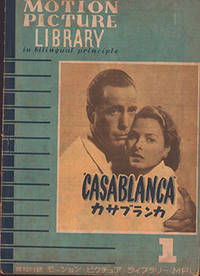
rif. 51-7274Tokyo: Shinsei Katsusha June 1946. Original pictorial wraps. 18.2 x 25.8cm. 60pp.The Motion Picture Library was a pioneering bilingual film publication launched in Tokyo in post-WWII Japan 1946-1948. Aimed at bridging American pop culture and Japanese audiences it printed full English scripts actor profiles and bilingual synopses of imports like Casablanca. The emergence of these bilingual or heavily translated film resources during the mid-1940s marked a dramatic cultural shift. Following wartime censorship and the total ban of foreign films the sudden influx of Hollywood movies under the Supreme Commander for the Allied Powers SCAP created a boom in cine-literacy. .“MÅshon pikuchÄ raiburarÄ«” wa dainijisekaitaisengo no Nihon 1946-nen 〜 1948-nen ni oite TÅkyÅ de sÅkan sa reta senku-tekina bairingaru eiga shuppan-monodeatta. Amerika no poppukaruchÄ to Nihon no kankyaku to no kakehashi to naru koto o mezashi dÅshi wa “Kasaburanka” nado no yunyū eiga ni tsuite kanzen'na eigo kyakuhon haiyū no purofīru soshite nichiei taiyaku no arasuji o keisai shite ita. 1940-Nendai nakaba ni okeru kÅshita bairingaru aruiwa Åhabana hon'yaku o hodokoshita eiga kanren shiryÅ no tÅjÅ wa gekitekina bunka-teki tenkan o shÅchÅ suru monodeatta. Senji-chū no ken'etsu ya gaikoku eiga no zenmen kinshi o hete rengÅ-koku saikÅ shirei-kan sÅ shirei-bu SCAP no tÅchi-ka de Hariuddo eiga ga totsujotoshite tairyÅ ni ryūnyū shita koto wa eiga riterashī eiga o yomitoku chikara e no kanshin o ikkini takameru būmu o makiokoshita nodearu.『モーション・ピクãƒãƒ£ãƒ¼ãƒ»ãƒ©ã‚¤ãƒ–ラリーã€ã¯ã€ç¬¬äºŒæ¬¡ä¸–界大戦後ã®æ—¥æœ¬ï¼ˆ1946年〜1948年)ã«ãŠã„ã¦ã€æ±äº¬ã§å‰µåˆŠã•ã‚ŒãŸå…ˆé§†çš„ãªãƒã‚¤ãƒªãƒ³ã‚¬ãƒ«æ˜ 画出版物ã§ã‚ã£ãŸã€‚アメリカã®ãƒãƒƒãƒ—カルãƒãƒ£ãƒ¼ã¨æ—¥æœ¬ã®è¦³å®¢ã¨ã®æž¶ã‘æ©‹ã¨ãªã‚‹ã“ã¨ã‚’目指ã—ã€åŒèªŒã¯ã€Žã‚«ã‚µãƒ–ランカã€ãªã©ã®è¼¸å…¥æ˜ ç”»ã«ã¤ã„ã¦ã€å®Œå…¨ãªè‹±èªžè„šæœ¬ã€ä¿³å„ªã®ãƒ—ãƒãƒ•ã‚£ãƒ¼ãƒ«ã€ãã—ã¦æ—¥è‹±å¯¾è¨³ã®ã‚らã™ã˜ã‚’掲載ã—ã¦ã„ãŸã€‚1940年代åŠã°ã«ãŠã‘ã‚‹ã€ã“ã†ã—ãŸãƒã‚¤ãƒªãƒ³ã‚¬ãƒ«ã‚ã‚‹ã„ã¯å¤§å¹…ãªç¿»è¨³ã‚’æ–½ã—ãŸæ˜ 画関連資料ã®ç™»å ´ã¯ã€åŠ‡çš„ãªæ–‡åŒ–的転æ›ã‚’象徴ã™ã‚‹ã‚‚ã®ã§ã‚ã£ãŸã€‚戦時ä¸ã®æ¤œé–²ã‚„å¤–å›½æ˜ ç”»ã®å…¨é¢ç¦æ¢ã‚’経ã¦ã€é€£åˆå›½æœ€é«˜å¸ä»¤å®˜ç·å¸ä»¤éƒ¨ï¼ˆSCAP)ã®çµ±æ²»ä¸‹ã§ãƒãƒªã‚¦ãƒƒãƒ‰æ˜ ç”»ãŒçªå¦‚ã¨ã—ã¦å¤§é‡ã«æµå…¥ã—ãŸã“ã¨ã¯ã€æ˜ ç”»ãƒªãƒ†ãƒ©ã‚·ãƒ¼ï¼ˆæ˜ ç”»ã‚’èªã¿è§£ã力)ã¸ã®é–¢å¿ƒã‚’一気ã«é«˜ã‚るブームを巻ãèµ·ã“ã—ãŸã®ã§ã‚る。. Tokyo: Shinsei Katsusha , June, 1946 paperback
1877rif. 0011261877 Lyon, N. Scheuring, 1877. In-8 (150 X 217 mm) demi-maroquin rouge à coins, dos cinq nerfs filetés, titre doré, caissons richement ornés, date en queue, tête dorée, double filet doré sur les plats (reliure de l'époque) ; VIII-384 pages.
rif. AQ22324Newcastle: W. Fordyce Printer s.d. c. 1820s Single leaf broadside edges uncut. A trifle creased and browned. An apparently unrecorded late Georgian playbill advertising three evenings of entertainment provided by a travelling troupe of actors in or around Newcastle including a performance of Church of Scotland minister John Home's 1722-1808 drama in blank verse Douglas. The play first performed in Edinburgh on 14th December 1756 found overwhelming approval with the general public despite having been rejected in London by actor and theatre manager David Garrick over concerns of taste. Not all found fault however Scottish philosopher David Hume said of Home; 'you possess the true theatric genius of Shakespeare and Otway refined from the unhappy barbarism of the one and the licentiousness of the other'. . Dimensions 150 x 230 mm. W. Fordyce, Printer, [s.d., c. 1820s] unknown
rif. 21935Oblong 8 x 10 photograph GREAT CONDITION SIGNATURES GUARANTEED AUTHENTIC. Signed by Author. Unbound.
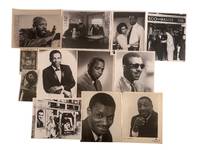
1940rif. 225431940. Archive of African American entertainer photographs circa 1940s to 1970s documents the publicity performance and social spaces through which Black artists gained national visibility across film soul music jazz theater nightclub entertainment and stand-up comedy. Identified subjects include Isaac Hayes Harry Belafonte Sidney Poitier Dick Gregory Moses Gunn and John Marriott performers whose careers collectively illuminate the expanding but still restricted opportunities available to African Americans in twentieth-century entertainment. The group moves between controlled studio portraits motion-picture stills live-performance images and candid street photography showing how Black public identity was constructed both through commercial publicity and within community institutions. The survival of agency stamps press captions credits and editorial crop marks further documents how such photographs circulated through newspapers magazines studios and publicity departments; comparable institutional collections preserve these markings as evidence of publication and public-relations use. Twelve original silver gelatin photographs and halftone publicity prints circa 1940s to 1970s in various sizes the majority approximately 8 by 10 inches. Several bear photographer or agency stamps typed press captions printed credits or editorial markings on the versos or margins. Principal images include a tightly cropped portrait of Isaac Hayes with a caption identifying him as "composer singer actor black Moses of soul"; a film still of Harry Belafonte in a tense scene from the 1959 noir Odds Against Tomorrow; and Sidney Poitier embracing Barbara McNair in They Call Me Mister Tibbs! released in 1970. AFI records Belafonte's film as a November 1959 drama and Poitier's sequel as a July 1970 release filmed in San Francisco and Los Angeles. Additional portraits show comedian and civil-rights activist Dick Gregory; stage and screen actor Moses Gunn associated with the Negro Ensemble Company and Shaft; and veteran actor John Marriott. The unidentified material broadens the archive beyond established celebrity: a tuxedoed singer poses in a nightclub or theatrical setting; a well-dressed man stands before a facade displaying posters for entertainers identified as Kit Kara and Rio; two men shake hands beneath the marquee of Harlem's Savoy Ballroom; and smaller prints show a saxophonist performing and an image of a lobby card advertising comedian "Hot Ashes." The Savoy image is especially significant as a street-level record of a Harlem venue closely associated with Black social dance and jazz performance. Together the photographs trace several routes through which African American performers entered public view: Hayes through the assertive visual language of 1970s soul; Belafonte and Poitier through films that placed Black actors within politically charged dramatic narratives; Gregory through the union of comedy and civil-rights activism; and Gunn and Marriott through sustained stage and character work. The unidentified singer saxophonist theater facade and Savoy Ballroom scene preserve the broader entertainment culture surrounding nationally recognized artists preventing the archive from reducing Black performance history to celebrity alone. Light handling wear scattered corner creases and press crop marks; captions stamps credits and principal images remain legible and well preserved. Very good. A varied visual record connecting African American celebrity publicity with the theaters clubs films and performance networks that sustained Black entertainment across four decades. unknown
1940rif. 225431940. Archive of African American entertainer photographs circa 1940s to 1970s documents the publicity performance and social spaces through which Black artists gained national visibility across film soul music jazz theater nightclub entertainment and stand-up comedy. Identified subjects include Isaac Hayes Harry Belafonte Sidney Poitier Dick Gregory Moses Gunn and John Marriott performers whose careers collectively illuminate the expanding but still restricted opportunities available to African Americans in twentieth-century entertainment. The group moves between controlled studio portraits motion-picture stills live-performance images and candid street photography showing how Black public identity was constructed both through commercial publicity and within community institutions. The survival of agency stamps press captions credits and editorial crop marks further documents how such photographs circulated through newspapers magazines studios and publicity departments; comparable institutional collections preserve these markings as evidence of publication and public-relations use. Twelve original silver gelatin photographs and halftone publicity prints circa 1940s to 1970s in various sizes the majority approximately 8 by 10 inches. Several bear photographer or agency stamps typed press captions printed credits or editorial markings on the versos or margins. Principal images include a tightly cropped portrait of Isaac Hayes with a caption identifying him as "composer singer actor black Moses of soul"; a film still of Harry Belafonte in a tense scene from the 1959 noir Odds Against Tomorrow; and Sidney Poitier embracing Barbara McNair in They Call Me Mister Tibbs! released in 1970. AFI records Belafonte's film as a November 1959 drama and Poitier's sequel as a July 1970 release filmed in San Francisco and Los Angeles. Additional portraits show comedian and civil-rights activist Dick Gregory; stage and screen actor Moses Gunn associated with the Negro Ensemble Company and Shaft; and veteran actor John Marriott. The unidentified material broadens the archive beyond established celebrity: a tuxedoed singer poses in a nightclub or theatrical setting; a well-dressed man stands before a facade displaying posters for entertainers identified as Kit Kara and Rio; two men shake hands beneath the marquee of Harlem's Savoy Ballroom; and smaller prints show a saxophonist performing and an image of a lobby card advertising comedian "Hot Ashes." The Savoy image is especially significant as a street-level record of a Harlem venue closely associated with Black social dance and jazz performance. Together the photographs trace several routes through which African American performers entered public view: Hayes through the assertive visual language of 1970s soul; Belafonte and Poitier through films that placed Black actors within politically charged dramatic narratives; Gregory through the union of comedy and civil-rights activism; and Gunn and Marriott through sustained stage and character work. The unidentified singer saxophonist theater facade and Savoy Ballroom scene preserve the broader entertainment culture surrounding nationally recognized artists preventing the archive from reducing Black performance history to celebrity alone. Light handling wear scattered corner creases and press crop marks; captions stamps credits and principal images remain legible and well preserved. Very good. A varied visual record connecting African American celebrity publicity with the theaters clubs films and performance networks that sustained Black entertainment across four decades. unknown books
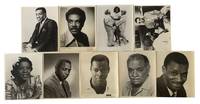
1960rif. 224801960. African America Film and Entertainment Photo Archive of Black Entertainers Musicians Actors & Comedy Figures 1950s-1970s including Otis Redding Dinah Washington and Brock Peters. An archive of 9 original gelatin silver and glossy studio prints black and white measuring 10" x 8". Produced for press and promotional use in the United States during the mid 20th century. This archive comprises promotional portraits of major and lesser known Black entertainers. Multiple framed headshots feature blues and soul music legends Otis Redding and Dinah Washington as well as veteran character actors Brock Peters Moses Gunn John Marriott Thomas Anderson and gospel composer Howard A. Roberts. Additional images include a staged comedy scene produced by Laff Records featuring two older Black men in comedic poses surrounding a man in drag and a candid interview style photo of an unidentified Black entertainer at a desk with rotary telephone. Otis Redding and Dinah Washington headshots capture their poised midcentury publicity style: Washington smiles hair pinned with flower and pearls exuding jazz elegance; Redding presents a three quarter confident gaze in a dark suit. Otis Redding and Dinah Washington were among the most influential African American vocalists of the mid-20th century each achieving extraordinary success in a tragically abbreviated career. Redding hailed as the "King of Soul" became a defining figure of Southern soul with hits like "These Arms of Mine" and "Sittin' On The Dock of the Bay" the latter recorded just days before his death in a 1967 plane crash at the age of 26. His electrifying performance at the Monterey Pop Festival expanded his appeal beyond Black audiences and cemented his place in American music history. Washington known as the "Queen of the Blues" and "Queen of the Jukeboxes" crossed genres from gospel to jazz to pop with chart-topping hits in the 1950s earning a Grammy Award and influencing generations of vocalists with her dramatic phrasing and interpretive command. She died of an accidental overdose in 1963 at just 39 years old. Though their styles differed-Redding's raw emotive soul contrasting with Washington's polished versatility-their shared legacies lie in the groundbreaking commercial and artistic success they achieved in a racially segregated industry and in the profound cultural loss their premature deaths represented. The archive also includes studio portraits of lesser-known but notable Black figures: Brock Peters who achieved both stage and screen fame including pivotal roles addressing race in American culture; Moses Gunn a prominent character actor and Shakespearean performer; John Marriott and Thomas Anderson performers whose careers bridged regional theatre and early television. These studio shots display Peters with contemplative expression; Gunn looking directly toward the camera with intensity; Roberts identified by "Howard Roberts" printed beneath his image alongside performing arts agency credit; Thomas Anderson and John Marriott similarly styled in classic studio poses. The Laff Records comedic photograph shows two older men flanking a man in drag. Laff Records was an LA-based imprint which produced raunchy comedy records by Black comic icons such as Richard Pryor and Redd Foxx and was a vital platform which elevated subversive Black expression in a time of segregation and censorship. The final print shows a Black man at a desk holding a telephone receiver-a press snapshot suggestive of an interview or managerial context. Minor toning to margins on two prints; small creases at corners of three; image clarity remains strong; agency or studio credits legible. Overall very good condition. unknown
1960rif. 224801960. African America Film and Entertainment Photo Archive of Black Entertainers Musicians Actors & Comedy Figures 1950s-1970s including Otis Redding Dinah Washington and Brock Peters. An archive of 9 original gelatin silver and glossy studio prints black and white measuring 10" x 8". Produced for press and promotional use in the United States during the mid 20th century. This archive comprises promotional portraits of major and lesser known Black entertainers. Multiple framed headshots feature blues and soul music legends Otis Redding and Dinah Washington as well as veteran character actors Brock Peters Moses Gunn John Marriott Thomas Anderson and gospel composer Howard A. Roberts. Additional images include a staged comedy scene produced by Laff Records featuring two older Black men in comedic poses surrounding a man in drag and a candid interview style photo of an unidentified Black entertainer at a desk with rotary telephone. Otis Redding and Dinah Washington headshots capture their poised midcentury publicity style: Washington smiles hair pinned with flower and pearls exuding jazz elegance; Redding presents a three quarter confident gaze in a dark suit. Otis Redding and Dinah Washington were among the most influential African American vocalists of the mid-20th century each achieving extraordinary success in a tragically abbreviated career. Redding hailed as the "King of Soul" became a defining figure of Southern soul with hits like "These Arms of Mine" and "Sittin' On The Dock of the Bay" the latter recorded just days before his death in a 1967 plane crash at the age of 26. His electrifying performance at the Monterey Pop Festival expanded his appeal beyond Black audiences and cemented his place in American music history. Washington known as the "Queen of the Blues" and "Queen of the Jukeboxes" crossed genres from gospel to jazz to pop with chart-topping hits in the 1950s earning a Grammy Award and influencing generations of vocalists with her dramatic phrasing and interpretive command. She died of an accidental overdose in 1963 at just 39 years old. Though their styles differed-Redding's raw emotive soul contrasting with Washington's polished versatility-their shared legacies lie in the groundbreaking commercial and artistic success they achieved in a racially segregated industry and in the profound cultural loss their premature deaths represented. The archive also includes studio portraits of lesser-known but notable Black figures: Brock Peters who achieved both stage and screen fame including pivotal roles addressing race in American culture; Moses Gunn a prominent character actor and Shakespearean performer; John Marriott and Thomas Anderson performers whose careers bridged regional theatre and early television. These studio shots display Peters with contemplative expression; Gunn looking directly toward the camera with intensity; Roberts identified by "Howard Roberts" printed beneath his image alongside performing arts agency credit; Thomas Anderson and John Marriott similarly styled in classic studio poses. The Laff Records comedic photograph shows two older men flanking a man in drag. Laff Records was an LA-based imprint which produced raunchy comedy records by Black comic icons such as Richard Pryor and Redd Foxx and was a vital platform which elevated subversive Black expression in a time of segregation and censorship. The final print shows a Black man at a desk holding a telephone receiver-a press snapshot suggestive of an interview or managerial context. Minor toning to margins on two prints; small creases at corners of three; image clarity remains strong; agency or studio credits legible. Overall very good condition. unknown books
18352 vols., 8vo., First Edition, with engraved portrait frontispiece (mildly age-soiled), some very light and inoffensive age-staining to text, neat pencilled nineteenth-century inscription of half-title of second volume; attractively bound in contemporary half calf, coarse-grain cloth sides ruled in gilt, backs with five raised bands, second and third compartments lettered and ruled in gilt, all other compartments framed and tooled in gilt, gilt edges, marbled endpapers, a very good, bright, crisp copy in wholly unrestored period binding. The UK edition is much scarcer than its US counterpart published in the same year, particularly as two volumes as originally issued. Kean died in 1833.
2005rif. C92639London 2005. Very Good. Dimensions 155mm x 220mm. Daler à Rowney sketchbook: black boards with plain pages. Signatures clearly written in medium gauge felt pen one per page. Detailed notes on each artist where and when the signature was collected written in pencil verso. From the collection of the great collector of autographs signed books and signed photos Clive Bullimore.London based ex stockbroker who spent his retirement assiduously collecting autographs. Signatures dated 2005; pencil notes indicate 2017. Signatures: Simon Napier à Bell Judy Carmichael Curtis Fuller Cedric Kyles Sandy Shaw Sandra Bullock Barb Jungr Stephen Fretwell Bjork Josh Rouse Captain Sensible Howard Marks dick Taylor Pretty Things Andy Bey Moby with cartoon drawing Leo Sayer Nik Kershaw Graham Gouldman 10cc Jacki Graham Natalie Imbruglia Elle Macpherson Elizabeth Hurley David mcAlmont Christopher Eccleston Philip Pullman Merrill Osmond Osmonds Anne Kirkbride Karen England and Rebecca Knight Opera Babes G4 Male voice Group Keedie Russell Watson Aled Jones Emma Johnson China Forbes Pink Martini Charlie Dore Ozzy Osbourne Anthony Head Claire Bloom Kim Wilde Mary Gauthier The Bees Olivia Newton John Ken Foree David Carradine Julian Clary Corinne Drury Swing Out Sister Madeline Peyroux Bonnie Bramlett Tony Joe White Brenda Blethyn Sidney Pollack Nichole Kidman Cowboy Jack Clement Richard Briers Play Emiliana Torrini Procol Harum Albert Hammond Squeeze Chris Difford Doves Teenage Fanclub Estelle Idle Wild Scottish rock band. The album could profitably be split up but it is an atractive collectable item as it is. Each autograph on one side only of a separate page 8 by 6 inches. Very good indeed. Very slight lean. hardcover
1993rif. 309442NY: DC COMICS. Fine with no dust jacket. 1993. First Edition; First Printing. Paperback. First edition. SIGNED in silver ink on front cover next to their portraits by actors Walter Koenig Mr. Chekov and by James Doohan 'Scotty'. Fine in stapled pictorial printed wrappers. 10" X 6 3/4"; 10" x 6 3/4"; Signed by Actor . DC COMICS. paperback
2003rif. C93110London 2003. Very Good. Dimensions 155mm x 220mm. Daler à Rowney sketchbook: black boards with plain pages. Signatures clearly written in medium gauge felt pen one per page. Detailed notes on each artist where and when the signature was collected written in pencil verso. From the collection of the great collector of autographs signed books and signed photos Clive Bullimore. London based ex-stockbroker who spent his retirement assiduously collecting autographs. Signatures dated 2003; pencil notes indicate 2017. Signatures: Pink Rancid Kim Fowley Patsy KensitAlan Rickman Paul Darrow Patricia Merrick David Bailey David Jackson Mike and the Mechanics Mike Rutherford ex-Genesis/ Paul Carrack Japan David Sylvian Terry Malloy Wendy Padbury Bernard Hoestall Christopher Cazenove Haley Westenra Ron Carter Travis Fran Healy/ Neil Primrose/ Andy Dunlot/ Dougie Payne Dave Allen Alan Bennett Lord Montague Lawrence Makoare David Naughton Jonathan Hardy Rene Auberjondis Corey Feldman George Takei Robson Davies Dinsdale Landen Nicholas Parsons oh Sophie Aldred Bee Gees Robin Gibb John Mills Hunter Davis Douglas Hurd Gordon Ramsey Sheryl Crow John Challis Richard Briers Backstreet Boys Kevin Richardson Frances Rattelle Anita Dobson Ruthie Henshall Miss Dynamite Richard Gere Emma Thompson Laura Linney Kelis Giorgio Armani Tim Krabbe Michael Madsen Jono Kassir Jerry Hardin Robin CurtisReggie Bannister Penny Lancaster Mylene Klaas Stiff Little Fingers Jake Burns Beautiful South Paul Heaton Dave Rothery Alison Wheeler Dave Hemingway Deborah Watling. The album could profitably be split up but it is an atractive collectable item as it is. Each autograph on one side only of a separate page 8 by 6 inches Very good indeed. hardcover
1977rif. AMO-2072François Truffaut / Charles Denner etc. Néstor Almendros (photographe). PHOTOGRAPHIES / L'HOMME QUI AIMAIT LES FEMMES. Ensemble de 15 tirages argentiques 25,3 x 20,2 cm noir et blanc. Papier Kodak. Tirages de l'époque, photos de presse non tamponnées au verso. Cote manuscrite au stylo au verso pour chaque photo (une seule photo n'est pas cotée). Excellent état (photographies très peu ou pas manipulées restées jusque là sous enveloppe). ON JOINT : 1 tirage identique avec annotations de tirage au verso. ON JOINT : Jeu B - 12 photos couleurs d'exploitation 27 x 21 cm, sous enveloppe. Complet. Excellent état, pas de trace d'affichage ni trous de punaise. Sortie en salle : 27 avril 1977 Synopsis : Bertrand est autant amoureux des femmes que de l'idée même de la femme. Pour lui, toutes les femmes sont uniques et irremplaçables. Elles sont à la fois l'œuvre de sa vie, son inspiration artistique et la cause de sa mort. Mais si Bertrand est un amoureux insatiable, c'est qu'une profonde blessure est restée en lui. Celle que lui a causé une mère distante et froide, tout d'abord, et dont il ne parviendra jamais à se faire aimer. Et puis celle que lui a infligé Véra en le quittant. Depuis que Véra est partie, Bertrand erre de femme en femme, les collectionnant pour ne pas s'y attacher. Une passion qu'il résume par ces mots : « Les jambes de femmes sont des compas qui arpentent le globe terrestre en tous sens, lui donnant son équilibre et son harmonie. » SUPERBE ENSEMBLE. Autres photos sur demande.
1985rif. 009559Paris Gallimard NRF 1985 In-4 carré Cartonnage toilé et jaquette illustrée de l'éditeur
1930rif. 012910Paris 1930 In-12 agrafé, couverture illustrée
1979rif. AMO-2530Dossier de presse pour le film Série Noire d'Alain Corneau (1979), avec Patrick Dewaere, Marie Trintignant, Myriam Boyer, etc. Photographies argentiques d'époque 24 x 18 cm, certaines avec montages calque en vue des recadrages etc. Affichette de présentation à la presse (couleur), feuillet dactylographié polycopié à destination des journalistes à l'occasion du XXXIIe festival international du film à Cannes (10 au 24 mai 1979), par Alain Corneau, Synopsis du film à destination des journalistes (dactylographié polycopié). Photographe de plateau : Etienne George. « Étienne a su saisir des instants de tournage rares » (Bertrand Tavernier). Ce dossier contient : - 1 affichette de présentation à la presse (en couleurs) imprimée recto/verso. Format 30 x 23 cm. - 1 feuillet polycopié à destination des journalistes pour le festival de Cannes 1979 - 1 synopsis du film polycopié à destination des journalistes - 6 tirages argentiques noir et blanc 24 x 18 cm avec calques de recadrage et indications. - 3 tirages argentiques en couleurs 24 x 18 cm (Patrick Dewaere et Marie Trintignant) - 1 tirage argentique noir et blanc 24 x 18 cm (Alain Corneau seul pendant le tournage) - 1 tirage argentique noir et blanc 24 x 18 cm (Alain Corneau avec P. Dewaere et Bernard Blier) - 7 tirages argentiques noir et blanc 24 x 18 cm (scènes du tournage) - 1 diapositive couleur 24 x 36 mm (Patrick Dewaere tenant le pistolet et tenant en joue la vieille) Franck Poupart (Patrick Dewaere), excentrique et imprévisible représentant de commerce, rêve d'une vie plus aventureuse. Quand sa femme Jeanne (Myriam Boyer) le quitte et qu'il perd son emploi après une nuit en cellule, il saute le pas : avec le soutien des beaux yeux de Mona (Marie Trintignant), une prostituée de 16 ans, il va commettre un crime. Il tue sa tante (qui est aussi sa maquerelle), lui vole ses économies (100 000 francs), et abat sur les lieux du crime un pauvre immigré au chômage, Tikidès, pour faire croire à un cambriolage qui a mal tourné. Mais quand Jeanne revient et que son patron Staplin (Bernard Blier) commence à avoir des soupçons, Franck, de plus en plus fou, se retrouve dans une situation ingérable. Il finira par étrangler sa femme et se faire voler son butin par Staplin. Mais qu'importe, il a eu ce qu'il voulait, une aventure et une femme, Mona. Le désespoir des personnages reste baigné d'une tonalité sarcastique et d'un humour surréaliste. "Difficile de trouver les mots, les phrases exactes pour décrire ce que l'on ressent physiquement après Série noire, tant on en sort épuisé, lessivé... Comme si l'on avait réellement participé à ce qui vient de se passer." (Bertrand Tavernier). Les photos de tournage sont là pour témoigner de ce road movie à la limite du surréalisme. Bel ensemble, peu commun. Important : Nous cédons le support uniquement (objet physique) et en aucun cas les droits de reproductions sur l'ensemble des photographies. La librairie L'amour qui bouquine ne peut être tenue pour responsable de l'usage qui est fait des tirages photographiques vendus. Ces tirages sont tous certifiés originaux d'époque (il ne s'agit pas de retirages modernes).
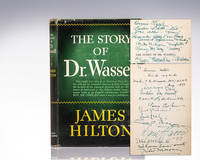
1943rif. 148748Boston: Little Brown and Company 1943. First edition early printing of this biographical narrative based on the real-life heroism of Dr. Corydon M. Wassell basis for the classic film. Octavo original publisher's cloth. Presentation copy inscribed by Dr. Corydon M. Wassell at the top of the front free endpaper "To Lorene Welton. Kind regards. Com dr. C. M. Wassell M.C. U.S.N.R. Aug. 1943." Additionally signed on the front free endpaper and half-title page by his wife Madeline Wassell and the cast of the 1944 film adaptation including director Cecil B. DeMille actors Gary Cooper Laraine Day Carol Thurston Paul Kelly Signe Hasso Elliott Reid Dennis O'Keefe Barbara Britton Renny McEvoy Oliver Thorndike and others. Near fine in a very good price-clipped dust jacket. Jacket design by George F. Kelley. A unique example. The Story of Dr. Wassell by James Hilton is a biographical narrative that recounts the remarkable wartime service of Dr. Corydon M. Wassell a U.S. Navy physician who risked his life to save wounded American sailors during the Japanese invasion of Java in World War II. Hilton presents Wassell as a figure of moral courage and quiet heroism whose actions—defying evacuation orders to ensure the safety of his patients—earned him the Navy Cross and widespread national recognition. The story’s compelling themes of sacrifice and duty were further popularized by Cecil B. DeMille’s 1944 film adaptation starring Gary Cooper which brought Wassell’s exploits to an even broader audience and reinforced his legacy as a symbol of American wartime valor. Little, Brown and Company hardcover
1933rif. 20041933 Edité sous la direction de Jacques de Brunhoff, chez Jules Meynial, Paris , 1933. Grand in-4 broché, 95 pages. 48 iillustrations en noir dans le texte, 32 planches doubles hors-texte, tirées par l'imprimerie Coulouma en héliogravure bistre et noir de Iacovleff, le texte d'Elisséeff (éminent orientaliste)