Rowling, J KBiblio.com

975 results
1998ref. 38962New York New York U.S.A.: Scholastic Press 1998. 1st US . Hardcover. As New/As New. Grandpre Mary. 1st US Larger book fine green cloth spine dark blue boards with diamond pattern bright silver lettering on spine red inside covers and adjacent end papers 341 pages. DJ heavy paper colorful illustration of Harry with phoenix. DJ beneath mylar and book both As New. Scholastic Press hardcover
ref. DADAX0307407098New unknown
ref. DADAX0241347939Fig Tree 0000-00-00. hardcover. New. 6.97x1.10x8.82. Buy with confidence. Excellent Customer Service & Return policy. Fig Tree hardcover
ref. DADAX000649885XNew unknown
1840ref. 9769Harrisburg Pa 1840. Third edition. Small 8vo. 84pp. Quarter calf over marbled boards with rubbing and wear spine faded pages toned and foxed attempted removal of ink writing on front pastedown very good. Early and desirable German-language printing of one of the foundational texts of American folk magic. First published in Pennsylvania in 1820 Hohman's Der Lang Verborgene Freund "The Long-Hidden Friend" became the best-known manual of Pennsylvania Dutch "pow-wow" practice - a uniquely American blend of Christian mysticism folk healing charms protective prayers and practical magic carried into rural German-speaking communities by immigrant traditions. Filled with remedies blessings occult protections and household formulas against illness witchcraft thieves and misfortune the work occupied the fascinating borderland between devotional handbook and grimoire and circulated heavily among everyday practitioners throughout the 19th century. This printing in the original German is especially appealing preserving the linguistic and cultural context from which these traditions emerged before later English-language editions popularized the text for a broader American occult audience. A cornerstone of Pennsylvania Dutch esoterica and among the most influential Christian folk grimoires produced in the United States. . unknown
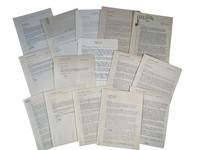
1959ref. 214711959. Gloye Eugene E. Archive of Autograph letters on Magic late 1950s to mid 1960s document the working methods technical experimentation and intellectual framework of a mid twentieth century American magician engaged in both performance and psychological analysis of illusion. Written primarily to fellow magician Don Tanner these letters provide direct evidence of how tricks were conceived refined and communicated within professional networks revealing the intersection of apparatus design sleight of hand and audience perception. Gloye's dual role as performer and psychologist situates the correspondence within broader developments in performance theory and applied psychology supporting research into the history of magic entertainment culture and the study of deception. Eugene Gloye authored 23 magic books including "For Magicians Only" "Fantastic Tricks with Plastic Cups" and "Theatrical Magic" Archive of sixteen letters spanning approximately the late 1950s through the mid 1960s containing detailed discussions of trick construction performance strategy and experimentation with materials and methods.Throughout the letters Gloye discusses numerous tricks he devised or refined often providing detailed explanations of their mechanics and performance nuances. His correspondence reveals a deep engagement with magical apparatus sleight of hand and psychological deception. One of the more detailed discussions in the letters revolves around Gloye's development of Fan-Ta-Cups which evolved from an earlier trick he had devised Fan-Ta-Bill. On September 5 1961 he describes how the trick was born: "I first got the idea for this cup trick about 14 years ago when I was experimenting with a bill trick which I eventually put on the market. The bill trick also uses a celluloid gimmick and was an adaptation of Liquid Appear. Since I thought of the cup trick at the time of my Fan-Ta-Bill I decided it was fitting to call it 'Fan-Ta-Cups.'" He further explains that while the idea had been percolating in his mind for years he hadn't developed a complete routine for it until recently. Inspired by the classic three-shell game he worked out a performance structure that he believed would make it more engaging. In a letter from July 11 1961 Gloye excitedly shares his thoughts on using hollow plastic golf balls for new magic tricks: "I am convinced that this new golf ball will open up many new trick possibilities. The fact that they come in several colors is also interesting." This suggests that Gloye was experimenting with different materials for manipulation tricks possibly related to vanishing or color-changing effects. Gloye also played with magical history concocting a hoax to see how the magic community would react. In the September 5 1961 letter he reveals his plan: "Last December I got an idea for a variation on the Tip-Over Box. It's just a slightly different way of building it. At first I was going to put it in my 'New Look' series but then as we were talking about it I commented that this trick should have been in Hoffmann. This led to the devilish idea of writing it up in Hoffmann style and publishing it in Genii as a lost page from the original book." He notes that Bill Larsen and another friend were in on the plan and they wanted to see if the trick would be accepted as a legitimate discovery. Another standout trick mentioned in the letters is Gloye's adaptation of Billy McComb's routine using a flap slate and a force deck. On January 31 1961 he explains: "My version which I tried for the first time several days ago with huge success uses one deck and a flap slate. The deck is made like a peek deck but with two cards only. All faces are the same and all concealed cards are the same. Cards which audience sees are trimmed and glued at one end to a second group of 26 duplicates." This approach ensured that the spectator would believe they had freely chosen a card when in fact the outcome was predetermined. Gloye describes modifications he made to a Head Chopper Illusion a prop widely used in stage magic in a February 23 1961 letter: "My version does not retain the Chinese theme. My blade is a simple black affair with a couple of brass stripes across it to make it look more solid. I spent a long time trying to figure out a good lock for the blades Abbott's want you to remove a couple of tacks which hold the blade and this is simply not workable. I ultimately did come up with a practical idea only to abandon it in my current routine." He explains that his routine involved swapping out the real blade for a fake setting up a comedic climax where "carrots fly in all directions" as the blade seemingly falls. This archive is a rare window into the intellectual and technical world of a magician who bridged academia and performance. Gloye's detailed notes on illusion mechanics reflections on the state of magic and collaboration with figures like Bill Larsen and Frances Marshall make this a significant collection for magic historians and collectors alike. Produced during a period of active exchange among professional magicians through correspondence and publications such as The Linking Ring these letters document how knowledge circulated within specialized communities and how innovation often emerged through incremental modification of established techniques. Gloye's attention to apparatus construction coded deception and audience management reflects broader mid century interest in performance psychology while his references to collaborators and publication strategies illustrate the role of print culture and informal networks in shaping the field. As a cohesive manuscript archive the letters preserve the technical language and creative process underlying stage magic offering a detailed record of mid twentieth century illusion practice. Light wear and handling consistent with age with legible manuscript throughout; overall condition very good. unknown
ref. DADAX1851587071New unknown
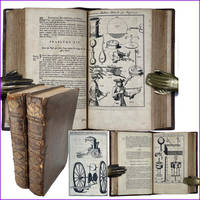
1696ref. 28the forerunner of mathematical recreations and its use in the art of illusionism and magic an early manual for the first "mentalists" Ozanam Jacques. Recreations mathematiques et physiques VOL I. Amsterdam: Gallet 1696. Togheter with Ozanam Jacques. Recreations mathematiques et physiques VOL II. Paris : Jombert 1696. 2 volumes in 8vo 188x120 mm contemporary calf with gilt decorations at spine pp. 16 265 1; 266-583 25 the last is blank. Engraved title-page. Second edition of the forerunner of modern books on mathematical recreations including illusionism mentalism fireworks conjuring sundials and clocks. 84 engraved folding plates 45 first Vol. 39 second that support the solution of mathematical arithmetic geometric optical or cosmographic problems or that visualize the mechanism of a clock. Scarce second edition 1st published in 1694 of the first work on recreational mathematics. This is one of the most popular books on the subject dealing among the other subjects with fireworks conjuring and presenting in vol. 2 a translation of Domenico Martinelli's treatise on clocks printed in Venice in 1663 p. 473 The volumes are divided into 9 topics Vol 1: 1 Arithmetic 2 Geometry 3 Optics 4 Gnomonics and 5 Cosmography. Vol 2 6 Mechanics 7 Pyrotechnics 8 Physics and 9 the translation Martinelli treatise on Watches. For each topic Ozanam presents a series of problems with the various possible solutions described and often illustrated Among the problems of mechanics Ozanam describes and illustrate a form of transport that foreshadows the automobile: behind the driver who holds reins in his hands stands a valet who activates with his feet two spring-loaded boards giving the carriage its impetus playing the role of a modern engine. Most of the chapter about arithmetic is dedicated to the art of illusionism and mathematical games. A long chapter is dedicated to magic squares from pp. 36 on but many are the tricks described always in the form of a problem/solution which today are attributed to a kind of illusionism called mentalism a form of illusionism whose practitioners through techniques such as cold reading or hot reading give the illusion of being able to read others 'minds demonstrating supernatural or at least highly developed mental and intuitive ability. In their performances mentalists give the impression of being able to exercise telepathy clairvoyance divination precognition psychokinesis mediumship mind control hypnosis prodigious memory and rapid mental calculation. Among the games described in the text that can be accounted under this category we remember for example: Problem XII: Thrown two dice how to guess the values on the top two sides without looking at them. Problem XIV: Guessing a number that someone has chosen by asking him questions Problem XVI: Guessing a number someone has chosen without asking them questions problem XX: Guess how many coins a spectator hides in his hands Problem XXVIII: Given three known playing cards and three spectators guess which card each one has chosen. problem XXXI: Among different cards arranged on three decks how to guess which one the spectator has chosen and many others. Jacques Ozanam 1640 - 1718 was a French mathematician. Although his father pushed him toward an ecclesiastical career he was much more attracted by science and mathematics that continued to study as a self-taught. At the age of 15 he was able to write a treatise on mathematics but his father induced him to enroll in courses in theology despite his little inclination for the priestly life. After four years of theological studies his father died and he returned to scientific studies. In 1670 he published trigonometric and logarithmic tables more accurate than the existing Ulacq Pitiscus and Briggs works and numerous and well received mathematical publications. In particular he had great success with Dictionnaire mathématique the five volumes of the Cours de mathématiques and Récréations mathématiques et physiques ; his manuscript entitled Les six livres de l'Arithmétique de Diophante augmentés et reduits à la spécieuse received commendations from Leibnitz himself. Récréations mathématiques et physiques was also successful in the English translation and is still well known and looked after today. He was elected a member of the Académie Royale des Sciences now Académie des Sciences in 1701. The death of his wife plunged him into deep sorrow and the loss of his foreign pupils through the War of the Spanish Succession reduced him to poverty. Conditions: light marks of use at bindng in general very good condotions Provenance: Paper ex-libris pasted at title page of both volumes " Engeg. Gio Battisa Carraca.
1801ref. 306156London: Printed for G. Kearsley Fleet Street; Bell and Bradfute Edinburgh; and Brash and Reid Glasgow by W. Glendinning 1801. First English edition. xix i errata 397 3 publisher's ads pp. 8vo. Contemporary half leather over gray paper-covered boards. Covers worn joints cracked but sewing sound lacking spine label text block roughly trimmed occasional light soiling along lower blank margins. Remnant of contemporary bookplate. In a custom redpaper slipcase and matching chemise. First English edition. xix i errata 397 3 publisher's ads pp. 8vo. The first English edition of this quite unusual and very entertaining compendium of conundrums problems parlor tricks and "interesting facts" - it is actually much more fun than the title would seem to suggest. The first French edition was published in London in 1799 under the title Choix d' amusements physiques et mathématiques. The work includes tricks with cards magic squares magic lanterns feats of artificial memory and proto-spiritualist conjuring through "palingenesy" by which a performer can make the images of the dead appear in a glass jar plus other optical illusions. A large collection of mathematical and physical curiosities including chapters on arithmetic "To arrange 30 criminals in such a manner as to save 15 of them &c." "A lady lamenting that her age was triple that of her daughter" and amusing "secrets" "To make people in a room have a hideous appearance". Toole Stott 240 Printed for G. Kearsley, Fleet Street; Bell and Bradfute, Edinburgh; and Brash and Reid, Glasgow, by W. Glendinning unknown
ref. SONG0822223325Used: Good unknown
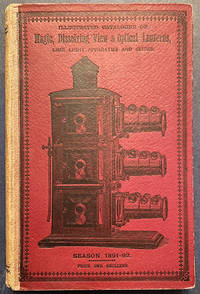
1891ref. BB112Magic Lantern Catalogue Illustrated Catalogue of Magic Dissolving View & Optical Lanterns Lime-light Apparatus and Slides. Rare generic trade catalogue for the entire industry almost certainly London 1891-92 but without imprint. Wood-engraved illustrations of magic lanterns accessories and occasionally the projected image. 8vo. 352 pp. with detailed listings of sets of slides all with prices and various types of magic lanterns with optical projections a few pages browned pp 44/45; original pictorial cloth lettered in black a little rubbed front cover beginning to warp. No imprint, hardcover
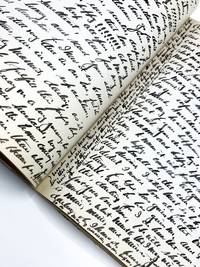
1917ref. 45784Ithaca NY: n.p. 1917. Very good plus. Original manuscript journal containing the wildly ardent lovelorn musings of "Magie" to "Margie" written while waiting for the finalization of Margie's divorce. To call "Magie's" love for "Margie" superlative would be an understatement: his writing in this journal is comprised of verbose expressions of fondness and adoration for her "the only blessed wonderful loyal fine sweet true adorable lovable precious beautiful altogether lovely incomparable perfect little woman in God's great universe whom I ever have ever can really love!!!!!!!!!" Magie's enthusiasm even bleeds into the margins of some leaves where he has written additional missives around the main text. Who is the lovesick "Magie" the author of this manuscript journal that positively oozes with pent-up emotion and who is the "Margie" for whom he so desperately pines Magie's remark that "our marriage . will be so far different from the marriages we knew that they will seem like a bad dream" as well as several references to the day when Margie will be "legally free" to "give and receive" love indicate that both parties had been married previously and that Margie was likely still in the divorce process or the remarriage waiting period when this journal was written. The US divorce rate in 1917 was just 1.2%; this borderline-taboo action often had dire social consequences for the parties involved particularly the women and a state- or self-imposed period of waiting before remarriage was not unusual. Magie apparently spent this separation in varying degrees of agony emptying his evidently very full heart into this journal almost every day from May 28th to July 22nd. The lovebirds remain somewhat elusive in official records despite several tantalizing pieces of information nestled within Magie's lovelorn ramblings: references to "this fearful year" which in addition to a mention of a state military census pins the date of this journal pretty convulsively to 1917 which was "three quarters of the way through" by July 19th his occupation as a lawyer and the address 302 N. Cayuga Street a location Magie calls "our office". That address is sometimes listed as the location of a local Ithaca restaurant The City Cafeteria but more frequently as the longtime residence of prominent citizen and noted Wordsworth collector - her collection was donated to Cornell Cynthia Woodward Morgan St. John. Her son Edward Morgan St. John Cornell 1911 Cornell Law 1913 did work as an attorney and in the records of his 1919 marriage to Ruth Cronk he lists at least one and possibly two previous marriages though we find only a 1910 marriage to Lena Marie Smith. Cronk however does not. Which suggests perhaps sadly that "Margie" if she existed at all did not get her happily ever after. Nevertheless a compelling document overall and a vivid vernacular portrait of limerence. 10.25'' x 7.5''. Original cloth-backed marbled boards with printed label to front board hand-lettered "I". 94 manuscript leaves written both recto and verso. Boards with light edgewear. Hinges a touch cracked. Tight and clean. n.p. unknown
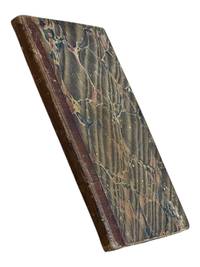
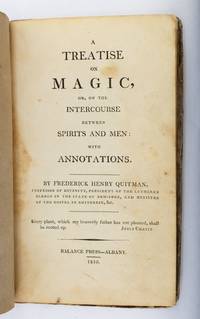
1810ref. ST17557Albany New York: Balance Press 1810. FIRST EDITION. 170 x 103 mm. 6 3/4 x 4". vi 76 pp. Errata slip tipped onto final page. Contemporary marbled boards backed with sheepskin smooth spine divided into panels by single gilt rules. Front free endpaper with bookplate of the Ricky Jay Collection. Front pastedown with neat early owner's signature pencilled initials "M. A." in a juvenile hand adjacent to a rudimentary pencil sketch of two people; rear pastedown with pencilled signature of Sally E. Original errata slip pasted onto bottom half of final page the slip defective at lower left corner. Sabin 67364; Shaw & Shoemaker 21169. Sheepskin a bit rubbed marbled paper boards somewhat chafed stained and quite worn at corners endpaper a bit spotted torn or at back missing other minor defects but the unsophisticated original insubstantial binding still solid. Title page and front flyleaves with light dampstain to gutter and tail margin a little foxing and faint browning other imperfections but the volume still generally clean and surprisingly fresh despite its cheap paper. Written by a Lutheran minister in upstate New York this entertaining treatise gives a brief history of the supernatural from ancient times to the present day and seeks to educate the audience about the dangers and follies of harboring magical beliefs noting that "witchcraft can never take root unless it be supported by credulity." According to the author's preface Frederick Henry Quitman 1760-1832 was motivated to write this work after a neighbor's home was besieged by supposed "supernatural" occurrences that included thrown stones and theft. Even though Quitman a staunch skeptic endeavored to attribute the activity to mischievous entities of the human variety the damage had been done: "Scarcely had the rumour about the forementioned witchcraft a little subsided when we heard the report of the appearance of apparitions in several quarters of the town. And it is really to be feared that during this dull winter all the corners of the town for want of other employment will be infested with demons." The Annotations at the end of the book contain many amusing definitions and descriptions of such things as talismans popular magic gothic novels and ventriloquists. Our copy was owned by the eminent magician actor writer scholar and sleight of hand artist Ricky Jay 1946-2018. In their catalogue Sotheby's notes that "Ricky Jay's accomplishments were as varied as are the formats and subjects of the material in his celebrated Collection . . . . He is one of the very select company of persons who assembled a collection of the very first rank in a field in which he was not only a world-renowned practitioner but also a scholar of considerable note." Our 1810 printing--the only early edition of this work--is rare on the market with RBH recording just four copies at auction in more than 60 years. Balance Press
2000ref. 010348New York: Knopf 2000. First American edition of book 3 of the "His Dark Materials" trilogy; A most acceptable copy; 518pp. First U.S. Edition. Hard Cover. VG/VG. Knopf Hardcover
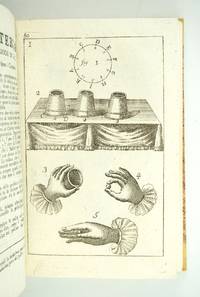
1795ref. ST20614Venice: Giuseppe Orlandelli 1795. Fourth Edition. 180 x 114 mm. 7 x 4 5/8". 154 pp 1 leaf. Pedestrian 19th century half vellum over pink marbled paper boards smooth spine with old ink lettering. WITH 16 ENGRAVED PLATES SHOWING MAGIC TRICKS and numerous diagrams in the text. Tomash & Williams A56; Riccardi I 15. Marbled paper a little chafed title washed first and last leaf a bit soiled and with repairs at inner and outer margins but no text affected half a dozen other leaves with minor repairs or mounted isolated small smudges or corner creases but still an acceptable copy of a book expected to be found in poor shape--the text clean the impression of the engravings crisp and the binding solid. This is a pleasing copy of a rather scarce collection of mathematical puzzles magic tricks and illusions abounding with illustrations and diagrams. Our author Bolognese architect and engineer Giuseppe Antonio Alberti 1712-68 had a varied career which is reflected in his literary output: his publications discuss civil engineering pyrotechnics mathematics and factories among other topics. Described by Tomash and Williams as "the type of book that mischievous uncles like to own" the present work begins with a study of amusing and unusual arithmetic equations and puzzles before discussing magic tricks and illusions including card tricks dice games and even complex stage illusions involving specialized equipment. These are illustrated with a series of delightful copper engravings with labelled mechanisms sometimes operated by lively little figures or disembodied hands with ruffled sleeves. "Giuochi" was first published in Bologna in 1747 and remained in print for a further 20 years after the present edition. Because this is the kind of book that would have been subjected to uncareful use early editions are difficult to find in the attractive condition seen here. Giuseppe Orlandelli unknown
ref. 82273No place 19th century. original paste-grain paper-covered stiff wrappers side stitched. Old ink ownership name; ink and pencil drawings on rear endsheet; wrappers chipped and rubbed. 16mo. Illustrated from hand-colored engravings drawn from various published books. See Ricky Jay Magic Magic Book. An Enquiry into the Venerable History & Operation of the Oldest Trick Conjuring Volumes Designated "Blow Books." "Blow books" are among the earliest recorded magic props handmade and artfully constructed with subtle variations along the fore-edge to allow the performer to selectively flip through the leaves in a variety of ways in order to create the illusion that the contents of the book have been transformed. unknown
ref. 82258France 19th century. original decorated paper-covered boards with printed paper label on spine and applied illustrations printed in gold on front and rear panels. . Upper joint rubbed; very nice operating condition. 12mo. Illustrated from hand-colored engravings drawn from various published books. See Ricky Jay Magic Magic Book. An Enquiry into the Venerable History & Operation of the Oldest Trick Conjuring Volumes Designated "Blow Books." "Blow books" are among the earliest recorded magic props handmade and artfully constructed with subtle variations along the fore-edge to allow the performer to selectively flip through the leaves in a variety of ways in order to create the illusion that the contents of the book have been transformed. hardcover
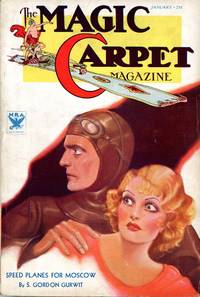
1934ref. 36676Indianapolis IN: Popular Fiction Publishing Company 1934. Tanning to text paper closed tears stress creases spine split at lower left front cover fraying at head of spine a very good to nearly fine copy. 36676. Octavo single issue cover by Margaret Brundage pictorial wrappers. Pulp magazine. Contains fiction by Robert E. Howard "The Shadow of the Vulture" which features the only pulp appearance of Red Sonya. Also a Dennis Dorgan story by Patrick Ervin R. E. Howard. Other fiction by Frank Owen Seabury Quinn and others. Red Sonya was brought into the Hyborean world of Conan as Red Sonja in the comic books by writer Roy Thomas. Reference: Tymm and Ashley Science Fiction Fantasy and Weird Fiction Magazines pp. 455-456. Popular Fiction Publishing Company unknown
1934ref. 36675Indianapolis IN: Popular Fiction Publishing Company 1934. Tanning to text paper fraying at base of spine several slight creases a nearly fine copy. 36675. Octavo single issue cover by Margaret Brundage pictorial wrappers. Pulp magazine. Contains fiction by Robert E. Howard "The Shadow of the Vulture" which features the only pulp appearance of Red Sonya. Also a Dennis Dorgan story by Patrick Ervin R. E. Howard. Other fiction by Frank Owen Seabury Quinn and others. Red Sonya was brought into the Hyborean world of Conan as Red Sonja in the comic books by writer Roy Thomas. Reference: Tymm and Ashley Science Fiction Fantasy and Weird Fiction Magazines pp. 455-456. Popular Fiction Publishing Company unknown
1947ref. D10934America 1947. Cloth-covered 3-ring binder American manufactured covers illustrated in black marker with drawings of top-hats an ace of spades an eight ball faces names and maxims "Flunk Early Avoid the Rush" "Here's Your Hat What's Your Hurry". The inside front cover bears our author's name "Budd Leader Sophomore 1st half" as well as a cloud of girls' names Joan Ginger Darlene Sally Betty Roberta et al perhaps referring to his lovely assistants -- women who put birds back in their cages who comforted newly hatless rabbits who were sawn in half or who otherwise gave themselves to magic. This distinctly American binder is bursting with 382 tricks handwritten in ink in tidy script on lined paper most of them accompanied by careful pencil drawings demonstrations of steps and techniques on small leaves of onion skin paper stapled to the trick they describe. Extremities bumped and cloth a bit frayed; boards warped see aforementioned "bursting" I wasn't joking with a few small spots of soiling. Top ring of binder doesn't close all the way ahem bursting so a few pages have come loose but could be easily reinforced if one were so inclined. Contents are bright and clean perfectly legible pleasing to behold and -- one assumes -- hitherto privileged information. Includes tricks with cards rope dice balloons sleights of hand mind reading break-away cabinets and so much more. Though some of the illusions strike this cataloguer as enticingly practical "How to be Marvelous without Skill" "The Vanishing Alarm Clock" many of the illusions seem quite advanced and particular to the world of magic "Second Sight Extraordinary" "Mind Signals" "You Do As I Do". Though little can be found on Budd Leader now he was clearly a high school student of some talent and considerable dedication. A quintessential distinct volume. Remarkable. hardcover
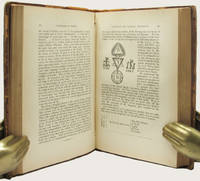
1886ref. 34453London: George Redway 1886. Very Rare First Edition. Illustrated within the text with various symbols relating to magic and the genre. 8vo bound in early half-calf over marbled paper covered boards. xliii 1 349 1 pp. A rare survival the text-block quite clean and very well preserved the binding with evidence of use and age with rubbing to the extremities. VERY RARE AND THE TRUE FIRST EDITION VERY SELDOM ENCOUNTERED IN COMMERCE. Perhaps the first truly significant publication of Lévi's work in the English language. R. A. Gilbert tells that Waite was fascinated by the quotes from Lévi that he read in Blavatsky's "Isis Unveiled" 1877 and that Waite promptly acquired a copy of Lévi's major work "Dogme et Rituel de la Haute Magie" which he began translating into English. In 1885 Waite suggested to the prominent Theosophist A. P. Sinnett that an anthology of Lévi's writings based on these translations would make a good book. Sinnett evidently agreed and recommended him to the publisher George Redway who took on the project thus beginning what would turn out to be a lengthy collaboration with Waite. In addition to translating and editing Lévi's essays Waite contributed a Biographical and Critical Essay. Gilbert B1. Weiser In the preface to The History of Magic Waite enumerates what he believed to be the nine key tenets of magic as codified in Levi's earlier work Doctrine and Ritual of Transcendental Magic. They are: 1 There is a potent and real Magic popular exaggerations of which are actually below the truth. 2 There is a formidable secret which constitutes the fatal science of good and evil. 3 It confers on many powers apparently super-human. 4 It is the traditional science of the secrets of Nature which has been transmitted to us from the Magi. 5 Initiation therein gives empire over souls to the sage and full capacity for ruling human wills. 6. Arising apparently from this science there is one infallible indefectible and truly catholic religion which has always existed in the world but it is unadapted for the multitude. 7 For this reason there has come into being the exoteric religion of apologue parable fable and wonder-stories which is all that is possible for the profane : it has undergone various transformations and it is represented at this day by Latin Christianity under the obedience of Rome. 8 Its veils are valid in their symbolism and it may be called valid for the crowd but the doctrine of initiates is tantamount to a negation of any literal truth therein. 9 It is Magic alone which imparts true science. Levi The three chief components of Levi's magical thesis were: Astral Light the Will and the Imagination. "Eliphas Lévi" the name under which he published his books was his attempt to translate or transliterate his given names "Alphonse Louis" into Hebrew .In 1854 Lévi visited England where he met the novelist Edward Bulwer-Lytton who was interested in Rosicrucianism as a literary theme and was the president of a minor Rosicrucian order. With Bulwer-Lytton Lévi conceived the notion of writing a treatise on magic. This appeared in 1855 under the title Dogme et Rituel de la Haute Magie and was translated into English by Arthur Edward Waite as Transcendental Magic its Doctrine and Ritual . Its famous opening lines present the single essential theme of Occultism and gives some of the flavor of its atmosp:Lévi's version of magic became a great success especially after his death. That Spiritualism was popular on both sides of the Atlantic from the 1850s contributed to this success. His magical teachings were free from obvious fanaticisms even if they remained rather murky; he had nothing to sell and did not pretend to be the inititate of some ancient or fictitious secret society . He incorporated the Tarot cards into his magical system and as a result the Tarot has been an important part of the paraphernalia of Western magicians. He had a deep impact on the magic of the Hermetic Order of the Golden Dawn and later on the ex-Golden Dawn member Aleister Crowley . It was largely through the occultists inspired by him that Lévi is remembered as one of the key founders of the twentieth century revival of magic." wiki Arthur Edward Waite was a scholarly mystic who wrote extensively on occult and esoteric matters and was the co-creator of the Rider-Waite Tarot deck. As his biographer R.A. Gilbert described him "Waite's name has survived because he was the first to attempt a systematic study of the history of western occultism — viewed as a spiritual tradition rather than as aspects of proto-science or as the pathology of religion." Waite was a prolific author with many of his works being well received in academic circles. He wrote occult texts on subjects including divination esotericism Rosicrucianism Freemasonry black and ceremonial magic Kabbalism and alchemy ; he also translated and reissued several important mystical and alchemical works. His works on the Holy Grail influenced by his friendship with Arthur Machen were particularly notable. wiki George Redway hardcover
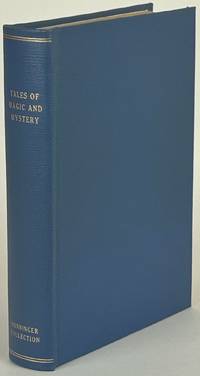
1927ref. 31906Camden NJ: Personal Arts Company Publishers 1927-1928. Issues slightly trimmed for binding otherwise quite fine with little tanning to text paper mostly cream colored. At the base of the spine is stamped "Dunninger Collection." A lovely presentation. 31906. Octavo five issues pictorial wrappers bound in blue boards with gold stamping to spine. A bound volume of all five issues that were noted magician Joseph Dunningers copy with his signed name and also inscribed and signed by editor/author Walter Gibson to Joe Dunninger. Gibson wrote several books about magic for Dunninger they were lifelong friends. This is likely a presentation volume to Dunninger. Tales of Magic and Mystery was a short lived magazine which published stories and articles about magic and the occult as well as some short fiction. The March 1928 issue published the H. P. Lovecraft short story "Cool Air." Other authors of fiction include Frank Owen Miriam Allen de Ford Archie Binns Robert Leslie Bellem and others. Gibson wrote most non-fiction material under his own name and also using the pseudonyms Alfred Maurice and Bernard Perry. Personal Arts Company, Publishers unknown
1833ref. ST12867New York: N. C. Nafis 1833. 144 x 85 mm. 5 5/8 x 3 3/8". 71 pp. PUBLISHER'S ORIGINAL GRAY-GREEN PRINTED BOARDS upper cover with titling and an illustration of a gentleman identified as the author lower cover with two amusing woodcuts "The Lawyer and his Client" a bewigged gentleman astride an ass and "Hocus Poke-us" two boys fighting. In a brown cloth chemise and a slightly rubbed matching calf-backed slipcase. With a folding frontispiece depicting a conjurer and his assistant onstage before an amazed crowd. Toole-Stott 724. ◆Small stains at top and bottom of spine covers just slightly grubby endpapers a bit browned text with light inoffensive foxing but for what it is AN UNUSUALLY FINE COPY the fragile binding entirely sound and the text remarkably fresh and clean. Given the materials it was made from and the hard use it would have been expected to suffer this is an exceptionally well-preserved copy of a popular handbook of conjuring tricks an early American edition of a work first compiled in 1722 by the British magician Henry Dean. Dean's work was itself based on Reginald Scot's influential "Discoverie of Witchcraft" 1584 which sought to discredit belief in "supernatural" forces by exposing the tricks by which conjurers deceived their audience. In the publications of Dean and subsequent editors this exposé of witchcraft evolved into a guide for performing parlor tricks. Our edition is a reprint or reissue of the 1831 version published by R. Schoyer; because the word "renowned" is spelled "renowed" on both title pages Toole-Stott speculates that Nafis bought sheets from Schoyer suggesting that our item would have been a reissue. These insubstantial guide books typically experienced considerable uncareful use in the hands of amateur and often juvenile magicians; consequently the few copies that do appear on the market are in deplorable shape. N. C. Nafis unknown
ref. 159183N.p.: N.p. 1970. Substantial archive of material belonging to Austrian-American stage hypnotist and magician John Kolisch including two three-ring card binders with typescript and manuscript notes for Kolisch's live shows and 271 vintage photographs of Kolisch in performance. Archive appears to date from the 1950s through the 1970s the heyday of Kolisch's career. One binder holds notes and scripts for Kolisch's magic tricks powers of suggestion and general show patter and jokes while the other binder focuses primarily on feats of hypnosis. The binders hold a variety of material relating to Kolisch's performances a mix of more formal typed scripts for routines alongside manuscript draft notes and annotations noting potential "ad-libbed" interjections. Several pages capture Kolisch recording his ideas for changes to the pacing and setup of his shows as well as reminders about modernizing his patter and updating his celebrity references. Although the bulk of Kolisch's material is undated earlier acts appear to reference specific actors films or shows such as opera singers or the television show "Cavalcade of Stars" while later routines simply note the names of prominent contemporary actors and celebrities to insert at random. Kolisch who billed himself as "The Fastest Hypnotist in the World" apparently used a blend of serious hypnotism stage magic and standup comedy in his shows and accordingly an entire binder section labeled "Funny Lines" is devoted to ripostes and one-liners. These zingers cover every performance eventuality from hecklers "Have you ever been to the zoo I mean as a visitor" to a silent audience "Well they say a silent tribute is the sincerest of them all!". The archive's considerable collection of photographs captures the spirit and energy of Kolisch's live shows with audience members engaged in a number of humorous activities-stripping saluting yelling and singing dancing acting as human furniture kissing and hugging each other playing musical instruments such as maracas and the ukulele-or simply sleeping. Several photographs bear Kolisch's name and company address in Jackson Heights New York in the recto margins an address that also appears in Kolisch's company letterhead on many of his show notes. Included in the archive are 17 contact sheets capturing images from performances and portrait photographs of Kolisch. Also included are two gatherings of typescript and copied material related to Kolisch's lectures on "dynamic auto-conditioning" and "dynamic auto-suggestion" with many pages annotated by Kolisch in manuscript ink or pencil. Archive also features a 17-page bound treatise titled "Your Incredible Subconscious Mind" published in 1956 by the "Subconscious Research Institute" an organization possibly created by Kolisch himself. Photographs range in size with the majority measuring 10 x 8 inches. Near Fine to Very Good plus with occasional edgewear and creasing. Binders contact sheets lecture material and treatise Near Fine to Very Good plus with some light edgewear creasing and soil on binder exteriors. N.p. unknown
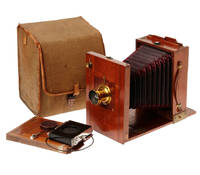
1900ref. G1ADNMOA0S9LKopenhagen 1900. Housed in the original publisher's wooden boxes. Includes 2 original projectors and 1 camera. More than 400 glass slides depicting various motifs related to coal mining chemical processes and astronomy as well as topographical motifs from Asia Africa China Europe and America. Remarkable all-encompassing collection of turn-of-the-century magic lantern slides. Several of the slides show cavalry horses: the "Krigen 1848-1864" set includes no. 45 an equestrian portrait of General Bülow victor of the 1849 Battle of Fredericia painted by Aug. Jerndorff; no. 29 Friedrich von Schleppegrell riding at the battle of Isted; no. 26 General Krogh on horseback all V. Richter Kopenhagen; no. 20. captioned "Pferdeablieferung" horse delivery.A box lebelled "København" includes: no. 21 Brandmajoren rykker ud; no. 20 a fire at the time of King Frederik VI of Denmark d. 1839.Other slides show workhorses in Denmark and Sweden during haying-time or spreading manure as well as works of the Danish painter Otto Bache: the Coronation of Christian IV in 1596; the conspirators escaping from Finderup on horseback after having murdered Eric V of Denmark in 1286. The collection also contains copies of paintings by various artists such as Leonardo da Vinci Raphael and Rembrandt. Among the remaining slides we find astronomical illustrations and pictures of observatories Greenwich Delhi Potsdam etc.; as well as numerous photographs and paintings of landscapes people and architecture in Africa Asia Europe China and America. unknown