8,398 results
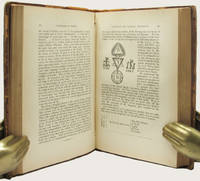
1886ref. 34453London: George Redway 1886. Very Rare First Edition. Illustrated within the text with various symbols relating to magic and the genre. 8vo bound in early half-calf over marbled paper covered boards. xliii 1 349 1 pp. A rare survival the text-block quite clean and very well preserved the binding with evidence of use and age with rubbing to the extremities. VERY RARE AND THE TRUE FIRST EDITION VERY SELDOM ENCOUNTERED IN COMMERCE. Perhaps the first truly significant publication of Lévi's work in the English language. R. A. Gilbert tells that Waite was fascinated by the quotes from Lévi that he read in Blavatsky's "Isis Unveiled" 1877 and that Waite promptly acquired a copy of Lévi's major work "Dogme et Rituel de la Haute Magie" which he began translating into English. In 1885 Waite suggested to the prominent Theosophist A. P. Sinnett that an anthology of Lévi's writings based on these translations would make a good book. Sinnett evidently agreed and recommended him to the publisher George Redway who took on the project thus beginning what would turn out to be a lengthy collaboration with Waite. In addition to translating and editing Lévi's essays Waite contributed a Biographical and Critical Essay. Gilbert B1. Weiser In the preface to The History of Magic Waite enumerates what he believed to be the nine key tenets of magic as codified in Levi's earlier work Doctrine and Ritual of Transcendental Magic. They are: 1 There is a potent and real Magic popular exaggerations of which are actually below the truth. 2 There is a formidable secret which constitutes the fatal science of good and evil. 3 It confers on many powers apparently super-human. 4 It is the traditional science of the secrets of Nature which has been transmitted to us from the Magi. 5 Initiation therein gives empire over souls to the sage and full capacity for ruling human wills. 6. Arising apparently from this science there is one infallible indefectible and truly catholic religion which has always existed in the world but it is unadapted for the multitude. 7 For this reason there has come into being the exoteric religion of apologue parable fable and wonder-stories which is all that is possible for the profane : it has undergone various transformations and it is represented at this day by Latin Christianity under the obedience of Rome. 8 Its veils are valid in their symbolism and it may be called valid for the crowd but the doctrine of initiates is tantamount to a negation of any literal truth therein. 9 It is Magic alone which imparts true science. Levi The three chief components of Levi's magical thesis were: Astral Light the Will and the Imagination. "Eliphas Lévi" the name under which he published his books was his attempt to translate or transliterate his given names "Alphonse Louis" into Hebrew .In 1854 Lévi visited England where he met the novelist Edward Bulwer-Lytton who was interested in Rosicrucianism as a literary theme and was the president of a minor Rosicrucian order. With Bulwer-Lytton Lévi conceived the notion of writing a treatise on magic. This appeared in 1855 under the title Dogme et Rituel de la Haute Magie and was translated into English by Arthur Edward Waite as Transcendental Magic its Doctrine and Ritual . Its famous opening lines present the single essential theme of Occultism and gives some of the flavor of its atmosp:Lévi's version of magic became a great success especially after his death. That Spiritualism was popular on both sides of the Atlantic from the 1850s contributed to this success. His magical teachings were free from obvious fanaticisms even if they remained rather murky; he had nothing to sell and did not pretend to be the inititate of some ancient or fictitious secret society . He incorporated the Tarot cards into his magical system and as a result the Tarot has been an important part of the paraphernalia of Western magicians. He had a deep impact on the magic of the Hermetic Order of the Golden Dawn and later on the ex-Golden Dawn member Aleister Crowley . It was largely through the occultists inspired by him that Lévi is remembered as one of the key founders of the twentieth century revival of magic." wiki Arthur Edward Waite was a scholarly mystic who wrote extensively on occult and esoteric matters and was the co-creator of the Rider-Waite Tarot deck. As his biographer R.A. Gilbert described him "Waite's name has survived because he was the first to attempt a systematic study of the history of western occultism — viewed as a spiritual tradition rather than as aspects of proto-science or as the pathology of religion." Waite was a prolific author with many of his works being well received in academic circles. He wrote occult texts on subjects including divination esotericism Rosicrucianism Freemasonry black and ceremonial magic Kabbalism and alchemy ; he also translated and reissued several important mystical and alchemical works. His works on the Holy Grail influenced by his friendship with Arthur Machen were particularly notable. wiki George Redway hardcover
1947ref. D10934America 1947. Cloth-covered 3-ring binder American manufactured covers illustrated in black marker with drawings of top-hats an ace of spades an eight ball faces names and maxims "Flunk Early Avoid the Rush" "Here's Your Hat What's Your Hurry". The inside front cover bears our author's name "Budd Leader Sophomore 1st half" as well as a cloud of girls' names Joan Ginger Darlene Sally Betty Roberta et al perhaps referring to his lovely assistants -- women who put birds back in their cages who comforted newly hatless rabbits who were sawn in half or who otherwise gave themselves to magic. This distinctly American binder is bursting with 382 tricks handwritten in ink in tidy script on lined paper most of them accompanied by careful pencil drawings demonstrations of steps and techniques on small leaves of onion skin paper stapled to the trick they describe. Extremities bumped and cloth a bit frayed; boards warped see aforementioned "bursting" I wasn't joking with a few small spots of soiling. Top ring of binder doesn't close all the way ahem bursting so a few pages have come loose but could be easily reinforced if one were so inclined. Contents are bright and clean perfectly legible pleasing to behold and -- one assumes -- hitherto privileged information. Includes tricks with cards rope dice balloons sleights of hand mind reading break-away cabinets and so much more. Though some of the illusions strike this cataloguer as enticingly practical "How to be Marvelous without Skill" "The Vanishing Alarm Clock" many of the illusions seem quite advanced and particular to the world of magic "Second Sight Extraordinary" "Mind Signals" "You Do As I Do". Though little can be found on Budd Leader now he was clearly a high school student of some talent and considerable dedication. A quintessential distinct volume. Remarkable. hardcover
1947ref. D10934America 1947. Cloth-covered 3-ring binder American manufactured covers illustrated in black marker with drawings of top-hats an ace of spades an eight ball faces names and maxims "Flunk Early Avoid the Rush" "Here's Your Hat What's Your Hurry". The inside front cover bears our author's name "Budd Leader Sophomore 1st half" as well as a cloud of girls' names Joan Ginger Darlene Sally Betty Roberta et al perhaps referring to his lovely assistants -- women who put birds back in their cages who comforted newly hatless rabbits who were sawn in half or who otherwise gave themselves to magic. This distinctly American binder is bursting with 382 tricks handwritten in ink in tidy script on lined paper most of them accompanied by careful pencil drawings demonstrations of steps and techniques on small leaves of onion skin paper stapled to the trick they describe. Extremities bumped and cloth a bit frayed; boards warped see aforementioned "bursting" I wasn't joking with a few small spots of soiling. Top ring of binder doesn't close all the way ahem bursting so a few pages have come loose but could be easily reinforced if one were so inclined. Contents are bright and clean perfectly legible pleasing to behold and -- one assumes -- hitherto privileged information. Includes tricks with cards rope dice balloons sleights of hand mind reading break-away cabinets and so much more. Though some of the illusions strike this cataloguer as enticingly practical "How to be Marvelous without Skill" "The Vanishing Alarm Clock" many of the illusions seem quite advanced and particular to the world of magic "Second Sight Extraordinary" "Mind Signals" "You Do As I Do". Though little can be found on Budd Leader now he was clearly a high school student of some talent and considerable dedication. A quintessential distinct volume. Remarkable. hardcover books
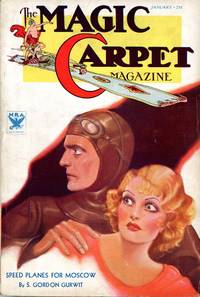
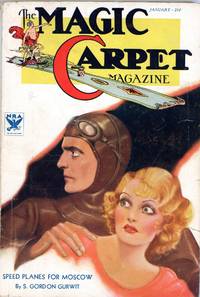
1934ref. 36675Indianapolis IN: Popular Fiction Publishing Company 1934. Tanning to text paper fraying at base of spine several slight creases a nearly fine copy. 36675. Octavo single issue cover by Margaret Brundage pictorial wrappers. Pulp magazine. Contains fiction by Robert E. Howard "The Shadow of the Vulture" which features the only pulp appearance of Red Sonya. Also a Dennis Dorgan story by Patrick Ervin R. E. Howard. Other fiction by Frank Owen Seabury Quinn and others. Red Sonya was brought into the Hyborean world of Conan as Red Sonja in the comic books by writer Roy Thomas. Reference: Tymm and Ashley Science Fiction Fantasy and Weird Fiction Magazines pp. 455-456. Popular Fiction Publishing Company unknown
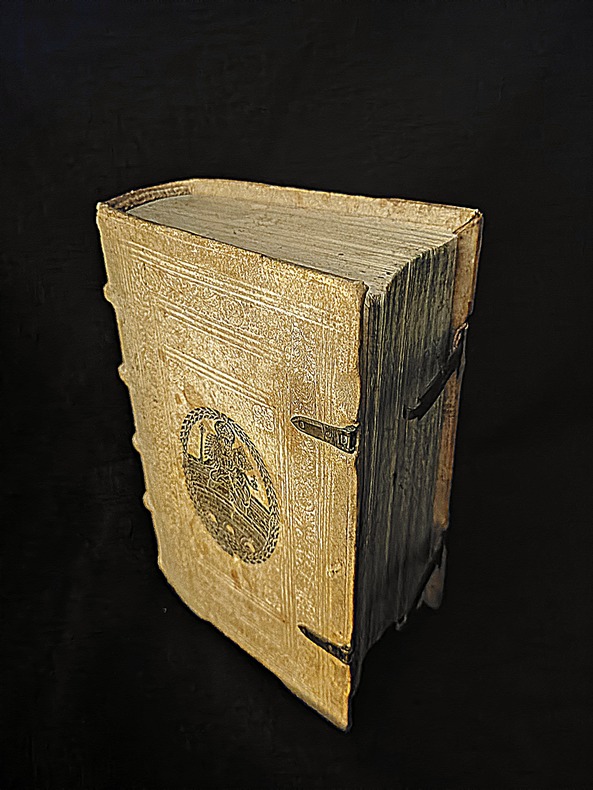
1581ref. GEJ-8Ingolstadt, apud Davidem Sartorium, 1581. pp. [80] 542 p. Book in Latin. In-8. Beautifull ornamented white blind stamped calf. Additionally black engreved to front cover. Two original clasps. Fist and last blank leaf missing. Title page in black. 80 unnumbered and 542 numbered pages. Blue paper edges. Clean endpapers with small pencil annotation on the first back cover. Nice ornameting, wide margins and initial letters. Very clean and bright interior. Franziskaner Kloster Dettelbach stamp and hand-written anotations on the title page. Complete. Very good condition. 2nd rare edition (First, 1580) of interesting and influential work on heresy. Very uncommon issue on the market. Rare in any edition. "Hammer of Heretics" is a Catholic counter-reformation text by Georg Eder, published in Ingolstadt, that defends Catholicism against Protestant doctrines, particularly Lutheranism and Anabaptism. It is distinct from the 1487 Malleus Maleficarum (witch-hunting manual), focusing instead on combating heresy through theological argumentation. Eder was a lawyer and Catholic theologian (1523 - 1587), Imperial Court Councillor and advisor to Emperors Ferdinand I, Maximilian II, and Rudolf II. Best known for his theological polemical writings. "His oratorical and literary talent, the decidedly Catholic orientation from his Bavarian homeland, which deepened in Cologne and, in Vienna, where he immediately sought contact with the Jesuits, manifested itself in tireless activity, making Eder a champion of Catholicism struggling for its existence in Austria" (NDB IV, 311 f.). "Eder's writings from this period all deal with the question of church confession with regard to the differing and opposing positions of the Protestants" (ADB V, 318). Bibliography: USTC No. 674751, VD16 E 541, Stalla 1413, Adams E 64. Provenance: Franziskaner Kloster Dettelbach.
1583ref. 12463Paris, Nicolas Chesneau, 1583. In-4 de [8]-275-[37] pages, plein vélin à rabats, dos lisse. Reliure fin XIXe, 2 ex-libris modernes. Note manuscrite sur un feuillet blanc XIXe, citant Yve-Plessis.
ref. 18563début du XXe siècle..
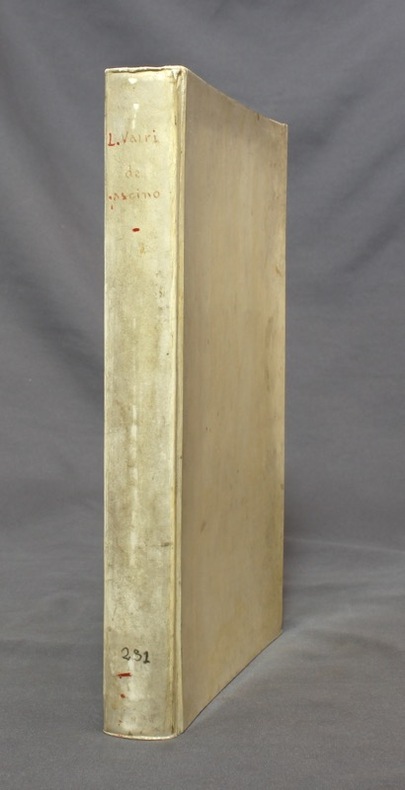
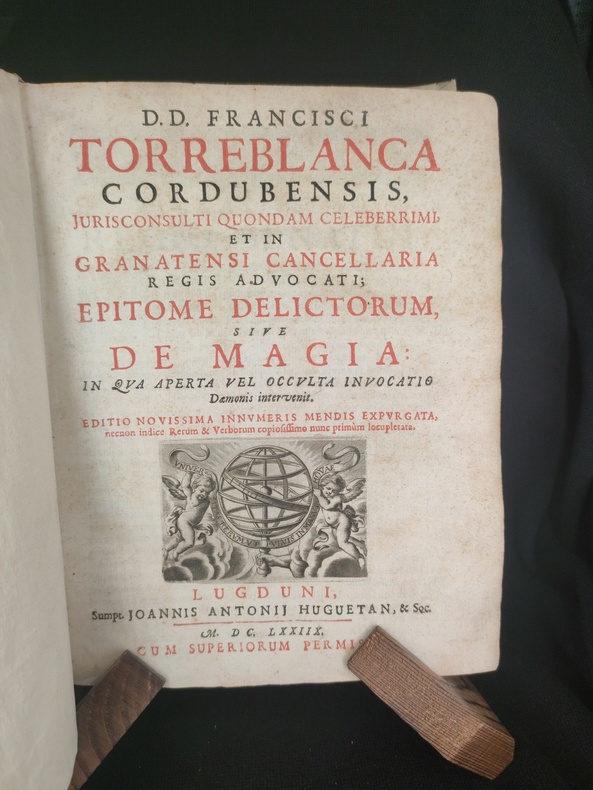
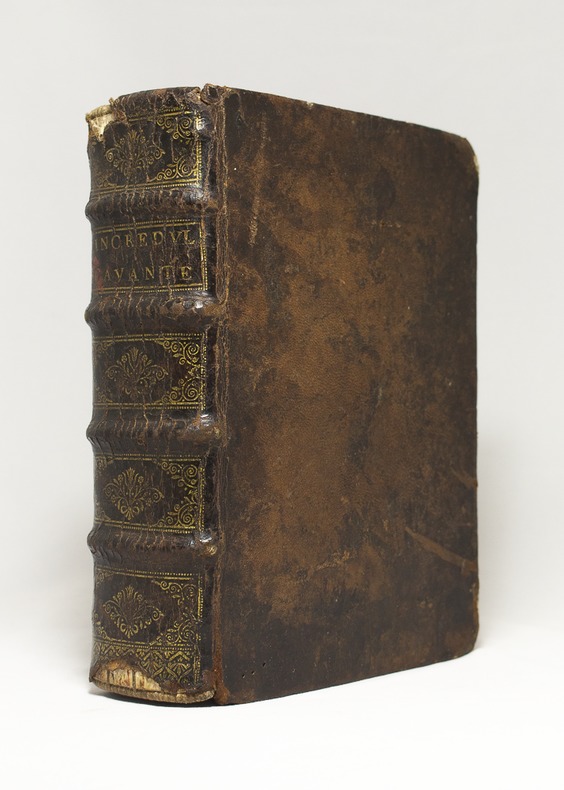
1678ref. GEJ-9Lugduni (Lyon), sumpt. J. A. Huguetan, 1678. Book in Latin. In-4. Collation: [8], 576, [104]. Original full vellum, ink title on the spine. Title in red & black. Armorial bookplate of the Prince of Lichtenstein on the front pastedown. First and last blank endpapers intact. Some wear and soiling to vellum. Foxing. Overall Very good. Complete. 3rd edition of Summary of Crimes, or On Magic: In which open or hidden invocation of the demon intervenes, is a comprehensive legal guide on defining, identifying, and prosecuting acts of magic, witchcraft, and sorcery, heavily influenced by the Spanish Inquisition and demonological theory. The work categorizes different types of magic—distinguishing between "open" (explicit pacts) and "hidden" (implicit/superstitious) invocation of demons. It was a standard reference for canon law and criminal issues related to magic in the 17th century, including its use in Spanish and Portuguese colonial contexts. Book is devided into 4 parts + "Defensa". Pages 514-76 contain the author's "Defensa de los Libros Católicos de la Magia". Bibliography: Caillet 10764; Cornell Witchcraft Collection 53; Graesse (Magica) 53; Palau 334.827; Thorndike VII, 326-30; USTC No. 6080367; Coumont T.33.3; Goldsmith T-444; Crowe 551; OCLC: 11407716; Robbins 1026. "The work is divided into four books devoted to divining magic, operative magic, and its punishment in the forum exterior and juridical, and in the interior tribunal of the soul and confessional. Magic is defined after Proclus and Psellus as an exacter knowledge of secret things in which, by observing the course and influence of the stars and the sympathies and antipathies of particular things, they are applied to one another at the proper time and place and in the proper manner, so that marvels are worked. Torreblanca turns to diabolical magic and the extent of the powers of the devil to make it possible. Torreblanca has jumbled together natural and diabolical magic almost inextricably, but his remaining chapters are on witchcraft, with the two last on natural and divine remedies against it." (Thorndike VII, A History of Magic and Experimental Science). Provenance: Old Ex libris - (library ?) Lichtensteinianis (Armorial bookplate of the Prince of Lichtenstein?).
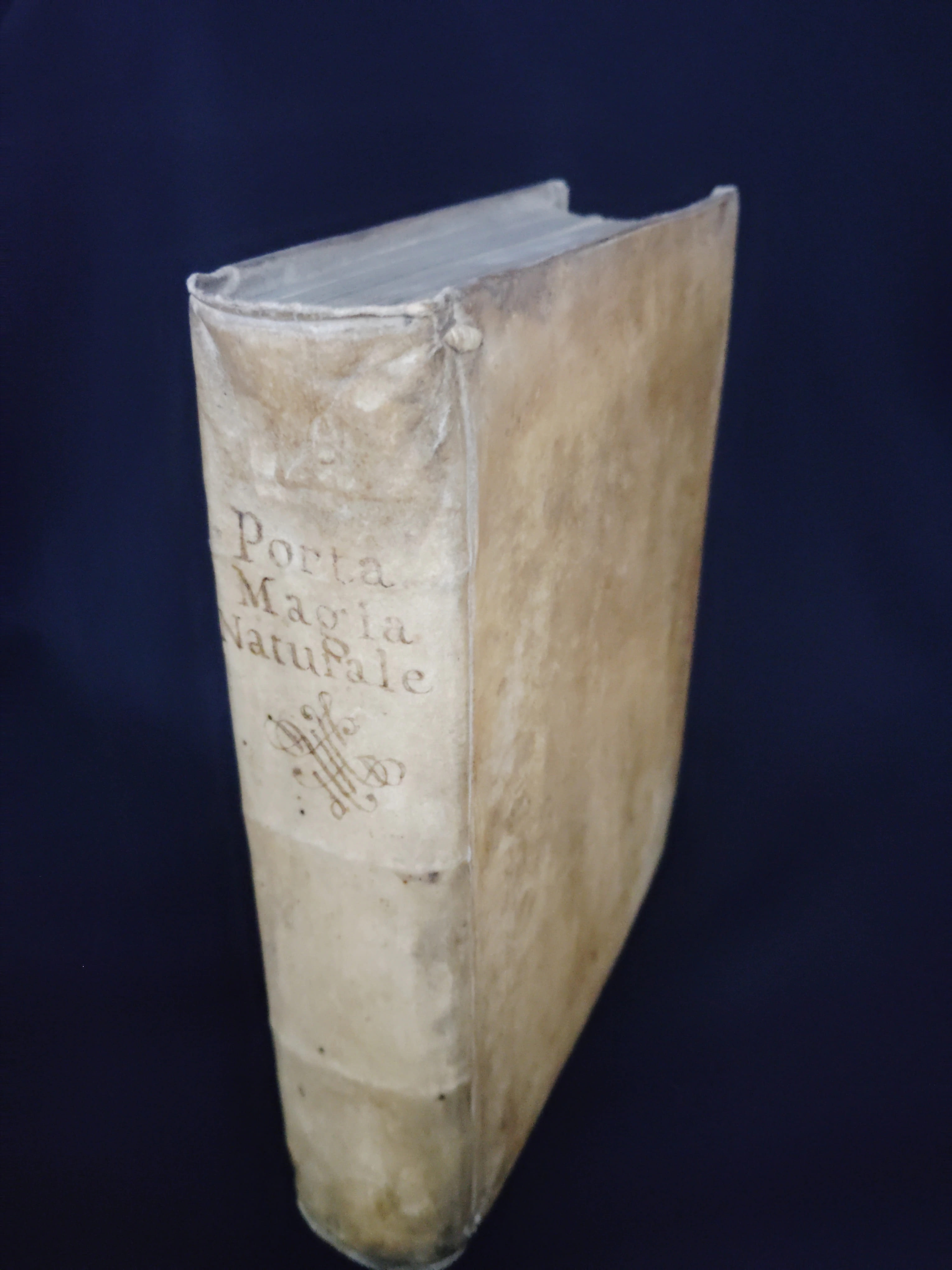
1611ref. GEJ-12Napoli, appresso Giovanni Giacomo Carlino, 1611, pp. [8] 725 [1]. In-4. Book in Italian. Original full vellum, ink title on the spine. Title in black. Small restoration on the title page. Old but later endpapers. Clean with a little foxing. Overall Very good. Complete. This rare 1611 Italian 1st expanded twenty-book version of Giambattista della Porta’s magnum opus, Della magia naturale (Natural Magic). Originally published as a shorter four-book treatise in 1558, della Porta spent decades expanding his observations into this monumental encyclopedia of Renaissance science, secrets, and experimental philosophy. Della Porta’s work serves as a fascinating intellectual bridge between medieval alchemy and the Scientific Revolution. To the author, natural magic did not mean sorcery, but rather the understanding and manipulation of the hidden laws of nature through rigorous observation and experimentation. Across its twenty books, this comprehensive volume covers an astonishingly diverse range of subjects. It includes early descriptions of the camera obscura and foundational concepts in optics that later influenced the invention of the telescope. It also delves into metallurgy, cryptography, agriculture, and botany, alongside practical recipes for cosmetics, perfumes, pyrotechnics, and early chemical warfare. As the founder of the Academy of the Secrets of Nature, della Porta was one of Europe’s foremost polymaths, and his writings heavily influenced contemporary titans of science like Galileo Galilei and Johannes Kepler. Capturing the very peak of late-Renaissance intellectual curiosity, this 1611 edition stands as a highly desirable and significant artifact for any collector of early science, occult philosophy, and the history of ideas. Bibliography: USTC No. 4025330; EDIT16; Riccardi II, 307; Caillet 8851; Duveen (Bibliotheca Alchemica et Chemica) p. 481; OPAC SBN Numer BVEE002361; Graesse V; Dorbon-Aîné 3710-20; STCN 833455907; Ferguson, II, p. 216.
1803ref. 31718BBBerlin/Wien Pauli/Trattnern 1784-1803. 16 Bände. 8°. Mit insgesamt 115 gestochenen Kupfertafeln. Mit elektrischen, chemischen, metallurgischen, mechanischen und ökonomischen Versuchen. Band 1-4: Halbleder, Rückenschilder, Rückenvergold., 5 Bünde, 3seitiger Rotschnitt - Band 1-9/11-12 Halbleder, Rückenschilder, Rückenvergold., 5 Bünde, 3seitiger Rotschnitt. Band 10 Pappband. Einbände berieben und bestossen, Seiten mit Bräunung, teils fleckig, insgesamt sauber und gut erhalten.
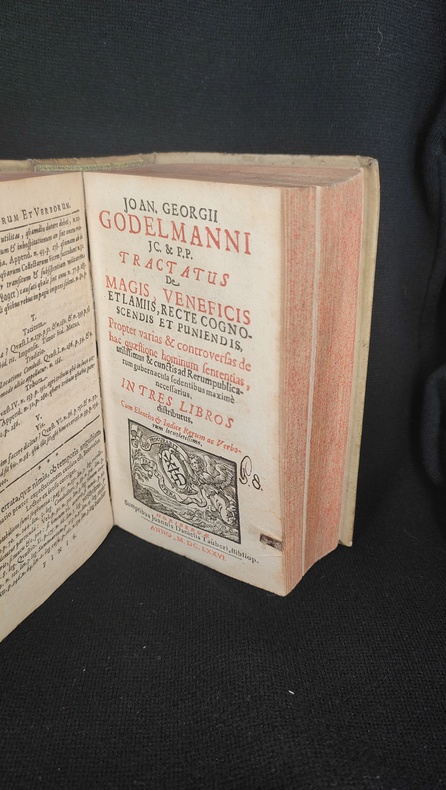
1676ref. GEJ-5Nuremberg: Johann Daniel Tauber, 1676. Book in Latin and German. In-8. [12], 162; 102; 256, [73] pages, including errata leaf at end. Contemporary vellum, ink title on the spine, occasional light foxing. Title in red & black. Later edition of this work on magic and witchcraft by J.G. Godelmann (1559-1611), German diplomat and professor of law at Rostock University. Book contains 3 parts. The 1st and 2nd part contains information on magic, sorcerers, and witches, the 3rd part dedicates to legal procedures in witchcraft cases. The book was placed on the Index of prohibited books in 1601. Bibliography: Ref. VD-17 1:0629512, Caillet 4226, Coumont G 43.5., Thorndike VI, 535-37. USTC 2589027. Not in BL London. Coumont G 43.5. - "Godelmann's greatest achievement lies in his, for this time, exceptionally decisive stance against the belief in witches". Provenance: From the library of André Lambert, with ex-libris. Ownership sticker: Oskar Gershel, Buchhandlung Stuttgart, Kronprinzstrasse 32. bound with Law book by MEVIUS (David) titled: Considerationes juridicae super Sex diversis punctis, indeque resultantibus Quaestionibus, in Causis Proprietariorum Pensionariorum subinde occurrentibus. Hall. Saxon.[Halle-sur-Saale], Sumptibus Simon. Joh. Hubneri, 1675.
1638ref. 0032951638 A Paris, Chez Rolet Boutonne, 1638. Quatre parties en un volume in-12 (107 X 163) vélin rigide à coutures apparentes, titre calligraphié à l'encre noire en tête du dos (reliure de l'époque) ; (1) f. blanc, titre, (7) ff., 280 pages, 63 pages (dont titre), (1) page blanche, titre, (1) f. « Au lecteur », 67-106 pages, (5) ff. de table, (1) f. blanc, 39 pages (dont titre), (1) page blanche, (1) f. blanc. Tache brune sur le premier plat.
ref. 104082Paris, Chez la Vefue Guillaume Cauvellat, au mont S. Hilaire, au Pelican 1597 - 1598, 115x85mm, reliure basane. Reliure plein veau blond. Auteur, tomaison et filets dorés au dos à 4 nerfs. Double encadrement doré sur les deux plats. Bordure triple filets dorés. Toutes tanches dorées. Garde papier marbré. Format elzévirien. Reliure du XIXème siècle en bon état, hormis charnières usées. Intérieur propre - hormis noirceurs avec petits trous sur les pages 52, 53 et 54 du tome sixième, sans atteinte de texte. Erreur de typographie à la numérotation de la page 22 du tome sixième marquée comme 62. Brunet, I, pages 982-983. Yve-Plessis, réf. 236 : “Cette édition comporte 109 charmantes figures finement gravées et certainement par les artistes qui ont exécuté les figures des Epistres d’Ovide en français, de la Métamorphoses d’Ovide figurée, etc. M. Didot croit y reconnaître le dessin de Jean Cousin.” Bel exemplaire.
1934ref. 36676Indianapolis IN: Popular Fiction Publishing Company 1934. Tanning to text paper closed tears stress creases spine split at lower left front cover fraying at head of spine a very good to nearly fine copy. 36676. Octavo single issue cover by Margaret Brundage pictorial wrappers. Pulp magazine. Contains fiction by Robert E. Howard "The Shadow of the Vulture" which features the only pulp appearance of Red Sonya. Also a Dennis Dorgan story by Patrick Ervin R. E. Howard. Other fiction by Frank Owen Seabury Quinn and others. Red Sonya was brought into the Hyborean world of Conan as Red Sonja in the comic books by writer Roy Thomas. Reference: Tymm and Ashley Science Fiction Fantasy and Weird Fiction Magazines pp. 455-456. Popular Fiction Publishing Company unknown
1801ref. 63820Berlin, Joachim Pauli, 1788-1801. 8°. Mit 12 (2 ankolor.) gest. Titelvignetten u. 84 gefalt. Kupfertafeln. Zus. ca. 7.000 S., HLdr.-Bde. d. Zt. m. etw. Rückenverg., goldgepr. Rückenschildern u. dreiseitigem Farbschnitt.
1586in-16, pp. (16), 253, 1 cb, 84, (4), (16), 327, leg. p. perg. molle coeva con tit. mss al d. con nervi. Front. a due colori con testo contornato da fine fregio xilogr. e stemma cardinalizio del Cardinale Gabriele Paleotti, Vescovo di Bologna. La terza parte, dedicata a Francesco Gonzaga, reca un proprio front. con bello stemma xilogr. con le armi della famiglia Gonzaga. Belliss. esempl. del noto manuale di esorcismi di Girolamo Menghi (Viadana di Mantova 1529-1609). L'opera, proibita dalla Sacra Congregazione nel 1709, è un trattato di demonologia suddiviso in tre libri: il primo dedicato alla natura, manifestazione e potere del diavolo; il secondo ai rimedi per liberare dall’ossesso e alla pratica degli esorcismi con le preghiere da recitare; il terzo, già pubblicato autonomamente nel 1584, contiene anch’esso i precetti per gli esorcismi. Manca a Caillet che cita altre edizioni. Ottimo esempl. [053]
1932ref. 027073London 1932 Macmillan & Co Hardcover Very Good
ref. 82273No place 19th century. original paste-grain paper-covered stiff wrappers side stitched. Old ink ownership name; ink and pencil drawings on rear endsheet; wrappers chipped and rubbed. 16mo. Illustrated from hand-colored engravings drawn from various published books. See Ricky Jay Magic Magic Book. An Enquiry into the Venerable History & Operation of the Oldest Trick Conjuring Volumes Designated "Blow Books." "Blow books" are among the earliest recorded magic props handmade and artfully constructed with subtle variations along the fore-edge to allow the performer to selectively flip through the leaves in a variety of ways in order to create the illusion that the contents of the book have been transformed. unknown
ref. 82258France 19th century. original decorated paper-covered boards with printed paper label on spine and applied illustrations printed in gold on front and rear panels. . Upper joint rubbed; very nice operating condition. 12mo. Illustrated from hand-colored engravings drawn from various published books. See Ricky Jay Magic Magic Book. An Enquiry into the Venerable History & Operation of the Oldest Trick Conjuring Volumes Designated "Blow Books." "Blow books" are among the earliest recorded magic props handmade and artfully constructed with subtle variations along the fore-edge to allow the performer to selectively flip through the leaves in a variety of ways in order to create the illusion that the contents of the book have been transformed. hardcover
16332 parti in un gr. vol. in-4, pp. (6), 1070, bella pregevole leg. perg. coeva con impressioni a secco ai piatti, dorso con nervi. Front. animato inc. in rame con scene bibliche. Teologo gesuita (Anversa 1551 - Lovanio 1608), in quest'opera confuta la teoria per cui il Nuovo Testamento avrebbe messo fine all'arte magica, e cita le Sacre Scritture, i concilii, le pratiche degli esorcismi, l'esperienza personale, per sostenere che molti fatti, potendo sembrare frutto della credulità, pur tuttavia lasciano nell'imbarazzo sia chi ha fede sia chi non crede. Immensa e fondamentale opera sulla magia, cui l'A. deve la sua fama, suddivisa in 6 capitoli: 'de magia naturali, artificiali, et praestigiatrice; de magia daemoniaca; de malefico; de prophetia, divinatione et coniectatione; de iudicis officio; de officio confessarij. Include tutti i rituali e processi di accusa alla stregoneria e magia e altri rituali importanti come l'unione sessuale tra demoni e streghe. Caillet 2967: "Ouvrage qui au point de vue documentaire est des plus precieux". Olschki 6446. Graesse II, 355 per altre ediz. Esempl. marginoso anche se, come sempre, debole per la qualità della carta. Front. con pic. perdita di un cm all'angolo bianco destro sup. Forti bruniture non omogenee. [448]
1678ref. 14608Lyon, Pierre André, 1678. In-4 de [40]-1108-[24] pages, pleine basane brune du temps, dos à nerfs orné de filets et fleurons dorés.
1854No Date [1854] 1st edition. Original Green Cloth with embossed gilt illustrated front board & spine Small 8vo, [i]-x, [11]-282 pages; with 6 pages of undated ads. Includes 2 dramatic frontispieces separated by a tissue guard, one shows casting out the evil spirits, the other shows table tipping (reproduced in gilt on the front cover), both with attractive young women at the center. Published just 6 years after the founding of the Spritualist movement in America. Spiritualists often set March 31, 1848, as the beginning of their movement. On that date, Kate and Margaret Fox, of Hydesville, New York, reported that they had made contact with a spirit that was later claimed to be the spirit of a murdered peddler whose body was found in the house, though no record of such a person was ever found. The spirit was said to have communicated through rapping noises, audible to onlookers. The evidence of the senses appealed to practically-minded Americans, and the Fox sisters became a sensation .many early participants in Spiritualism were radical Quakers and others involved in the mid-nineteenth-century reforming movement. These reformers were uncomfortable with more prominent churches because those churches did little to fight slavery and even less to advance the cause of women's rights. Such links with reform movements, often radically socialist, had already been prepared in the 1840s, as the example of Andrew Jackson Davis shows. After 1848, many socialists became ardent spiritualists or occultists. Socialist ideas, especially in the Fourierist vein, exerted a decisive influence on Kardec and other Spiritists (Wikipedia). Only one copy has appeared at a major auction house in the last 100 years. OCLC: 504493987. OCLC lists only 1 copy worldwide (British Library). Rear board also attractively embossed. Spine sunned, occasional light foxing. Very Good Condition. An excellent attractive copy of this exceedingly rare book. (AC-22-20)
1665in-4°; pp. (8), 212, e 90 tavole a piena pagina fuori testo che riproducono oltre mille e duecento figure di mani con le linee evidenziate, Edizione originale. Quest’opera è uno dei migliori e più completi trattati di chiromanzia del XVII secolo, notevole anche per l’enorme quantità di casi di mani; in quesro apparato iconografico praticamente si comprendono tutte le possibilità di cvarianti che si esprimono nell’interpretazione chiromanztica. Inoltre a ogni figura corrisponde la descrizione nel testo. In una ristampa l’opera è attribuita a Jean Taisnier; proprio le sucessive ristampe denotano l’importanza che veniva attribuita all’opera.. Marginali fori di tarlo. Al frontespizio leggero timbro non sul testo. Sabattini 589 “edizione orig. rara”; Cicognara 2467; Caillet 10053; Ainè Biblioteca esoterica 4478 cita solo la II ed.. Legatura in piena pelle con fregi e titolo in oro al dorso.
In Fiorenza, nella Stamperia di Zanobi Pignoni, 1643, volume unico, in-4, legatura settecentesca che riutilizza due pergamene più antiche (probabilmente smontate da rilegature di libri di formato inferiore), con dorso rinforzato in carta decorata antica e titolo calligrafato su tassello in carta, pp. 610, [2]. Frontespizio stampato in rosso e nero con stemma mediceo, 23 incisioni xilografiche nel testo (fra cui forme geometriche, la pianta di un passaggio segreto, mobili a doppio fondo, teschi e ossa umane) e una tavola allegorica in rame fuori testo (che quasi mai si trova) raffigurante un liuto senza una corda su cui si poggia una cicala e con motto latino "Ut suppleat" - simbologie per la stonatura delle perversioni del genere umano, sostenuta però dall'intelletto personificato dall'apollinea cicala -. Rara opera seicentesca sul diritto criminale scritta da Antonio Maria Cospi, giudice in varie sedi dello Stato toscano fra la fine del Cinquecento e l'inizio del Seicento, ed edita postuma dal nipote Ottaviano. Si tratta di un testo di pratica giudiziaria che tenta di organizzare i ricordi e le conoscenze professionali dell'autore. Si spazia infatti dalla trattazione scientifica alla spicciola quotidianità del criminalista, passando per la superstizione e l'aneddotica. Il Cospi si sofferma nella prima parte sulla deontologia del giudice, indicando la lussuria e quindi - in una visione fortemente antifemminile - la donna come "ianua diabuli". Nella seconda parte tratta gli ambiti della criminalità, soprattutto quelli fra reato e peccato, quali la magia, la divinazione, l'eresia, la stregoneria. Nella terza, oltre che su negromanzia, avvelenamenti, stupri, aborti, ladri, zingari e bari (alle carte o ai dadi), si sofferma a lungo sull'importanza della ricognizione del cadavere e del luogo del suo ritrovamento. Ci troviamo di fronte a un quasi manuale per "la scena del crimine", con tanto di descrizioni dettagliate e illustrazioni. L'autore sostiene proprio che il giudice necessiti di conoscenze scientifiche, anatomiche, chimiche e di disegno, oltre a quelle prettamente giuridiche e morali, per poter analizzare al meglio e mettere a verbale ogni caso in modo critico. Altro concetto innovativo e fondamentale è quello della testimonianza, intesa come interrogatorio al fine di trarre indizi dall'esame del reo e vista come unica via laddove la scienza non può arrivare. Dalle bibliografie a nostra disposizione (Piantanida/Diotallevi/Livraghi 1948, Michel 1970 e la rivista "Le Carte e la Storia" edita da Il Mulino 2002) questa del 1643 risulterebbe come prima edizione, anche se, probabilmente in tempi successivi, ne sarebbe stato censito un unico esemplare, alla Biblioteca Nazionale di Firenze, datato invece 1638. Più probabilmente però, secondo la nostra interpretazione, si tratterebbe di un errore tipografico sulla data di quest'ultimo esemplare: MDCXXXVIII (1638) invece di MDCXXXXIII (1643). La carta Oo presenta uno strappo con perdita di qualche carattere; minuto camminamento di tarlo alle 6 carte da Vv3 a Xx4, solamente marginale; alcuni fascicoli leggermente bruniti per la fattura della carta. Comunque un bell'esemplare.
1675in-4 antico, pp. (8), 249 (i.e. 239), (4), leg. settecentesca m. pelle con tass. e tit. oro al d., angoli. Vignetta inc. in rame al front. Fregi xilogr. Con 50 gr. belle incis. in rame a p. pag. di Jean-Louis Duran raff. divinità, profeti e sibille. Prima rara edizione sull'arte divinatoria presso gli antichi, con la descrizione di indovini, veggenti e dei premonitori del futuro, e nozioni di magia, astrologia, chiromanzia. Casanatense 608. Caillet II, 5191 (per ediz. 1680). Cantamessa n. 5425. Lieve alone marginale, ma bell'esempl. [223]