Best.-Nr. 59282 p.l. 280 pp. 8vo cont. green sheep-backed marbled boards spine lettered in gilt. Paris: A. Labitte 1873. The first and most important private collection ever formed exclusively devoted to festivities; this sale catalogue has remained an indispensable work of reference to the present day. The 1200 lots are arranged under the sixteen different countries in which these festivities took place except for two amazing special sections: the first catalogues thirty-eight books published between 1515 and 1559 describing festivities and solemnities in honor of Emperor Charles V. The second describes almost 400 pieces concerning festivities held during the French Revolution offered in one lot but catalogued separately on pp. 259-277. Ruggieri d. 1885 was the last of a long line of Royal and Government “artificers” i.e. pyrotechnists which had been founded in 1730 when five Ruggieri brothers transferred themselves from Bologna to Paris. Fine and attractive copy. Original printed upper wrapper bound-in. â§ Blogie col. 126. unknown
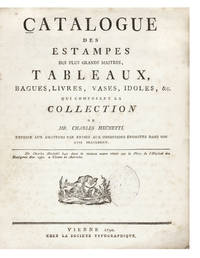
Best.-Nr. 6413viii 120 pp. 4to cont. pale blue paper wrappers spine defective. Vienna: La Société Typographique 1790. The uncommon sale catalogue of the collections formed by the founder of the famous Viennese music publisher. Originally from Lucca Mechetti c. 1745-1811 encountered financial troubles and was forced to sell his collection of thousands of items primarily Italian prints and paintings. In the introduction Mechetti highlights certain pieces in his collection which was apparently not for sale by auction but rather private contract. Pages 113-20 describe a large library rich in books on the arts and history. Nice copy. This copy was inscribed on the inside front wrappers to the amateur geologist Baron de Beroldingen see Zittel. From the library of His Serene Highness Prince Fürstenberg at Donaueschingen with his stamp on title. â§ Cicognara 4548. unknown
1720Best.-Nr. 540914London: Printed for E. Curll 1720. Hardcover. Good. First edition. Octavo. xix 5 320 8pp. eight-page publisher’s catalogue at the back. Illustrated with an engraved frontispiece portrait and three engraved plates one of which shows images of sign language. In the original calf with blind tooling on both covers neatly re-backed in 19th century calf with a red spine label and wove endpapers. The boards are darkened and worn at the corners four text leaves are slightly creased some intermittent toning about very good. The author of this popular account of an enterprising deaf-mute has been attributed both to William Bond and Daniel Defoe and has yet to be resolved in favor of one or the other. A scarce copy of the first edition in the original boards ESTC T69700. OCLC locates only two copies. Printed for E. Curll hardcover
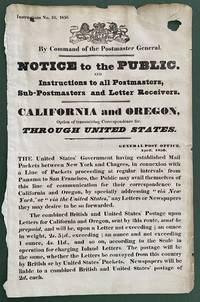
1850Best.-Nr. List2416Great Britain 1850. Broadside measuring 9 ⅞ x 15 ⅜ inches. Some chipping and wear to edge ink number written in corner two small section of loss due to improper mounting very good overall. Coat of arms of the United Kingdom above printed text. Very Good. A scarce broadside relating to British postal rates across the Panama Route through the Chagres River which supplied mail to California and Oregon beginning in 1848 before eventually being replaced by the Overland route in 1860. The service was characterized by long delay times as steamships on either side of the isthmus were often not coordinated causing major delays in the delivery. Several different steamship companies operated privately some carrying express mail. The letters were transported by canoe or pack animal across the isthmus. Postmaster General Cave Johnson began establishing post offices in California in 1848. Johnson also oversaw the transition to the prepaid delivery system. The broadside here of which we find no other records does state that postage must be prepaid and that the route can be accessed by writing “via New York” on the letters. A scarce postal history item relating to the expansion of mail services to California. We find no other records of this institutionally or in the trade. unknown
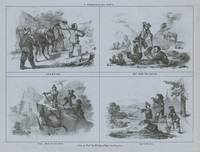
1850Best.-Nr. List1315Britton and Rey 1850. Single sheet measuring 8 ¼ x 10 ¾ inches on blue wove paper. Small chip to corner not affecting image some older tape repairs verso at margins else fine very good plus overall and quite attractive. Very Good. A series of four illustrations telling the story of a mining party that heads out with a pack mule only to fail to find gold and lose their mule before returning to a new prospect with their clothes in shambles. This is entry 209 in Baird’s California’s Pictorial Letter Sheets in which he sets the publication date as being prior to 1855. The series possibly illustrates scenes from a song. A particularly fine example on the classic blue wove paper of the period. unknown
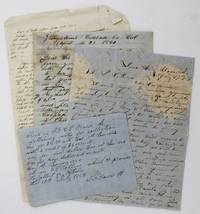
1860Best.-Nr. 4301Eldorado & Iowa Hill 1860. Good. Four manuscript documents including three letters totaling six pages. Old folds moderate toning minor edge wear a few tears a small hole in one letter. A neat group of four manuscript letters and documents all related to the mining activities of L.D. Davis of Georgia over a four-year period during the latter years of the California Gold Rush. Davis appears to be a lawyer living somewhere back east and may have been an investor in California mines or managing the financials for some mining concern from afar. The documents include an 1856 promissory note regarding "noted for collection" a long undated letter likely from California to Davis detailing amounts of gold taken from an unspecified mine and the mine's ownership situation and two letters overtly datelined from California -- the first from Iowa Hill in 1859 and the second from Georgetown in El Dorado County in 1860. Each document presents a unique set of concerns for Davis. Notable details of the three letters are as follows: 1 Autograph Letter Signed from A.J. Huff to Mr. L.D. Davis. Iowa Hill Ca. April 17 1859 2pp. The text reads in part "I have been very very sick for the last three weeks but am at this time improving.the disease is caused by the exposure of this last winter having worked continually in the rain and snow preparing my claim for the season. Times are very hard in this country now everyone has to work hard and is in big luck if he makes a decent living. A great many are making money very fast but in comparison not one in ten to the number than used several years back to make money or in other words the chances are about one in ten when they were one in fifty two and three in this country. If a man can get a good claim he can make more clear money out of it than he could then owing to the fact that everything is cheaper and experience has taught the People of California a great deal in respect to saving the gold and expediting the work. I think I have a very good claim which will last for a long time three or four years. It has been very expensive opening it but that is pretty well all over with now." 2 Autograph Letter Signed from J.D. Arranaut to L.D. Davis. Georgetown Eldorado County Ca. April 28 1860 2pp. Here a colleague of Davis's in California seems to be struggling and writes thanking Davis for a loan. The text reads in part with spelling normalized: "I was glad to hear from you and to.learn that you would comply with my request by letting my wife have $25 worth of corn for her use and please find enclosed a bank draft. I take it as a great favor as I am far from home. Let me know how my wife is getting along and if she stands in need of anything." 3 Autograph Letter Signed from J.H. Worley to L.D. Davis Esq. N.p. n.d. 1p. The letter concerns percentage ownership in an unspecified mine and opens with a four-line listing of the "amt. of gold taken from mine 513.51.1 while under my control." The author then writes in part: "The rent and expenses were take out of the above account and after the gold was sold one half after paying expenses. I know you are too well positioned in law to know that I dare not have settled with any other person unless I had been so instructed according to law. When Mr. Findley returned from Burke County he stated to me that one half the mine was for Mr Adams and myself and the other was for himself and his friends but did not say who they were. unknown
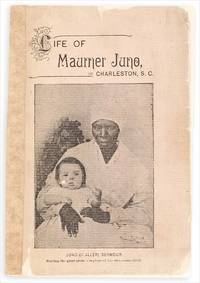
Best.-Nr. 3733512Atlanta: Foote & Davies 1892. Small 8vo. Frontis. 41 1pp. Pictorial wraps with later tape reinforcement to spine small tears and light soil. With a two-page introduction by William Tertsh Whilden Williamston Female College professor. Written through the lens of the “Lost Cause” ideology this life sketch of Juno Waller Seymour d. 1883 was crafted by a member of the Whilden family of Charleston South Carolina—possibly Ellen Ann Whilden 1822–1895 or W.G. Whilden to whom she was enslaved as a domestic servant. While presented as a memorial tribute to Seymour’s life its text blends plantation and evangelistic literature folklore and perhaps occasional kernels of biographical truth. According to the narrative Seymour’s given name was Cumba and she claimed her lineage as a member of West Africa’s Fula tribe and the daughter of a king. She was captured by slavers as a child and initially brought to the French colony of St. Domingue now Haiti. Amidst the tumultuous backdrop of Toussaint Louverture’s Revolution she was sold and transported to Charleston in 1800 where she came under the ownership of Bayfield Waller a city merchant. Seymour was subsequently given to the prominent Whilden family with Joseph Whilden Bayfield Waller’s stepson and co-founder of the City Gazette and Advertiser in 1816 serving as the family patriarch. To the Whildens she became known as “Maumer Juno” or “Maum Juno.” Apart from tending to her daily domestic duties Seymour looked after the growing family’s children and continued to do so across several generations. The front wrapper and frontispiece of the Life of Maumer Juno feature an identical image of Maumer Juno gently cradling a baby in her arms accompanied by the caption “Minding the great great-daughter of her first owner 1853.” Known as the “chattel Madonna formula” this visual motif was employed by 19th-century photographers to portray enslaved African American women as the benevolent care-takers to the children of their enslavers. Matthew Fox-Amato Support for this construct is found in elsewhere in the text but in words not images. In one passage Seymour is found to be “surprised and delighted when for the first time a tiny white babe was placed in her arms.” Seymour’s exuberant expression of joy is juxtaposed with a passage elsewhere in the text that underscores the fact that she never bore any children with her enslaved husband. Enlarging the “Madonna formula” further Seymour is posthumously labeled by the author as being a “saint of African birth” on the day of her funeral. This resonates with the author’s intention of depicting this faithful yet enslaved servant as deeply religious truly Christian and in fact purified as exemplified in an earlier passage where Seymour declares “I am black outside but inside I am white for every day my heart is washed in blood.” Following the primary text there is an additional seven-page profile of Seymour penned by “Mrs. J.C.H.” The reliability of this white woman’s observations seem questionable as when she writes: “She Seymour told me that when first dressed in our clothing she thought she was being prepared for sacrifice and fled away hiding in an outhouse while she took off her garments tearing them almost into ribbons in her fright.” p30 Still at least one observation may be deemed reliable such as this passage: “Of her native land she talked often and as the days of her pilgrimage lengthened her memories grew more bright and strong of her life in the far-away land. The customs of her people their worship of the new moon the wearing of cloth their method of preparing food all seemed vivid mental pictures…” p30 LCP Afro-Americana 5921. See the image “Old Maumer selling Groundnut candy in the Streets of Charleston” taken by G.N. Barnard 1819–1902 South Carolina photographer. unknown
Best.-Nr. 01-085816th Century . Bartsch XV no. 2. Engraving. 133 x 154 mm. 16th Century unknown
1930Best.-Nr. 59487New York: Horace Liveright 1930. Second Printing same year as the first. Octavo 21cm; black cloth with titles stamped in gilt on spine and front cover; illustrated endpapers; 1213-3093pp; illus. Inscribed by the author in year of publication the half-title page: "To Erskine and Sara / with never-ceasing affection / Sincerely & fraternally / Michael Gold." Further inscribed by Wood: "From Erskine & Sara to their dear friend Max Rosenberg - echoing the above - The Cats / July 1930." A tight clean copy in the original cloth binding; board corners lightly bumped and a few mild taps to board edges the endpapers illustrated after woodcuts by Howard Simon. Solidly Very Good lacking the scarce dustwrapper. A great association copy inscribed by Gold to one of the leading leftist intellectuals and authors of his time. Wood 1852-1944 was a self-styled anarchist aesthete and painter. As an attorney in the 1920s he defended a number of prominent figures on the left including the anarchist lecturer Emma Goldman and contributed prolifically to the radical periodicals of the period. With his second wife Sara Bard Field he was a long-time resident of Los Gatos California and was known for entertaining visitors at the estate "The Cats" mentioned in the present inscription. Interestingly Wood did not have a reputation for sympathy with doctrinaire Marxist thought; it seems unlikely that Gold would have written Wood such an effusive inscription even a few years later as during the Great Depression he would rise to become one of the leading apparatchiks in the CPUSA. Horace Liveright unknown
1705Best.-Nr. OB993London: Printed for R. C. Richard Chiswell S. S. S. Smith or Samuel Sprint B. W. Benjamin Walford. 1705. Hard Cover. x 30 23-286 289-392 351-553 1 p. plates portrait; 38 cm. The account of Hooker's life is by Izaak Walton 1593-1683. The first edition of 1553-1597 is Printing and the Mind of Man 104. Pages 211 220 276 432 437 and 445 are misnumbered 221 200 476 434 435 and 436; text and register are continuous. Added engraved title-page: Of the Lawes of Ecclesiastical Politie Eight Books. Edited by John Gauden 1605-1662. Bound in contemporary leather rebacked by Hope Bindery with gilt spine; very good. Stock#OB993. Printed for R. C. [Richard Chiswell?], S. S. [S. Smith or Samuel Sprint?], B. W. [Benjamin Walford?]... hardcover
1789Best.-Nr. 3236The scarce first edition of this delightful collection of moral tales attributed to the prolific children's writer Richard Johnson. Illustrations by Bewick were added to the second and subsequent editions of which there were many including four in America in Philadelphia Wilmington and New York. The author is given on the title page as 'by the editor of the Looking Glass for the Mind' which was printed by Newbery in 1787 and which was actually by the French children's writer Arnaud Berquin. It was translated by 'J. Cooper' one of the many pseudonyms of Richard Johnson. In his preface the editor praises Berquin and other foreign writers whose books for the juvenile market 'merit the highest encomiums' and who have humbled themselves to deal in 'the plain language of youth in order to teach them wisdom virtue and morality'. The text comprises some 23 short stories of varied length style and setting including such titles as 'Juvenile Tyranny conquered' 'The Book of Nature' 'The happy Effects of Sunday Schools on the Morals of the rising Generation' 'The Happy Villager' 'The Indolent Beauty' and 'Female Courage properly considered'. 12mo 170 x 100 mm attractive engraved frontispiece and pp. vi 212 engraved title-page vignette tear to p. 85 through text but with no loss in contemporary plain sheep spine cracking some scuffing to covers plain spine ruled in gilt with faded ink title headcap chipped worn at extremities with the contemporary ownership inscription of Ann Elliot on the front pastedown. Roscoe J39 1; Osborne II 900. Elizabeth Newbery
1702Best.-Nr. 007452Augsburg 1702. First Edition. Full Straight-Grained Morocco. Very Good. A fine collection of highly detailed Baroque copper engravings. 8vo. 18.5 by 13 cm. 188 leaves of plates. Plates most often have two copper engraved illustrations each approximately half the page but a good number of plates two or more smaller vignettes in lieu of a larger rectangular illustration in the bottom half of the page. There are also an abundance of title pages -- these are included in the pagination -- with two title pages per section each with a frontis and also a title for the work overall. Well over 300 separate illustrations. Printing on only one side of each leaf. Condition: rubbing along joints and some other scratches and wear to straight grained morocco. Scattered foxing and/or other soiling never disconcerting fortunately. A few short-ish closed tears. unknown
1959Best.-Nr. 4585New York: Vanguard Press 1959. First American edition. Hardcover. Fine/fine. 8vo charcoal cloth Advance Review Copy with Review Slip and glossy drawing laid in. Author's first book. Extraodinarily fresh condition. Vanguard Press hardcover
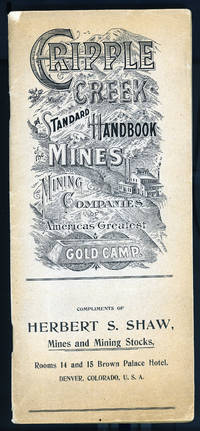
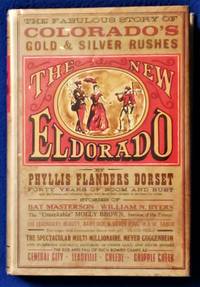
1901Best.-Nr. 215CRIPPLE CREEK: A Standard Handbook of the Mines and Mining Companies 1901 of America's Greatest Gold Camp and other Mining Camps of Colorado U.S.A. Correct To Date. Compiled from the Land Office Records and Official Reports of the Various Companies Mentioned Herein By O. R. Salmans and J. M. Auld No. 19 Midland Block Colorado Springs Colorado January 1901 App-Stott Co. Engravers and Printers Denver Colorado "Compliments of Herbert S. Shaw Mines ands Mining Stocks Rooms 14 and 15 Brown Palace Hotel Denver Colorado" printed on front cover. Handbook dimensions: 4-1/2 inches by 10-1/4 inches; 96 pages. Condition: very good plus to near fine; light chipping near spine ends; internal pages brtight and clean; complete with front and back wrappers. Stock broker's investment handbook detailing property production development and other details for mining companies throughout the Cripple Creek Gold Mining District of Colorado. Hundreds of mining companies listed. Numerous mining plat maps. One 2-page township map of the Cripple Creek Gold District. Excellent reference for collecting Cripple Creek mining stock certificates and finding mining properties in the district. COLORADO ARTIFACTUAL. App-Stott Co., Engravers & Printers paperback
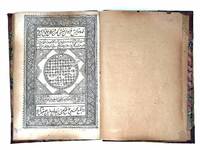
Best.-Nr. O16Quarto ca. 28x195 cm. 252 pp. numbered in Eastern Arabic system. Text in Farsi title page decorated with elaborate floral ornaments. Period ink notes in French and Farsi on both endpapers the note on the rear endpaper is dated 1303 H. 1886 and reads in translation: “It’s the property of Allah and after the property of Amun Ali abd Al-Ali ibn Akbar ali Khan God bless him.” Period Indian brown half sheep with marbled papered boards renewed gilt lettered title label and gilt tooled borders on the spine and corners. Binding rubbed on extremities a minor chip of marbled paper on the rear board paper slightly age toned but overall a very good copy. Rare Indian imprint in Farsi with no paper copies found in Worldcat. Interesting edition of the famous “Gulistan” by Saadi Shirazi one of the greatest poets in the classical Persian literary tradition. As follows from the afterword the Bombay edition was approved by Sheikh Ghulam Muhi ad-Din and edited by Abd ar-Rauf. Commentaries on the margins include references to Ali Bahai; the main text is followed by “khatima” or afterword. The author Sa’adi Shirazi known as the “Master of Speech” created thousands of mystical romantic poems long forms with irregular rhythm – qasidas religious hymns etc. “Gulistan” was composed in 1258 AD and is Sa’adi’s second major work after “Bustan” “Garden”. It consists of small stories of aphoristic character with elegant intricate plots expressed in precise and exact lines. This “multi-layered” poem led to the creation of an Iranian saying: “Every line of Sa’adi has 72 meanings”. Gulistan contains hidden context of Sufi character and is deeply connected with the teachings of as-Suhrawerdi. b. 1155. The poem influenced both Western and Eastern tradition and showed new moral practical philosophical and mystical dimensions of small literary forms. hardcover
1525Best.-Nr. 4627Vinegia Venice: Nicolo di Aristotile detto Zoppino 1525. Very Good. Bound in period vellum with title and intricate symbol on spine. Covers have moderate and common aging to vellum. Partially separated from binding and some loose pages; all pages present - there is a jump in pages from LVII to LXI but text appears complete and same issue with other copies currently/recently available. Some minor spotting inside. Contains 30 engravings including allegorical scenes surrounding title page intricate capital lettering in text image on final page and 27 images related to the dialogue throughout. Type is all in italics except where names are in capital characters. Comprising the works of Lucian this is the first Italian translation. Comes with a cardboard slipcase for stability in shipping. Pages: 488 Dimensions: 4 x 6 x 1¼. Nicolo di Aristotile detto Zoppino unknown
Best.-Nr. xxx044Lincoln: Univ of Nebraska Press 1983. First Thus. Hardcover. Fine/Fine. All first printings of this Nebraska edition. Thirteen volumes Volume One being the folio atlas published without dust jacket. Eleven of the other twelve volumes in large octavo Volume 13 being the set Index. Volume 12 is the herbarium volume with black and white reproductions of the "more than 200 pressed and dried plant specimens gathered by" the expedition; actually 239. This volume larger than the others. Aside from the atlas the other twelve volumes are fine in fine dust jackets. The atlas is very good with minimal fading and also minimal fading to the spine which is often the victim of sunshine. The atlas is a presentation copy inscribed by Moulton to Samuel Davis III. This edition is critically edited by Moulton and the press. Other than the original two volume 1814 edition of the journals this is the quintessential edition and is now scarce in fine condition first editions. PLEASE NOTE THAT SHIPPING INCLUDING INSURANCE WILL BE EXTRA TO COVER EXPENSES OF SHIPPING WHICH WILL BE IN 2 OR 3 BOXES. REQUEST FOR EXTRA SHIPPING WILL BE CALCULATED UPON REQUEST TO THE BUYER. PLEASE DO NOT ASK FOR COST OF SHIPPING UNLESS YOU INTEND TO PURCHASE BUT EXPECT UPWARDS TOWARD $100. THANK YOU. Univ of Nebraska Press hardcover
1813Best.-Nr. elala1132London: Published By W.Faden Geographer To His Majesty 1813. 1813. 8vo. pp. 2 p.l. 123. folding table. contemorary half calf extremities bit rubbed. armorial bookplate of General Aylmer. Second Edition. First published in 1799 this was the earliest published topographical description of the young province of Upper Canada prepared by its first surveyor-general. Smith who had originally come to Upper Canada in 1792 serving as a quartermaster in a British regiment stationed at Niagara was appointed to the position of surveyor-general of the province in 1793 by Governor-General Simcoe. The advertisement following the title states that the notes and gazetteer were drawn up at Simcoes request to illustrate a separately published map of the colony and that this second edition was revised corrected and updated by Lieutenant-Governor Francis Gore to accompany a new map compiled in the surveyor-generals office and recently published under his direction. Casey I 983. Lande 2208 with map. Morgan p. 353. Sabin 85205. TPL 736. DCB VII pp. 811-13. London: Published By W.Faden, Geographer To His Majesty , 1813. unknown
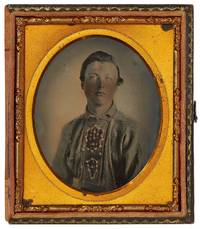
1859Best.-Nr. 423474Salt Lake City 1859. Unbound. Near Fine. A hand-colored sixth plate ambrotype portrait of a young man wearing what appears to be a battle shirt identified on the verso of the plate and in pencil on the paper lining behind the image as "Leivingston Moore. Salt Lake" and dated April 22nd 1859. Slight tarnish along perimeter of image; some tarnish on mat; lacking half of the leather covered case. According to Census records Livingston Moore was born in 1840 in Jamestown Missouri lived in St. Louis and finally died in Moran Missouri in 1911. Likely a Mormon Livingston Moore lived most of his life in Missouri which had a large Mormon population until The Missouri Mormon War took place in 1838 and forced more than 10000 Mormons to leave the state. Many settled near or in the city of Nauvoo Illinois. Moore's census records do not indicate why he was in Salt Lake City in 1859 but it is possible that he was sent there as a member of the Nauvoo Legion a militia employed by LDS leaders for protection of the community. Between May 1857 and July 1858 a confrontation between the Mormon settlers in the Utah Territory and the U.S. Federal Government took place referred to as the Utah War. This armed dispute stemmed from an attempt by President James Buchanan's administration to replace Brigham Young as governor of Utah Territory. Although the conflict was over by April 1859 it is conceivable that Moore may have been stationed in Salt Lake in case any additional uprisings occurred against the Mormons. unknown
1971Best.-Nr. 5613North Vietnam: N.P. 1971. An original gouache propaganda painting from North Vietnam as was from 1971. The style is pure socialist realism the official art doctrine of Hanoi strongly influenced by Soviet and Chinese propaganda art of the period. We suspect that this painting was a preparatory piece for a propaganda poster although we have been unable to find a poster that followed. The coastal scene with a warship and junks was particularly relevant in 1971 when US naval bombardment of the north was at its peak. The title which can be read as "Guard the Skies of the Homeland" or "Defend Our Homeland's Skies" us exactly the sort of patriotic messaging used in North Vietnam at this time. The soldier's uniforms are of the North Vietnamese army red tabs with gold stars in particular being NVA rank insignia. From the close-up detail of the ship carries a painted inscription that appears to read Trưá»ng Sa; a reference to the Spratly Islands a matter of considerable strategic sensitivity at the time.During the war North Vietnam recognised China's claims to the islands but once they had won the whole country changed their mind and made their own claims. Original propaganda artwork from this period is scarce. The painting has some damage with some significant closed tears and some rubbing to a little of the paint and some small areas of paper loss Look to the right of the soldier on the right. Nevertheless it is an attractive piece and could be fully restored. The paper has been lightly tipped onto European backing art card quite some time ago and this also has defects but could be removed. The painting is 61cm x 40cm. The backing card is 67cm x 46cm. Une peinture de propagande originale à la gouache provenant de l'ancien Nord-Vietnam datant de 1971. Le style est celui du réalisme socialiste pur doctrine artistique officielle de Hanoï fortement influencé par l'art de propagande soviétique et chinois de l'époque. Nous pensons que cette peinture était une ébauche destinée à une affiche de propagande bien que nous n'ayons pas réussi à trouver l'affiche qui en a résulté. La scène côtière avec un navire de guerre et des jonques était particulièrement d'actualité en 1971 alors que les bombardements navals américains sur le nord étaient à leur apogée. Le titre qui peut se lire « Gardez les cieux de la patrie » ou « Défendez les cieux de notre patrie » correspond exactement au type de message patriotique utilisé au Nord-Vietnam à cette époque. Les uniformes des soldats sont ceux de l'armée nord-vietnamienne les pattes rouges ornées d'étoiles dorées étant notamment les insignes de grade de l'ANV. Les œuvres de propagande originales de cette période sont rares. La peinture présente quelques dommages notamment des déchirures fermées importantes quelques traces d'usure sur une petite partie de la peinture et quelques petites zones de perte de papier regardez à droite du soldat de droite. Il s'agit néanmoins d'une œuvre attrayante qui pourrait être entièrement restaurée. Le papier a été légèrement collé sur un carton d'art européen il y a déjà un certain temps qui présente également des défauts mais ceux-ci pourraient être éliminés. La peinture mesure 61 cm x 40 cm. Le carton de support mesure 67 cm x 46 cm. N.P. unknown
2012Best.-Nr. __0435071696Heinemann 2012. Mixed media product. New. 1st edition. 13.15x10.55x7.87 inches. Heinemann unknown
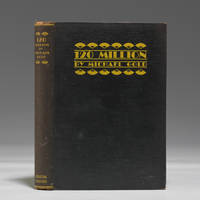
1929Best.-Nr. 1161981929. First Edition. Signed. GOLD Mike. 120 Million. New York: International 1929. Octavo original black cloth. $1650.First edition of the first book by controversial radical Mike Gold published at the cusp of the Great Depression an outstanding presentation/association copy inscribed by him to influential New York publisher and editor Albert ""Pete"" Gross inscribed by Gold along an entire page ""To Pete GrossÑLion Tamer Father Author's Friend New Yorker Book Maker Philosopher Gin Drinker and Puritan from a fellow bum Mike Gold"" featuring 20 early passionate writings by Gold on Black Americans the I.W.W. immigrants miners strikers and more.Born Itzok Isaac Granich Jewish American Mike Gold was a ""radical's radical. born to poverty reared in poverty and educated by poverty"" Folsom Education of Mike Gold 224. A founding co-editor of New Masses in 1926 before becoming its sole editor Gold made a major impact that was early and unusually noted by Time magazine which declared: ""40 times he has been chased by cops for taking part in street demonstrations; 20 strikes have had his help."" Confrontational and controversial Gold was at the forefront of an emerging literary tradition that launched works by Richard Wright Tillie Olsen Henry Roth John Fante H.T. Tsiang Claude McKay and many more. His own writings were pivotal in arguing for art as a ""class weapon"" Rideout Radical Novel 165Ñworks that helped launch a movement ""nurtured by the cultural politics of the left"" the impact of racism poverty and the rise of fascism and fiction that was also often propelled by the ""heroes plots and language of pulp fiction."" To Lionel Trilling ""the importance of the radical movementÉ cannot be overestimated. It may be said to have created the American intellectual class as we now know it"" Denning Cultural Front 240 3. The 20 works in 120 Million his first book includes Gold's writings on Black Americans immigrants the I.W.W. and strikers and miners along with short fiction dramatic prose and select poems. First edition first printing: with ""Copyright 1929 by International Publishers Co. Inc/""; no statement of edition or printings. Without very elusive dust jacket. Hanna 1443. The recipient Albert ""Pete"" Gross was a highly influential publisher and editor who co-founded International Publishers in 1924 before becoming am editor at Boni & Liverright in 1924. Text very fresh faint edge-wear to spine ends of original cloth. An impressive about-fine inscribed copy. hardcover
1742Best.-Nr. 23231Paris 1742. 12mo. Briasson Contemporary gold-tooled polished calf sewn on 5 supports with the corresponding raised bands on the spine a red morocco title label on the spine lettered in gold the gilt coat of arms of Louis-Hilaire du Bouchet comte de Sourches in the centre of both boards gold-tooled board edges red edges marbled endpapers. With an engraved frontispiece portrait of Thamas Kouli-Kan an engraved folding map 26.4 x 22.5 cm several decorated woodcut initials and woodcut head- and tailpieces. 4 455 6 pp. First edition of this life of the Persian ruler Nader Shah 1688-1747 founder of the Afsharid dynasty. Published anonymously the work has been attributed to Jean-Antoine Du Cerceau 1670-1730 and Abbé André de Claustre dates unknown. The biography is arranged chronologically with the years indicated in the margins. Illustrated with a large portrait and a folding map of Persia and the Mughal territories the work also contains a wealth of information on the geography and history of the Persian Empire.Nader Shah was a member of the Afshar tribe. He entered the service of Tahmasp the son of Shah Sultan Husayn. Nadir took the name Tahmasp Kuli Khan Tahmasp's slave. He warred against the Turks successfully and when the shah turned victory to disaster by a conciliatory peace Nadir in 1732 deposed him. Tahmasp's infant son Abbas III was placed on the throne with Nadir as regent. In 1736 Nadir deposed Abbas and he himself became shah thus ending the rule of the Safavid dynasty. In 1747 during a campaign against rebellious Kurds Nadir Shah was assassinated by officers of his own guard. Although the dynasty he founded the Afshar dynasty 1736-49 was short-lived Nadir is generally regarded as one of the greatest of all rulers of Persia. The present copy comes from the library of Louis-Hilaire du Bouchet called the Comte de Sourches 1716-1788 Seigneur de la Ronce and d' Hilaire-Ursule de Thiersault captain of the dragons at the regiment of the Languedoc lieutenant-général and knight of Saint-Louis.From the library of Louis-Hilaire du Bouchet 1716-1788. The edges of the boards are slightly scuffed the spine shows traces of use the title label is partly detached but still present. The leaves are lightly browned. Otherwise in good condition.l Atabey 257; De Backer & Sommervogel II col. 977; Cioranescu 19736; cf. Diba Collection p. 83 later ed.; for the coat of arms: Olivier Man. Rel. Arm. pl. 580. hardcover
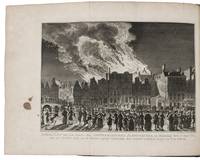
1772Best.-Nr. 3909Amsterdam: Gerrit Warnars and Petrus den Hengst 1772. Contemporary marbled calf gold-tooled spine and board edges red sprinkled edges. 4to. With an engraved frontispiece a small engraved illustration by Noach van der Meer II on both title-pages 4 folding engraved plates of the old theatre; 5 folding engraved plates of the new theatre all engraved by the publishers after designs by Van der Meer and 1 by Simon Fokke. 2 works in 1 volume. Large-paper copies of the first editions of two works on the schouwburg theatre of Amsterdam the first on the old theatre which burned down in 1772 and the second on the new theatre which was built on the Leidseplein and finished in 1775. The large engraved plates show the exterior of the new theatre together with the surrounding buildings and with people on the foreground and the interior of both the theatres the balconies and stages. Two plates depict the old theatre going up in flames and another plate shows the ruins. The text gives a history of both the theatres including a description of the building process the restorations and renovations the staff the stage equipment lightning decor hoist tools costumes etc. and also including a vivid description of the fire. The first work is often ascribed to Jan Fokke but both works are also frequently ascribed to Myndert de Boer who wrote the long poems in both works.With bookplates. Binding rubbed along the extremities slightly worn at the head and foot of the spine. The plate of the external fire with a large tear some occasional spots and stains but otherwise in very good condition.l Van Aken III p. 65 & 70; Muller Historieplaten 4253a & 4283a; cf. Sluijter-Seijffert "De Amsterdamse schouwburg van 1774" in: Oud Holland XC 1 1976 pp. 21-64. Gerrit Warnars and Petrus den Hengst, unknown
1908Best.-Nr. 2111902160201390Yushu-sha 1908. Soft Cover. Fine. Volume: 1 Yushu-sha paperback