NAKAMURA, Tomihei (or Magobei)Biblio.com
15 698 résultats
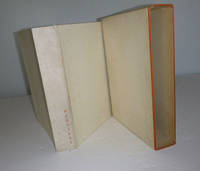
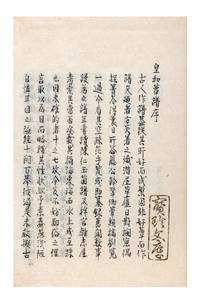
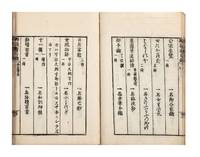
réf. 7548151 folding leaves. Three parts in one vol. Thickish 8vo orig. patterned wrappers upper wrapper a little worn orig. block-printed title label on upper cover label somewhat defective new stitching. From the colophon: Kyoto: Nakamura Magobei 1710. First edition of this important and useful bibliography. In 1710 “the Kyoto publisher Nakamura Magobei compiled a catalogue known as Bengi shomokuroku. The aim of this catalogue was to help the reader disentangle book titles which could be easily confused because they were read in the same way because they used the same characters but different readings or because they were known by several titles…Nakamura Magobei included manuscripts kakihon and explained that he had ‘given the majority of the many titles of manuscripts that have been circulating since past times’.”–Laura Moretti “The Japanese Early-Modern Publishing Market Unveiled: A Survey of Edo-Period Booksellers’ Catalogues” in East Asian Publishing and Society Vol. 2 2012 pp. 206n & 245. Nice copy preserved in a chitsu. Some minor worming carefully repaired. ⧠Peter Kornicki The Book in Japan pp. 441-42–”The publication of Bengisho mokuroku in 1710 went considerably further. The author was Nakamura Magobee a Kyoto publisher and bookseller and it was written for fellow members of the book trade. He considered books printed with movable type as a separate category and was the first to draw up a catalogue of them. He directed some attention to the book trade which also explains his attention to the titles of books not yet published and to books with homophonic titles that could easily be confused. At the same time the compilation of catalogues for commercial and for private purposes was becoming commonplace and bespeaks a growing concern with the identification of books by their distinguishing characteristics.”. unknown
réf. 7548151 folding leaves. Three parts in one vol. Thickish 8vo orig. patterned wrappers upper wrapper a little worn orig. block-printed title label on upper cover label somewhat defective new stitching. From the colophon: Kyoto: Nakamura Magobei 1710. First edition of this important and useful bibliography. In 1710 “the Kyoto publisher Nakamura Magobei compiled a catalogue known as Bengi shomokuroku. The aim of this catalogue was to help the reader disentangle book titles which could be easily confused because they were read in the same way because they used the same characters but different readings or because they were known by several titles…Nakamura Magobei included manuscripts kakihon and explained that he had ‘given the majority of the many titles of manuscripts that have been circulating since past times’.”–Laura Moretti “The Japanese Early-Modern Publishing Market Unveiled: A Survey of Edo-Period Booksellers’ Catalogues” in East Asian Publishing and Society Vol. 2 2012 pp. 206n & 245. Nice copy preserved in a chitsu. Some minor worming carefully repaired. ⧠Peter Kornicki The Book in Japan pp. 441-42–”The publication of Bengisho mokuroku in 1710 went considerably further. The author was Nakamura Magobee a Kyoto publisher and bookseller and it was written for fellow members of the book trade. He considered books printed with movable type as a separate category and was the first to draw up a catalogue of them. He directed some attention to the book trade which also explains his attention to the titles of books not yet published and to books with homophonic titles that could easily be confused. At the same time the compilation of catalogues for commercial and for private purposes was becoming commonplace and bespeaks a growing concern with the identification of books by their distinguishing characteristics.”. unknown books
1551réf. 32892-1119Florence Lorenzo Torrentino 1551. With large historiated woodcut initial at the beginning. 90 pp. 1 blank leaf. Sm.-4to 193 x 138 mm. 17th-century polished calf gilt panelled spine red edges blind library stamps on first and last leaves back rep. From the collection of Charles Spencer 3rd Earl of Sunderland lot 10608 in his sale 1882. Florence Lorenzo Torrentino 1551. First edition. Probably originally published and later reprinted Palau: Se reimprimio en coleccion en la obras. as part of the larger work by the Spanish born Jesuit Torres 1509-1584 "De summi pontificis supra concilia auctoritate libri tres" 1551 against Ambrosius Catharinus Archbishop of Conza 1484-1553. Torres was professor at the Roman College and wrote more than seventy books principally polemical mainly against Protestants. "Can also exist independently": State Library Berlin transl. - Palau 33697 knows only the BN copy; FRBNF31481832; CNCE 48142 no copy in Florence; cf. Adams 1192; not in EDIT 16; not in STC Italian but cf. p. 687. Florence, (Lorenzo Torrentino) unknown
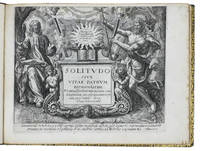
1606réf. 63TA003RHVIKParis 1606. Small oblong folio 19 x 25.5 cm. Thomas de Leu Gold-tooled blue goatskin morocco ca. 1890 bound by Bernard David or his son Salvador David in Paris on 5 recessed supports each board with elegant double borders title and date reading up the spine with decorations above and below gold-tooled turn-ins and board edges curl-marbled endpapers signed with a stamp - in sans-serif capitals - in the corner of the first free endleaf DAVID. With an engraved allegorical title page including a 2-line quotation from Hebrews 11:37-38 and 29 engraved prints plate size ca. 15 x 19 cm: mostly numbered but a few unnumbered or irregularly numbered illustrating the lives of the early Christian hermits living in the desert 7 signed by Thomas de Leu as printer-publisher in 2 cases accompanied by the monogram NB the engraver Nicolaes de Bruyn. 1 29 engraved ll. Finely engraved title page and prints depicting the lives of hermits living in the desert as described by Hieronymus in his famous Vitae patrum. The engraved title page and prints were printed and published by Thomas de Leu or de Leeuw 1560-1612 a Flemish engraver in Paris who probably engraved many himself. He had begun his career in Antwerp and some of the prints signed by him excudit also bear the NB monogram of the engraver Nicolaes de Bruyn 1571-1656 in Antwerp. The Antwerp painter Maarten de Vos 1531/32-1603 had drawn numerous hermit scenes: four series engraved printed and published by Johannes I Sadeler ca. 1550-ca. 1600 and his brother Raphael I Sadeler 1560-1632 who continued alone with three further series making in total seven series containing 7 engraved title pages and 107 prints all published at Antwerp at least the first series in or before 1584. De Leu and De Bruyn very skillfully copied all seven series including the title pages and captions. The present selection includes the title page of the first series Solitudo which originally contained 29 prints but only 16 of the present 29 prints come from that series the other 13 are taken from series 2 Sylvae 1 3 Trophaeum 1 4 Oraculum 5 Sylvae 2 and 6 Trophaeum 2.Bernard David 1824-1895 studied under Lortic and other leading Paris bookbinders before setting up on his own there. His son Salvador d. 1929 took over the workshop in 1890. The laid endpapers show no watermark. With aa small marginal tear repaired occasional minor marginal spots and a few tiny and insignificant scuff marks on the edges of the binding. Book and binding otherwise in very good condition and with ample margins.l Hollstein XXI pp. 147-155 nos. 377-450 & pp. 240-245 nos. 118-157 the Sadeler eds. but noting the De Leu eds. at the end of each series; www.calcografica.it many of the prints in these De Leu series; USTC 6000645 3 copies; cf. for De Leu also: Benezit 6 p. 623; Thieme-Becker 23 pp. 143-144. unknown
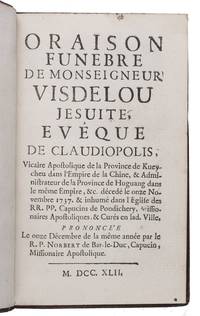
1742réf. 89PBMXY3Z0MCAvignon: no publisher 1742. Contemporary calf gold-tooled spine with red label marbled endpapers red edges. 8vo. Second or third edition of the funeral oration for the sinologist and mathematician Claude de Visdelou 1656-1737 by Father Norbert of Bar-le-Duc 1703-1769 dedicated to Pope Benedict XIV. The oration prooved highly important in the so-called Struggle of the rites in China between the Jesuit missionaries and the Chinese emperor and the Pope.The author of the oration Norbert de Bar-le-Duc a Capuchin monk 1716 and priest 1729 also known as Norbert de Lorraine Curé Pierre Parisot or Abbé Platel was sent to Malabar and later to Pondicherry in December 1736 after being appointed procurator of the French mission. He stayed for three years in Pondicherry where he soon came into conflict with the Jesuits on the same issue - the struggle of the now Malabaric rites -which had lead to Visdelous exile in the same Capuchin monastery in the same town. So the anti-Jesuit Father Norbert de Bar-le-Duc understandably delivered Visdelous funeral oration .An undated 4to edition that names no printer or place of printing appears to be the first edition of the funeral oration. Sommervogel and Cordier mention an 8vo edition nominally printed by Antoine Pereira in Cadiz though other sources suggest it was printed in Avignon with the same collation as our edition and published in the same year making the present edition the second or third.Fine copy with bookplate on inside front cover: ''Devie Prêtre''. Binding skilfully repaired; head of second fly-leaf damaged.l De Backer & Sommervogel VIII col. 843; Cordier Sinica 1100-1; Librairie Polak Coll. de M.M.: Extreme oriênt du 16e siècle au 20e siècle 305; Adelhelm Jann Die katholischen Missionen in Indien China und Japan 1915 passim; Claudia von Collani & Claudio Filippo Grimaldi S.J. Zur Ankunft des päpstlichen Legatien Charles-Thomas Maillard de Tournon in China in: Monumenta Scrica 42 1944 pp. 329-359; Robert Streit & Joh. Dindinger eds. Bibliotheca Missionum 7 1932 pp. 105-107; Biogr. univ. XLIII cols. 638-640; not in Lust. [no publisher], unknown
1950"Everyone who is concerned with international finance listens when Schacht speaks. His new plan, designed to restore Europe's economic well-being, is an ingenious, essentially uncomplicated idea which has already affected official plans for dealing with Europe's [post WWII] exchange problems. For the rest of his life Dr. Schacht will remain a controversial figure on account of the political role he played in Germany from 1930 onwards; but as a financial and banking expert - as friend and collaborator of Montague Norman, and many other experts in this field - he has had hardly an equal in our time." - dust jacket. 125, [1] pp. First English printing of the 1949 German first edition. Original light yellow cloth lettered in red is very well preserved. Binding tight. Former library copy but with only two markings: a stamp inside the front board and a stamp upon the copyright page. Modest lean to spine. Average wear to dust jacket which is now preserved in archival-grade Brodart. A quality copy of this daring proposal. Peterson p.367 Book
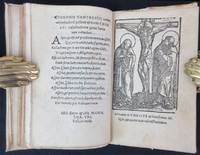
1536réf. 12039Antwerp: Simon Cock Cocus. Good with no dust jacket. 1536. First Edition. Vellum. 44 ff. Small octavo. Newer vellum binding over card. Vellum has some light wear some browning to the rear. Newer end papers. Title page a bit grubby. Some occasional small staining/thumbing but otherwise very nice. Recto of last leaf has a full-page woodcut of the crucifixion verso has an errata and a neat older owner name in ink. A very scarce copy only 5 recorded in World Cat of a collection of religious verse hymns elegies and prayers by three Neolatin poets. The first is "Cornelius" which may refer to Cornelius Crocus Kroock 1500-1550 a Dutch theologian and educator; then Joannes Fernandus and Rodolphus Langius. There is an introductory poem by Faustus Andrelinus and a final poem by J. B. Cantalicius. Printed in March 1536. OCLC 69408729 NK 1631. ; 8vo 8" - 9" tall; 88 pages . Simon Cock (Cocus) hardcover
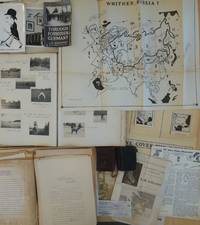
1950réf. List2425Europe and California 1950. Includes two small diaries from 1901 and 1917 with sporadic entries a large photo album measuring 14 x 11 with appx. 400 small photographs from 1906-1909 attached to album pages most measuring 3 x 2 as well as a few larger format images laid in. With 100 plus pages of typed pages including retained correspondence story ideas and various other manuscripts. With eleven maps produced for his “Of Men and Maps” series including five copies of a large map entitled “Whither Russia” in varied states and in large sizes up to 30 by 36 inches and a handful of small ephemeral pieces. Generally near fine condition with the exception of the album which is missing its rear board and has some pages loose and torn. Very Good. J.M. de Beaufort a war correspondent for the London Daily Telegraph and New York American during World War I recounted his wartime adventures in the 1917 book "Behind the German Veil: A Record of a Journalistic War Pilgrimage." Originally arriving in Chicago in 1909 he married a steel magnate's daughter and pursued a career in show business. However by 1912 he had gone through a divorce and transitioned to newspaper work earning the moniker of the "Dude Reporter." Originally born in the Netherlands as Jacques Albert Uilenbroek he was thought to be a deserter. He spent the latter part of his life in the United States apparently jailed in San Francisco for a stint in the 1920s and eventually settled in Los Angeles. Offered here is an interesting smattering of material from the life of the mysterious De Beaufort which bookends his most unusual career and life with a large visual photographic record of his life in Europe as a young man and over a hundred pages of manuscript material from late in his life with a highlight being several maps in draft form for an apparently unpublished project called “Of Men and Maps.” As a group the material shows the work of an ex-con artist and war correspondent trying to regain his form while living in Los Angeles. He was still writing as a “Special Correspondent” at this point though the title seems to have been fully honorary. Also included are two small pocket journals with sporadic notations from his life in Europe in 1900 and in 1917. In its entirety the group gives an interesting visual and manuscript record of a literary fraudulent and imaginative transatlantic life and intellect. The cartographic highlight of the group is several iterations of a large map called “Whither Russia” in varied forms which show an interesting interpretation of the sphere of influence of the USSR and its growth from 1939 to 1946. Also included are two drafts of a map of Operation Market-Garden in the Netherlands in 1944 an unidentifed tactical map of a military battlefield a map called “Middle East Jackpot” showing the division of territory between the Allied and Axis powers a map called “Dawn’s Early Light some reproduced small format maps from the De Beaufort’s and a small map called “Gifts from Yalta.” De Beaufort was working on these maps for a column called “Of Men Maps and Memories” that was published in the East Los Angeles Tribune. He also sent the columns out in newsletter form from his address at 1635 N. Ogden Drive in Los Angeles. The collection of manuscripts drafts and retained correspondence tackle a range of subjects perhaps most interestingly those detailing De Beaufort’s creative process - drafts of stories lists of ideas for stories and letters. His over the top style is on display in a lot of the writings some of which are of unknown origin and purpose. The documents contain correspondence between De Beaufort and Edwin Pauley the oil man and presidential advisor. In one untitled essay he asks himself the question “What has been your most thrilling experience” and his reply is “ Silly questions. Who or at least what newspaperman of some 25 turbulent years standing - and falling - could answer such a question. A reporter’s life has a thousand thrills. There was that rainy day in Marcy 1915 in the fortress of Loetzen when I stood face to face with Hindenburg. Hm yes that was quite a thrill…” De Beaufort was entrenched in the Los Angeles journalistic scene at this point and the documents show the degree to which he relied on his former glories to attempt various career revitalizations endeavors. The album of photographs from 1906-1909 over 400 in total give a visual record of the young Uilenbroek’s life in Europe. The star of the collection is his bulldog Bob who travels throughout Europe with him and eventually comes to America by 1907. Mary who we presume to be his future wife is featured heavily in the images. It is unclear whether he was working at this point the images show affluent young people and their dog in varied cities and are purely of a personal nature. Other photographs laid in are relics from his war correspondent period. The loose photographs and ephemera are a mix of portraits from different periods from his life including two pictures of Sydney Turing Barlow Lawson one signed by his widow. The journals are sporadically filled and hard to decipher though one legible passage says “drinking all day.” Overall the group gives evidence of this intriguing life and is the only extant group of material relating to Beaufort to our knowledge with the exception of a single journal from his time in Belgium during WWI that was sold at Bonhams and is still available in the trade as of this writing. unknown
1950réf. List2425Europe and California 1950. Includes two small diaries from 1901 and 1917 with sporadic entries a large photo album measuring 14 x 11 with appx. 400 small photographs from 1906-1909 attached to album pages most measuring 3 x 2 as well as a few larger format images laid in. With 100 plus pages of typed pages including retained correspondence story ideas and various other manuscripts. With eleven maps produced for his “Of Men and Maps” series including five copies of a large map entitled “Whither Russia” in varied states and in large sizes up to 30 by 36 inches and a handful of small ephemeral pieces. Generally near fine condition with the exception of the album which is missing its rear board and has some pages loose and torn. Very Good. J.M. de Beaufort a war correspondent for the London Daily Telegraph and New York American during World War I recounted his wartime adventures in the 1917 book "Behind the German Veil: A Record of a Journalistic War Pilgrimage." Originally arriving in Chicago in 1909 he married a steel magnate's daughter and pursued a career in show business. However by 1912 he had gone through a divorce and transitioned to newspaper work earning the moniker of the "Dude Reporter." Originally born in the Netherlands as Jacques Albert Uilenbroek he was thought to be a deserter. He spent the latter part of his life in the United States apparently jailed in San Francisco for a stint in the 1920s and eventually settled in Los Angeles. Offered here is an interesting smattering of material from the life of the mysterious De Beaufort which bookends his most unusual career and life with a large visual photographic record of his life in Europe as a young man and over a hundred pages of manuscript material from late in his life with a highlight being several maps in draft form for an apparently unpublished project called “Of Men and Maps.” As a group the material shows the work of an ex-con artist and war correspondent trying to regain his form while living in Los Angeles. He was still writing as a “Special Correspondent” at this point though the title seems to have been fully honorary. Also included are two small pocket journals with sporadic notations from his life in Europe in 1900 and in 1917. In its entirety the group gives an interesting visual and manuscript record of a literary fraudulent and imaginative transatlantic life and intellect. The cartographic highlight of the group is several iterations of a large map called “Whither Russia” in varied forms which show an interesting interpretation of the sphere of influence of the USSR and its growth from 1939 to 1946. Also included are two drafts of a map of Operation Market-Garden in the Netherlands in 1944 an unidentifed tactical map of a military battlefield a map called “Middle East Jackpot” showing the division of territory between the Allied and Axis powers a map called “Dawn’s Early Light some reproduced small format maps from the De Beaufort’s and a small map called “Gifts from Yalta.” De Beaufort was working on these maps for a column called “Of Men Maps and Memories” that was published in the East Los Angeles Tribune. He also sent the columns out in newsletter form from his address at 1635 N. Ogden Drive in Los Angeles. The collection of manuscripts drafts and retained correspondence tackle a range of subjects perhaps most interestingly those detailing De Beaufort’s creative process - drafts of stories lists of ideas for stories and letters. His over the top style is on display in a lot of the writings some of which are of unknown origin and purpose. The documents contain correspondence between De Beaufort and Edwin Pauley the oil man and presidential advisor. In one untitled essay he asks himself the question “What has been your most thrilling experience” and his reply is “ Silly questions. Who or at least what newspaperman of some 25 turbulent years standing - and falling - could answer such a question. A reporter’s life has a thousand thrills. There was that rainy day in Marcy 1915 in the fortress of Loetzen when I stood face to face with Hindenburg. Hm yes that was quite a thrill…” De Beaufort was entrenched in the Los Angeles journalistic scene at this point and the documents show the degree to which he relied on his former glories to attempt various career revitalizations endeavors. The album of photographs from 1906-1909 over 400 in total give a visual record of the young Uilenbroek’s life in Europe. The star of the collection is his bulldog Bob who travels throughout Europe with him and eventually comes to America by 1907. Mary who we presume to be his future wife is featured heavily in the images. It is unclear whether he was working at this point the images show affluent young people and their dog in varied cities and are purely of a personal nature. Other photographs laid in are relics from his war correspondent period. The loose photographs and ephemera are a mix of portraits from different periods from his life including two pictures of Sydney Turing Barlow Lawson one signed by his widow. The journals are sporadically filled and hard to decipher though one legible passage says “drinking all day.” Overall the group gives evidence of this intriguing life and is the only extant group of material relating to Beaufort to our knowledge with the exception of a single journal from his time in Belgium during WWI that was sold at Bonhams and is still available in the trade as of this writing. unknown books
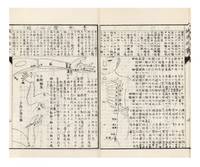
réf. 7485Numerous woodcut illustrations in the text. Title-page 31 folding leaves one leaf of colophon. 8vo orig. patterned blue semi-stiff wrappers orig. block-printed title label on upper cover label rubbed new stitching. Tokyo Kyoto & Osaka: 1864. First edition and rare. Imamura 1814-90 was a leading physician and historian of Japanese medicine of his period. Professor of medicine at Tokyo University he was physician to the future Emperor Taisho when he was a youth. Imamura found that many of the contemporary Japanese works on acupuncture had strayed from the classic teachings of the Chinese physicians. In this work he makes a series of corrections to refine the fourteen meridians. The numerous woodcuts depict various parts of the body and pressure points. Very nice copy. Light stain to first few leaves. ⧠Mestler Old Japanese Medical Books I p. 297. unknown
réf. 7485Numerous woodcut illustrations in the text. Title-page 31 folding leaves one leaf of colophon. 8vo orig. patterned blue semi-stiff wrappers orig. block-printed title label on upper cover label rubbed new stitching. Tokyo Kyoto & Osaka: 1864. First edition and rare. Imamura 1814-90 was a leading physician and historian of Japanese medicine of his period. Professor of medicine at Tokyo University he was physician to the future Emperor Taisho when he was a youth. Imamura found that many of the contemporary Japanese works on acupuncture had strayed from the classic teachings of the Chinese physicians. In this work he makes a series of corrections to refine the fourteen meridians. The numerous woodcuts depict various parts of the body and pressure points. Very nice copy. Light stain to first few leaves. ⧠Mestler Old Japanese Medical Books I p. 297. unknown books
réf. 6812Eight full-page drawings & one illus. in the text. 17 folding leaves. 8vo 243 x 165 mm. orig. blue semi-stiff wrappers some dampstaining to upper portion of each leaf. Japan: mid-Edo. Kagawa 1683-1755 a member of the medical family dynasty studied in Kyoto with Ryozan Goto and Jinsai Ito from whom he learned moxibustion and the therapeutic value of the waters of hot springs. Kagawa established the successful Ippondo medical school and was one of the most enthusiastic practitioners of moxibustion of his time. There is another manuscript of this text at Kyoto University attributed to Kagawa. Some of the illustrations are very different. The introductory remarks describe the importance of the precise placement of the moxa on the skin how to measure the placements based on distance from certain bones or joints of the body and the various techniques and occasions for moxibustion applications. Following this the text precisely describes the moxibustion locations on the body and how to locate each one with references to Simiao Sun’s classic text Qian jin fang Essential Prescriptions Worth a Thousand Gold Pieces compiled in 650-59. Kagawa lists many diseases and injuries for which moxibustion is appropriate. There is a most interesting section on how to treat unsuccessful moxibustion procedures application of certain ointments etc. The attractive illustrations depict moxibustion loci on an osteological background and loci on the stomach arms legs and feet. As mentioned above there is dampstaining to the upper fifth of each leaf but all the characters remain completely legible. unknown
réf. 6812Eight full-page drawings & one illus. in the text. 17 folding leaves. 8vo 243 x 165 mm. orig. blue semi-stiff wrappers some dampstaining to upper portion of each leaf. Japan: mid-Edo. Kagawa 1683-1755 a member of the medical family dynasty studied in Kyoto with Ryozan Goto and Jinsai Ito from whom he learned moxibustion and the therapeutic value of the waters of hot springs. Kagawa established the successful Ippondo medical school and was one of the most enthusiastic practitioners of moxibustion of his time. There is another manuscript of this text at Kyoto University attributed to Kagawa. Some of the illustrations are very different. The introductory remarks describe the importance of the precise placement of the moxa on the skin how to measure the placements based on distance from certain bones or joints of the body and the various techniques and occasions for moxibustion applications. Following this the text precisely describes the moxibustion locations on the body and how to locate each one with references to Simiao Sun’s classic text Qian jin fang Essential Prescriptions Worth a Thousand Gold Pieces compiled in 650-59. Kagawa lists many diseases and injuries for which moxibustion is appropriate. There is a most interesting section on how to treat unsuccessful moxibustion procedures application of certain ointments etc. The attractive illustrations depict moxibustion loci on an osteological background and loci on the stomach arms legs and feet. As mentioned above there is dampstaining to the upper fifth of each leaf but all the characters remain completely legible. unknown books
réf. 51-5055Paris: Société des Cent-Une 1938. 4to. 24 x 30.5 cm. 317pp. Sheets loose as issued in original parchment wraps parchment board chemise and slipcase. One of 101 numbered copies in Roman numerals from a total edition of 134; with 15 full page etchings printed by Roger Lacourière. Traduction de Marcel PreÌvost.Provenance: la comtesse de Serionne.Luc Monod Manuel de l'amateur de livres illustrés modernes no. 8808; OCLC Number: 459962764.Printed in red and black.Latin text and French translation on opposite pages.Derain's 15 etchings are included in the pagination.". le tirage est dû à Roger Lacourière graveur à Paris et des esquisses des 30 culispices que Pierre Bouchet imprimeur . a eÌxeÌcuteÌs sur bois"--Colophon.Ed. of 135 numbered copies.4° 309 p. en feuilles couv. parcheminée rempl. chemise en demi-vélin titrée en rouge étui. Edition illustrée de 15 eaux-fortes originales et 30 culispices d'André Derain gravés sur bois par Pierre Bouchet. Tirage limité à seulement 135 ex. num. 1/101 en chiffres romains. Ex. nominatif pour la comtesse de Serionne. Bel exemplaire. Paris: Société des Cent-Une, 1938 paperback
réf. 1053143 folding leaves. 8vo 240 x 170 mm. orig. patterned semi-stiff wrappers with orig. title-slip old stitching. Japan: 1791 date of Preface. A rare manuscript of Japanese natural studies or the “learning of roots and herbs” honzÅgaku 本è‰å¸ by ZÅ doctor and botanist 1758-1834. It was one of the major intellectual trends of the Tokugawa period with a large portion of the educated classes taking an interest in the topic. Initially inspired by the Chinese encyclopedic work Bencao gangmu 本è‰ç¶±ç›® Systematic Materia Medica Japanese natural studies came with time to focus on the natural environment of Japan in contradistinction to China. Our manuscript explicitly concerned with the mushrooms of “Our August Japan” is a case in point. It contains descriptions of 129 mushrooms divided into categories: wood mushrooms ground mushrooms bamboo mushrooms wood-ear mushrooms and poisonous mushrooms. Our author lists alternative names for a mushroom in question notes where it grows and describes its appearance. Literary references are given in many of the entries. Curiously despite the manuscript’s title ZÅ Han quotes from Chinese local gazetteers which often contained lists of local products. There is an appendix which contains four essays. discusses in turn different names of the mushroom in various parts of Japan; the etymology of the character kinoko 蕈 meaning mushroom; the method of ascertaining the poisonous character of a mushroom; and a prescription for breaking down the poison. ZÅ was the author of Seikei zusetsu An Illustrated Book of Agricultural Things the great agricultural and botanical work issued in the early years of the 19th century. It is an encyclopedic survey of all the agricultural products and practices of Japan. He served the Satsuma fiefdom under the lord Shimazu Shigehide Our text was never printed circulating only in manuscript form. ⧠Ueno MasuzÅ 上野益三 Nihon hakubutsugakushi 日本åšç‰©å¦å² Tokyo: Heibonsha 1973 p. 416. unknown
réf. 1053143 folding leaves. 8vo 240 x 170 mm. orig. patterned semi-stiff wrappers with orig. title-slip old stitching. Japan: 1791 date of Preface. A rare manuscript of Japanese natural studies or the “learning of roots and herbs” honzÅgaku 本è‰å¸ by ZÅ doctor and botanist 1758-1834. It was one of the major intellectual trends of the Tokugawa period with a large portion of the educated classes taking an interest in the topic. Initially inspired by the Chinese encyclopedic work Bencao gangmu 本è‰ç¶±ç›® Systematic Materia Medica Japanese natural studies came with time to focus on the natural environment of Japan in contradistinction to China. Our manuscript explicitly concerned with the mushrooms of “Our August Japan” is a case in point. It contains descriptions of 129 mushrooms divided into categories: wood mushrooms ground mushrooms bamboo mushrooms wood-ear mushrooms and poisonous mushrooms. Our author lists alternative names for a mushroom in question notes where it grows and describes its appearance. Literary references are given in many of the entries. Curiously despite the manuscript’s title ZÅ Han quotes from Chinese local gazetteers which often contained lists of local products. There is an appendix which contains four essays. discusses in turn different names of the mushroom in various parts of Japan; the etymology of the character kinoko 蕈 meaning mushroom; the method of ascertaining the poisonous character of a mushroom; and a prescription for breaking down the poison. ZÅ was the author of Seikei zusetsu An Illustrated Book of Agricultural Things the great agricultural and botanical work issued in the early years of the 19th century. It is an encyclopedic survey of all the agricultural products and practices of Japan. He served the Satsuma fiefdom under the lord Shimazu Shigehide Our text was never printed circulating only in manuscript form. ⧠Ueno MasuzÅ 上野益三 Nihon hakubutsugakushi 日本åšç‰©å¦å² Tokyo: Heibonsha 1973 p. 416. unknown books
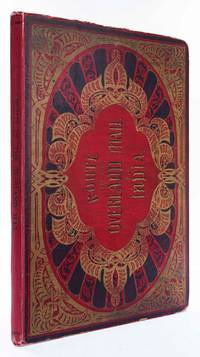
réf. 52890London: Atchley & Co. 106 Great Russel Street. Printed by Leighton Brothers c.1860. Oblong folio 42 x 28 cm. Original decorative red cloth titled on both sides spine lettered in black a.e.g. Original 4 pp. prospectus listing and describing the plates loosely tipped in. 32 full page illustrations: Southampton Isle of Wight Bay of Biscay Berlingas Cintra Tagus Trafalgar Tarifa Gibraltar Algiers Panteleria Malta Alexandria Mahmoudie Canal Boulac Cairo Cemetery Dead Camel Central Station Arabs on Horseback Encampment by Night Women Drawing Water Joseph's Well Red Sea Suez Jeddah Mocha Aden Point de Galle & Calcutta engraved on wood by Sears Heaviside Measom et al. With the small circular blind-stamp of the Library of Arts 106 Great Russell Street to title as often. Ex libris Isabel Clayton. Some time rebacked occasional spotting. Authorship has variously been attributed to John Tillotson or Joachim Hayward Stocqueler. This full title is taken from the prospectus for the work which is loosely tipped into this copy which otherwise as normal just has the short title "The Route of the Overland Mail to India" on the upper cover and and repeated on the pictorial title page. 106 Great Russell Street is the premises formerly occupied by Robert Frew 1985-2005 There are other issues with alternative publishers and in slightly different format some of which we have had with 63 pages of text. This copy appears quite complete but the only descriptive text is provided by the prospectus. London: Atchley & Co. 106 Great Russel Street***. Printed by Leighton, Brothers, [c.1860]. hardcover
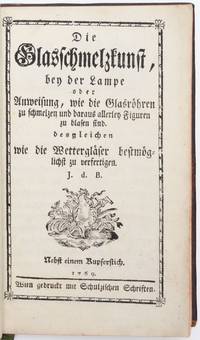
1769réf. 1430Wien: gedruckt mit Schulzischen Schriften 1769. First edition. In contemporary leather. Spine gilt with red title vignette. Edges tinted. Woodcut headpiece on A1. Pages ruled with woodcut frame. Light brown stains on the plate. Otherwise clean. In fine condition. First edition. In contemporary leather. Spine gilt with red title vignette. Edges tinted. Woodcut headpiece on A1. Pages ruled with woodcut frame. 1 title page verso blank a–b8 c6 i.e. 24 leaves and 1 folded plate. A curious and scarce treatise on glassblowing and the making of scientific glass objects. The book is illustrated with an engraved plate showing a glassmaker or lampworker at his working table surrounded by examples of his craft various scientific apparatuses a Cartesian devil a glass eye and elaborate glass-figurines and a centerpiece whose technique of making together with the detailed instruction for manufacturing thermometers hydrometers barometers is described in the text. The author of Die Glasschmelzkunst remained unrevealed hidden behind the initials of “J. d. B”. The second edition was published under different initials of “A. Z. G” Brünn: Tascher 1824. Both editions are often attributed erroneously to Karl Moritz Diesing 1800–1867. Duncan in the Bibliography of Glass attributes it to Disting. Duncan 3269. . gedruckt mit Schulzischen Schriften unknown
1836réf. ST14728eLondon 1836-50. Various editions. 224 x 137 mm. 8 3/4 x 5 1/2". 16 volumes. FINE CONTEMPORARY FULL CALF MOST EITHER TREE OR POLISHED CALF see below raised bands spines intricately gilt in compartments morocco labels marbled endpapers and edges. Some works with frontispiece portraits. Front pastedowns with engraved bookplate of Edward Nicholas Hurt see below. A LOVELY COLLECTION--WITH VIRTUALLY NO SIGNS OF USE. Handsomely bound with beautifully gilt spines and just about uniform in size these volumes make an impressive appearance on the shelf. The six titles here include: 1 DE SAUMAREZ JAMES. ROSS JOHN. "MEMOIRS AND CORRESPONDENCE OF ADMIRAL LORD DE SAUMAREZ." 1838 Two volumes. Polished calf. 2 ELDON JOHN LORD CHANCELLOR. TWISS HORACE. "THE PUBLIC AND PRIVATE LIFE OF LORD CHANCELLOR ELDON." 1844 Three volumes. Polished calf. 3 HORNER FRANCIS. "MEMOIRS AND CORRESPONDENCE OF FRANCIS HORNER M. P." 1843 Two volumes. Tree calf. 4 STANHOPE PHILIP DORMER. "THE LETTERS OF PHILIP DORMER STANHOPE EARL OF CHESTERFIELD." 1845; 1853 Five volumes. Tree calf. 5 TAYLOR WILLIAM. "THE LIFE AND WRITINGS OF THE LATE WILLIAM TAYLOR OF NORWICH." 1843 Two volumes. Tree calf. 6 WARD ROBERT PLUMER. PHIPPS EDMUND. "MEMOIRS OF THE POLITICAL AND LITERARY LIFE OF ROBERT PLUMER WARD ESQ." 1850 Two volumes. Polished calf. The bookplate here is that of notable bibliophile and barrister Edward Nicholas Hurt 1795-1867 of Derbyshire and Marylebone London. He married Caroline Strutt daughter of the immensely wealthy philanthropist and social reformer Joseph Strutt 1765-1844 who was twice Mayor of Derby. As the Strutt arms are incorporated into the escutcheon of Hurt's ornate bookplate the plate can be dated to no earlier than their wedding in 1828. unknown
1836réf. ST14728eLondon 1836-50. Various editions. 224 x 137 mm. 8 3/4 x 5 1/2". 16 volumes. FINE CONTEMPORARY FULL CALF MOST EITHER TREE OR POLISHED CALF see below raised bands spines intricately gilt in compartments morocco labels marbled endpapers and edges. Some works with frontispiece portraits. Front pastedowns with engraved bookplate of Edward Nicholas Hurt see below. A LOVELY COLLECTION--WITH VIRTUALLY NO SIGNS OF USE. Handsomely bound with beautifully gilt spines and just about uniform in size these volumes make an impressive appearance on the shelf. The six titles here include: 1 DE SAUMAREZ JAMES. ROSS JOHN. "MEMOIRS AND CORRESPONDENCE OF ADMIRAL LORD DE SAUMAREZ." 1838 Two volumes. Polished calf. 2 ELDON JOHN LORD CHANCELLOR. TWISS HORACE. "THE PUBLIC AND PRIVATE LIFE OF LORD CHANCELLOR ELDON." 1844 Three volumes. Polished calf. 3 HORNER FRANCIS. "MEMOIRS AND CORRESPONDENCE OF FRANCIS HORNER M. P." 1843 Two volumes. Tree calf. 4 STANHOPE PHILIP DORMER. "THE LETTERS OF PHILIP DORMER STANHOPE EARL OF CHESTERFIELD." 1845; 1853 Five volumes. Tree calf. 5 TAYLOR WILLIAM. "THE LIFE AND WRITINGS OF THE LATE WILLIAM TAYLOR OF NORWICH." 1843 Two volumes. Tree calf. 6 WARD ROBERT PLUMER. PHIPPS EDMUND. "MEMOIRS OF THE POLITICAL AND LITERARY LIFE OF ROBERT PLUMER WARD ESQ." 1850 Two volumes. Polished calf. The bookplate here is that of notable bibliophile and barrister Edward Nicholas Hurt 1795-1867 of Derbyshire and Marylebone London. He married Caroline Strutt daughter of the immensely wealthy philanthropist and social reformer Joseph Strutt 1765-1844 who was twice Mayor of Derby. As the Strutt arms are incorporated into the escutcheon of Hurt's ornate bookplate the plate can be dated to no earlier than their wedding in 1828. unknown books
2012réf. 5132DB2 Bände. Simbach, Il Bulino - edizione d'arte / Verlag Müller und Schindler. 2012/20. Folio 835 Bl. Mit vielen farbigen, goldigen, teils ganzseitigen Miniaturen und Initialen. Samteinband mit Medaillon aus Messing mit einem Halbedelstein auf dem Vorderdeckel und Acrylglas-Box. Broschur (Kommentarband).
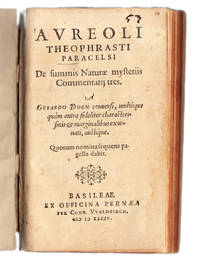
réf. 117924Basel ex Officina Pernæa per Conr. Waldkirch 1584. 8vo. 16 128 127-147 wrongly paginated 173 10 pp. Illustrated with several woodcuts and the last 10 pp. are only woodcuts. A full page woodcut portrait. Richly annotated and underlined in both ink and pencil by different hands. Slight browning and minor stain in the beginning. Manuscript notes on the final endpaper. Eighteenth century blue paper boards spine lettered in ink but head of spine worn with loss of text red edges. Initials ”C.S” dated ”Freiburg den 21 Marti 1748” on front fly leaf and with a 20th century bookplate. VD 16 P507. Adams P274. Duveen p. 453. Second edition the first came in 1570 of this rare compilation of works said to be by Paracelsus and translated and edited by Gerard Dorn c. 1530-84. However according to Sudhoff Versuch einer Kritik der Echtheit Paracelsischen Schriften 125 & 201 it is more probably a forgery by Dorn. He claims to have translated the original from German into Latin but as no original German edition exists it seems reasonable to assume that the editor was in fact also its author. The book is divided into four sections: ”De spiritibus planetarum” ”De occulta philosophia”; ”Medicina coelestis sive de signis zodiaci & mysteriis eorum” and the brief ”De transmutationis metallorum tempore”.The Swiss physician philosopher theologian and alchemist Paracelus 1493-1540 was born Theophrastus Bombastus von Hohenheim but took the name Paracelsus later in life meaning 'superior to Celsus' the famous Roman physician. hardcover
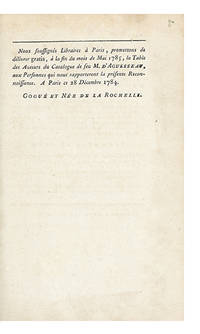
réf. 5858xxxvi 366 pp. one leaf but lacking as is often the case the 12-page schedule of sale & the 80-page author index. 8vo cont. speckled calf two corners a bit worn joints a little cracked but strong flat spine gilt red morocco lettering piece on spine. Paris: Gogué & Née de la Rochelle 1785. The rare sale catalogue of the great library of books and early manuscripts many illuminated founded by Henri François d’Aguesseau 1668-1751 Chancellor of France a man of great learning. According to the preface of the catalogue he had acquired the collection of the poet Florent Chrestien 1541-1596 and his son Claude b. 1567. His library passed to his second son Jean Baptiste Paulin d’Aguesseau Marquis de Mannoevre 1701-84 who considerably enlarged it. Between the two generations they created a most remarkable collection. The father and son employed fifteen versions of their coat-of-arms on their bindings. The sale included 5583 lots and was sold over a 57-day period. Payne and the Marquis de Méjanes were major buyers. Very good copy with some minor foxing. Short tear due to a paper flaw to title but with no loss of text. Bookplate of the great French bookseller Georges Heilbrun. As mentioned above this copy lacks — as does the Grolier Club copy — the schedule of sale and index but it does have a final leaf in which the auctioneers promise to deliver the index at no charge by the end of May 1785 to anyone who requests a copy. ⧠Gustave Brunet Dictionnaire de Bibliologie Catholique col. 405–“cette vaste réunion d’ouvrages importants.” Grolier Club Printed Catalogues of French Books Auctions…1643-1830 318–lacking both the schedule of sale and author index. Guigard II p. 173. Peignot p. 76. unknown
réf. 5858xxxvi 366 pp. one leaf but lacking as is often the case the 12-page schedule of sale & the 80-page author index. 8vo cont. speckled calf two corners a bit worn joints a little cracked but strong flat spine gilt red morocco lettering piece on spine. Paris: Gogué & Née de la Rochelle 1785. The rare sale catalogue of the great library of books and early manuscripts many illuminated founded by Henri François d’Aguesseau 1668-1751 Chancellor of France a man of great learning. According to the preface of the catalogue he had acquired the collection of the poet Florent Chrestien 1541-1596 and his son Claude b. 1567. His library passed to his second son Jean Baptiste Paulin d’Aguesseau Marquis de Mannoevre 1701-84 who considerably enlarged it. Between the two generations they created a most remarkable collection. The father and son employed fifteen versions of their coat-of-arms on their bindings. The sale included 5583 lots and was sold over a 57-day period. Payne and the Marquis de Méjanes were major buyers. Very good copy with some minor foxing. Short tear due to a paper flaw to title but with no loss of text. Bookplate of the great French bookseller Georges Heilbrun. As mentioned above this copy lacks — as does the Grolier Club copy — the schedule of sale and index but it does have a final leaf in which the auctioneers promise to deliver the index at no charge by the end of May 1785 to anyone who requests a copy. ⧠Gustave Brunet Dictionnaire de Bibliologie Catholique col. 405–“cette vaste réunion d’ouvrages importants.” Grolier Club Printed Catalogues of French Books Auctions…1643-1830 318–lacking both the schedule of sale and author index. Guigard II p. 173. Peignot p. 76. unknown books
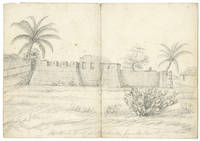
1819réf. 52991N.p. but near present-day Prampram Ghana. ca. 1819–1836. The British on the Gold Coast of Africa: Three Drawings An attractive set of skillfully executed original pencil sketches featuring British colonial structures in Prampram Gold Coast present-day Ghana likely between 1819 and 1836. The sketches are titled in pencil as follows: "Commandant's Residence Pam Pram Gold Coast" "Lower Town Pam Pram from the Upper Town" and "Abandoned Fort at Appolonia from the Beach." The Union Jack flies proudly in the foreground of the sketch of the Commandant's residence. Officially Great Britain colonized the Gold Coast region from 1867 until the independence of Ghana in 1957 though the British had maintained and controlled forts along the West African coastline since long before 1867. Fort Appolonia in the extreme southwestern corner of the country had been a British trading and military outpost from 1691 until 1819 and then again from 1836 onwards when it changed hands from the British to the Dutch then back to the British again. As such if the artist here labeled Fort Appolonia as "Abandoned" he or she most likely sketched the fort during the period it was shuttered between 1819 and 1836. A fascinating trio of original sketches offering unique views from a rarely visualized period in British colonial affairs in West Africa. Central vertical crease to each drawing the first two titled in a contemporary hand in pencil to verso the third similarly titled below the image. Very good. unknown