GOLD, HerbertABAA
18.723 risultati
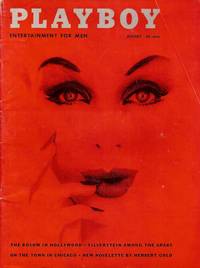
1959rif. 303851959. GOLD Herbert. "The Sender of Letters." In Playboy Magazine August 1959. Very Good crease front cover. $45.00. unknown books
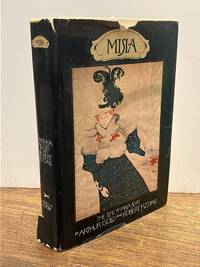
1980rif. 335696New York: Knopf 1980. hardcover. near fine/very good-. Illustrated in color and b/w. xii 337 pages. 8vo decoratively gilt white cloth owners bookplate on flyleaf pictorial d.w. edges chipped with several tears. New York: Knopf 1980. A near fine copy in a very good- dust wrapper. Knopf unknown books
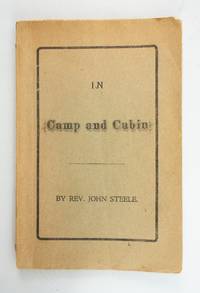
1901rif. ST20777Lodi Wisconsin: J. Steele 1901. FIRST EDITION. 232 x 155 mm. 9 1/8 x 6". 81 pp. Original green faded to brown printed paper wrappers. Housed in a fine modern caramel-colored morocco clamshell box with gilt lettering on spine. Inside front wrapper with ink signature of M. R. Skinner; occasional pencil underlining in the text. Howes S-924; Graff 3964; Streeter 3027; Wagner-Camp 244 note. Top inch of spine chipped away a little fraying to edges first three leaves with overall browning minor corner creases but QUITE AN EXCELLENT COPY of a very fragile item clean and fresh internally with the insubstantial binding entirely intact against all odds. Based on the author's diaries written between September 1850 and July 1853 this work as the introduction tells us lays out events "just as they happened" being "ludicrous solemn serious tragic inexpressibly sad but always interesting." Kurutz calls the book a "detailed and important account of mining life" and notes that Steele "provided important information on mining techniques and laws while laboring in the Coloma District and on the Yuba and Feather rivers." This account includes some fascinating stories about the many hardships and dangers experienced by the author and his associates including nearly constant fatigue and hunger dreadful weather conditions and dicey encounters with desperados dishonest miners and disgruntled frontier men of commerce. John Steele 1832-1905 was only 18 years old when he left his home in Wisconsin for the gold fields of California. After three and a half years of adventuring he returned to the Midwest where he pursued a career in teaching. Steele also volunteered for the Union army during the Civil War and spent the last 30 years of his life as a minister in the Methodist Episcopal Church. The present work was privately printed by the author in a small number of copies and is as expected quite rare on the market now. Besides the present one RBH lists just two other copies sold since 1981 and as of this writing no other dealer seems to be offering one. Furthermore our copy is a remarkably well-preserved survival with its delicate wrappers and text in condition as attractive as one could hope to find. J. Steele unknown books
1991rif. 113212New York: Prentice Hall Press 1991. Hardcover. xiii 303p. first printing very good condition in like dust jacket. AIDS content. Prentice Hall Press hardcover books
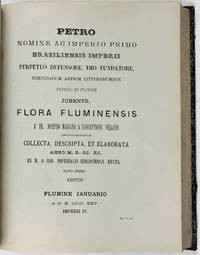
1881rif. 45183Flumine Januario / Rio de Janeiro: Typ. Economica 1881. First complete edition. Half black morocco over marbled boards gilt spine title. A very good copy boards rubbed repaired tear and closed tear on Volume V half title and title page. xii vii 467 1 pp. 4to. Published in and taking up the entire volume of Archivos do Museu Nacional do Rio De Janeiro. Volume V. 1880 1881. Added title page: Petro nomine ac imperio primo Brasiliensis imperii perpetuo defensore . jubente Flora fluminensis a' fr. Josepho Mariano a Conceptione Vellozo Ordinis monorum collecta descripta et elaborata anno M.D. CC. XC. Ex M.S. cod. Imperialis bibliothecæ eruta nunc primo etitur. Flumine Januario A.D.M. DCCC. XXV imperii IV. José Xavier Veloso 1742-1811 born in what is now Minas Gerais Brazil was ordained in 1766 in the convent of St. Anthony in Rio de Janeiro where he studied philosophy and theology later geometry in San Paulo and finally natural history. He collected plants animals and minerals in the Rio de Janeiro area from 1783 to 1790 at which time he moved to Lisbon where he worked at the Royal Academy of Sciences while preparing Florae Fluminensis his greatest work for publication. Using the Linnaeus’ system of sexual classification of plants he prepared very highly detailed texts and 1700 prints many of them of new species. But the publication of the work was beset by problems. First sent to Venice the plates were never completed. Later the French invasion of the Iberian peninsular sent the Portuguese government then Veloso and his manuscripts into exile in Brazil where he died in 1811. In 1825 an abbreviated version of the text was published followed by the eleven volumes of the Icones in 1827 of which few copies survive. The complete text was not published until this edition in 1881. Bound with and proceeded by Archivos do Museu Nacional do Rio De Janeiro. Volume IV. 1879. Rio 1881. viii 151 1 pp vii plates. Folded color plate split at fold. Volume subtitle: Insectologia. Includes Müller Fritz: A metamorphose de um insecto diptero among other works. Rodrigues 2473. Sabin 98833n. For the shorter version of 1825 see: Barba de Moraes II p. 343. Pritzel 468. Jackson 377. Innocencio V.5 4258; V.13 p.122. Also see Nissen BBI 2046. Typ. Economica hardcover books
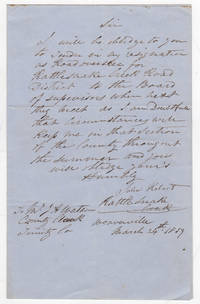
1859rif. 44772Weaverville CA 1859. Very good minor creasing along edges and folds minor soiling contents clean. 1 pp. Bifolium. 5 x 8 inches. March 24th 1859. Gold Rush era letter from John Hobart to Trinity County Clerk J.A.Watson resigning from his post in Weaverville California . "I will be obliged to you to tender in my resignation as Road overseer for Rattlesnake Creek Road District to the Board of Supervisors when next they meet as I am doubtfull that circumstance will keep me in that section of the County throughout the summer." Weaverville California founded in 1850 was a Gold Rush town and once had a population of nearly 2500 Chinese goldminers. In 1855 the Weaverville Trinity Times called attention " the large and rapidly increasing number of Chinese among us.crowding themselves into every vacant spot they can find." unknown books
1854rif. 25890Boston / Cleveland: John P. Jewett / Jewett Proctor and Worthington 1854. Paper wrappers. A clean copy without the blue wrappers. 42 pp. Pamphlet. Attributed to Samuel R. Phillips by Halkett & Laing. Attributed to George W. Bungay in Brown University Dict. Cat. of the Harris Coll. Vol. 2. LCP Afro-Americana 1795. Halkett & Laing v. 9 p. 221. John P. Jewett / Jewett, Proctor, and Worthington unknown books
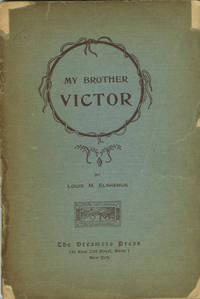
1912rif. 22953New York: Dreamers Press 1912. First edition. Light blue paper wrappers decorated in brown. Wrappers split at spine chipped at the corners small tear to front edge faint crease to wrapper end paper and title page leaves clean crisp and unmarked. A good or better copy of this scarce item. 2 28 2 p. 8 p. of plates. Illus. with b/w plates. Sm. 8vo. "The Memorie was written at Paris France in the author's twenty-third year; while studying Art at Julians." A long memoir in verse by Louis Michel Eilshemius or Elshemus 1864-1941 a unique American artist rediscovered by Marcel Duchamp in 1917 only a few years before Eilshemius gave up painting. RLIN and OCLC list only five locations for this title. Dreamers Press unknown books
1935rif. 206117Privately Constructed: no publisher an Artists book 1935. Hardcover. VG light signs of age-toning to sheets. Tan paper spine is hand-lettered attached to green paper-covered boards. Inscribed and decorated endpaper in front hand-lettered and color-painted title-page followed by 12 hand-lettered pages inter-leaved with 10 hand-painted illustrations 9 of them being full-page. This book is a unique birthday present crafted for and presented to Juliana Force by Eirene Mungo-Park or Mungo Park in an undated inscription which reads as follows: "To Juliana Force a tribute from one of the birds the "English Robin". Provider of my utmost needs Baths and Sanctuary and feeds. God bless you dear for I would be Thin and grubly but for thee." This inscription is on the front free endpaper and is accompanied by a watercolor painted Robin with a crown of flowers perched upon a branch. The other watercolor illustrations in the book are primarily of birdfs as seen on the title-page and of birds and other beats gathered in or around an elevated circular water-bath or bird-bath in a yard. A few rudimentary human figures and other animals are present and there is a very nice end illustration exclaiming Happy Birthday with a young Shirley Temple-ish girl surrounded by a circluar frame of flowers at the end. A unique artist's book by Eirene Mungo-Park for her benefactor Juliana Force. Mungo-Park was a member of the Whitney Studio Club in the late 1920s and her works were purchased by Demuth Bluemner and others and Bluemner took inspiration from some of Mungo-Park's poetry noteably The Sonnet Series in the mid-1930s. no publisher, an Artists book hardcover books
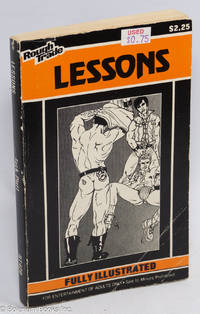
rif. 310485n.p.: no pub no date. Paperback. 190p. explicit line drawings price sticker on cover wear else a good first printing PBO in camp pictorial wraps. Gay pulp fiction. Rough Trade RT420. no pub paperback books
1827rif. 177815New York: Imprint whereof is at New-York 1827. VG few foxing spots but remarkably clean and tight. No evidence of page removal between pages xxx and xxv as mentioned in research. Original boards with cloth spines and remnants of affixed paper labels. Untrimmed uncut. Volume 1: irregular pagination. 2 blanks tp copyright iii iv-xx xxv-xvii blank 29 30-263. There is ample evidence of three sheets having been excised after pp. xviii and that a sheet numbered xix/xx has been inserted and glued after these three remnants. The text from page xx to the following page xxv appears to be continuous indicating a re-working of the text from the original printed sheets for pages xix-xxiv. An 1877 book auction catalogue lists this publication which was indicated to be 2 volumes as Very Scarce having been suppressed by the author. No auction or sales records found. A copy of part 2 was sold in 1904 as an odd volume as part of aa larger lot. A 1911 auction catalogue notes the following: "2 vols. 12° boards uncut. A caustic satire on New York's Four Hundred in 1827 which led to the prosecution of its author for libel and the mutilation of all copies of the work by the removal of pp. xxi.-xxiv. of A Short Proem its most vitriolic portion." It can be noted that the copy in the American Antiquarian Society lacks 3 sheets xix-xxiv. Their copy was printed in Boston and not New York. Shoemaker R.H. Checklist of American imprints for 1820-1829 29389 Blanck J. Bibliography of American literature 11021 Wright L.H. American fiction 1774-1850 2nd ed. 1510 Hebrew Union College-Jewish Institute of Religion. Jewish Americana 76 Singerman R. Judaica Americana 0448. Imprint whereof is at New-York hardcover books
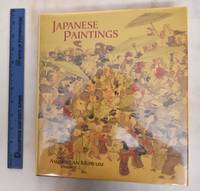
2003rif. 179099Oxford: Ashmolean Museum 2003. Hardcover. VG. shelf-wear to lower cover edges corners & textblock. square red boards w/ gilt printing. 254 pgs w/ bw & illustrations. gold & yellow pictorial dustjacket w/ protective plastic cover. Text in English and Japanese. Details 94 pieces; wonderful bright illustrations. Ashmolean Museum hardcover books
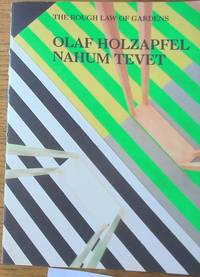
2016rif. 160042Berlin: Sternberg Press 2016. Softcover. VG. Fluorescent green and illus. wraps with intentionally glued spine; 18 text pp. plus many illustrated pages. Issued in conjunction with a 2015 exhibition of installation art by German contemporary artist Olaf Holzapfel b. 1967 and Israeli sculptor Nahum Tevet b. 1946. With an essay by Galia Bar Or and many views from the exhibition. Rare. Sternberg Press paperback books
1947rif. 101287New York: Willard Gallery 1947. Softbound. VG. Green stapled printed wraps. 16 pp. 7 bw plates. Lists 15 works each accompanied by a short or long ethereal essay. An early gallery catalogue on this artist. Willard Gallery paperback books
1906rif. 134811Cleveland OH: Arthur H. Clark Company 1906. Hardcover. good ex-library with expected marks plus perforation stamp on half title title page and facsimile title. front hinge loose. wear to exterior including fraying to cloth at spine ends. Burgundy library buckram. 311 pp advertisements. Reprint of Palmer's Journal of Travels 1847 with new preface. Arthur H. Clark Company hardcover books
1961rif. 129183Milano: Rizzoli Editore 1961. Hardbound. VG/VG- light wear to extremities of dj. in VG slipcase. A large weighty book. Green cloth with color pictorial glossy dustjacket all contained in a custom slipcase. Appx. 105 pp. 115 mostly color plates tipped-in to the text portion and 42 full-sheet color plates many of them folding. A most impressive book both by its content and its volumetric displacement. Text is in Italian. Transit mass would be 272 ounces. A stunning production detailing the work of Carpaccio in the Church of San Giorgio Degli Schiavoni. Rizzoli Editore hardcover books
2004rif. 123206Ann Arbor Michigan: UMI Dissertation Services 2004. Softcover. VG. Light blue wraps; 334 pp.; 107 bw figures. A dissertation in the history of art presented at Penn toward a Doctor of Philosophy degree. UMI Dissertation Services paperback books
1976rif. 122182Milano: Rizzoli Editore 1976. Hardbound. VG/VG in VG slipcase. A large weighty book. Red maroon cloth with color pictorial glossy dustjacket all contained in a custom slipcase. Appx. 217 pp. 138 mostly color plates tipped-in to the text portion and 50 full sheet 13.5" x 16" color plates. A most impressive book both by it's content and it volumetric displacement. Vital in the study of Caravaggio. Another version of this appears to have been printed in 1971 and this edition has a few extra illustrations at least and likely some additional or revised text. Text is in Italian. Transit mass would be 272 ounces. A stunning production. Rizzoli Editore hardcover books
1977rif. 122184Milano: Rizzoli Editore 1977. second edition. Hardbound. VG/VG- small rip in lower rear dustjacket in VG slipcase. A large weighty book. Green cloth with color pictorial glossy dustjacket all contained in a custom slipcase. Appx. 105 pp. 115 mostly color plates tipped-in to the text portion and 34 full sheet 13.5" x 16" color plates many of them folding. A most impressive book both by its content and its volumetric displacement. Text is in Italian. Transit mass would be 272 ounces. A stunning production detailing the work of Carpaccio in the Church of San Giorgio Degli Schiavoni. Rizzoli Editore hardcover books
2009rif. 1410346New York: Alfred A. Knopf 2009. First edition. Hardcover. Octavo 559 pages. In Very Good condition with a Very Good dust jacket. Spine is light green with black and orange print. Dust jacket in mylar; vendor label on front panel. Price unclipped: “$26.95”. Boards quarter bound with brown cloth to spine and orange paper to boards. Signed in ink by the author on front endpaper. NOTE: Shelved in Netdesk Column Z. 1410346. FP New Rockville Stock. Alfred A. Knopf hardcover books
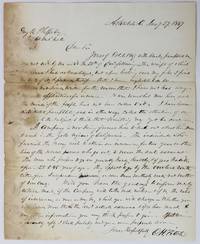
1849rif. 2389Ashtabula Oh: January 29 1849. About very good. 1pp. on a bifolium. Previously folded. Light dampstaining and short closed tears along gutter somewhat affecting first few lines of text but not overall sense. An interesting letter from O.H. Field an aspirational field representative of the Connecticut Mutual Life Insurance Company in Ashtabula Ohio to the company secretary George R. Phelps inquiring about a policy for a group of men headed to the Gold Rush in California in January 1849. Connecticut Mutual was founded in Hartford three years prior to the composition of this letter in 1846. Fitch's missive begins with a report on his efforts to drum up interest in life insurance in his area with pamphlets and other materials sent to him by Phelps: "Yours of Oct 1 1849 with blanks pamphlets &c was not received by me until the 25th of Dec. following. I have not had any definitive applications for insurance. It was somewhat new here and the minds of the people had not been called to it. I have however distributed pamphlets and in other ways called the attention of our citizens to the subject. I think that something yet might be done. The letter goes on to describe a potential policy for a group soon leaving for the Gold Rush and requests a favorable rate in order to stimulate interest in policies from additional parties: "A company is now being formed to head out about ten men to work in the gold regions of California. The individuals who furnish the money wish to obtain an insurance for two years on the lives of the several persons who go out to secure the amount advanced. The men who propose to go are generally hardy healthy & of good habits & from 25 to 45 years of age. They expect to go by the overland route either from Independence Missouri or some more southerly route not south of Vera Cruz. Will you have the goodness to inform me by return mail if the company will take such risks -- & if so the rates of insurance as near as may be which you will charge -- whether you will insure more than the amt. actually advanced & if so how much & any other information you may think proper to give. If I receive a favorably sic reply I shall probably send you more proposals soon." A neat letter concerning the preparations and considerations necessary for a journey to California in the early days of the Gold Rush and the role and rise of early American insurance companies in the planning of such lengthy and dangerous overland travel. January 29 unknown books
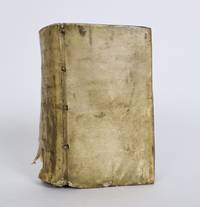
1633rif. 1409373Lugduni Batavorum Leiden: Joannis Maire 1633. Hardcover. 12mo 36 613 pages. In Very Good minus condition. Bound in early vellum with faded illegible writing on spine. Tearing up rear hinge with a large chunk of material missing from tail of spine. Yapped edges. Edges of textblock dyed. Adhesive residue to endpapers. Bookplate to front pastedown. Light foxing scattered throughout interior. Contemporary signature to front free endpaper dated 1633. Shelved in Case 3. USTC: 1011674. Signatures in 8 and 12. Vegtius was a Roman citizen writing during the late 4th century/early fifth century. "De re militari" is his treatise on Roman military principles. It gained a renewed popularity as a manual on warfare during the Middle Ages. 1409373. Shelved Dupont Bookstore. Joannis Maire hardcover books
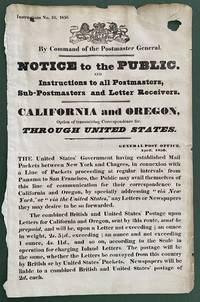
1850rif. List2416Great Britain 1850. Broadside measuring 9 ⅞ x 15 ⅜ inches. Some chipping and wear to edge ink number written in corner two small section of loss due to improper mounting very good overall. Coat of arms of the United Kingdom above printed text. Very Good. A scarce broadside relating to British postal rates across the Panama Route through the Chagres River which supplied mail to California and Oregon beginning in 1848 before eventually being replaced by the Overland route in 1860. The service was characterized by long delay times as steamships on either side of the isthmus were often not coordinated causing major delays in the delivery. Several different steamship companies operated privately some carrying express mail. The letters were transported by canoe or pack animal across the isthmus. Postmaster General Cave Johnson began establishing post offices in California in 1848. Johnson also oversaw the transition to the prepaid delivery system. The broadside here of which we find no other records does state that postage must be prepaid and that the route can be accessed by writing “via New York” on the letters. A scarce postal history item relating to the expansion of mail services to California. We find no other records of this institutionally or in the trade. unknown books
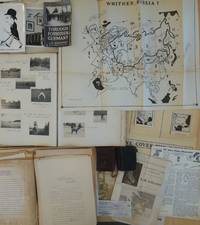
1950rif. List2425Europe and California 1950. Includes two small diaries from 1901 and 1917 with sporadic entries a large photo album measuring 14 x 11 with appx. 400 small photographs from 1906-1909 attached to album pages most measuring 3 x 2 as well as a few larger format images laid in. With 100 plus pages of typed pages including retained correspondence story ideas and various other manuscripts. With eleven maps produced for his “Of Men and Maps” series including five copies of a large map entitled “Whither Russia” in varied states and in large sizes up to 30 by 36 inches and a handful of small ephemeral pieces. Generally near fine condition with the exception of the album which is missing its rear board and has some pages loose and torn. Very Good. J.M. de Beaufort a war correspondent for the London Daily Telegraph and New York American during World War I recounted his wartime adventures in the 1917 book "Behind the German Veil: A Record of a Journalistic War Pilgrimage." Originally arriving in Chicago in 1909 he married a steel magnate's daughter and pursued a career in show business. However by 1912 he had gone through a divorce and transitioned to newspaper work earning the moniker of the "Dude Reporter." Originally born in the Netherlands as Jacques Albert Uilenbroek he was thought to be a deserter. He spent the latter part of his life in the United States apparently jailed in San Francisco for a stint in the 1920s and eventually settled in Los Angeles. Offered here is an interesting smattering of material from the life of the mysterious De Beaufort which bookends his most unusual career and life with a large visual photographic record of his life in Europe as a young man and over a hundred pages of manuscript material from late in his life with a highlight being several maps in draft form for an apparently unpublished project called “Of Men and Maps.” As a group the material shows the work of an ex-con artist and war correspondent trying to regain his form while living in Los Angeles. He was still writing as a “Special Correspondent” at this point though the title seems to have been fully honorary. Also included are two small pocket journals with sporadic notations from his life in Europe in 1900 and in 1917. In its entirety the group gives an interesting visual and manuscript record of a literary fraudulent and imaginative transatlantic life and intellect. The cartographic highlight of the group is several iterations of a large map called “Whither Russia” in varied forms which show an interesting interpretation of the sphere of influence of the USSR and its growth from 1939 to 1946. Also included are two drafts of a map of Operation Market-Garden in the Netherlands in 1944 an unidentifed tactical map of a military battlefield a map called “Middle East Jackpot” showing the division of territory between the Allied and Axis powers a map called “Dawn’s Early Light some reproduced small format maps from the De Beaufort’s and a small map called “Gifts from Yalta.” De Beaufort was working on these maps for a column called “Of Men Maps and Memories” that was published in the East Los Angeles Tribune. He also sent the columns out in newsletter form from his address at 1635 N. Ogden Drive in Los Angeles. The collection of manuscripts drafts and retained correspondence tackle a range of subjects perhaps most interestingly those detailing De Beaufort’s creative process - drafts of stories lists of ideas for stories and letters. His over the top style is on display in a lot of the writings some of which are of unknown origin and purpose. The documents contain correspondence between De Beaufort and Edwin Pauley the oil man and presidential advisor. In one untitled essay he asks himself the question “What has been your most thrilling experience” and his reply is “ Silly questions. Who or at least what newspaperman of some 25 turbulent years standing - and falling - could answer such a question. A reporter’s life has a thousand thrills. There was that rainy day in Marcy 1915 in the fortress of Loetzen when I stood face to face with Hindenburg. Hm yes that was quite a thrill…” De Beaufort was entrenched in the Los Angeles journalistic scene at this point and the documents show the degree to which he relied on his former glories to attempt various career revitalizations endeavors. The album of photographs from 1906-1909 over 400 in total give a visual record of the young Uilenbroek’s life in Europe. The star of the collection is his bulldog Bob who travels throughout Europe with him and eventually comes to America by 1907. Mary who we presume to be his future wife is featured heavily in the images. It is unclear whether he was working at this point the images show affluent young people and their dog in varied cities and are purely of a personal nature. Other photographs laid in are relics from his war correspondent period. The loose photographs and ephemera are a mix of portraits from different periods from his life including two pictures of Sydney Turing Barlow Lawson one signed by his widow. The journals are sporadically filled and hard to decipher though one legible passage says “drinking all day.” Overall the group gives evidence of this intriguing life and is the only extant group of material relating to Beaufort to our knowledge with the exception of a single journal from his time in Belgium during WWI that was sold at Bonhams and is still available in the trade as of this writing. unknown books
1850rif. List1929California 1850. With thirteen letters most multi-page written from Monterey in 1850 a 7 pp facsimile transcription of a 1834 Mexican land grant on cloth measuring 11 x 14 inches and and eleven page document on paper in Spanish relating to a Monterey land grant transcribing an 1841 document. Letters heavily worn with some loss at margins but mostly legible land grant in good to very good condition transcribed document in Spanish in fair condition with water damage to margins. Fair. An interesting archive of 1850s-era material relating to the life and career of the surveyor Edward Williams which recently surfaced in the central mother lode region. The group includes his personal letters from the California Gold Rush as well as well two interesting documents form his work for the Surveyor General J.W. Mandeville in 1858 where he transcribed two Mexican land grants. Lt. Edward Williams was a member of Company E New York Volunteers under Capt. Nelson Taylor. He came to California around 1847 and found employment as a deputy surveyor later working for the Office of the Surveyor General of the Unites States for California. In 1858 Surveyor General J.W. Mandeville commissioned a report on Mexican-era California Land Grants. Mandeville had Williams copy the original documents exactly - inclusive of an ink copy on linen that is an "exact tracing" of the original documents starting with 1834 up through about 1840. These "copies" were submitted to the Surveyor General in 1858 for use in the report. Williams continued the title work by copying other documents from about 1841 though this time not as a tracing but hand copied on the usual blue paper of the 1850s. The documents illustrate the length officials went to while they investigated Mexican Land Grant titles to California properties in the 1850s. The process was difficult and involved two distinctly separate cultures and legal systems that clearly conflicted. The Mexican Government granted rights for these large land parcels in California to various people but clearly stated they could not sell parts of the property. The wording was used many times in litigation of the period in both defense of the land grants and in opposition to how the land grants were handled. The issues were actually quite simple in that the Mexican legal standards for land grants was far different from those in the United States and the two differing forms of written land ownership and use clashed. These documents reflect a parcel of land granted to Francisco Mesa at "Corral de Tierra" a large parcel in Monterrey County California. Mesa had requested land for "his personal use and that of his family." In the Grant the title papers reflect "while the land is under Francisco's possession it cannot be divided mortgaged or a levy placed on it nor handed down." These original documents help illustrate the complex story of Mexican Land Grants in California. Also included are thirteen letters from Ed aka "Ned" to various family members primarily his mother and sister Alice and vice versa. About half are from Ed the other half are written to him. The dates of the letters are; 1850: February 10th April 15th April 16th April 28th June 10th July 30th October 11th and November 17th and 1851: September 9th. One undated letter with heavy loss is written from Panama. The letters are generally readable but the condition far from perfect with water stains throughout and chips abundant along edges and significant textual loss. The letters are generally at least two pages sometimes four or more inclusive of writing in the crossed line custom to save paper. Most are datelined at Monterrey where he discusses the people the customs setting and more. Despite the condition flaws there is much to be gleaned from his correspondence. In his April 15 1850 letter . he describes his trip to San Juan Bautista from Monterrey in detail while he was on his way to San Francisco. Williams writes of his great pleasure on tasting cooked beef by the Indians that he found was the best he ever tasted as they camped on the way to San Jose with the ultimate goal Mission Dolores in San Francisco: “this the beef they put on the embers of the fire and broiled it - I never tasted anything like it before so tender so juicy…” One of his first notes on San Francisco: "There are regular streets filled with all kinds of sorts of stores… The shipping covers the water as far as you can see. And those nearest the shore are converted into store houses the rigging being taken down and the and holes cut in the sides for doors.The best houses in town are occupied by gamblers . a large saloon filled with tables on which are played all kinds of games of chance - at some of the tables are displayed immense amounts of coin and gold in lumps worth from 1 to 5000 dollars which some poor infatuated fool of a miner has at some time lost to them." In his letter of April 16th he discusses both his difficulties with women in California and his lack of fitting in back east: “The Spanish Girls are very nice and all that sort of thing but the trouble is to find one that is educated. I can’t bear an uneducated wom an and I think I shall have to come to N.Y. and bring one out here… I know one or two in N.Y. but I don’t believe they would have such an uncouth specimen of an ‘hombre’ as me…” In his next letter he describes Carmel in detail. He states: “I haven’t been to the mines nor have I any inclination to go” though he intends to settle in California permanently. In his next letter he discusses the people he’s met and how he detests the anglophone community there: “How do I like the People Those of Spanish whom I call my friends I love with all my soul - there is not much society except among them… the Eng. and Am. population I detest from the bottom of my heart. This may sound strange but you will know the por que when you arrive.” He then praises the climate and scenery of Monterey. One letter written from Panama which has unfortunately sustained heavy losses at margins offers some details of the trip on the Chagres River. The replies to Williams from his family offer details on life in New York and are similarly compromised in condition but overall there is enough to glean from the group to provide a detailed example of family correspondence from the period. Overall a very interesting and unusual archive of a young professional who moved to California during the Gold Rush period and rejected the Anglophone mining community with particular interest to historians of Monterey and of the systems of land grants that shaped Mexican and American land policy in the nineteenth century. unknown books