19.040 risultati
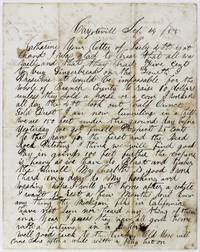
1855rif. 3206Coyoteville: September 12 1855. Very good. 2pp. plus integral blank. Original mailing folds moderate toning staining and ink spotting but still easily readable. Bottom fourth of integral blank excised. An informative Gold Rush letter about mining in the long-vanished ghost town of Coyoteville which was an extraordinarily rich gold area for a couple of years in the early 1850s. A noted tunneling method nicknamed "coyoteing" was developed in the town and subsequently inspired the name of the town. In the present letter Moses Pine writes to "Catherine" in Branch County Michigan and signs his name simply as "Mose Esq" at the conclusion. The author informs Catherine presumably his wife or sister of his activities some of the economic realities and some of the practical details of prospecting for gold in California. Presuming that "it would be impossible for the whole of Branch County to raise $10 unless they sell a horse" Pine comments that he had ginger bread on the Fourth of July after working all day and yielding a "half Ounce Gold Dust." He then provides a detailed description of his mining: "I am now tunneling in a hill. We are 150 feet under the ground. Day before yesterday we got small respect 25 cents to the pan for the first and the bed rock pitching. I think we will find good pay in the going 100 feet further the expense is heavy as we have to blast and timber the tunnel." Pine also talks of his health and that "I work hard every day do my cooking and baking." He then expresses his hope to get back to Michigan to "rest a few months" but knows nothing of other Michigan folks in California: "Have not seen nor heard anything of them in a year. I guess they have all gone home with a fortune in a horn. Well good luck to the lucky. Old Mose will come home after a while with a pretty hat on." A nicely-detailed letter from an unusual and obscure Gold Rush location. September 12 unknown books
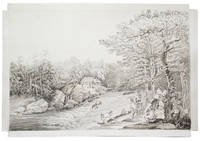
1800rif. 52601Canada 1800. Graphite pen-and-ink and grey wash on wove paper watermarked "W. Elgar 1796". 13 5/8 x 20 inches. Corners clipped outside the image verso toned. Graphite pen-and-ink and grey wash on wove paper watermarked "W. Elgar 1796". 13 5/8 x 20 inches. Along the falls of a tree-lined river two First Nations men are pulling a canoe into the water directed by another in an elaborate feather headdress; a wigwam with mother and child is on the same shore to their left; across the river a longhouse and structure for smoking fish with another group of native people can be seen; at the far left a First Nations man is standing in his canoe fishing with a pole in the water just below the rapids. Although the 1796 watermark on the paper is consistent with drawings by Heriot the unfinished quality of this work make attribution difficult. However it is somewhat reminiscent of a smaller grisaille watercolor signed by Heriot titled FALLS OF THE POQUISQUE ON THE RIVER ST JOHN on verso sold at Waddington's March 15 2018 lot 137. Furthermore this scene is reminiscent of one described by Heriot in his Travels in the Canadas 1807 in which he describes Native American fishing on the cacasdes of St. Mary nine miles below the entrance to Lake Superior: "It is at the bottom of the rapids and even among their billows which foam with ceaseless impetuosity that innumerable quantities of excellent fish may be taken from the spring until the winter; the species which is found in the greatest abundance is denominated by the savages atticameg or white fish; the Michilimakinac trout and pickerell are likewise caught here. These aflford a principal means of subsistence to a number of native tribes. No small degree of address as well as strength is employed by the savages in catching these fish; they stand in an erect attitude in a birch canoe and even amid the billows they push with force to the bottom of the waters a long pole at the end of which is fixed a hoop with a net in the form of a bag into which the fish is constrained to enter. They watch it with the eye when it glides among the rocks quickly ensnare it and drag it into the canoe. In conducting this mode of fishing much practice is required as an inexperienced person may by the efforts which he is obliged to make overset the canoe and inevitably perish." Trained by Paul Sandby at the Royal Military Academy Woolwich London Heriot worked as a clerk for Board of Ordnance. "In 1792 Heriot was posted to Quebec and promoted clerk of the cheque in the Ordnance department. Heriot was to remain in Lower Canada until 1816 except apparently for two periods of absence in 1796-97 and in 1806. His first years at Quebec are not well documented. Sketches record visits in and about Quebec and Montreal perhaps on Ordnance business. In November 1792 he published a sketch of Jersey in the Quebec Magazine and the following year he prepared a view of Quebec perhaps also intended for publication. When he returned to Britain in 1796 he resided in London travelled to the south coast and made at least one sketching foray into Wales . A watercolour prepared from his sketches of Wales and two Canadian views were accepted by the Royal Academy of Arts for exhibition in the spring. Heriot probably sailed for Lower Canada soon afterwards taking notes and making sketches on the voyage. The impact of his visit to Britain was considerable. While there he had been stimulated by the art he had seen and by his success as an artist. He returned with a fresh enthusiasm for the Canadas; he began to read about their past and to make elaborate notes and numerous sketches of the places he visited and the peoples he encountered. His sojourn abroad had affected his artistic vision of the Canadas; his drawings and water-colours assumed a new confidence and his landscape forms developed a new strength and grandeur. In London he had probably studied the simply handled and remarkably strong water-colours of younger British artists such as Thomas Girtin Joseph Mallord William Turner and John Varley. Either in Britain or in Lower Canada he had also become familiar with Lieutenant George Bulteel Fisher's Six views of North America . London 1796. He was influenced by this work especially by Fisher's use of the Picturesque in depicting Canadian landscape" Dictionary of Canadian Biography. unknown books
1972rif. 3429New York: International Publishers 1972. Paperback. 322p. first wraps edition very good condition. International Publishers paperback books
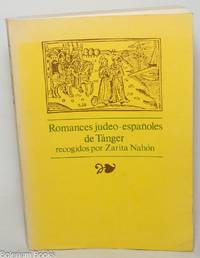
1977rif. 346414Madrid: Cátedra-Seminario Menéndez Pidal 1977. Paperback. 253p. wraps illus. spine creased and sunned else very good condition. Inscribed and signed by Armistead on the half-title. Text mostly in Spanish with a prolog in English. Fuentes Para el Estudio del Romancero Serie Sefardi F.E.R.S. IV. Cátedra-Seminario Menéndez Pidal paperback books
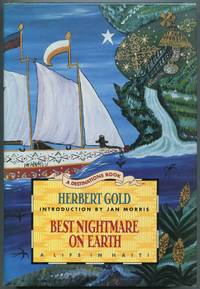
1991rif. 159522New York: Prentice Hall Press 1991. Hardcover. Near Fine/Near Fine. First edition. 303pp. Introduction by Jan Morris. Light foxing on page edges near fine in near fine dust jacket. Prentice Hall Press hardcover books
1991rif. 197281991. Softcover. VG slight wear to extremities. Color wraps. 128 pp. Numerous color and bw plates. paperback books
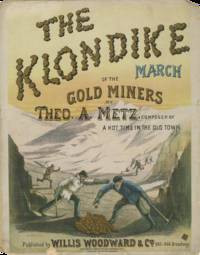
1897rif. Cat358New York: Willis Woodward & Co 1897. Folio sheet music complete. Illustrated color lithograph title page by Robert Teller. Covers detached contents complete good with lithographed cover in particularly bright and attractive condition. Sheet music issued at the height of the Klondike Gold Rush capitalizing directly on the surge of public interest following the discoveries in the Yukon in 1896–1897. The lithographed title page signed in style by Robert Teller shows a dramatic scene of prospectors working a gold deposit in the mountains with two miners in the foreground bent over a pile of freshly uncovered gold tools in hand. Theodore August Metz was a German-born musician trained on violin in Hanover who emigrated to the United States and worked various trades before establishing himself as a bandleader and composer in Chicago’s late 19th-century popular music scene. He achieved national prominence with “There’ll Be a Hot Time in the Old Town Tonight” 1896–97 a widely performed marching tune that became especially popular during the Spanish-American War and in minstrel and touring band repertories. OCLC 726910235 locating a single copy at the Levy Collection. Willis Woodward & Co unknown books
1805rif. 1402716New York 1805-1809. A collection of five New York Supreme Court writs and summons documents dated from between 1805 to 1809. Each sheet contains handwritten legal notations case details clerk signatures and embossed state seals. In Very Good condition. Light overall age-toning with scattered foxing and mild surface wrinkling. Embossed and foil seals remain present and largely intact with minor rubbing from handling. Original fold lines visible from storage. Edges and corners show light wear including a small close tear of approximately 0.5" along the lower left margin of one document. RW Consignment. Shelved at Rockville Room A General Ephemera Part 2. These writs executed by clerks such as Fairlie & Bloodgood and Breese summon parties in a variety of civil cases most involving debt and judgment: 1. Montgomery Co. 1808 -Partially printed writ of summons with Arthur Breese named as clerk printed bearing the gilt seal of the New York Supreme Court. Summons Timothy Moors to answer in a case brought by John Haggerty and David Austin leading New York auctioneers who together operated the powerhouse firm Haggerty & Austin dominant in city auction circles in the early 19th century. Attorney listed as "T Sill" Theodore Sill partner to Thomas Ruggles Gold. A vivid example of the Court's extension into upstate counties through its Utica office. 2. Cortland Co. 1809 - writ of summons for Samuel Sheldon in a case brought by John Bissell likewise partially printed with Arthur Breese named as clerk printed with gilt seal. Attorney named as "Theodr. Sill" Theodore Sill partner to Thomas Ruggles Gold 3. Montgomery Co. 1805 - Partially printed writ which names James Fairlie and Francis Bloodgood as clerks printed. Summons Jonas Dillingback and names attorneys Gold & Sill Thomas Ruggles Gold and Theodore Sill of Whitesboro a distinguished Federalist political duo and influential legal partners. 4. Albany Co. 1806 - Fully manuscript writ of execution signed as Fairlie and Bloodgood clerks demanding that the Sheriff enforce payment by Joseph Lyon to Thomas and Garrit Storm. The Storms were members of a prominent New York mercantile family; Thomas Storm 1748-1833 served as Speaker of the New York Assembly 1802-03. Attorney of record: "Graham." 5. Washington Co. 1809 - manuscript writ of summons signed as Fairlie Bloodgood and Breese in what appears to be at least two distinct hands naming J. Russell as attorney summoning Absalom Daley and William Johnson to answer Simon Willard. The documents show the transition from fully manuscript legal process to printed blanks filled in by clerks and bear the signatures of early Supreme Court clerks: James Fairlie Harmanus Bleecker Bloodgood and Arthur Breese. James Fairlie 1757-1830: Revolutionary War officer served as aide-de-camp to General Steuben later Clerk of the New York Supreme Court of Judicature for the New York City office 1798-1820. Prominent in Federalist circles he was also a Regent of the University of the State of New York. His long tenure as clerk makes his name common on early 19th-century Supreme Court writs. Francis Bloodgood 1775-1840: Clerk of the New York Supreme Court of Judicature at Albany 1797-1825 and later served twice as Mayor of Albany. A central figure in Albany's legal and civic world his career spanned both law and politics and he is remembered for helping administer the highest state court during a formative period. Arthur Breese 1770-1825: Princeton graduate 1790 lawyer and influential in Oneida County politics. Appointed Clerk of the New York Supreme Court at Utica in 1808 overseeing the new western division of the court until his death in 1825. He was the father of Sidney Breese later U.S. Senator from Illinois and Chief Justice of the Illinois Supreme Court. His clerkship marked the expansion of the state's judicial system into western New York. 1402716. Special Collections - Upstairs. unknown books
1967rif. 196420New York: Random House 1967. Hardcover. Near Fine/Very Good. Later. Near fine in very good dust jacket. Clean text with slightly soiled end pages browned text and edges clean cloth covers dust jacket is discolored rubbed on rear. Random House hardcover books
1984rif. 236536Spain: Impreso en Espania 1984. Softcover. Very Good. Fourth edition. Very good in wrappers. Paperback slightly rubbed at spine ends and corners beautiful pictures. Impreso en Espania unknown books
1993rif. 187637New York: Villard 1993. Hardcover. Fine/Very Good. First edition. Fine in very good dust jacket. Pages clean. Clean and glossy cover. One inch tear on top edge of front dust jacket. 2 inch tear on rear dust jacket on top edge. Shelf rubbing to dust jacket. Solid book. Villard hardcover books
2003rif. 192069New York: Penguin 2003. Hardcover. Fine/Fine. First edition. Fine in fine dust jacket. Hardcover is in nice clean condition. Dustwrapper is in clean condition except for slight wearing of top and bottom panel edges. Penguin hardcover books
1966rif. 200457New York: Random 1966. Hardcover. Very Good/Very Good. Book club. Very good in very good dust jacket. Spine of dust jacket is browned. Random hardcover books
1985rif. 121129CA: Ins Contemporary Studies 1985. Softcover. Good. Good in wrappers. Book's front cover has writing on it. Bumped corners. Rubbed on spine. Ins Contemporary Studies unknown books
1963rif. 209883New York: Dial 1963. Hardcover. Very Good. Very good plus Bottom spine end bumped. Former owner's name on front end paper. Dial hardcover books
1987rif. 148166New York: Villard Books 1987. Hardcover. Fine/Fine. Reprint. Fine in a fine dust jacket with a sticker on the front panel. Reprint. Villard Books hardcover books
1992rif. 250188CA: Univ of CA 1992. Softcover. Good. First edition. Good in wrappers a paperback. Corners rubbed. Text clean. Univ of CA unknown books
1958rif. 234494New York: Doubleday 1958. Hardcover. Very Good/Very Good. First edition. Very good in very good dust jacket. Name plate inside front cover. Pages brown. Edges of spine bumped. Minor tears on edges of dust jacket spine and corners. Doubleday hardcover books
1963rif. 209875New York: Dial 1963. Hardcover. Fine/Very Good. Fine in very good dust jacket. Dustwrapper rubbed. Dial hardcover books
1974rif. 207091New York: Bantam 1974. Softcover. Very Good. Very good in wrappers a paperback. Pages brown. Shelf rubbing. Bantam unknown books
1975rif. 147197New York: Harper 1975. Hardcover. Near Fine/Near Fine. First edition. Near fine in near fine dust jacket. Slight shelf rubbing on dust jacket. Harper hardcover books
1988rif. 217968PA: Jewish Pub 1988. Softcover. Very Good. Uncorrected. Paperback Very good in wrappers. Cover rubbed and browning very lightly. Jewish Pub unknown books
1957rif. 303021957. GOLD Herbert. "The Not Nice Guy." In Playboy magazine May 1957. Near fine minor wear. $45.00. unknown books
1957rif. 303011957. GOLD Herbert. "Do Nice Artistic Girls." In Playboy magazine August 1957. Very Good. $45.00. unknown books
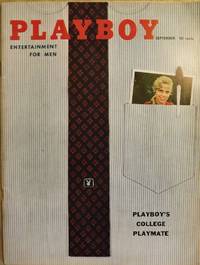
1958rif. 304001958. GOLD Herbert. "Sleepers Awake." In Playboy Magazine September 1958. Very Good. $50.00. unknown books