Gold, Theodore SBiblio.com

16 450 résultats
réf. 1024279960.Ghardcover. Good. Access codes and supplements are not guaranteed with used items. May be an ex-library book. hardcover
réf. 1023971925.Gpaperback. Good. Access codes and supplements are not guaranteed with used items. May be an ex-library book. paperback
réf. 1363220306.Ghardcover. Good. Access codes and supplements are not guaranteed with used items. May be an ex-library book. hardcover
réf. 133138107X.Gpaperback. Good. Access codes and supplements are not guaranteed with used items. May be an ex-library book. paperback
réf. 087005144X.Ghardcover. Good. Access codes and supplements are not guaranteed with used items. May be an ex-library book. hardcover
1722réf. 7302Londini London: Impensis Richardi Sare . 1722. Folio pp. xliv 468. Parallel Greek and Latin text contemporary panelled calf neatly rebacked retaining original spine corners and end-papers renewed. Nineteenth century book label: Bishopric of Cornwall. Second century Christian author probably martyred under Marcus Aurelius. Styan Thirlbys edition is described by Dibdin as splendid and carefully executed although Dibdin is cautious regarding Thirlbys achievements as editor: ingenious but vain seems to be his opinion. Book Impensis Richardi Sare [...] unknown
réf. 1984552287.Ghardcover. Good. Access codes and supplements are not guaranteed with used items. May be an ex-library book. hardcover
réf. 1330302540.Gpaperback. Good. Access codes and supplements are not guaranteed with used items. May be an ex-library book. paperback
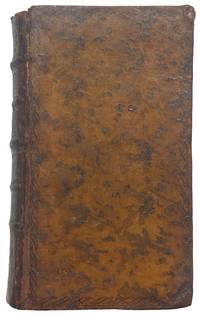
1783réf. 43848Lyon: chez Jean-Marie Bruyset Pere & Fils. A. 1783. 12mo. 17x 9.5cm Volume 5. In original full mottled calf real raised bands panels ornated full gilt decorated marbled endpapers edges stained red in contemporary binding style some wear on the edges hollow binding with the rear marbled endpaper re-used to line the hollow out recess which continue from page 30 the back interior box glued. – When opened the interior hollowed recess is not noticeable however the book is uncommonly light in very good sound condition. very good. These hollow book boxes were common before after the second war in the book stals on the banks of the Siene. They were made from broken sets which were common in that era and were considered a great keepsake in the growing tourist trade. As a bookseller you never had any money to hide away however we did keep the cash register float in a book box made from a small folio “Boy’s Own Annual 1912” for about forty years shelved with the reference and bibliography section behind the counter until it fell apart in complete exhaustion. chez Jean-Marie Bruyset Pere & Fils. A. unknown
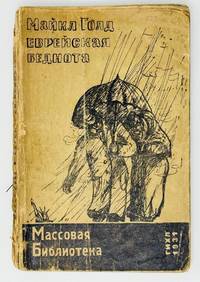
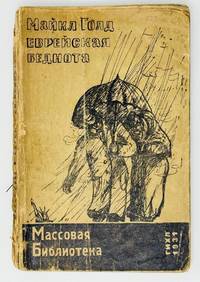
réf. 2685Moscow: Gos. izd-vo khud. lit-ry 1931. 214 1 p. 175 × 11 cm. Original illustrated wrappers. Good condition. Spine is chipped and two small fragments are missing from the edges. Minor soiling of the covers. Scarce. 1 of 5000 copies. First edition. Second edition followed the next year. Original English version published in 1930. Translated from English by the Soviet translator Mark Volosov 1895-. The book design by Leonid Zusman 1906—1984. At different times Zusman attended private art studios of F. Rerberg and A. Miganadzhian in Moscow the workshop of I. Mashkov etc. In 1924—1926 he studied at the Higher Art and Technical Institute in Leningrad under K. Petrov-Vodkin and in 1927—1929 at the Higher Art and Technical Institute in Moscow under D. Shterenberg. Zusman’s work was closely connected to the illustration of children’s books design of various newspapers and magazines. Some of his most famous works in book design include: Thousand and One Nights 1958—1960Oleshi’s Zavist’ i.e. Envy 1979 etc. The Russian translation of a semi-autobiographical novel by the Jewish American writer and lifelong Communist Mike Gold 1894- 1967. The only novel written by the author Yevreyskaya bednota i.e. Jews without Money became a manifestation of the American proletarian spirit of the 1930s. The novel is set in a slum populated mainly by Jewish immigrants from Eastern Europe. The father of the hero is a painter who suffers from lead poisoning. When he falls from a scaffold he is disabled and can no longer work. His business fails and the family is pushed into poverty. Although he is a bright boy young Michael decides he must leave school. On the final page of the book the poor Jewish boy prays for the arrival of a Marxist worker’s revolution that will emancipate the working class. Born in New York to Romanian Jewish immigrant parents American writer Mike Gold was an ardent supporter of the Bolshevik Revolution. In 1921—1922 Gold became Executive Editor of the magazine The Liberator on the pages of which the journalist wrote: The Russian Bolsheviks will leave the world a better place than Jesus left it. They will leave it on the threshold of the final victory - the poor will have bread and peace and culture in another generation not churches and a swarm of lying parasite minister dogs the legacy of Jesus. Three years later Mike visited Moscow where his fascination with Communism reached its peak. Throughout the 1920s Gold worked on his only novel Jews Without Money. Published in 1930 it was an immediate success and was translated into over 14 languages. The popularity of Jews Without Money made Gold a national figure and cultural commissar of the Communist Party. The Russian society got acquainted with the writings of Mike Gold in the mid-1920s. In the period from 1925 to 1931 Mark Volosov who was the classic translator of the American writer issued 3 Russian translations of Mike’s works: Proklyatyy agitator i.e. The Damned Agitator 1925 120 millionov i.e. 120 Million 1930 and this title 1931; 1932. With the gradual introduction of the anti- semitic campaign in the Soviet Union works by Mike Gold and other Jewish authors vanished from the print. At the age of 19 Volosov was drafted into WWI and taken prisoner by the Nazis. After escaping from captivity Volosov fled to Norway and then to the United States returning to the USSR only in 1923. Knowledge of English allowed him to start translating fiction. With his help Soviet readers got acquainted with such authors as Theodore Dreiser Michael Gold Grace Lampkin etc. Volosov was reported missing during WWII. Worldcat shows only one copy in NYPL. unknown
réf. 159924196X.Ghardcover. Good. Access codes and supplements are not guaranteed with used items. May be an ex-library book. hardcover
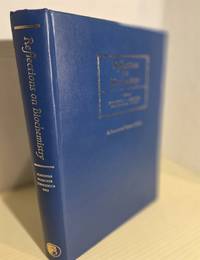
réf. 135741Pergamon Press. Very Good with no dust jacket. 0. Hardcover. Not many marking except for the library pocket. Book is attractive pages are clean very good binding ; 1976-01-01; Ex-Library; 8vo 8" - 9" tall; 0 pages . Pergamon Press hardcover
réf. 2660Moscow: Gos. izd-vo khud. lit-ry 1931. 214 1 p. 175 × 11 cm. Original illustrated wrappers. Good condition. Spine is chipped and two small fragments are missing from the edges. Minor soiling of the covers. Scarce. 1 of 5000 copies. First edition. Second edition followed the next year. Original English version published in 1930. Translated from English by the Soviet translator Mark Volosov 1895-. The book design by Leonid Zusman 1906—1984. At different times Zusman attended private art studios of F. Rerberg and A. Miganadzhian in Moscow the workshop of I. Mashkov etc. In 1924—1926 he studied at the Higher Art and Technical Institute in Leningrad under K. Petrov-Vodkin and in 1927—1929 at the Higher Art and Technical Institute in Moscow under D. Shterenberg. Zusman’s work was closely connected to the illustration of children’s books design of various newspapers and magazines. Some of his most famous works in book design include: Thousand and One Nights 1958—1960Oleshi’s Zavist’ i.e. Envy 1979 etc. The Russian translation of a semi-autobiographical novel by the Jewish American writer and lifelong Communist Mike Gold 1894- 1967. The only novel written by the author Yevreyskaya bednota i.e. Jews without Money became a manifestation of the American proletarian spirit of the 1930s. The novel is set in a slum populated mainly by Jewish immigrants from Eastern Europe. The father of the hero is a painter who suffers from lead poisoning. When he falls from a scaffold he is disabled and can no longer work. His business fails and the family is pushed into poverty. Although he is a bright boy young Michael decides he must leave school. On the final page of the book the poor Jewish boy prays for the arrival of a Marxist worker’s revolution that will emancipate the working class. Born in New York to Romanian Jewish immigrant parents American writer Mike Gold was an ardent supporter of the Bolshevik Revolution. In 1921—1922 Gold became Executive Editor of the magazine The Liberator on the pages of which the journalist wrote: The Russian Bolsheviks will leave the world a better place than Jesus left it. They will leave it on the threshold of the final victory - the poor will have bread and peace and culture in another generation not churches and a swarm of lying parasite minister dogs the legacy of Jesus. Three years later Mike visited Moscow where his fascination with Communism reached its peak. Throughout the 1920s Gold worked on his only novel Jews Without Money. Published in 1930 it was an immediate success and was translated into over 14 languages. The popularity of Jews Without Money made Gold a national figure and cultural commissar of the Communist Party. The Russian society got acquainted with the writings of Mike Gold in the mid-1920s. In the period from 1925 to 1931 Mark Volosov who was the classic translator of the American writer issued 3 Russian translations of Mike’s works: Proklyatyy agitator i.e. The Damned Agitator 1925 120 millionov i.e. 120 Million 1930 and this title 1931; 1932. With the gradual introduction of the anti- semitic campaign in the Soviet Union works by Mike Gold and other Jewish authors vanished from the print. At the age of 19 Volosov was drafted into WWI and taken prisoner by the Nazis. After escaping from captivity Volosov fled to Norway and then to the United States returning to the USSR only in 1923. Knowledge of English allowed him to start translating fiction. With his help Soviet readers got acquainted with such authors as Theodore Dreiser Michael Gold Grace Lampkin etc. Volosov was reported missing during WWII. Worldcat shows only one copy in NYPL. unknown
1882réf. 054950Brighouse: A. B. Baynes 1882. First Edition . Hardcover. Very Good Plus. Small Octavo. Illustrated. FIRST EDITION : 1882. Volume 1 of 4. Hardback. Original dark-blue sand-grained cloth gilt lettered spine and cover. Light grey end-papers. Frontispiece and two plates. Owner bookplate; no owner markings. A tight bright and clean copy. Slight browning to end-papers. Minor wear only. Neat Bingley bookbinder's stamp to rear; 'Harrison Queen Street Mill'. 375 pages. Indexes. VERY GOOD INDEED. SCARCE. Will be well-packed for posting/shipping. Sm.8vo. Rosley Books for Antiquarian books CHS Cumberland Everyman GKC Inklings Keswick Literature MacDonald Rarities Theology and History. . A. B. Baynes hardcover
1881réf. 055125Brighouse: A. B. Baynes 1881. First Edition . Hardcover. Very Good Plus. 8vo. Illustrated. FIRST EDITION. BRIGHOUSE : 1881. Volume 2 of 4. Hardback. Original dark-blue sand-grained cloth gilt lettered spine and cover. Light grey end-papers. Frontispiece and two fold-out plates in very good order. Owner bookplate; no owner markings. A tight bright and clean copy. Slight browning to end-papers. Minor wear only. Includes extensive bibliography of Heywood's works. Neat Bingley bookbinder's stamp to rear; 'Harrison Queen Street Mill'. 372 pages. Index. VERY GOOD INDEED. Book now in an archival quality clear protective jacket. SCARCE. Rosley Books for Antiquarian books Theology & Church History. A. B. Baynes hardcover
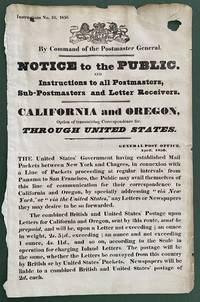
1850réf. List2416Great Britain 1850. Broadside measuring 9 ⅞ x 15 ⅜ inches. Some chipping and wear to edge ink number written in corner two small section of loss due to improper mounting very good overall. Coat of arms of the United Kingdom above printed text. Very Good. A scarce broadside relating to British postal rates across the Panama Route through the Chagres River which supplied mail to California and Oregon beginning in 1848 before eventually being replaced by the Overland route in 1860. The service was characterized by long delay times as steamships on either side of the isthmus were often not coordinated causing major delays in the delivery. Several different steamship companies operated privately some carrying express mail. The letters were transported by canoe or pack animal across the isthmus. Postmaster General Cave Johnson began establishing post offices in California in 1848. Johnson also oversaw the transition to the prepaid delivery system. The broadside here of which we find no other records does state that postage must be prepaid and that the route can be accessed by writing “via New York” on the letters. A scarce postal history item relating to the expansion of mail services to California. We find no other records of this institutionally or in the trade. unknown
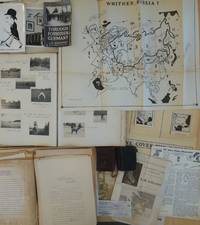
1950réf. List2425Europe and California 1950. Includes two small diaries from 1901 and 1917 with sporadic entries a large photo album measuring 14 x 11 with appx. 400 small photographs from 1906-1909 attached to album pages most measuring 3 x 2 as well as a few larger format images laid in. With 100 plus pages of typed pages including retained correspondence story ideas and various other manuscripts. With eleven maps produced for his “Of Men and Maps” series including five copies of a large map entitled “Whither Russia” in varied states and in large sizes up to 30 by 36 inches and a handful of small ephemeral pieces. Generally near fine condition with the exception of the album which is missing its rear board and has some pages loose and torn. Very Good. J.M. de Beaufort a war correspondent for the London Daily Telegraph and New York American during World War I recounted his wartime adventures in the 1917 book "Behind the German Veil: A Record of a Journalistic War Pilgrimage." Originally arriving in Chicago in 1909 he married a steel magnate's daughter and pursued a career in show business. However by 1912 he had gone through a divorce and transitioned to newspaper work earning the moniker of the "Dude Reporter." Originally born in the Netherlands as Jacques Albert Uilenbroek he was thought to be a deserter. He spent the latter part of his life in the United States apparently jailed in San Francisco for a stint in the 1920s and eventually settled in Los Angeles. Offered here is an interesting smattering of material from the life of the mysterious De Beaufort which bookends his most unusual career and life with a large visual photographic record of his life in Europe as a young man and over a hundred pages of manuscript material from late in his life with a highlight being several maps in draft form for an apparently unpublished project called “Of Men and Maps.” As a group the material shows the work of an ex-con artist and war correspondent trying to regain his form while living in Los Angeles. He was still writing as a “Special Correspondent” at this point though the title seems to have been fully honorary. Also included are two small pocket journals with sporadic notations from his life in Europe in 1900 and in 1917. In its entirety the group gives an interesting visual and manuscript record of a literary fraudulent and imaginative transatlantic life and intellect. The cartographic highlight of the group is several iterations of a large map called “Whither Russia” in varied forms which show an interesting interpretation of the sphere of influence of the USSR and its growth from 1939 to 1946. Also included are two drafts of a map of Operation Market-Garden in the Netherlands in 1944 an unidentifed tactical map of a military battlefield a map called “Middle East Jackpot” showing the division of territory between the Allied and Axis powers a map called “Dawn’s Early Light some reproduced small format maps from the De Beaufort’s and a small map called “Gifts from Yalta.” De Beaufort was working on these maps for a column called “Of Men Maps and Memories” that was published in the East Los Angeles Tribune. He also sent the columns out in newsletter form from his address at 1635 N. Ogden Drive in Los Angeles. The collection of manuscripts drafts and retained correspondence tackle a range of subjects perhaps most interestingly those detailing De Beaufort’s creative process - drafts of stories lists of ideas for stories and letters. His over the top style is on display in a lot of the writings some of which are of unknown origin and purpose. The documents contain correspondence between De Beaufort and Edwin Pauley the oil man and presidential advisor. In one untitled essay he asks himself the question “What has been your most thrilling experience” and his reply is “ Silly questions. Who or at least what newspaperman of some 25 turbulent years standing - and falling - could answer such a question. A reporter’s life has a thousand thrills. There was that rainy day in Marcy 1915 in the fortress of Loetzen when I stood face to face with Hindenburg. Hm yes that was quite a thrill…” De Beaufort was entrenched in the Los Angeles journalistic scene at this point and the documents show the degree to which he relied on his former glories to attempt various career revitalizations endeavors. The album of photographs from 1906-1909 over 400 in total give a visual record of the young Uilenbroek’s life in Europe. The star of the collection is his bulldog Bob who travels throughout Europe with him and eventually comes to America by 1907. Mary who we presume to be his future wife is featured heavily in the images. It is unclear whether he was working at this point the images show affluent young people and their dog in varied cities and are purely of a personal nature. Other photographs laid in are relics from his war correspondent period. The loose photographs and ephemera are a mix of portraits from different periods from his life including two pictures of Sydney Turing Barlow Lawson one signed by his widow. The journals are sporadically filled and hard to decipher though one legible passage says “drinking all day.” Overall the group gives evidence of this intriguing life and is the only extant group of material relating to Beaufort to our knowledge with the exception of a single journal from his time in Belgium during WWI that was sold at Bonhams and is still available in the trade as of this writing. unknown
1883réf. 054132Bingley: T. Harrison 1883. First Edition . Hardcover. Average. 8vo. Illustrated. FIRST EDITION. BINGLEY : 1883. Volume 3 of 4. Hardback. Original dark-blue sand-grained cloth gilt lettered spine and cover. Light grey end-papers. Frontispiece and one plate. Owner bookplate; no owner markings. Boards stained spine not stained and is bright; affects first and last 25 pages; apart from this text clean. Staining to end-papers. Minor wear. Includes extensive bibliography of Heywood's works. Neat Bingley bookbinder's stamp to rear; 'Harrison Queen Street Mill'. 374 pages. Index. AVERAGE. Ideal as a reading copy. Book now in an archival quality clear protective jacket. SCARCE. Rosley Books for Antiquarian books Theology & Church History. T. Harrison hardcover
1850réf. List1929California 1850. With thirteen letters most multi-page written from Monterey in 1850 a 7 pp facsimile transcription of a 1834 Mexican land grant on cloth measuring 11 x 14 inches and and eleven page document on paper in Spanish relating to a Monterey land grant transcribing an 1841 document. Letters heavily worn with some loss at margins but mostly legible land grant in good to very good condition transcribed document in Spanish in fair condition with water damage to margins. Fair. An interesting archive of 1850s-era material relating to the life and career of the surveyor Edward Williams which recently surfaced in the central mother lode region. The group includes his personal letters from the California Gold Rush as well as well two interesting documents form his work for the Surveyor General J.W. Mandeville in 1858 where he transcribed two Mexican land grants. Lt. Edward Williams was a member of Company E New York Volunteers under Capt. Nelson Taylor. He came to California around 1847 and found employment as a deputy surveyor later working for the Office of the Surveyor General of the Unites States for California. In 1858 Surveyor General J.W. Mandeville commissioned a report on Mexican-era California Land Grants. Mandeville had Williams copy the original documents exactly - inclusive of an ink copy on linen that is an "exact tracing" of the original documents starting with 1834 up through about 1840. These "copies" were submitted to the Surveyor General in 1858 for use in the report. Williams continued the title work by copying other documents from about 1841 though this time not as a tracing but hand copied on the usual blue paper of the 1850s. The documents illustrate the length officials went to while they investigated Mexican Land Grant titles to California properties in the 1850s. The process was difficult and involved two distinctly separate cultures and legal systems that clearly conflicted. The Mexican Government granted rights for these large land parcels in California to various people but clearly stated they could not sell parts of the property. The wording was used many times in litigation of the period in both defense of the land grants and in opposition to how the land grants were handled. The issues were actually quite simple in that the Mexican legal standards for land grants was far different from those in the United States and the two differing forms of written land ownership and use clashed. These documents reflect a parcel of land granted to Francisco Mesa at "Corral de Tierra" a large parcel in Monterrey County California. Mesa had requested land for "his personal use and that of his family." In the Grant the title papers reflect "while the land is under Francisco's possession it cannot be divided mortgaged or a levy placed on it nor handed down." These original documents help illustrate the complex story of Mexican Land Grants in California. Also included are thirteen letters from Ed aka "Ned" to various family members primarily his mother and sister Alice and vice versa. About half are from Ed the other half are written to him. The dates of the letters are; 1850: February 10th April 15th April 16th April 28th June 10th July 30th October 11th and November 17th and 1851: September 9th. One undated letter with heavy loss is written from Panama. The letters are generally readable but the condition far from perfect with water stains throughout and chips abundant along edges and significant textual loss. The letters are generally at least two pages sometimes four or more inclusive of writing in the crossed line custom to save paper. Most are datelined at Monterrey where he discusses the people the customs setting and more. Despite the condition flaws there is much to be gleaned from his correspondence. In his April 15 1850 letter . he describes his trip to San Juan Bautista from Monterrey in detail while he was on his way to San Francisco. Williams writes of his great pleasure on tasting cooked beef by the Indians that he found was the best he ever tasted as they camped on the way to San Jose with the ultimate goal Mission Dolores in San Francisco: “this the beef they put on the embers of the fire and broiled it - I never tasted anything like it before so tender so juicy…” One of his first notes on San Francisco: "There are regular streets filled with all kinds of sorts of stores… The shipping covers the water as far as you can see. And those nearest the shore are converted into store houses the rigging being taken down and the and holes cut in the sides for doors.The best houses in town are occupied by gamblers . a large saloon filled with tables on which are played all kinds of games of chance - at some of the tables are displayed immense amounts of coin and gold in lumps worth from 1 to 5000 dollars which some poor infatuated fool of a miner has at some time lost to them." In his letter of April 16th he discusses both his difficulties with women in California and his lack of fitting in back east: “The Spanish Girls are very nice and all that sort of thing but the trouble is to find one that is educated. I can’t bear an uneducated wom an and I think I shall have to come to N.Y. and bring one out here… I know one or two in N.Y. but I don’t believe they would have such an uncouth specimen of an ‘hombre’ as me…” In his next letter he describes Carmel in detail. He states: “I haven’t been to the mines nor have I any inclination to go” though he intends to settle in California permanently. In his next letter he discusses the people he’s met and how he detests the anglophone community there: “How do I like the People Those of Spanish whom I call my friends I love with all my soul - there is not much society except among them… the Eng. and Am. population I detest from the bottom of my heart. This may sound strange but you will know the por que when you arrive.” He then praises the climate and scenery of Monterey. One letter written from Panama which has unfortunately sustained heavy losses at margins offers some details of the trip on the Chagres River. The replies to Williams from his family offer details on life in New York and are similarly compromised in condition but overall there is enough to glean from the group to provide a detailed example of family correspondence from the period. Overall a very interesting and unusual archive of a young professional who moved to California during the Gold Rush period and rejected the Anglophone mining community with particular interest to historians of Monterey and of the systems of land grants that shaped Mexican and American land policy in the nineteenth century. unknown
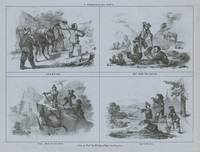
1850réf. List1315Britton and Rey 1850. Single sheet measuring 8 ¼ x 10 ¾ inches on blue wove paper. Small chip to corner not affecting image some older tape repairs verso at margins else fine very good plus overall and quite attractive. Very Good. A series of four illustrations telling the story of a mining party that heads out with a pack mule only to fail to find gold and lose their mule before returning to a new prospect with their clothes in shambles. This is entry 209 in Baird’s California’s Pictorial Letter Sheets in which he sets the publication date as being prior to 1855. The series possibly illustrates scenes from a song. A particularly fine example on the classic blue wove paper of the period. unknown
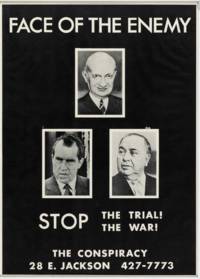
1969réf. List911Chicago 1969. 21 1/4 x 29 1/4 inches. Some light toning and edgewear near fine condition overall. The first example of this poster we have encountered which shows Judge Julius Hoffman Chicago Mayor Richard Daley and President Richard Nixon. We find no other records and can only assume it was produced in the same era as the previous offering as it bears the same address of 28 E. Jackson. unknown
réf. R9781737382928Third Man Books. New. Special order item direct from the distributor Third Man Books unknown
réf. 1330042603.Gpaperback. Good. Access codes and supplements are not guaranteed with used items. May be an ex-library book. paperback
réf. 1527886743.Gpaperback. Good. Access codes and supplements are not guaranteed with used items. May be an ex-library book. paperback
réf. 1330610601.Gpaperback. Good. Access codes and supplements are not guaranteed with used items. May be an ex-library book. paperback