RC Gold R CBiblio.com

15.698 risultati
1961rif. EB-PB-06-031744Drive-In Girl by R.C. Gold Midwood Books paperback
1961rif. 8626New York: Midwood / Tower Publications Inc 1961. First edition paperback original Midwood 87. Paperback in illustrated wrappers by Paul Rader. Spine cocked light edge wear and rubbing. Very good. Scarce Rader GGA cover. Midwood / Tower Publications, Inc paperback
1936rif. 023623Minneapolis Minesota: General Mills Inc. 1936. 1st Edition . Soft cover. Very Good. 12mo - over 6¾ - 7¾" tall. Spiral Bound With Soft Wrapper. Minor Edge Wear. No Ownership Marks Or Writing. Lightly Tanned Edges. General Mills Inc. paperback
rif. 25426Hill’s letter dated 22 July 1850 from 3 Carlton Crescent Southampton. The pedigree copied by Hill from the original made by the College of Arms London and dated 24 November 1845. Captain Hill was the son of Vice-Admiral Henry Hill 1775–1849. In 1845 Captain Hill married Amelia Jane Boyce 1821–1895 granddaughter of the Duke of Marlborough with whom he had ten children. Hill’s letter is written on the back of the pedigree and addressed to ‘The Revd / The Warden / New College / Oxford’. It reads: ‘Mr. Warden / I have the honour of transmitting herewith for your information the Copy of a Pedigree which I have received from the Heralds Office shewing the consanguinity of my Family to William of Wickham the Founder of New College Oxford and of the College of St. Mary at Winchester; and I beg leave to request that you will do me the kindness of communicating to me the result of the examination of the said Pedigree by the authorities of New College.’ The pedigree transcribed by Hill from the original is 40 x 32 cm with a central vertical fold. It appears to have been extracted from a binding causing wear to the central crease which has been repaired with tape. Otherwise it is in fair condition on aged and worn paper. Closely written with one correction in pencil it is headed ‘Pedigree of the Family of Hill shewing their consanguinity to the Family of Nicholas Wadham Esquire Founder of Wadham College in the University of Oxford and also shewing their consanguinity to William of Wickham of New College Oxford and of the College of Saint Mary at Winchester.’ Hill does not feature but his father does: ‘Henry Hill of Braishfield near Romsey Co: Southampton 2d. surviving Son. Born 23. May 1772: bapt. at Newport aforesd. Appointed Captain 1 Jan: 1801. Rear Admiral 22 July 1830; Vice Admiral of the Blue Squadron 23. Nov: 1841. Living 1845.’ Also present is Hill’s mother. Accompanying the pedigree is a 20 x 32 cm. pedigree taking the descent down to Hill himself ‘Henry Worsley Hill Lieut: Governor of the Gold Coast & a Commissioner in the Royal Navy only child by 1st. Wife Born 21 May 1799: bapt: at Freshwater in the Isle of Wight.’ and his wife ‘Amelia Jane eldest daur: of Henry Pitcher Boyce by Lady Amelia Sophia daur of George 4th. Duke of Marlborough KG. Married 1 July 1845 at St. Geo: Han: Square.’ At bottom right is a transcription by Hill of the following statement: ‘We hereby certify the above Pedigree to be faithfully extracted from the Records of the College of Arms London and examined therewith this twenty fourth day of November 1845 by us / Signed / Albert: Co: Woods Lancaster Herald / Geo Harrison Bluemantle’. Hill’s letter dated 22 July 1850, from 3 Carlton Crescent, Southampton. The pedigree copied by Hill from the original made by unknown
rif. 25842‘Kew Green. Kew. / Feb 1. 1869’. See his entry in the Oxford DNB. 1p 12mo. In fair condition on aged paper with strip of sunning and evidence of mounting on reverse which also bears contemporary pencil annotation: ‘Honble Roden Noel / Son of Earl of Gainsborough / A considerable writer & Poet / Author of “A little Child’s Monument” & other Poetry’. Folded twice. The signature is large and firm but rest of his handwriting is appalling. The page carries the letter’s valediction with date and address and a seven-line postscript: ‘. Kind regards . How sad is the . London! I have been visiting a district . since I have been there & the scenes one witnesses are sometimes most sad.’ ‘Kew Green. Kew. / Feb 1. 1869’. unknown
rif. 1897261268.Gpaperback. Good. Access codes and supplements are not guaranteed with used items. May be an ex-library book. paperback
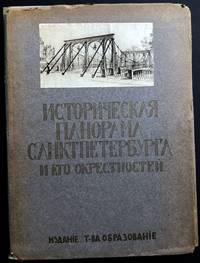
1912rif. H35583Moskva; Moscow: Obrazovanie 1912. First Printing. Hardcover. Good. 12 x 9 inches thick card folding chemise with title on front with small pictorial onlay housing 55 pp. text in Russian and 36 loose "phototype" plates some tinted green brown rust etc. and some double-page. Fair to good with ex-library marks including faint blindstamps of the University of Pittsburgh on each plate's lower margin some wear to chemise cloth reinforcement to versos of flaps. Very uncommon in the trade and in institutions. Tsarskoye Selo was the town containing a former residence of the Russian imperial family and visiting nobility located 24 kilometer south from the center of Saint Petersburg. The residence now forms part of the town of Pushkin. Obrazovanie hardcover
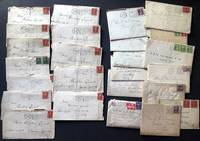
rif. H27660Very good. A remarkable group of 13 letters from Leib or Leybe Salmon 1869-1955 b. in either Lithuania or Poland a Jewish merchant of dry goods sundries shoes glass and silver -- M. Salmon & Son Beaver Falls -- to his cousin Bertha Quint in the Lower East Side of New York City wooing and courting her and arranging to marry her. Their son Jacob was born in 1907 J. Quint Salmon would serve as Judge in the Court of Common Pleas in Beaver County from 1970-1979. These are supplemented by letters to Bertha Quint Salmon from other family members including their son. For the first several years the couple and their child lived with Leib's parents Mayer and Rebekah before getting a place of their own. The letters offer a window into Jewish traditions in western Pennsylvania and into the close-knit ties of family and kinship among immigrant Jews. We will give a short summary of the contents of each of the 13 letters from Leib to Bertha and a general summation of the rest of the letters. Each has its original envelope with clearly legible postmarks and Salmon was a good writer. Although according to censuses Yiddish was their primary language all but one of these letters is in English. 1 Dec. 5 1905. 3 pp. "I am very glad that you got your suit and that you are so pleased with it and trust you look so well in it but you know a good looking girl looks good in anything she wears and that is what I think of you. I only wish I could see you now. I think I can arrange for your furs so you will get a nice set. I wish you would look around and write me what style you would like." He concludes with sincere expressions of affection. 2 Dec. 27 1905. 3 pp. Salmon reports he's working hard up to midnight each night and that in regards to the furs "I don't believe in selecting wearing apparel of that kind for you without you seeing it and have you pleased." He suggests that Bertha go to Lipman & Myers on E. 11th St. and select what would suit her best and that they would treat her right if she presented a letter of introduction from him. "I think that a throw over is a good style so you get it in a nice fur don't get a cheap one and if he has none to suit you don't get any." He expresses sorrow in hearing how hard she is working and hope that it will be better in the future. In a postscript he suggests besides fur Tibet lamb or astrakhan in black "for grays are worn to death." 3 Jan. 28 1906. Leybe is happy she is well pleased with her furs but "In reading your letter between the lines you seem to take it as an imposition from myself on you that you had to get them yourself but I can't see it that way." He recounts going to the theater to see "Hop" Ward in "The Grafter" and that he thought of her all evening as the last time he had been to a play it had been with her and hopes the next time he sees a play it will be with her and "don't forget all the nice things you have to tell me when I come to New York for it may be 3 to 4 weeks before I come." 4 Feb. 22 1906. 2 1/2 pp. He writes of his happiness at the family news she passes on. "Bertha the reason I did not answer your letter before this is I was ready to leave for New York on the 11th but the weather got cold and business revived so I had to postpone my trip and now if nothing happens I intent to leave Sunday March 4th." 5 April 1 1906. 3 pp. He expresses happiness with the letter she wrote him. "Your anxious question in regard to what my folks had to say is quite natural. I assure you that there never has been the least question between my folks and my self in regards to you. the only hint that they gave me was that I should make the wedding in B. F. Beaver Falls and as much as I would like to have them all at our wedding it would be an imposition on me to ask you to do it in as much I am opposed to it my self. Dear Bertha I want you to know that it was not that Wednesday night that I made my mind up it was a settled question with me for a long time: it was absolutely you and you only and when you said yes I was the happiest baby boy and the more I think of you the more happier I am." He concludes with some remarks regarding his cousins Julius and Sadie etc. 6 May 10 1906. 2 1/2 pp. He opens with some remarks about Sadie and her folks and that his mother is recovering from an illness corrects a false impression she might have had of a remark he made about good taste. "Dearest Bertha you want to know my idea if absence makes the heart grow fonder. I would say it does if the love is of the fervid passion nature. I assure you my dear that I am not in that class of lovers. My love for you is pure and honest and I have the greatest faith in you and it makes very little difference to me whether it is in absence or in presence." At the end in a postscript he grouses that she omitted the traditional "xxx" at the end of her last letter and wonders about its significance. 7 June 17 1906. 2 1/2 pp. He expresses happiness that Bertha has left her employment presumably to get ready for the move to Beaver Falls but is defensive about her response to his questions concerning the financial feasibility: "Bertha Dear I don't want an itemized statement of what you are getting it is not my disposition at all I was only trying to make it as easy and light for you as possible neither was I trying to give you lessons on economy it was only to save you a lot of hostling and worry as I know what it means for a girl to get ready for an occasion of that kind." 8 June 28 1906. 6 pp. In this letter he makes plans for the wedding including printing invitations and a possible wedding date -- August 6 -- but begins with a touching sentiment: "My Dear Bertha in accordance with the Hebrew calendar last Sunday was 22 years since we arrived in New York it is just about that time I saw you first you was running around in a little skirt but I had no idea then that in 22 years later will be so near our wedding and I believe you were also ignorant of the fact at that time." It appears that the wedding will not be in Beaver Falls after all: later in the letter he writes "Dearest you also question me in regards to my folks whether they are coming to our wedding. I am very sorry to say that I don't think they will. Father told me some time ago that it is too much for him as he is so unused to traveling and it would be so much harder for Mother to undertake it but don't let this worry you 'dear' I assure you of their anxiety to be at our wedding." 9 July 8 1906. 4 pp. In response to a letter from Bertha he found "full of arguments" Leib defends his choice of August 6th as a wedding date; "I will say the only reason I have for fixing the date on the 15th day of Ab which is the 6th of August is in as much as I don't pause to be pious but I like to observe anything in religion which don't cause me much inconvenience." He then discusses the Hebrew law regarding fasting on a wedding day and the possibility if she wants of the wedding to be held on Sunday August 12th which would probably result in a larger crowd but would also create more work for her and her helper Mary. 10 July 15 1906. 3 1/2 pp. It would appear that Bertha got her wish to change the wedding date to the 12th of August but Leib in this letter informs her that's not going to work either that would be the "21st day of Ab in the Jewish month. Father objects to have it on the old "chodesh" he says it's not right. So the first Sunday in 'Ellul' is 26th of August and I think it's the best we can do now." He reports that the clerks from the store will all be back from their annual vacation by the 10th of August and he will leave after that. He also cautions her against sending any invitations to his side of the family "as it will cause bad feelings for the rest and also look bad for outsiders as I want to be clear of it so I can say I did not invite anybody. When you get them printed 'dear' send me 3 or 4 of them." 11 July 29 1906. 3 pp. Leib refuses a suggestion from Bertha to change his name from Leybe to Louis. "I regret very much that I can't and will not consent to that request as I think Leybe is a much prettier name than Louis. In the Jewish Encyclopedia it is spelled Leib I have thought some time to spell it that way but will not have Louis." He does ask his wife to make some suggestions as to what he should wear at the wedding and also laments that she is shopping for goods for their life together when his dry goods store has all that they would need. 12 August 6 1906. 3 pp. Leybe assures Bertha that he's not angry with her for suggesting a name change but that he has a simple reason -- everyone knows him as Leybe and changing his name would be "silly." He also can't believe six months have passed since their last parting kiss on a railway platform and that in two weeks they would be married. 13 August 13 1906. 3 pp. Leybe has received the printed invitations he's requested but remarks that the date given for the wedding is JUNE 26th not August and that she can correct this before sending out the invitations. He has also implored her a number of times regarding the wedding not to make "a fuss" about it and to keep it simple; on hearing that she's going to have music at the wedding he remarks that music is something he can do without. It's just "common sense " he says. And that's the last letter he wrote before departing for New York on the 15th. The rest of the letters are from the mid-to-late 1930s to 1941: most are from a favorite niece of Bertha's in Brooklyn named Ruth who writes newsy letters about her family and Bertha's with several snapshots enclosed in one of them. A few are from their son Jacob including one written in his late twenties as he's visiting friends in the Boston area remarking on how impressed he was with Harvard's Law Library and its statue of Cardozo seeing it was quite a thrill for him and full portrait of Holmes. A rather longer letter from 1941 by which time he's married expresses concern about his father's health. There is also a letter in Yiddish to Bertha from a Mrs. Nathan Goldfarb dated 1933 from the Cincinnati area. The personalities of Leybe and Jacob come through in these letters: Leybe seems old before his time stuffy and prickly but with an admirable sincerity and a strong capacity to love; Jacob comes across equally sincere and a devoted and caring sort with a fine character. Beaver Falls for a small western Pennsylvania town had a fairly established Jewish population by the turn of the century and by the end of the 1920s the town had at least four synagogues supporting a several-hundred strong community of Jews in the Beaver Valley. unknown
1969rif. H29089Leningrad: Detskai Literatura 1969. First Printing. Hardcover. Good. 8vo cloth backed pictorial boards good to very good some soil rubbing stains and war to covers contents very good. 111 pp text in Russian seems written for older children. RARE: OCLC locates two copies of the 1975 reprint and none at all of this original edition. One of the author's first books; he also published his first book of short stories that year. One of the leading voices in the "Leningrad School of Fiction" and his later novels depicting post-Soviet life have been characterized as surreal and picaresque. Detskai Literatura hardcover
1983rif. H23677Dimashq / Damascus: Mu assasat Tishr n lil-S ih fah wa-al-Nashr 1983. First printing. Paperback. Good. 8vo wraps good to very good with some wear and light creasing to covers contents very good. 463 pp 14 unnumbered leaves of maps and plates loosely inserted. OCLC locates only two copies LOC and British Library. The author was a senior Syrian officer who was the Syrian Minister of Defense from 1972 to 2004. Israel invaded Lebanon in 1982 in alliance with the major Lebanese Christian militias of the Lebanese Forces and Kataeb Party and forcibly expelled the PLO. Mu assasat Tishr n lil-S ih fah wa-al-Nashr paperback
1963rif. H11250Athens: A. G. E. T. 1963. Very Good. No. 23 of 80 copies on special paper of the limited edition. Folio in sturdy cloth chemise 15.5 x 12.5 inches housing 33 mounted color reproductions of paintings by Tetsis with colophon sheet and biographical sheet on Tetsis and with quotation by Kazantzakis. Tetsis a Greek painter born in 1925 d. 2016 painted mainly marine subjects. We could not locate copies of this or the trade edition in OCLC despite using as many variations in spelling as we could think of. Lovely plates in a post-impressionist manner. Light wear and soil to chemise. A. G. E. T. unknown
1905rif. H9782Athens: Ek ton Typografikón Katastimáton Ath. Papaspýrou - Io. Deoudé 1905. Very Good. 8vo black morocco gilt backed cloth boards very good light rubbing to binding original wraps bound in 104 pp some tanning. RARE two copies in OCLC. In Greek. Ek ton Typografikón Katastimáton Ath. Papaspýrou - Io. Deoudé unknown
1946rif. H9768Athens: Saliverou 1946. First printing. Hardcover. Very Good. 8vo modern morocco backed imitation snakeskin boards very good. 152 5 pp illustrated. A series of radio lectures broadcast on the Athens radio station between 1941 and 1944. A second edition was apparently published in 1965 and that is the only one recorded in OCLC. Saliverou hardcover
1966rif. H10050Washington DC: U.S. Department of Commerce 1966. Very Good. 8.5 x 11 stapled wraps 161 pp. Very good light ink note to cover mild age toning. Very rare in institutions and in commerce a single copy is located by OCLC: Bogazici University Library. U.S. Department of Commerce unknown
1678rif. H7589Amberes: Iuan Bautista Verdussen 1678. Hardcover. Good. Folio 12.5 inches 32 cm tall old but probably not original vellum hand lettered on spine 18 34 6 398 Empresa Politica 2 pp Sumario; lacking at least one more page of the Sumario at end with woodcut emblems throughout. Good text with dampstaining the Table page of Republica Literaria and last page of text have wear pp. 370-378 have some lining to the outer margins and flipping through the book there are probably a handful of other pages similarly lined. Rare edition of this Anti-Machiavellian emblem book. Iuan Bautista Verdussen hardcover
rif. H6549Hardcover. Very Good. Produced in Thailand probably 1980s-1990s with tag on mulberry paper: 'Roy Lemkwean / 100 Percent Nature' -- wooden boards measure approximately 10.75 x 8.5 inches 27.5 x 21.5 cm. Blank book of around 50 sheets of mulberry paper. Housed in sturdy buckram folding clamshell slipcase. Including is long and unused pencil made from a tree branch. hardcover
1866rif. H6866Philadelphia: Lippincott 1866. First printing. Hardcover. Very Good. 8vo original blue cloth gilt spine very good light wear to spine ends minor smoky odor. RARE on the market. Attributed to Frederick William Beasley the introduction is signed by a Caspar Almore; a mix of stories and poems. Beasley 1808-1878 was ordained in the Protestant Episcopal Church in 1832 and served as rector of the All Saints' Church in Lower Dublin PA for most of his life was a published poet. Some of the stories such as "The Indian Dream-Cell" and poems such as "The Ghost at Ford's Inn" -- have a fantastic element to them. Lippincott hardcover
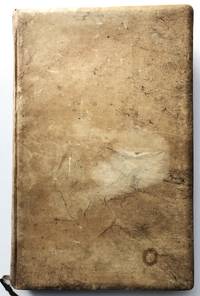
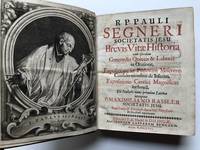
1707rif. H4643Augustae Vindel. & Dilinae: apud Joannem Casparum Bencard 1707. Hardcover. Very Good. Published 1707 quarto 8 inches 20 cm contemporary polished dark brown calf gilt spine with raised bands red spine label 10 142 8 252 2 250 45 7 62 pp. with title pages for each new title. Very good crisp bright copy with lovely frontispiece of the author. The author an Italian Jesuit preacher was one of the most popular preachers of his time. His work included in this volume Concordia Quietis & Laboris is considered a classic on religious meditation. apud Joannem Casparum Bencard hardcover
1858rif. H3843Madrid: Imprenta y Estereotipia de M. Rivadeneyra 1858. First printing. Hardcover. Near Fine. First edition 1858 original blue wraps bound into quarter marbled morocco and cloth boards very good or better 329 pp. Beautifully bound. Imprenta y Estereotipia de M. Rivadeneyra hardcover
1928rif. H2276Barcelona: Llibreria Catalonia 1928. Hardcover. Very Good. Published 1928 Volume I of the Obres Completes nicely bound in half vellum raised bands green marbled boards very good plus with light soil and wear pages tanning 171 pp. Author is regarded as one of the greatest of the Catalan poets of the 19th century. Llibreria Catalonia hardcover
1930rif. H2417Cleveland: The Cleveland Directory Co 1930. Hardcover. Very Good. Reproduction of the original edition of 1837 no date we'd estimate 1930s cloth backed olive printed boards 144 pp very good light rubbing to corners and tips. Even this reproduction is rare. The Cleveland Directory Co hardcover
1793rif. H3339Madrid: En La Imprenta Real 1793. First printing. Hardcover. Very Good. First edition 1793 original flame calf deep red spine label very good copy 8 290 3 pp. In three parts the first lessons for children on their obligations when they are grown to their king and lord the second addressed to priests and the third part addressed to Pius VI regarding the revolution in France and what it portends. The author was a well known priest orator and educator on very good terms with Spanish royalty who rewarded him by making him a bishop with his base in Rio de la Plata Argentina but also with bishoprics in Cordoba and Catamarca Bolivia. This book would have been part of his efforts to educate South American children on their duties to Spain one of his chief goals. En La Imprenta Real hardcover
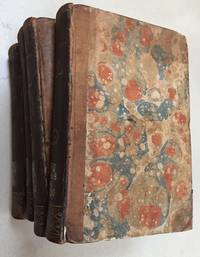
1731rif. H334Venezia Venice: Presso Angiolo Geremia 1731. Hardcover. Good. 4 volumes complete published 1730-1731. 8vo old half leather marbled boards 458 441 383 373 pp. indices in each volume. Good plus set minor library marks call numbers on spines bookplates blindstamp on title pages barcode stickers on rear endpapers some darkening to spines rubbing to boards texts clean and bright. Poet and playwright. Text in Italian. Presso Angiolo Geremia hardcover
1966rif. biblio3164Tel Aviv : Publishing House Olamenu; 1st Edition 1966. Hardcover Red cloth Gilt lettering with beige dj in bad condition. No Wear. Free of marks inscriptions etc throughout. Strong tight binding perfect hinges. 13.1"x9.75". be8x. For International shipping contact seller Publishing House Olamenu hardcover
1971rif. biblio3165Geschichte Der Juden inTel Aviv: Publishing House Olamenu; 1st Edition 1971. Fine Hardcover Red cloth Gilt lettering with White NearFine DJ. No Wear. Free of marks inscriptions etc throughout. Strong tight binding perfect hinges. 13.1"x9.75"x0.9". be8x. For International shipping contact seller Publishing House Olamenu hardcover