17 560 résultats
199488 pages. Koko's adventures in gold country. Glossy illustrated boards. Page 9 coming loose. Chunk removed from back flyleaf. Occasional small red ink and pencil markings to text. Book
1706réf. B6518Paris / probably Amsterdam: Gedrukt tot Parys inde Koninglyke druckery van den klyne Louis Carel Allard. Imprime a l'Imprimerie Royal du petit Louis”. Circa 1706. Very rare and desirable overall plates are crisp and clean; corner of title and edges of some plates slightly darkened; corner torn off at plate 13. . Notes: An important work on the War of the Spanish Succession with a collection of prints by Carel Allard or “Petit Louis” ridiculing the “Sun King” or Monarch Louis xiv in eclipse. Many of Allard’s prints initially separately were published in sets of varying combinations – including the present ‘Almanach’. For instance the Rijksmuseum owns a copy of a later 1713 publication entitled 't Lust-Hof van Momus Beplant met de voornaamste Gewassen van Mars in Europa Een opgepronkt met Staat-kundige Zinnebeelden Des Tegenwoordigen Oorlogs’ by Abraham Allard in which most of the prints of the present work are incorportated. Carel Allard known for depicting royalty inspired other later publications such as satirical engravings in the ‘South Sea Bubble’ published approximately a decade later. Muller comments on the rarity of the prints and the present series; only few known copies exist mainly owned by institutions; Muller states: "Their value as expressions of the spirit and life of the common people is inestimable: indeed there is almost no period in our history for which we possess such a rich treasure of prints." While the title states that the publication was printed in Paris researchers claim the place of editing and printing to be Amsterdam that not the royal imprimerie of ‘Petit Louis’ was used but the printing house of Carol Allard in Amsterdam. Moreover it is claimed that Allard edited the work in Amsterdam. Size: Small Folio 317 x206 mm Illustration: Text in Dutch and French. Illustrated with engraved letterpress copper title and eighteen 18 copper engraved plates; of these seven 7 full page with letterpress text and eleven 11 double page; all accompanied by text each in Dutch and all except for the fifth entitled ‘DE FRANSCHE EN SPAANSCHE HUYLEBALKEN’ and the eighteenth entitled ‘HARPAGON den Ouden Schrok EN HARLEKYN Smit’- all in French. Work on the War of the Spanish Succession ridiculing the Sun King. Provenance: Pencilled and ink notations and signature on upper pasted and free endpaper References: Brunet I: 194-195; Cohen: col. 28; Muller F: ‘De Nederlandsche Geschiedenis in Platen - Beredeneerde Beschrijving van Nederlandsche Historieplaten …’ 1863-70 vol.1: xiii-xv; vol 4: 36 3037/3067/ 3068/3082. Pages: Ff: bl. title 7 full page plates 11 double page plates. Category: Book Caricatures; Book Plate Books General; Book Europe Benelux; Gedrukt tot Parys inde Koninglyke druckery van den klyne Louis [Carel Allard]. Imprime a l'Imprimerie Royal du petit Louis”. unknown
2001Gebonden in linnen band, 379 p., ill., kleurenill., biogr., bibliogr., index. ISBN 9066250283. Sterckshof studies 17. Nederlandse, Franse, Duitse en Engelse tekst. De zilvercollectie van de Koninklijke Familie van Belgie met Europese en Amerikaanse topstukken vanaf 1830 tot 2000. Boek is in prima staat.
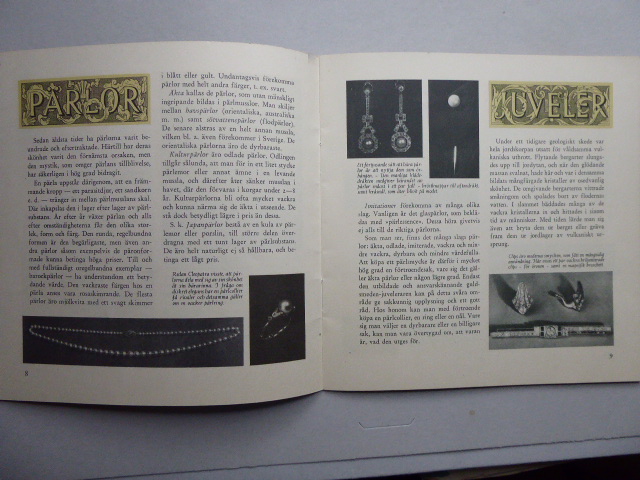
1934réf. 1838Stockholm. (1934). 19 Seiten. Mit mehreren Abb. Zweifarbiger Druck. Ill. Originalbroschur. 19x19 cm
2009réf. 944456Würzburg : Königshausen & Neumann, c 2009. 332 S. Broschiert.
1984réf. 2091502135407835Geumhwa Publishing Company 1984. Soft Cover. Fine. Number of books: 1 Geumhwa Publishing Company paperback
1966réf. 20201München, Hirmer, (1966). 296 S. mit zahlr. teils farb. teils ganzseit. Textabb. Kl.-4°. OLwd. (kl. Gebrssprn.) mit OU.
1988réf. 2091502135405122Henrim Publishing 1988. Soft Cover. Fine. Number of books: 2 Henrim Publishing paperback
1998réf. 2091502135410667Torubege 1998. Soft Cover. Fine. Number of books: 1 Torubege paperback
1973réf. 2091502133902795Komyo shubbansha 1973. Soft Cover. Fine. Volume: 1 Komyo shubbansha paperback
1973réf. 2091502135400122Komyo shubbansha 1973. Soft Cover. Fine. Number of books: 1 Komyo shubbansha paperback
1983réf. 2091502135410664Hirohide-sha 1983. Soft Cover. Fine. Number of books: 1 Hirohide-sha paperback
réf. 0761419438.Glibrary. Good. Access codes and supplements are not guaranteed with used items. May be an ex-library book. unknown
Geniet, 32pp., 24x16.5cm., ills. in z/w., als nieuw. Overdruk uit de Leiegouw XXVII (1985)
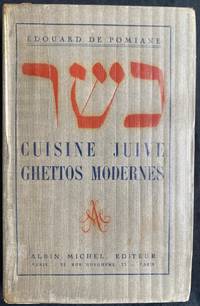
réf. 43450Paris: Albin Michel 1929. 1st edition. Original color-printed paper wrappers with later lamination 12mo 241 pages. 19cm. In French. Title translates as: "Kosher: Jewish Cuisine Modern Ghettos." Book was later re-issued under the less controversial title "The Jews of Poland; Recollections and Recipes." Rebecca Miller discussed the book at length in the Jewish Forward in 2013: "De Pomiane 1875-1964 a physician was also one of the most famous chefs and cookery writers of his day. Born Eduard Pozerski he was born into the Polish aristocracy brought up poor but refined. Both his parents were Polish patriots who fought against Russian domination of their homeland; his mother fled to France with the young Eduard when his father was deported to Siberia for insurrection against the Russians. Coming of age within the close-knit community of Polish exiles in Paris he was sympathetic to liberal causes and was a proponent of the Dreyfus cause. His ethnographic book about Polish Jewish culture and cooking written in 1928 was originally entitled 'Cuisine Juive; Ghetto Modernes' 'Jewish Cooking; Modern Ghettos'. It is perhaps the weirdest book I have ever read. A tantalizingly vague recipe for Carpe a la Juive 'Take a large live carp. Kill it.' follows a horrifying description of a pogrom relayed to de Pomiane by a museum guide who had survived the massacre by hiding under a heap of hay in which his sister suffocated overnight: 'A corpse belly ripped open lay with its guts wrapped around its neck.A child wandered aimlessly haggard mute crazed its body beaten to a pulp.' In de Pomiane's writing appreciative paragraphs about the accomplishment of certain refined Jews rub shoulders with unwittingly racist pseudo-science. 'I observed as a biologist.wrote as a scientist' claims de Pomiane as he cheerfully divides all male Jews into three types: 'The dark-haired Jew with a long beard and a delicate aquiline nose. His lips are often thin his ears lie flat against his head. His eyes are deep almost mystical. He is less excitable than the others. It could be said that he belongs to an ethnic aristocracy. He has an Egyptian profile.' 'This type is also dark-haired and much more common. His beard is black shorter his eyes are bulging and bloodshot his nose is squat his lips are thick and very red.This is the excitable Jewish type. When he laughs he sniggers. The face overall has a cruel and bestial appearance. Certainly this type of Jew would frighten a child in France even if that child were himself Jewish.' 'A third and rarer type is completely red-headed. The beard is shorter and divided in two. He has the same negroid facial characteristics as the preceding type. The lips look even thicker and frame the teeth with two red borders of equal size. Although they are red the peyes look brown from being rolled twisted and curled between fingers that are constantly being licked.' Having provided us with this helpful diagram of Jewish types he takes us on a tour of Jewish Poland beginning with Kazimierz the Jewish Ghetto in Crakow since the Middle Ages: The whole place seems fairly and in some places extremely poverty-stricken. The more so since the population is dirty and strange. In Kazimierz everyone dresses in black everyone rushes about in a hurry they all bustle about irritably pushing shouting arguing. One would think the whole city was in the grip of some nervous disease. De Pomiane believes that these poor nervous Jews give us a sense of what the tribes of Israel must have been like 'these people who when settled among us became the educated and refined individuals with whom we are familiar.' So De Pomiane argues the less 'Jew-y' the Jews are the more European the more refined they are-and hence it seems equal to non-Jews. Unfortunately in only a few years there was no refinement that could save a Jew in Poland or indeed France: being Jewish was considered a racial fact not a cultural subtlety. But de Pomiane's distinctions are fascinating because they are being spouted by a man who was actually sympathetic to Jewish culture. De Pomiane's observations are strikingly detailed. Describing the typical kaftan he states 'they wear a long black cloth gown which descends to their feet. It is not waisted like an overcoat but is slightly fuller. Two rows of buttons secure it over the chest. This kaftan is quite high-necked.' And then he describes a head-covering that can be found in contemporary Williamsburg: 'Older Jews wear black hats of brushed felt. These head-coverings are worn very far forward a little over the eyes because on the crown of the head under the hat they wear a little black scull-cap.' He speaks of prostitution: 'Just as in the Orient one sees in the streets of Cracow and Warsaw Jews attempting to draw in the passerby to admire a supposed daughter or niece.' And the book is not short of anecdotes: a friend of de Pomiane's was tempted by an old man who spoke of a girl 'as beautiful and fresh as a mountain stream.' Tantalized he followed the old man into an ancient house and through a rather dark and very smelly courtyard. 'The Jew opened a door; my friend entered a room which was quite clean and saw a young girl in profile.' She was a perfect beauty. Then she turned to face him and he saw that one of her eyes had been gouged out. When he left in a panic the old man cried 'It wasn't for an eye that you followed me here!' De Pomiane takes us to a stylish health resort called Zakopane. There de Pomiane finds a lot of rich Jews. 'What is so surprising' he asks. 'They alone.engage in trade. They alone are rich and they alone can afford to vacation in Zakopane.' Spending time with these wealthy assimilated Jews Pomiane is amazed at their patriotism. A doctor he met 'defended both Zakopane and the whole of Poland.he was a proud Polish nationalist. There are men like these among Jewish intellectuals who have achieved a certain status in life. having left the kaftan and the ghetto behind.they have almost forgotten Yiddish replacing it with very good German. They call themselves Polish.' De Pomiane the ethnographer paints a fascinating portrait of a class divide amongst the assimilated versus the unassimilated Jews: Try and imagine a Jew in his worn shiny discolored kaftan with his beard and side-locks on his temples. Imagine him strolling down the Avenue Henri-Martin in Paris which is inhabited almost exclusively by wealthy French Jews. Would he be welcomed as a compatriot by those elegant ladies getting out of their automobiles whose children speak English to their nannies Definitely not. These 'Israelites' a term favored at the time by assimilated Jews as more politically correct than 'Jew' avoid the Polish Jew whom they have dubbed 'Polak'. The book encapsulates contradictions and subtleties within the Polish Jewish population between the wars but also within the writer himself a Polish Francophile exile who loved food and had an abiding interest in Jewish cuisine. Beef Bouillon with Sauerkraut Chicken Soup with Almonds Goose Soup with Barley Carp a la Juive-these recipes and many more are all lovingly preserved for the curious gourmand in this most curious of books." OCLC: 1323307672. OCLC locates only 3 copies of the first edition in North America NYPL USC UUtah though some copies listed as "internet resource" may in fact be original hard copies. Lamination is transparent and has preserved the original paper binding quite well. Good Condition Thus. cook-4-4-'#ecc. Paris: Albin Michel unknown
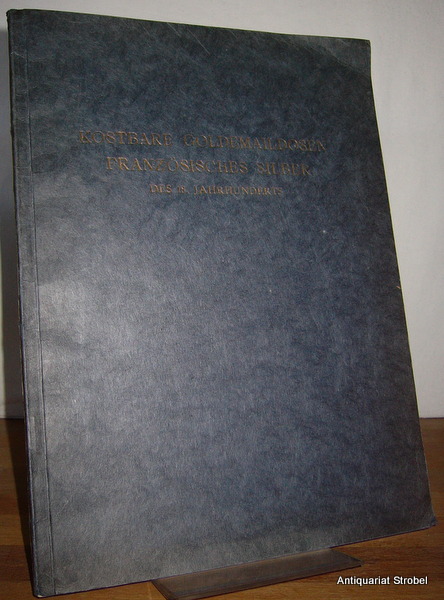
1930réf. 33703Berlin, Hermann Ball und Paul Graupe, 1930. 60 S., 1 Bl. Mit zahlreichen Abbildungen. 4° (31 x 23 cm). Original-Karton.
1978Bross., cm 25x22, pp 30, 12 tavv a colori.
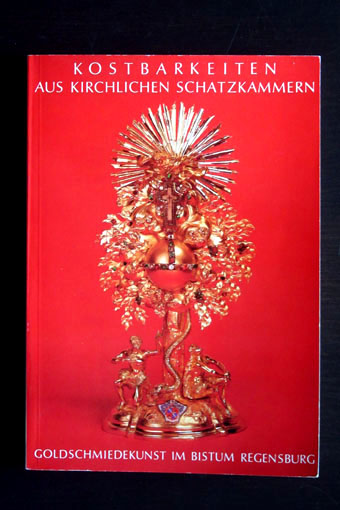
1979réf. 34651Schnell und Steiner, München, 1979. 184 Textseiten, 239 s/w Bildtafeln; etwas größeres Format (ca. 17 x 24 cm), broschiert
1974réf. V15431München (Schuler) 1974 (= Erste deutsche Ausgabe). 4°, Originalkunstleder mit illustriertem Orignialumschlag (Hardcover), 121 S., zahlreiche Abbildungen, Bildband,
1980réf. 75856Berlin, Deutsche Buch-Gemeinschaft um, 1980.
2005réf. 761162005 Editions Heart Herning Museum of Contemporary Art, Denmark - sans date ( après 2005 ) - 1 vol in-4 - broché - 125 pages - Illustrations en noir et blanc et en couleurs hors texte - Textes en danois et en anglais
1929réf. 1697Auckland New Zealand: Whitcombe & Tombs Ltd 1929. First printing. Hardcover. Near Fine/very good. 194 pages. Signed by the author. " To Miss Martin an appreciation from the authress Autograph copy May 5th 1948 Mary Ramsay Ellen BlaIr "Twilliallan" 26 Hunahuna Rd Kaiti Gisborne N. Z." White pictorial dust jacket over blue cloth. B&W photographs and marbled endpapers. Unclipped jacket. A couple of cards etc included: A print of Old Tulliallan Castle by M Blair 1946 an illustrated poem The Old Mission Station and a hand written note Whitcombe & Tombs Ltd hardcover
1978réf. 26050238Collins UK 1978. First Edition. Hardcover. Near Fine/Near Fine. Hardcover. 233 pages. PUBLISHING DETAILS: Collins UK 1978. First Edition. CONDITION: The book itself is in near fine condition and comes in near fine dust jacket. More specifically: Boards have no wear rubbing or soiling. Edges of dust jacket have light bumping. Dust jacket is unclipped. Edges of pages are lightly browned. ABOUT THIS BOOK: When Ted Kramer's wife walks out he is left with all the worldly goods a high-flying job he knows backwards and a son whom he knows hardly at all. Over the next few months Ted and Billy become friends for the first time. Then Joanna Kramer reappears demanding custody of their son. Quantity Available: 1. Category: Fiction; Movie / TV Tie-in; ISBN: 0002214253. ISBN/EAN: 9780002214254. Inventory No: 26050238. 9780002214254 Collins hardcover
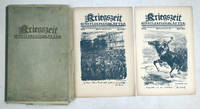
réf. 92759Berlin Paul Cassirer 1914-16. 2° 48 x 32 cm je 2 Bl zahlreiche Abb. davon teilweise blattgrosse Orig.-Lithogr. Lose Hefte in Original-Flügelmappe Mappe etwas fleckig u. eingerissen. Hefte sauber 3 Hefte min. wasserrändig am Fuss. Die ersten Hefte auf sehr holzhaltigem sprödem Papier darum gebräunt u. kleine Fehlstellen am Rande - insgesamt gute Exemplare. Alle Lithographien im Stein signiert.Mit Beiträgen in Form von Originallithographien von Ernst Barlach Max Beckmann Hans Baluschek Erich Büttner August Gaul Rudolph Grossmann Franz Heckendorf Otto Hettner Dora Hitz Ferdinand Hodler Heinrich Hübner Willy Jaeckel Georg Kolbe Max Liebermann Hans Meid Oskar Nerlinger Max Oppenheimer Max Slevogt Ottomar Starke Max Unold Wilhelm Wagner E.R. Weiss und vielen anderen.Die überwiegend nationalistisch kriegsbejahenden Lithographien etwa Max Liebermanns erscheinen neben Arbeiten von Ernst Barlach Max Beckmann August Gaul Willy Jaeckel Käthe Kollwitz oder Wilhelm Trübner mit teilweise sogar chauvinistischem Unterton die speziell für diese Zeitschrift angefertigt wurden. Künstler die gemeinhin eher für eine oppositionelle Haltung zum politischen Establishment des Deutschen Kaiserreichs bekannt sind fügten sich nach Kriegsausbruch zunächst dem politischen „Burgfrieden“ und stellten sich freiwillig in den Dienst einer nationalen Begeisterung für den Krieg. Dieser Grundströmung folgte aber schon bald die Ernüchterung die ihren Niederschlag in veränderten Themen fand. Statt hurra-patriotisch stürmender Soldaten in Kampfszenen erschienen zunehmend eskapistische mit kritischen Untertönen versehene Bildwerke mit teils sogar auch verstohlen pazifistischen Ansätzen.Schon Mitte 1915 begann der Verleger die zunächst wöchentliche Erscheinungsweise des Periodikums auf einen zweiwöchigen Publikationsrhythmus zu strecken ehe es vor seiner Einstellung 1916 nurmehr unregelmäßig veröffentlicht wurde. Ihm folgte „Der Bildermann“ das neue Zeitschriften-Projekt Paul Cassirers das in gleichem Umfang und mit gleicher Ausstattung wie die „Kriegszeit“ aber mit anderer inhaltlicher Ausrichtung ab 1916 erschien. 010 Berlin, Paul Cassirer, 1914-16 unknown