19.309 resultados
1949ref. 95605Los Angeles 1949. 1st ed. Paperback. Near Fine. Inked inscription on front side of stationery. 14 x 22 cm. Verso unused. Some fading of ink. The Biltmore Hotel was listed in a couple 1960s editions of "The Green Book but seems likely to have been welcoming to African Americans as well as non-heterosexuals before that date but don't know if thas true before 1949. We also do not know when or whether Brown was in Los Angeles when she inscribed this and don't know whether she was staying or able to stay in that hotel at that time. Baron Long identified as President on the stationery acquired the hotel in 1933 which was almost a decade after Brown had ended her four year term as President of the National Association of Colored Women 1920-1924. We also don't know anything about the inscribee. paperback books
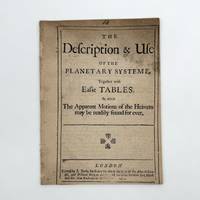
1675ref. 371490London: Printed by J. Darby for Robert Morden . and William Berry 1675. Second issue with the added Postscript. 26 2 blank 4pp. Tables. 4to. Disbound. Trimmed close minor soiling. Second issue with the added Postscript. 26 2 blank 4pp. Tables. 4to. This second issue with the added Postscript dated 1675 in which the author defends himself from criticism by John Flamsteed. The work is an early use of the term "planetary system" in the title and includes a 12-line poem on the solar system on the final page. Streete 1621-1689 Irish-born astronomer is best known for his 1661 work Astronomia Carolina a new theorie of Coelestial Motions which was read and praised by Halley Newton Flamsteed and others. A follower of Kepler Streete argued that the Earth's velocity in its annual revolution around the sun was not uniform and increases in velocity as it approaches the Sun and decreased as it moves away. ESTC calls for a plate but we find no reference to one in other extant copies. Scarce. ESTC R606; cf. Wing S5955 Printed by J. Darby, for Robert Morden ... and William Berry unknown books
ref. 346024Santa Fe NM: Tewa Silk Screen Prints. 6 x 5-14 inches Image Frame 11 x 12 inches. Framed and glazed. With label from Tewa Silk Screen Prints on back. 6 x 5-14 inches Image Frame 11 x 12 inches. Begay was born on the Navajo Reservation near White Cone Trading Post in Az. and was the last living former student of Dorothy Dunn and Geronima C. Montoya at the Santa Fe Indian School when he died in 2012. He studied there from 1934 to 1940. Tewa Silk Screen Prints unknown books
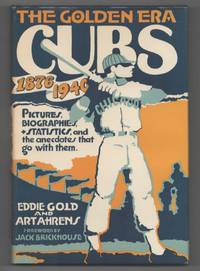
1985ref. 207059Chicago IL: Bonus Books 1985. First edition and first printing. Hardcover. 180 pages. Features a foreword by legendary Cubs announcer Jack Brickhouse and additional text by Eddie Gold and Art Ahrens. Includes numerous black and white images. A near fine copy in black cloth boards with a former owner blindstamp to the title page and in a clean near fine dust jacket. Bonus Books unknown books
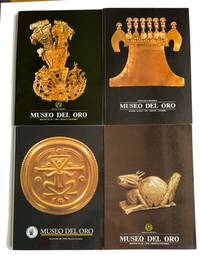
1996ref. 94828Bogota Colombia: Museo del Oro 1996. Paperback. Very Good. illustrations some color 139 143 184 and 152p. Softcovers in original wrapper. 26 cm. "Rejected Tozzer Library" stamp on first interior pages of two issues. Ceased print publication with No. 45 1998; continued as an online publication. Museo del Oro paperback books
1970ref. 94917Krakow: Panstwowe Wydawn Naukowe 1970. Hardcover. Fine/Fine. tipped-in frontis illustrations 275p. Original cloth-backed boards. dj. 31 cm. Original scuffed slipcase intact with significant scuffing. Polyglot vocabulary on laid in printed broadsheet. Polish text. Panstwowe Wydawn, Naukowe hardcover books
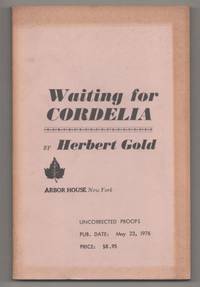
1976ref. 193863New York: Arbor House 1976. First edition. Softcover. 214 pages. Uncorrected proof. A novel from Gold. A very good in printed wrappers with some toning to the edges. Internally a clean copy. Arbor House unknown books
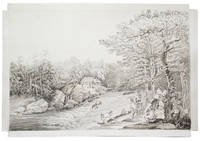
1800ref. 52601Canada 1800. Graphite pen-and-ink and grey wash on wove paper watermarked "W. Elgar 1796". 13 5/8 x 20 inches. Corners clipped outside the image verso toned. Graphite pen-and-ink and grey wash on wove paper watermarked "W. Elgar 1796". 13 5/8 x 20 inches. Along the falls of a tree-lined river two First Nations men are pulling a canoe into the water directed by another in an elaborate feather headdress; a wigwam with mother and child is on the same shore to their left; across the river a longhouse and structure for smoking fish with another group of native people can be seen; at the far left a First Nations man is standing in his canoe fishing with a pole in the water just below the rapids. Although the 1796 watermark on the paper is consistent with drawings by Heriot the unfinished quality of this work make attribution difficult. However it is somewhat reminiscent of a smaller grisaille watercolor signed by Heriot titled FALLS OF THE POQUISQUE ON THE RIVER ST JOHN on verso sold at Waddington's March 15 2018 lot 137. Furthermore this scene is reminiscent of one described by Heriot in his Travels in the Canadas 1807 in which he describes Native American fishing on the cacasdes of St. Mary nine miles below the entrance to Lake Superior: "It is at the bottom of the rapids and even among their billows which foam with ceaseless impetuosity that innumerable quantities of excellent fish may be taken from the spring until the winter; the species which is found in the greatest abundance is denominated by the savages atticameg or white fish; the Michilimakinac trout and pickerell are likewise caught here. These aflford a principal means of subsistence to a number of native tribes. No small degree of address as well as strength is employed by the savages in catching these fish; they stand in an erect attitude in a birch canoe and even amid the billows they push with force to the bottom of the waters a long pole at the end of which is fixed a hoop with a net in the form of a bag into which the fish is constrained to enter. They watch it with the eye when it glides among the rocks quickly ensnare it and drag it into the canoe. In conducting this mode of fishing much practice is required as an inexperienced person may by the efforts which he is obliged to make overset the canoe and inevitably perish." Trained by Paul Sandby at the Royal Military Academy Woolwich London Heriot worked as a clerk for Board of Ordnance. "In 1792 Heriot was posted to Quebec and promoted clerk of the cheque in the Ordnance department. Heriot was to remain in Lower Canada until 1816 except apparently for two periods of absence in 1796-97 and in 1806. His first years at Quebec are not well documented. Sketches record visits in and about Quebec and Montreal perhaps on Ordnance business. In November 1792 he published a sketch of Jersey in the Quebec Magazine and the following year he prepared a view of Quebec perhaps also intended for publication. When he returned to Britain in 1796 he resided in London travelled to the south coast and made at least one sketching foray into Wales . A watercolour prepared from his sketches of Wales and two Canadian views were accepted by the Royal Academy of Arts for exhibition in the spring. Heriot probably sailed for Lower Canada soon afterwards taking notes and making sketches on the voyage. The impact of his visit to Britain was considerable. While there he had been stimulated by the art he had seen and by his success as an artist. He returned with a fresh enthusiasm for the Canadas; he began to read about their past and to make elaborate notes and numerous sketches of the places he visited and the peoples he encountered. His sojourn abroad had affected his artistic vision of the Canadas; his drawings and water-colours assumed a new confidence and his landscape forms developed a new strength and grandeur. In London he had probably studied the simply handled and remarkably strong water-colours of younger British artists such as Thomas Girtin Joseph Mallord William Turner and John Varley. Either in Britain or in Lower Canada he had also become familiar with Lieutenant George Bulteel Fisher's Six views of North America . London 1796. He was influenced by this work especially by Fisher's use of the Picturesque in depicting Canadian landscape" Dictionary of Canadian Biography. unknown books
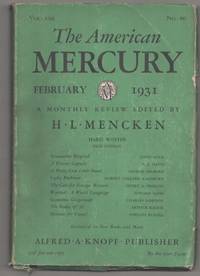
1931ref. 183404New York: Alfred A. Knopf 1931. First edition. Softcover. Literary magazine edited by H.L. Mencken. Includes Jack Conroy's "Hard Winter" and additional contributions by Louis Gold H.L. Davis Robert Collyer Washbur Arthur Kroch and others. A very good copy in green yapped wrappers with some expected light soiling and small chips and light wear. Internally a clean copy. Alfred A. Knopf unknown books
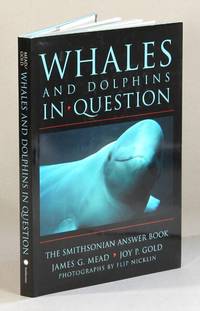
2002ref. 60855Washington DC & London: Smithsonian Institution Press 2002. First edition 8vo pp. xv 1 200; illustrations throughout much in color; fine copy in the dust jacket. This is Mead's personal copy but without signature or bookplate. He is the Curator Emeritus of Marine Mammals at the Smithsonian. Smithsonian Institution Press unknown books
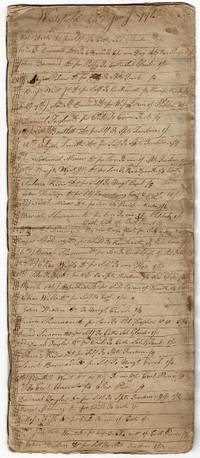
1805ref. 59752Waitsfield Vermont 1805. Narrow tall folio approx. 15½" x 6¾" 112 pp. in ink five separately sewn signatures; a few pages loose some pages darkened or chipped at edges; some entries faint. This account book is the record of the practice of either Stephen Pierce or Simeon Stoddard practicing in Waitsfield Vermont between 1795 and 1806. These were the second and third physicians to have settled and practiced in Waitsfield. Most likely it is the record of Pierce who is supposed to have settled in Waitsfield in 1795. The first physician in Waitsfield Moses Heaton remained there only between 1793 and 1796. Depending on the source Pierce was the third physician to practice in Waitsfield and/or the first to practice in Moretown a settlement to the northeast of Waitsfield. He farmed as well as doctored and his farm lay mostly in Moretown his office in Waitsfield. He was a respected and successful physician who served the community in other capacities: as selectman representative delegate to the Constitutional Convention of 1814 and Assistant Judge of the County Court. One source claims that he succeeded Judge Kinne December 1 1814 and served one year and that he was a justice of the peace in Waitsfield. He died either in 1854 after living in Waterbury and Berlin Vermont or he died in Barnard in 1864. See: History of the Town of Waitsfield Vermont 1782-1908 by Matt Bushnell Jones Boston 1909 p. 182. Simeon Stoddard on the other hand was born December 12 1761 either in Saybrook Connecticut or in Waitsfield. On August 19 1784 he married Abiah Thompson who had been born in 1763 in Waitsfield. Some sources state that he moved to Waitsfield from Saybrook in 1794. He served the southwestern area of Waitsfield and died in 1841. This account book records each date of visit the householder's name the relationship of patient to householder the medicine prescribed and its price and the cost of the doctor's visit. The doctor whether it be Stoddard or Pierce treated thirty to forty patients each month and as many as fifty-six in December of 1801. He charged as little as 4 pence and as much as 42 shillings 10 pence for his services. As a comparison the tax on an acre of land in Waitsfield was 2 pence an acre. The poll tax list of 1795 showed fifty voters so the doctor seems to have treated the members of nearly every family. The diseases treated are not stated in the entries made but he seems to have prescribed antimonium tartaricum in many instances and also digitalis. Waitsfield was founded by Col. Benjamin Wait or Waite and others who were granted a charter on February 25 1782. Wait had served under Gen. Jeffery Amherst in the French and Indian Wars and had fought in the Revolutionary War. Both Waitsfield and Moretown are now somewhat renowned as the areas around Mad River a popular ski resort. Mad River has been remarkable from the settling of the area as the source of numerous sudden destructive and deadly floods. The Green Mountains the northern extent of the Appalachians rise just to the west of the town. The doctor records having treated members of the Wait family including Benjamin's wife Martha d. April 3 1804 Ezra Thomas and Gilbert. The family names of the community are listed making this a good source for early settlement history and genealogical research. Among the householders who required the doctor's services are Smolly Skinner Taylor Spalding Hitchcock Parkhurst Carpenter the family had a tannery and potash works Heaton Burdick Johnson Rider Fuller Symonds McNight Chamberlain Atherton Lyon Butterfield Barnave Osgood Foster Hobson Robinson Brun Latimer and Sherman. Many of the names appear often. unknown books
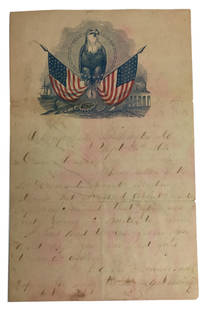
1862ref. 916131862. Poor. 20 cm x 25 cm single sheet folded to make 4 handwritten pages. Large patriotic color Illustration of a bald eagle with 2 U.S. flags occupies top third of first page of stationery. Two horizontal fold mark. Split halfway across on a fold on the last two pages. Pinkish color to much of the letter suggesting old damping. Ink quite faded and generally difficult to read. Many words are so indistinct that it was impossible for us to read them and some other words or phrases are just gone. Her letter is addressed to an otherwise unidentified cousin. Jones does not seem to show on standard lists of Civil War Nurses but the information in this letter suggests that she should. Here is our effort to transcribe this difficult-to-decipher letter: "Your letter of the 21st came to hand in due time but I had about made my mind that you was not going to write to me. I was glad to hear from you and hope that you will not fail to write again. I am well. Hoping you enjoy the same good blessing. We are situated on the same ground we occupied a part of last Fall and Winter. We have been here about four weeks. After spending the summer on the peninsula we are very glad to obtain old ground which seems almost like home. You want to know why I am in the hospital. It is not because I am sick but because others are sick and need care. I am what is termed nurse. My wages are $26.50 per month. The business is by no means delightful but I get along very well. We have got one fellow who is very sick I fear he will not recover. On the Peninsula my health became very poor but now I am well. I wish that I could hear that Grandmother is on the gain but fear I never shall. Tell hear I think of her nearly all of the time and and want to see but if I fail to see her I expect to see her in Heaven. I have wrote to your father. I presume he has received my last letter before now. I do not know that I can tell you anything about the war that would amount to anything more than you already know. As we are at present we are retired from the active field I am not as well posted as when we were aamid the turmoils of battle. I have not heard a battle sound since we came across the river. Apparently all seems quiet which seems good. top two lines at top of 4th page too indistinct to decipher My hospital service is every other day. Every other day and night. I have to work taking care of the sick of our regiment then I am idle twenty-four hours. . several lines gone or indistinct here and the I will have a chance to eat army rations wear army cloths and a few moremostly indistinct lines ." She ends the letter by requesting that her cousin write to her at Hospital 50th NY Engineer Regiment Washington D.C. Online information reports that the regiment composed mostly of men from New York and a small number from Pennsylvania lost by death 10 killed in action 7 from wounds received and 214 from disease and other causes. unknown books
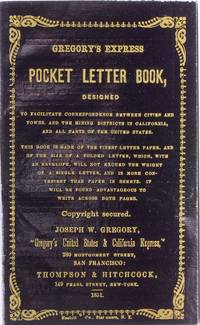
1851ref. 320912San Francisco: Joseph W. Gregory 1851. 20 blank leaves. 24mo. Original dark purple wrappers printed in gilt. Minor ink stains on inner wrappers otherwise a near fine copy with the original unused plain paper envelope. 20 blank leaves. 24mo. A lovely example of an unused Gold Rush letter book intended to advertise Joseph Gregory's California and New York Express Line by means of a convenient way for gold seekers in California to communicate with friends and family back home. According to the wrapper "this book is made of the finest letter paper and of the size of a folded letter which with an envelope will not exceed the weight of a single letter and is more convenient than paper in sheets Joseph W. Gregory unknown books
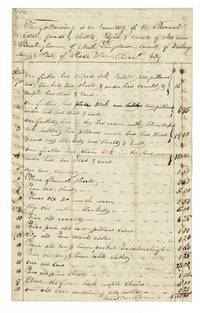
1833ref. 57649V.p. 1833. A dozen or so items over half of which seem inconsequental. Ezbon or Esbon Sanford 1765-1846 was born in Newport worked in Washington County. He was a storekeeper innkeeper and cabinetmaker and is cited in various articles about Rhode Island furniture making. One receipt is from the "estate of Abigail Congdon" his mother-in-law which details payment for molasses and gin as well as a coffin for herself at $6.00. A detailed inventory May 15 1833 is included of the estate of Anna Buckingham of North Kingstown Washington County. All her belongings are listed including furniture: "eleven old fiddleback maple chairs" at $5. This type of chair is described in an article by Kathleen E. Johnson in Art & Antiques Magazine Sept/Oct 1981 as "an intentional translation of the elements of the carved mahoghany or walnut cabriole legged Queen Anne- style chair into the vocabulary of the turned chair tradition." A large floor plan for a house with its footprint neatly laid out is one of the more interesting documents with a detailed list of supplies joists ranging timber furing laths doors & frames roof boards shingles and nails each with prices. Ezbon Sanford held a local court office as Judge of the Court of Common Pleas and nother interesting document is dated 1830 from the state to the sheriff concerning the warrant for the arrest of George Young charging him as the father of Margaret Mitchel's "bastard child." The paper was signed by John H. Green Deputy Sheriff. Other names mentioned in his storekeeper receipts are Robert Hosford Robert Northrup Charles Douglas Weighty Underwood and Paul Austin. unknown books
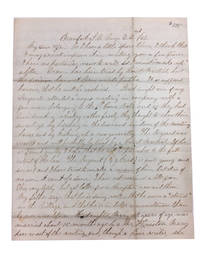
1862ref. 899701862. Near Fine. Interesting content in this Maine Infantry Civil War Letter of almost 4 full pages written in a clear hand from Beaufort South Carolina and dated Aug. 22 1862. 25 cm. Envelope not present. The writer probably a Lieutenant references colored negro troops from Connecticut and gives a long opinion on how the north should win the war with the resources at its disposal. He also mentions troop misconduct at a "Negro Meeting: "Last night one of my sergeants attended a "Negro Meeting: in company with a few men belonging to the 6th Connecticut Vols. and as they had been drinking whiskey rather freely they thought to show their smartness by breaking in doors and windows of the meeting house and by kicking up a row generally. The sergeant was arrested and will probably be tried by a Court Martial. If he is found guilty I hope he will be punished to the full extent of the law. The sergeant George J. Card is quite young and smart and I have tried to make a man of him but it is of no use -- it can't be done. unknown books
1972ref. 166879New York: David McKay Company 1972. First edition. Hardcover. First printing. A collection of "letters" from Gold to his daugher Tracy on a wide range of subjects. A near fine copy in an about very good dust jacket with a tear to the bottom rear corner another to the bottom of the spine and some other minor wear. Signed and inscribed by Gold on the front free endpaper: "To Lois and Wayne- In enduring friendship. Best Don Gold." A nice association copy as the recipient was Lois Wille who was a two time Pulitzer Prize winning Chicago journalist and Gold was a Chicago writer. David McKay Company unknown books
1938ref. 312786N.p.: Privately printed for the members of the Royal Guild of Wisconsin Fisherman 1938. First edition one of a very few copies known. Illustrations from photographs. vi 25 pp. 1 vols. 8vo. White printed wrappers stapled. Very good. Some minor wear. Green quarter morocco slipcase. First edition one of a very few copies known. Illustrations from photographs. vi 25 pp. 1 vols. 8vo. Salmon fishing during four days in the first part of July 1938 by a party of six who styled themselves the Royal Guild of Wisconsin Fishermen comprising: Evan A. Evans Louis M. Hanks Roy F. Tomlinson Theodore G. Montague William S. Kies and George I. Haight to whom authorship is attributed by the Wisconsin Historical Society. The last page of text records their catch by weights. Rare. Wetzel p. 171 tentatively ascribed to William Kies. "A rare work."; Bruns K-45 not seen; Bibliotheca Salmo Salar 105. OCLC 2 copies Princeton Wisconsin Historical Society Privately printed for the members of the Royal Guild of Wisconsin Fisherman] unknown books
ref. 634118 leaves. Small 4to attractive modern marbled boards red morocco lettering piece on spine. Wittenberg: C. Heyden 1619. First edition of this rare book which is considered by A.D.B. to be the author's most important scientific work; it is a careful record of the third of the three bright comets of 1618-19. Schmidt 1570-1637 was "one of the last of the scholars of Germany who taught the language and literature of Greece in the spirit of Melanchthon. Schmidt was professor first of Greek and next of Mathematics at Wittenberg. His principal work was an edition of Pindar with a Latin translation and a careful commentary 1616."-Sandys II p. 272. Fine copy. ⧠A.D.B. Vol. 32 pp. 27-28. Zinner 4785. unknown books
ref. 87705Paperback. Good. Condition varies but all are sound. Rust stains from staples or proximity to staples on adjacent items. paperback books
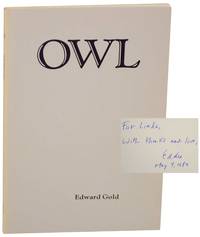
1983ref. 154398College Park MD: Scop Publications Inc 1983. First edition. Softcover. 31 pages. A collection of 19 poems. A near fine copy in wrappers with some very faint foxing to the page edges. Signed and inscribed by Gold on the front free endpaper to another poet. Uncommon. Scop Publications, Inc unknown books
ref. 87270Godl Coast: Government Press Accra n.d. Reprint of the 1920 edition. Paperback. Very Good. 61p. Softcover in light green wrapper which is backed in dark green binder's tape. 32cm. Appears to be an undated later photocopy of the original 1920 edition. Government Press, Accra paperback books
2001ref. 147885New York: Hyperion 2001. First edition. Softcover. Advanced Reading Copy. Gold's very well received debut novel a thriller about magician Charles Joseph Carter. A tight very good copy in French style wrappers with some slight creasing to the foredge of the first few pages and a small stain to the bottom of the page edges. Signed by Gold on the title page. Additionally this copy has been signed by Gold's wife the dedicatee author Alice Sebold on the dedication page. Uncommon thus. Hyperion unknown books
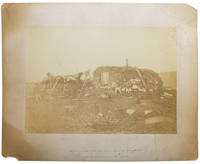
1872ref. 303445London 1872. Albumen print measuring 11-5/8 x 16-1/4 in 295 x 412 mm. Laid down on thick cream card with manuscript caption measuring 17 x 21 in. Image slightly faded card chipped with some minor soiling one tear not affecting image. Albumen print measuring 11-5/8 x 16-1/4 in 295 x 412 mm. A rare survival. This image appears in William Bradford's fabled book of photographs Arctic Regions. It was taken by either Dunmore or Critcherson the two professional photographers from Boston who accompanied Bradford on his 1869 expedition to the Arctic on the steamship Panther. It was probably taken at Upernavik a settlement on an island off Greenland's west coast or Godhavn. Arctic Regions included 141 albumen prints in addition to Bradford's account of the voyage. The title of the photograph here varies from the printed caption in the book where it reads: "Plate Number: 116 Esquimaux igloe or winter hut made of turf and stones. The entrance is to the left through a door which is about three and a half feet high. The length of the passage is about twelve or fifteen feet and at the farther end is another door through which one almost has to crawl on his hands and knees. After passing through there is then room to stand erect but one is forced to leave very soon owing to the bad air." This photograph is slightly larger than the one in the book which is 277 x 365mm. Furthermore the image in the book is cropped closer on the right and left margins. The New York Public Library has a folio of 26 images of near identicle size mounted on card. The portfolio was donated to the library in 1892 as part of the Robert Stuart Collection. According to Horch originally all of these images were captioned in manuscript though were later remounted with typed captions as "the original ink-written captions for the photographs had badly faded by 1940." It's interesting that the caption on their duplicate of this image is the same as ours and the image itself has not been cropped. Horch writes that Bradford probably not only selected these images himself but "closely directed the actual taking of the photographs." It's entirely likely that Bradford would have had extra prints made to distribute to friends repay favors and most of all to solicit subscribers to what was a very expensive book to publish. Given how it conforms to the examples in the Robert Stuart portfolio this particular image is probably one of them. Horch Frank. "Photographs and Paintings by William Bradford". American Art Journal 5.2 1973: pp 61-70; cf Parr and Badger I p31Prm/photo unknown books
1979ref. 83006Moskva: Nauka 1979. Hardcover. Near Fine. 133p. Original black cloth. 26 cm. Minor wear. Facsimile reproduction of the unique scroll of a draft copy of the Arabic text of a waqf document dated 1299 from Bokhara and supplemented by an old Persian translation made before 1661. Brief 3 1/2 page English summary at end. Both documents were in the Central State Archive in Tashkent. Nauka hardcover books
2001ref. 138966New York: Hyperion 2001. First edition. Softcover. Advanced Reading Copy. Very well received debut novel. A fine unread copy in French style wrappers. Hyperion unknown books