17.607 resultados
ref. 25403Chicago: Herbert S. Stone 1897. First edition. Bound in publisher's original full burgundy cloth with the title and decorations stamped in gilt on the front and spine t.e.g. Minor wear at corners and head and heel front interior hinge weak but holding otherwise very good. Chicago: Herbert S. Stone, 1897 hardcover books
ref. 11598Eight double-page & 24 full-page woodcuts. .5 32; 36 folding leaves. 8vo orig. semi-stiff wrappers now mottled title-slips new stitching. Japan: 1867; Preface dated 1865 & Postscripts dated 1861 & 1866. First edition. The tragic story of Hayashi Shihei æž—åå¹³ 1738-93 and his efforts to prepare Japan for changing times is well known. A Japanese scholar and a specialist in military affairs he travelled to Nagasaki in 1777 where he was greatly impressed by the size and strength of the Dutch ships. While there he learned of Russian intentions to advance south from Siberia into Asia. This prompted him to go to the northernmost island of Hokkaido to study the situation. As a result of this journey he became alarmed at the weakness of Japan's coastal defenses and ignorance of the outside world. In 1787 Hayashi began to privately issue in a series of 16 volumes only 38 sets were produced his famous and controversial Kaikoku heidan which recommended stronger military forces and a maritime defense capability. His series is a remarkable example of a study on modern strategy introducing the military sciences of the West to Japan. Hayashi describes the powerful weaponry of the Western powers and openly criticizes the shogunate for its ignorance of the rest of the world and reliance upon an isolationist policy while neglecting maritime defenses. Kaikoku heidan caused a sensation and was banned by the government in 1792 on the grounds that national security matters were being discussed without official consent. Almost all copies and the woodblocks were confiscated. Hayashi was placed under house arrest in 1792 and died the following year. In his final years he used the pen name "Rokumusai" meaning "Six Losses" enumerated as: "no parents no wife no children no woodblocks no money and no desire to die." The present work by his nephew Michiyuki who had studied under the military theorists Oikawa Kanzaemon åŠå·å‹˜å·¦è¡›é–€ and Hishita JūzŠ日下å蔵 is both an homage to his uncle and an addendum on the modern role of horses and cavalry in warfare as practiced in the West. Michiyuki believed that the traditional Japanese methods of using horses in battle were no longer relevant and that the samurai must be trained in the methods practiced by the cavalries of Western countries. The book is richly illustrated. In the first volume are fine woodcuts of training patterns designed to improve the horses' agility. Also shown are a series of horses' eyes and teeth each revealing the character of the animal and its suitability in warfare. Acupuncture points on legs of horses are also shown. The woodcuts in the second volume depict modernized saddles stirrups bridles and horseshoes. Fine set and very scarce. Preserved in a chitsu. unknown books
ref. 11599Four full-page woodcuts & border decorations. 8 p.l. 70 pp. 3 leaves. 8vo orig. decorated boards deckle edges. Taipei: Nikkō Sanbō æ—¥å山房 1940. A very remarkable work written by a 12-year-old girl as part of the effort by the impresario Nishikawa Mitsuru to establish a Taiwanese regional literature gaichi bungaku or "overseas" literature to rival Japanese literary traditions. Nishikawa è¥¿å· 滿 1908-99 was a wealthy and highly influential Japanese author poet publisher and book designer in Taiwan during the colonial period. After studying French literature at Waseda University he returned to Taiwan most of his childhood had been spent there and quickly became the leading advocate - through his own poetry short stories and novels and his publishing empire of magazines literary journals and luxury press books - of establishing a dynamic Taiwanese literary culture rooted in the island's folklore local myths and religious traditions. Nishikawa believed this body of literature from colonized Taiwan should be able to compete with the literature produced in Japan. "Most attention focuses on the literary output of male Taiwanese writers. The voices of women writers living in colonial Taiwan exist but have yet to be translated much less discussed in any significant length.The voices of women writers in colonial Taiwan were marginalized at several levels both due to their race and also gender living in Taiwan's patriarchal society.The literature produced in Taiwan by Taiwanese writers during Japan's occupation of the country has fallen through the cracks of academic disciplines that consider such works either too Japanese and thus not fit for inclusion in Taiwanese literary histories or too Taiwanese and thus not fit for inclusion in Japanese literary histories."-Anne Sokolsky "Yang Qianhe and Huang Fengzi: Two Voices of Colonial Taiwan" in Japan Studies Association Journal Vol. 8 2010 pp. 239 240 & 244 & see the rest of this article upon which we have greatly depended. The prominent woman author Huang 1928- is such an example. She was a member of the generation of Taiwanese authors who grew up during the Japanese colonization of the island. In 1937 as part of Japan's efforts to assimilate the population all Taiwanese students were required to learn to speak and write Japanese. Huang came from a Taiwanese family with strong connections to Japan. Her father had studied law at Kyoto Imperial University and taught at Kansai Daigaku in Japan. Huang was an excellent student and after four years of study was able to speak and write Japanese flawlessly. An extremely precocious young woman Huang at the age of 12 in the spring of 1940 entered a colonial government competition which called for essays about Taiwanese folklore. Her essay Chitsuniumaashii was about the famous Goddess Qi Niang Ma or Zhi Nu the Weaver Girl who protected children in the folk beliefs of both Taiwan and China. Huang's essay won and was selected to be published in the journal Minzoku Taiwan æ°‘æ—å°ç£ Folklore Taiwan edited by Nishikawa. Nishikawa so appreciated the 12-year-old girl's essay that he decided to publish it along with 15 other of her writings in his luxury-press book series under the imprint Nikkō Sanbō. Today Nishikawa is considered to be Taiwan's first fine book designer. He employed superior materials including handmade paper to produce these remarkable works. For Huang's book Nishikawa furnished the striking designs for the cover and the book's layout in collaboration with Tateishi Tetsuomi 立石鉄臣 1905-80 artist illustrator and native of Taiwan. The drawings for the four full-page woodcut illustrations were done by Huang's classmate Chen Fenglan 陳鳳蘭. She became a well-known Taiwanese illustrator. Chen's drawings were carved by Shi Kunfeng æ–½å¤å¡— a prominent artist and collaborator of Nishikawa. The entire work was edited by Ikeda Toshio æ± ç”°æ•雄 1916-81 folklorist and educator who was raised in Taiwan. He co-founded Minzoku Taiwan with Nishikawa and played an important role in the modern study of Taiwanese folk history and colonial-era literature. Ikeda and Huang later married. This work was published in 75 numbered deluxe copies Xin Xiang shu 新娘本 and another 500 regular paper copies. Our copy is part of the deluxe issue on fine handmade Japanese paper unnumbered but marked 家蔵 "House Copy" reserved by Nishikawa. It is accompanied by the original illustrated wrapper. In pristine condition with the printed slip giving details of the production of this work. â§ Faye Yuan Kleeman "Colonial Ethnography and the Writing of the Exotic: Nishikawa Mitsuru in Taiwan" in Proceedings of the Association for Japanese Literary Studies 2 2001 pp. 355-77-this too is an excellent article explaining Nishikawa's place in the literary history of both Taiwan and Japan and his varying reputation. unknown books
2009ref. 15279New York: Clarkson Potter 2009. First Edition. Hardcover. Very good/near fine. Quarto 25.5 cm pp. 224. Navy blue boards white titling pictorial jacket. Profusely illustrated with color photos includes index. Boards are bumped at corners. Clarkson Potter hardcover books
ref. WELLER9781593768089New. New book. unknown books
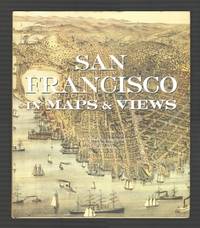
2006ref. 30534New York: Rizzoli. Very Good in Near Fine dj. 2006. First Edition. Hardcover. slight bumping to corners small red dot probably a remainder mark on bottom edge of text block some damage to binding in front and rear gutters although the binding itself is still quite solid; the jacket is quite nice but for the minimal bumping at the corners matching the book. maps This beautifully-designed book "explores the city's growth over the course of 400 years through a number of breathtaking full-color illustrations. These stunning surveys maps and most recently computer-drawn designs shwo how government religion and geography shaped San Francisco's urban fabric; they illustrate the development of the city's trolley and public transit systems and they hint at how San Francisco's population has evolved over time. It's an exciting new way of looking at the city and a useful book for both seasoned locals and tourists." Although I've called it "beautifully-designed" the book also has a serious flaw: it can't decide on the correct spelling of the author's surname which is rendered as "Woodbrige" on the jacket's front panel and title page but correctly as "Woodbridge" in most other places including elsewhere on the jacket itself!. I hope somebody at Rizzoli received a proper tongue-lashing over this unforgivably sloppy proofreading fail. NOTE that additional postage charges will be assessed for international shipping of this heavy book; if this concerns you please contact us for a shipping quote before placing your order. As always at ReadInk domestic Media Mail shipping is free. . Rizzoli hardcover books
1936ref. 29990New York: International Publishers. Very Good-. c.1936. Unstated edition. Hardcover. no dust jacket a good sound copy but with some unfortunate damage about a 1-inch rip in the cloth along the rear joint some uneven fading to front cover. INSCRIBED and SIGNED by the author on the front endpaper: "To Bill Learner - / No Pasaran! / Mike Gold / Hollywood April 10 1937." A wide-ranging collection of short articles and mini-essays by this New York-born Jewish writer 1894-1967 who during the 1930s and 1940s was one of the most prominent and outspoken Communist writers on the American literary landscape. There are about 65 pieces in all most of which per an introductory note "were first published as columns in the Daily Worker or the New Masses." Signed by Author . International Publishers hardcover books
2001ref. UCALVIE01fpPrentice Hall 2001. Very Good. Calo Carole Gold. Viewpoints: Readings in Art History. Upper Saddle River NJ: Prentice Hall 2001. Second edition. xi 385pp. Illustrated. 8vo. Paperback. Book condition: Very good. Edges lightly rubbed. Prentice Hall paperback books
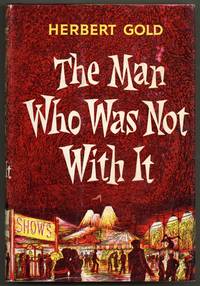
1954ref. 30271Cleveland/New York: The World Publishing Company. Near Fine in Very Good- dj. c.1954. First Edition. Hardcover. price-clipped minor shelfwear only to book; the jacket is worn at the corners with a number of tiny nicks along the top and bottom edges creasing in the lower section of the rear panel a small sticker-removal scar on the front panel some fading along the spine and a number of old internal tape-reinforcements at the fold points. The author's second novel set in Cleveland is "the story of Harry Bowers a powerful and a good man owner of the Green Glade Hotel and King of Prospect Avenue -- a street of honkytonks and small shots of vicious dreamers and men desperate for the security of a dollar." . The World Publishing Company hardcover books
1954ref. 30341New York: International Publishers. Very Good in Very Good dj. c.1954. First Edition. Hardcover. a good sound copy light age-toning to edges of text block minor shelfwear; the jacket is a little scuffed on the front panel lightly soiled on the rear panel. "A cross-section from a wide range of his poetry stories sketches columns reportage and literary criticism" together with "a penetrating essay on Mike Gold's role and work" by Samuel Sillen editor of "Masses & Mainstream." . International Publishers hardcover books
1958ref. 606138Garden City New York: Doubleday 1958. Hardcover. Very Good/Very Good. Book club edition. Light foxing and creasing on flyleaves soiling on boards very good in a very good dust jacket with chips and tears on the spine affecting text. 15 stories from Galaxy Science Fiction magazine from Robert Sheckley Fritz Leiber Avram Davidson Isaac Asimov Lester Del Rey Damon Knight and more. Doubleday hardcover books
1909ref. 597297Pennsylvania 1909. Unbound. Good. Two Real Photo Postcards. Each measuring approximately 3½" x 5½". Versos soiled recto of one with a bit of ink bleed-through and the other with shallow loss good only. Two brief 1909 postcards from "Geo." or "G.H." to a Miss Mary Anderson of Jersey Shore Pennsylvania; it seems "Geo." may have taken a liking to her. Each card has a 1909 Harrisburg & Erie postmark. Sadly a later note penciled on the verso of one card states that young G.H. died in April of 1910. A worn but handsome pair of images. unknown books
1929ref. 28801New York: International Publishers. Very Good. c.1929. Unstated edition. Hardcover. no dust jacket light shelfwear age-toning to edges of text block small indentation in top of text block with minor damage to the top edges of a few pages non-authorial gift inscription dated 1934 on front endpaper. Short fiction and non-fiction pieces drama and verse by this New York-born Jewish writer 1894-1967 who during the 1930s and 1940s was one of the most prominent and outspoken Communist writers on the American literary landscape. The first section of the book consists of a dozen "Proletarian Sketches" a mix of short stories essays and reportage with evocative titles like "The Damned Agitator" "Death of a Negro" "On a Section Gang" "Love on a Garbage Dump" etc. The second section is entitled "Proletarian Chants and Recitations and contains ten pieces of varying types; most are in a blank verse format although one entitled "Strike!" subtitled "A Mass Recitation" is more or less a one-act play. One of the other recitations is entitled "Vanzetti in the Death House." . International Publishers hardcover books
1935ref. 585116New York: Macmillan Company 1935. Hardcover. Very Good. First American edition. Turquoise cloth with gilt-stamped letters. Small stains on front cover spine sunned spine ends and corners lightly rubbed else a very good copy being author Grace Buchanan Sherwood's copy with her name and address penned on the front fly lacking the dust jacket. Macmillan Company hardcover books
1956ref. 590368Boston: Little Brown and Company 1956. Hardcover. Near Fine/Very Good. First edition. Faint rubbing and just a bit of discoloration on the boards near fine in a rubbed very good dust jacket with a sunned spine foxing on the rear panel and the interior a bit of edgewear and a tiny puncture near the foot of the spine. Little, Brown and Company hardcover books
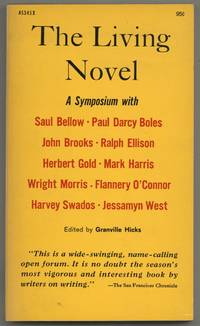
1962ref. 593220New York: Collier Books 1962. Softcover. Near Fine. First Collier Books edition originally published by Macmillan in 1957. Edited by Granville Hicks. Mass market paperback. 223pp. Spine age-toned with wrinkle near the foot else near fine. Contains contributions by Ralph Ellison "Society Morality and the Novel" Flannery O'Connor "The Fiction Writer and His Country" Saul Bellow "Distractions of a Fiction Writer" Wright Morris Herbert Gold Jessamy West and more. Collier Books unknown books
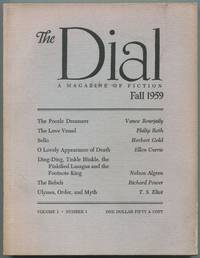
1959ref. 593597New York: The Dial Press 1959. Softcover. Very Good. First edition. 160pp. Gray printed wrappers. Thin dampstain on topedge of pages spine darkened else very good. Contributions by Vance Bourjaily Philip Roth Herbert Gold Ellen Currie Nelson Algren Richard Power and T.S. Eliot. The Dial Press unknown books
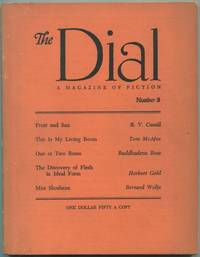
1960ref. 593602New York: The Dial Press 1960. Softcover. Very Good. First edition. 126pp. Red printed wrappers. Wrappers lightly soiled spine darkened and nicked else very good. Contributions by Herbert Gold Bernard Wolfe R.V. Cassill Tom McAfee Buddhadeva Bose. The Dial Press unknown books
1980ref. UGOLMIS00crAlfred A. Knopf 1980. Very Good. Gold Arthur. Misia: The Life of Misia Sert. Fizdale Robert; Sert Misia. New York: Alfred A. Knopf 1980. 337pp. Indexed. Illustrated. Bibliography. 8vo. Cream cloth with gilt embossing. Book condition: Very good with bumped spine foot. Dust Jacket Condition: Very good with rubbed and bumped edges. Short closed tears in edges. Alfred A. Knopf hardcover books
1990ref. USHELAR00abs1990. Very Good. Sherman Kenneth. Large Marine Ecosystems: Patterns Processes and Yields. Alexander Lewis M.; Gold Barry D. Washington DC: NP 1990. 242pp. Indexed. Illustrated. 4to. Paperback. Book condition: Very good with lightly bumped edges. Former owner's stamp on title page. paperback books
1991ref. UGOLBES00tpmPrentice-Hall 1991. Very Good. Gold Herbert. Best Nightmare on Earth: A Life in Haiti. NY: Prentice-Hall 1991. 303pp. 8vo. 1/4 Cloth. Book condition: Very good. Dust Jacket Condition: Very good. Prentice-Hall hardcover books
1976ref. UGHIWAT00LAWUniversity of Utah Press 1976. Very Good. Ghiselin Brewster. The Water of Light: A Miscellany in Honor of Brewster Ghiselin. Taylor editor Henry; Tate Allen; Cowley Malcolm; Dickey James; Lytle Andrew; Nemerov Howard; Gold Herbert; Gordon Caroline; Lattimore editor and translator Richmond; Stegner Wallace; Stanford Ann. Salt Lake City: University of Utah Press 1976. 275pp. 4to. Black cloth with gilt lettering on spine. Book condition: Very good with bottom corners rubbed. Dust Jacket Condition: Good with small loss from front lower corner light soiling and subtly rubbed corners. University of Utah Press hardcover books
2008ref. UGOLBON00LRAldus Books 2008. Fine. Gold R. D. Bondage of the Mind. Menlo Park California: Aldus Books 2008. 268pp. Indexed. 8vo. Hardcover. Book condition: Near fine. Dust Jacket Condition: Near fine. Aldus Books hardcover books
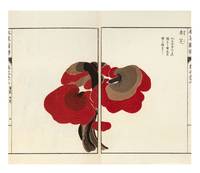
1916ref. 99921916. Several thousand double-page & full-page color-printed woodcuts many with embossing. 95 vols. 8vo 256 x 174 mm. orig. tan patterned semi-stiff wrappers orig. title slips on upper covers orig. stitching occasional stitching a little loose. Tokyo: HonzÅ Zufu KankÅkai 本è‰åœ–èœåˆ‹è¡Œæœƒ 1916-22. The definitive and complete edition of the "the greatest illustrated botanical work of nineteenth century Japan.This monumental work the HonzÅ zufu briefly describes and splendidly illustrates in full color some 2000 plants. It is considered to be one of the two most important works on systematic botany in the Tokugawa period 1603-1867."-Richard C. Rudolph "Illustrations from Weinmann's 'Phytanthoza iconographia' in Iwasaki's 'HonzÅ zufu'" in Huntiana Vol. 2 15 October 1965 p. 1. Iwasaki 1786-1842 was an important natural historian who studied with Ono Ranzan the "Linnaeus of Japan." Iwasaki learned Western botanical theories from Yoan Udagawa one of the most celebrated rangakusha Dutch scholars of the period and from Philipp Franz von Siebold the German physician and scientist. Iwasaki also made many field trips throughout the main island of Japan collecting botanical specimens which he brought back to Edo and cultivated in a garden the government had given him. The publication history of the editions of HonzÅ zufu is long and complicated and there are several conflicting bibliographical accounts. We give Prof. Richard C. Rudolph's account cited above based on Kotaro Shirai's history of the work which appeared in Vol. 93 1921 of the modern edition of HonzÅ zufu 1916-22. We believe Prof. Rudolph's account is the best and most accurate in English. "Early in 1828 Iwasaki founded a botanical society. The first meeting which was held at his own home was attended by the most prominent scholars in this field. In the autumn of the same year after a long period of collecting illustrating practical gardening and study of most of the available botanical works Iwasaki completed the compilation of a comprehensive illustrated flora. "Iwasaki planned to issue this large work in twenty-four series of four volumes each. It seems obvious from the preface that the illustrations were to be printed in black and white and then were to be colored by hand. Shirai in his history of this project says that in this first attempt to reproduce Iwasaki's compilation only four volumes were printed in 1830. "This first attempt to print the HonzÅ zufu was a commercial failure.income was insufficient to finance the printing of so large a work.printing was abandoned but reproduction of his compilation was continued in manuscript with colors brushed in by hand. How many copies were made of each volume in this manner is not recorded but four volumes were produced yearly until his death in 1842. His family carried on with the work and completed the manuscript volumes of HonzÅ zufu in ninety-two volumes in the latter part of 1844 and they are incredibly rare. "It is obvious that a printed edition of such an important work would be produced sooner or later. Several attempts made in the late 19th century ended in failure. In the early years of the present century the HonzÅ Zufu Kanko Kai or Society for Publication of the HonzÅ zufu was organized and a successful printing of the work in color by woodblocks was completed after five years of labor in 1921. This edition is composed of ninety-three volumes.The first ninety-two volumes contain illustrations of about 2000 plants in color and a very brief text and the following volume is composed of an additional text by Iwasaki together with Shirai's biography of him and history of the work. Another two volumes containing Japanese Chinese and Latin binomial indexes compiled by Shirai were published in the same format in 1922. Moreover each of the ninety-two volumes of plates has its own Chinese Japanese-binomial index. "In projects of this kind the publisher deserves a share of credit along with the author.it would take a man of considerable courage to undertake the printing of this great flora by woodblocks. Such a person was the Tokyo publisher Iwamoto YonetarÅ a man of little capital and poor health but rich in the courage required to produce a work of this kind.The rise in the cost of materials and labor due to World War I almost caused the project to end in failure as had others before it.To obtain the necessary funds he sold his personal library and cut down on the size of the staff.Iwamoto personally went over each printed page correcting faults in blockcutting and in coloring. "Either because Iwamoto published a small edition of the HonzÅ zufu or because it suffered destruction during World War II as did early Japanese books in general it is now almost impossible to locate a complete copy of this work."-Rudolph ibid. pp. 4-6. The plates are superbly color-printed and often exhibit subtle embossing. In very fine and fresh condition. Covers a bit discolored or spotted. unknown books
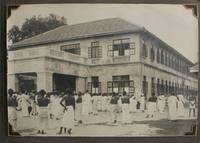
1938ref. 9564Manipay Sri Lanka 1938. Very good. Two albums leather over board: one 4¾" x 7¼" string-tied; one 8" x 10½" metal brads. A total of 164 B&W and sepia photographs corner-mounted to 86 pages 4 photos laid in 34 pp. blank. Photos range from 1½" x 1" to 6" x 8" and 19 are captioned. One album good due to lacking front board else very good or better: light scuffing to covers; one album with moderate offsetting to pages not affecting photos; a few photos spotted; a few loose or chipped; 1 taped and 1 may be lacking. This is a great collection of photos showing the life and work of Dr. William John Jameson who spent 15 years transforming the first hospital and medical school in Sri Lanka. Rev. Dr. John Scudder the first medical missionary to Ceylon arrived in 1819 and began what is believed to be the first medical mission dispensary in the world. In 1848 Dr. Samuel Fisk Green founded Sri Lanka's first hospital and medical school which came to be known as Green Memorial Hospital GMH. Jameson was a missionary doctor from Auburndale Massachusetts who came with his wife to Manipay in 1923. Son William Jr. and daughter Gladys were born there in quick succession and per limited histories we found online and evidence in present photos the family was esteemed in their community. According to the Jaffna Medical Journal Vol. 16 No. 1 March 1981 Jameson: "transformed this hospital scene for the next 15 years and enjoyed tremendous popularity . . . He was an able surgeon: he performed over 500 operations annually; an efficient administrator and fluent in Tamil . . . He secured grants from the Government and donations from the people and erected several buildings and built up endowments . . . raised the professional standard of his assistants by sending the doctors for postgraduate training abroad . . . equipped the hospital with X-ray plant ECG recorder BMR apparatus and Choul apparatus for the treatment of cancer." The family stayed in Manipay until 1938. The namesake Jameson Block at GMH has 18 rooms for neuro-rehabilitation is the first and as of 2024 still the only such service in Sri Lanka's Northern Province. These albums mainly hold family photos and nearly all the captions point out young "Billy" including a shot with his "birthday presents - Temple given by natives." A 1927 greeting card has a photo of Gladys and a poem: "This is my year / To send Christmas cheer / And a glimpse of me / In my first saree / Billy Mother and Dad / Share Greetings with 'Little Glad' / Mission Bungalow Manipay Ceylon." There are also large fantastic shots of native nurses all in white including "Miss McNeil and 1st Graduating Class of" GMH as well as what seem to be hospital staff and community elders some in saris some in suits. Two images reveal the "Governor's visit" and we see Jameson with a cake iced to celebrate the hospital's 75th anniversary. There are about a dozen views of hospital buildings beds and inner workings like the "1st portion of non-paying ward" and a great series of ten shows natives gathered - cooking dancing playing instruments - as the doctor and his family stand in what appears to be a central position of honor. Lovely photographs of an important missionary doctor his family and hospital work in Sri Lanka. unknown books