17.607 resultados
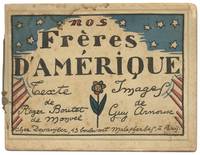
1918ref. 413891Paris: Chez Devambez 1918. Softcover. Very Good. First edition. Text by Roger Boutet de Monvel. Illustrations by Guy Arnoux. Oblong 16mo. String-tied illustrated wrappers. Dampstaining visible on first two leaves foxing throughout else about very good. Praise for the American allies with text and 12 illustrations in color inspired by World War One. Chez Devambez] unknown books
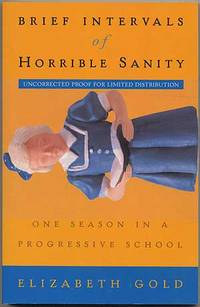
2003ref. 402928New York: Penguin 2003. Softcover. Fine. Uncorrected proof. Trade paperback. Fine. Penguin unknown books
1981ref. 175452New York: Holt Rinehart & Winston 1981. Softcover. Good. Uncorr proof. Good in wrappers. Is uncorrected proof spine is yellowed corners bumped. Holt, Rinehart & Winston unknown books
ref. 384317Unbound. Fine. Small watercolor illustration. Image approximately 4.5" x 4" on a 5" x 7.5" leaf. About fine. A lovely little painting of a well-dressed Chinese woman confronting soldiers Signed "Marjory Lane" and dated in 1921. Lane was a Chicago painter. unknown books
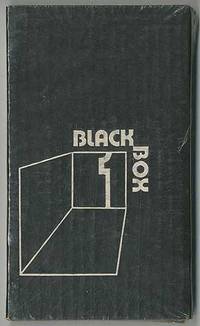
1972ref. 382751Washington DC: New Classroom 1972. Unbound. Fine. Black corrugated box with folding flap containing two 60-minute audio cassettes. Measuring 4.25" x 7.25". Fine in original shrinkwrap with green broadsheet stating contents. A Fluxus-style literary magazine consisting of audio recordings of poetry by James Tate Jerome Rothenberg Dennis Schmitz Andrea Wyatt Michael Rossman Edmund Skellings Edward Gold Etheridge Knight Todd Gitlin Sha'ir Rasul Marge Piercy and Pablo Neruda. New Classroom unknown books
1963ref. 354481New York: The Dial Press 1963. Hardcover. Fine/Near Fine. First edition. 254pp. Fine with very light browning at endpapers in a near fine dustwrapper with very gentle wear at extremities. With essays by Nelson Algren James Baldwin Saul Bellow Herbert Blau George P. Elliot Herbert Gold Paul Goodman Elizabeth Hardwick Seymour Krim Mary McCarthy Arthur Miller Warren Miller William Saroyan William Styron Harvey Swados and Gore Vidal. The Dial Press hardcover books
1854ref. 331498Boston & Cleveland: John P. Jewett and Jewett Proctor and Worthington 1854. Softcover. Very Good. First edition. Small octavo. 42pp. Printed green glazed wrappers. Early penciled owner's name splitting and slight erosion at the spine a very good copy. John P. Jewett and Jewett, Proctor and Worthington unknown books
2001ref. 304350London: Sceptre 2001. Hardcover. Fine/Fine. First edition. Fine in fine dustwrapper. Signed by the author. Although not marked in any way this copy is from the distinguished modern first edition collection of Bruce Kahn. Sceptre hardcover books
1963ref. 66738New York: Dial 1963. Hardcover. Near Fine. First edition. Spine lettering worn else near fine in near fine spine tanned dustjacket with some light soiling and light wear to the bottom of the spine. Inscribed by the author. Dial hardcover books
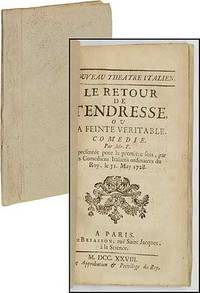
1728ref. 78892Paris: Chez Briasson 1728. Softcover. Near Fine. First edition. Text in French. 52pp. Bound in old but probably later unprinted wrappers. An ink blot on the inside of the front wrap slight foxing to the pages a near fine copy. An Italian-style comedy play. Very scarce. OCLC locates no copies of this edition and only three copies of a 1729 printing. Chez Briasson unknown books
1961ref. 79234London: Andre Deutsch 1961. Hardcover. Fine/Fine. First English edition. Fine in fine dustwrapper. Collection of short stories of all types of love; erotic passionate filial parental etc. Andre Deutsch hardcover books
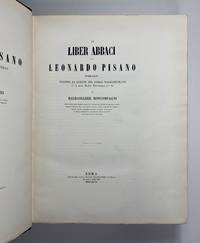
1862ref. 4120Rome: Tipografia delle Scienze Mathematiche e Fisiche 1862. Very good. 2 vols. folio. Numerous diagrams; occasional light spotting and foxing. Modern brown morocco uncut. In slipcases. EDITIO PRINCEPS OF THE WRITINGS OF FIBONACCI THE GREATEST MATHEMATICIAN OF THE MIDDLE AGES STILL THE ONLY COMPLETE EDITION PUBLISHED. IN THE HISTORY OF MATHEMATICS THIS UNABRIDGED EDITION OF THE LATIN TEXT IS ESSENTIAL AND WAS THE VEHICLE BY WHICH FIBONACCI'S WORKS WERE DISSEMINATED THROUGHOUT MODERN AND CONTEMPORARY CULTURE. Rare in private ownership. This copy which sold at Sotheby's forty years ago is the ONLY copy that has ever appeared at public auction according to Rare Book Hub which currently lists more than 15 million records in the Rare Book Transactions database; furthermore it is the only copy currently available on the market. Leonardo of Pisa ca. 1170-1250 a.k.a. Fibonacci is justly considered to be the most important mathematician of the Middle Ages if only for being the first Christian mathematician to systematically explain Arabic numerals. Indeed the mathematical renaissance in the West began with him according to George Sarton. The first volume contains the the 'Liber Abaci' devoted to problems of computation including algebraic quadratic problems; here Fibonnaci here introduces Arabic numerals the fraction bar and the numerical approach to square roots and cube roots. The second volume contains the 'Practica Geometriae' devoted to the application of algebra to geometric problems; 'Flos' written for Frederick II in answer to a number of mathematical problems posed by Magister Johannes; "Letter to Magister Theodorus" developing a general method for the solution of indeterminate problems; and finally the great "Liber quadratorum" described by Vogel as "a first-rate scientific achievement and showing Fibonacci as "a major number theorist." Vogel continues to assert correctly that Fibonacci was far ahead of his time without a successor until 1621 when Bachet made the text of Diophantus available which in turn stimulated Fermat in founding number theory. "In addition to the antique manuscripts there also undeniably exists however a vehicle that notwithstanding the inadequate and problematic access to the manuscript sources has spread the text of the Fibonaccian treatise throughout modern and contemporary culture: the well known Italian mathematician and historian of science Baldassarre Boncompagni Ludovisi in fact in his brilliant far-reaching project which brought into focus the personality of Fibonacci as well as his surviving works realized and published in Rome in 1857 i.e. THIS EDITION what can with ample justification be defined the editio princeps of the entire treatise." Germano. Despite the flaws in Boncompagni's work "it of course was a noteworthy editorial operation especially as it made available in print to a vast number of interested parties a work which had almost fallen into oblivion and that up to that time could be consulted only from its manuscript sources with all the difficulties and inconvenience which this could entail." Germano. It is fair to say that Fibonacci's contributions to mathematics languished unappreciated until the rediscovery of his texts and their presentation in the present -- surprisingly rare -- volumes. Despite its flaws Boncompagni's edition serves as the basis for only complete translation of the Liber Abici made into a modern language thus far namely Lawrence E. Sigler's "Fibonacci's Liber Abaci. A Translation into Modern English of Leonardo Pisano's Book of Calculation" 2002. Whereas Sigler corrected some errors he introduced many others usually on account of inability to understand and effectively translate the Renaissance Latin text. Before Boncompagni's edition only the "Prologus" and Chapter XV of Fibonacci's Liber Abaci had received a respectful circulation in print that was due to G. Libri's "Histoire des sciences mathématiques en Italie dépuis la renaissance des lettres jusqu'à la fin du dixseptième siècle" Paris 1838 vol. II respectively pp. 287-290 and 307-476. REFERENCES: Giuseppe Germano "The Modern Dissemination in Print of the 'Liber Abaci' and its Pitfalls" Part 3 of his New Editorial Perspectives on Fibonacci's Liber Abaci in: Reti Medievali Rivista 14:2 Firenze University Press 2013 pp. 161-163 and passim. George Sarton Introduction to the History of Science II p. 611 et seq. On Boncompagni see V. Cappelletti's in DBI XI pp. 704-709. M. Mazzotti "For Science and for the Pope-King: Writing the History of the Exact Sciences in 19th-century Rome" in: British Journal for the History of Science 33 2000 pp. 257-282 especially pp. 259-265. On the strengths and weaknesses of Boncompagni's edition see R.E. Grimm "The Autobiography of Leonardo Pisano" in: The Fibonacci Quarterly 11 1973 pp. 99-104. John D. Stanitz Sources of Science and Technology: an Exhibit of One Hundred and One Books and Documents Kent State 1972 no. 14 this copy. PROVENANCE: John D. Stanitz his sale Sotheby's New York 25 April 1984 lot 268 with with Sotheby's label on the slipcase of vol. II --> Messrs. Bernard Quaritch June 1984 Mathematics list $3000 --> James M. Vaughn 1939-2022 enigmatic American philanthropist and bibliophile who assembled the finest mathematics collection ever formed by a private individual: 125 rare and foundational books in the history of mathematics were donated to the Harry Ransom Center in 2021; our volume was kept in Vaughn's home in River Oaks Houston and sold to us by his estate. Vaughn funded the Mathematical Association of America and helped support the solution of the 300-year-old math puzzle Fermat's Last Theorem; it is therefore meaningful that he owned this copy of the Editio Princeps of the complete works of Fibonacci. With J.M.V. bookplate in each volume. Tipografia delle Scienze Mathematiche e Fisiche unknown books
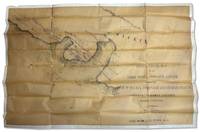
1865ref. 72790North and South Carolina: np 1865. Archive of 1880s business correspondence between William Treloar gold-mining engineer and manager of the Gold Hill Mines Rowan County North Carolina and the Gold Hill Mine Company in London. Primarily letters from the London headquarters to Treloar in Salisbury with several retained copies of his outgoing correspondence. Also includes an 1865 Civil War-era letter concerning the Stewart Gold Mine an 1894 brochure on the Appalachian Gold Belt and an 1895 gold-mining catalog from Mecklenburg County North Carolina. Fair condition overall with creasing folds staining tears and chipping; most correspondence remains legible. Detailed listing of contents as follows: 1866 letter in French written to the future manager Capt. Treloar of Gold Hill Mines; 12 page pamphlet titled "Gold Hill Mining Property Rowan County N. C. Abstract and Opinion" dated December 2 1878. This pamphlet chronicles the legal history of the land deeds and their successors from 1802 to the 1870's; Legal sized "Copy" Memorandum of Agreement" dated May 27th 1881. Memorandum is 3 pages long and is "Between The Gold Hill Mines Limited of No. 36. Palmerston Building's Old Broad Street in the City of London hereinafter called the said Company of the one part and William Treloar of Plymouth in the County of Devon Mining Engineer but now residing at Gold Hill Town in the County of Rowan North Carolina in the United States of America." Memorandum signed by the directors of the Company on page 3. Circa 1870's topographical map measuring approximately 32.75" x 22.25" of Union Mining Company's Estate comprising the Macklin Townsand and Standard Tracts in Cabarrus and Rowan Counties North Carolina and also showing Gold Hill. Map surveyed by Ernest Hauessor Geologist and Mining Engineer. The map is drawn on thin paper and shows details of the mining tract. A few small tears and holes to the map mainly located on the folds; 4 page "Rough Estimate of the Working Cost of Gold Hill Mine." This estimate is written on paper measuring approximately 12" x 8". The estimate is written in lined columns that numerates quantity occupation cost per day per man per month and per annum. The estimate total at bottom is 96770 dollars. 1 page letter dated July 6 1881 written to the manager of Gold Hill Mining Company. Letter refers to "blackmailing" and involving an agent employing a New York lawyer to take up a claim. Letter written on "The Mines Investment Association Limited London" letterhead; 15 pages of 1882 business correspondence written to "Capt. William Treloar" Manager of Gold Hill Mines Company. Letters written on "Haile's Gold Mine Lancaster County S.C." New York office letterhead. These letters have suffered water damage in the past and are faded torn chipped creased etc. Some loss of contents to this letter group. Letters arranged chronologically for the most part with possibility of a couple incomplete letters. Some of the letters are undated but circa 1882. Contents of this letter group contain much technical information surrounding the operation of the mines; 3 loose 1882 Western Union Telegraph Cable Messages addressed to Manager Treloar of Gold Hill Mining; Undated envelope empty from the "Gold Hill Mines Limited London" formerly containing letters from the board; Approximately 62 pages of letters plus 11 Western Union cable messages glued to the backs of the letters. One finely written two page letter labeled "Private" is included. Letters are dated from 1881-1883 with most hand addressed from "The Gold Hill Mining Company" office in London. Some of the pages are on company letterhead. Letters addressed to "Capt. William Treloar Manager of the Gold Hill Mines Salisbury North Carolina". Several of these letters are stuck together on the left edges. Remnants of yellow paper also stuck to the left margins. Some of these letters are now separated. Most letters are in chronological order with a few out of place and the possibility of an incomplete letter. This group may have been stored in the undated company envelope listed above. Contents of these letters covers the operations costs expenses technical information and much more. These letters provide much of the information pertinent to the mines around Gold Hill including the Randolph Mine Barnhardt mine etc.; undated "Amalgamation Department Summary" work sheet circa early 1880's; 4 large "Pay Roll of Men by the Gold Hill Mines Rowan County North Carolina." sheets dated August 31st 1882. Sheets have vertically lined columns containing categories listing 112 names a few duplicated station daily works number of days total amount and some pencil numbers written on the right sides. Sheets are creased edge stained chipped torn etc. Minor loss of contents; 10 pages of 1881-1883 correspondence between Gold Hill Mining Company and "Capt. Treloar Salisbury North Carolina"; 4 page "copy" letter dated September 1882 addressed to Manager Capt. Treloar discussing costs losses at the Barnhardt & Reservoir Mines referencing the Randolph Mine and requesting more detailed information on expenses. Letter signed by "Wm. Baxter Chairman." 3 page letter written on London company letterhead dated March 1883 detailing business; 2 page letter on company letterhead to Manager Treloar signed by the Secretary of the Gold Hill Mine Company and dated May 1883. This letter was probably removed from a larger gathering. A section of yellow paper is stuck on the blank rear page; Undated "The Gold Hill Mines Company" work sheet circa early 1880's; Approximately 16" x 13" lined sheet titled "Gold Hill Mines Limited in Acct with Wm. Treloar" dated 1883. Work sheet has stains; 5 pages of correspondence January 1884 from William Treloar to G. H. Harvey "Whitchurch Villa Mannamead Plymouth" referencing payroll the Randolph Mine and stock shares. Includes an undated 1880's note on Curteis & Pearse Solicitors Plymouth letterhead. Brochure dated January 1894 "A Few More Solid Facts Relating to the Treatment of Ores of the Appalachian Gold Belt." Published by the Inter-State Land Bureau 918 F Street N. W. Washington D.C. January 1894. Circular No. 5. 10 pages. Staples missing with light stains where they were located. Paper folded. contents clean. This circular mentions the Haile Mine in South Carolina; 1895 Catalogue P. The Mecklenburg Iron Works John Wilkes Manager Charlotte N.C. U.S.A. Machinery for Mining and Milling Gold Ores. 24 pages. Illustrated. Catalogue is folded with page edge tears and light stains and holes towards the back; Last item is a Civil War era letter written in April 1865 letter from an Union soldier who had 'escaped' a Charlotte North Carolina Confederate Prison. He stayed briefly with H. Downing at the "Stuart" Stewart "Goald" Gold Mine in North Carolina. Letter addressed to the H. Downing's son and transcribed here: Winchester West Va. Virginia April 11th 1865 Mr. Downing Dear Sir - Having made my escape from the C.S. Military Prison at Charlotte N.C. on the 17 -Feby last and in making my way north through the state fortune directed me to the Stewart goald gold mines when I mett Mr H Downing your father with whom myself and my companions took supper on the 19th of Feby I would say it was the best supper I had for many months before. On my departure from them he your father requested me to write to you giving me your address should I be fortunate enough to make my within our lines "Thank" God I am again within those lines. He your father requested me to remember him to all his family and say that it is his intention to remain at the Stewart goald mines until the close of the war. I am glad to say that the old Gentleman was well and in good spirits at the time I saw him. I would be glad to hear from you at any time. I am Respy Lewis Maish. York Penn'a. Gold was first discovered at Little Meadow Creek in Cabarrus County North Carolina in 1799 by Conrad Reed marking the first documented discovery of gold in the United States. Gold was discovered in the Gold Hill district of southeastern Rowan County in 1824 approximately 20 miles north of the Reed Mine. By the 1840s Gold Hill had become a major mining center with 23 mines and a populationf of approximately 3000. The Barnhardt and Randolph mines were among the most productive with the Randolph shaft reaching 850 feet making it the deepest gold mine in the United States at the time. Mining declined after the California Gold Rush and the Civil War but resumed on a larger scale in the 1880s following the purchase of the mines and establishment of the New Gold Hill Mining Company based in London. Gold was shipped to England and substantial production continued until about 1915. The accompanying correspondence provides a contemporary record of the operation of the Gold Hill mines during the 1880s. Letters between mine manager William Treloar in Salisbury North Carolina and the London-based company discuss mining operations expenses production and financial matters. Despite significant gold production Treloar's correspondence indicates that operating costs remained high and profits were limited during the early 1880s. np unknown books
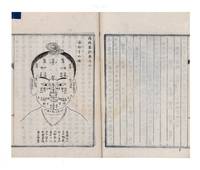
ref. 11584Two full-page drawings & 42 smaller drawings in the text. Three parts in one. 60 folding pre-printed leaves. 8vo 247 x 174 mm. orig. wrappers orig. stitching. Japan: ca. 1770s-80s. An unpublished manuscript by Yamabe court doctor of the Nakatsu fiefdom in today's Ōita Prefecture. He also published several works on Chinese medicine and gynecology. This is his main work on smallpox and measles in which he focuses on the diagnosis prognosis and treatment of these infectious diseases in children. Many recipes for medicines are provided. This work remained in manuscript and was never published. We find one other manuscript copy at Kyoto University. The first part describes smallpox and measles and contains instructions on how to control outbreaks amongst children. The second part contains many fine drawings of eruptions on various parts of the body. Following each drawing Yamabe gives a diagnosis and a recipe for the appropriate medication. The third part discusses how to treat the symptoms especially fevers. Fine condition. ⧠For Yamabe's gynecological work see Mestler A Galaxy of Old Japanese Medical Books II p. 495. unknown books
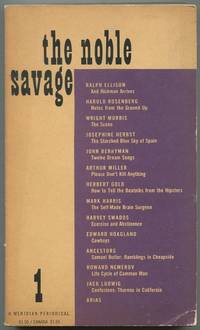
1960ref. 629152New York: Meridian Books 1960. Softcover. Very Good. Magazine. Octavo. Perfectbound in wrappers. Very good with moderate toning and and wear at the edges. A literary anthology with contributions from Ralph Ellison Wright Morris John Berryman Arthur Miller Herbert Gold and Howard Nemerov. Meridian Books unknown books
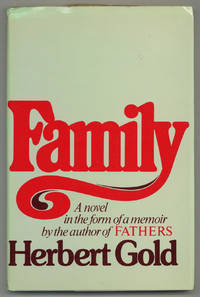
1981ref. 577460New York: Arbor House 1981. Softcover. Fine/Very Good. Uncorrected proof in proof jacket. Fine in printed wrappers in a moderately worn very good or better proof jacket with a bit of sunning at the edges. The jacket is printed only on the spine and cover panel and is about ¼" taller than the book. Arbor House unknown books
1985ref. 197567First edition. Oblong 4to 8 1/2" x 11". Illustrated with 26 lino and wood-cut drawings by Clarke. Printed yellow pictorial board; spiral bound. Fine fresh. No signatures or bookplates. #9/50 numbered copies the entire edition. An attractive alphabet book. The Author hardcover books
1977ref. 300530First edition. Octavo. Dust jacket designed by Judith Leeds unclipped; few nicks. Fine. 234 pages. No other signatures or bookplates. Signed and inscribed by Herbert Gold in black on the title page: "For Sheila - to us in the future! we'll reunite the past at leisure Herb." Novel set in San Francisco concerning a prostitute's efforts to unionize her colleagues. Arbor House hardcover books
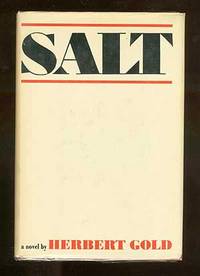
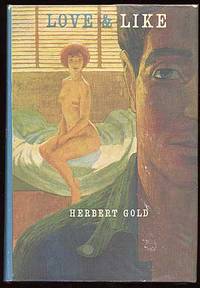
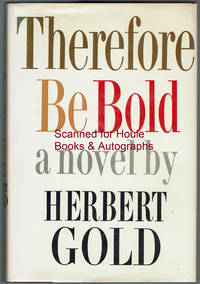
1960ref. 300531First edition. Octavo. Dust jacket designed by Paul Bacon price clipped. Very good. 256 pages. No signatures or bookplates. The Dial Press hardcover books
1971ref. 208037London: Weidenfeld and Nicolson 1971. hardcover. very good-/good. 305 pages 8vo pink boards dust wrapper large slit on front cover. London: Weidenfeld and Nicolson 1971. A very good- copy in a good dust wrapper. Inscribed on the front free endpaper by the author: "To James Murray this English edition of a San Francisco novel for the San Francisco version of a British diplomat Greetings Herbert Gold 17 May 1971." Weidenfeld and Nicolson unknown books
1951ref. 57269New York: Viking Press 1951. Hardcover. Very Good/Good. First edition. A little fraying at the crown thus very good in good price-clipped dustwrapper which is spine-faded and with a number of small chips and tears. Scholar and author R.P. Blackmur's copy with his embossed ownership stamp repeated three times on the first two blank pages. Viking Press hardcover books
1541ref. 6509Luguduni sic: Lyon: Seb. Gryphium Sebastian Gryphius 1541. Early reprint. Leatherbound. Good. 12mo. Pp. 314 13. Early 18th-C. tree calf five raised bands with gilt tooled decorations and lettering piece edges trimmed and dyed red. Decorative initial caps italic text with roman titles table of Latin and Greek chapter titles marginal notes index following text followed by a tail-piece that of a gryffin in reference to printer Gryphius. Includes Appendicula de condituris varijs ex Ioanne Damasceno a section of fourteen recipes for "condimenta" and "condituræ" between De Re Culinaria and Facultatibus alimentorum. Spine ends chipped edges rubbed endpapers stained marginal annotations in ink tight binding. Presents four culinary and health texts as called for appearing together with Torinus' introduction the same year as a nearly identical Basel edition but in smaller format for a different market. The collection of Roman recipes De Re Culinaria attributed to Apicius first appeared in this form in the fifth century AD. Torinus' sources were "codexes" found in Maguelone and Transylvania. Bartolomeo Sacchi Platina's De Honesta Voluptate given an alternate title by Torinus was the first movable-type cookbook based on Maestro Martino da Como's recipes. Paul of Aegina was a Byzantine Greek physician. Gryphius learned printing from his father in Germany then in Venice moving to Lyon around 1520. By the 1540s he had the city's largest printing establishment and reputation for a high standard of editing and impression specializing in Humanist works in small format modeled on Aldus Manutius. DURLING Sixteenth Century Printed Books in the National Library of Medicine 232. . Seb. Gryphium [Sebastian Gryphius] unknown books
ref. 5361Denver: Henrietta Bromwell. Original Painting. Oil on Canvas Framed. Painting Fine within a Very Good Ornate Frame. Original oil painting framed depicting a disused pioneer cabin amid a forest clearing blue sky and pink clouds overhead. Exposed painting measures 9.75 x 8 inches; frame measures 14 x 11 inches. Bromwell neglected to sign and date many of her paintings; this work is signed "H. E. Bromwell" and features the "July 25 192unintelligible". On the back of the period frame is the remnant of a store label for Chain & Hardy Book Stationery and Art Co. Denver with only the address 1609-1615 Arapahoe St. and "Art Department" remaining. The painting is in Fine condition with three small chips to the gilded Victorian frame please see photos. Born in Illinois in 1870 Henrietta Elizabeth Bromwell 1859-1946 moved to the Colorado Territory when her father Henry Pelham Holmes Bromwell joined the territorial legislature. She studied art at the University of Denver and with Anne Evans daughter of John Evans Colorado's second territorial governor founded the Denver Artists Club also known as the Artists' Club of Denver. By 1923 that organization evolved into the Denver Art Museum. The subject of the painting is typical of Bromwell's oeuvre utilizing mountain streams rustic settings and pioneer life as her subjects. In an 1899 article Bromwell credited Monet as influencing her landscape painting as the lighter color palette and loose brushstrokes attest. Critics have suggested the influence of Henry Durrie and Jasper Francis Cropsey. Interest in Bromwell fluctuates with articles appearing periodically. In 1997 an issue of Colorado Heritage featured just that with the cover boasting a Bromwell painting akin to this offering. . Henrietta Bromwell unknown books
1849ref. BK0018Ferrisburgh Vermont 1849. Autograph letter signed "Anne R. M." to her husband Lloyd Minturn in San Francisco "Upper California." 8 pp.; approximately 1700 words. With stampless cover bearing a black "NEW-YORK / 40" datestamp of January 17 and manuscript routing "per Cherokee. Significant edge wear and central vertical crease; text generally clear and complete. An intimate Christmas letter from Anna Robinson Minturn of Ferrisburgh Vermont to her husband Lloyd then engaged in the hotel and real estate business at Pueblo San José during the California Gold Rush. Writing on the anniversary of his departure Anna describes the four-month-old son Lloyd had never seen questions whether California's speculative "mania" could last and repeatedly urges him to return home. Lloyd Minturn had traveled to California in January 1849 with David Lion Gardiner and other eastern emigrants. By November Gardiner reported that Minturn was "at Pueblo San Jose keeping a hotel and speculating in real estate."1 Anna's references to Lloyd's hotel and stables their rental and the uncertain recovery of his investment relate directly to his California business. He later appears in San Francisco as a member of the Committee of Vigilance of 1851 with his place of business on California Street and his residence at the Mansion House.2 Anna begins writing late on Christmas day imagining a future holiday spent with Lloyd "by thy quiet fire-side in Vermont-with thy wife and darling child with thee." Returning to the letter three days later she reflects on the year since his departure: "Oh how much I think about thee as the anniversary of thy departure comes round . When I think of thee my dearest ask then what a weary dreary time it seems . Our little darling improves so rapidly is so very lovely that I can hardly bear to have thee away." News that another California emigrant Dr. Stone had returned safely made Lloyd's absence still more painful. Although she understood that "the object of thy pilgrimage" at last appeared attainable Anna wondered why the management of his property could not be entrusted to an agent asking why "Mr. Ruckle" cannot "receive the rents & pay the former owner and send thee thy portion of the profits." However she immediately checks her own advice with an observation on marriage and gender: "You men know so much more how these things work than we so that it is rather labor wasted to advise much and I do hate to see a woman trying to rule her husband-don't thee" Anna feared that Lloyd might remain away sacrificing his domestic life only to lose the anticipated reward. Her skepticism extends to the Gold Rush itself: "I do hope though that the man who has taken your property will be able to pay you-that would be so bad to stay away so long-sacrificing so much & lose thy reward entirely-don't thee suppose this mania in California will end much as the land speculation did here seems to me it must. I hope thee won't get drawn in." Much of the letter is devoted to their infant son whose birth Lloyd may initially have learned of from another returning emigrant because of the "shamefully neglected" Pacific mails. At four months the boy weighed eighteen and one-quarter pounds and had "cheeks as hard as little apples." Anna encloses a lock of his hair explaining that she had kissed it before sending it. The contrast between California and the Vermont household runs throughout the letter. Anna describes the snow distant mountains sleighing baked apples and buckwheat cakes while Lloyd remains in a place known to her mainly through contradictory reports and unreliable correspondence. She cites Bayard Taylor's account of portions of California as suitable wheat country while noting that other observers claimed wheat could not be grown there at all remarking on the "contradictory accounts about California" that make it hard to "tell what to believe." Her anxiety was heightened by reports of cholera progressing toward California. She closes by asking Lloyd to protect his health and praying that he might be restored to her "in sound health both body & soul." Anna was a daughter of Rowland Thomas and Rachel Robinson of Rokeby the prominent Ferrisburgh Quaker family whose home later became known for its role in the Underground Railroad. Other letters from Anna to Lloyd during his California absence survive at the Bancroft Library and the Smithsonian.3 Overall a substantial and affecting account of the Gold Rush from the perspective of a wife left behind. 1 David Lion Gardner Letter to Juliana McLachlan Gardiner November 30 1849 David Gardiner Letters BANC MSS 2006/127 box 1.The Bancroft Library University of California Berkeley. 2 Anna Robinson Minturn Letters to Lloyd Minturn 1849-1851 Warshaw Collection of Business Americana Subject Categories: Steamboats box 1 folder 6 J-L Archives Center National Museum of American History Smithsonian Institution Washington DC. 3 Anna R. Minturn "Anna R. Minturn to Mr. Lloyd Minturn Ferrisburgh December 2 1849" California Gold Rush Letters BANC MSS C-B 547 box 5 The Bancroft Library University of California Berkeley. . unknown books
1830ref. 1418413Wien: Commission der Ulons Doll'fchen 1830. Umgearbeitet und mit vielen Zusaken versehen von Dr. J.C. Stark; von neuem bearbeitet und mit Zusaken vermehrt von Dr. J.F. Diessenbach. Hardcover. Octavo vii 540 pages 38 leaves of plates. In Fair condition. Ex-library with library stamps on endpapers. Spine is brown faded print green title label. Boards in brown paper; worn and chipping spine caps and corners worn hinges rubbing/shelfwear. Text block has owner stamp on front flyleaf foxing throughout uncut pages. Illustrated: b&w plates drawings some folded. Text in German gothic/fraktur font. NOTE: Shelved in Netdesk Column F ND-F . 1418413. FP New Rockville Stock. Commission der Ulons Doll'fchen hardcover books