1830ref. 1418413Wien: Commission der Ulons Doll'fchen 1830. Umgearbeitet und mit vielen Zusaken versehen von Dr. J.C. Stark; von neuem bearbeitet und mit Zusaken vermehrt von Dr. J.F. Diessenbach. Hardcover. Octavo vii 540 pages 38 leaves of plates. In Fair condition. Ex-library with library stamps on endpapers. Spine is brown faded print green title label. Boards in brown paper; worn and chipping spine caps and corners worn hinges rubbing/shelfwear. Text block has owner stamp on front flyleaf foxing throughout uncut pages. Illustrated: b&w plates drawings some folded. Text in German gothic/fraktur font. NOTE: Shelved in Netdesk Column F ND-F . 1418413. FP New Rockville Stock. Commission der Ulons Doll'fchen hardcover books
1970ref. 12255Crestline CA: Institute for the Development of the Harmonius Human Being 1970. Reprint. Original Wraps. Very Good. Reprint. Original Wraps. Printed in 1970 by the Institute for the Development of the Harmonius Human Being the book explore fascinating concepts and ideas on mysticism the occult and spirituality. The commentary is followed by a facsimile reprint of the text itself taken from Crowley's 1903 satire featuring an original introduction connecting the contents to the rituals of the Hermetic Order of the Golden Dawn and the sex magic of the Ordo Templi Orientis. Toning and light shelfwear else tight bright and unmarred. Staplebound in tan wrappers. 8vo. xii 32pp. [Institute for the Development of the Harmonius Human Being] unknown books
1952ref. 192842Beijing 1952. Hardbound. Good- portfolios highly scuffed scratched; edge-worn w/ loose threads; masking tape repair & pencil notations to labels; interior linings peeling & chipped. print mats will have instances of chips tears smudgingrubbing & foxing. prints will have instances of tanning foxing smudging & occasional dampstaining; chips & tears to corners & edges. some tissue-guards present & will be of similar conditions. plates remain loose beneath the mats. two oversized navy blue textured portfolios w/ white title labels. vol1: 23 color & black woodblack prints. vol2: 39 color & black woodblack prints. 62 prints total. Interior portfolio flaps have original print listings intact. Both Parts one and two are incomplete. Part two has an incomplete set of supplements. There are also 6 random color prints with no identifaction; a few unmatted. A few prints appear to have been placed in unnumbered mats with handwritten pencil numbers so it's difficult to authentic if that is the acutal assigned print. Contents as follows with indentififers of hand-written numbering color or black printing whether a second copy of slight variation is present and other notable conditions; Part I: Print Number 5 Hand-Written Number HW Color; 11 C 12 C 15 Black with chipping 22 C 25 C with dense foxing 32 HW C 40 HW C 41 C and severely torn 45 C 49 HW C 57 two copies present with slight variations in design/printing HW C 60 C 71 HW C 73 HW C 78 HW C 88 Black and torn at lower corner/edge 89 B 92 B two copies present with slight variations in design/printing 93B two copies present with slight variations in design/printing. Part Two Contents: 114 B 123 two copies present with slight variations in design/printing C and B 124 C 129 two copies present with slight variations in design/printing C and B 135 C two copies of variations 141 C 142 C two copies of variations 144 C 146 C two copies of variations 148 C 155 C two copies of variations 159 C. Part Two Supplemental all prints Black printing: S1 S2 S10 two copies of variations S11 S12 S12 S14 S15 two copies of variations S16 with heavy tanning/foxing or dampstaining S19 S20 with creased chipped edges and dampstaining/foxing S21 HW S22 S23 and S24. Approximately 22lbs of shipping. hardcover books
1923ref. 240826Hollywood CA: Paramount PIctures 1923. Stapled Pamphlet. Very Good binding. The Covered Wagon" is considered the first great Western epic in movie history establishing a number of cliches that became staples. Very nice copy of the booklet that "has been prepared to present to the public some interesting facts in connections with the production of this Paramount picture" price 25 cents. Interesing item for the Teddy Roosevelt completist as the Paramount dedicated the movie to his memory; it so states on the verso of the front panel. Very Good binding. Paramount PIctures unknown books
1967ref. 73165Warehouse Point: National Railway Historical Society 1967. Hardcover. Very good. Hardcover. 38pp. Very good hardback in a lightly rubbed jacket. National Railway Historical Society hardcover books
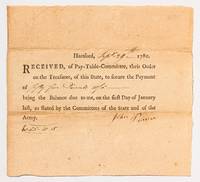
1780ref. 423856Hartford Connecticut 1780. Unbound. Near Fine. Approximately 7" x 6. 5" on laid paper with a deckled edge. Old folds near fine. Receipt of payment from the Pay-Table Committee of 55 pounds to John Pearce or Pierce Signed as received by him as Pearce. Docketed as received on the verso as Pierce. unknown books
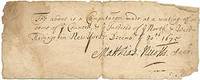
1675ref. 407229North & West Ridings Long Island New York 1675. Unbound. Good. Manuscript document. A single paragraph possibly removed from a larger document Signed at the conclusion by Matthias Nicolls. Approximately 8" x 3". Old fold some age-toning and small nicks and tears a little fragile but good. The document reads in full: "The above is a computacon made at a meeting of some of ye Councell & ye Justices of ye North & West Ridings in New York. Decembr. ye 30th 1675. Matthias Nicolls. secr." Matthias Nicholls 1626-1687 was the Provincial Secretary of New York. Born in Plymouth England he was selected to serve as secretary by Samuel Maverick who was one of the Royal Commissioners investigating conditions in New England. Accompanying the commission to New England which was headed by appointed Governor Richard Nicolls they were assigned the task of wresting the province of New York from the Dutch. Matthias held the position of provincial secretary continuously until 1680 except for the short period of 1674-75 when the Dutch briefly reoccupied New York. He was the Secretary of the Commission that accepted the Dutch surrender of New York. He served as the sixth Mayor of the city of New York in 1672-73. He is widely known as "the principal author of the legal code known as the 'Duke's Laws'." He was at least partially responsibility for religious tolerance in New York and founded the town of Plandome around his estate of the same name. unknown books
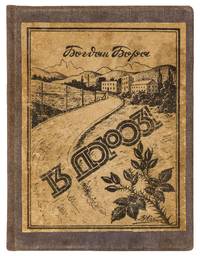
1946ref. 423496Rimini Italy: Zyttia w tabori 1946. Hardcover. Very Good. Limited edition one of 280 copies. Mimeographed. Octavo. pp. 1-4 i-iv v-vi 1-104. Illustrated with a portrait of Bogdan and four other full-page illustrations. Bound in original army linen over boards with mimeographed illustration mounted on the front cover. Small contemporary name in ink on front free endpaper slight staining and rubbing to the boards small marginal tears to endpapers very good. A very scarce book of poetry by the Ukrainian poet Bogdan Bora 1920-97 written and published at a prison camp in Rimini Italy about one year after World War II. Bora had been captured by British forces and sent to the prison camp in Rimini where he spent the following two years and published three books of poetry including this collection the title of which translated as “On the Road.” Bora’s poems written in Ukrainian are moving works evocative of the turbulent era. The cover design and a full-page portrait of Bogdan Bora were made by fellow inmate Volodimir Kaplun. In 1947 Bora was moved to Britain where he was given his freedom and lived out the rest of his days. Very scarce. OCLC locates only six copies in institutional holdings worldwide. Zyttia w tabori hardcover books
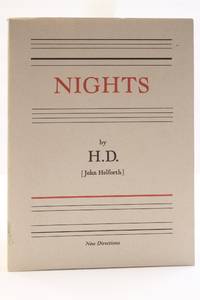
1986ref. 1418152New York: New Directions Publishing 1986. First Edition Thus First Printing. Softcover. Octavo 106 pages. In Very Good condition with a Very Good dust jacket. Dust jacket spine tan with black lettering protected in mylar covering price uncut: "$19.95". Mild general shelf wear. Mild tearing to head of dust jacket. Scuffing to back of dust jacket cover near tail of dust jacket spine and bottom edge of textblock. Shelved in Fiction. 1418152. Shelved Dupont Bookstore. New Directions Publishing unknown books
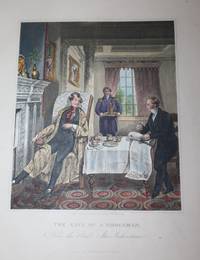
1825ref. 007994London: George Henderson. Printed by George Dawe who also was engraver 1825. First Edition. Full Morocco. Near Fine. Suite of nine hand-colored aquatint plates depicting the louche hedonistic and self-destructive life of a young aristocrat. Bound by Riviere & Son in full red morocco with ruled border raised bands other gilt decoration including turn-ins marbled endpapers. N.d. circa 1820s. 4to. 31 by 25 cm. No title page -- this was issued as a suite of plates not in a book form. A blank sheet in front two in back and tissue guards between plates. Each plate is depicting a scene and basically a step in the descent to self-destruction by the young buck aristocrat. Scenes are The Inheritance The First Party The Night House in other words the bordello The Betting Booth at the racetrack The Gambling House The Usurer The Mess Room clearly the dining room of an elite military unit The Duel and finally The Sick Room. We would note that the Usurer has the casual anti-Semitic trope so prevalent throughout history of the hook-nosed lender. The artwork has a pleasant slightly naive quality with the loosest of adherence to perspective. The settings are generally quite resplendent capturing Regency England grandeur perfectly. Scarce. Yale has several copies. Only two other complete sets held by institutions according to OCLC First Search one at Harvard and one somewhat later and published by Tegg at the Art Institute in Chicago. The Henderson version clearly the first was issued without color we would add. The Harvard Hollis catalogue gives no indication whether the copy at Houghton has hand-coloring -- something that Hollis generally will denote if it does. No copies found in commerce on date of this description was prepared. Light wear to binding. Light soiling in the margins of the plates. Pictorial elements consistently bright and attractive. George Henderson. Printed by George Dawe, who also was engraver unknown books
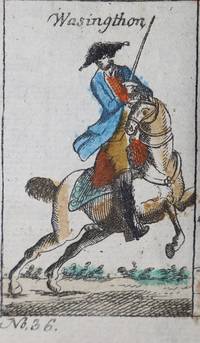
ref. 006887Nürnberg: Trautner. Hardcover. Paper pastedown on slightly limp boards. Very Good. Early depiction of General Washington in Germany -- possibly the first such. N.d. circa late 1780s. We can date these generally to the late 1780s because Frederick the Great's death in 1786 is noted but Joseph II is still presented as alive but he died in early 1790. Folio 32 by 20 cm. 33 pages with mounted content including 15 double paged plates measuring 32 by 38.5 cm or thereabouts. The sixteenth plate is double paged half the page height -- this plate was somewhat crudely cut probably in half. In these plates there are about 345 separate images or cells -- the cell count is not hard and fast as there are instances in which two cells can be regarded as a single illustration or cell. The vast majority of the cells or illustrations relate to military men and many of these are equestrian images with the commander or officer mounted on horse. We also find rows of soldiers that can be viewed as if on parade or alternatively like cells in a movie. Military costume and regalia isn't the only subject however. Two of the plates are devoted mostly to the hunt and shooting. In these hunters are shown holding up firearms to various prey. And one plate depicts biblical scenes or subjects. In these plates brief captions can identify the subject. Thus we know that one of the pictures is of Washington who certainly would have been an international celebrity in the late 1780s. The hand-coloring of the prints is a fairly crude stencil and the palette of colors is not extensive. Dominating are blues oranges greens and golds. Not to be slighted is the first page in this album which is an entirely different sort of artwork and seemingly bears no relation to the rest of the contents. This page presents a depiction of Saint Catherine with the saint and her executioner depicted in a printed oval set as a centerpiece surrounded by foliate tracery intricately cut out like lacework. Surrounding all of this is a paper frame all from the same sheet as far as we can discern. The paper and the center oval are mounted onto the album leaf and thus the lacework given the whole thing some dimensionality. The coloring of this specimen of folk art is also richer and more refined than applies to the stenciling of the prints to follow. Scarce -- we could no other examples of Trautner's military prints not to speak of collection of this size on OCLC First Search or elsewhere. Condition: the cover has considerable wear with some crinkling of the paper pastedown some surface loss to the paper and soiling. Spine has a fair amount of paper pastedown loss. The first page with the Saint Catherine artwork has some loss to the tracery but we would also assert that it is remarkable that so much of it has survived intact. The paper framing is considerable soiled with some running of the coloring onto that paper and elsewhere in the artwork. The Trautner prints have light soiling comprised of margin smudging and a light dampstain affecting a few of the prints but overall these read as mostly clean. We noted that the last print is partial. Trautner hardcover books
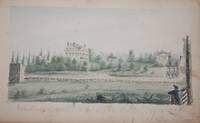
1828ref. 006534New York City 1828. Hardcover. Cloth spine. Marbled pastedown on boards. Leather centerpiece label on front board. Good. Original watercolors of rural Manhattan as it appeared in 1828. Among these and captioned are a farmhouse on Broadway and 8th Street; Kips Bay showing a boy sailing a small craft with a farmhouse in the background; a house in Bloomingdale the location of an early village now the Upper West Side along the river between 96th and 106th Streets; and a stately mansion surrounded by fields and less important buildings we would conjecture in or around Bloomingdale but captioned surely incorrectly the Battery. Most of the paintings are uncaptioned. Of these some are surely the Upper Hudson area or are scenes that we can't tell whether they are upstate or in the present day city. The artist also ventured away from the New York areas. Among the non-New York paintings are a depiction of the Cape Pogue Lighthouse on Martha's Vineyard which still stands; Fowey Harbour which is in Cornwall; and a few scenes which look very much like Scotland. Oblong 14 by 19.5 cm. 55 watercolors generally fully finished. Although the sketchbook has a label on its front board bearing the name of Walter Oddie who was a listed artist we believe a good amount of the artwork contained in this sketchbook is of his father-in-law Henry Meigs. Meigs had been a U.S. Congressman from New York and also held a number of other political positions in the city over the course of his career. More pertinently Meigs was known to be an amateur painter and as such an inspiration to Oddie. Given Oddie's youth at the time -- he was 20 or 21 years old - and from his diary for the years 1828 and 1829 now housed in the Winterthur Library we know he was just starting to paint we find it inconceivable that he would have had the skill yet to produce the sensitive and fine renderings of nature and buildings that typify this sketchbook. Further underlying our thinking about attribution is that some of captioning only makes sense if Meigs were the primary artist. We do consider it quite likely that Oddie may have done some of the sketchier work contained herein as well as contributing in bits and pieces to his father-in-law's work as well as perhaps copying some of it in this sketchbook. To us it isn't really so important who was responsible for particular paintings in the sketchbook. Rather the significance lies in the recording of New York City and its surroundings at the time - we suspect that there may be no recording anywhere of some of the buildings and locations at this time. And of course not to be minimized is the beauty of the better paintings contained in the sketchbook. Whatever the degree of Oddie's contribution the sketchbook does have something to say about his career and visa versa given that it contains the type of artwork for which he became known later. Oddie was born in Maryland Washington D.C. or possibly New Orleans but spent almost his entire life in New York and more specifically New York City Brooklyn or Long Island. In 1828 the year most of the watercolors in the catalogue were executed Oddie was spending much of his time in the city. Once Oddie's interest in painting was sparked he was believed to have been largely self-taught but he did come to study art with Hudson River School painter Robert Walter Weir and Anthony Lewis De Rose a portrait and historical painter. From the diary we know that Oddie did work with De Rose in 1829; we believe that his tutelage with Weir came later. From the diary we know that Oddie was regularly going to art exhibits and critiquing what he saw. The diary also discloses or corroborates our prior sense that Oddie sometimes would work off of engraved prints. To what degree he was merely copying the prints as opposed to using the prints as a spur to his own imagination we can not determine with certitude. We tend to think the views of Scottish and Welsh castles contained in the Sketchbook were done by Meigs not Oddie and so they might well have been done from life. From the diary we know that Oddie had some day job that occupied him during the week and so he did most of his painting at that time on the weekends when he would often go for long hikes along the Hudson. Oddie also refers in the diary to having been in Hudson then and now the county seat of Columbia County and so it is very plausible that some of the upstate scenery is from around there. Again we think some of these paintings may have been done by Meigs. Oddie would become an associate member of the National Academy of Design where he frequently exhibited his artwork. One further note - we spoke of questioning one caption referring to the Battery. In 1828 the urbanized part of the city didn't even reach 14th Street but the Battery as the oldest part of the city was thoroughly urbanized. Thus the painting could not be of the Battery. But the landscape is very consistent with the topography of Upper Manhattan. hardcover books
1550ref. 5044Rome: ca 1550. SECOND STATE of three with the addition of "Romae" incised at lower right. Hardcover. Fine. A very fine example with high contrast of this rare print. This is the first published engraving dedicated to Michelangelo's Moses and one of only two made in the 16th century. The funerary monument of Julius II occupied Michelangelo in various phases from 1505 to the 1540s. Prints of the entire monument are few. In them the figure of Moses is necessarily reduced in size and imperfectly executed. Later prints of the statue in isolation such as that by the Netherlandish artist Jacob Matham 1571-1631 in which the figure is shown in reverse fail to match the standard set by this early engraving. The inscription reads: Moysis ingens ex marmore simulacrum in Julij Secundi/ Pontificis Maximi ad petri in Exquilijs uincula sepulcro / præstanti Michaelis Angeli Bonarotae manu fictum. The immense marble statue of Moses in the Church of San Pietro in Vincoli on the Esquiline Hill sculpted by the hand of Michelangelo Buonarroti for the tomb of Pope Julius II. Michelangelo's design for the tomb of Pope Julius II with the master's iconic figure of Moses was originally intended for St. Peter's but was ultimately installed in the church of San Pietro in Vincoli in Rome. The work was commissioned by Pope Julius in 1505 at which time Michelangelo received an initial payment of 100 gold ducats but was not completed until March 1545. Michelangelo re-worked his initial design numerous times first in 1513 after Julius' death and again in 1516 1525/1526 1532 and 1542. The final monument includes three figures carved by Michelangelo: the aforementioned Moses and Leah and Rachel symbols respectively of the active and contemplative life. Michelangelo's sculptures of the dying and rebellious slaves now in the Louvre and the Genius of Victory Palazzo Vecchio Florence were not used in the final design. On the second tier of the monument as it stands is an effigy of the reclining Julius II attributed to Tommaso di Pietro Boscoli 1503-1574 but with the face possibly the work of Michelangelo watched over by the Madonna and Child carved by Alessandro Scherano di Settignano after a model by Michelangelo and flanked by a sibyl and a prophet; these last two sculptures were carved by Michelangelo's pupil Raffaello da Montelupo ca. 1504-ca. 1567. "The engraving reproduces accurately in the same direction and without substantial variations the sculpture of the tomb of Julius II identifying the light source at the top left. The work attributed by Bottari to Beatrizet Heinecken 1768 was treated as anonymous by Heinecken in the Nachrichten of 1768 but later included by him in the list of Beatrizet's works Dictionnaire 1788. Nagler recorded it both under the monogram of Cornelis Bos and as the work of Beatrizet. Appearing in the Hollstein repertoire as Bos it was subsequently treated among works of doubtful attribution both of Bos Schéle 1965 and of Beatrizet Bianchi 2004. "Due to the fact that copies of this print are found in volumes of Roman composition on the model of the Speculum Romanae Magnificentiae El Escorial; Madrid Biblioteca Nacional; both datable between the mid-1580s and the 1590s one would be led to believe that the plate was engraved in Rome where in the last decade of the 16th century it was acquired by Van Aelst. This does not however exclude Cornelis Bos as a possible author since more than one of his plates is known to bear a Roman address in late editions even if it makes it more likely -in our opinion- the identification with a Flemish engraver active in Italy. In the sparse and luminous texture and in the clean geometries one could also perceive the burin of Niccolò della Casa."Alberti Rovetta and Salsi "D'après Michelangelo"2015 p. 219 ff. ca hardcover books
1630ref. 5226Bracciano: Privately Printed by Andreas Phaeus 1626 to 1630. SOLE EDITION. Hardcover. Fine. An excellent copy. Bound in contemporary vellum lacking ties a few wormholes to the lower cover small puncture and a little rumpling along the fore-edge of the upper cover. Complete with the errata leaf and blanks F4 R6 & 4I6 b3 bound after c2 few small tears a some scattered toning and foxing a few inconsequential blemishes. With an early German manuscript shelf label - "M.W." 19th-century bookplate with coronet. Illustrated with an engraved allegorical frontispiece fine engraved portrait of Paolo Giordano Orsini Duke of Bracciano with dedication engraved vignette on printed title & many fine engraved illustrations in the text many full-page depicting the author's observations of sunspots his observational platform with his assistants busily working his telescopes and helioscopes of his own design. Scheiner's greatest work. This magnificent book along with Hevelius' lunar atlas "Selenographia" is one of the two most richly and superbly illustrated astronomy book published in the first half of the 17th century. It describes and depicts Scheiner's observations of sunspots and showcases his instruments including his Keplerian telescope and his helioscope. In 1611 Scheiner constructed a telescope with which he began to make astronomical observations and in March of that year he detected the presence of spots on the sun. Scheiner's claim to the discovery of sun spots independently of Galileo was the origin of one of the most famous and heated controversies in the history of science. This book contains the summation of Scheiner's observations of the sun the fruit of many years of observation and study. He confirmed his method and criticized Galileo for failing to mention the inclination of the axis of rotation to the plane of the ecliptic. Yet he finally agreed with Galileo that sunspots are on the Sun's surface or in its atmosphere rather than satellites that they are often generated and perish there and that the Sun is therefore not perfect. Scheiner further advocated a fluid heavens against the Aristotelian solid spheres and he pioneered new ways of representing the motions of spots across the Sun's face. Because shortly after the appearance of Rosa Ursina sunspot activity decreased drastically the so-called Maunder Minimum ca. 1645-1710 his work was not superseded until well into the eighteenth century. Scheiner was responsible for many advances and innovations in the design of telescopes and related instruments. Of great importance is Scheiner's creation of a special helioscope described here the first Keplerian telescope in use consisting of two convex lenses; it was also the first to use colored glass in the eyepiece Kepler himself had only considered the telescope theoretically. Scheiner is also known for having invented the pantograph and for establishing the retina as the seat of vision. The quality of the engravings in this book is exceptional. Not only the complete instruments but also their component parts lenses fittings etc. are depicted in these engravings. Rosa Ursina sive Sol was costly to produce. Scheiner originally sought the support of Cardinal Alessandro Orsini 1592-1626 who was close to the Jesuits and after Alessandro's death that of his brother Paolo Giordano II Duke of Bracciano a great patron of astronomy. Rosa Ursina sive Sol was thus published at Bracciano on the Duke's private press though over several years 1626-30 due to financial difficulties. The book starting with its title is replete with references to the Orsini family whose heraldry included the rose and the bear orsus = ursus = bear. Given the strained relations with Paolo Giordano II who was unwilling to pay for the book these references to the Orsini family quickly became obsolete. Depicting the Astronomical Observatory and Methods of Observing Sunspots: On page 150 there is a remarkable full-page engraving with two scenes of astronomers at work. The first shows a viewing terrace outfitted with two obelisks and a number of figures using astronomical instruments including a helioscope and a telescope. Three figures may be identified as Jesuits from their distinctive birettas. One is at the foot of the obelisk measuring the position of the reflected sunspot against a plumb line at M with a compass. The second image an interior scene shows Scheiner and his assistant at work in his study which has astrolabes and a quadrant on the walls. This plate illustrates seven methods of observing sunspots: 1 the simplest and most natural way of observation is to let the Sun at F shine through a bare opening of a ball at G into a dark place where a paper is held perpendicularly and on which a figure is formed at H. 2 another simple form of observation is to let the Sun at Q shine through a convex glass at R onto a chart at S. 3 the simplest and most natural way of observation is with the naked eye at P when the Sun is at the horizon at I. 4 observation of the Sun at E through a helioscope at D. 5 observation of the Sun at B behind a cloud at C through a telescope at A. 6 observation of the Sun at I by a reflection at LN by a plane mirror at K. This is a method that Scheiner initially used at Ingolstadt. 7 observation of the Sun where its ray V through a helioscopic tube at X is projected onto paper in the circle Y contained in the perimeter cfdg. This method is described as 'the most excellent the most secure and the easiest' method of observation which Scheiner used at Ingolstadt from 1612 as well as at Rome. The Christogram 'IHS' adopted by the Jesuits as their emblem may be seen at the top of one of the obelisks and the rose of the Orsini family may be found on the edge of the roundel and elsewhere. On the side of a stool on which a telescope and sundial rest is the signature of the engraver Daniel Widman. The quotation at the top of the image is from Pliny the Elder's Naturalis historia II.112 where Eratosthenes's estimate of the circumference of Earth is described as 'an audacious venture but achieved by such subtle reasoning that one is ashamed to be sceptical.'. [Privately Printed by] Andreas Phaeus, 1626 to hardcover books
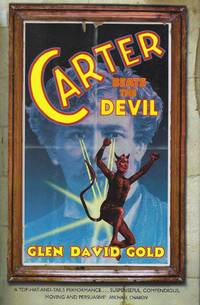
2001ref. 58644London: Sceptre Hodder & Stoughton 2001. First Edition first printing. Signed by Gold on the title page. Thick tall 8vo. gray boards in dust jacket; 563 pages. Very Good would be fine but top of spine is bumped; fine d/j. Sceptre (Hodder & Stoughton) unknown books
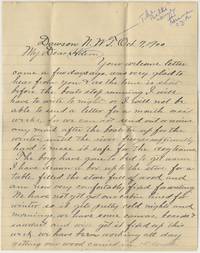
1900ref. List3888Dawson North West Territory sic Yukon Territory 1900. A long 1900 letter from Frank S. Bell in Dawson written shortly before navigation closed for the winter. Bell explains that if he does not write at once he may not be able to send another letter for quite a while: "as the time is short before the boats stop running I will have to write tonight or I will not be able to send a letter for a month or six weeks for we can not send out or receive any mail after the boats tie up for the winter until the river freezes sufficiently hard to make it safe for the dog teams." Bell writes from an unfinished cabin; he and his companions had spent the day carrying in fifteen cords of wood and still needed to prepare the cabin for winter: "The boys have gone to bed to get warm. I have drawn a box up to the stove for a table filled the stove full of wood and am now very comfortably fixed for writing. We have not yet got our cabin lined for winter so it gets pretty cold nights and mornings." He gives a good account of Dawson under Canadian police regulation. Sunday labor required a permit public houses were closed gambling was allowed only if conducted fairly and "sure thing games" were not permitted: "It is against the law here to work on Sunday without getting a permit & if the police catch you at it they take you in the police regulations are very strict almost too much so sometimes but then it makes Dawson a pretty orderly place to all outside appearances. All gambling must be done on the square no sure thing games are permitted." Bell notes that Dawson where "Saloons & all public houses are closed on Sunday" is a "much more orderly town than it would be if it were on the American side." The letter also anticipates further gold rushes in Alaska likely the Fairbanks rush as Bell mentions activity in "Tanana country": "I think there will be a stampede into the Tanana country this winter & next spring; prospectors have been in there this summer and staked some claims but there was no way to get provision in there until the snow comes when they can sled it in with dogs . We may go down in the spring if we make money enough this winter for a grub stake." Bell is also unusually reflective about the psychology of the Klondike. He calls this his "last chase" but immediately admits the pull of the country: "There is a fascination about this Klondike country. People that leave here & go outside only remain away a short time before they want to get back. There is always that ripple of excitement & any day may bring tidings of another rich discovery somewhere. Everyone is here for the one purpose to get rich quick." He closes with practical comments on Dawson travel hospitals trained nurses and his hope to make enough money to enter business in Seattle. A good Dawson letter from the late Klondike period with content on winter travel and mail cabin life Canadian police regulation gambling Sunday laws theaters hospitals Seattle and Skagway travel and coming gold rushes. . unknown books
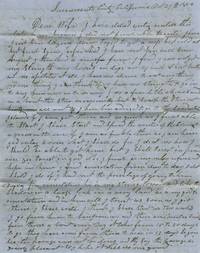
1850ref. BK0017Sacramento City California 1850. Autograph letter signed "Sam'l Locke" to his wife in Belfast Maine. 6 pp. Stampless folded letter with clear circular "SACRAMENTO CITY / CAL." postmark and "40" rate handstamp; manuscript notation recording receipt in Maine on December 19 1850. Light soiling; very good. A bleak California Gold Rush letter written during the 1850 Sacramento cholera epidemic by Samuel Locke a Maine emigrant suffering from prolonged fever and unable to regain his strength. Surrounded by sickness failed mining ventures violent crime and men too poor or ill to return home Locke plans to seek recovery in the Sandwich Islands while relying upon his religious faith for consolation. Locke had been ill since August and was now so weak that ordinary work exhausted him: "My limbs or legs are very weak short breath and no appetite at all. I have no desire to eat anything not one thing I can think of. I have no strength to go into any business or to do any. I do a few little chores round or about the store occasionally but to sweep the store it beats me all out . O how I long to get out of this place. Can't get any strength don't know as I can anywhere but I long to try." Friends advised him to spend the winter in the Sandwich Islands. He expected to travel first to San Francisco and then make the fifteen- to twenty-day passage to Hawaii though he feared that continued illness might leave him unable either to support himself there or return to Maine. He states that he will "trust in providence yes trust in God who I feel is my only refuge". Locke gives a grim account of California's climate and the spread of cholera through Sacramento claiming that the climate in California prevented the sick from recovering their strength as the "air is very light & bad middle of the day very hot and nights very cool." The previous week's report had stated forty dead but "nothing near all the cases were reported" with Locke himself knowing of several unreported cases personally. A local blacksmith died overnight after his companions borrowed Locke's syringe and "We can hardly see a healthy looking individual in the streets." The letter also records the uncertain fortunes of men from Locke's home region scattered through the mines. William Beckett and his partners had spent the summer constructing a mining dam had struck gold on the first day and then immediately "the dam was washed away so they lost all their summer's labor." Other acquaintances had moved to Kelsey's Bar the southern mines or Oregon or were preparing to return east by way of Panama. Some remained convinced that California would reward perseverance while others had "seen enough" after accomplishing nothing. Locke regarded success as largely accidental: "Thousands are here and in the mines who want to get home and cannot-not able to do seamen's duty and no money to pay but they have got to stay in the mines and do the best they can. Some it is true have been lucky. It is all luck. If they happen to hit a good place they do well." News that cholera had entered the mining districts increased his alarm. Locke feared especially for men living in tents as the rainy season approached with poor food and little protection from exposure. Sacramento itself was marked by nightly violence: "There are murders or robberies about every night. One man killed in front of our house a few nights ago. We heard him holler and heard the blows. Next morning he died. His head was dreadfully mangled." Locke closes with an emotional message to his wife and children. His health finances and prospects all appeared uncertain and he repeatedly asked his family and church to pray for him: "Tell the dear Children to be good and if they never see me again when I am gone they will have the satisfaction . of knowing they acted as thy Father requested . Pray for me ask the Church to pray for me indeed I know I have your prayers and you have mine often." A particularly bleak account of the human cost of the California Gold Rush documenting epidemic disease physical collapse failed mining schemes violent crime religious faith and the predicament of emigrants unable to escape California after their health and resources were exhausted. . unknown books
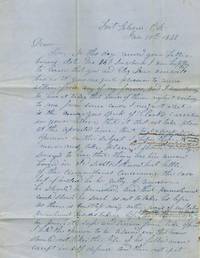
1849ref. BK0028Fort Gibson Cherokee Nation 1849. Autograph letter signed "Benj. Wingate" three pages with integral address leaf to Arba L. Hardy Lexington Scott County Indiana bearing manuscript "Fort Gibson C.N." postmark dated January 8 and manuscript "Paid 10." 7 ¾ x 10 inches. Light toning and edge wear otherwise very good. A substantial letter by Benjamin Wingate Mexican-American War veteran and future namesake of Fort Wingate New Mexico written during his frontier service at Fort Gibson in the Cherokee Nation. Responding to news that the execution of a man named Clark had been delayed Wingate launches into a lengthy and forceful rejection of capital punishment: "You speak of Clark's execution in your letter that it did not take place at the appointed time but to express an opinion on the subject I hope that it never did take place; do not understand me to say that I want him to go unpunished. I should be very sorry to hear that there has been a man hanged in old Scott. I know but little of the circumstances concerning the case but if indeed he be guilty of murder he should be punished and that punishment should be such as to not take his life as there is doubtless many other ways of inflicting punishment besides taking life . I hold the opinion to be a sound one that man should not take the life of his fellow man except in self defense and then not if it could be avoided. I look upon the law of punishing capital offences as being barbarous and savage in the extreme. It is a subject that the attention of the law making or legislating power should be called to act on." Living amid the Indigenous nations of Indian Territory Wingate makes a comparison with the customs around him: "The present law is more barbarous if possible than the laws and customs of the Indians in this part of the country. If a rich Indian kills a poor Indian he can make atonement for the crime by paying a certain sum of money but if one Indian kills another Indian and is not able to pay for him they kill him in return." Fort Gibson established within Cherokee country was one of the principal U.S. military posts in Indian Territory and Wingate's comments come from a young Army officer living within that environment. The comparison is striking precisely because he uses what he understands as Native retaliatory justice as the measure by which to criticize American law. The letter then turns to family gossip and politics. Wingate jokes that the election of Zachary Taylor meant "that the Whigs are as badly whipped as they was when they elected J. Tyler" anticipating that Taylor would "doubtless have to take a trip up salt river if he is not burnt in effigy by the Whigs before that time." More appealing personally was the news then pouring out of California. In January 1849 with the Gold Rush only beginning to transform American migration westward Wingate was already considering abandoning the Army: "I have been thinking very strong for some time of resigning and going to California but I am not off yet nor I don't know that I will get off soon if at all. But whether I should or should not go it is certainly a very great opening for a young man to make a fortune in a short time if there is any confidence to be placed in reports." He remained instead in military service. Wingate had fought in Mexico at Cerro Gordo and subsequently served on the frontier in Oklahoma Texas Utah and New Mexico. He was mortally wounded at the Battle of Valverde during the Civil War; Fort Wingate established in New Mexico later in 1862 was named in his honor. The Filson Historical Society preserves correspondence of Wingate and the allied Hardy family including Arba L. Hardy the recipient here.1 An appealing early Wingate letter combining an extended argument against capital punishment with observations from Indian Territory and the immediate lure of California at the opening of the Gold Rush. 1 "Wingate Hiram 1778-1875 Papers 1833-1914" Filson Historical Society Mss. A W769. . unknown books
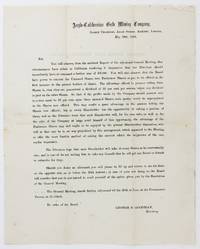
1855ref. 5250London: May 19 1855. About very good. 2pp. on a bifolium. Previously folded. Light wear along top edge; short closed tear at right margin. Scattered faint foxing. With original mailing envelope. This two-page printed circular dated May 19th 1855 from the Anglo-California Gold Mining Company in London offers to convert "unissued shares" of company stock into "preference shares." The first page of the circular reads in part: "You will observe from the enclosed report not present of the adjourned General Meeting that circumstances have arisen in California rendering it imperative that the Director should immediately have at his command a further sum of £6600. You will also observe that the Board have power to convert the unissued shares into preference shares at par to be offered in the first instance to the present holders of shares. The advantage offered to persons taking those Shares is that they are guaranteed a dividend of 25 per cent per annum before any dividend is paid on the other Shares." The second leaf of the bifolium prints a blank form for recipients to purchase said preferred shares. During the first years of the California gold rush approximately 120 companies formed in Great Britain to offer mining shares in the booming goldfields to the public. Many saw these companies as an opportunity to invest in the boom without facing the expense or the danger of traveling to California. Most however ended in failure and investors collectively lost almost £2 million at the time. The Anglo-California Gold Mining Company formed by Luke Williams in March 1849 was one of the first and largest of these British ventures and it sold thousands of ten shilling shares to the public. Williams sent a former Royal Navy Captain Henry Vere Huntley to the Calaveras River in early 1850 to start the operation. When he failed Williams arranged a deal with Fremont's Quartz Rock Mariposa Gold Company to crush and refine their ore and the ore of smaller ventures. To that end the company sent two steam-powered crushing mills to California and when those proved useless to the task the company failed. May 19 unknown books
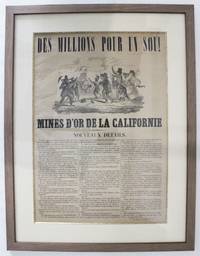
1849ref. 5043Paris: Typ. Schneider Rue d'Erfurth 1 1849. Very good. Broadside approximately 18 x 13 inches. Matted and framed. A pair of short closed tears repaired at lower edge. Even toning and light creasing. Contemporary manuscript annotation under caption title. A wonderful illustrated faux news broadside published in Paris as gold fever coursed through Europe in 1849. The headline promises "nouveaux détails" of the gold mines in California but the text is in fact a humorous description and light-hearted admonishment of the multitudes thoughtlessly giving up their livelihoods for the hardscrabble life of a gold digger in the California wilderness. The first section runs through a litany of types who are abandoning their lives for adventure and advises them not to consider the difficulties of the journey: "En route pour les mines d'or de la Californie! Partez! Il n'est pas néccessaire que vous preniez de lourds baggages : une cassette et une bonne pioche vous suffriont. Ne vous laissez pas décourager par la peur d'une navigation de cinq mois. elle sera peut-être périlleuse. mais le résultat est si consolant : de l'or!. toujours de l'or!. Qu'importent la colique et les fièvres doublées d'un mal de mer brutal. de l'or!. toujours de l'or!. Qu'importe d'être noir ou jaune en mourant du moment qu'on se repose dans un linceul d'or pour l'éternité! Partez!" The remainder of the text somewhat sardonically describes life in California and warns prospective travelers not long for the comforts of home but rather to concentrate on their sought-after riches: "Par example ne vous attendez pas à jouir de toutes les douceurs de la vie. Vous n'y trouverez ni biftecks au beurre d'anchois ni dinde truffées; car les aliments y sont rares. Mais les racines y sont en grande abondance. Vous vivrez un peu à la manière des anachorètes pour un temps. seulement vous déterrerez de l'or. ce qu'ils ne faisaient pas que l'on sache." The illustration which occupies approximately the top third of the broadside depicts men and women from all walks of life carrying pickaxes on their shoulders and racing for a ship about to depart. The image carries the printed signature of "B. Netter;" a contemporary manuscript note under the caption identifies the publication date as February 17 1849. The Bibliothèque Nationale de France estimates that as many as 40000 French men and women made their way to California between 1848 and 1856. The present broadside is an excellent document of California gold fever in France and the pervasive interest in gold rush news in Europe during the mid-19th century. Rare we locate just four copies at Berkeley UCSD California Historical Society and the BNF. Typ. Schneider, Rue d'Erfurth, 1 unknown books
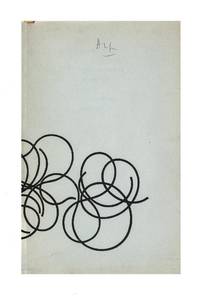
ref. 11558Three full-page engraved illus. by Taeuber-Arp. 28 pp. 8vo orig. printed thick paper wrappers & orig. pictorial dust-jacket a trifle worn staple-bound. Grasse France: Self-published 1941. A rare poetic artist's book jointly created by the Arps from a numbered edition of 150 ours is no. 72; according to WorldCat there are only five copies in North America. The couple had escaped Paris before it fell to the Nazis and headed to Vichy France in the South. One of their stops was with Peggy Guggenheim in Veyrier. They settled in Grasse in 1941 and established an artist colony with colleagues Sonia Delaunay and Alberto Magnelli. Taeuber-Arp's short time in Grasse was very formative and she experimented with overlaid undulating lines that created appealing geometric compositions which are featured here in the book paired with her husband's poetry and on the dust-jacket. Within a year Arp 1886-1966 and Taeuber-Arp 1889-1943 decamped for Zürich following Grasse's takeover by the Germans. In near fine condition; edgewear to the dust-jacket. From the edition of 150 the first ten copies were accompanied by a drawing. W. Summerfield "The Modern Artists Who Made the Most of Isolation" April 2020 Apollo Magazine website accessed 10 September 2026. We recommend visiting the Sophie Taeuber-Arp Research Project website's illustrated database to see the artist's work from this period. unknown books
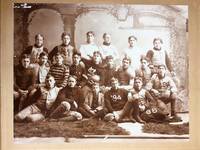
1894ref. 33580np 1894. Framed photograph 10-1/2" x 13-1/2" matted behind glass within ornate gilt frame 21" x 23-1/2". Light wear to surface of photograph. Matting has some spotting. Some wear to frame and small chip to frame edge. Else Very Good. The squad is dressed in various football uniforms including laced smock vests over long sleeved shirts caped sweaters and knee length pants. Each of the two young men wearing military style uniforms has a small billed cap. unknown books
1882ref. 28712California 1882. 62 2 blank pp. Original printed wrappers lightly dustsoiled stitched. Rubberstamp at head of front wrap: "McKee J. Filed Feb. 25 1882." Text clean. Very Good. offered with NO. 8072. . POINTS AND AUTHORITIES FOR APPELLANT. MASTICK BELCHER & MASTICK ATTORNEYS FOR APPELLANT. 41 1 blank pp. Original printed wrappers lightly dustsoiled stitched. Ink correction on front wrapper changing "Appellant" to "Respondent." A few question marks in ink written in margins. Very Good. offered with NO. 8072. . RESPONDENT'S REPLY TO APPELLANT'S BRIEF. ESTEE & BOALT AND RAMON E. WILSON ATTORNEYS FOR RESPONDENT. 23 1 blank pp. Original printed wrappers lightly dustsoiled stitched. Light creasing of a few later leaves. Very Good. offered with NO. 8072. . RESPONDENT'S POINTS AND AUTHORITIES. ESTEE & BOALT AND RAMON E. WILSON ATTORNEYS FOR PLAINTIFF AND RESPONDENT. 42pp. Original printed wrappers lightly dustsoiled stitched. Text clean. Very Good. The complaint charged that the plaintiff and defendant were owners of adjoining gold quartz mines near Plymouth California in Amador County the birthplace of the California Gold Rush; and that Defendant Empire had unlawfully entered Plaintiff Pacific Gold Mining Company's mine and taken ores of the value of $250000. Plaintiff brought suit in the Superior Court of Amador County for compensation. unknown books
1878ref. 28959Boston: Frank Wood Printer 1878. 34pp plus portrait frontis and original tissue guard of John Everitt who "sailed for Valparaiso from New York.to be associated with the General Superintendent at the Mines"; and large Bird's-Eye View 32" x 16" and Topographical Plan of the mines. Original printed wrappers stitched. Wrappers chipped at edges and reinforced at the spine with tape. Some chipping to several blank margins. Good. The Company based in New York issued this Prospectus which includes a detailed report from its Mining Engineer W.A. Holcomb. Flagler its President was a major capitalist during the last half of the 19th century; he formed the National Tube Company and owned one of the predecessors to U.S. Steel. OCLC 1013744777 1- U IL as of November 2020. Frank Wood, Printer unknown books
1872ref. ST17640-G121872-1921. 60 different editions in 61 volumes. Most items in their original publisher's bindings mostly cloth or wrappers and a few in limp suede; one in half morocco. Condition ranging from very good to very fine; many of the cloth items with light shelfwear rubbing to edges mild soiling fraying to head and tail of spine and minor condition issues internally light scattered foxing and browning a handful of items with more noticeable condition issues spine partially lost rubbed joints moderate browning etc. but on the whole an excellent group. Amassed over the course of many years by a passionate collector of the Rubaiyat this is a very substantial and wide-ranging group of 60 works that attest to the work's enduring popularity more than 150 years after Edward FitzGerald introduced it to the West. Son of a wealthy Irish landowner FitzGerald had enough money to pursue a rather desultory literary career as a "genteel gipsy" in Terhune's words before beginning to study languages in middle age. He started his translation of the quatrains "rubáiyát" in Persian attributed to "Umar Khayyam" in 1856; according to DNB about half of FitzGerald's final work paraphrases rather than directly translates portions of the 11th century poem while the rest is original verse inspired by Omar. "The result is generally seen as being in some ways an original English poem one that is much better known than Omar's poem is in Persian." DNB In Jewett's opinion it certainly earned FitzGerald "a prominent place among the immortals of English literature." In 1858 FitzGerald submitted 25 of the "less wicked" verses to "Fraser's Magazine" only to be rejected. He had 250 copies published anonymously at his own expense but had no luck selling them. Admitting defeat he gave 200 copies to Quaritch; these sold so poorly that they were relegated to the penny bin where Potter says they were discovered--and soon celebrated--by Dante Gabriel Rossetti and Algernon Swinburne. Those copies that remained unsold when Quaritch moved to Piccadilly in 1860 were either lost or destroyed but by 1861 Rossetti and his Pre-Raphaelite brethren along with Celtic scholar Whitley Stokes were evangelizing for the work embracing the lush lyrical verse that would move English poetry away from Victorian orthodoxy and convention. According to Day by the end of the 19th century "a copy of the 'Rubaiyat' upon an Oxford table was a symbol of sophistication. Today . . . it remains the most popular single poem of the Victorian era." The present collection is especially strong in illustrated editions with more than 25 artists represented including Edmund Dulac Elihu Vedder Willy Pogany Adelaide Hanscom Gilbert James Edmund J. Sullivan Arthur Szyk René Bull and Abanindro Nath Tagore. Notable text editions in this group include a Third Edition of FitzGerald's translation; a First Published American Edition; and a signed and inscribed copy of Eben Francis Thompson's translation. There is also a small group of fine press printings including examples by the Gregynog Press Thomas Mosher and Elbert Hubbard. There are no duplicated editions in this collection and there are no trade paperbacks. A full list of the collection's contents is available upon request. unknown books