Wilson, Wendell E.; Bobrink, TedMareMagnum

130 Ergebnisse
1984145 pages. Index. Footnotes. Reference list. Supplemental 1984 price guide laid-in. "Contains nearly 450 illustrations covering every type of candlestick brand-name model, plain to fancy blacksmith models, folding and mechanical models. Also included are many wonderful underground photos from the turn of the century showing mine candlesticks in actual use. Includes a discussion of history, collecting pointers, and guides to cleaning and recognition." - from photocopy of publisher's book list laid-in. Wilson's superbly detailed diagrams exquisitely present these artifacts in their original form. Average wear. Binding intact. Unmarked. A sound copy of this magnificent reference. Book
1976Best.-Nr. SBBIH-EZK45UYX5W3SOxford University Press 1976. paperback. Good. Our good condition books are generally good for reading but not for gifting or collecting. They could have imperfections such as creasing fanning inscriptions margin notes yellowing staining on edge or cover or pages bumps scuffs etc etc sometimes multiple of these. It's a wide category that encompasses anything that isn't almost-new down to anything that is slightly better than poor. We would NOT recommend gifting Good books - these should be considered reading copies. Our books are dispatched from a Yorkshire former cotton mill. We list via barcode/ISBN so please note that the images are stock images and may not be the exact copy you receive furthermore the details about edition and year might not be accurate as many publishers reuse the same ISBN for multiple editions and as we simply scan a barcode or enter an ISBN we do not check the validity of the edition data when listing. If you're looking for an exact edition please don't order at least not without checking with us first although we don't always have time to check. We aim to dispatch prompty the service used will depend on order value and book size. We can ship to most countries see our shipping policies. Payment is via Abe only. Oxford University Press paperback
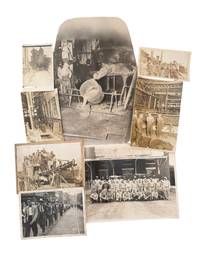
1900Best.-Nr. 235961900. African American coal mining photo archive depicting Black industrial labor from the turn of the century through the postwar era documenting the changing conditions of mine work while revealing the continuity of Black employment in one of America's most dangerous industries. Spanning approximately fifty years from an early albumen photograph made around the turn of the century to silver gelatin photographs of the 1940s and 1950s the group records successive generations of miners whose labor fueled the nation's railroads steel production and wartime industries. By 1900 more than 180000 African Americans worked in mining and related extractive industries particularly across Appalachia and the industrial Midwest where operators frequently recruited Black labor during strikes while maintaining segregated workforces and company towns. Photo archive of 10 photographs including one large albumen print and nine silver gelatin photographs ranging from approximately 3 x 5 to 9 x 14 inches United States circa 1900s through the 1950s. The photographs show Black miners posed beside coal cars loaded with freshly mined coal; mixed Black and white work crews standing before steam powered mining equipment; African American workers operating within large industrial preparation plants beneath towering conveyors and ore bins; foundry and furnace interiors where molten metal is poured from massive ladles; miners gathered for formal group portraits outside industrial buildings; and workers posing beside hoists rail equipment and mechanical machinery. One of the largest photographs records a substantial interracial work crew surrounding a coal car marked with capacity information while another documents a line of African American workers walking through a commercial district following their shift preserving the contrast between industrial labor and urban life. Later photographs depict Black workers operating heavy electrical or mechanical equipment and standing inside modernized industrial facilities illustrating the technological transformation of mining and processing across the first half of the twentieth century. Coal mining became one of the largest employers of African American industrial labor following Reconstruction as southern and Appalachian operators recruited Black workers into mines expanding to meet the demands of railroads steel mills and urban growth. During both World Wars Black miners became indispensable to national coal production even while remaining concentrated in the most dangerous occupations and frequently excluded from skilled positions promotion and union representation until the growing influence of the United Mine Workers and the broader civil rights movement began to erode formal segregation after the Second World War. The chronological span of this archive distinguishes it from single period mining groups by tracing the persistence of Black industrial labor from the era of mule drawn coal cars and steam powered extraction to mechanized postwar production. Light surface wear scattered creasing and occasional edge chipping; the large albumen print shows moderate age toning. Overall in very good condition. A concentrated visual record of African American labor sustaining the American coal industry across five decades of industrial and social change. unknown
1900Best.-Nr. 235961900. African American coal mining photo archive depicting Black industrial labor from the turn of the century through the postwar era documenting the changing conditions of mine work while revealing the continuity of Black employment in one of America's most dangerous industries. Spanning approximately fifty years from an early albumen photograph made around the turn of the century to silver gelatin photographs of the 1940s and 1950s the group records successive generations of miners whose labor fueled the nation's railroads steel production and wartime industries. By 1900 more than 180000 African Americans worked in mining and related extractive industries particularly across Appalachia and the industrial Midwest where operators frequently recruited Black labor during strikes while maintaining segregated workforces and company towns. Photo archive of 10 photographs including one large albumen print and nine silver gelatin photographs ranging from approximately 3 x 5 to 9 x 14 inches United States circa 1900s through the 1950s. The photographs show Black miners posed beside coal cars loaded with freshly mined coal; mixed Black and white work crews standing before steam powered mining equipment; African American workers operating within large industrial preparation plants beneath towering conveyors and ore bins; foundry and furnace interiors where molten metal is poured from massive ladles; miners gathered for formal group portraits outside industrial buildings; and workers posing beside hoists rail equipment and mechanical machinery. One of the largest photographs records a substantial interracial work crew surrounding a coal car marked with capacity information while another documents a line of African American workers walking through a commercial district following their shift preserving the contrast between industrial labor and urban life. Later photographs depict Black workers operating heavy electrical or mechanical equipment and standing inside modernized industrial facilities illustrating the technological transformation of mining and processing across the first half of the twentieth century. Coal mining became one of the largest employers of African American industrial labor following Reconstruction as southern and Appalachian operators recruited Black workers into mines expanding to meet the demands of railroads steel mills and urban growth. During both World Wars Black miners became indispensable to national coal production even while remaining concentrated in the most dangerous occupations and frequently excluded from skilled positions promotion and union representation until the growing influence of the United Mine Workers and the broader civil rights movement began to erode formal segregation after the Second World War. The chronological span of this archive distinguishes it from single period mining groups by tracing the persistence of Black industrial labor from the era of mule drawn coal cars and steam powered extraction to mechanized postwar production. Light surface wear scattered creasing and occasional edge chipping; the large albumen print shows moderate age toning. Overall in very good condition. A concentrated visual record of African American labor sustaining the American coal industry across five decades of industrial and social change. unknown books
1899Best.-Nr. 4090VA: ORIGINAL ARCHIVE 1899. ORIGINAL MANUSCRIPT ARCHIVE. 14 X 4 1/4 Inch Binder. Very good ledger marked "The Property of C. Kirwan 1st Officer S.S. Chatham" leather spine over marbled paper boards with approximately 150 pages with roughly 66 used. The front end page and page one are detached. Memorandum of Work and Repairs on S.S. Chatham 1899; Cubic feet of boats and life rafts; 8 pages repairs 1899-1901; passenger list 50 pages with approximately 1500 passenger names in manuscript. Savannah to Baltimore and return. ACCOMPANIED BY: merchant & Miners Transportation Co. Pass 1918 - issued to Capt. C. Kirwan Master - Signed by "J.H. Jenkins" president 2 1/2 X 4 Inches. WITH: The Baltimore & Ohio Railroad Company Identification Card No. 599. C. Kirwan Captain. S.S. Suwannee M & M T Co. Signed "C. Kirwan & M.J. Doyle." 2 1/2X 4 1/6 Inches. WITH: Chesapeake & Ohio Railway Company. 1918 Pass. Captain Clarence Kerwin S.S. Howard. On all piers at N News VA. Issued to and Signed by L.G. Spengler 2 1/2 X 4 Inches. WITH: U.S. Customs Service. Port of Baltimore. Pass to Piers Waterfront or Vessel. Issued to and Signed by Surveyor of Customs. Issued to: Clarence Kirwan. With Photograph attached. 3 X 5 Inches. WITH: Phila. Balto. & Wash. R.R. Co. Baltimore Division - P.R.R. 1917 Permit Bearer to Pass Guards at Canto Piers and Elevator. Sgined: "L.C. Frederick." 2 1/2 X 3 13/16 Inches. WITH: United States Department of Commerce Steamboat Inspection Service. License to Master of Steam and Motor Vessels. Issued to Clarence Kirwan Baltimore Md. 1933. Signed. Printed and manuscript. Includes: Atlantic Coast and Gulf of Mexico and waters surrounding the West Indies First class pilot on Chesapeake Bay and tributaries & c. 8 X 10 5/16 Inches. . Engraved form with embellishments including vignette of steamship. WITH: TLS. 1915. Merchants and Miners Transportation Co. To Kirwan congratulations for rescuing the crew of the ill fated Steamship Colorado. WITH: TLS. 1916. Department of Commerce. Steamboat Inspection Service Jacksonville Florida. To Kirwan Steamer Suwannee. Charges of damge to reaft and vessel on the St. John's River. WITH: 13 TLS. 3 ALS 2 TL 8 pieces: Names of wharfs and other docking points Bell Rock Three Trees Sandy Pt. Gloucester Pt.; etc. WITH: Photograph. Ship Suwannee 6 1/2 X 8 1/2 Inches. - Monunted on stiff board. Some foxing. Edge of board chipped. WITH: Photograph. Ship "T.P.A." Convention Savannah Ga. may 17 1902 3 7/8 X 5 1/2 Inche mounted on stiff board - Some foxing. Wilson Photo 14. WITH: Photograph. Ship "T.P.A." Convention Savannah Ga. May 17 1905 4 5/8 X 6 1/2 Inches. - Mounted on stiff board. Lightly soiled. Wilson Photo 15. WITH: Photograph.Ship. Wreck of M. & M.T. Co. SS "Chatham" Mouth of St. John's River FLa. 3/20/10. A very nice archive overall. ORIGINAL ARCHIVE unknown