753 risultati
rif. DADAX1350037834New unknown
rif. 55903Harrisburg: Lane S. Hart 1881. . Black cloth spine designed and lettered in gilt. Marbled page edges. Engraved pictorial title page and six folding maps and plates. Upper front cover a bit marked some wear and a white mark on the spine a clean very good copy in general. Small name stamp on end paper and title page. The final 180 pages and the folding plates all relate to coal mining in Pennsylvania. Plates illustrate coke ovens a coal washing machine and a columnar section from a shaft; the others are detailed maps of coal mines. Harrisburg: Lane S. Hart, 1881. hardcover
rif. DADAX0738593060New unknown
rif. DADAX1439876347New unknown
rif. DADAX3829604688New unknown
rif. SONG0860102637Used: Good unknown
rif. SONG0873353633Used: Good unknown
rif. DADAX0415493285New unknown
rif. DADAX0531149714New unknown
rif. DADAX0252061195New unknown
rif. DADAX0271037695New unknown
rif. DADAX0553214330New unknown
rif. DADAX0754636739New unknown
rif. DADAX0801499003New unknown
rif. DADAX0807827657New unknown
rif. DADAX0813116104New unknown
rif. DADAX0873710827New unknown
rif. SONG1572334959Used: Good unknown
rif. SONG3540647260Used: Good unknown
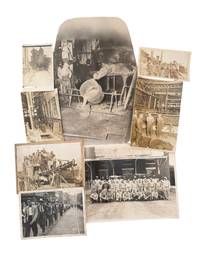
1900rif. 235961900. African American coal mining photo archive depicting Black industrial labor from the turn of the century through the postwar era documenting the changing conditions of mine work while revealing the continuity of Black employment in one of America's most dangerous industries. Spanning approximately fifty years from an early albumen photograph made around the turn of the century to silver gelatin photographs of the 1940s and 1950s the group records successive generations of miners whose labor fueled the nation's railroads steel production and wartime industries. By 1900 more than 180000 African Americans worked in mining and related extractive industries particularly across Appalachia and the industrial Midwest where operators frequently recruited Black labor during strikes while maintaining segregated workforces and company towns. Photo archive of 10 photographs including one large albumen print and nine silver gelatin photographs ranging from approximately 3 x 5 to 9 x 14 inches United States circa 1900s through the 1950s. The photographs show Black miners posed beside coal cars loaded with freshly mined coal; mixed Black and white work crews standing before steam powered mining equipment; African American workers operating within large industrial preparation plants beneath towering conveyors and ore bins; foundry and furnace interiors where molten metal is poured from massive ladles; miners gathered for formal group portraits outside industrial buildings; and workers posing beside hoists rail equipment and mechanical machinery. One of the largest photographs records a substantial interracial work crew surrounding a coal car marked with capacity information while another documents a line of African American workers walking through a commercial district following their shift preserving the contrast between industrial labor and urban life. Later photographs depict Black workers operating heavy electrical or mechanical equipment and standing inside modernized industrial facilities illustrating the technological transformation of mining and processing across the first half of the twentieth century. Coal mining became one of the largest employers of African American industrial labor following Reconstruction as southern and Appalachian operators recruited Black workers into mines expanding to meet the demands of railroads steel mills and urban growth. During both World Wars Black miners became indispensable to national coal production even while remaining concentrated in the most dangerous occupations and frequently excluded from skilled positions promotion and union representation until the growing influence of the United Mine Workers and the broader civil rights movement began to erode formal segregation after the Second World War. The chronological span of this archive distinguishes it from single period mining groups by tracing the persistence of Black industrial labor from the era of mule drawn coal cars and steam powered extraction to mechanized postwar production. Light surface wear scattered creasing and occasional edge chipping; the large albumen print shows moderate age toning. Overall in very good condition. A concentrated visual record of African American labor sustaining the American coal industry across five decades of industrial and social change. unknown
rif. DADAX1240527470Bibliogov 2010-12-31. paperback. New. 7.44x0.20x9.69. Buy with confidence. Excellent Customer Service & Return policy. Bibliogov paperback
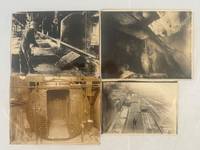
1920rif. 224531920. Appalachian Coal Mining Operations; Photo Archive of Five Original Gelatin Silver Photographs ca. 1910s-1920s. Five gelatin silver prints measuring betweenand 8" x 9" to 5" x 7" Striking vernacular archive documenting early 20th-century industrial coal mining practices through four large-format photographs capturing both above- and below-ground operations. One image depicts a smelter or foundry worker tending molten material in a heavy industrial setting possibly related to coke production-a critical process in transforming coal into fuel for steelmaking. The worker wears a protective leather apron gloves and a helmet with face shield using a long paddle to manipulate the material. Industrial piping and steel platforms surround the workspace and a massive crucible or furnace stands nearby. Another photograph captures a dramatic underground mining scene. Two Black miners in heavy coats and headlamps drill upward into the cavern ceiling using a compressed-air jackleg drill. The low uneven rock walls exposed support timbers and scattered equipment emphasize the confined and hazardous conditions of subsurface labor. Coal dust visibly clings to their garments hinting at prolonged exposure to harsh particulate-laden environments common in deep mining shafts. One image centers on a large cylindrical steel structure-likely a pressure chamber or industrial boiler associated with coal-fired power or steam generation. The riveted iron shell and complex pipe fittings suggest this is part of an early steam engine or autoclave. Tools such as a coal shovel and rake lean nearby alongside a coal scuttle reinforcing the manual labor involved in operating and maintaining this machinery. Another photograph presents an expansive view of a coal rail yard in winter. A lone worker walks atop a line of boxcars amid snow-covered tracks while coal smoke rises from the buildings along the rail lines. The archive offer a vivid and textural record of early 20th-century coal mining labor and its related technologies. At this time coal mining was one of the deadliest occupations in the United States; between 1900 and 1930 tens of thousands of miners died in accidents or from occupational illnesses such as black lung disease. Light edge wear and surface handling; one image with silvering and faint creases. Well-preserved examples of early 20th-century industrial photography documenting coal mining infrastructure labor and technology during a critical era of American energy and industrial history. Minor edge wear and light creasing; one image with mild silvering; overall very good. unknown
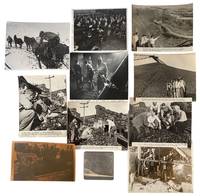
1943rif. 213381943. Anthracite coal mining photographs circa 1930s to 1950s document the daily labor conditions environmental hazards and union activity within Pennsylvania's coal industry and provide direct visual evidence of industrial work in one of the most significant energy sectors in the United States. Created during a period when anthracite coal production remained central to regional economies and national energy supply these images record both above ground and subterranean labor processes as well as the collective organization of workers responding to unsafe conditions and economic pressures. The archive supports research into labor history industrial practices occupational health and union movements in mid twentieth century America. Eleven silver gelatin photographs ranging approximately from 4 x 6 inches to 8 x 10 inches some with typed captions attached depicting mining activity and related scenes in Pennsylvania's anthracite region. Images include miners traversing severe winter conditions while guiding donkeys hauling coal carts through heavy snow; workers shoveling coal in enclosed dimly lit environments with airborne dust visible in the light captioned "Coal shoveling brigade or how I spent my summer vacation"; and inspection scenes in which workers examine coal samples prior to distribution. Additional photographs show large scale coal piles dwarfing individual laborers emphasizing production scale. One press photograph dated January 15 1943 documents a mass meeting in Hazleton Pennsylvania where union leader Andrew Yevchak addresses striking miners with caption noting that 17000 workers were ordered to return to work following the gathering. Produced during a period marked by ongoing labor disputes mechanization and heightened awareness of occupational hazards such as coal dust inhalation these photographs capture both the physical demands of mining and the organizational structures that shaped worker response. The inclusion of the 1943 Hazleton meeting situates the archive within broader wartime labor tensions when coal production was critical to the war effort and strikes carried national implications. Together the images provide a grounded record of industrial labor environmental exposure and collective action within the anthracite coal industry preserving visual documentation of work that was both economically essential and physically hazardous. Minor edge wear and light creasing to a few prints with strong image clarity overall; condition very good. unknown
1964rif. ZB1320919Pitman 1964. 205 pp. hardcover ex library else text and binding clean and tight. - If you are reading this this item is actually physically in our stock and ready for shipment once ordered. We are not bookjackers. Buyer is responsible for any additional duties taxes or fees required by recipient's country. Pitman hardcover
rif. DADAX3659210617New unknown