Spilman, Hendrik - 1721 Amsterdam - Haarlem 1784Antiquariat.de
644 resultados
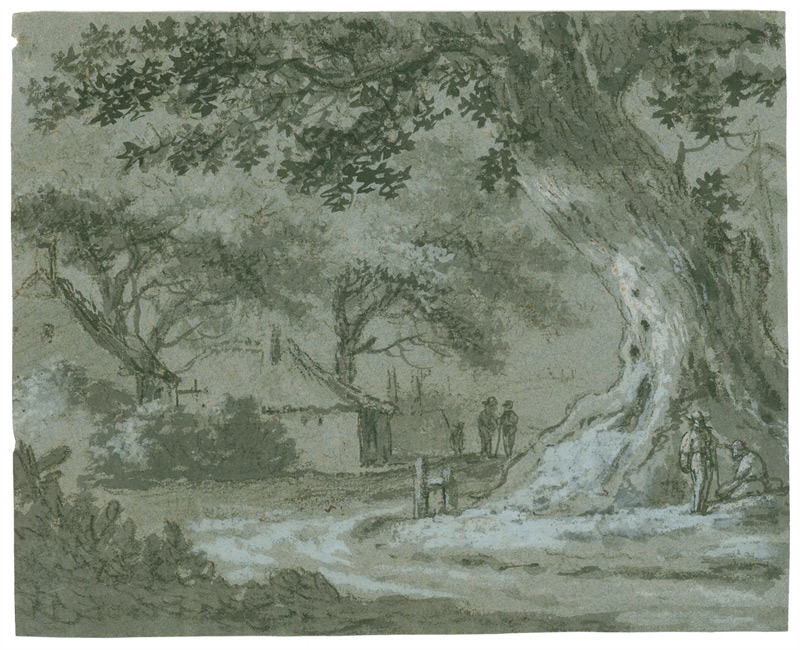
ref. 055-Do.J. Pinsel in Grau, Kohle und Deckweiß, auf blauem Bütten, verso bezeichnet ?Spillmann.? Sowie ein Monogramm. 15,3:18,9 cm. - Verso: Baumlandschaft, Skizze. Kohle. Verso an drei Ecken Reste einer alten Verklebung, im linken Rand oben winzige Fehlstelle. Provenienz: Sammlung der Stadt Leipzig, Lugt 2731.
1775ref. 0043981775 Avignon et Lyon, Regnault, 1775. In-8 (131 X 200) basane fauve marbrée,dos cinq nerfs ornés d'une roulette dorée, caissons ornés de fers d'angles et fleuron dorés, deux larges chainettes dorées en queue, pièce de titre maroquin grenat, coiffes et coupes ornées de roulettes dorées, tranches rouges (reliure de l'époque) ; (4) ff. de faux-titre, titre, avis au lecteur, errata, avis au relieur et additions, XXIV-543 pages, IX planches. La page de titre a été consolidée dans la marge latérale gauche. Ex-libris manuscrit à la plume sur le titre.
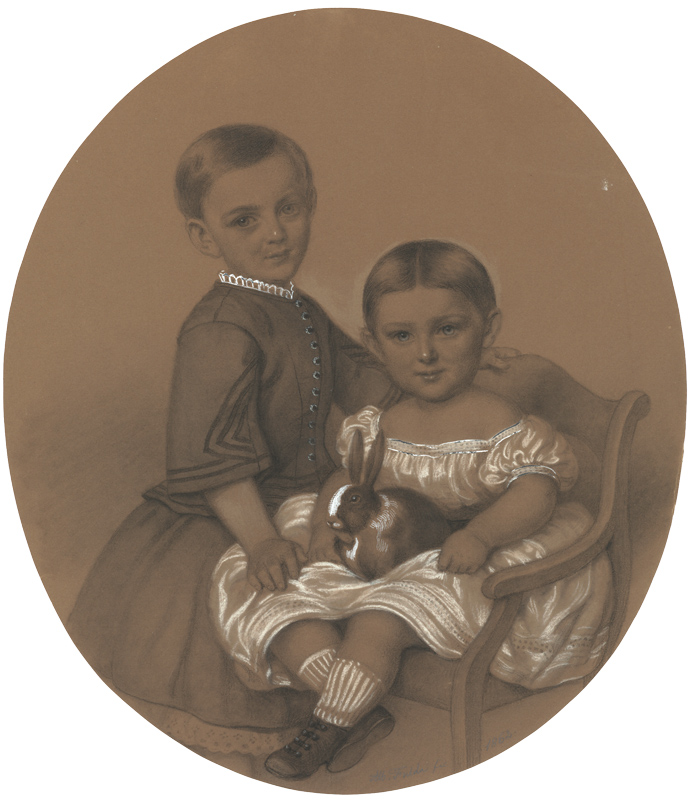
ref. 471-Eo.J. Kohle, Pinsel in Grau, weiße Kreide und Deckweiß sowie etwas Aquarell, auf braunem Papier, unten signiert und datiert ?Alb. Fulda fec. 1862.?. Darstellung im Hochoval. 33,7:29 cm.
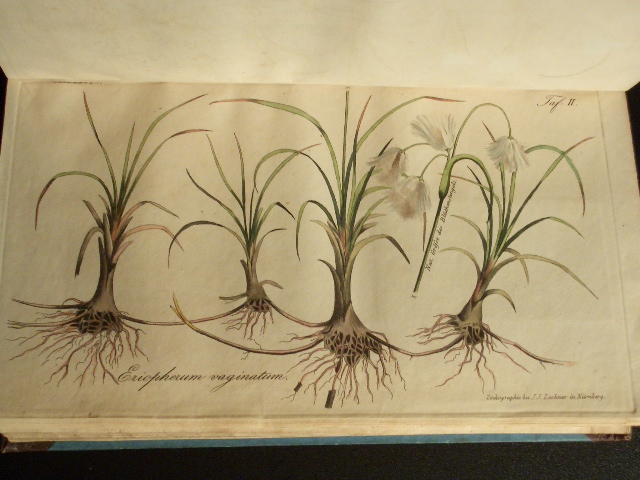
1840ref. 2652Mit 6 (5 kolor., 1 gefalt.) zinkographierten Tafeln u. 1 gefalt. Tabelle. Nürnberg, Riegel u. Wießner, 1840. 8vo. (21,7 x 12,7 cm). IV, 116 S. Halbleinwandband d. Zt. mit goldgeprägtem Rückentitel.
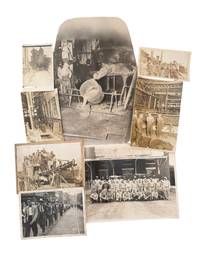
1943ref. 213381943. Anthracite coal mining photographs circa 1930s to 1950s document the daily labor conditions environmental hazards and union activity within Pennsylvania's coal industry and provide direct visual evidence of industrial work in one of the most significant energy sectors in the United States. Created during a period when anthracite coal production remained central to regional economies and national energy supply these images record both above ground and subterranean labor processes as well as the collective organization of workers responding to unsafe conditions and economic pressures. The archive supports research into labor history industrial practices occupational health and union movements in mid twentieth century America. Eleven silver gelatin photographs ranging approximately from 4 x 6 inches to 8 x 10 inches some with typed captions attached depicting mining activity and related scenes in Pennsylvania's anthracite region. Images include miners traversing severe winter conditions while guiding donkeys hauling coal carts through heavy snow; workers shoveling coal in enclosed dimly lit environments with airborne dust visible in the light captioned "Coal shoveling brigade or how I spent my summer vacation"; and inspection scenes in which workers examine coal samples prior to distribution. Additional photographs show large scale coal piles dwarfing individual laborers emphasizing production scale. One press photograph dated January 15 1943 documents a mass meeting in Hazleton Pennsylvania where union leader Andrew Yevchak addresses striking miners with caption noting that 17000 workers were ordered to return to work following the gathering. Produced during a period marked by ongoing labor disputes mechanization and heightened awareness of occupational hazards such as coal dust inhalation these photographs capture both the physical demands of mining and the organizational structures that shaped worker response. The inclusion of the 1943 Hazleton meeting situates the archive within broader wartime labor tensions when coal production was critical to the war effort and strikes carried national implications. Together the images provide a grounded record of industrial labor environmental exposure and collective action within the anthracite coal industry preserving visual documentation of work that was both economically essential and physically hazardous. Minor edge wear and light creasing to a few prints with strong image clarity overall; condition very good. unknown
1967ref. 2080202105300521Nittetsu Mining Co. Ltd. Kaho Mining Office 1967. Soft Cover. Fine. Volume: 1 Nittetsu Mining Co., Ltd. Kaho Mining Office paperback
1899Pages 562-676. Features: In the Khalifa's Clutches - part IV of Charles Neufeld's ordeal; Impressions of Pekin - sensational photo-illustrated article; Two Loves Affairs, and How They Ended - Colonel Hervey Tryon falls headlong into a deep well of garbag; The Hook-Swinging Ceremony as I Saw It - Rev. Joshua Knowles describes a South Indian pagan festival in which devotees have hook placed in their flesh before they are swung into the air at the end of long poles - with photos; A Desperate Plight - travails of Captain H.V. Barclay in the arid Australian interior; The Great Grottos of Han - photo-illustrated article on the marvelous caverns near Han-sur-Lesse in the Belgian Ardennes; Held by An Octopus - Herbert Perkins explains how he was grabbed from out of the water; Shooting the Reversible Falls - photo-illustrated story from St. John, New Brunswick involving Xavier Francis and Louis Mitchell; Life in an Italian Village (near Pallanza); On the War-Path with Redskins - a retaliatory raid of natives is recounted by J.W. Schultz, a Rocky Mountain guide who was married to a Blackfoot and lived among them in Montana; The Fantastic Carnival at Pangau in a remote part of the Austrian Tyrol; Twenty-Seven Days in an Open Boat - Part II - the castaways are finally rescued, but in ghastly condition; Naia, The Witch of Rochefort-en-Terre, in Brittany - photo-illustrated article; Through Italy in Bedouin Dress - photo-illustrated account; One Thousand Miles on Mule-Back - Part I of this photo-illustrated article of the amazing journey of Mabel Penniman from New York to London via Central and South Amerca; The Bogus "Rush" at Coolgardie - photo-illustrated of a fake gold rush in Australia as told by John Marshalll of Kalgoorlie; Photo of women coal heavers in Dresden; Full-page photo from Kelsey Creek, California showing a river of fish three feet deep - with no water!; Photo of Tunisian camel fight; and more. Average external wear and soiling. Few pencil markings. Binding intact. A sound vintage copy of this excellent issue. Book
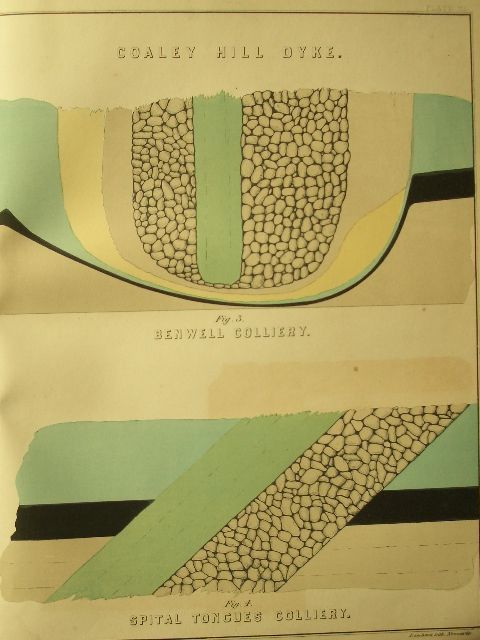
1855ref. 4840Mit 61 (57 doppelblattgr.) farbig lithogr. Tafeln. Newcastle upon Tyne, M. & M. W. Lambert, 1855. 4to. (30,9 x 24,5 cm). 3 Bl., 204 S. Halblederband d. Zt. mit goldgeprägtem Rückentitel.
1900ref. 235961900. African American coal mining photo archive depicting Black industrial labor from the turn of the century through the postwar era documenting the changing conditions of mine work while revealing the continuity of Black employment in one of America's most dangerous industries. Spanning approximately fifty years from an early albumen photograph made around the turn of the century to silver gelatin photographs of the 1940s and 1950s the group records successive generations of miners whose labor fueled the nation's railroads steel production and wartime industries. By 1900 more than 180000 African Americans worked in mining and related extractive industries particularly across Appalachia and the industrial Midwest where operators frequently recruited Black labor during strikes while maintaining segregated workforces and company towns. Photo archive of 10 photographs including one large albumen print and nine silver gelatin photographs ranging from approximately 3 x 5 to 9 x 14 inches United States circa 1900s through the 1950s. The photographs show Black miners posed beside coal cars loaded with freshly mined coal; mixed Black and white work crews standing before steam powered mining equipment; African American workers operating within large industrial preparation plants beneath towering conveyors and ore bins; foundry and furnace interiors where molten metal is poured from massive ladles; miners gathered for formal group portraits outside industrial buildings; and workers posing beside hoists rail equipment and mechanical machinery. One of the largest photographs records a substantial interracial work crew surrounding a coal car marked with capacity information while another documents a line of African American workers walking through a commercial district following their shift preserving the contrast between industrial labor and urban life. Later photographs depict Black workers operating heavy electrical or mechanical equipment and standing inside modernized industrial facilities illustrating the technological transformation of mining and processing across the first half of the twentieth century. Coal mining became one of the largest employers of African American industrial labor following Reconstruction as southern and Appalachian operators recruited Black workers into mines expanding to meet the demands of railroads steel mills and urban growth. During both World Wars Black miners became indispensable to national coal production even while remaining concentrated in the most dangerous occupations and frequently excluded from skilled positions promotion and union representation until the growing influence of the United Mine Workers and the broader civil rights movement began to erode formal segregation after the Second World War. The chronological span of this archive distinguishes it from single period mining groups by tracing the persistence of Black industrial labor from the era of mule drawn coal cars and steam powered extraction to mechanized postwar production. Light surface wear scattered creasing and occasional edge chipping; the large albumen print shows moderate age toning. Overall in very good condition. A concentrated visual record of African American labor sustaining the American coal industry across five decades of industrial and social change. unknown
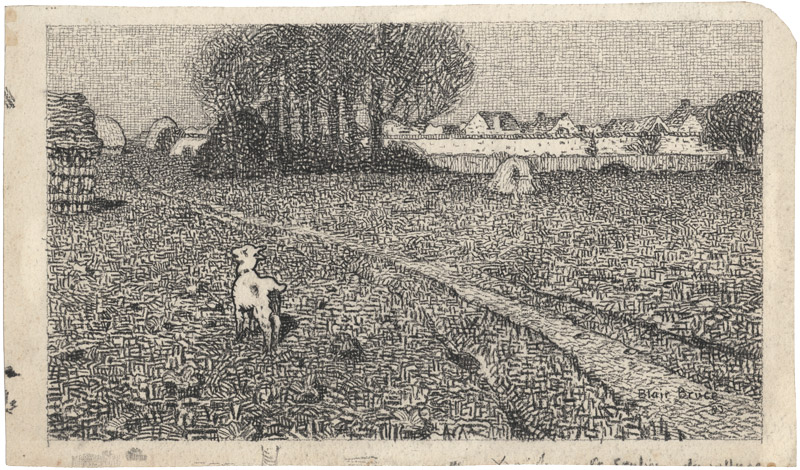
ref. 359-Eo.J. Kohle auf grob genarbtem Papier, mit einzelner Umfassungslinie, rechts signiert und datiert ?Blair Bruce 83?. 20,8 x 36,2 cm.
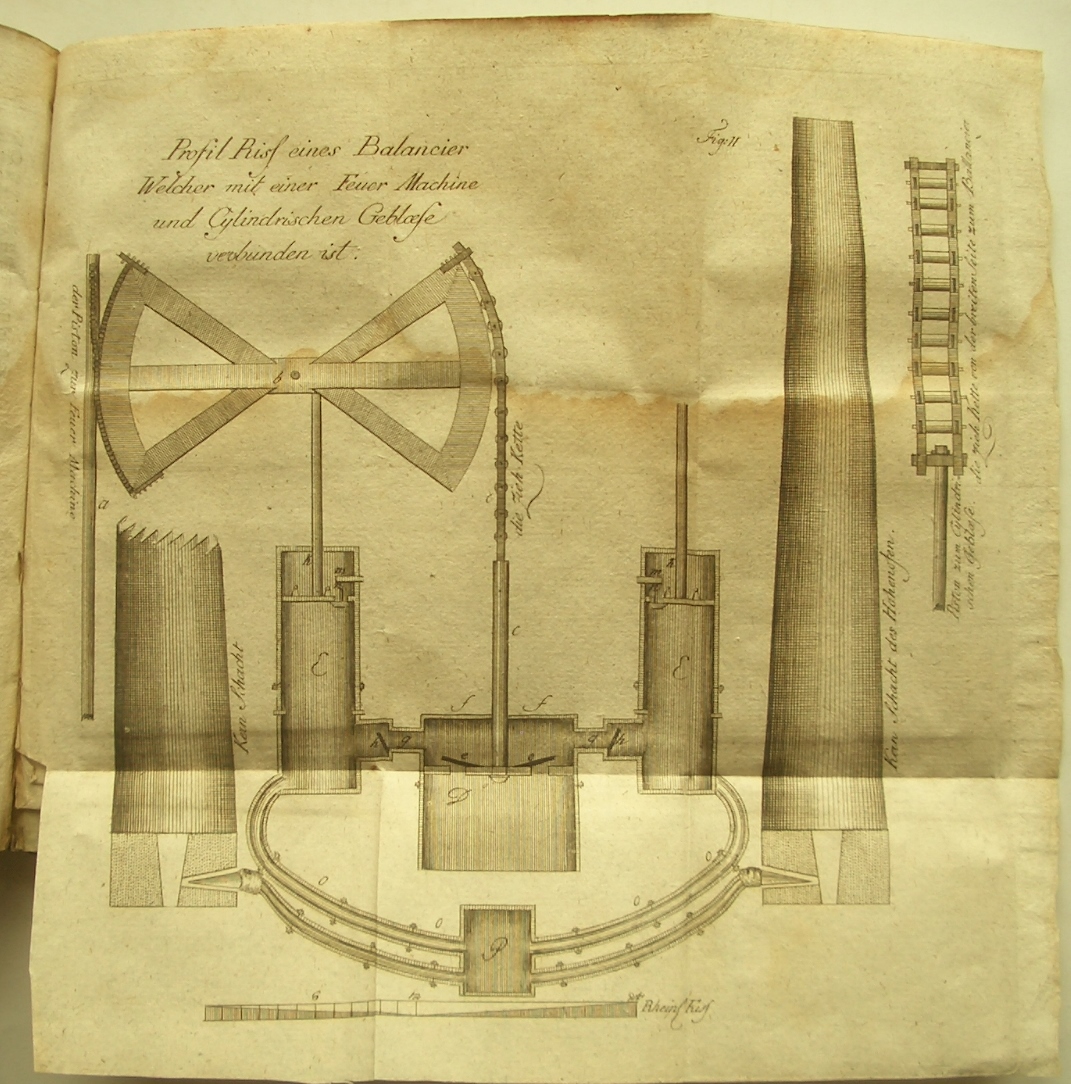
1792ref. 6102Mit 28 Abb. auf 5 gefalt. gest. Tafeln. Berlin, A. Mylius, 1789. 8vo. (19,4 x 11,4 cm). 77 S. - Vorgebunden: Rösler, Karl Anton. Bergmännische Nachrichten über die Gebirge und den Bergbau zu Joachimsthal. Nebst einigen Nachrichten über die Gebirge auf der Straße von Prag bis Joachimsthal, hrsg. von Johann Mayer. Dresden, Walther, 1792. 8vo. 126 S. Marmorierter Pappband d. Zt. mit zwei farbigen Rückenschildern. [6 Warenabbildungen]
1856ref. 43932Keokuk: J. B. Howell & Company Printers 1856. 1856. IOWA. First edition. 8vo. Original salmon-colored printed wrappers 11 pp. A rare promotional and description of a town that was never built in the Des Moines Valley in Iowa. To be located on the Des Moines River thirty miles above Keokuk Lawrence was meant to be to Keokuk "what Lowell and Lawrence of Massachusetts are to Boston and it is believed that the natural advantages are such as to relieve this design of even the appearance of extravagance." The text points out the need for manufacturing companies to take advantage of the growing population of the region as well as natural resources such as coal and other mineral deposits. The water power provided by the river would be harnessed by a proposed dam and lock system. The final page contains a description of the Lawrence Coal Company leading some to conclude they may have been behind the publication of this pamphlet. The town was apparently never built. Moffit located only the copy at the Library of Congress and the American Imprints Inventory for Iowa added only the Boston Public Library and Wisconsin Historical Society. OCLC adds Yale Grinnell College the Newberry Library and the DeGolyer Library. Americana Exchange lists a copy offered by Goodspeeds in 1966 and none before or since. Rare. An old water stain to the lower one third of the covers and each page else a very good copy of a rare document. J. B. Howell & Company, Printers, 1856. unknown
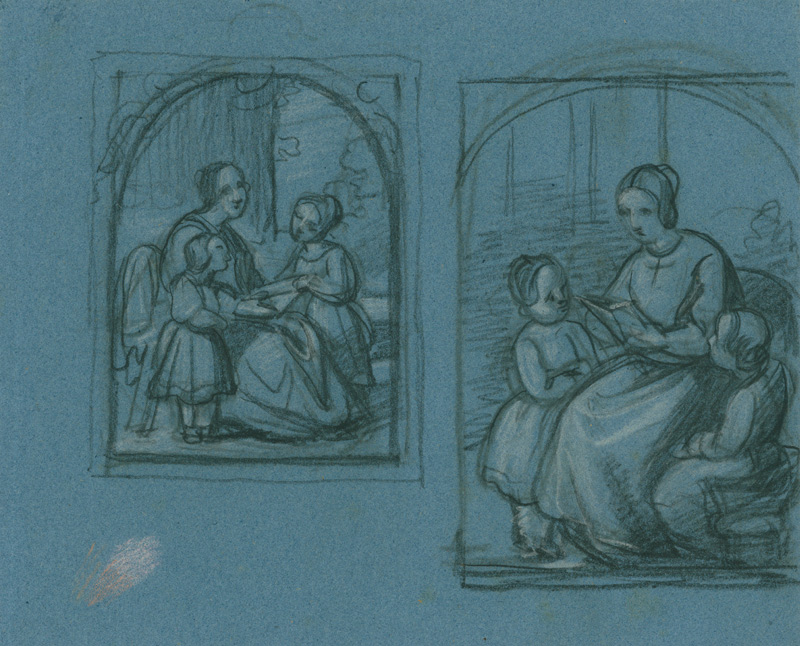
ref. 003-Wo.J. Schwarze Kreide, weiß gehöht, je mit schwarzer Kreide gerahmt (rechts beschnitten) und oben rundbogig abgeschlossen, links unten Proben farbiger Kreide, auf blauem Velin. 15,4:18,9 cm. In den Rändern ungleich beschnitten, Knickfalte am linken Rand, verso am Oberrand Reste alter Verklebung. Provenienz: Sammlung H. Geller, Dresden.
1907243 pages. Tissue-protected frontis photo portrait of author. Attractively decorated maroon cloth-covered front board. All seventeen black and white plates present. "An autobiographical account of the author's first twelve years (from 1862 to September 1873) as a Methodist missionary among the Cowichan and Nanaimo Indians." - Lowther. Average wear. Prior owner's name in light pencil upon front free endpaper. Faint moisture marks to fore-edge of first twenty-five pages. Hinges starting. Issued without dust jacket. LOWTHER 1556, RICKS p.75, AMTMANN 3499, SMITH 2134, WALLACE p.52, MATTHEWS 295, TOD & CORDINGLEY p.85. Book
1961ref. 2091502135500449Not Available 1961. Soft Cover. Fine. Number of pages: 46 horizontal pages Size: 25 x 35 cm Not Available paperback
1900ref. WRCAM55644N.p. most likely in Illinois or Indiana: Chicago Architectural Photographing Company 1900. Seventeen large-format black-and-white photographs backed on linen each 7 1/2 x 9 1/2 inches. Oblong quarto. Contemporary black textured cloth. Minor soiling and wear. Images a bit dust-soiled. Very good. An impactful and informative collection of photographs documenting the process of coal extraction from inside a shaft mine to the loading of the railway cars. The album includes exterior views of a few different mines with prominent headframes; the first image is titled "Mine No. 3" in the negative. This image also features an early model automobile from the 1930s at the latest. Five images capture the underground workings of the miners as they chisel away large blocks of coal from a wall in a pinched claustrophobic setting. One image shows a hallway with a wood plank floor and walls supported with corrugated metal. This is followed by six views of the ground-level processing area where the coal is dumped onto large conveyor belts that load it into railway cars. In one of the exterior views a Rock Island railway car is prominent loaded with coal likely on its way to Chicago. The last two images - close-up top-down views of rail cars overflowing with coal - are from the New York Central Railroad. Six of the images carry a photographer's stamp reading "Chicago Architectural Photographing Company" in the negative. The company was founded in 1885 to meet the demand for architectural photography in the bustling post-fire building boom in Chicago. Their prolific photographic services were employed by architectural legends such as Adler & Sullivan Frank Lloyd Wright and Burnham & Root. In addition to a vast array of buildings and construction projects the company photographed various mining companies in Illinois and Indiana though it seems to have been a small part of their business. A handful of institutional collections include scattered holdings of mining photographs taken by the company but nothing as comprehensive as the present album. An important album of coal mining photographs that capture the cramped working conditions inside the mine in a visceral manner along with a peak into the process of how past generations transported one of the most important energy sources of the time. Chicago Architectural Photographing Company hardcover books
ref. Z1-C-087-01231National Coal Board. Used - Acceptable. Used - Acceptable. Spinal cover is in poor condition most of it is ripped. Ships from UK in 48 hours or less usually same day. Your purchase helps support Sri Lankan Children's Charity 'The Rainbow Centre'. Ex-library with wear and barcode page may have been removed. 100% money back guarantee. We are a world class secondhand bookstore based in Hertfordshire United Kingdom and specialize in high quality textbooks across an enormous variety of subjects. We aim to provide a vast range of textbooks rare and collectible books at a great price. Our donations to The Rainbow Centre have helped provide an education and a safe haven to hundreds of children who live in appalling conditions. We provide a 100% money back guarantee and are dedicated to providing our customers with the highest standards of service in the bookselling industry. National Coal Board unknown
1915ref. 13004Kanawha County WV 1915. 52 leaves with fifty-eight full-page professionally-produced sepia-toned photographs each with printed marginal captions and six informational plates most backed on linen. Oblong octavo 5 x 8 inches. Contemporary brown cloth. Front cover lacking spine and rear cover chipped and worn. Internally clean. Good condition. A fascinating annotated photograph album produced by the Lackawanna Coal and Lumber Company a prominent early-20th-century mining and lumber company highlighting its officers and the variety of its operations in West Virginia. The album begins with portraits of four of the company's mustachioed owners -- W.L. Connell J.K. Griffith Thomas J. Foster and William Griffith. The preponderance of the album focuses on the company's activities in various locations showing their Power House Coal Yard company store and more at Mucklow; large barge shipments on the Kanawha River; exterior scenes and shots inside the mine at Upper Town; the Power House and Tipple at Greenbrier; various scenes at Paint Creek including the Power House Tipple interior mine scenes including "Miners Working in Paint Creek Mine Using Electrically Driven Undercutter" their mule barn and Hickory Camp Power House; scenes around their Nuckolls Greencastle and Grosstown properties; scenes inside their Foster Mine; and much more. Other photographs picture the various trees the company turns into lumber some scenes around the company's Crescent Property lumber yard and a couple of their new sawmill. The album concludes with a half dozen informational plates akin to modern-day Power Point slides providing financial information on coal land values coal consumption coal production and details on anthracite and bituminous productivity. The album presents like a type of promotional brochure couching the Lackawanna Coal and Lumber Company as a vital and dynamic enterprise with numerous opportunities for potential investors. We could locate nothing like it in OCLC; the Hagley Museum holds a 1914 album of fifty photographs comprising an inspection trip to the Lackawanna Coal and Lumber Company and Highland Lumber Company which would be an excellent companion piece to the present album. unknown
1812ref. 16509Paris, Firmin-Didot, 1812 ; 4 tomes in-4 ; veau raciné, dos lisse à faux nerfs dorés, fleurons et croisillons dorés, pièces de titre et de tomaison vert-empire, roulette d’encadrement des plats, double filet doré sur les coupes, tranches marbrées (reliure de l’époque) ; I : (4), XIX, (1), 304 pp., 23 planches dépliantes (22 + 18bis) ; II : XXIII, (1) errata, 371 pp., pl. 24 à 38 ; III: XXVI, (2) errata, 381 pp., pl. 39 à 58 et 47bis ; IV : XXII, (2) errata, 411 pp., pl. 59 à 65, soit en tout 66 planches gravées dépliantes (la planche 23 n’existe pas et il y a les planches 18bis et 47bis).