4.433 resultados
1990ref. 13699U.S. Department of the Interior 1990. Large hardback in very good condition. Part 2 only. 3rd edition. 3rd Edition. Hardcover. Very Good. U.S. Department of the Interior Hardcover
2001ref. 20035West Conshohocken Pennsylvania U.S.A.: Astm Intl 2001. hardback in fine conditon. Hardcover. Fine. West Conshohocken, Pennsylvania, U.S.A.: Astm Intl Hardcover
ref. 185166212X.Ghardcover. Good. Access codes and supplements are not guaranteed with used items. May be an ex-library book. hardcover
1999ref. 79745Washington DC: United States Department of Energy Office of Fissile Materials Disposition 1999. Presumed First Edition First printing. Wraps. Good. This consists of a Summary volume 4 vii. 1 54 2 pages; Volume I - Part A various paginations approximately 400 pages; Volume I - Part B various paginations approximately 570 pages; Volume II various paginations approximately 500 pages rear cover and several back pages creased; Volume III - Part A Comment Response Document various paginations approximately 1150 pages; and Volume III - Part B Comment Response Document various paginations approximately 800 pages. Tables. Figures. Footnotes Acronyms. maps. Name written in ink on two covers. Covers have some wear and soiling. Minor edge soiling. Interior appears unmarked. The SPD EIS analyzes a nominal 50 metric tons t 55 tons of surplus weapons-usable plutonium which is primarily in the form of pits the core element of a nuclear weapon's fission component metals and oxides. In addition to 38.2 t 42 tons of weapons-grade plutonium already declared by the President as excess to national security needs the material analyzed includes weapons-grade plutonium that may be declared surplus in the future as well as weapons-usable reactor-grade plutonium that is surplus to the programmatic and national defense needs of DOE. In December 1996 the U.S. Department of Energy DOE published the Storage and Disposition of Weapons-Usable Fissile Materials Final Programmatic Environmental Impact Statement Storage and Disposition PEIS DOE 1996a. That PEIS analyzes the potential environmental consequences of alternative strategies for the long-term storage of weapons-usable plutonium and highly enriched uranium HEU and the disposition of weapons-usable plutonium that has been or may be declared surplus to national security needs. The Record of Decision ROD for the Storage and Disposition PEIS issued on January 14 1997 DOE 1997a outlines DOE's decision to pursue an approach to plutonium disposition that would make surplus weapons-usable plutonium inaccessible and unattractive for weapons use. DOE's disposition strategy consistent with the Preferred Alternative analyzed in the Storage and Disposition PEIS allows for both the immobilization of someand potentially all of the surplus plutonium and use of some of the surplus plutonium as mixed oxide MOX fuel in existing domestic commercial reactors. The disposition of surplus plutonium would also involve disposal of both the immobilized plutonium and the MOX fuel as spent nuclear fuel in a potential geologic repository. The purpose of and need for the proposed action is to reduce the threat of nuclear weapons proliferation worldwide by conducting disposition of surplus plutonium in the United States in an environmentally safe and timely manner. Comprehensive disposition actions are needed to ensure that surplus plutonium is converted to proliferation-resistant forms. In September 1993 President Clinton issued the Nonproliferation and Export Control Policy White House 1993 in response to the growing threat of nuclear proliferation. Further in January 1994 President Clinton and Russia's President Yeltsin issued a Joint Statement Between the United States and Russia on Non-Proliferation of Weapons of Mass Destruction and the Means of Their Delivery White House 1994. In accordance with these policies the focus of the U.S. nonproliferation efforts includes ensuring the safe secure long-term storage and disposition of surplus weapons-usable fissile plutonium. Following publication of the SPD Draft EIS the United States and Russia signed a 5-year agreement to provide the scientific and technical basis for decisions concerning how surplus plutonium will be managed and a statement of principles with the intention of removing approximately 50 t 55 tons of plutonium from each country's Surplus Plutonium Disposition Final Environmental Impact Statement A MOX lead assembly is a prototype reactor fuel assembly that contains MOX fuel. Should the No Action Alternative be chosen the ROD pursuant to the SPD EIS would also address the movement of the remaining surplus nonpit plutonium from RFETS in support of its planned closure in 2006. The disposition activities proposed in the SPD EIS will enhance U.S. credibility and flexibility in negotiations on bilateral and multilateral reductions of surplus weapons-usable fissile materials inventories. United States Department of Energy, Office of Fissile Materials Disposition paperback
1985ref. 75754Tokyo: Iwanami Shoten 1985. First English Language Edition stated First printing stated. Trade paperback. Very good. xx 218 pages. Illustrations. Chronology. Selected Bibliography. Index. Format is approximately 5.25 inches by 8 inches. Cover has slight wear and soiling. Bookmark or receipt with information in English and Japanese present and the ISBN number also present. Foreword by the Mayors of Hiroshima and Nagasaki. This book was published simultaneously in Japanese and English editions. By August 1945 the Allies' Manhattan Project had produced two types of atomic bombs and the 509th Composite Group of the United States Army Air Forces USAAF was equipped with the specialized Silverplate version of the Boeing B-29 Superfortress that could deliver them from Tinian in the Mariana Islands. Orders for atomic bombs to be used on four Japanese cities were issued on July 25. On August 6 one of its B-29s dropped a Little Boy uranium gun-type bomb on Hiroshima. Three days later on August 9 a Fat Man plutonium implosion-type bomb was dropped by another B-29 on Nagasaki. The bombs immediately devastated their targets. Roughly half of the deaths in each city occurred on the first day. Large numbers of people continued to die from the effects of burns radiation sickness and other injuries compounded by illness and malnutrition for many months afterward. Hiroshima had a sizable military garrison. Iwanami Shoten paperback
2008ref. 73705Princeton NJ: Princeton University Program on Science and Global Security The International Panel on Fissile Materials 2008. Presumed First Edition First printing. Wraps. Very good. 4 138 2 pages. Maps. illustrations. Endnotes. Cover has slight wear and soiling. The Panel produces an annual Global Fissile Material Report which summarizes new information on fissile material stocks and production worldwide as well as periodic research reports. Almost two decades since the end of the Cold War the United States and Russia still retain stockpiles of about 10000 nuclear weapons each and have committed only to reduce to about half that number by the end of 2012 when the Strategic Offensive Reductions Treaty comes into force. There are now seven other nuclear weapon states including North Korea which carried out its first nuclear test on October 9 2006. Their arsenals range from a few simple warheads to several hundred high-yield thermonuclear weapons. There are growing concerns about a loss of momentum in the nuclear disarmament process additional states acquiring nuclear weapons and the possibility of nuclear terrorism. Fissile materials ordinarily plutonium and highly enriched uranium HEU are the essential ingredients in all nuclear weapons. Securing consolidating and eliminating fissile material stocks worldwide are the common imperatives in the overlapping efforts to eliminate nuclear weapons in the countries where they exist halt their spread to still more countries and prevent terrorists from obtaining them. This is the third report by International Panel on Fissile Materials on the global situation with regard to efforts to secure and eliminate fissile materials. A Fissile Material Cutoff Treaty FMCT would ban the production of fissile material - in practice highly-enriched uranium and separated plutonium - for weapons. It has been supported by strong majorities in the United Nations. After it comes into force newly produced fissile materials could only be produced under international - most likely International Atomic Energy Agency - monitoring. Many non-weapon states argue that the treaty should also place under safeguards pre-existing stocks of fissile material in civilian use or declared excess for weapons so as to make nuclear-weapons reductions irreversible. This paper discusses the scope of the FMCT the ability to detect clandestine production and verification challenges in the nuclear-weapons states. The International Panel on Fissile Materials IPFM was founded in January 2006 and is an independent group of arms-control and nonproliferation experts from both nuclear weapon and non-nuclear weapon states. The mission of the IPFM is to analyze the technical basis for practical and achievable policy initiatives to secure consolidate and reduce stockpiles of highly enriched uranium and plutonium. These fissile materials are the key ingredients in nuclear weapons and their control is critical to nuclear weapons disarmament to halting the proliferation of nuclear weapons and to ensuring that terrorists do not acquire nuclear weapons. Both military and civilian stocks of fissile materials have to be addressed. The nuclear-weapon states still have enough fissile materials in their weapon stockpiles for tens of thousands of nuclear weapons. On the civilian side enough plutonium has been separated to make a similarly large number of weapons. Highly enriched uranium is used in civilian reactor fuel in more than one hundred locations. The total amount used for this purpose is sufficient to make about one thousand Hiroshima-type bombs a design well within the potential capabilities of terrorist groups. The Panel has been co-chaired since 2015 by Professor Alexander Glaser and Dr. Zia Mian of Princeton University and Professor Tatsujiro Suzuki of Nagasaki University Japan. Previously it was co-chaired by Professor Jose Goldemberg of the University of Sao Paolo Brazil 2006-2007 Dr. R. Rajaraman 2007-2014 Professor Emeritus of Jawaharlal Nehru University New Delhi India and Professor Frank von Hippel of Princeton University 2006-2014. Its members include nuclear experts from seventeen countries: Brazil Canada China France Germany India Iran Japan Mexico Norway Pakistan South Korea Russia South Africa Sweden the United Kingdom and the United States. This group of countries includes seven nuclear-weapon states and ten non-weapon states. IPFM research and reports are shared with international organizations national governments and nongovernmental groups. It has full panel meetings twice a year at capitals around the world in addition to specialist workshops. These meetings and workshops are often in conjunction with international conferences at which IPFM panels and experts make presentations. Princeton University's Program on Science and Global Security provides administrative and research support for the IPFM. Princeton University, Program on Science and Global Security, The International Panel on Fissile Materials paperback
2008ref. 73704Princeton NJ: Princeton University Program on Science and Global Security The International Panel on Fissile Materials 2008. Presumed First Edition First printing. Wraps. Very good. 4 83 1 pages. Maps. Endnotes. Cover has slight wear and soiling. The Panel produces an annual Global Fissile Material Report which summarizes new information on fissile material stocks and production worldwide as well as periodic research reports. Almost two decades since the end of the Cold War the United States and Russia still retain stockpiles of about 10000 nuclear weapons each and have committed only to reduce to about half that number by the end of 2012 when the Strategic Offensive Reductions Treaty comes into force. There are now seven other nuclear weapon states including North Korea which carried out its first nuclear test on October 9 2006. Their arsenals range from a few simple warheads to several hundred high-yield thermonuclear weapons. There are growing concerns about a loss of momentum in the nuclear disarmament process additional states acquiring nuclear weapons and the possibility of nuclear terrorism. Fissile materials ordinarily plutonium and highly enriched uranium HEU are the essential ingredients in all nuclear weapons. Securing consolidating and eliminating fissile material stocks worldwide are the common imperatives in the overlapping efforts to eliminate nuclear weapons in the countries where they exist halt their spread to still more countries and prevent terrorists from obtaining them. This is the third report by International Panel on Fissile Materials on the global situation with regard to efforts to secure and eliminate fissile materials. A Fissile Material Cutoff Treaty FMCT would ban the production of fissile material - in practice highly-enriched uranium and separated plutonium - for weapons. It has been supported by strong majorities in the United Nations. After it comes into force newly produced fissile materials could only be produced under international - most likely International Atomic Energy Agency - monitoring. Many non-weapon states argue that the treaty should also place under safeguards pre-existing stocks of fissile material in civilian use or declared excess for weapons so as to make nuclear-weapons reductions irreversible. This paper discusses the scope of the FMCT the ability to detect clandestine production and verification challenges in the nuclear-weapons states. The International Panel on Fissile Materials IPFM was founded in January 2006 and is an independent group of arms-control and nonproliferation experts from both nuclear weapon and non-nuclear weapon states. The mission of the IPFM is to analyze the technical basis for practical and achievable policy initiatives to secure consolidate and reduce stockpiles of highly enriched uranium and plutonium. These fissile materials are the key ingredients in nuclear weapons and their control is critical to nuclear weapons disarmament to halting the proliferation of nuclear weapons and to ensuring that terrorists do not acquire nuclear weapons. Both military and civilian stocks of fissile materials have to be addressed. The nuclear-weapon states still have enough fissile materials in their weapon stockpiles for tens of thousands of nuclear weapons. On the civilian side enough plutonium has been separated to make a similarly large number of weapons. Highly enriched uranium is used in civilian reactor fuel in more than one hundred locations. The total amount used for this purpose is sufficient to make about one thousand Hiroshima-type bombs a design well within the potential capabilities of terrorist groups. The Panel has been co-chaired since 2015 by Professor Alexander Glaser and Dr. Zia Mian of Princeton University and Professor Tatsujiro Suzuki of Nagasaki University Japan. Previously it was co-chaired by Professor Jose Goldemberg of the University of Sao Paolo Brazil 2006-2007 Dr. R. Rajaraman 2007-2014 Professor Emeritus of Jawaharlal Nehru University New Delhi India and Professor Frank von Hippel of Princeton University 2006-2014. Its members include nuclear experts from seventeen countries: Brazil Canada China France Germany India Iran Japan Mexico Norway Pakistan South Korea Russia South Africa Sweden the United Kingdom and the United States. This group of countries includes seven nuclear-weapon states and ten non-weapon states. IPFM research and reports are shared with international organizations national governments and nongovernmental groups. It has full panel meetings twice a year at capitals around the world in addition to specialist workshops. These meetings and workshops are often in conjunction with international conferences at which IPFM panels and experts make presentations. Princeton University's Program on Science and Global Security provides administrative and research support for the IPFM. Princeton University, Program on Science and Global Security, The International Panel on Fissile Materials paperback
2007ref. 73703Princeton NJ: Princeton University Program on Science and Global Security The International Panel on Fissile Materials 2007. Presumed First Edition First printing. Wraps. Very good. 6 164 2 pages. Maps. Illustrations some with color. Appendix. Endnotes. Glossary. Cover has slight wear and soiling. The Panel produces an annual Global Fissile Material Report which summarizes new information on fissile material stocks and production worldwide as well as periodic research reports. Almost two decades since the end of the Cold War the United States and Russia still retain stockpiles of about 10000 nuclear weapons each and have committed only to reduce to about half that number by the end of 2012 when the Strategic Offensive Reductions Treaty comes into force. There are now seven other nuclear weapon states including North Korea which carried out its first nuclear test on October 9 2006. Their arsenals range from a few simple warheads to several hundred high-yield thermonuclear weapons. There are growing concerns about a loss of momentum in the nuclear disarmament process additional states acquiring nuclear weapons and the possibility of nuclear terrorism. Fissile materials ordinarily plutonium and highly enriched uranium HEU are the essential ingredients in all nuclear weapons. Securing consolidating and eliminating fissile material stocks worldwide are the common imperatives in the overlapping efforts to eliminate nuclear weapons in the countries where they exist halt their spread to still more countries and prevent terrorists from obtaining them. This is the second report by International Panel on Fissile Materials on the global situation with regard to efforts to secure and eliminate fissile materials. The International Panel on Fissile Materials IPFM was founded in January 2006 and is an independent group of arms-control and nonproliferation experts from both nuclear weapon and non-nuclear weapon states. The mission of the IPFM is to analyze the technical basis for practical and achievable policy initiatives to secure consolidate and reduce stockpiles of highly enriched uranium and plutonium. These fissile materials are the key ingredients in nuclear weapons and their control is critical to nuclear weapons disarmament to halting the proliferation of nuclear weapons and to ensuring that terrorists do not acquire nuclear weapons. Both military and civilian stocks of fissile materials have to be addressed. The nuclear-weapon states still have enough fissile materials in their weapon stockpiles for tens of thousands of nuclear weapons. On the civilian side enough plutonium has been separated to make a similarly large number of weapons. Highly enriched uranium is used in civilian reactor fuel in more than one hundred locations. The total amount used for this purpose is sufficient to make about one thousand Hiroshima-type bombs a design well within the potential capabilities of terrorist groups. The Panel has been co-chaired since 2015 by Professor Alexander Glaser and Dr. Zia Mian of Princeton University and Professor Tatsujiro Suzuki of Nagasaki University Japan. Previously it was co-chaired by Professor Jose Goldemberg of the University of Sao Paolo Brazil 2006-2007 Dr. R. Rajaraman 2007-2014 Professor Emeritus of Jawaharlal Nehru University New Delhi India and Professor Frank von Hippel of Princeton University 2006-2014. Its members include nuclear experts from seventeen countries: Brazil Canada China France Germany India Iran Japan Mexico Norway Pakistan South Korea Russia South Africa Sweden the United Kingdom and the United States. This group of countries includes seven nuclear-weapon states and ten non-weapon states. IPFM research and reports are shared with international organizations national governments and nongovernmental groups. It has full panel meetings twice a year at capitals around the world in addition to specialist workshops. These meetings and workshops are often in conjunction with international conferences at which IPFM panels and experts make presentations. Princeton University's Program on Science and Global Security provides administrative and research support for the IPFM. Princeton University, Program on Science and Global Security, The International Panel on Fissile Materials paperback
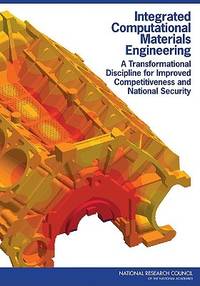
2008ref. 64977Washington DC: The National Academies Press 2008. Presumed first edition/first printing. Trade paperback. Very good. No dust jacket as issued. xiii 137 p. Illustrations color. Integrated computational materials engineering ICME is an emerging discipline that can accelerate materials development and unify design and manufacturing. Developing ICME is a grand challenge that could provide significant economic benefit. To help develop a strategy for development of this new technology area DOE and DoD asked the NRC to explore its benefits and promises including the benefits of a comprehensive ICME capability; to establish a strategy for development and maintenance of an ICME infrastructure and to make recommendations about how best to meet these opportunities. This book provides a vision for ICME a review of case studies and lessons learned an analysis of technological barriers and an evaluation of ways to overcome cultural and organizational challenges to develop the discipline. The National Academies Press paperback
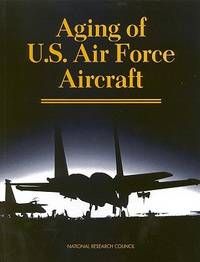
1997ref. 67196Washington DC: National Academies Press 1997. Presumed first edition/first printing. Trade paperback. Good. Corners of several pages creased. Cover has some wear and soiling. xii 112 p. Acronyms. Illustrations. Tables. Figures. Diagrams. References author listing continues: "on Aging of U.S. Air Force Aircraft". Publicaiton NMAB-488-2. Many of the aircrafts that form the backbone of the US Air Force operational fleet are 25 years old or older. A few of these will be replaced with new aircrafts but many are expected to remain in service an additional 25 years or more. This book provides a strategy to address the technical needs and priorities associated with the Air Force's aging airframe structures. It includes a detailed summary of the structural status of the aging force identification of key technical issues recommendations for near-term engineering and management actions and prioritized near-term and long-term research recommendations. National Academies Press paperback
1993ref. 57836Washington DC: U. S. Department of Energy 1993. Wraps. Very good. No dust jacket as issued. Cover has minor wear and soiling. xi 152 p. Includes index. Publication References. DOE/ER-0581P. This report contains a listing of research underway in FY 1992 together with a convenient index to the Division's programs. Recent publications from Division-sponsored panel meetins and workshops are listed. U. S. Department of Energy paperback
2006ref. 001475Toronto ON: Warwick Publishing 2006. Paperback. New. New; "Inspiration and practical approaches for creating a comfortable cost-efficient and attractive residence. Rattenbury explains Wright's concepts in simple terms and takes potential homebuilders through the steps of choosing a site hiring an architect working with contractors selecting materials dealing with building regulations and over-seeing construction. Warwick Publishing paperback
1983ref. 0008673Abbeville Press Incorporated 1983. First edition. Hardcover. Fine/fine. 4to 228 pages cloth Extensive study of Pomodoro's works and sculptures. Inscribed by Pomodoro at Chicago in 2002. With 212 illustrations of which 24 are in full color. Abbeville Press, Incorporated hardcover
1979ref. 299496Technomic 1979 Hardback in fine condition. volume 7 only. Hardcover. Fine. Technomic hardcover
1985ref. 08145Washington D.C.: National Academy Press 1985. First Edition. Paperback. Fair/No dust jacket. This is an ex-library book with stamps stickers and a cardholder. Sticker removal pealed off a small portion of top layer of the front cover near bottom left corner. The binding is tight. The pages are clean and unmarked. Electronic delivery tracking will be issued free of charge. National Academy Press paperback
1973ref. TOB224-60369-A-4.61Philadelphia PA: American Society for Testing and Materials. Good with no dust jacket. 1973. 1st Edition Unstated; No Printing Stated. Hardcover. 284 pages; Ex-Library copy with usual identifiers. B&W illustrations. Charts. Graphs. Light rubbing on the covers. Minor yellowing on pages. Good condition otherwise. No other noteworthy defects. No markings on text pages. ; - Your satisfaction is our priority. We offer free returns and respond promptly to all inquiries. Your item will be carefully cushioned in bubble wrap and securely boxed. All orders ship on the same or next business day. Buy with confidence. . American Society for Testing and Materials hardcover
1979ref. TOB224-60370-A-4.61Philadelphia PA: American Society for Testing and Materials. Good with no dust jacket. 1979. 1st Edition Unstated; No Printing Stated. Hardcover. 199 pages; Ex-Library copy with usual identifiers. Graphs. Light rubbing on the covers. Light yellowing on pages. Good condition otherwise. No other noteworthy defects. No markings on text pages. ; - Your satisfaction is our priority. We offer free returns and respond promptly to all inquiries. Your item will be carefully cushioned in bubble wrap and securely boxed. All orders ship on the same or next business day. Buy with confidence. . American Society for Testing and Materials hardcover
1972ref. TOB223-58259-A-2.35Philadelphia PA: American Society for Testing and Materials European Office. Very Good with no dust jacket. 1972. 1st Edition Unstated; No Printing Stated. Hardcover. 191 pages; minor rubbing on front cover. Very slightly cocked spine. Very Good condition otherwise. No other noteworthy defects. No markings. ; - Your satisfaction is our priority. We offer free returns and respond promptly to all inquiries. Your item will be carefully cushioned in bubble wrap and securely boxed. All orders ship on the same or next business day. Buy with confidence. . American Society for Testing and Materials, European Office hardcover
1973ref. TOB223-58330-A-2.35Philadelphia PA: American Society for Testing and Materials. Good with no dust jacket. 1973. 1st Edition Unstated; No Printing Stated. Hardcover. 801 pages; B&W illustrations. Graphs. Minor to light foxing on the exterior edges of textblock. Previous owner's name on front free endpaper. Light fading and some foxing speckles on spine. Good condition otherwise. No other noteworthy defects. No markings on text pages. ; - Your satisfaction is our priority. We offer free returns and respond promptly to all inquiries. Your item will be carefully cushioned in bubble wrap and securely boxed. All orders ship on the same or next business day. Buy with confidence. . American Society for Testing and Materials hardcover
1967ref. TOB223-58340-A-2.35Philadelphia PA: American Society for Testing and Materials. Good with no dust jacket. 1967. 1st Edition Unstated; No Printing Stated. Hardcover. 542 pages; B&W illustrations. Graphs. Previous owner's name on front free endpaper and on the exterior edges of textblock. Light foxing on the top exterior edge of textblock. Some speckles on the fore-edge and covers/spine. Slightly cocked spine. Light rubbing and discoloration on the covers. Good condition otherwise. No other noteworthy defects. No markings on text pages. ; - Your satisfaction is our priority. We offer free returns and respond promptly to all inquiries. Your item will be carefully cushioned in bubble wrap and securely boxed. All orders ship on the same or next business day. Buy with confidence. . American Society for Testing and Materials hardcover
1983ref. TOB223-58335-A-2.35Philadelphia PA: American Society for Testing and Materials. Good with no dust jacket. 1983. 1st Edition Unstated; No Printing Stated. Hardcover. 531 pages; B&W illustrations. Graphs. Previous owner's name on front free endpaper and on the exterior edges of textblock. Slightly cocked spine. Light rubbing on the covers and spine. Minor foxing on the top exterior edge of textblock. Few speckles on other edges. Good condition otherwise. No other noteworthy defects. No markings on text pages. ; - Your satisfaction is our priority. We offer free returns and respond promptly to all inquiries. Your item will be carefully cushioned in bubble wrap and securely boxed. All orders ship on the same or next business day. Buy with confidence. . American Society for Testing and Materials hardcover
1968ref. TOB223-58430-A-2.35Philadelphia PA: American Society for Testing and Materials. Good with no dust jacket. 1968. 1st Edition Unstated; No Printing Stated. Hardcover. 408 pages; B&W illustrations. Graphs. Charts. Some color illustrations. Previous owner's name on front free endpaper. Light fading on spine. Light rubbing on the covers. Minor foxing on the top exterior edge of textblock. Very Good condition otherwise. No other noteworthy defects. No markings on text pages. ; - Your satisfaction is our priority. We offer free returns and respond promptly to all inquiries. Your item will be carefully cushioned in bubble wrap and securely boxed. All orders ship on the same or next business day. Buy with confidence. . American Society for Testing and Materials hardcover
1972ref. TOB223-58378-A-2.35Philadelphia PA: American Society for Testing and Materials. Good with no dust jacket. 1972. 1st Edition Unstated; No Printing Stated. Hardcover. 182 pages; B&W illustrations. Graphs. Research lab stamps on endpapers. Previous owner's name on front free endpaper. Minor foxing on the top exterior edge of textblock. Light fading and a couple of speckles on spine. Good condition otherwise. No other noteworthy defects. No markings on text pages. ; - Your satisfaction is our priority. We offer free returns and respond promptly to all inquiries. Your item will be carefully cushioned in bubble wrap and securely boxed. All orders ship on the same or next business day. Buy with confidence. . American Society for Testing and Materials hardcover
1979ref. TOB223-58474-A-2.35Philadelphia PA: American Society for Testing and Materials. Good with no dust jacket. 1979. 1st Edition Unstated; No Printing Stated. Hardcover. 792 pages; B&W illustrations graphs. Minor fading on front cover and spine's text. Minor rubbing on the covers. Good condition otherwise. No other noteworthy defects. No markings on text pages. ; - Your satisfaction is our priority. We offer free returns and respond promptly to all inquiries. Your item will be carefully cushioned in bubble wrap and securely boxed. All orders ship on the same or next business day. Buy with confidence. . American Society for Testing and Materials hardcover
1970ref. TOB223-58200-A-2.35Philadelphia PA: American Society for Testing & Materials. Good with no dust jacket. 1970. 1st Edition Unstated; No Printing Stated. Hardcover. 328 pages; B&W illustrations. Charts. Previous owner's name on front free endpaper. Some stains on the covers and spine. Good condition otherwise. No other noteworthy defects. No markings on text pages. ; - Your satisfaction is our priority. We offer free returns and respond promptly to all inquiries. Your item will be carefully cushioned in bubble wrap and securely boxed. All orders ship on the same or next business day. Buy with confidence. . American Society for Testing & Materials hardcover