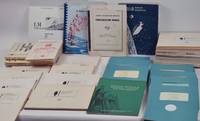
1995réf. ZB393024International Business Machines Corporation 1995. Price HAS BEEN REDUCED by 10% until Monday Nov. 2 weekend sale item volumes 4-5; mostly in original paper wrappers PRICE IS FOR THE LOT. - If you are reading this this item is actually physically in our stock and ready for shipment once ordered. We are not bookjackers. Buyer is responsible for any additional duties taxes or fees required by recipient's country. Photos available upon request. International Business Machines Corporation unknown
réf. 40849New York: n.p. 1970. Very good plus. Archive of the Crucible Furniture Corporation's product photographs internal documents and marketing materials: a treasury of American furniture design. Weinstock's Crucible Corporation supplied seating to many iconic locations including the 5th Avenue Revlon Salon the Kennedy Airport and San Francisco's Fairmount Hotel among numerous other public buildings. As a supplier to architectural institutional and commercial interior designers for over 50 years Crucible was a significant contributor to the 'look' of the public-facing 20th century: not only showpieces like the aforementioned lobbies and lounges but the everyday stools chairs and tables of of theaters classrooms and restaurants; the shapes one sees and touches every day that form the greater shape of contemporary life. Born in Poland in 1924 Weinstock was most active in the 1940s through the 1970s and by the later decades of his career was one of the last furniture designers and manufacturers remaining in New York City. This archive includes original product photographs magnificently alone or staged on plush carpeting set off by marble busts; sales brochures design specs advertising materials clippings from industry publications among them: Furniture Production Magazine's tech report on secret developments in Rigid Foam; an article on the special requirements of psychiatric ward design with photo credits to Crucible alongside Herman Miller and Knoll; and advertisements featuring Weinstock or other Crucible personnel and products. A curious inclusion is one small notebook of design sketches followed by handwritten notes: various puns quotations and aphorisms possibly intended for advertising use along with a series of apparently original observations on city scenes and the passers-by who sooner or later would sit in a Crucible chair e.g. "She wore her martyrdom & her goodness like jewelry woman on a bus"; "To the world he contributed nothing but demands & complaints". A fascinating collection from a firm whose craftsmanship and conception of public space helped form the essential experience of waiting in comfort or anticipation in liminal spaces; from gleaming white hotel lobby barrel chairs like cushioned bathtubs to the vast connected rows of lecture hall seating to the imperceptibly nervous-making lines of airport lounges: a smooth silhouette with a core of iron in the bustling heart of the city and the century. 12'' x 9'' folders. Three original smooth white printed folders with CRUCIBLE printed to exterior; versos matte red. 1 contains: Several dozen items including a stapled catalogue of public area multiple seating; hand-annotated design specs and full folded blueprints for a signature Crucible table; news articles and clippings from design industry publications; double-page advertisement for Republic Steel's Merchant Pig Iron featuring Weinstock. 2 contains: Four leaves of chair design sketches on various company stationery; advertising mock-ups and logo design; small notebook of design sketches followed by handwritten notes; 16-page catalogue; 48 page catalogue unbound but with three-hole punches to left side; additional loose pages of catalogue photography and specs. 3 contains: 42 original 8'' x 10'' glossy black and white photographs; 16 smaller original photographs of assorted sizes one in color; and 7 additional 8'' x 10'' photographs with printed specs and Crucible logo apparently intended for catalogue use. Photographer and/or designer names stamped on versos of some photos; pen or colored pencil notations on rectos and versos of several photos. Crucible employee Vera White's name written or printed on a significant number of documents throughout the collection. Contents in generally very good condition with many photographs fine; wear and chipping to magazine pages; slight yellowing and general edgewear to documents throughout. n.p. unknown books
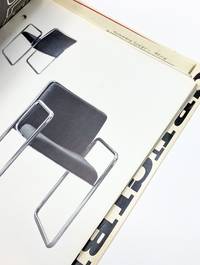
réf. 40849New York: n.p. 1970. Very good plus. Archive of the Crucible Furniture Corporation's product photographs internal documents and marketing materials: a treasury of American furniture design. Weinstock's Crucible Corporation supplied seating to many iconic locations including the 5th Avenue Revlon Salon the Kennedy Airport and San Francisco's Fairmount Hotel among numerous other public buildings. As a supplier to architectural institutional and commercial interior designers for over 50 years Crucible was a significant contributor to the 'look' of the public-facing 20th century: not only showpieces like the aforementioned lobbies and lounges but the everyday stools chairs and tables of of theaters classrooms and restaurants; the shapes one sees and touches every day that form the greater shape of contemporary life. Born in Poland in 1924 Weinstock was most active in the 1940s through the 1970s and by the later decades of his career was one of the last furniture designers and manufacturers remaining in New York City. This archive includes original product photographs magnificently alone or staged on plush carpeting set off by marble busts; sales brochures design specs advertising materials clippings from industry publications among them: Furniture Production Magazine's tech report on secret developments in Rigid Foam; an article on the special requirements of psychiatric ward design with photo credits to Crucible alongside Herman Miller and Knoll; and advertisements featuring Weinstock or other Crucible personnel and products. A curious inclusion is one small notebook of design sketches followed by handwritten notes: various puns quotations and aphorisms possibly intended for advertising use along with a series of apparently original observations on city scenes and the passers-by who sooner or later would sit in a Crucible chair e.g. "She wore her martyrdom & her goodness like jewelry woman on a bus"; "To the world he contributed nothing but demands & complaints". A fascinating collection from a firm whose craftsmanship and conception of public space helped form the essential experience of waiting in comfort or anticipation in liminal spaces; from gleaming white hotel lobby barrel chairs like cushioned bathtubs to the vast connected rows of lecture hall seating to the imperceptibly nervous-making lines of airport lounges: a smooth silhouette with a core of iron in the bustling heart of the city and the century. 12'' x 9'' folders. Three original smooth white printed folders with CRUCIBLE printed to exterior; versos matte red. 1 contains: Several dozen items including a stapled catalogue of public area multiple seating; hand-annotated design specs and full folded blueprints for a signature Crucible table; news articles and clippings from design industry publications; double-page advertisement for Republic Steel's Merchant Pig Iron featuring Weinstock. 2 contains: Four leaves of chair design sketches on various company stationery; advertising mock-ups and logo design; small notebook of design sketches followed by handwritten notes; 16-page catalogue; 48 page catalogue unbound but with three-hole punches to left side; additional loose pages of catalogue photography and specs. 3 contains: 42 original 8'' x 10'' glossy black and white photographs; 16 smaller original photographs of assorted sizes one in color; and 7 additional 8'' x 10'' photographs with printed specs and Crucible logo apparently intended for catalogue use. Photographer and/or designer names stamped on versos of some photos; pen or colored pencil notations on rectos and versos of several photos. Crucible employee Vera White's name written or printed on a significant number of documents throughout the collection. Contents in generally very good condition with many photographs fine; wear and chipping to magazine pages; slight yellowing and general edgewear to documents throughout. n.p. unknown
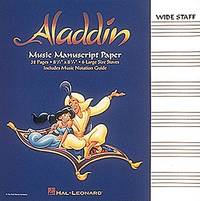
1994réf. SBBIH-N2A3PBD2I2EQHal Leonard Corp 1994. paperback. Very Good. Most of our very good books have only minor imperfections such as shelf wear consistent with a new book that's sat on a bookshop shelf for a year or two. Occasionally we may miss other minor imperfections as we have to grade books at speed. Our books are dispatched from a Yorkshire former cotton mill. We list via barcode/ISBN so please note that the images are stock images and may not be the exact copy you receive furthermore the details about edition and year might not be accurate as many publishers reuse the same ISBN for multiple editions and as we simply scan a barcode or enter an ISBN we do not check the validity of the edition data when listing. If you're looking for an exact edition please don't order at least not without checking with us first although we don't always have time to check. We aim to dispatch prompty the service used will depend on order value and book size. We can ship to most countries see our shipping policies. Payment is via Abe only. Hal Leonard Corp paperback
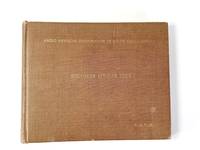
1955réf. 410891Johannesburg 1955. Foxing to prelims and postlims light spotting to text leaves photographs clean and well-preserved. 8 x 9.5 inches 203 x 242 mm. Preliminary text leaf: "Visit of British Educationists to Southern Africa December 28 1954––January 12 1955." 48 black-and-white photographic prints mounted back-to-back; interleaved with text leaves all mounted on guards. Light-brown cloth gilt-lettered on front cover. Provenance: G. H. G. Harris a member of the tour gilt initials on front cover pencil signature on title typed letter from the Harry Oppenheimer 27 June 1955 mounted on front pastedown. The letter on the pastedown from Harry Oppenheimer Deputy Chairman presents the volume to Mr. Harris: "After your visit to Southern Africa. it occurred to us that you might care to have some photographs to remind you of the places and people you encountered here. We have accordingly had a selection of photographs assembled in the form of an album. It is as you are aware our hope that as a result of your visit more young men from the British Isles may be interested in making their careers with us." The opening text describes the trip made during December 1954 and January 1955 on which "twenty educationists–University Professors Careers Masters and Headmasters from the United Kingdom–visited South Africa and the Rhodesias as guests of Anglo American Corporation of South Africa Limited." In South Africa they visited the gold mine of South African Land and Exploration Company Ltd.; the uranium and sulphuric acid plants of Daggafontein Mines Ltd.; the Orange Free State Goldfields Welkon and Allanridge; Premier diamond mine at Cullinan near Pretoria; the diamond mines at Kimberley; and the Cornelia Colliery near Vereeniging. They went to Victoria Falls and in the Rhodesias they visited the copper mines of Nchanga Consolidated Copper Mines Ltd and Rhokana Corporation; the research labs of Rhoanglo Mine Services Ltd at Kitwe; and the mining towns of Chingola and Nkana. The names of the twenty members of the party are listed on the preliminary text leaf. The photos start at the company's headquarters in Johannesburg and then follow the course of the trip. A number show The Ernest Oppenheimer Hospital at Welkom and others show the De Beers facilities including dogs trained to attack intruders. Each photo faces a printed caption detailing the subject in the image. The Anglo American Corporation of South Africa was founded in 1917 by Ernest Oppenheimer with financial backing from the American bank J.P. Morgan & Co. The AAC became the majority stakeholder in De Beers in 1926. In the late 1940s and 50s the AAC focused on the development of the Free State goldfields and the Vaal Reefs mine. Ernest Oppenheimer died in 1957 and the company continued under his son Harry the author of the letter to Mr. Harris that is found on the pastedown of this album. The company has at least one connection to the literary world: they loaned a diamond to artist Richard Chopping to use as a model for the paintings he made for Ian Fleming's James Bond series’ dust jackets. Rare: given the presentation of this volume it is likely that twenty albums were compiled and distributed to the educationists. We trace no copies in WorldCat/OCLC nor any at auction. A very scarce piece of corporate promotion. unknown books
1955réf. 410891Johannesburg 1955. Foxing to prelims and postlims light spotting to text leaves photographs clean and well-preserved. 8 x 9.5 inches 203 x 242 mm. Preliminary text leaf: "Visit of British Educationists to Southern Africa December 28 1954––January 12 1955." 48 black-and-white photographic prints mounted back-to-back; interleaved with text leaves all mounted on guards. Light-brown cloth gilt-lettered on front cover. Provenance: G. H. G. Harris a member of the tour gilt initials on front cover pencil signature on title typed letter from the Harry Oppenheimer 27 June 1955 mounted on front pastedown. The letter on the pastedown from Harry Oppenheimer Deputy Chairman presents the volume to Mr. Harris: "After your visit to Southern Africa. it occurred to us that you might care to have some photographs to remind you of the places and people you encountered here. We have accordingly had a selection of photographs assembled in the form of an album. It is as you are aware our hope that as a result of your visit more young men from the British Isles may be interested in making their careers with us." The opening text describes the trip made during December 1954 and January 1955 on which "twenty educationists–University Professors Careers Masters and Headmasters from the United Kingdom–visited South Africa and the Rhodesias as guests of Anglo American Corporation of South Africa Limited." In South Africa they visited the gold mine of South African Land and Exploration Company Ltd.; the uranium and sulphuric acid plants of Daggafontein Mines Ltd.; the Orange Free State Goldfields Welkon and Allanridge; Premier diamond mine at Cullinan near Pretoria; the diamond mines at Kimberley; and the Cornelia Colliery near Vereeniging. They went to Victoria Falls and in the Rhodesias they visited the copper mines of Nchanga Consolidated Copper Mines Ltd and Rhokana Corporation; the research labs of Rhoanglo Mine Services Ltd at Kitwe; and the mining towns of Chingola and Nkana. The names of the twenty members of the party are listed on the preliminary text leaf. The photos start at the company's headquarters in Johannesburg and then follow the course of the trip. A number show The Ernest Oppenheimer Hospital at Welkom and others show the De Beers facilities including dogs trained to attack intruders. Each photo faces a printed caption detailing the subject in the image. The Anglo American Corporation of South Africa was founded in 1917 by Ernest Oppenheimer with financial backing from the American bank J.P. Morgan & Co. The AAC became the majority stakeholder in De Beers in 1926. In the late 1940s and 50s the AAC focused on the development of the Free State goldfields and the Vaal Reefs mine. Ernest Oppenheimer died in 1957 and the company continued under his son Harry the author of the letter to Mr. Harris that is found on the pastedown of this album. The company has at least one connection to the literary world: they loaned a diamond to artist Richard Chopping to use as a model for the paintings he made for Ian Fleming's James Bond series’ dust jackets. Rare: given the presentation of this volume it is likely that twenty albums were compiled and distributed to the educationists. We trace no copies in WorldCat/OCLC nor any at auction. A very scarce piece of corporate promotion. unknown
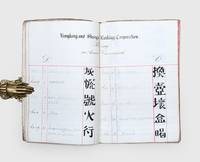
1900réf. 172658Likely Beijing: c. 1900. Language learning at China's premier banking institution A connection to the late Qing dynasty and the Legation Era: a banker's vocabulary list for learning spoken and written Chinese produced during the tenure of HSBC's legendary Peking agent Edward "Guy" Hillier when political upheavals brought new diplomatic stresses and economic opportunities for China's largest foreign bank. The ledgers from which this example is formed were only produced between 1890 and 1910. HSBC entered the China market in Hong Kong in 1865 and because Chinese reformers began to look for more foreign investment in government projects it established a Peking office in the Legation Quarter in the 1880s. Quickly Guy Hillier 1857-1924 was drafted to lead operations. Fluent in Chinese Hillier was the bank's chief representative in the Chinese capital from 1891 to 1924 although he managed to avoid be out of the city during the Boxer Uprising. "Hillier tested the very limits of the 'treaty system' establishing close relations both with modernizing compradores and with imperial officials. It was Hillier's genius to understand the politics of the foreign diplomatic community to learn what was possible in the London market to determine what was acceptable politically in China and to match all three - on terms to the benefit of the Hongkong Bank its associate companies and indeed the general British position in China" ODNB. Hillier needed well-trained multilingual staff to handle HSBC's growing involvement in loan negotiations. This manual containing over 1000 entries suits this purpose combining English words with their Chinese character equivalents and a romanized form with tone numbers for pronunciation purposes. Fittingly for a banker it begins with numbers from 1 to 100000 and their simple logic the number "20" for example being formed from the characters "2" and "10". The contents is then arranged alphabetically by romanization and ranges from the essential "you" and "quick" to the complex "camel" and "deaf". The final two pages contain a list of common fruits and vegetables in English and romanized Chinese. The regular stiff form of the Chinese characters as well as the inclusion of serifs on strokes echoes the songti fonts found in many contemporary western works on China and suggests that the writer was a learner copying directly and cautiously from a printed dictionary rather than an experienced linguist producing the manual for a colleague. Several leaves see the learner tackle the complexities of words and sentences formed from multiple characters. "Bicycle" for example is explained as the combination of the Chinese characters for "self" "proceed" and "carriage" while "woo yuan woo koo dee" is given for the phrase "without cause of reason". Over the page they pair such phrases such as as "I tomorrow give you money" and "Have fish fresh not have" with their romanization indicative of attempts to get to grips with the logical distinctions between Chinese and English syntax. Also given is a list of countries with their Chinese pronunciations - with the exception of America Russia and Japan these are all European nations. The compiler's identity remains unknown. Fourteen individuals worked in HSBC's Peking office under Hillier between 1895 and 1908. This manuscript bears all the hallmarks of one of these bankers cutting their linguistic teeth in the complex atmosphere of late-imperial Peking. Octavo 210 x 133 mm ff. 72. Contemporary buff card wrappers 132 pages filled in ink and pencil. Formed from 3 ledgers each with red edges and and 12 bifolia ruled in red on recto the opening bifolium of each ledger with Hongkong and Shanghai Banking Corporation Peking letterhead printed in black all bound into wrappers with cord. Binding sturdy staining and soiling to wrappers and contents 40 mm closed tear slightly intruding into manuscript on one page: a very good example. unknown
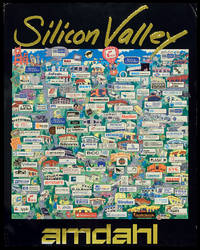
réf. 14948California: Mikkelsen and Associates in Association with Access Global Inc. 1992. 732 by 585mm. 28.75 by 23 inches. Colour printed poster on glossy paper with title embossed in gold. An amusing promotional poster illustrated with a pictorial map of silicon valley showing the locations and offices of the major technology companies based there in 1992. This poster was commissioned by Amdahl Corporation who likely gave it away to clients and employees. Founded in 1970 by former IBM chief architect Gene Amdahl the company was an early competitor to IBM. It produced cheaper faster and more reliable high-end mainframe computers that were "plug compatible" with IBM's software and peripheral devices. IBM took a combative approach to their competitor causing Gene Amdahl to coin the term "FUD" which is defined in the "The Jargon File" the programmer's equivalent to urban dictionary as "the fear uncertainty and doubt that IBM sales people instil in the minds of potential customers who might be considering Amdahl products." By the early 1990's when this poster was published Amdahl was suffering major losses due to a stark decline in mainframe computers sales. As such the company had begun to diversify into other services such as software production data storage and consulting. When IBM introduced a 64-bit processor in 2000 Amdahl admitted defeat and abandoned hardware entirely. The company is now a subsidiary of Fujitsu. The design of the poster with a gold spray paint inspired font used for the title is characteristic of the early 90's while the cartoonish style in the pictorial map is representative of the laid-back unconventionality that is stereotypical of Silicon Valley and its innovative tech-savvy inhabitants. Mikkelsen and Associates in Association with Access Global Inc., unknown
1969réf. 29710various: various 1969. various. Very Good. Our consignor's father was an aeronautical engineer working for Boeing and assigned to work with NASA on the Apollo program. He did a significant favor for a member of the astronauts office while living in Houston. They asked him what they might do in return. He requested "a full set of Apollo astronaut training manuals" the result of which you see here - 34 items in total. They have remained in the family since. A list of the manuals follows. Many are by the sub-contractors responsible for building the particular systems involved. A remarkable archive. In addition to a letter of provenance from the consignor the archive includes a 1968 Nassau Telephone book showing the previous owner as well as a goodly number of astronauts. GRUMMAN MANUALS: The following manuals all state "For training purposes only: In support of LM-5 & Subsequent Subsystem Briefings." and are part of "Contract NAS 9-1100 Exhibit E: Paragraph 3.7.4 Type III Document." They are all three hole punched and held together with dual post "prestong" brand adjustable metal straps with robin blue colored Grumman binder paper with cut-outs for the titles. The metal straps are rusted to varying degrees the paper still bright and clean. 1 LSG 770-154-6 - LM-5 & Sub. June 1969. "Abort Guidance Section Study Guide Lunar Module LM-5 & Subsequent." Light green paper. No copies OCLC. 2 LSG 770-430-40 LM-5 & Sub. April 1969. "Instrumentation Subsystem Study Guide Lunar Module LM-5 & Subsequent." Yellow paper. No copies OCLC. 3 LSG 770-154-7 - LM-5 & Sub. April 1969. "Control Electronics Section Study Guide Lunar Module LM-5 & Subsequent" Light green paper. No copies OCLC. 4 LSG 770-154-5 - LM-5. April 1969. "Radar Section Study Guide Lunar Module LM-5" Blue paper. No copies OCLC. 5 LSG-770-154-9-LM-5 & Sub. May 1969. "Propulsion & RCS Subsystem Study Guide Lunar Module LM-5 & Subsequent" Dark green paper. No copies OCLC. 6 LSG 770-154-4-LM-5 & Sub. May 1969. "Electrical Power Subsystem Study Guide Lunar Module LM-5 & Subsequent" Yellow paper. No copies OCLC. 7 LSG-770-154-3-LM-5 & Sub. May 1969. "Environmental Control Subsystem Study Guide Lunar Module LM-5 & Subsequent" Tan/orange paper. No copies OCLC. 8 LSG 770-154-10-LM-5. May 1969. "Lunar Module Structures Handout LM-5" Light grey ash paper. No copies OCLC. Wikipedia note on the LM-5: "Lunar Module Eagle LM-5 is the spacecraft that served as the crewed lunar lander of Apollo 11 which was the first mission to land humans on the Moon. It was named after the bald eagle which was featured prominently on the mission insignia. It flew from Earth to lunar orbit on the command module Columbia and then was flown to the Moon on July 20 1969 by astronaut Neil Armstrong with navigational assistance from Buzz Aldrin. Eagle's landing created Tranquility Base named by Armstrong and Aldrin and first announced upon the module's touchdown. The name of the craft gave rise to the phrase "The Eagle has landed" the words Armstrong said upon Eagle's touchdown." The Grumman manuals below have different wrapper colors but the same metal strap binding. 9 LSG 770-430. Nov 1967. "Orientation Study Guide Lunar Module" White printed wrappers have ink stamp of "Mutter H.P." White paper internally. No copies OCLC. 10 LSG 770-430-48 -LM-3. "August 1967. Propulsion and RCS Study Guide Lunar Module LM-3" White printed wrappers. Green paper internally. Inked "Oscar Bernard" on top wrapper. No copies OCLC. 11 LMA790-1. LMA790-01001C. October 15 1965. Superceeds LMA790-1 dated March 15 1965. "Lunar Excursion Module Familiarization Manual" Exhibit E Paragraph 10.2 NAS 9-1100. Type II Document. Inked in red "Crew Systems" at head of top wrapper with small piece of top wrapper excised. two copies this title OCLC 12 "Lunar Module Subsystem Assembly and Installations". 52 pages. Printed green wrappers. What appears to be a commercial advertising item rather than a training manual. No copies OCLC. GENERAL MOTORS CORPORATION manuals 1 "Apollo CM Primary Guidance Navigation and Control System Student Study Guide". CSM Digital Autopilots. DAP 2100. June 2 1969. Perfect bound with light blue paper. 3 copies this title OCLC 2 "Apollo Lunar Module Primary Guidance Navigation and Control System Student Study Guide." LM PGNCS Level III System Mechanization Course SM31000. Dates January 27 1967 Oct 1 1967 and finally Jan 30 1969. Bound with blue plastic comb binding. Blue paper. No copies OCLC. NASA MANUALS: 1 FLIGHT CONTROL DIVISION manual NASA. FC027. 3/15/68. "Lunar Module Systems Handbook Vehicle LM-3" MSC8305-68. 5 hole punched. Not bound. No copies OCLC. 2 MSC Internal Note MSC-CF-E-68-12. "Photo Equipment for Manned Space Flight Handbook" June 20. 1968. 5 hole punched. Stapled. "Oscar Bernard x-5821" inked on top wrapper and a few inked notes on the bottom wrapper. No copies OCLC. NORTH AMERICAN ROCKWELL CORPORATION SPACE DIVISION MANUALS. All note "For Training purposes only". All 11 x 8 1/2 inches. 1 CSM Logistics Training : Guidance and Control System - Block II May 15 1969. Prefect bound white and blue paper No copies OCLC. 2 CSM Logistics Training: Sequential Systems EDS SECS LES ELS Course No A-318 Handout No. 1. June 15 1969. Perfect bound light yellow paper. No copies OCLC. 3 Apollo CSM Logistics Training. Apollo Operations Handbook Subsections 2.2 and 2.3. Guidance and Control. May 1 1969. Perfect Bound blue paper. No copies OCLC. 4 Apollo CSM Logistics Training. Apollo Operations Handbook Subsection 2.8 Telecommunications. May 1 1969. Perfect bound dark brown paper. No copies OCLC. 5 Apollo CSM Logistics Training. Apollo Operations Handbook Subsection 2.6 Electrical Power System May 1 1969. Perfect bound yellow paper. No copies OCLC. 6 Apollo CSM Logistics Training. Apollo Operations Handbook Subsection 2.9 Sequential Systems May 1 1969. Perfect bound tan paper. No copies OCLC. 7 Apollo Training. Apollo Operations Handbook CSM Preliminary Subsection 2.9 Sequential Systems June 26 1968 Perfect bound light yellow paper some folding on "fax" paper. Ink stamp "Mutter H.P." on top wrapper and spine. 8 Apollo Training. Structures and Mechanical Subsystems Course Number A-5125. June 13 1969. Perfect bound grey paper. No copies OCLC. 9 Apollo Training. Block II CSM Propulsion Subsystem. Dec 12 1968. Perfect bound pale green paper. No copies OCLC. 10 Apollo Training. Electrical Power Subsystem Block II CSM. Nov 1 1968. Perfect bound oblong yellow paper. No copies OCLC. 11 Apollo Training. CSM/LM Docking and Crew Transfer Block II handout. Apr 15 1968. Perfect bound oblong pale brown paper. Stamp "Mutter H. P." on top wrapper and spine. No copies OCLC. 12 Apollo Training. Environmental Control System Block II. Apr 1 1969. Perfect bound oblong orange sherbert paper. No copies OCLC. 13 Apollo Training. Crew Equipment Course A512 C. Jan 1 1969. Perfect bound pink paper. No copies OCLC. 14 Apollo Training. Crew Equipment Course A512C. June 26 1968. Perfect bound pink paper. No copies OCLC. #7-14 above show "Apollo Logistics Training" logo on the top wrapper with little or no mention of Rockwell in the document although we believe it is clearly their output given the names physical addresses to use for questions about the documents and production details of the various manuals. Wikipedia note on the CSM: "The Apollo command and service module CSM was one of two principal components of the United States Apollo spacecraft used for the Apollo program which landed astronauts on the Moon between 1969 and 1972. The CSM functioned as a mother ship which carried a crew of three astronauts and the second Apollo spacecraft the Apollo Lunar Module to lunar orbit and brought the astronauts back to Earth." NORTH AMERICAN AVIATION Inc. SPACE AND INFORMATION SYSTEMS DIVISION manuals 1 SID 64-1613A GFE Command and Service Module - Manned Space Flight Network Signal Performance and Interface Specificaiton Block II. NAS 9-150 Revised Nov 22 1966. Copy made on "fax" style paper three hole punched with two aluminum screw posts holding the pages together. Another stamp unclear if on the original or here stamped notes Recorded Jul 18 1967 by the Saturn V Data management at the Boeing C. Technical Data Central. Note on orginal document notes 60 8 1/2 x 11 and 20 11 x 17 foldouts presumably. No copies OCLC. 2 SID 64-1389 GFE NASA Furnished Crew Equipment Performance and Interface Specification Block II. NAS 9-150. Revised Feb 22 1965 Copy made on "fax" style paper three hole punched with two aluminum screw posts holding the pages together. Another stamp unclear if on the original or here stamped notes Recorded Aug 2 1967 by the Saturn V Data management at the Boeing C. Technical Data Central. Note on orginal document notes 164 pages. No copies OCLC. 3 SID 64-1388. GFE Scientific Equipment Performance and Interface Specification Block II - CM. NAS9-150. Revised Feb 22 1965. Note on original document indiates 51 pages. Stamped upper left rusted one page loose in rear. No copies OCLC. 4 SID 64-1866. GFE Command and Service Module - Manned Space Flight Network Signal Performance and Interface Specification - Block 1. NAS9-150. January 5 1965. Exhibit I Paragraph 4.1. "Fax" style paper three hole punched with two aluminum screw posts for binding. No copies OCLC. NOTE: GFE stands for Government Furnished Equipment - where the government would provide equipment to the contractor to assist in their work NOTE: The # in the lists above are included solely for convenience of reference. Identifying numbers on the documents if any follow that number. Provided with a letter of provenance and the Sept 1968 Nassau Bay TX Telephone Co directory with the consignor's father listed in it as well as a fair number of well known astronauts. various. A remarkable archive of training manuals only a few of which appear in OCLC and only one of which we've seen in the last 20 years. various unknown books
1969réf. 29710various: various 1969. various. Very Good. Our consignor's father was an aeronautical engineer working for Boeing and assigned to work with NASA on the Apollo program. He did a significant favor for a member of the astronauts office while living in Houston. They asked him what they might do in return. He requested "a full set of Apollo astronaut training manuals" the result of which you see here - 34 items in total. They have remained in the family since. A list of the manuals follows. Many are by the sub-contractors responsible for building the particular systems involved. A remarkable archive. In addition to a letter of provenance from the consignor the archive includes a 1968 Nassau Telephone book showing the previous owner as well as a goodly number of astronauts. GRUMMAN MANUALS: The following manuals all state "For training purposes only: In support of LM-5 & Subsequent Subsystem Briefings." and are part of "Contract NAS 9-1100 Exhibit E: Paragraph 3.7.4 Type III Document." They are all three hole punched and held together with dual post "prestong" brand adjustable metal straps with robin blue colored Grumman binder paper with cut-outs for the titles. The metal straps are rusted to varying degrees the paper still bright and clean. 1 LSG 770-154-6 - LM-5 & Sub. June 1969. "Abort Guidance Section Study Guide Lunar Module LM-5 & Subsequent." Light green paper. No copies OCLC. 2 LSG 770-430-40 LM-5 & Sub. April 1969. "Instrumentation Subsystem Study Guide Lunar Module LM-5 & Subsequent." Yellow paper. No copies OCLC. 3 LSG 770-154-7 - LM-5 & Sub. April 1969. "Control Electronics Section Study Guide Lunar Module LM-5 & Subsequent" Light green paper. No copies OCLC. 4 LSG 770-154-5 - LM-5. April 1969. "Radar Section Study Guide Lunar Module LM-5" Blue paper. No copies OCLC. 5 LSG-770-154-9-LM-5 & Sub. May 1969. "Propulsion & RCS Subsystem Study Guide Lunar Module LM-5 & Subsequent" Dark green paper. No copies OCLC. 6 LSG 770-154-4-LM-5 & Sub. May 1969. "Electrical Power Subsystem Study Guide Lunar Module LM-5 & Subsequent" Yellow paper. No copies OCLC. 7 LSG-770-154-3-LM-5 & Sub. May 1969. "Environmental Control Subsystem Study Guide Lunar Module LM-5 & Subsequent" Tan/orange paper. No copies OCLC. 8 LSG 770-154-10-LM-5. May 1969. "Lunar Module Structures Handout LM-5" Light grey ash paper. No copies OCLC. Wikipedia note on the LM-5: "Lunar Module Eagle LM-5 is the spacecraft that served as the crewed lunar lander of Apollo 11 which was the first mission to land humans on the Moon. It was named after the bald eagle which was featured prominently on the mission insignia. It flew from Earth to lunar orbit on the command module Columbia and then was flown to the Moon on July 20 1969 by astronaut Neil Armstrong with navigational assistance from Buzz Aldrin. Eagle's landing created Tranquility Base named by Armstrong and Aldrin and first announced upon the module's touchdown. The name of the craft gave rise to the phrase "The Eagle has landed" the words Armstrong said upon Eagle's touchdown." The Grumman manuals below have different wrapper colors but the same metal strap binding. 9 LSG 770-430. Nov 1967. "Orientation Study Guide Lunar Module" White printed wrappers have ink stamp of "Mutter H.P." White paper internally. No copies OCLC. 10 LSG 770-430-48 -LM-3. "August 1967. Propulsion and RCS Study Guide Lunar Module LM-3" White printed wrappers. Green paper internally. Inked "Oscar Bernard" on top wrapper. No copies OCLC. 11 LMA790-1. LMA790-01001C. October 15 1965. Superceeds LMA790-1 dated March 15 1965. "Lunar Excursion Module Familiarization Manual" Exhibit E Paragraph 10.2 NAS 9-1100. Type II Document. Inked in red "Crew Systems" at head of top wrapper with small piece of top wrapper excised. two copies this title OCLC 12 "Lunar Module Subsystem Assembly and Installations". 52 pages. Printed green wrappers. What appears to be a commercial advertising item rather than a training manual. No copies OCLC. GENERAL MOTORS CORPORATION manuals 1 "Apollo CM Primary Guidance Navigation and Control System Student Study Guide". CSM Digital Autopilots. DAP 2100. June 2 1969. Perfect bound with light blue paper. 3 copies this title OCLC 2 "Apollo Lunar Module Primary Guidance Navigation and Control System Student Study Guide." LM PGNCS Level III System Mechanization Course SM31000. Dates January 27 1967 Oct 1 1967 and finally Jan 30 1969. Bound with blue plastic comb binding. Blue paper. No copies OCLC. NASA MANUALS: 1 FLIGHT CONTROL DIVISION manual NASA. FC027. 3/15/68. "Lunar Module Systems Handbook Vehicle LM-3" MSC8305-68. 5 hole punched. Not bound. No copies OCLC. 2 MSC Internal Note MSC-CF-E-68-12. "Photo Equipment for Manned Space Flight Handbook" June 20. 1968. 5 hole punched. Stapled. "Oscar Bernard x-5821" inked on top wrapper and a few inked notes on the bottom wrapper. No copies OCLC. NORTH AMERICAN ROCKWELL CORPORATION SPACE DIVISION MANUALS. All note "For Training purposes only". All 11 x 8 1/2 inches. 1 CSM Logistics Training : Guidance and Control System - Block II May 15 1969. Prefect bound white and blue paper No copies OCLC. 2 CSM Logistics Training: Sequential Systems EDS SECS LES ELS Course No A-318 Handout No. 1. June 15 1969. Perfect bound light yellow paper. No copies OCLC. 3 Apollo CSM Logistics Training. Apollo Operations Handbook Subsections 2.2 and 2.3. Guidance and Control. May 1 1969. Perfect Bound blue paper. No copies OCLC. 4 Apollo CSM Logistics Training. Apollo Operations Handbook Subsection 2.8 Telecommunications. May 1 1969. Perfect bound dark brown paper. No copies OCLC. 5 Apollo CSM Logistics Training. Apollo Operations Handbook Subsection 2.6 Electrical Power System May 1 1969. Perfect bound yellow paper. No copies OCLC. 6 Apollo CSM Logistics Training. Apollo Operations Handbook Subsection 2.9 Sequential Systems May 1 1969. Perfect bound tan paper. No copies OCLC. 7 Apollo Training. Apollo Operations Handbook CSM Preliminary Subsection 2.9 Sequential Systems June 26 1968 Perfect bound light yellow paper some folding on "fax" paper. Ink stamp "Mutter H.P." on top wrapper and spine. 8 Apollo Training. Structures and Mechanical Subsystems Course Number A-5125. June 13 1969. Perfect bound grey paper. No copies OCLC. 9 Apollo Training. Block II CSM Propulsion Subsystem. Dec 12 1968. Perfect bound pale green paper. No copies OCLC. 10 Apollo Training. Electrical Power Subsystem Block II CSM. Nov 1 1968. Perfect bound oblong yellow paper. No copies OCLC. 11 Apollo Training. CSM/LM Docking and Crew Transfer Block II handout. Apr 15 1968. Perfect bound oblong pale brown paper. Stamp "Mutter H. P." on top wrapper and spine. No copies OCLC. 12 Apollo Training. Environmental Control System Block II. Apr 1 1969. Perfect bound oblong orange sherbert paper. No copies OCLC. 13 Apollo Training. Crew Equipment Course A512 C. Jan 1 1969. Perfect bound pink paper. No copies OCLC. 14 Apollo Training. Crew Equipment Course A512C. June 26 1968. Perfect bound pink paper. No copies OCLC. #7-14 above show "Apollo Logistics Training" logo on the top wrapper with little or no mention of Rockwell in the document although we believe it is clearly their output given the names physical addresses to use for questions about the documents and production details of the various manuals. Wikipedia note on the CSM: "The Apollo command and service module CSM was one of two principal components of the United States Apollo spacecraft used for the Apollo program which landed astronauts on the Moon between 1969 and 1972. The CSM functioned as a mother ship which carried a crew of three astronauts and the second Apollo spacecraft the Apollo Lunar Module to lunar orbit and brought the astronauts back to Earth." NORTH AMERICAN AVIATION Inc. SPACE AND INFORMATION SYSTEMS DIVISION manuals 1 SID 64-1613A GFE Command and Service Module - Manned Space Flight Network Signal Performance and Interface Specificaiton Block II. NAS 9-150 Revised Nov 22 1966. Copy made on "fax" style paper three hole punched with two aluminum screw posts holding the pages together. Another stamp unclear if on the original or here stamped notes Recorded Jul 18 1967 by the Saturn V Data management at the Boeing C. Technical Data Central. Note on orginal document notes 60 8 1/2 x 11 and 20 11 x 17 foldouts presumably. No copies OCLC. 2 SID 64-1389 GFE NASA Furnished Crew Equipment Performance and Interface Specification Block II. NAS 9-150. Revised Feb 22 1965 Copy made on "fax" style paper three hole punched with two aluminum screw posts holding the pages together. Another stamp unclear if on the original or here stamped notes Recorded Aug 2 1967 by the Saturn V Data management at the Boeing C. Technical Data Central. Note on orginal document notes 164 pages. No copies OCLC. 3 SID 64-1388. GFE Scientific Equipment Performance and Interface Specification Block II - CM. NAS9-150. Revised Feb 22 1965. Note on original document indiates 51 pages. Stamped upper left rusted one page loose in rear. No copies OCLC. 4 SID 64-1866. GFE Command and Service Module - Manned Space Flight Network Signal Performance and Interface Specification - Block 1. NAS9-150. January 5 1965. Exhibit I Paragraph 4.1. "Fax" style paper three hole punched with two aluminum screw posts for binding. No copies OCLC. NOTE: GFE stands for Government Furnished Equipment - where the government would provide equipment to the contractor to assist in their work NOTE: The # in the lists above are included solely for convenience of reference. Identifying numbers on the documents if any follow that number. Provided with a letter of provenance and the Sept 1968 Nassau Bay TX Telephone Co directory with the consignor's father listed in it as well as a fair number of well known astronauts. various. A remarkable archive of training manuals only a few of which appear in OCLC and only one of which we've seen in the last 20 years. various unknown