9034 risultati
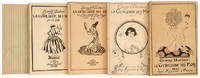
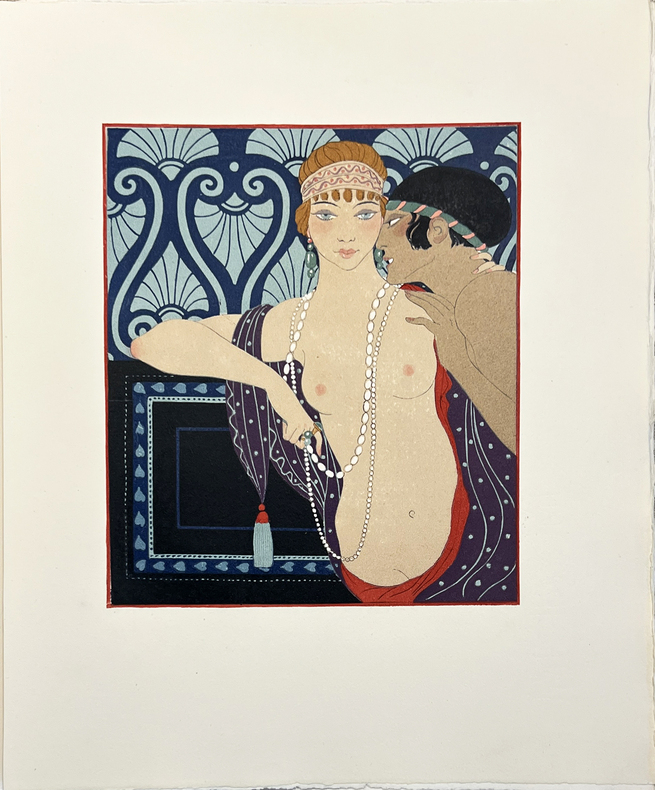
rif. 119437A Paris, Aux bureaux du Journal des Dames, de 1912 à 1914, 4 tomes in-8, contiennent les 79 numéros parus, complets des 186 planches gravées coloriées au pochoir (184 +2), menu illustré par Boscher au numéro du mois de décembre 1913, tirage à 1279 exemplaires numérotés, un des 1250 exemplaires numérotés sur papier de Hollande (n°1009). 79 fascicules aux cahiers non coupés, non cousus, sous leur couverture de livraison titrée bleue, bleu-vert, ou grise, regroupés sous 4 chemises éditeur papier bleues titrées (par année pour 1912, par semestre pour 1913 et 1914). Chaque numéro contient : 4 pages publicitaires en supplément, 8 pages de chroniques littéraires ou poèmes, 1 ou plusieurs planches hors-texte rehaussées au pochoir; le premier numéro contient en plus une préface de 8 pages et 1 feuillet fac-similé de la première page du Journal de mai 1812. Menus défauts aux chemises I et II (légères taches, petites déchirures), un numéro avec des traces de mouillures (n°73), de très rares rousseurs (pl.17 et 26), sinon intérieur en très bon état, les planches et les couleurs sont magnifiques, bon état général.
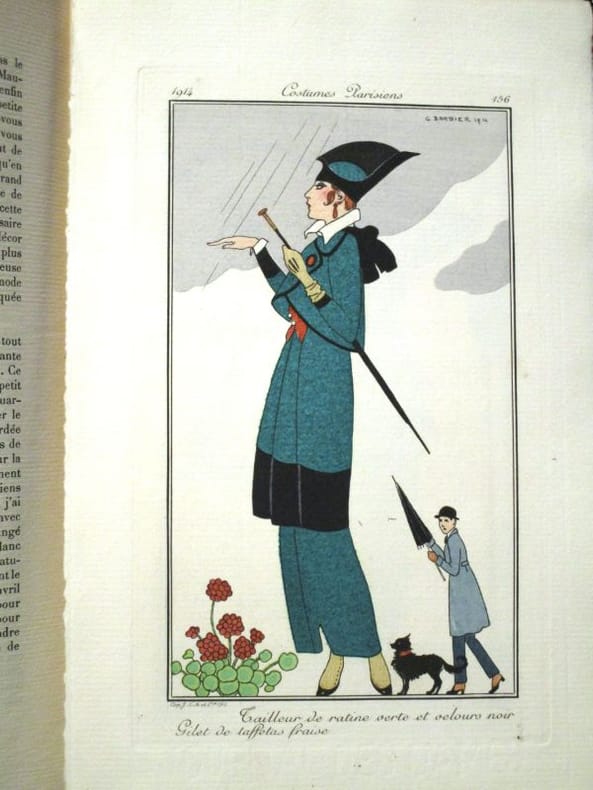
1912rif. 51747Reliure postérieure pleine basane racinée pour 3 tomes et 1 volume en plein bradel vélin à petit recouvrement. Chaque fascicule est illustré d'une, deux ou trois planches coloriées au pochoir, gravées sur papier fort. Les couvertures de livraison ont été reliées à la fin des volumes.L'ensemble est orné de 186 figures hors texte gravées sur cuivre et finement aquarellées à la main d'après George Barbier, Léon Bakst, Bernard Boutet de Monvel, Umberto Brunelleschi, Étienne Drian, Marie-Madeleine Franc-Nohain, Paul Iribe, Pierre Legrain, Charles Martin, Fernand Simeon, Armand Vallee et Gerda Wegener, entre autres.Les chroniques sont signées Robert de Montesquiou, Robert de Flers, Marcelle Tinayre, René Boylesve. On y trouve également des poèmes de Jean Cocteau, Anna de Noailles, Lucie Delarue-Mardrus.
rif. 116864Paris Meynial 1917-1921. . First editions 5 vols 12mo 12.3 x 8.4 cm; 31 colour pochoir lithograph plates illustrations in the text; original pictorial satin over Bodoni boards with pictorial dust-wrappers original decorated slipcases some age-toning to dust wrappers and slipcases otherwise very attractive copies housed in a later Art Deco style box with tassle and gold tassle a fine set. A fine complete set of Barbier almanacs which although published in a small format due to wartime austerity are nevertheless extremely luxurious. The early volumes of these beautiful little annual almanacs often include images of men in military uniform. In addition to the pochoir illustrations Barbier contributed articles from 1918 to 1921 on such topics as the Ballets Russes epigrams opera and the pleasures of love. The fashions depicted show a radical post-war shift in style with the adoption of shorter and fuller skirts backless gowns and fabrics that incorporated more risqué elements of the tango. Paris, Meynial, 1917-1921. hardcover
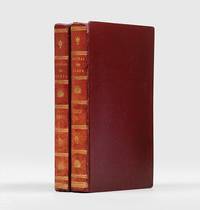
1912rif. 119004Paris: aux bureaux du Journal des dames 1912-13. First editions number 807 of 1250 copies. This journal which borrowed both the title and format of La Mésangère's periodical of a hundred years before was founded by Tom Antongini secretary friend and biographer of the poet and collector Gabriele D'Annunzio 1863-1938 whom Antongini followed to Paris from Italy in 1910. It features colour pochoirs by Barbier Bakst Brunelleschi Dammy and Martin and was meant as a record of contemporary Parisian culture and fashion. Perhaps less deliberately it also documents the transition from the end of the Belle Époque to a radically different period in world history. The journal ceased publication in August 1914 due to the outbreak of the First World War. 2 vols octavo. With 1 facsimile plate 93 etched pochoir plates without advertisements. Contemporary red straight-grain boards smooth spines lettered and decorated in gilt. Original wrappers bound in. Spines slightly sunned and worn still excellent copies. hardcover
rif. 102348Paris A & G Mornay Éditeurs 1929. . Limited edition one of 67 copies on Japon this numbered 37; 8vo 21 x 17.5 cm; 325pp. 36 compositions in colour after Barbier including the printed wrappers title-page and vignette printed on wood by Gasperini with an additional suite of illustrations of the same composition but in a simplified outline design printed in red black grey or purple pages cut and in various sizes blue marbled endpapers minor age toning but otherwise very fresh; bound in contemporary quarter crushed dark blue morocco over marbled boards with the original wrappers bound in spine in six parts with raised bands and gilt title to second in fine condition. Théophile Gauthier's novel was undoubtedly inspired by the 'Orientalism' which dominated French culture in the middle of the XIX century. The text first appeared in parts in Le Moniteur universel between March and May 1857 and was published in book form in 1858. Set in the Valley of Kings a young English aristocrat and a German Egyptologist find a sarcophagus with a perfectly preserved mummy of a pharaoh named Tahoser inside. After this discovery the novel recounts the life of beautiful Tahoser and her lovers. Paris, A & G Mornay, Éditeurs, 1929. hardcover
1914rif. 1477Imprimé pour Charles Meunier, La Maison du Livre, Paris 1914. 1 volume in-folio (370 x 280 mm) entièrement monté sur onglets, couverture muette de papier marbré gaufré, portefeuille à rabats, dos et coins de percaline bleue, pièce de titre (de l'éditeur). 10 EAUX-FORTES ORIGINALES EN COULEURS HORS-TEXTE DE LOBEL-RICHE dont un frontispice, une vignette gravée sur le titre, 10 illustrations dans le texte et nombreux ornements. Édition de luxe tirée à 30 exemplaires seulement. EXEMPLAIRE SUR JAPON IMPÉRIAL contenant 5 ÉTATS DES EAUX-FORTES dont un état sur parchemin signé à la mine de plomb (1e, 2e, 3e épreuves en états d'eau-forte, 4e état terminé sur parchemin, signé pour chacune au crayon par l'artiste, 5e état en couleurs à la poupée sur vélin blanc), une suite sur Japon de 12 petites eaux-fortes reprenant les vignettes in-texte, la gravure de titre avant la lettre et 2 très jolis DESSINS ORIGINAUX signés au crayon en noir et bistre sur le faux-titre. English description: LES BARS. Size plate or paper : 37 x 28 cm, 10 original etchings in 5 states : 1rst state (eau-forte pure), second state in black, state in black signed and printed on parchemin, in black with aquatint, and final state in color (à la poupée). cumulatively 50 plates. Also 20 pages of text with small drawings printed in red. All these drawings are reinterpreted in original etching (pointe-sèche) : 12 (tltle + 11), and printed on Japan paper. 2 ORIGINAL DRAWINGS signed on the half-title page.
1934rif. 260057New York: The Derrydale Press 1934. First Edition ONE OF 55 LARGE-PAPER COPIES signed by Barber this being No. 22. 5 color plates one of them handcolored and 121 other illustrations. TOGETHER WITH BARBER'S ORIGINAL INK DRAWING FOR THE TITLE PAGE laid in. 1 vols. 4to. Original full red morocco gilt t.e.g. others uncut; very slight chipping to top of spine else a fine copy of a book seldom found approaching this condition. Half red morocco slipcase with Derrydale logo on spine and on upper cover leather label with chemise. First Edition ONE OF 55 LARGE-PAPER COPIES signed by Barber this being No. 22. 5 color plates one of them handcolored and 121 other illustrations. TOGETHER WITH BARBER'S ORIGINAL INK DRAWING FOR THE TITLE PAGE laid in. 1 vols. 4to. "One of the most important books published by Connett." -- Siegel This is the large paper edition of this work. The regular trade edition was published at the same time by Windward House a sporting press started by Connett in 1933. Both editions used Barber's vignette on the the title page. From this drawing it appears that Connett liked the artist's Windward design and used in it the Derrydale edition: in the margin of the drawing Connett has pencilled "reduce 1/4 inch" and the drawing was photographically reduced to the smaller dimension for the large paper copies. A simplified version of the design was used on the Derrydale edition spine. One of the rarest and most desirable productions of the Derrydale Press and by virtue of the drawing a unique copy. Siegel 85; Frazier B-5-a The Derrydale Press unknown
1934rif. 260057New York: The Derrydale Press 1934. First Edition ONE OF 55 LARGE-PAPER COPIES signed by Barber this being No. 22. 5 color plates one of them handcolored and 121 other illustrations. TOGETHER WITH BARBER'S ORIGINAL INK DRAWING FOR THE TITLE PAGE laid in. 1 vols. 4to. Original full red morocco gilt t.e.g. others uncut; very slight chipping to top of spine else a fine copy of a book seldom found approaching this condition. Half red morocco slipcase with Derrydale logo on spine and on upper cover leather label with chemise. First Edition ONE OF 55 LARGE-PAPER COPIES signed by Barber this being No. 22. 5 color plates one of them handcolored and 121 other illustrations. TOGETHER WITH BARBER'S ORIGINAL INK DRAWING FOR THE TITLE PAGE laid in. 1 vols. 4to. "One of the most important books published by Connett." -- Siegel This is the large paper edition of this work. The regular trade edition was published at the same time by Windward House a sporting press started by Connett in 1933. Both editions used Barber's vignette on the the title page. From this drawing it appears that Connett liked the artist's Windward design and used in it the Derrydale edition: in the margin of the drawing Connett has pencilled "reduce 1/4 inch" and the drawing was photographically reduced to the smaller dimension for the large paper copies. A simplified version of the design was used on the Derrydale edition spine. One of the rarest and most desirable productions of the Derrydale Press and by virtue of the drawing a unique copy. Siegel 85; Frazier B-5-a The Derrydale Press unknown books
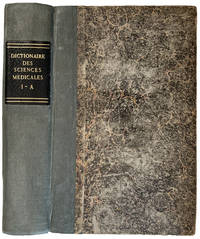
1812rif. M12282Paris:: Crapart & C.L.F. Panckoucke 1812-22. 1812. Complete set of 60 volumes. 127 engraved plates list of subscribers in the index volume 10 folding charts; occasional foxing ink and water-stains. Modern quarter green spines over original marbled boards gilt-stamped black leather spine labels; re-backed. Ex-lib bookplates and ink stamps of the Norwich & Norfolk United Medical Book Society early ownership inscription of Hudson Gurney. Fine. FIRST EDITION. 19th Century French Medical Encyclopedia Possibly one of the most important encyclopedia/dictionaries of medicine ever assembled and certainly the earliest. As Diderot's encyclopedia became the model for assembling scientific knowledge this massive set brings together all that was known about medicine in the post-Napoleonic era. Included here are numerous engraved plates of surgical instruments of the period. Also illustrated are facial expressions and signs of mental abnormality many in the style of Esquirol's work. A smaller set Dictionnaire abrege des sciences medicales. . . was concurrently published however that set is only 15 volumes. In 1821-25 Panckoucke published Dictionnaire des sciences medicales Biographie medicale. . . which includes biographies of medical luminaries. Nicolas Philibert Adelon 1782-1862 and Francois Victor Merat 1780-1851 were two of the prominent contributors to this medical encyclopedia. This compendious work was not included amongst the items exhibited by the Library of Congress in their Circle of Knowledge exhibition of the history of the encyclopedia. Panckoucke 1736-1798 was involved with issuing various encyclopedias beginning with Diderot's Encyclopedie which ". . . was an immediate success: a new edition was called for even before the first had been completed. C.J. Panckoucke proposed such a new edition in 1761 and bought the rights to the first seven volumes. He approached Diderot to edit a new revised edition and when Diderot refused began to reissue the original volumes. The government intervened in 1770 and seized the three which had appeared. After the death of the last of the original proprietors in 1775 Panckoucke published a five-volume supplement to the Encyclopedie and later in 1780 a two-volume index. The complete first edition comprises Diderot's twenty-eight volumes plus Panckoucke's seven; its publication spanned the years 1751-80." Circle of Knowledge 1979 p. 8. Provenance: Hudson Gurney 1775-1864 was an antiquary and verse-writer of Norwich. He became an M.P. for Newtown in 1816 and sat in six successive parliaments. In 1835 he was high-sheriff of Norfolk and was elected fellow of the Society of Antiquaries 1819 was vice-president from 1822-46 a fellow of the Royal Society and a member of the British Archaeological Association. As such Gurney may have been the donor of this set to the Norwich & Norfolk Library. DNB Vol. VIII pp. 803-4. Circle of Knowledge 1968 1979; Wellcome II p. 465. Crapart & C.L.F. Panckoucke, 1812-22. hardcover
1812rif. M12282Paris:: Crapart & C.L.F. Panckoucke 1812-22. 1812. Complete set of 60 volumes. 127 engraved plates list of subscribers in the index volume 10 folding charts; occasional foxing ink and water-stains. Modern quarter green spines over original marbled boards gilt-stamped black leather spine labels; re-backed. Ex-lib bookplates and ink stamps of the Norwich & Norfolk United Medical Book Society early ownership inscription of Hudson Gurney. Fine. FIRST EDITION. 19th Century French Medical Encyclopedia Possibly one of the most important encyclopedia/dictionaries of medicine ever assembled and certainly the earliest. As Diderot's encyclopedia became the model for assembling scientific knowledge this massive set brings together all that was known about medicine in the post-Napoleonic era. Included here are numerous engraved plates of surgical instruments of the period. Also illustrated are facial expressions and signs of mental abnormality many in the style of Esquirol's work. A smaller set Dictionnaire abrege des sciences medicales. . . was concurrently published however that set is only 15 volumes. In 1821-25 Panckoucke published Dictionnaire des sciences medicales Biographie medicale. . . which includes biographies of medical luminaries. Nicolas Philibert Adelon 1782-1862 and Francois Victor Merat 1780-1851 were two of the prominent contributors to this medical encyclopedia. This compendious work was not included amongst the items exhibited by the Library of Congress in their Circle of Knowledge exhibition of the history of the encyclopedia. Panckoucke 1736-1798 was involved with issuing various encyclopedias beginning with Diderot's Encyclopedie which ". . . was an immediate success: a new edition was called for even before the first had been completed. C.J. Panckoucke proposed such a new edition in 1761 and bought the rights to the first seven volumes. He approached Diderot to edit a new revised edition and when Diderot refused began to reissue the original volumes. The government intervened in 1770 and seized the three which had appeared. After the death of the last of the original proprietors in 1775 Panckoucke published a five-volume supplement to the Encyclopedie and later in 1780 a two-volume index. The complete first edition comprises Diderot's twenty-eight volumes plus Panckoucke's seven; its publication spanned the years 1751-80." Circle of Knowledge 1979 p. 8. Provenance: Hudson Gurney 1775-1864 was an antiquary and verse-writer of Norwich. He became an M.P. for Newtown in 1816 and sat in six successive parliaments. In 1835 he was high-sheriff of Norfolk and was elected fellow of the Society of Antiquaries 1819 was vice-president from 1822-46 a fellow of the Royal Society and a member of the British Archaeological Association. As such Gurney may have been the donor of this set to the Norwich & Norfolk Library. DNB Vol. VIII pp. 803-4. Circle of Knowledge 1968 1979; Wellcome II p. 465. Crapart & C.L.F. Panckoucke, 1812-22. hardcover books
1928rif. 87423Sous étui et chemise cartonnés. Couverture illustrée en rempliée.Belle édition publiée d'après une maquette typographique de François-Louis Schmied, illustrée de 33 compositions en couleurs de George BARBIER gravées sur bois par Pierre Bouchet.
rif. 125420Paris Pierre Corrard 1914. . First edition folio 32.5 x 27.8 cm; No.396 out of a limited edition of 512 numbered and initiated by the publisher; signed by Karsavina; title page with pictorial vignette to head and verso 12 full-page coloured illustrations by Barbier printed on rectos only plates exceptionally fresh; original pictorial wrappers; 24 ll. Signed by Tamara Karsavina An attractive copy in the original wrappers of Barbier's early masterpiece dedicated to Tamara Karsavina. 'The cover design pays homage to Beardsley. and its 12 pochoir plates depict Karsavina in her principal parts. That their purpose is again to stir the emotion and delight the eye of the viewer not to document the performance is demonstrated by Le spectre de la rose glimpsed at the moment when the phantom lover of whom the young girl has dreamed after the ball is about to disappear as the rose drops from her hand.' Ray. Paris, Pierre Corrard, 1914. unknown
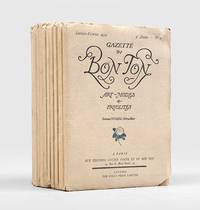
1920rif. 118958London: the Field Press Limited 1920. An attractive run of the hugely influential French fashion magazine. Founded by Lucien Vogel the first issue was released in November 1912. Publication was suspended in 1915 due to the First World War resuming in 1920 with the present volume and continuing until 1925. Extensive runs such as this especially in such bright condition are uncommon. "After the last issue of this excellent magazine in 1925 nothing else quite like it was ever produced. It has the prestige of having pioneered the idea of using the very best artists to illustrate the very best haute couture designs of having maintained a superb standard of printing on hand-made paper and for most of its life it was guided by one director Lucien Vogel" Robinson p. 28. Although short-lived Gazette du Bon Ton was a key publication and reported on the latest developments in fashion and lifestyle at the beginning of the twentieth century at a time when styles were changing dramatically in the space of a few years. The magazine was only available to subscribers at a price which equals $425 per year in today's money thereby creating a very exclusive image. Lucien Vogel the editor aimed to establish fashion as an art form and to create "good taste" for the Parisian elite. Contributing artists included all the greatest names of the day such as Dufy Bakst Barbier and Brunelleschi all of whom depicted the haute couture in a narrative and dramatic style using vivid colours and the pochoir technique on special handmade paper. Many of the designs were idealistic leisure scenes of the well-to-do illustrating the latest creations of Paris vintage fashion houses such as Worth Lanvin Doucet Poiret Callot Soeurs Paquin and Beers often without explanatory text. The literary content was also of the highest quality with essays by well-known art historians playwrights and novelists of the day. 10 vols quarto: 79 hand-coloured lithograph plates en pochoir 48 coloured croquis. Loose as issued in original printed paper wrappers. Housed in a custom orange cloth solander box. Trivial wear to edges corners very slightly defective to front wrapper of part I; a very good remarkably well-preserved set. Julian Robinson The Golden Age of Style 1976. hardcover
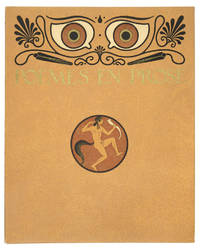
rif. 94761Paris A. Blaizot 1928. . First edition number 101 of 150 copies; 4to 26 x 21 cm; 27 text illustrations wood-engraved by Pierre Bouchet and printed in colour after designs by Barbier; presentation copy signed by Barbier on front blank; loose as issued in original pictorial wrappers after Barbier publisher's burgundy cloth chemise and slipcase. Presentation copy inscribed by Barbier A French Romantic poet Maurice de Guérin 1810-39 achieved cult status in his lifetime as one of the first writers of 'prose poems.' The present work is illustrated by George Barbier who provides beautiful illustrations of the mythological Centaur and the Bacchante a follower of Bacchus Dionysus. The charming presentation inscription reads: 'À Mademoiselle Violette Gath / ces petites divinités d'autrefois déjà touchées par la mélancolie d'aujourd'hui / avec les respectueux compliments de l'artiste / George Barbier / juin 1928.' To Miss Violette Garth / These small deities of days past already touched by the melancholy of today / With respectful compliments of the artist George Barbier / June 1928. Carteret IV 195; Méhé II 309-310; Ritchie 25. Paris, A. Blaizot, 1928. hardcover
1922rif. 3930Collection Pierre Corrard, Paris 1922. Un volume in-4 en feuilles sous coffret décoré imitant la peau de serpent dorée, incrustée au premier plat, la médaille de Bilitis réalisée pour l'occasion par le sculpteur art-déco, Albert POMMIER. Première édition illustrée par GEORGE BARBIER et gravée sur bois par F.L. SCHMIED. 44 superbes illustrations couleurs dont la couverture, 13 en hors-texte et 8 à pleine page, 21 dans le texte ainsi que de nombreux ornements. L'un des 125 ex. numérotés sur Arches, seul tirage, signé par G.Barbier. Il est joint à cet exemplaire trois maquettes originales d'essai de la couverture avec ajouts et découpes par Barbier. - ENGLISH DESCRIPTION: P. Loüys. LES CHANSONS DE BILITIS. Taduit du grec. Illustrations de G. Barbier gravées sur bois par F.L. Schmied (1922) .Collection Pierre Corrard, Paris 1922. A quarto volume (33 x 26 cm) issued in loose sheets within a shellcase featuring a gold snakeskin-effect finish; the front cover is inset with the "Bilitis" medallion created for the occasion by Art Deco sculptor Albert Pommier. First edition, illustrated by George Barbier and featuring wood engravings by F.L. Schmied.- 44 superb illustrations, including the cover, 13 plates and 8 full-page images, 21 in-texte, as well as numerous decorative elements. One of 125 copies numbered on Arches paper, signed by G. Barbier. Included with this copy are three original cover mock-ups featuring additions and cut-outs by Barbier. A perfectly preserved copy housed in a highly elegant custom-made presentation box. Additional photographs available upon request.
rif. 121036Paris Meynial 1922-1926. . First editions; 5 vols 8vo 252 x 170 mm; each issue with colour vignette to title & 12 colour pochoir plates 60 in total introductory text by Colette; loose as issued in original coloured pictorial wrappers by Barbier a fine set. A fine example of a complete set A complete set of this exquisite series displaying fashion in magnificent and imaginative illustrations. The series includes Barbier's depiction of the seven deadly sins in the volume for 1925. Here one finds a great theme of the Western iconographical tradition at home in Barbier's special world. 'Anger' shows a modish couple quarrelling in a formal garden; 'Envy' is displayed by a maid regarding her mistress as she steps from a Rolls Royce; and 'Gluttony' is depicted as a gourmandise. Falbalas et fanfreluches was the last of Barbier's books to reflect contemporary life. Its special value lies in the unique way in which it catches the tone and mood of les années vingts. Gaudriault p115. Paris, Meynial, 1922-1926. unknown
1922rif. 47635Paris.: Meynial éditeur. 1922 - 1926. Loose as issued in original publisher's printed wrappers with pochoir colour designs by Barbier. 5 vols. 8vo. c.260 x 175 mm. Each issue with title with colour vignette and 12 colour plates by George Barbier each with pochoir colour; monochrome head-piece to each essay and calendar for each year ruled in a different colour. A fine and complete set of Barbier's Art Deco gem 'Falbalas et Fanfreluches' in the original wrappers.The issue for 1923 features the essay 'Modes' by Colette; the remaining essays are by the Comtesse de Noailles Cécile Sorel Gérard d'Houville and the Baronne de Brimont. Meynial éditeur. unknown
1922rif. 48789Paris.: Chez Meynial. 1922. Loose as issued in original publisher's printed wrappers with a colour design by Barbier heightened with gilt gilt black and purple marbled board chemise and matching slipcase. Folio. 380 x 294 mm. Illustrated half-title with colour wood-engraved design by Barbier title with colour wood-engraved Harlequin vignette 12 full- and 2 half-page wood-engraved colour plates 22 wood-engraved colour four-line initials as well as decorative devices in the text many heightened in silver and gold final wood-engraved colour vignette list of plates and colophon. Each leaf of text surrounded by decorative frame. The cover illustration is repeated on the half-title. A very fine copy of this delightful collaboration between two Art Deco masters: Georges Barbier and François-Louis Schmied.From the edition limited to 150 numbered copies signed by Barbier in pencil. The plates were engraved by Schmied after Barbier's magnificent original designs. Chez Meynial. unknown
1912rif. 1091912. 1st Edition. Soft cover. Fine. FIRST EDITION OF ALL 79 ISSUES WITH 186 HAND-COLORED PLATES by some of the most famous artists of the era. Number 884 each issue from the same set of only 1250 sets on Holland paper out of a total edition of 1279. IN ORIGINAL WRAPPERS IN FINE CONDITION. "The Journal des Dames et des Modes lasted only two years the first issue appeared on 1 June 1912 and the last on 1 August 1914. This stylish periodical was issued regularly three times a month and ceased publication upon the outbreak of the First World War. With its expensive layout its society columns its poetic texts its colourful annotations and its fashion reports it represented the last brilliant refined impartial and aestheticizing impulse of a happy and optimistic society occupying the centre of the stage in the period that has aptly been called the 'belle époque'. It was essentially the testimony the history--illustrated or rather 'clothed' and narrated--of the customs ideas and ideals of a society and a period. "Every issue carefully reviewed all the current novelties of fashion and every issue carried coloured stencil prints reproducing the latest conceptions of the fashion designers." For the text "the magazine could count on the collaboration of the best known writers and littérateurs of the time" including Henri Duvernois Marcel Boulenger Paul Margueritte Jean Cocteau and many others. The artistic contributions "included the works of some outstanding artists and many promising young ones. Most frequent in his appearance and outstanding for the quality of his illustrations was Georges Barbier." Other artists included Léon Bakst Bernard Boutet de Monvel Umberto Brunelleschi H. Robert Dammy Paul Iribe Charles Martin and Fernand Siméon. Christina Nuzzi Parisian Fashion from the "Journal des Dames et des Modes". Note: all 186 plates are present numbered 1-184 with two unnumbered plates. Paris: 1912-1914. Octavo each issue loose as issued in original wrappers inserted loosely into four half-yearly plus one supplemental original large wrappers. A few plates with spots but generally exceptionally clean dampstaining to edges of five issue wrappers. A nearly immaculate set exceedingly scarce in original wrappers. unknown
1912rif. 1091912. 1st Edition. Soft cover. Fine. FIRST EDITION OF ALL 79 ISSUES WITH 186 HAND-COLORED PLATES by some of the most famous artists of the era. Number 884 each issue from the same set of only 1250 sets on Holland paper out of a total edition of 1279. IN ORIGINAL WRAPPERS IN FINE CONDITION. "The Journal des Dames et des Modes lasted only two years the first issue appeared on 1 June 1912 and the last on 1 August 1914. This stylish periodical was issued regularly three times a month and ceased publication upon the outbreak of the First World War. With its expensive layout its society columns its poetic texts its colourful annotations and its fashion reports it represented the last brilliant refined impartial and aestheticizing impulse of a happy and optimistic society occupying the centre of the stage in the period that has aptly been called the 'belle époque'. It was essentially the testimony the history--illustrated or rather 'clothed' and narrated--of the customs ideas and ideals of a society and a period. "Every issue carefully reviewed all the current novelties of fashion and every issue carried coloured stencil prints reproducing the latest conceptions of the fashion designers." For the text "the magazine could count on the collaboration of the best known writers and littérateurs of the time" including Henri Duvernois Marcel Boulenger Paul Margueritte Jean Cocteau and many others. The artistic contributions "included the works of some outstanding artists and many promising young ones. Most frequent in his appearance and outstanding for the quality of his illustrations was Georges Barbier." Other artists included Léon Bakst Bernard Boutet de Monvel Umberto Brunelleschi H. Robert Dammy Paul Iribe Charles Martin and Fernand Siméon. Christina Nuzzi Parisian Fashion from the "Journal des Dames et des Modes". Note: all 186 plates are present numbered 1-184 with two unnumbered plates. Paris: 1912-1914. Octavo each issue loose as issued in original wrappers inserted loosely into four half-yearly plus one supplemental original large wrappers. A few plates with spots but generally exceptionally clean dampstaining to edges of five issue wrappers. A nearly immaculate set exceedingly scarce in original wrappers. unknown books
1998rif. SBBIH-A6XP6D24VPJFCentre for European Reform CER 1998. paperback. Good. Our good condition books are generally good for reading but not for gifting or collecting. They could have imperfections such as creasing fanning inscriptions margin notes yellowing staining on edge or cover or pages bumps scuffs etc etc sometimes multiple of these. It's a wide category that encompasses anything that isn't almost-new down to anything that is slightly better than poor. We would NOT recommend gifting Good books - these should be considered reading copies. Our books are dispatched from a Yorkshire former cotton mill. We list via barcode/ISBN so please note that the images are stock images and may not be the exact copy you receive furthermore the details about edition and year might not be accurate as many publishers reuse the same ISBN for multiple editions and as we simply scan a barcode or enter an ISBN we do not check the validity of the edition data when listing. If you're looking for an exact edition please don't order at least not without checking with us first although we don't always have time to check. We aim to dispatch prompty the service used will depend on order value and book size. We can ship to most countries see our shipping policies. Payment is via Abe only. Centre for European Reform (CER) paperback
1914rif. 191067Paris: La Belle Édition 1914. Neoclassical Art Deco First edition one of 25 copies on vergé paper and with the extra suite of monochrome illustrations from a total edition of 240 numbered copies of which this is number 63. Barbier transforms the Song of Songs into a sumptuous reverie both neoclassical and charged with the style of early Art Deco. Indeed this is "one of the few significant illustrated books in which the Art Deco style already predominates published in 1914 or earlier" Ray p. 32. Quarto. With 17 designs including 13 pochoir plates each present in two states: black and gold and monochrome. Original wrappers. With glassine dust jacket. Housed in a custom black cloth solander box by Sangorski & Sutcliffe. Contents possibly reglued into wrappers still a near-fine copy. Gordon Ray "The Art Deco Book in France" in Studies in Bibliography vol. 55 2002. hardcover
1927rif. 9184Limited to 150 copies this being number 141 but with an additional original 14 x 17 cm Barbier watercolor bound in before the half title. This original work had served as the model for Charles Frederick Worth's "Robe du Soir" as plate 21 in La Gazette du Bon Ton 1922 no. 3. Sumptous full Morocco by Georges Crette with gilt particulars to spine. All edges heavily gilt. Polished calf doublures and decorated endpapers with the original wraps bound in. Decorative slipcase with Morocco fore edges. Minor wear to corners of case see image. Pochoir frontispiece by Barbier as well as pochoir initials headpieces tail pieces. 8.25 x 10.25 in or 21 x 26 cm A. Blaizot hardcover
1933rif. 1713Se trouve pour les amateurs à Paris à l'enseigne du nombril de Vénus (1933). Un Album in-folio oblong (310 x 415 mm), en feuilles, chemise toilé à quadruple rabat. Très rare album commandé à Charles Martin par Marcel Valotaire, Jean Beauclair et Georges Cretté, composé d'un titre illustré et de 12 planches très libres, en couleurs et en noir, gravées à l’eau-forte au repérage par Charles Martin. Chaque planche est présentée dans une chemise légendée. Feuillet de justification en fin d'ouvrage. Celui-ci exemplaire J comprenant : La planche de titre en état définitif couleur, état en noir et état avant la lettre ; les 12 COMPOSITIONS LIBRES EN 4 ÉTATS DONT : couleur, noir, eau-forte pure, à part l'état en noir avec très importantes remarques, réservé aux seuls exemplaires lettrés. Cet exemplaire est accompagné de : 13 DESSINS ORIGINAUX DONT : 6 AUX CRAYON DONT UN REHAUSSÉ DE COULEUR, 7 DESSINS DÉFINITIFS À L'ENCRE DE CHINE (À LA PLUME) DONT UN ENTIÈREMENT AQUARELLÉ, tous au format 310 x 415 mm et un dépliant recto-verso, et 4 rarissimes "kodatraces" gravés ayant servis au reports sur cuivre des originaux de Charles Martin.
rif. 102802Paris Chez Meyniel 1924 . Group of six lithographs hand-coloured in pochoir by Henri Reidel after Barbier some with fully coloured backgrounds. Framed and glazed overall size: 52 x 38.5cm. The plates for Le Bonheur du Jour wee amongst the largest and most carefully meditated of Barbier's designs. So ambitious was this album that it took him from 1920 to 1924 to complete it to his satisfaction. A study of manners and fashion it was designed to appeal both to those who like to link the present to the past and to observers of the current scene. Barbier saw similarities between the period after the Napoleonic Wars and his own post-Great War era with dandies and their ladies free at last to enjoy frivolities and sensuality. C Paris, Chez Meyniel, 1924 unknown