10 858 résultats
1921réf. 615521 vol. in-8 en feuillets sous chemise, Aux Editions Lucien Vogel, Paris, Condé Nast Publ. New-York, Naville & Cie, Genève, The Field Press Ltd, London, 1921, pp. V-VIII (sommaire et publicités), pp. 35-64 avec 8 planches hors texte en couleurs et avec les croquis d'Installation moderne d'un Jeune Ménage composition par Lucie Renaudot exécution de P. A. Dumas (4 lithographies sous chemise portant la table des planches)
1921réf. 615531 vol. in-8 en feuillets sous chemise, Aux Editions Lucien Vogel, Paris, Condé Nast Publ. New-York, Naville & Cie, Genève, 1921, pp. IX-XII (sommaire et publicités), pp. 65-96 avec 8 planches hors texte en couleurs et avec les croquis des "Modes en l'An de Grâce mil neuf cent vingt un par Woodruff (4 lithographies sous chemise portant la table des planches)
1922réf. 615541 vol. in-8 en feuillets sous chemise, Publications Lucien Vogel, Condé Nast Editeur, Paris, Naville et Cie, Genève, Rodriguez Giles et Cie, Buenos-Ayres, 1922, 2 ff. (titre général du premier semestre 1922), VI pp. et 1 f. (tables), IV pp. (sommaire et publicités), 31 pp. avec 8 planches hors texte en couleurs et avec les 8 croquis de "Album des Dames, leurs Modes et Frivolités" où est enseigné l'art d'accorder parfaitement, dans une toilette, le gant, le chapeau, l'ombrelle et l'éventail (8 planches sous chemise portant la table des planches)
1922réf. 615561 vol. in-8 en feuillets sous chemise, Publications Lucien Vogel, Condé Nast Editeur, Paris, Naville et Cie, Genève, Rodriguez Giles et Cie, Buenos-Ayres, 1922, pp. XIII-XVI (sommaire et publicités), pp. 69-100 avec 8 planches hors texte en couleurs et avec les 8 croquis "Le Ruban employé dans la Mode et la Couture" (8 planches sous chemise portant la table des planches)
1922réf. 615571 vol. in-8 en feuillets sous chemise, Publications Lucien Vogel, Condé Nast Editeur, Paris, Naville et Cie, Genève, Rodriguez Giles et Cie, Buenos-Ayres, 1922, pp. XIII-XVI (sommaire et publicités), pp. 101-132 avec 8 planches hors texte en couleurs et avec les 8 croquis "Huit Croquis de Tailleurs imaginés en des tissus de fantaisie nouveaux" (8 planches sous chemise portant la table des planches)
1922réf. 615581 vol. in-8 en feuillets sous chemise, Publications Lucien Vogel, Condé Nast Editeur, Paris, Naville et Cie, Genève, Rodriguez Giles et Cie, Buenos-Ayres, 1922, pp. XVII-XX (sommaire et publicités), pp. 133-164 avec 8 planches hors texte en couleurs et avec les 8 croquis de "Robes à Danser inspirées des Costumes de Femmes de couleur de l'Afrique Centrale" (8 planches sous chemise portant la table des planches)
1913réf. 615371 vol. in-8 en feuillets sous chemise, Librairie Centrale des Beaux-Arts, Paris, s.d. [ 1913 ], IV pp. (publicités), pp. 289-318, avec 10 planches hors texte en couleurs
1913réf. 615361 vol. in-8 en feuillets sous chemise, Librairie Centrale des Beaux-Arts, Paris, s.d. [ 1913 ], IV pp. (publicités), pp. 257-287, avec 10 planches hors texte en couleurs
1913réf. 615351 vol. in-8 en feuillets sous chemise, Librairie Centrale des Beaux-Arts, Paris, s.d. [ 1913 ], IV pp. (publicités), pp. 225-255, avec 10 planches hors texte en couleurs
1913réf. 615321 vol. in-8 en feuillets sous chemise, Librairie Centrale des Beaux-Arts, Paris, s.d. [ 1913 ], IV pp. (publicités), pp. 129-159, avec 10 planches hors texte en couleurs
1913réf. 615391 vol. in-8 en feuillets sous chemise, Librairie Centrale des Beaux-Arts, Paris, s.d. [ 1913 ], IV pp. (publicités), pp. 353-382, avec 10 planches hors texte en couleurs
1913réf. 615381 vol. in-8 en feuillets sous chemise, Librairie Centrale des Beaux-Arts, Paris, s.d. [ 1913 ], IV pp. (publicités), pp. 321-351, avec 10 planches hors texte en couleurs
1914réf. 615401 vol. in-8 en feuillets sous chemise, Librairie Centrale des Beaux-Arts, Paris, s.d. [ 1914 ], IV pp. (publicités), 1 f. (avis au lecteur), 39 pp. avec 10 planches hors texte en couleurs
1914réf. 615411 vol. in-8 en feuillets sous chemise, Librairie Centrale des Beaux-Arts, Paris, s.d. [ 1914 ], IV pp. (sommaire et publicités), 1 f. (avis au lecteur), pp. 41-70 avec 10 planches hors texte en couleurs
1929réf. 147285Henry Babou éditeur Paris, Henry Babou éditeur, 1929. In-8 carré broché, couverture bleue à rabats, 52 pages. Illustré de 18 dessins en noir et en couleurs dans le texte et de 11 planches hors-texte, dont 7 en couleurs. Dixième volume de la collection Les artistes du livre, publié sous la direction de Marcel Valotaire. Etude critique de Jean-Louis Vaudoyer, précédée d'une lettre préface en vers par Henri de Régnier, portrait par Charles Martin. Tirage à 700 exemplaires, celui-ci n°494 sur vélin blanc des papèteries Johannot.
2007réf. 1769150102074Imports 2007-10-23. Audio CD. Like New. CD plays perfectly & the case looks good. Imports unknown
réf. 37827Paris, Henri Babou (coll. "Les artistes du livre"), 1929. In-4°, 48p. En feuilles sous couverture illustrée rempliée.
1790réf. 16757Paris, Defer de Maisonneuve, 1790. 2 volumes in-12 de [4]-296; [4]-300 pages, plein maroquin cerise, dos lisses ornés de fleurons et roulettes dorées, pièces de titre et de tomaison en maroquin vert, roulette dorée en encadrement des plats et intérieur, filet doré aux coupes, tranches dorées.
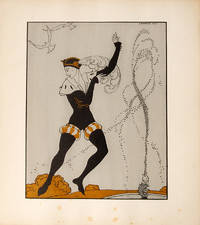
réf. 114931London C. W. Beaumont 1913. . Chromolitohraph mounted very minor spotting to margin; image size 23.4 x 17.3 cm mounted size 40.9 x 37.9 cm. 'The designs although somewhat fantastic in treatment do convey the impression produced by Nijinsky in his famous characters' Beaumont. 'In his brief time Nijinsky was the most famous male dancer in the world a pre-eminence due in part to his extraordinary virtuosity. But it was not his virtuosity alone that made him such a powerful stage presence. As contemporary reports make clear Nijinsky was a great and unusual actor. The ideal Fokine interpreter he was able to expand a simple choreographic design into a rich dramatic portrait using in keeping with Fokine's dicta the whole body as an expressive instrument. Nijinsky's influence as a dancer was immediate and huge. That ballet nearly extinguished artistically in western Europe was revived in this century is due to him and other great dancers of his generation such as Anna Pavlova and Karsavina as well as to Diaghilev. That male ballet utterly extinguished was also revived is due to him preeminently. Nijinsky was the first real ballet star of the male sex that Europe had seen since the retirement of Auguste Vestris nearly a century earlier. He initiated a renaissance.' Cohen: The International Encyclopedia of Dance Vol. 4 pp. 646-648. London, C. W. Beaumont, 1913. unknown
réf. 114723London C. W. Beaumont 1913. . Chromolithograph mounted very minor spotting to margin; image size 25 x 23 cm mounted size 40.9 x 37.9. 'The designs although somewhat fantastic in treatment do convey the impression produced by Nijinsky in his famous characters' Beaumont. 'In his brief time Nijinsky was the most famous male dancer in the world a pre-eminence due in part to his extraordinary virtuosity. But it was not his virtuosity alone that made him such a powerful stage presence. As contemporary reports make clear Nijinsky was a great and unusual actor. The ideal Fokine interpreter he was able to expand a simple choreographic design into a rich dramatic portrait using in keeping with Fokine's dicta the whole body as an expressive instrument. Nijinsky's influence as a dancer was immediate and huge. That ballet nearly extinguished artistically in western Europe was revived in this century is due to him and other great dancers of his generation such as Anna Pavlova and Karsavina as well as to Diaghilev. That male ballet utterly extinguished was also revived is due to him preeminently. Nijinsky was the first real ballet star of the male sex that Europe had seen since the retirement of Auguste Vestris nearly a century earlier. He initiated a renaissance.' Cohen: The International Encyclopedia of Dance Vol. 4 pp. 646-648. London, C. W. Beaumont, 1913. unknown
réf. 114933London C. W. Beaumont 1913. . Chromolithograph mounted minor spotting to margin; image size: 24.9 x 19 cm mounted size: 40.9 x 37.9 cm. 'The designs although somewhat fantastic in treatment do convey the impression produced by Nijinsky in his famous characters' Beaumont. 'In his brief time Nijinsky was the most famous male dancer in the world a pre-eminence due in part to his extraordinary virtuosity. But it was not his virtuosity alone that made him such a powerful stage presence. As contemporary reports make clear Nijinsky was a great and unusual actor. The ideal Fokine interpreter he was able to expand a simple choreographic design into a rich dramatic portrait using in keeping with Fokine's dicta the whole body as an expressive instrument. Nijinsky's influence as a dancer was immediate and huge. That ballet nearly extinguished artistically in western Europe was revived in this century is due to him and other great dancers of his generation such as Anna Pavlova and Karsavina as well as to Diaghilev. That male ballet utterly extinguished was also revived is due to him preeminently. Nijinsky was the first real ballet star of the male sex that Europe had seen since the retirement of Auguste Vestris nearly a century earlier. He initiated a renaissance.' Cohen: The International Encyclopedia of Dance Vol. 4 pp. 646-648. London, C. W. Beaumont, 1913. unknown
1827réf. 41340Washington City: Printed for the Author by S. C. Ustick 1827. 48pp in contemporary plain wrappers. Stitching absent unbound. Faint rubberstamp on title page gum label at lower spine. Good plus. This is the first part of what became a three-part book. Each is a separate imprint. Parts II and III were printed in 1828 and 1832. Part II like the first Part was printed by Ustick in Washington. Part III was printed in Frederick Maryland by Neilson Poe. "The conversion of the Barber family despite the prejudices of a Puritan education and environment was one of the most notable and far-reaching in its results of any recorded in the early annals of the Church in New England. Daniel Barber has left a 'History of My Own Times' Washington 1827 in which he states that his father and mother were Congregational Dissenters of strict Puritanic rule and he continued in that sect until his twenty-seventh year when he joined the Episcopalians. Previous to this he had served two terms as a soldier in the Continental army" "Barber Family" by Thomas Francis Meehan Catholic Encyclopedia website accessed May 01 2026. "Daniel Barber came from good Puritan stock and was a fine upstanding Congregationalist minister. Until some Episcopalians convinced him that Apostolic Succession matters when it comes to ministerial Orders. So he became an Episcopalian priest. He was a fine upstanding Episcopalian priest for many years. He and his wife Chloe raised three children as good Episcopalians. But eventually the question of Apostolic Succession came back to him and he realized that Episcopalianism didn't satisfy the question of Apostolic Succession - the Catholics actually had it and the Episcopalians didn't. Meantime his son Virgil had also become a fine upstanding Episcopalian priest. He and his wife Jerusha were in charge of a good school and had a comfortable life with their children. But a chance encounter with a pamphlet on the life of St. Francis Xavier fired his heart to seek the faith that motivated a man like St. Francis to do what he'd done. Eventually Virgil and Jerusha became Catholic. Then Chloe converted along with a number of other members of the family. And finally Daniel also became Catholic. The entire affair was very upsetting to fine upstanding New England Protestant sensibilities and caused a sensation" "Barber Family" by Thomas Francis Meehan Catholic Encyclopedia website accessed May 01 2026. FIRST EDITION. Parsons 922. Howes B117. Printed for the Author, by S. C. Ustick unknown
1827réf. 41340Washington City: Printed for the Author by S. C. Ustick 1827. 48pp in contemporary plain wrappers. Stitching absent unbound. Faint rubberstamp on title page gum label at lower spine. Good plus. This is the first part of what became a three-part book. Each is a separate imprint. Parts II and III were printed in 1828 and 1832. Part II like the first Part was printed by Ustick in Washington. Part III was printed in Frederick Maryland by Neilson Poe. "The conversion of the Barber family despite the prejudices of a Puritan education and environment was one of the most notable and far-reaching in its results of any recorded in the early annals of the Church in New England. Daniel Barber has left a 'History of My Own Times' Washington 1827 in which he states that his father and mother were Congregational Dissenters of strict Puritanic rule and he continued in that sect until his twenty-seventh year when he joined the Episcopalians. Previous to this he had served two terms as a soldier in the Continental army" "Barber Family" by Thomas Francis Meehan Catholic Encyclopedia website accessed May 01 2026. "Daniel Barber came from good Puritan stock and was a fine upstanding Congregationalist minister. Until some Episcopalians convinced him that Apostolic Succession matters when it comes to ministerial Orders. So he became an Episcopalian priest. He was a fine upstanding Episcopalian priest for many years. He and his wife Chloe raised three children as good Episcopalians. But eventually the question of Apostolic Succession came back to him and he realized that Episcopalianism didn't satisfy the question of Apostolic Succession - the Catholics actually had it and the Episcopalians didn't. Meantime his son Virgil had also become a fine upstanding Episcopalian priest. He and his wife Jerusha were in charge of a good school and had a comfortable life with their children. But a chance encounter with a pamphlet on the life of St. Francis Xavier fired his heart to seek the faith that motivated a man like St. Francis to do what he'd done. Eventually Virgil and Jerusha became Catholic. Then Chloe converted along with a number of other members of the family. And finally Daniel also became Catholic. The entire affair was very upsetting to fine upstanding New England Protestant sensibilities and caused a sensation" "Barber Family" by Thomas Francis Meehan Catholic Encyclopedia website accessed May 01 2026. FIRST EDITION. Parsons 922. Howes B117. Printed for the Author, by S. C. Ustick unknown books
1831réf. 001294New Haven: Printed and Sold By J. W. Barber 1831. Modern quarter calf; marbled boards. Eight hand-colored plates. Issue with 120 pages including 12 pages added in 1832. Foxing. Very Good. First Edition. Printed and Sold By J. W. Barber hardcover
1901réf. 1517jWaterlow and Sons 1901. Hardcover. Very Good/No Jacket. Very rare. Original boards bound in 1/2 leather with new end papers. Translated from the Dutch. The boards are a little shelf rubbed and edge worn but remain strong and sturdy. Internally there is a stamp marking on the front end page and red ink annotation and tanning around the edges throughout. This does not affect the text in any way and the pages are neat crisp and complete. The binding is secure. Handsome. JK. Our orders are shipped using tracked courier delivery services. Waterlow and Sons hardcover