Geo F Barber and CoBiblio.com

10 858 résultats
réf. 0243076339.Gpaperback. Good. Access codes and supplements are not guaranteed with used items. May be an ex-library book. paperback
réf. 44545658-nnew. unknown
2013réf. 2-1608457834Morgan & Claypool Publishers 2013. Paperback. New. 84 pages. 9.00x7.25x0.25 inches. Morgan & Claypool Publishers paperback
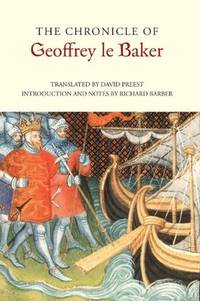
réf. 697484344Boydell & Brewer Group Limited . Hardback. New. pp. xxvii 155 Maps Boydell & Brewer Group, Limited hardcover
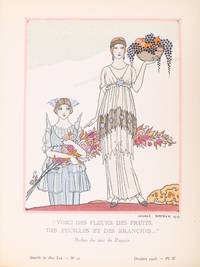
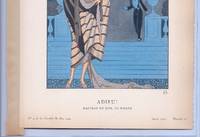
1913réf. 89500Paris 1913. Fine. Paris Octobre 1913 19 x 24.50 cm une feuille Original colour print heightened in palladium printed on laid paper and signed at the bottom right outside the plate. Original engraving produced for the illustration of La Gazette du Bon Ton one of the most beautiful and influential fashion journals of the 20th century celebrating the talent of French designers and artists at the height of the Art Deco era. A celebrated fashion magazine established in 1912 by Lucien Vogel La Gazette du bon ton appeared until 1925 with a hiatus from 1915 to 1920 due to the war the editor-in-chief having been called up for service. It consisted of 69 issues printed in only 2000 copies each and notably illustrated with 573 color plates and 148 sketches of the models of the great designers. Right from the start this sumptuous publication was aimed at bibliophiles and fashionable society Françoise Tétart-Vittu La Gazette du bon ton in Dictionnaire de la mode 2016 and was printed on fine vergé paper using a type cut specially for the magazine by Georges Peignot known as Cochin later used in 1946 by Christian Dior. The prints were made using stencils heightened in colors some highlighted in gold or palladium. The story began in 1912 when Lucien Vogel a man of the world involved in fashion he had already been part of the fashion magazine Femina decided with his wife Cosette de Brunhoff the sister of Jean creator of Babar to set up the Gazette du bon ton subtitled at the time: Art fashion frivolities. Georges Charensol noted the reasoning of the editor-in-chief: In 1910 he observed there was no really artistic fashion magazine nothing representative of the spirit of the time. My dream was therefore to make a luxury magazine with truly modern artists I was assured of success because when it comes to fashion no country on earth can compete with France. Un grand éditeur dart. Lucien Vogel in Les Nouvelles littéraires no. 133 May 1925. The magazine was immediately successful not only in France but also in the United States and Latin America. At first Vogel put together a team of seven artists: André-Édouard Marty and Pierre Brissaud followed by Georges Lepape and Dammicourt as well as eventually his friends from school and the School of Fine Arts like George Barbier Bernard Boutet de Monvel and Charles Martin. Other talented people soon came flocking to join the team: Guy Arnoux Léon Bakst Benito Boutet de Monvel Umberto Brunelleschi Chas Laborde Jean-Gabriel Domergue Raoul Dufy Édouard Halouze Alexandre Iacovleff Jean Émile Laboureur Charles Loupot Chalres Martin Maggie Salcedo. These artist mostly unknown when Lucien Vogel sought them out later became emblematic and sought-after artistic figures. It was also they who worked on the advertising drawings for the Gazette. The plates put the spotlight on and celebrate dresses by seven designers of the age: Lanvin Doeuillet Paquin Poiret Worth Vionnet and Doucet. The designers provided exclusive models for each issue. Nonetheless some of the illustrations are not based on real models but simply on the illustrators conception of the fashion of the day. The Gazette du bon ton was an important step in the history of fashion. Combining aesthetic demands with the physical whole it brought together for the first time the great talents of the artistic literary and fashion worlds; and imposed through this alchemy a completely new image of women: slender independent and daring which was shared by the new generation of designers including Coco Chanel Jean Patou Marcel Rochas and so on Taken over in 1920 by Condé Montrose Nast the Gazette du bon ton was an important influence on the new layout and aesthetics of that little dying paper that Nast had bought a few years earlier: Vogue. unknown
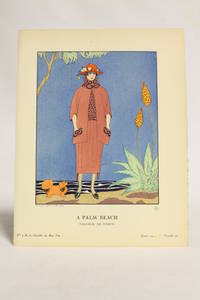
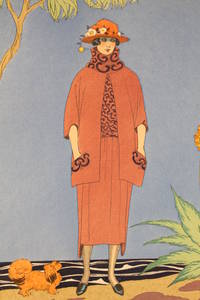
1921réf. 57545Paris: Lucien Vogel éditeur 1921. Fine. Lucien Vogel éditeur Paris 1921 18 x 24 cm une feuille original print in color printed on laid paper signed lower left on the board. Original content produced for the illustration of The Gazette fashionable one of the finest and most influential twentieth century fashion magazines celebrating the talent of creators and artists French burgeoning art deco. Famous fashion magazine founded in 1912 by Lucien Vogel The Gazette fashionable appeared until 1925 with an interruption during the War of 1915 to 1920 due to mobilization of its editor. She is 69 Deliveries from just 2000 copies and is illustrated including 573 color plates and 148 sketches depicting models of fashion designers. Upon publication these luxury publications ""are for bibliophiles and worldly aesthetes"" Françoise Tétart-Vittu ""good Gazette of tone"" in the fashion dictionary 2016. Printed on fine laid paper they use a typeface created specifically for the magazine by Georges Peignot the Cochin character taken in 1946 by Christian Dior. The prints are made with the technique of metal stencil enhanced color and some outlined in gold or palladium. The adventure began in 1912 when Lucien Vogel man of the world and fashion - it has already participated in Femina magazine - decided to found with his wife Cosette de Brunhoff John's sister the father of Babar Gazette good tone in which the subtitle is then ""Art fashions and frivolities."" Georges Charensol quotes the editor: ""In 1910 he observed there was no truly artistic fashion magazine and representative of the spirit of his time. So I thought of making a glossy magazine with truly modern artists . I was certain of success because no country for fashion can compete with France. """" A great art editor. Lucien Vogel ""in Literary News No. 133 May 1925. The success of the magazine is immediate not only in France but also the US and South America. Originally Vogel therefore brings together a group of seven artists: André-Édouard Marty and Pierre Brissaud followed by Georges Lepape and Dammicourt; and finally his friends from the School of Fine Arts as are George Barbier Bernard Boutet de Monvel or Charles Martin. Other talents come quickly reach the equipped Guy Arnoux Léon Bakst Benito Boutet de Monvel Umberto Brunelleschi Chas Laborde Jean-Gabriel Domergue Raoul Dufy Edward Halouze Alexander Iacovleff Jean Emile Laboureur Charles Loupot Charles Martin Maggie Salcedo. These artists mostly unknown when Lucien Vogel appealed to them will eventually become iconic figures and artistic sought. These are the same illustrators who make the drawings advertisements Gazette. The boards highlight the dresses and sublime seven artists of the time: Lanvin Doeuillet Paquin Poiret Worth Vionnet and Doucet. The designers provide for each number of exclusive models. Nevertheless some of Illustrations contained no real model but only the idea that the illustrator is done in the fashion of the day. Gazette fashionable is a milestone in the history of fashion. Combining the aesthetic requirement and plastic unit it brings together for the first time the great talents of the world of arts literature and fashion and imposed by this alchemy a new image of women slender independent and bold also driven by the new generation of designers Coco Chanel Jean Patou Rochas Marcel . Recovery in 1920 by Condé Montrose Nast Gazette fashionable modeled for the new composition and the aesthetic choices of the ""little dying newspaper"" that Nast had bought a few years ago: the Vogue magazine. Lucien Vogel éditeur hardcover
1921réf. 54878Paris: Lucien Vogel éditeur 1921. Fine. Lucien Vogel éditeur Paris 1921 18 x 24 cm une feuille Original color print printed on vergé paper signed in the plate. An original print used to illustrate the Gazette du bon ton one of the most attractive and influential 20th century fashion magazines featuring the talents of French artists and other contributors from the burgeoning Art Deco movement. A celebrated fashion magazine established in 1912 by Lucien Vogel La Gazette du bon ton appeared until 1925 with a hiatus from 1915 to 1920 due to the war the editor-in-chief having been called up for service. It consisted of 69 issues printed in only 2000 copies each and notably illustrated with 573 color plates and 148 sketches of the models of the great designers. Right from the start this sumptuous publication was aimed at bibliophiles and fashionable society Françoise Tétart-Vittu La Gazette du bon ton in Dictionnaire de la mode 2016 and was printed on fine vergé paper using a type cut specially for the magazine by Georges Peignot known as Cochin later used in 1946 by Christian Dior. The prints were made using stencils heightened in colors some highlighted in gold or palladium. The story began in 1912 when Lucien Vogel a man of the world involved in fashion he had already been part of the fashion magazine Femina decided with his wife Cosette de Brunhoff the sister of Jean creator of Babar to set up the Gazette du bon ton subtitled at the time: Art fashion frivolities. Georges Charensol noted the reasoning of the editor-in-chief: In 1910 he observed there was no really artistic fashion magazine nothing representative of the spirit of the time. My dream was therefore to make a luxury magazine with truly modern artists I was assured of success because when it comes to fashion no country on earth can compete with France. Un grand éditeur dart. Lucien Vogel in Les Nouvelles littéraires no. 133 May 1925. The magazine was immediately successful not only in France but also in the United States and Latin America. At first Vogel put together a team of seven artists: André-Édouard Marty and Pierre Brissaud followed by Georges Lepape and Dammicourt as well as eventually his friends from school and the School of Fine Arts like George Barbier Bernard Boutet de Monvel and Charles Martin. Other talented people soon came flocking to join the team: Guy Arnoux Léon Bakst Benito Boutet de Monvel Umberto Brunelleschi Chas Laborde Jean-Gabriel Domergue Raoul Dufy Édouard Halouze Alexandre Iacovleff Jean Émile Laboureur Charles Loupot Chalres Martin Maggie Salcedo. These artist mostly unknown when Lucien Vogel sought them out later became emblematic and sought-after artistic figures. It was also they who worked on the advertising drawings for the Gazette. The plates put the spotlight on and celebrate dresses by seven designers of the age: Lanvin Doeuillet Paquin Poiret Worth Vionnet and Doucet. The designers provided exclusive models for each issue. Nonetheless some of the illustrations are not based on real models but simply on the illustrators conception of the fashion of the day. The Gazette du bon ton was an important step in the history of fashion. Combining aesthetic demands with the physical whole it brought together for the first time the great talents of the artistic literary and fashion worlds; and imposed through this alchemy a completely new image of women: slender independent and daring which was shared by the new generation of designers including Coco Chanel Jean Patou Marcel Rochas and so on Taken over in 1920 by Condé Montrose Nast the Gazette du bon ton was an important influence on the new layout and aesthetics of that little dying paper that Nast had bought a few years earlier: Vogue. Lucien Vogel éditeur unknown
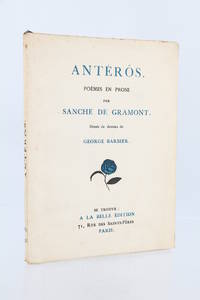
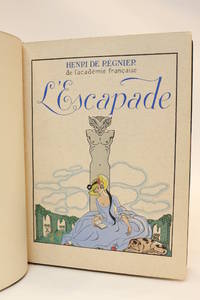
1913réf. 85304Paris: A la belle édition 1913. Fine. A la belle édition Paris 1913 15.50 x 21 cm broché Edition printed in 507 numbered copies ours one of 475 on laid paper. Some minor foxing otherwise a handsome copy. Work illustrated with 5 black drawings by George Barbier. A la belle édition unknown
réf. 1851701559.Gpaperback. Good. Access codes and supplements are not guaranteed with used items. May be an ex-library book. paperback
réf. 1851701591.Gboard_book. Good. Access codes and supplements are not guaranteed with used items. May be an ex-library book. unknown
réf. 43203777like new. unknown
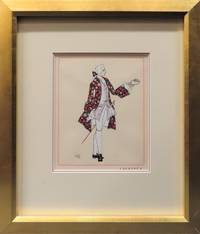
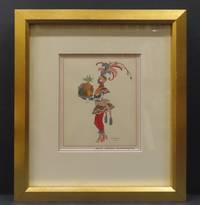
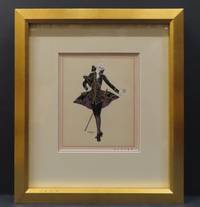
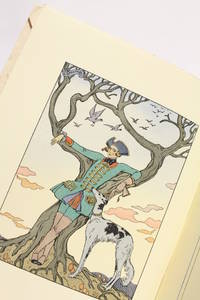
1919réf. 6619Original Barbier pochoir of Casanova with a mask in his hand adorned in floral attire from Panorama Dramatique. Casanova Décors et Costumes. Printed with white red pink blue orange and grey colors. Pink trim surrounds image. Dated in print 1918. Wooden frame with gilt front. Frame: 14.75 x 16.75 inches; Window: 7 x 8.25 inches. Lucien Vogel
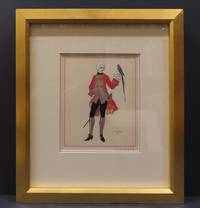
1919réf. 6641Original Barbier pochoir of Casanova with a parrot on his hand adorned in floriated attire. Pochoir from Panorama Dramatique in white red pink blue orange black silver gold brown and grey. Pink trim surrounds image. Dated 1918. Recent beveled gilt fronted wooden frame. Frame: 14.75 x 16.75 inches; Window: 7 x 8.25 inches. Lucien Vogel
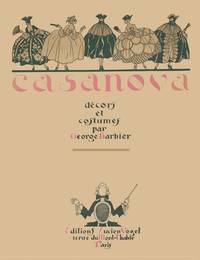
1919réf. 017937Paris: Editions Lucien Vogel 1919. No Binding. Very Good. 4to - over 9¾ - 12" tall. Card boards with loose sheets. Ties are missing. Interior folder paper appears to be split. Hinges of card covers showing. All 24 plates are present and very good with mild toning of paper. Some confusion over date but only date listed is 1919. Editions Lucien Vogel unknown
1913réf. 57650Paris: S. n. 1913. Fine. S. n. Paris 1913 14 x 22.50 cm une feuille original print in color printed on laid paper signed upper right of the board. One of the first French fashion magazines published a few days before the famous Gazette fashionable and bringing together the greatest French artists of the Art Deco movement. The Journal ladies and modes is a trimensuelle illustrated French fashion magazine created in 1797. Its publication was stopped in 1839 before being taken in June 1912 under the leadership of Tommaso Antongini secretary friend and biographer of Gabriele 'Annunzio. It will disappear in August 1914 on the eve of the First World War. The review was drawn to 1279 copies making it for the time a relatively confidential publication. The 186 plates with great finesse are engraved on strong paper and colored stencil. They represent the majority of the time women but also men and children. The models are not unlike those of the Gazette fashionable whose publication will be launched a few months later those renowned couturiers but are the fruit of the imagination of the illustrators themselves. The stencils are mostly executed by George Barbier but other artists collaborating on the magazine: Léon Bakst B. Berty Bernard Boutet de Monvel Roger Broders Jan van Brock Umberto Brunelleschi H. Robert Dammy Etienne Drian Abel Faivre Marie-Madeleine Franc-Nohain Xavier Gosé Paul Iribe Kriegck Victor Lhuer Pierre Legrain Charles Martin Fernand Simeon Ismael Smith Armand Vallee and Gerda Wegener. Many of these illustrators will also be involved in The Gazette fashionable. Their work emblematic of the Art Deco movement emphasize the influence of Orientalism and costumes of the Ballets Russes while registering in the daily activities of affluent French of the time. From the preface of the first issue of 1912 Anatole France said: ""After seventy-five years he is reborn. He is reborn through the efforts of a few ingenious minds and artists. He is reborn for the curious if there is that do not simply modes newspaper fired several thousand and illustrated by photography. And if publishers make us very exactly in its format with its paper printing its processes of etching and coloring the old classic patterns of the past is that they intend to continue the pleasantly and become charming classic fashion of today and tomorrow. "" S. n. unknown
1913réf. 57771Paris: S. n. 1913. Fine. S. n. Paris 1913 14 x 22.50 cm une feuille original print in color printed on laid paper signed on the top left of the board. One of the first French fashion magazines published a few days before the famous Gazette fashionable and bringing together the greatest French artists of the Art Deco movement. The Journal ladies and modes is a trimensuelle illustrated French fashion magazine created in 1797. Its publication was stopped in 1839 before being taken in June 1912 under the leadership of Tommaso Antongini secretary friend and biographer of Gabriele 'Annunzio. It will disappear in August 1914 on the eve of the First World War. The review was drawn in 1279 copies making it for the time a relatively confidential publication. The 186 plates with great finesse are engraved on strong paper and colored stencil. They represent the majority of the time women but also men and children. The models are not unlike those of the Gazette fashionable whose publication will be launched a few months later those renowned couturiers but are the fruit of the imagination of the illustrators themselves. The stencils are mostly executed by George Barbier but other artists collaborating on the magazine: Léon Bakst B. Berty Bernard Boutet de Monvel Roger Broders Jan van Brock Umberto Brunelleschi H. Robert Dammy Etienne Drian Abel Faivre Marie-Madeleine Franc-Nohain Xavier Gosé Paul Iribe Kriegck Victor Lhuer Pierre Legrain Charles Martin Fernand Simeon Ismael Smith Armand Vallee and Gerda Wegener. Many of these illustrators will also be involved in The Gazette fashionable. Their work emblematic of the Art Deco movement emphasize the influence of Orientalism and costumes of the Ballets Russes while registering in the daily activities of affluent French of the time. From the preface of the first issue of 1912 Anatole France said: ""After seventy-five years he is reborn. He is reborn through the efforts of a few ingenious minds and artists. He is reborn for the curious if there is that do not simply modes newspaper fired several thousand and illustrated by photography. And if publishers make us very exactly in its format with its paper printing its processes of etching and coloring the old classic patterns of the past is that they intend to continue the pleasantly and become charming classic fashion of today and tomorrow. "" S. n. unknown
1919réf. 6627Original Barbier pochoir of a magnificent African in festive attire. Pochoir in black gold blue red pink green yellow silver purple and orange. Pink trim surrounds image. Dated in print 1918. Archival wooden frame with gilt to front. Lucien Vogel
1919réf. 6629Original Barbier pochoir of a man in formal attire holding a hat from Panorama Dramatique. Printed with black gold green red pink light blue grey purple white and colors. Pink trim surrounds image. Dated in print 1918. Circa 1990 archival frame. Frame: 14.75 x 16.75 inches; Window: 7 x 8.25 inches. Lucien Vogel
1924réf. 55097Paris: Lucien Vogel éditeur 1924. Fine. Lucien Vogel éditeur Paris 1924 18 x 24 cm une feuille Original color print heightened with palladium printed on vergé paper signed in the plate. An original print used to illustrate the Gazette du bon ton one of the most attractive and influential 20th century fashion magazines featuring the talents of French artists and other contributors from the burgeoning Art Deco movement. A celebrated fashion magazine established in 1912 by Lucien Vogel La Gazette du bon ton appeared until 1925 with a hiatus from 1915 to 1920 due to the war the editor-in-chief having been called up for service. It consisted of 69 issues printed in only 2000 copies each and notably illustrated with 573 color plates and 148 sketches of the models of the great designers. Right from the start this sumptuous publication was aimed at bibliophiles and fashionable society Françoise Tétart-Vittu La Gazette du bon ton in Dictionnaire de la mode 2016 and was printed on fine vergé paper using a type cut specially for the magazine by Georges Peignot known as Cochin later used in 1946 by Christian Dior. The prints were made using stencils heightened in colors some highlighted in gold or palladium. The story began in 1912 when Lucien Vogel a man of the world involved in fashion he had already been part of the fashion magazine Femina decided with his wife Cosette de Brunhoff the sister of Jean creator of Babar to set up the Gazette du bon ton subtitled at the time: Art fashion frivolities. Georges Charensol noted the reasoning of the editor-in-chief: In 1910 he observed there was no really artistic fashion magazine nothing representative of the spirit of the time. My dream was therefore to make a luxury magazine with truly modern artists I was assured of success because when it comes to fashion no country on earth can compete with France. Un grand éditeur dart. Lucien Vogel in Les Nouvelles littéraires no. 133 May 1925. The magazine was immediately successful not only in France but also in the United States and Latin America. At first Vogel put together a team of seven artists: André-Édouard Marty and Pierre Brissaud followed by Georges Lepape and Dammicourt as well as eventually his friends from school and the School of Fine Arts like George Barbier Bernard Boutet de Monvel and Charles Martin. Other talented people soon came flocking to join the team: Guy Arnoux Léon Bakst Benito Boutet de Monvel Umberto Brunelleschi Chas Laborde Jean-Gabriel Domergue Raoul Dufy Édouard Halouze Alexandre Iacovleff Jean Émile Laboureur Charles Loupot Chalres Martin Maggie Salcedo. These artist mostly unknown when Lucien Vogel sought them out later became emblematic and sought-after artistic figures. It was also they who worked on the advertising drawings for the Gazette. The plates put the spotlight on and celebrate dresses by seven designers of the age: Lanvin Doeuillet Paquin Poiret Worth Vionnet and Doucet. The designers provided exclusive models for each issue. Nonetheless some of the illustrations are not based on real models but simply on the illustrators conception of the fashion of the day. The Gazette du bon ton was an important step in the history of fashion. Combining aesthetic demands with the physical whole it brought together for the first time the great talents of the artistic literary and fashion worlds; and imposed through this alchemy a completely new image of women: slender independent and daring which was shared by the new generation of designers including Coco Chanel Jean Patou Marcel Rochas and so on Taken over in 1920 by Condé Montrose Nast the Gazette du bon ton was an important influence on the new layout and aesthetics of that little dying paper that Nast had bought a few years earlier: Vogue. Lucien Vogel éditeur unknown
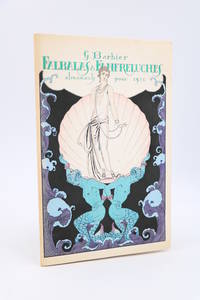
1924réf. 92324Meynial éditeur 1924. Fine. ""Each illustration glorifies the embodiment of fashion in every circumstance"" Meynial éditeur s. d. 1924 17.5 x 26.2 cm En feuilles First edition. Copy in loose leaves as issued complete with its illustrated wrappers its engraved title-page adorned with a colour vignette its black-and-white vignette at the head of the text and its twelve colour plates by Barbier. Spine very slightly sunned. A superb copy of this almanac illustrated with 12 pochoir plates by George Barbier who also designed the wrappers depicting an Art Deco Venus emerging on a shell borne by two tritons highlighted in silver. These plates became the epitome of Roaring Twenties elegance as evidenced by the near-immediate literary reference they inspired: ""In Michael Arlen's best-selling 1924 novel The Green Hat the heroine Iris March is compared to a figure in a Barbier fashion illustration: ""She stood carelessly like the women in Georges Barbier's almanacs Falbalas et Fanfreluches who know how to stand carelessly. Her hands were thrust into the pockets of a light brown leather jacket-pour le sport"" Steele p. 247. The casual elegance ascribed to Arlen's character a quintessential element of the 1920s fashion ideal epitomizes Barbier's figures. With their strong yet lithe forms and dark-lidded slightly exotic eyes Barbier's women embody the notions of female beauty and grace of the time."" Valerie Steele ""O all these women all these women who left upon the centuries their irresistible power!"" The almanac also contains an article by the actress Cécile Sorel ""Glorifions la coquetterie"" a charming counterpart to Barbier's compositions. Barbier's plates are entitled: Le Retour L'Escarpolette Le Jugement de Paris Mlle Sorel au Bal du Grand Prix L'Aveu difficile Au Polo La Jolie Insulaire Comptez sur mes Serments Sérénade Sont-ils gentils Le Baiser dérobé La Bénédiction paternelle. Quote in the headline by Anne-Laure Charrier-Ranoux Musée des Arts Décoratifs. Meynial éditeur hardcover
1988réf. 104951Bookking International 1988. Softcover. Fine/No jacket. In French. Oversized. Name written on first page. Bookking International unknown
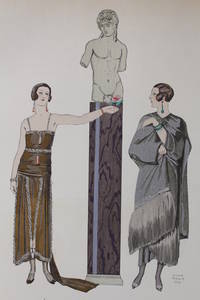
réf. 22880This original lithograph with hand applied color pochoir from the Gazette du Bon Ton 1921 plate 28. It is by George Barbier. A beautiful lithograph in Excellent shape with light age toning along the edges see scansMedium: Lithograph with hand -applied color. pochoirGeorge Barbier 1882-1932 was one of the great French illustrators of the early part of the 20th century. He mounted his first exhibition in 1911 and was subsequently swept to the forefront of his profession with commissions to design theatre and ballet costumes to illustrate books and to produce haute couture fashion illustrations. His prints for the Gazette du Bon Ton are amongst the most desirable produced by that fashion periodical.La Gazette du Bon Ton was a leading fashion magazine published in France from November 1912 to 1925 with a hiatus taken during the war years. Founded by Lucien Vogel the magazine covered the latest developments in fashion lifestyle and beauty. It was available by subscription only published on fine paper and meant to appeal to the upper echelon of Parisian society. The centerpiece of the Gazette were ten full-page fashion plates included with each issue with many featuring pochoir coloring which is accomplished by adding color to a lithograph by means of a stencil. The results are stunningly beautiful works of art by many of the leading fashion designers and artist of that time including George Barbier Andre Marty Charles Martin Brissaud Lepape Thayaht and Benito.Le Bon Ton d'apres-guerre. Art-Modes-Frivolites. Collection de 200 Planches en Couleurs de George Barbier et al. ; extraites des annees 1920 a 1922 De La Gazette du Bon Ton 2 serie 100 Planches Is the title of the work these prints came from. Basically it is a collection of these original plates assembled in book form attached to the binding by a thin tissue like paper see scans.The prints in the scans is the item you shall receive so please examine closely. unknown
1931réf. 72939Paris: A. & G. Mornay 1931. Fine. A. & G. Mornay Paris 1931 15 x 20.50 cm relié Edition adorned with 65 original pochoir coloured illustrations by George Barbier one of 877 numbered copies on Rives. Bound in half navy blue morocco spine in four compartments gilt date at the foot marbled paper boards iridescent effect paper endpapers wrappers and spine preserved top edge gilt binding signed Semet & Plumelle. Pleasant attractively set copy. A. & G. Mornay hardcover
1931réf. 62296Paris: A. & G. Mornay 1931. Fine. A. & G. Mornay Paris 1931 15.50 x 20.50 cm broché Illustrated edition with original compositions by George Barbier hand-colored with pochoir one of 877 numbered copies on Rives laid paper. Handsome copy. A. & G. Mornay unknown
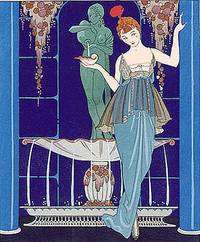
1914réf. 3009Barbier: La Fontaine de Coquillages Robe de Soir de Paquin. G.d.B.T. #3 March pl. 27. L'Etourdissant Petit Poisson Robe d'été G.d.B.T. #5 May pl.44.Brissaud: Ta Maman va Bien Tailler du Matin et Robe de filete de Jeanne Lanvin. G.d.B.T. #4 April pl. 37.Sais-Tu Ta Leçon Costumes Tailler de Fantasie de Jeanne Lanvin. Gd.B.T. #5 May pl. 40.A published in G.d.B.T. Gazette du Bon Ton 1914 Gazette du Bon Ton